導入
Thermoplastic Polyester Elastomer (TPEE), commercially known as Hytrel, is a high-performance block copolymer combining the properties of rubber and plastic. It is used in automotive boots, cables, and industrial hoses. Producing TPEE masterbatches is challenging due to the material’s high melt viscosity, sensitivity to shear history, and tendency to stick to metal surfaces. A Co-rotating twin screw extruder is the industry standard for TPEE because it provides the high shear necessary to disperse additives in the viscous matrix while allowing precise control over temperature to prevent degradation. This article details the production of TPEE masterbatches using co-rotating technology, specifically the Nanjing Kerke KTE series, which offers the robustness required for processing these demanding elastomers.
配合比率(さまざまな種類)
TPEE用カラーマスターバッチ
TPEE is naturally opaque/yellowish. Coloring requires high heat-stable pigments. Formulation: 30-40% Pigment (high loading due to opacity of TPEE), 60-70% TPEE carrier. Because TPEE is tough, dispersing agents (waxes or stearates) are crucial (1-2%) to prevent “orange peel” on the final molded part.
補強フィラーマスターバッチ
剛性向上のために、カーボンブラックまたはガラス繊維が使用されます。配合物:20〜30%のカーボンブラック(導電性グレード)、70〜80%のTPEE。カーボンブラックは高い結晶性を持ち、多くのポリマーを吸収するため、粘度が著しく上昇します。エクストラーダは、この高い負荷を扱い、トルクオーバーロードが発生しないようにしなければなりません。
難燃性TPEEマスターバッチ
For electrical cable applications. Formulation: 50% TPEE, 30% Magnesium Hydroxide (MDH – requires high loading), 15% Synergist, 5% Processing Aid. MDH is a high-loading filler that makes the compound very stiff and abrasive.
生産プロセス
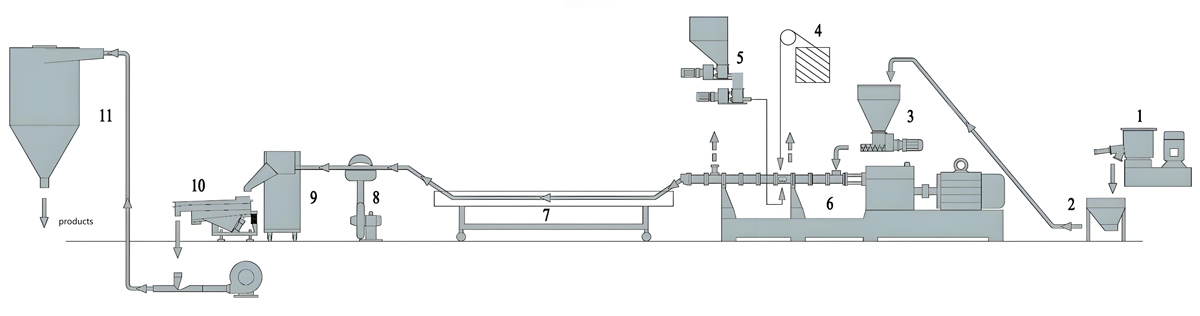
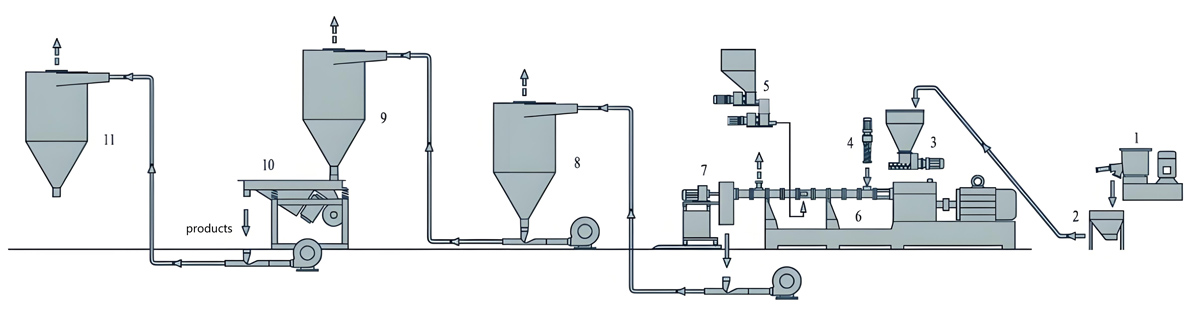
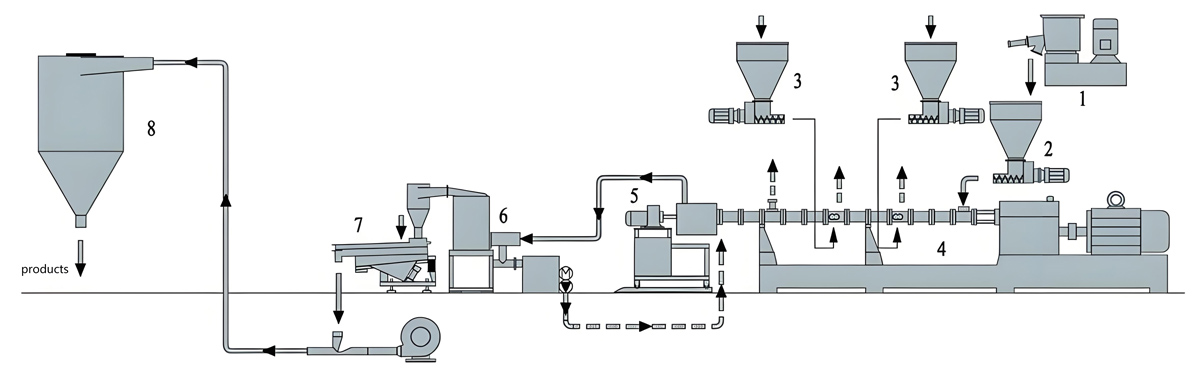
TPEE is hygroscopic and must be dried at 100°C-120°C for at least 4 hours before processing. The dried TPEE is fed into the co-rotating KTE extruder. The co-rotating screws intermesh and wipe the barrel wall, preventing the sticky TPEE from adhering and degrading. The process requires high shear in the mixing zone to break down TPEE’s crystalline structure and incorporate additives. Temperatures are maintained between 200°C and 240°C. Because TPEE has a wide processing window, careful control is needed to avoid under-melting (gels) or over-shearing (viscosity drop). The melt is filtered and pelletized. Due to TPEE’s “memory” (it tends to return to its original shape), water-ring pelletizing is often preferred over strand pelletizing to ensure consistent pellet shape. The pellets may require annealing (heat treatment) to relieve internal stresses.
生産設備紹介
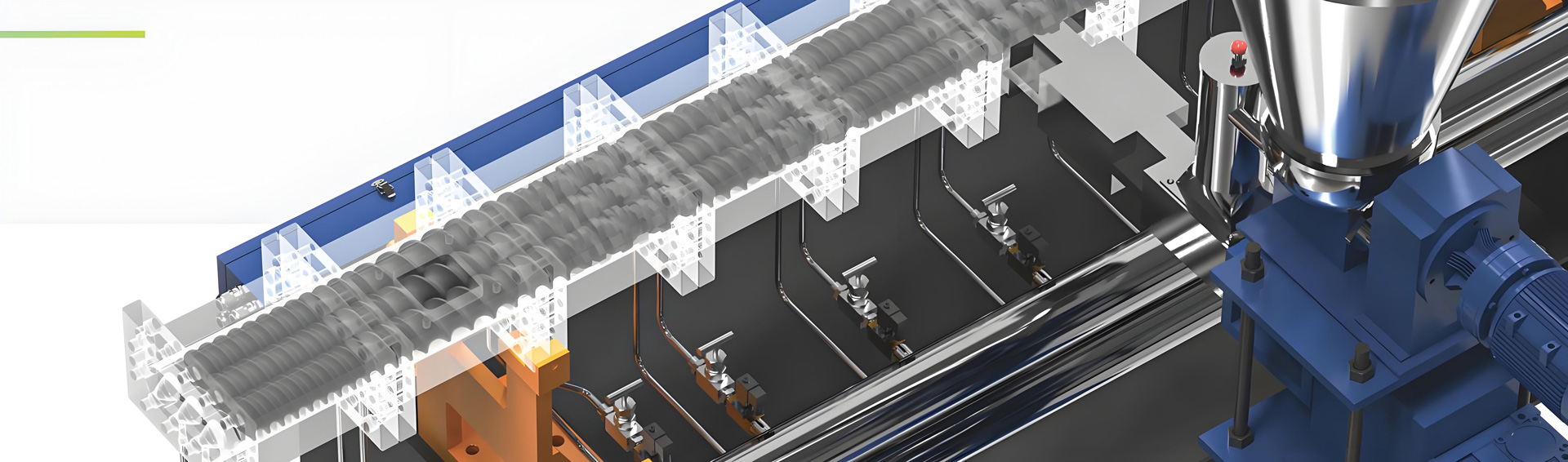
The Nanjing Kerke KTEシリーズ Co-rotating extruder is the backbone of TPEE processing. “Co-rotating” means both screws turn in the same direction, which creates an intermeshing, wiping action ideal for sticky materials. The KTE series for TPEE features screws with special geometries: high-shear kneading blocks in the melting zone and toothed mixing elements for distributive mixing. The barrel is often nitrided or bimetallic to resist the abrasive nature of fillers like carbon black or MDH. The gearbox is designed for high inertia to handle the sudden torque changes when melting high-viscosity TPEE. The system includes a gear pump (optional but recommended for TPEE) to stabilize the flow and pressure before the die, ensuring uniform pellet density. The control system monitors melt pressure and temperature closely to detect “stick-slip” phenomena common with elastomers.
パラメータ設定
温度プロファイル
TPEE melts around 200°C but needs heat to flow. Zone 1: 120°C (to prevent bridging), Zone 2-3: 180°C – 200°C, Zone 4-6: 210°C – 230°C, Die: 220°C. Avoid exceeding 240°C to prevent ester bond degradation (loss of elasticity).
ねじ速度と切断速度
共回転型押出機は中速(300〜600 rpm)で運転されます。重要なのはせん断速度です。TPEE では、融解するために初期段階で高いせん断が必要ですが、下流部で過剰なせん断はポリマー鎖を劣化させ、リバウンド弾力性を低下させます。トルクを監視する必要があります。急激な低下は劣化を示します。
真空システム
水分を除去するためには強力な真空 (-0.09 MPa) が不可欠です。TPEE溶融物には多くの水分が含まれており、それが最終製品に気泡(拡散)を引き起こします。高品質のTPEEマスターバッチには、しばしば二段階の真空が使用されます。
機器価格
Nanjing Kerke KTEシリーズ(TPEE用途)の参考価格:
- モデル KTE-75(共同回転): $170,000 – $200,000 USD. Standard configuration for TPEE.
- モデル KTE-95 (ギアポンプ付きヘビーデューティモデル): $280,000 – $340,000 USD. Includes melt pump and abrasion-resistant lining.
Note: The “Co-rotating” configuration is standard for KTE series. Prices vary based on abrasion resistance requirements (e.g., for carbon black). FOB Nanjing.
生産上の問題、解決策、および回避方法
問題: 粘着性の粒子/凝集
原因分析:TPEEは固着性をもつエラストマーです。カッターや水に接触すると、温度が高すぎると変形し、付着することがあります。また、処方中の冷却不足や防止剤不足も原因となります。水分含量が高いと、表面の付着性も発生します。
解決策: Use an underwater pelletizing system which cuts the melt stream directly into cold water, creating a “skin” on the pellet instantly. If using strand pelletizing, ensure the water bath is chilled (<10°C) となり、繊維を十分に乾燥させます。配合物に 0.5 ~ 1% の無機性防結集剤 (合成珪酸塩) を添加します。可能であれば、溶融温度を 10°C 減らします。
回避法:ダイスの表面デザインを最適化しましょう。研磨されたダイスは接着性を低減します。熱い材料がダイカット機内に放置しないでください。停止時にすぐにパージしましょう。カッターの表面に放散剤を噴霧してください(自動化システム)。TPEEの乾燥が完璧であることを確認してください。湿ったTPEEは乾いたTPEEよりもはるかに粘着性があります。
問題:粘度低下(劣化)
原因分析:TPEE は機械的劣化に弱く、せり出し速度が高すぎたり、滞留時間が長すぎると、ポリマー鎖が破断します(鎖分解)。その結果、分子量が低下し、最終製品の機械的特性が低下します(引張強度や破断伸び率の低下など)。
解決策:ねじの回転速度を減らします。計量ゾーンでより穏やかな混合ブロック(例えば、90°ではなく 45°)を使用するようにねじの構成を変更します。バレルの温度を下げます。バレルの冷却水が十分であるかどうかを確認します。過熱したバレルは劣化につながります。溶融流動速度(MFR)の試験を実施します。MFRが著しく増加した場合、劣化が起こっていることを示します。
回避法:反回転またはバンベリーミキサーではなく、共回転型エクストラーダーを使用する。共回転によりせん断の制御がより容易になる。溶融温度警報機を設置し、240°Cを超えた場合にヒーターを切断する。再粉砕の使用を最小限に抑える。再粉砕されたTPEEはすでにせん断されており、さらに劣化しやすい。ポリエステル用に特別に設計された安定剤(カルボジアミド)を使用して、末端グループを保護する。
問題: ジェル/溶けない粒子
原因分析: TPEE is semi-crystalline and has a high melting point. If the heating capacity is insufficient or the mixing is poor, “gels” (unmelted polymer chunks) remain in the masterbatch. This is common when starting up or if the feed rate is too high for the available heat.
解決策:溶融ゾーンのバレル温度を上げてください。溶融時間を増やすために供給速度を減らしてください。供給ゾーンのねじ部品が熱伝達を最大限にするように設計されていることを確認してください(例えば、バリアフライトを使用してください)。ヒーターを確認してください。一つのゾーンが機能していない場合、溶融プロファイルが破綻します。ジェルを除去するためにエクストラーダを浄化してください。
回避法:強固な溶融部を備えたねじ式設計を使用します。材料を供給する前に、バレルを少なくとも30分間設定温度に予熱します。ペレットを温めるために、ヒートジャケット付きホッパーローダーを使用します。高度に結晶化したTPEEグレードの場合、最終用途と相性のある場合は、溶融を促進するために少量の可塑剤を添加することを検討してください。
メンテナンス
TPEE maintenance focuses on preventing material buildup and managing wear. Because TPEE can carbonize on hot surfaces, the barrel and screws must be cleaned regularly with a reactive polymer cleaner. The screws should be inspected for “stick-slip” marks or corrosion. The gearbox needs frequent oil analysis because the high torque loads can generate metal particles. The thrust bearing is critical; any axial movement of the screws will cause rapid wear. For filled TPEE (carbon black/MDH), the barrel and screw tips should be hardened or coated with Stellite to resist abrasion. The die head should be polished regularly to prevent material drag-out.
FAQ
Q: TPEEのコロ旋回と反旋回の違いは何ですか?
A:共回転型エキスプラナーは、高いシェアと自己拭き能力を備えており、TPEEなどの粘着性の高いポリマーのねじの根元に付着するのを防ぐのに適しています。反回転型エキスプラナーは、シェアが低く、圧力が高く、PVC粉末に適していますが、分散が重要なTPEEマスターバッチには一般的に適していません。
Q: TPEEマスターバッチ用に単一スクリュエキストラクターを使用できますか?
A: それは難しいです。単一のスクリューは摩擦に依存して溶けるため、TPEE では過剰な熱を生成し、劣化を引き起こします。また、高負荷添加剤に必要な分散混合も欠如しています。高品質のTPEE マスターバッチには、ツインスクリュー(共同回転)を強く推奨します。
Q: TPEE では、なぜ水中ペレタイジングが好まれているのですか?
A: TPEE pellets have a “memory” and tend to stick together if cut while warm. Underwater pelletizing cuts the melt strands directly into a water chamber, instantly cooling them and transporting them to a centrifuge dryer. This prevents agglomeration and produces perfect spherical pellets, essential for consistent feeding in downstream injection molding machines.
結論
TPEEマスターバッチの生産には、高粘度の粘着性ポリマーを処理し、高いせん断要件を満たすことなく劣化を引き起こさないことが必要です。南京Kerke KTEシリーズ共転回ツインスクリュー押出機は、堅牢なギアボックス、最適化されたスクリュージオメトリ、および正確な温度制御により、これらの課題に対応するように特別に設計されています。分散のための十分なせん断と機械的劣化を回避するという微妙なバランスを管理することで、メーカーは、高い要求の自動車および産業用アプリケーション向けの高性能TPEEマスターバッチを生産できます。共転回システムへの投資は、一貫した溶融品質、優れた添加剤の分散、および単純な機械では処理できない高負荷配合物を処理できる能力を確保します。適切なメンテナンス、特に粘着性残留物の清掃と充填剤による摩耗の管理は、長期的な信頼性と製品品質を確保するために重要です。