導入
Polyvinyl Alcohol (PVA) is a unique water-soluble polymer used in applications ranging from laundry bags to agricultural films. Manufacturing PVA masterbatches is challenging due to PVA’s high melting point, sensitivity to shear, and extreme hygroscopic nature. An “Integrated” twin screw extruder system is designed to handle these challenges by combining the extruder, feeding system, and downstream pelletizing into a synchronized, compact unit. This integration minimizes residence time and exposure to ambient humidity, which is critical for PVA. This article focuses on the production of PVA masterbatches using advanced twin screw technology, specifically the Nanjing Kerke KTE series, which offers the precise control needed for this difficult material.
配合比率(さまざまな種類)
PVAマスターバッチは、通常、他のポリマーに水溶性やバリア特性を付与するために使用されます。配合物は、対象の用途に応じて異なります。
水溶性マスターバッチ(ブローンフィルム用)
これは最も一般的なタイプです。配合物は通常、60% から 80% の PVA樹脂(水酸化度が異なり、通常 88% または 98%)、15% から 30% の可塑剤(脆さを軽減するためのグリセリンまたはソルビトール)、および 5% から 10% の添加剤パッケージ(抗結合剤、色素)から構成されます。高い可塑剤含有量のため、相分離を防ぐために優れた混合が必要です。
バリア/酸素除去マスターバッチ
多層包装では、酸素バリアとしてPVAが使用されます。配合物には、50%のPVA、40%の粘土またはシリカ(曲線性向上)、および10%の相溶性剤(マレイン酸接枝ポリオレフィンなど)が含まれており、PVAがPEやPPなどの非極性層に付着するのを助けます。充填量が高いため、エクストルーダから高いトルクが必要です。
生分解性コンポステブルマスターバッチ
PVAはしばしばデンプンまたはPLAと混合されます。典型的な比率は、40% PVA、40% 変性デンプン、15% PLA、および5% 加工補助剤です。この配合物は湿気に非常に敏感であり、高い揮発性荷重を処理できる真空システムが必要です。
生産プロセス
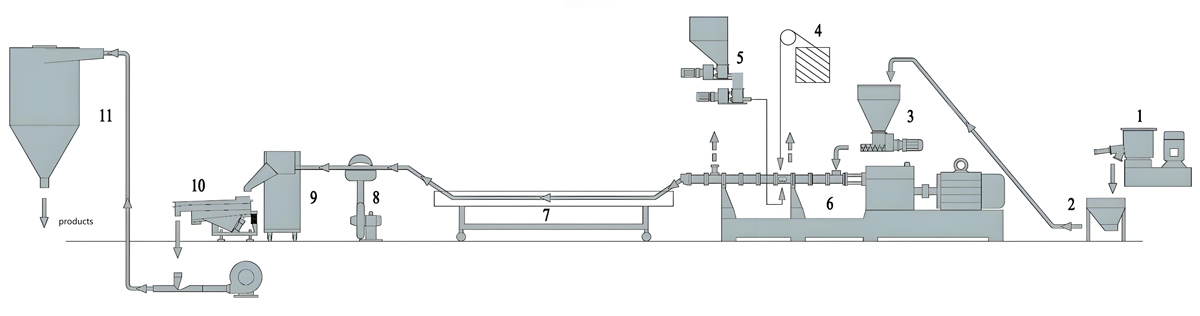
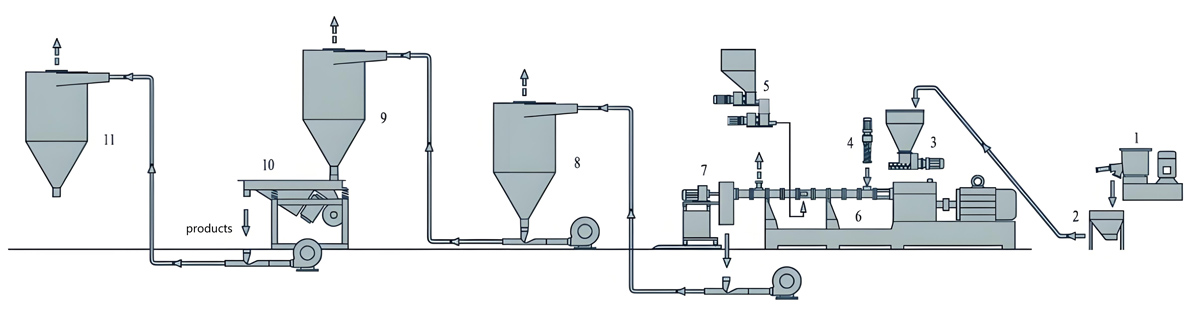
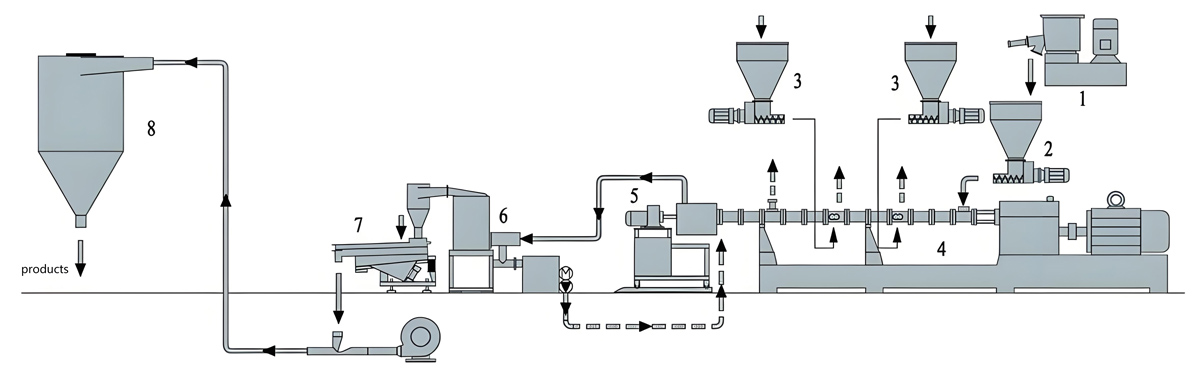
The manufacturing process for PVA masterbatch is distinct due to the material’s thermal instability. First, PVA pellets must be conditioned. Unlike PETG, PVA cannot be dried at high temperatures or it will cross-link. A specialized conditioning system that maintains humidity and temperature around 60-80°C is often used. The conditioned PVA is fed into the integrated twin screw extruder. The “Integrated” aspect implies a loss-in-weight feeder directly mounted on the extruder throat to prevent moisture absorption from the air. Inside the barrel, the material is melted at a relatively low temperature (160°C – 190°C) to avoid degradation. High shear sections are minimized; instead, distributive mixing is prioritized. The melt is filtered and sent to a water-ring pelletizer (underwater pelletizing is preferred for PVA to avoid sticking). The pellets are then packaged in moisture-proof bags immediately.
生産設備紹介
中心となるのはNanjing Kerke KTEシリーズ co-rotating twin screw extruder configured for PVA. The KTE series for PVA features a longer L/D ratio (typically 48:1 or 52:1) to provide sufficient residence time for melting without high shear. The barrel is equipped with high-capacity vacuum vents (often two stages) to remove the water vapor generated as PVA melts. The screws are designed with wide kneading blocks but low compression to prevent pressure build-up that could cause “melt fracture” or gel formation. The integrated control system manages the feeder, extruder speed, and pelletizer cutter speed in unison. If the extruder slows down, the feeder reduces rate automatically to prevent flooding. The gearbox is a high-precision unit designed for smooth operation at low speeds (100-400 rpm) to minimize shear heating.
パラメータ設定
PVAの処理には、温度、速度、真空の微妙なバランスが必要です。
温度プロファイル
PVA melts sharply. The temperature must be kept low. Zone 1: 40°C (to prevent bridging), Zone 2-3: 120°C – 140°C, Zone 4-6: 160°C – 180°C, Zone 7-8: 170°C – 180°C, Die: 175°C. Exceeding 190°C will cause the PVA to degrade and discolor (turn brown/black).
ねじの構成と速度
ねじの回転速度は比較的低く、150〜350rpmの間に保たれます。高い回転速度では摩擦熱が生じ過ぎます。トルクは適度に、50〜60%程度にする必要があります。ねじの要素は、強い90°のブロックではなく、前方の運搬ブロックと穏やかな練りブロック(30°または45°の角度)で構成されるべきです。
真空システム
二段階の真空システムが推奨されます。最初の段階では-0.06 MPaで作動し、表面の水分を除去し、第二の段階では-0.09 MPaで作動して結合水を除去します。真空ポンプは、オイル汚染を防ぐために水蒸気に対する高い容量を備えている必要があります(ガスバラストポンプ)。
機器価格
Nanjing Kerke KTEシリーズ(PVA用途)の参考価格:
- モデル KTE-75 (統合システム): $180,000 – $220,000 USD. Includes loss-in-weight feeders and vacuum system.
- モデル KTE-95 (大容量): $260,000 – $320,000 USD. Designed for high filler loading and 2-stage vacuum.
Note: The “Integrated” option commands a premium due to the synchronized control software and auxiliary integration. Prices are FOB Nanjing.
生産上の問題、解決策、および回避方法
問題: ペレットがくっついてしまう(ブロックになる)
原因分析:PVAは温めると吸湿性があり粘着性があります。ペレットが十分に冷却されていない場合、または表面に残留水がある場合、凝集することがあります。これは、水浴式ペレット化システムで、水の温度が高すぎる場合や乾燥サイクルが不十分な場合にしばしば発生します。
解決策:冷却水の温度を15°C以下に下げ、遠心乾燥機での滞留時間を延長します。水リングペレタイザーを使用する場合は、水の流量が十分であることを確認します。最終用途に許容される場合は、配合物に少量の防結塊剤(タルクやシリカなど)を加えてください。
回避法:水中ペレタイジングシステムと高効率の乾燥機を使用してください。パッケージング前に、ペレットの最終水分含量が1%以下であることを確認してください。すぐにアルミニウムライニングの袋に乾燥剤を入れて包装してください。高湿度の環境でペレットを保管することは避けてください。
問題:ジェルと黒い斑点
原因分析:局所的なせん断または温度が高すぎると、PVAは急速に劣化します。ゲルは、バレル内の停滞した材料やクロスリンクされたPVAによって引き起こされることがよくあります。黒い斑点は、過熱またはスクリューエレメント内の金属対金属摩耗による炭化を示します。
解決策: Reduce barrel temperatures by 10°C across the board. Purge the extruder thoroughly with a low-melting point polymer (like LDPE) to remove degraded material. Inspect screw elements for damage; replace any worn or damaged kneading blocks. Check heater bands for “runaway” heating (stuck in ON position).
回避法:自動拭きの機能を備えたねじ式設計を使用して、停滞領域を防止します。溶融温度センサーをダイヘッドに設置し、溶融温度が190°Cを超えた場合にヒーターを停止する安全ロック機能を実現します。また、バレル上の冷却ファンを定期的にメンテナンスして、熱漏れを防ぎます。
問題:最終マスタバッチの溶解性が低い
原因分析:PVAが押出中に過熱したり、過剰に裂けたりすると、ポリマー鎖の分解や交差結合により、水溶性特性を失うことがあります。また、可塑剤の分散不良により、不溶性の局所領域が生じることも原因となります。
解決策:混合部を最適化します。温度が低い下流部にプラスチファイザーを添加し、揮発化を防ぎます。スクリューの回転速度を低下させ、機械的劣化を最小限に抑えます。完全生産前に、実験室のビーカーで溶解性をテストします。
回避法:反回転または単一スクロージャー機と比較して、優しくしかし効果的な混合を実現する共回転スクロージャーを使用します。PVAと可塑剤を高速ミキサーで混合した後、エクストラーダに供給することで、初期の分散を確保します。バレル内の滞在時間を厳密に管理します。
メンテナンス
PVA processing is demanding on maintenance. Because PVA can corrode steel if wet, the extruder must be cleaned and dried immediately after shutdown. The “purge” procedure is critical: flush with a non-corrosive, moisture-free polymer. The vacuum system requires frequent cleaning of the condensate trap to prevent water from being sucked back into the barrel. Heater bands should be checked weekly for proper contact with the barrel. The screw elements should be inspected for signs of corrosion or wear, especially if filled PVA compounds are run. The gearbox oil should be changed more frequently (every 3 months) due to the potential for moisture ingress.
よくある質問
Q: PVA用に、シングルスクリューよりツインスクリューのエクストラーダが優れているのはなぜですか?
A: A single screw extruder relies on high friction to melt PVA, which causes severe degradation. A twin screw extruder, particularly the co-rotating KTE series, melts PVA through conductive heat and gentle shear, preserving the polymer’s solubility and mechanical properties.
Q: マスターバッチにリサイクルされたPVAを使用できますか?
A: はい、ただし、清掃して再プラスチケ化する必要があります。リサイクルされたPVAには、通常よりも高い水分含量と劣化した特性があります。品質上の問題を回避するために、通常は配合量の10~20%までに制限されます。
Q: PVAマスターバッチ生産における最大の課題は何ですか?
A: 湿度管理が最大の課題です。PVAは空気中の水分をすぐに吸収します。供給から包装までの全プロセスは、周囲の湿度から隔離する必要があり、そうしないと最終製品が曇ったり、べたついたり、もろくなることがあります。
結論
PVAマスターバッチの製造は、熱に敏感で吸湿性の高いポリマーに特化した機器が必要とされる高度なプロセスです。南京Kerke KTEシリーズの統合型ツインスクリュー押出機は、高品質のPVA合成物を生成するために、温度、せん断、真空を必要な精度で制御します。低温処理、効率的な脱溶剤化、厳格な水分管理に重点を置くことで、PVAの内在する困難を克服できます。統合システムへの投資は、生産性の向上、劣化の低減、市場が求める重要な水溶性特性を維持するマスターバッチを通じて、利益をもたらします。