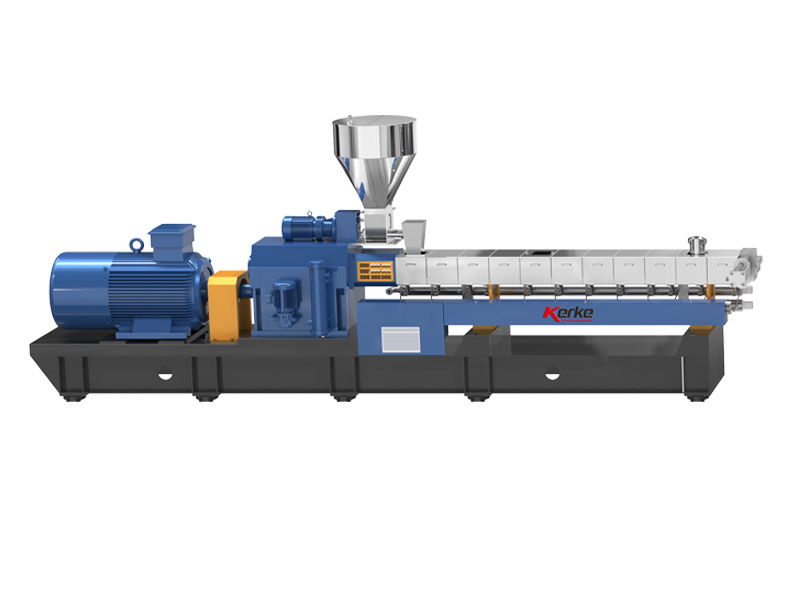
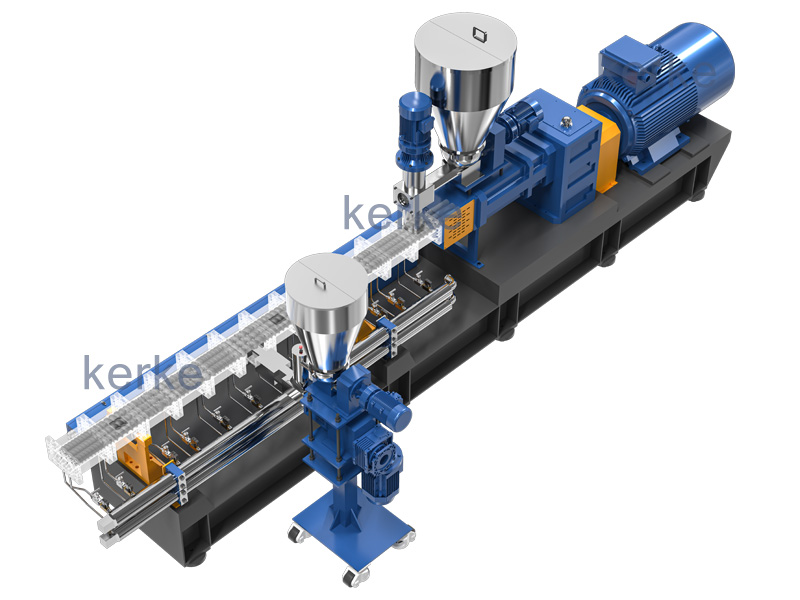
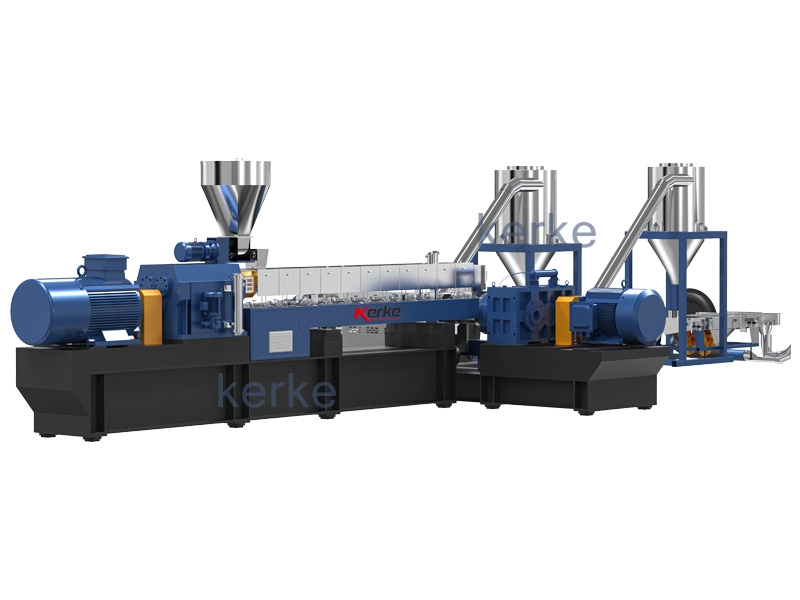
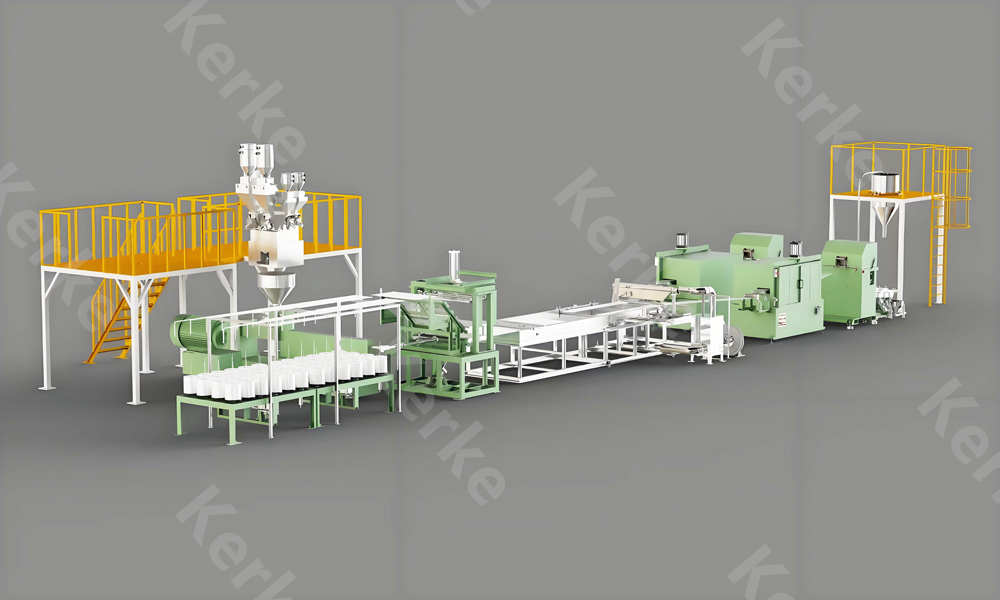
The global push for a circular economy has made plastic recycling a top priority for manufacturers and governments alike. The Compounding Extruder plays a pivotal role in this ecosystem by converting waste plastics—such as post-consumer bottles, industrial scrap, and agricultural films—into high-value compound pellets. Unlike simple pelletizing, compounding allows for the addition of compatibilizers, fillers, and stabilizers to restore or even enhance the properties of recycled plastic. This article explores how twin-screw compounding technology drives sustainability, the technical challenges involved, and the economic benefits of investing in such systems, with a focus on Kerke Extruder’s advanced recycling solutions.
第1章:循環経済における複合化の役割
廃棄物から価値へ:混合プロセス
Recycling is not just about collecting plastic; it is about reintroducing it into the value chain. A Compounding Extruder is essential because recycled plastics are inherently inconsistent. They often come as mixed streams with varying melt flow indices (MFI), contamination, and moisture content. A co-rotating Twin Screw Extruder excels in this environment due to its excellent distributive and dispersive mixing capabilities. The intense shear forces break down agglomerates and homogenize the melt, while the modular screw design allows for the injection of additives—like stabilizers or chain extenders—at precise locations to restore the polymer’s molecular weight and mechanical properties.
コンパウンド化は、低価値の廃棄物をエンジニアリング材料に変換します。たとえば、リサイクルポリプロピレン(rPP)は、機械的特性が劣化していることがよくあります。20%のガラス繊維とチェーンエクステンダーを混合することで、生成されるペレットは、新品のポリプロピレンと同等の性能を発揮し、自動車部品に適しています。このアップサイクリングプロセスは、最新のコンパウンドエクストラーダが提供する正確な制御によってのみ可能です。
第2章:困難なリサイクル原料の処理
汚染と混合ストリームの対処
リサイクルされたプラスチックは加工が非常に困難です。汚れ、ラベル、水分、または互換性のないポリマーが含まれていることがあります。例えば、混合されたポリオレフィン(PPとPE)をリサイクルするには、相互結合性を向上させるためにマレイン酸接合ポリプロピレンのような相溶性改善剤が必要です。適切な混合が行われないと、生成されるブレンドの機械的強度は低くなります。コンパウンドエクストラーダは、相溶性改善剤を効果的に分散させることで安定した合金を作り出す高強度の混合ゾーンを作成することでこれを解決します。
さらに、PVCやPETなどの材料は腐食性ガスを放出するか、高温が必要であるため、エクストラーダは特殊な耐腐食性材料で構築する必要があります。消費者向け廃棄物に含まれるラベル、接着剤、食品残渣は、臭気や揮発性物質を生成します。単一スクロージャのエクストラーダでは、相溶性剤を分散させるために必要なせん断力や、これらの揮発性物質を除去するために必要な真空を生成できません。その結果、臭いが強く、粒の強度が低下します。
水分と水解の課題
Moisture is the enemy of recycling, especially for PET and Nylon. Wet flakes can cause hydrolysis during extrusion, breaking polymer chains and reducing intrinsic viscosity (IV). This results in brittle pellets that are unsuitable for bottle-to-bottle recycling. A Compounding Extruder must be equipped with a robust pre-drying system and a high-efficiency vacuum venting system. The vacuum port must be strategically placed where the material is fully molten to allow trapped steam to escape efficiently. Kerke Extruder’s recycling lines often feature a crystallizer/dryer unit upstream to ensure moisture content is below 50 ppm before the material enters the extruder.
第3章:リサイクルアプリケーション向けのKerkeエクストラーダソリューション
高耐久リサイクリングエクストラーダーの設計
Kerke Extruderは、高汚染度の原料を処理するために設計された高耐久リサイクルラインを専門としています。当社のコンパウンドエクストラーダーには、デュアルステージまたはトリプルステージの脱ガスシステムが搭載されています。最初のステージでは、フィードゾーン付近で水分と軽い揮発性物質を除去し、第二のステージでは、しばしばバックフラッシュ溶融フィルターと組み合わせて、重い揮発性物質、臭気、および残存する水分を除去します。重く印刷されたフィルムやラベル付きボトルの場合、Kerkeはエクストラーダーの上流部に予洗浄および摩擦洗浄システムを統合し、摩耗を軽減します。
Kerke リサイクルエクストラーダーのねじ部品は、耐摩耗性の工具鋼(HIP スチールやバイメタルライナーなど)で作られており、廃棄物流に含まれることが多い鉱物充填剤(例えば、充填袋に含まれる炭酸カルシウム)やガラス繊維の粉砕性に対応します。ねじの設計は、低密度のフレークを処理する高輸送能力と添加剤を分散させる強力な練りブロックを備えています。専用の換気部品は、ポリマーが真空ポートから逃げるのを防ぎ、最大の収率を確保します。
脱ガス・臭気制御システム
食品接触用や屋内用に使用されるリサイクルプラスチックでは、臭いをコントロールすることが非常に重要です。ケルケは、-0.095 MPaを達成できる高効率の真空ポンプを使用しています。この深い真空は、臭いの原因となる揮発性有機化合物(VOC)を除去します。さらに、メルトのサイドストリームを高温に加熱し、複雑な臭い分子を分解する熱脱臭装置も提供しています。この技術により、リサイクルプラスチックは厳しい臭い基準(VDA 270 や ISO 12219 など)を満たすことができます。
濾過とペレタイジング
To ensure purity, a continuous melt filter is non-negotiable. Kerke’s hydraulic screen changers use fine mesh screens (up to 120 mesh) to capture dirt, gels, and unmelted contaminants. For high-quality recycling, a die-face water ring pelletizer is used to cool the pellets immediately, preventing re-agglomeration and ensuring a uniform size. The water is cooled and recirculated in a closed-loop system to minimize water consumption, aligning with sustainability goals.
第4章:経済および環境影響分析
リサイクルラインの資本コスト
リサイクルコンパウンドラインを設置するコストは大きいですが、原料の低コストにより正当化されます。シャレーダー、洗浄タンク、摩擦洗浄機、脱水ユニット、および高トルクのコンパウンドエクストラーダを含む完全なリサイクルラインは、容量(500 kg/h ~ 2000 kg/h)に応じて、150,000 ~ 400,000ドルの範囲に及ぶことがあります。これは大きな投資ですが、新しいポリマー工場を建設するコストのほんの一部です。
運用コストと節約
運用コストには電気、労働力、添加剤が含まれます。しかし、リサイクルされたペレットの製造コストは、原料のポリマーペレットよりも通常30%から50%低くなります。たとえば、原料のPPが1,200ドル/トンの場合、エネルギーと労働力を含むリサイクルされた複合PPを600ドル~800ドル/トンのコストで製造できます。このマージンにより、リサイクル業者は競争力を維持しながら、大量のプラスチックを埋立地から回収できます。さらに、最新のエキストルダーのエネルギー効率の高い設計により、特定エネルギー消費量(SEC)が0.25 kWh/kg以下となり、リサイクリングプロセスの炭素排出量が大幅に削減されます。
投資回収率(ROI)の計算
中規模のリサイクリング工場が、1,000 kg/hの廃プラスチックを24時間毎日300日間(年間7,200トン)処理しているとします。廃プラスチックのコストが300ドル/トンで、処理コスト(エネルギー、労働力、添加剤)が300ドル/トンである場合、総生産コストは600ドル/トンです。リサイクルされた合成物の販売価格が900ドル/トンである場合、粗利は300ドル/トンです。年間粗利は2,160,000ドルです。ケルケの押出ラインへの300,000ドルの初期投資を考慮すると、回収期間は約1.7年です。この迅速な投資回収率により、リサイクリング押出は非常に魅力的なビジネスモデルとなっています。
環境上の利点
Beyond economics, the environmental impact is profound. Recycling one ton of plastic saves approximately 2 tons of CO2 emissions compared to virgin production. It also reduces reliance on fossil fuels. By using a Compounding Extruder to upcycle waste, manufacturers can claim “recycled content” in their products, which is increasingly mandated by regulations (e.g., EU Plastics Tax) and demanded by consumers. Kerke Extruder’s machines are designed to maximize yield (up to 98%), minimizing waste generation within the recycling process itself.
第5章:高度リサイクリング技術
化学的リサイクル支援
機械的リサイクルが標準的な方法である一方で、化学的リサイクル(分子の分解)も登場しています。コンパウンドエクストラーダは、化学的リサイクルの成果物(モノマーまたは油)を添加剤や安定剤と混合し、再ポリマー化または直接使用することで、その役割を果たしています。Kerkeは、これらのプロセスで使用される腐食性の化学物質に耐える専用のねじとバレルを開発しており、当社の機械は次世代のリサイクリング技術の最先端に位置付けられています。
AI と並べ替えの統合
Modern recycling lines are integrating AI-driven optical sorters upstream of the extruder. These sorters remove specific polymers (e.g., PET from PVC) and contaminants (e.g., black plastics). The Compounding Extruder must be flexible to handle the varying feedstock quality resulting from different sorting efficiencies. Kerke’s control systems can adjust screw speed and temperature automatically based on feedback from online sensors monitoring melt viscosity and color, ensuring consistent output quality despite feedstock variations.
第6章:材料別のリサイクルの課題
rPET(リサイクルポリエチレンテレフタラート)
rPET is widely used for bottles. The main challenge is maintaining Intrinsic Viscosity (IV). High IV is needed for blow molding. The Compounding Extruder must operate at low temperatures to prevent thermal degradation. Solid-state polycondensation (SSP) is often used downstream, but the extruder’s role is to filter out contaminants and mix in stabilizers. Kerke offers screws with low-compression ratios to minimize shear heat, preserving IV.
rHDPE と rLDPE (リサイクルポリオレフィン)
These materials are easier to process but suffer from odor and gels. High-efficiency degassing is key. For film recycling, the feed system often includes a compactor to densify the fluffy film, improving feeding efficiency. The extruder must have high torque to handle the uneven feed rate from the compactor. Kerke’s gearboxes are rated for high torque (up to 12 Nm/cm³) to handle these surges without stalling.
rPVC(リサイクルポリビニルクロライド)
rPVCはHClの放出のために困難です。エクストラーダは耐食性合金(ハステロイや高クロム鋼など)で作られなければなりません。スクリューの設計は、HClが蓄積する可能性のある停滞領域を最小限にする必要があります。酸を即座に中和するために、専用の安定化剤注入システムが必要です。Kerkeは、中和剤を溶融体に直接注入するためのガス注入ポートを備えた、PVC専用のエクストラーダを提供しています。
Chapter 7: Future Trends and Kerke’s Commitment
リサイクルにおけるデジタル化
The future of recycling is digital. Kerke Extruder is integrating IoT sensors that track the “digital passport” of the plastic, recording its origin, processing history, and material properties. This traceability is crucial for certified recycled content in automotive and food packaging. Our machines can generate data logs that prove the percentage of recycled content in each batch, aiding customer compliance with regulations.
リサイクルラインにおけるエネルギー効率
さらに炭素排出量を削減するために、Kerke はリサイクルエクストラーダーに熱回収システムを導入しています。モーターとバレルの冷却水から得られる熱を利用して、洗浄水や施設用の熱水を予め加熱します。さらに、すべてのモーターに搭載された可変周波数駆動装置 (VFD) により、必要なときだけエネルギーを使用することができ、アイドル時の電力消費を削減します。これらの機能により、リサイクリングの運用コストが低下し、新品のプラスチックと比べて競争力を高めることができます。
結論
コンパウンドエクストラーダは、持続可能なプラスチックリサイクルの基盤です。廃棄物を貴重な資源に変え、循環型経済を実現し、環境への負荷を軽減します。Kerke Extruder は、最も厳しい原料を扱いながら生産性と品質を最大化する、堅牢で効率的、そして技術的に高度なリサイクリングソリューションを提供します。ビリヤードプラスチックのコスト上昇と、リサイクル原料の使用を義務付ける規制の強化に伴い、高品質のコンパウンドエクストラーダへの投資は、単なる環境への配慮ではなく、健全なビジネス戦略でもあります。Kerke がお客様のリサイクリング目標を支援する方法についての詳細は、www.kerkeextruder.com をご覧ください。