コンパウンディングにおける熱管理の導入
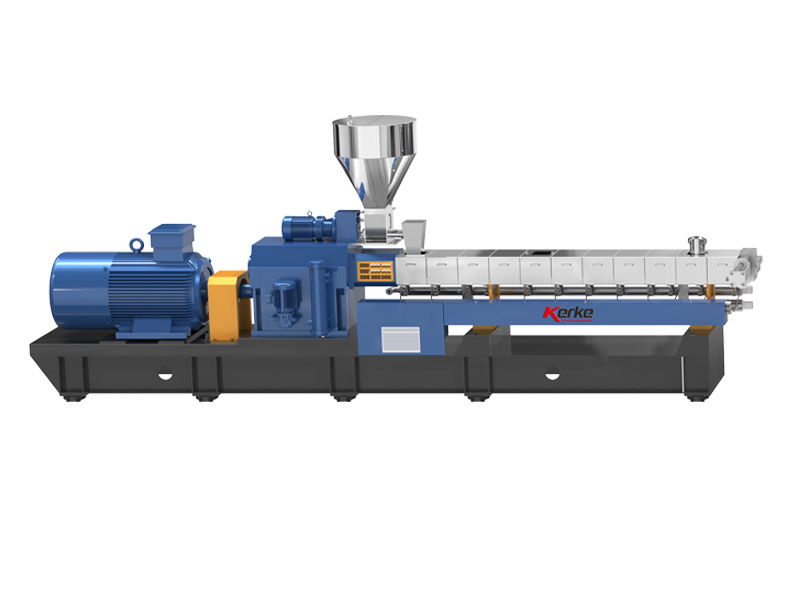
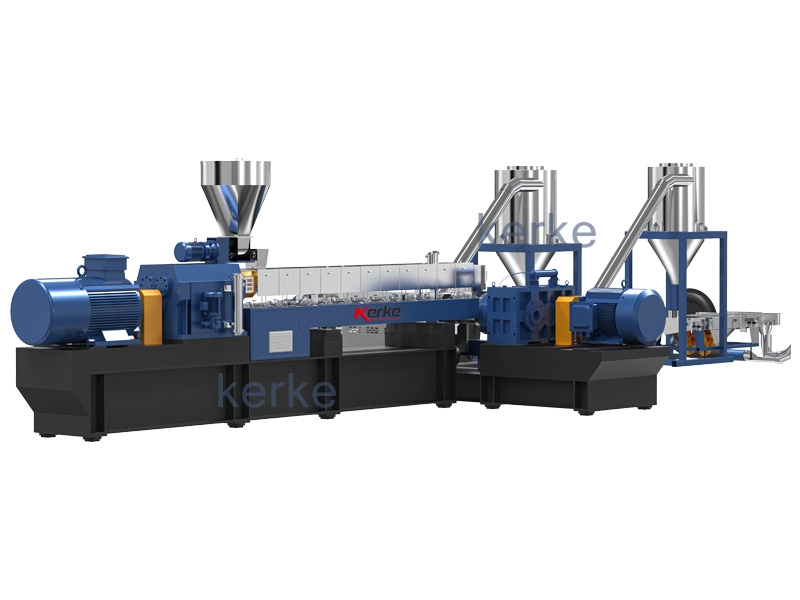
ポリマーコンパウンディングの世界において、温度は単なる変数ではなく、最終製品の品質を決定する重要なプロセスパラメータである。特に双螺杆モデルのコンパウンディング押出機は、機械的せん断(粘性散逸)を通じて膨大な熱を発生させる。この熱が精密に管理されないと、ポリマー劣化、混合不揃い、および製品欠陥を招く可能性がある。逆に、熱が不十分だと溶融不良、高トルク、およびモーター過負荷を引き起こす。本記事は双螺杆押出機の温度制御のメカニズムを掘り下げ、高品質コンパウンディングに精密な熱管理が不可欠である理由を説明し、Kerke Extruder機械で使用される高度システムを強調する。
双螺杆押出機における熱発生の物理学
熱がどのように発生するかを理解することは、それを制御する第一歩である。同方向回転双螺杆押出機では、熱は2つの源から来る:外部バレルヒーターと内部せん断加熱。外部ヒーターは主に始動時に冷たいポリマーを融点まで持ち上げるために使用される。プロセスが安定すると、熱の大部分(しばしば70〜90%)は内部せん断から来る。スクリューが回転すると、ポリマーをスクリューエレメントとバレル壁の間の狭いクリアランスを強制通過させる。この機械的仕事は熱エネルギーに変換される。せん断熱の量はスクリュー速度、溶融物の粘度、およびニーディングブロックの構成に依存する。強烈なニーディング要素は搬送要素よりも多くの熱を生成する。したがって、温度制御はスクリュー速度と供給速度の変化に動的に調整されなければならない。
不適切な温度制御の帰結
When temperature control fails, several quality issues arise. The most common is thermal degradation. If the melt temperature exceeds the polymer’s degradation threshold, the molecular chains break, leading to discoloration (yellowing), gel formation, and a loss of mechanical properties in the final product. This is particularly critical for heat-sensitive materials like PVC or bio-polymers. Another issue is “surging” or pressure instability. If the material is not fully melted, it acts as a solid plug, causing torque spikes. Conversely, if the material is too hot, viscosity drops, pressure decreases, and mixing efficiency suffers. Inconsistent temperature along the barrel length can also cause venting problems in devolatilization zones, where moisture or volatiles fail to escape because the melt seal is too cold or too hot.
ゾーン分割加熱および冷却システム
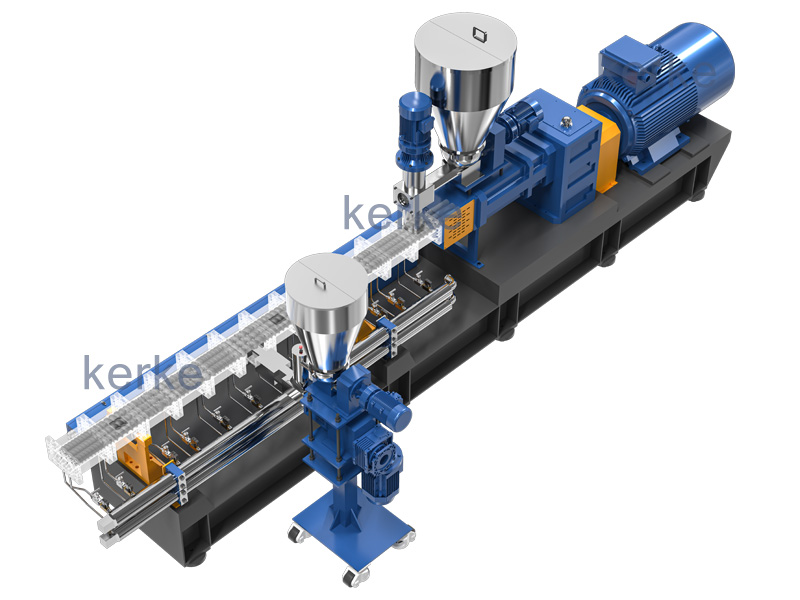
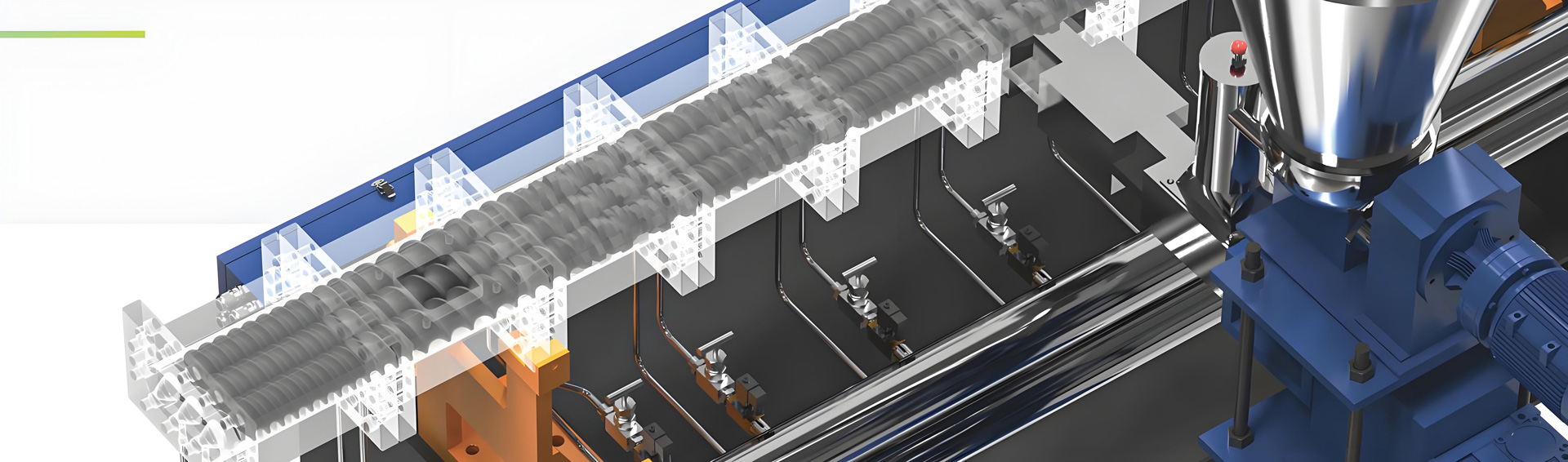
現代のコンパウンディング押出機は多ゾーン温度制御システムを利用する。バレルはいくつかの独立した加熱および冷却ゾーン(標準機で通常4〜8ゾーン)に分割される。各ゾーンは専用熱電対およびPIDコントローラによって制御される。これにより精密な温度プロファイルが可能となる。例えば、供給ゾーンは架橋を防ぐため冷却され、混合ゾーンは分散を促進するため加熱され、計量ゾーンはダイの圧力を構築するためわずかに冷却される。Kerke Extruder機械は、優れた熱接触と迅速な応答のため高精度鋳込みアルミニウムヒーターを備えている。冷却は通常バレル周りのジャケット内の水または油の循環によって達成される。冷却システムの効率は、押出機を生産速度までランプアップできる速さを決定する。
冷却供給スロートの役割
The feed throat is a critical area for temperature control. If the heat from the barrel travels upstream to the feed throat, it can cause the pellets to stick together (bridging) or the additives to melt prematurely, blocking the feeder. This is known as “feed throat freezing” or “bridging.” To combat this, high-performance extruders use a cooled feed throat. Kerke designs feed throats with water-cooled jackets or liquid nitrogen cooling systems. By keeping the feed zone temperature low (e.g., 30-50 degrees Celsius for nylon), we ensure the material remains in solid granular form, allowing for consistent gravimetric feeding and preventing torque instability. This is a hallmark of a quality compounding extruder.
溶融温度の測定と制御
Measuring the barrel wall temperature is not enough; the actual melt temperature inside the screws is what matters. Advanced extruders are equipped with melt pressure transducers that also measure melt temperature. This data is fed back to the control system to adjust the heaters dynamically. If the melt temperature rises due to increased screw speed, the cooling system intensifies automatically. This closed-loop control is vital for maintaining product consistency. Kerke’s control systems integrate these sensors, allowing operators to set a target melt temperature and let the PLC manage the heater bands and cooling pumps to maintain that setpoint within +/- 1 degree Celsius.
温度均一性と混合品質
バレル断面にわたる温度均一性は極めて重要である。バレルの一方が他方より熱いと、ポリマーは異なる粘度を持ち、不均一なせん断分布と不良混合を招く。これによりマスターバッチに筋や未混合の塊が生じる可能性がある。高品質な機械は、バレルの精密加工とヒーターの均一配置により熱対称性を確保する。さらに、スクリュー設計は熱伝達を促進すべきである。同方向回転双スクリューでは、噛合い作用がバレル壁に対する溶融フィルムを絶えず更新し、熱伝達効率を高める。この自己拭い作用は、温度感受性コンパウンディングにおいて、材料が制御されたバレル温度に均一に曝されることを確保し、それが双螺杆押出機を単螺杆や異方向回転より優秀にする理由である。
熱安定性および滞留時間分布(RTD)
Residence time distribution (RTD) refers to how long different particles of material stay inside the extruder. Narrow RTD is desirable for consistent processing. Temperature control affects RTD because hot spots can cause material to degrade and linger, while cold spots can cause solid material to move slower. By maintaining a stable thermal profile, the viscosity of the melt remains consistent, leading to a plug-flow behavior which is ideal for compounding. Kerke’s modular screw design allows engineers to optimize the residence time by adjusting the length of conveying and kneading sections, ensuring that the material experiences the target temperature for exactly the right amount of time to achieve dispersion without degradation.
反応押出の特別考慮事項
化学反応が発生する反応コンパウンディング(例:無水マレイン酸のポリプロピレンへのグラフト)では、温度制御はさらに重要である。反応速度は温度に指数依存する(アレニウス方程式)。わずか5度の偏差で反応速度が倍増したり完全に停止したりする。さらに、これらの反応はしばしば発熱性(熱を放出)である。冷却システムはこの反応熱を除去するのに十分強力でなければならず、熱暴走を防ぐ。Kerke押出機の反応押出向け設計は、これらの発熱ピークを処理するため大型冷却システムと高度に応答性の高い制御アルゴリズムを備え、ポリマー主鎖を劣化させることなく所望の転化率まで反応が進むことを確保する。
温度制御によるエネルギー効率
効率的な温度制御もエネルギーを節約する。バレルを過熱しすぎると、その熱を除去するために後でより多くの冷却水和エネルギーを要する。現代のシステムは断熱ヒーターバンドを使用して環境への熱損失を最小化する。Kerke機械はまた、バレル冷却水から除去された熱を供給材料の予熱や他の工場プロセスに使用する熱回収システムを利用する。熱バランスを最適化することで、比エネルギー消費(kW/kg)が全体として減少し、コンパウンディングラインの運転コストが低下する。
一般的な温度問題のトラブルシューティング
オペレータは始動時の温度オーバーシュートや生産中の変動等の問題にしばしば直面する。オーバーシュートは、即時全電力ではなくランプアップ加熱プロファイルを使用することで緩和できる。変動はしばしば摩耗した熱電対や不良な熱接触によって引き起こされる。温度センサの定期保守およびバレル表面の清掃が不可欠である。Kerkeは、温度ゾーンが不安定に挙動している場合にオペレータに警告し、品質問題が発生する前に予測保全を可能にする診断ツールを制御ソフトウェアに提供する。
結論
温度制御はコンパウンディング押出の品質を導く目に見えない手である。それは溶融粘度、混合効率、色安定性、および分子量保持のすべてに影響を及ぼす。高品質な双螺杆押出機は、そのトルクだけでなく、熱管理システムの精密さと応答性によって定義される。Kerke Extruderは高度な加熱、冷却、および制御技術を統合し、コンパウンディングプロセスが安定、効率、および高規格材料の生産能力を維持することを確保する。優れた温度制御を持つ機械への投資は、製品品質とプロセス信頼性への投資である。