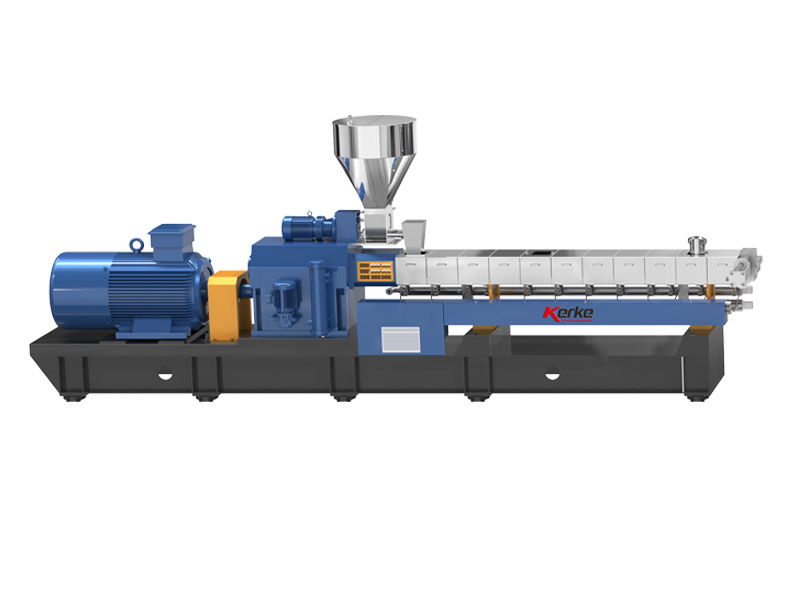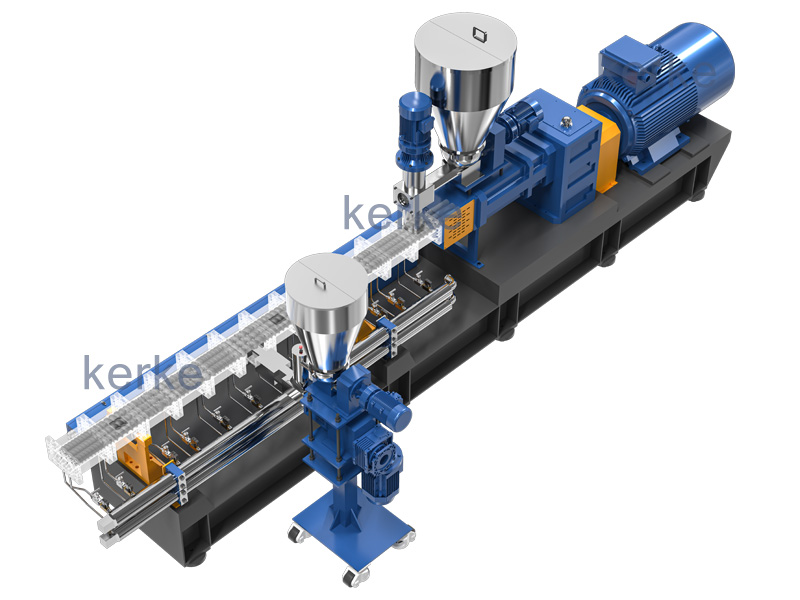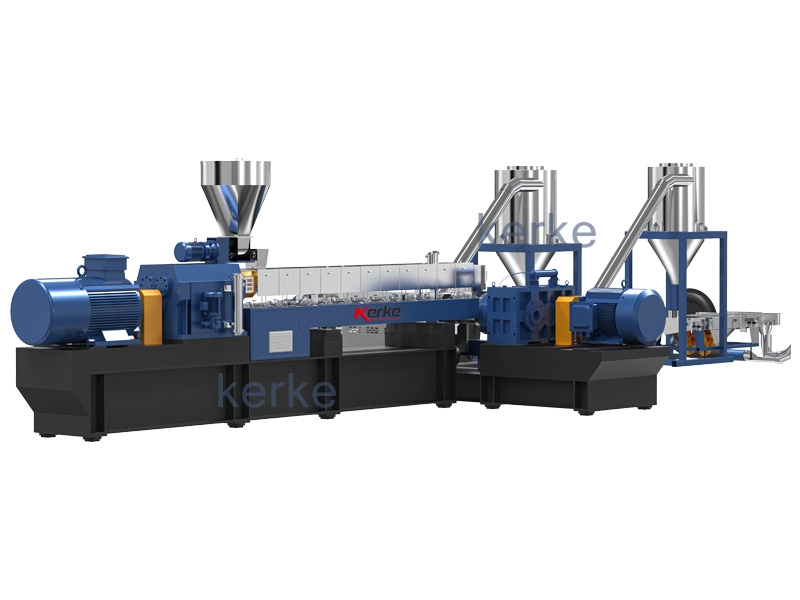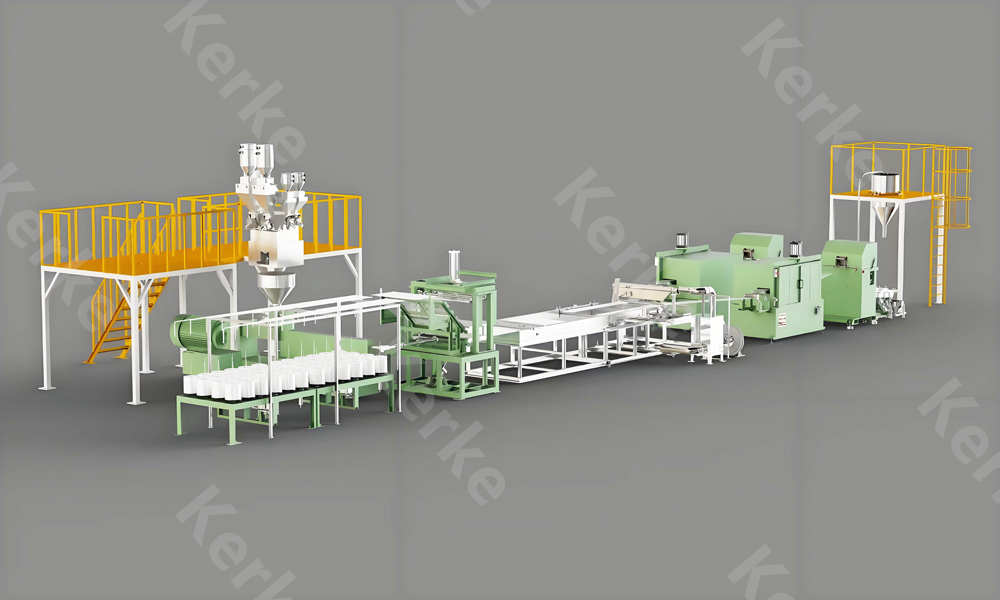
現代のプラスチック産業には汎用性が求められます。メーカーは単一の作業を行う機械に満足していません。混合、反応、脱揮、さらには重合までも——すべてを1パスで行える設備が必要です。共回転双螺杆押出機は、この多機能な役割に特有の適性を持っています。そのモジュラー設計により、反応器、混合機、およびポンプとして同時に機能できます。本記事では、双螺杆押出機が複雑な多機能コンパウンディングプロセスをどのように支えているかを掘り下げ、この汎用性の背後にある技術と、Kerke Extruderがこの柔軟性を活用して高付加価値用途向けの包括的なソリューションを提供する方法を紹介します。
双螺杆押出機のモジュラーな優位性
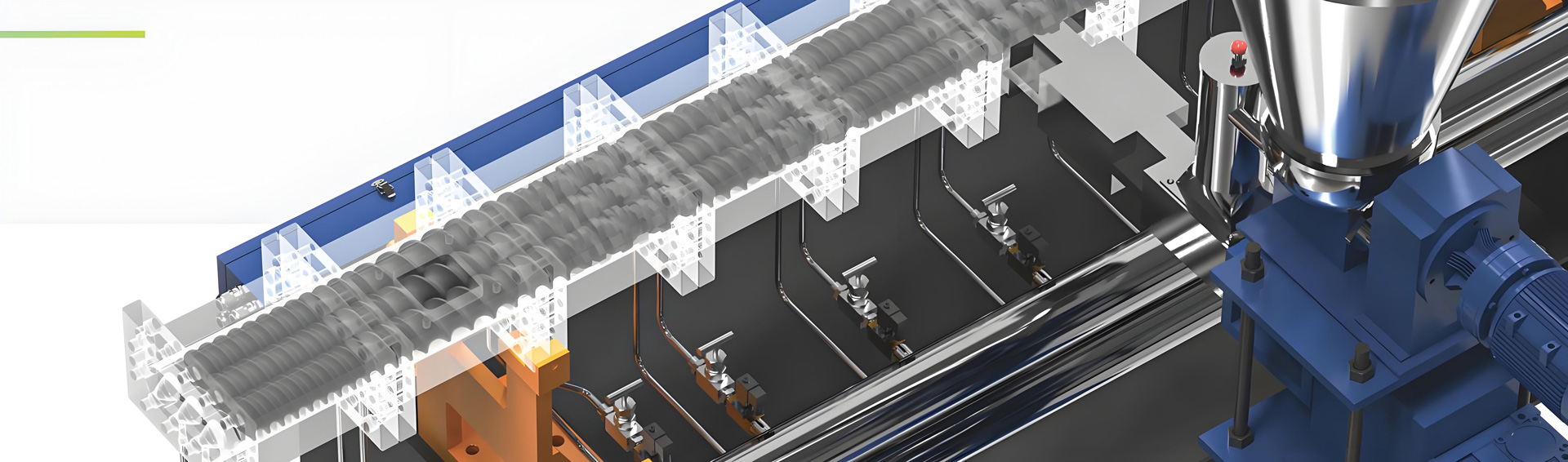
Unlike single screw extruders, which are limited by their drag flow mechanism, twin screw extruders use positive displacement. The screws are composed of individual elements (flights, kneading blocks, mixing heads, reverse elements) mounted on a splined shaft. This means you can customize the screw configuration for a specific process. For multi-functional compounding, this is critical. You can have a conveying section, followed by a melting section, a reaction zone, a venting port, and a metering section—all on the same shaft. This “process-in-a-barrel” capability allows a single machine to replace a batch reactor and a mixer, saving space, labor, and energy. The ability to change screw elements without changing the entire machine makes the twin screw extruder a “Swiss Army Knife” of polymer processing.
主な多機能能力
1. 反応押出(その場重合およびグラフト化)
反応押出とは、溶融相での化学反応を伴うプロセスです。一般的な例には、多層フィルムや複合材料の接着性を向上させるためのポリプロピレンへの無水マレイン酸のグラフト化(PP-g-MA)、またはジイソシアネートとジオールを反応させることによる熱可塑性ポリウレタン(TPU)の合成が含まれます。双螺杆押出機は、優れた熱伝達、反応物の迅速な混合、および真空ベントによる副生成物(水やメタノールなど)の効率的な除去を提供するため、理想的な反応器です。高い表面積・体積更新率により、触媒とモノマーが密接に混合されることが保証されます。Kerkeは、酸性触媒を処理するための耐食性バレル(多くの場合バイメタルまたはステンレス鋼316Lライナーを使用)や、溶融物に開始剤を直接添加するための精密な液体注入ポートを備えた押出機を提供しています。スクリュー設計には、副反応なしに反応を完結させるための滞留時間分布(RTD)を制御するニーディングブロックが含まれています。これにより、熱伝達の制限によりバッチ反応器では製造できない特殊ポリマーを生産できます。
2. 脱揮およびストリッピング:不要物の除去
これまでの記事で述べたように、真空ベントはコア機能です。多機能の文脈では、これにより押出機はストリッパーとして機能できます。例えば、PETボトルのリサイクルにおいて、押出機はフレークを溶融させ、臭気と脆化の原因となる水分、アセトアルデヒド、およびその他の揮発性成分をストリップします。これはインラインで行われ、乾燥・脱ガスされた溶融物はペレット化に直接送られます。これにより、従来のリサイクルラインで大きなエネルギー消費者である別個の予備乾燥ホッパ(PETの乾燥には160°Cで4〜6時間を要する)が不要になります。双螺杆押出機はこれを2〜3分で実行できます。ストリッピング効率は、真空レベル、溶融温度、およびベントスクリュー要素によって生成される表面積に依存します。多段ベントにより、PBTやナイロンなどのエンジニアリングプラスチックに不可欠な50 ppm未満の水分レベルを達成できます。
3. エラストマーおよびTPV(熱可塑性架橋物)の反応コンパウンディング
Thermoplastic Vulcanizates (TPV) are a blend of a rubber phase and a thermoplastic phase, where the rubber is cross-linked (vulcanized) dynamically. This requires precise control of temperature and shear to cross-link the rubber without degrading the thermoplastic. Twin screw extruders achieve this by controlling the residence time distribution. The mixing intensity can be adjusted to disperse the curatives and maintain the temperature in the narrow window required for vulcanization. Kerke’s TSE series is widely used for TPV production (e.g., Santoprene alternatives), demonstrating the machine’s ability to handle complex rheological changes during processing. The screws are designed with specific shear zones to break down the rubber particles to the right size before cross-linking, ensuring a fine morphology that gives TPV its rubber-like elasticity and thermoplastic processability.
4. 反応ブレンドと相溶化
When blending immiscible polymers (like PP and Nylon, or ABS and PC), the result is often a weak, phase-separated material. By adding a compatibilizer (often a reactive graft copolymer) in the extruder, the interface between the two phases can be strengthened. The twin screw extruder provides the shear needed to create a fine morphology (micro- or nano-dispersion) and the residence time for the compatibilizer to react at the interface. This in-situ compatibilization transforms waste blends into high-value engineering alloys. For example, recycling multi-layer films (PE/PA/EVOH) is difficult because the layers don’t mix. A reactive extruder with a compatibilizer can create a usable blend with good mechanical properties, opening up new recycling streams. This is a high-value application that commands premium pricing.
5. LFT(長繊維熱可塑性プラスチック)の直接コンパウンディング
長繊維熱可塑性プラスチック(LFT)は、金属に代わるものとして自動車分野でますます使用されています。LFTの製造には、長いガラス繊維(12〜25mm)を熱可塑性溶融物に含浸させることが必要です。これは、繊維が破断することなく濡らされる必要があるため困難です。特殊な低せん断スクリュー要素とロービング用サイドスタッフィングフィーダーを備えた双螺杆押出機が使用されます。押出機は粘性のあるコンパウンドを処理するための高トルクを備えている必要があります。Kerkeは、繊維が溶融物に直接供給され、コーティングされ、その後ペレット化されるか、または射出成形機に直接供給される(インラインコンパウンディング)LFTラインを提供しています。これにより、別個のペレット化工程が不要になり、エネルギーを節約し、繊維長の低下を低減します。
プロセス集約化:少ない資源でより多くを実現
Multi-functional extrusion is a form of “process intensification.” Instead of using a separate mixer, a batch reactor, and a devolatilizer, one extruder does it all. This reduces the “hold-up volume” (the amount of material in the system at any time). Lower hold-up means faster recipe changes and less material degradation. For high-value specialty polymers, this is crucial. A traditional batch process might take 4-6 hours for a reactive compound. A twin screw extruder can do it in 2-3 minutes. This massive increase in throughput per unit volume is a key economic driver. It allows manufacturers to be agile, switching between products quickly to meet market demand. The space savings are also significant; a single extruder line might replace three separate machines, freeing up floor space for other production.
多機能操業向け制御システム
Running a multi-functional extruder requires sophisticated control. The operator must manage multiple zones of temperature, screw speed, feeder rates, vacuum pressure, and liquid injection rates simultaneously. Kerke Extruder employs advanced PLC/HMI systems with recipe management. The system can store hundreds of recipes. More importantly, it features “cascade control.” For example, if the melt temperature rises, the system can automatically increase the feed rate (to absorb heat) or increase barrel cooling, rather than just slowing down the screws. This maintains production rate while protecting the material. Some systems also include torque monitoring to detect gelation or cross-linking spikes in real-time, adjusting the screw speed to prevent motor overload. Data logging and remote access allow process engineers to optimize the process from their office, reducing the need for on-site trial and error.
多機能押出機のコストと価値
A multi-functional twin screw compounding extruder is a premium asset. The price reflects the complexity. A standard compounding line might cost $200,000. A line configured for reactive extrusion with multiple injection ports, corrosion-resistant alloys, and advanced vacuum systems can cost $400,000 to $600,000. The price premium is roughly 50-100% over a standard mixing extruder. However, the value proposition is strong. Consider a company needing to produce a compatibilized alloy. The traditional method involves mixing in a high-speed mixer, then reacting in a batch reactor, then extruding. This requires three pieces of equipment and significant labor. A twin screw extruder does it in one pass. The labor savings alone can justify the premium. Furthermore, the quality is often superior because the reaction is better controlled in the continuous melt phase than in a viscous batch. The ability to produce “one-step” compounds opens up new product lines (e.g., reactive adhesives, specialty TPEs) that command higher margins.
コスト内訳の例:
– Base Extruder (200mm): $250,000
– Reactive Kit (Corrosion resistant barrels, extra injection ports): $50,000
– Vacuum System (Double stage with condensers): $40,000
– Control System Upgrade (Advanced PLC, Recipe Management): $30,000
– Auxiliaries (LFT feeder, underwater pelletizer): $80,000
合計:450,000ドル
ROI分析:新ラインにより、2.50ドル/kgではなく4.00ドル/kgで販売されるコンパウンドを生産でき、生産量が500 kg/hrの場合、増分収益は750ドル/hrになります。8,000時間では6,000,000ドルになります。機械コストは2ヶ月未満で回収されます。プレミアムが1.00ドル/kgだけであっても、ROIは依然として6ヶ月未満です。機械を変更することなく標準コンパウンディングと反応処理を切り替える柔軟性は、多大な運用上の優位性です。
多機能ラインのメンテナンス
これらの機械はより過酷に作動し、腐食性の化学物質を扱うため、メンテナンスが重要です。耐食性ライナーは孔食について点検する必要があります。液体注入ラインは詰まりを防ぐために毎日フラッシュする必要があります。反応ゾーンのスクリュー要素は、研磨性フィラーや化学攻撃による高い摩耗を経験する可能性があります。Kerkeは、これらのゾーンに高クロムまたはステライトコーティング要素の使用を推奨しています。特殊な反応スクリューの交換コストは高くなる可能性があります(15,000ドル以上)が、反応プロセスにとって必要なメンテナンス項目です。予測保全プログラム(振動解析、油チェック)の導入は、この投資を保護するために不可欠です。制御システムソフトウェアは、セキュリティの脆弱性を修正し新機能を追加するために定期的に更新する必要があります。Kerkeは、スクリュー、バレル、および制御システムの完全な点検を含む年次メンテナンス契約を提供しており、ピーク性能を確保しダウンタイムを最小限に抑えます。
用途例:汎用性の力
1. バイオプラスチックコンパウンディング:双螺杆押出機は、PLAを可塑剤および核剤とコンパウンドして耐熱性を向上させると同時に、バイオポリマーから水分を脱揮します。結果は、ホットフィル用途に耐えられる高性能バイオプラスチックです。
2. ケーブルコンパウンド:PVCまたはTPEケーブルコンパウンドには、PVC樹脂、可塑剤(DOTP/DINP)、安定剤、およびフィラーの混合が必要です。押出機は高粘度とせん断感受性の安定剤を処理できなければなりません。多機能スクリューは、安定剤が高せん断ゾーンに達する前に分散され、劣化を防ぐことを確保します。真空システムは安定剤から水分を除去し、設備の腐食を防ぎます。
3. 高速紡糸用マスターバッチ:繊維用途の場合、マスターバッチは極めて低いゲル含有量と完全な分散を持つ必要があります。押出機は(メルトポンプおよびスクリーンパックを介した)微細フィルターおよび混合機として機能し、紡糸前にポリマーが清浄で均質であることを確保します。これにより、高速紡糸ラインでコストのかかる繊維切れを防ぎます。
4. 多層フィルムのリサイクル:相溶化剤を備えた反応押出機を使用して、多層廃フィルム(PE/PA/EVOH)が単相アロイに変換されます。この材料は射出成形または押出に使用でき、廃棄物を埋立地から迂回させ、循環経済製品を作成します。リサイクルコンパウンドの価値は廃棄コストよりも大幅に高くなります。
結論
双螺杆押出機はポリマー加工業界における究極の多機能ツールです。混合、反応、脱揮、およびポンプ機能を単一の連続プロセスに統合するその能力は、比類のない効率と製品品質を提供します。反応性ポリマー、リサイクルアロイ、または高性能コンパウンドで革新しようとする企業にとって、Kerke Extruderのような専門メーカーからの多機能双螺杆押出機への投資は戦略的な動きです。初期コストは単機能設備よりも高いですが、単一ラインで幅広い製品を生産する柔軟性は、変化の激しい市場において重要な競争優位を提供します。コンパウンディングの将来は連続的、反応的、および汎用的——そして双螺杆押出機がその先頭に立っています。Kerkeを選ぶことは、単に機械を購入するのではなく、将来の革新と収益性のためのプラットフォームへの投資です。多大な資本支出なしに新しい材料とプロセスに適応できる能力は、真に現代的な押出ラインの特徴です。