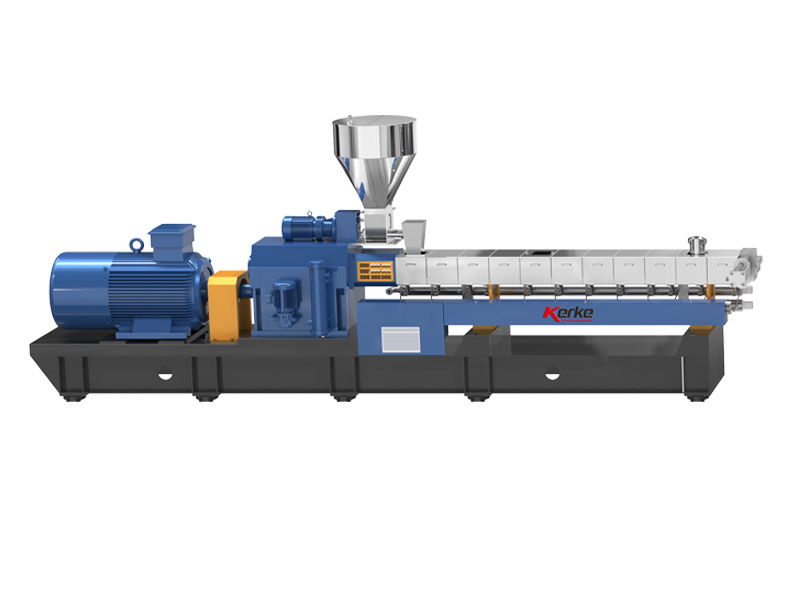
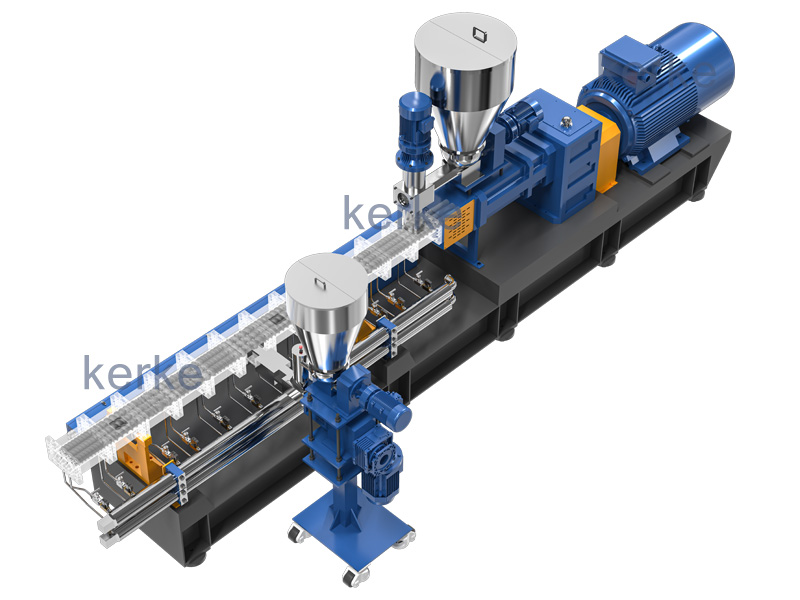
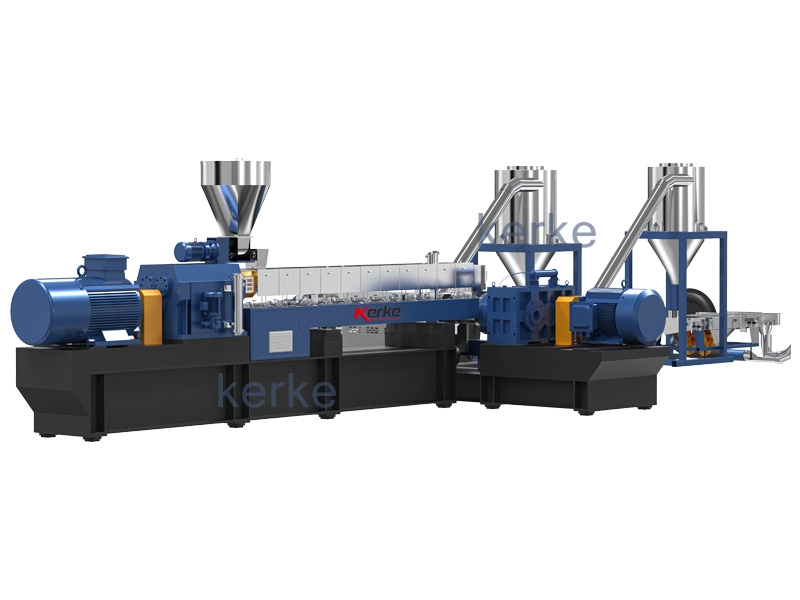
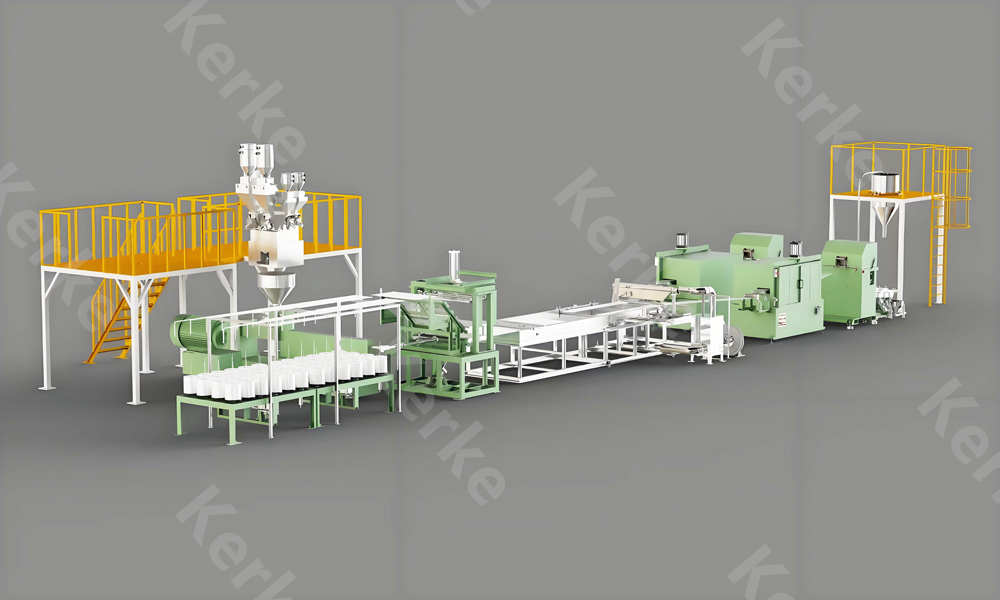
競争の激しいプラスチック産業では、材料コストは総生産コストの70〜80%を占めることが多いです。材料利用率がわずか1%向上しても、年間で数十万ドルに上る大幅な節約につながる可能性があります。マスターバッチ押出機は、色合わせだけでなく、原材料使用の効率を最大化するために設計された特殊な機械です。正確なコンパウンディング、連続処理、およびリグリンド(再生粉)の処理能力を通じて、Kerke Extruder(カーケ押出機)のような現代のマスターバッチ押出機は、廃棄を削減し、収益性を改善する上で極めて重要です。本記事では、これらの機械がプロセス制御、リサイクル統合の技術的詳細、および包括的なコストベネフィット分析を含め、材料利用率を最適化するメカニズムを探ります。
押出における材料利用率の概念
材料利用率は、良品出力と総材料投入の比率です。損失はいくつかの形で発生します。立ち上げ時の廃棄、規格外製品、スプルー/ランナー(射出成形の場合)、およびプロセス廃棄(粉塵、劣化材料)です。マスターバッチ押出機は主にプロセス廃棄の削減とコンパウンディング配合自体の最適化を目指します。顔料や添加剤の高度に濃縮された分散を作成することで、最終加工業者(例:フィルム吹込機や射出成形機)が全体的に添加剤を少なく使用できるようになり、これは化学的利用率の最適化の一形態です。しかし、本記事は押出プロセス自体の物理的利用率——投入された原材料からどれだけ多くの良品ペレットを得るか——に焦点を当てます。
精密ドージングと供給システム:効率の基盤
高い利用率の基盤は正確性です。従来のバッチ混合や単純な単螺杆押出は、投与誤差に悩まされることが多いです。顔料を多すぎるほど添加すると、バッチは規格外となり、廃棄するか、または低品質製品(グレードダウン)で使用しなければなりません。少なすぎる場合は、再押出する必要があります。どちらのシナリオも材料とエネルギーを無駄にします。現代のマスターバッチ押出機、特に双螺杆モデルは、重量減少(LIW)重力式フィーダーを使用します。これらのシステムは、キャリア樹脂、顔料、および添加剤の供給速度を±0.1%以内に制御します。この精度により、出力される1kgごとが正確な配合仕様を満たすことが確保されます。
重力ブレンド技術
Kerke Extruder integrates these feeders with the extruder’s control system, allowing for real-time adjustments. If the bulk density of the pigment changes due to humidity or particle size distribution, the feeder automatically adjusts the screw speed to maintain the correct mass flow. This eliminates “giveaway” (adding extra expensive pigment to be safe) and reduces off-spec material to near zero. For a line running 1000 kg/hr, reducing giveaway by 1% saves 10 kg/hr of pigment. If the pigment costs $10/kg, that is a $100/hr saving, or $800,000/year (8000 hours). This alone can justify the cost of the gravimetric system.
液体添加剤注入:廃棄ゼロ
液体着色剤、可塑剤、またはカップリング剤には、精密ギアポンプが使用されます。手注ぎによるこぼれや不均一な混合とは異なり、ギアポンプは溶融物に正確なマイクロリットル量を直接供給します。これにより、高価な液体添加剤の100%が製品に利用され、廃棄はゼロになります。ギアポンプの正の排除(positive displacement)性質はすべりがないことを意味し、低流量でも精度を確保します。これは非常に低濃度(例:0.1%の酸化防止剤)で効果的な添加剤にとって重要です。
連続処理とバッチ処理:効率のギャップ
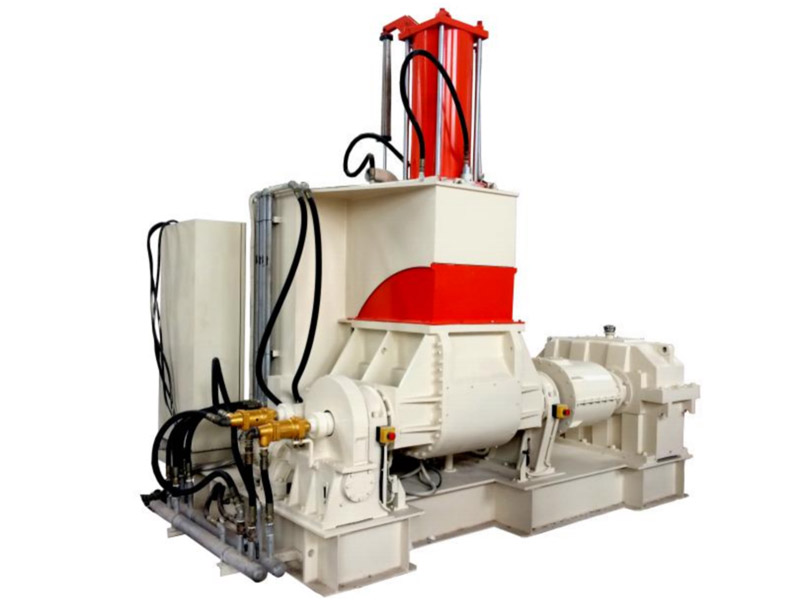
Older methods of producing masterbatches often involved batch mixers (Banbury) or kneaders. These processes have significant start-up and shut-down losses. Cleaning the mixer between color changes can result in 50-100 kg of waste. In contrast, a twin screw masterbatch extruder is a continuous process. Once stabilized, it can run for days or weeks with minimal waste. Color changes are faster due to self-cleaning screw designs. Kerke’s screws are designed to minimize hold-up volume, meaning less material is trapped in the barrel during purging. A purging cycle might use only 20-30 kg of transition material compared to 100+ kg in a batch mixer. This dramatically improves the utilization rate for frequent color changeovers (e.g., in custom compounding houses).
リグリンドと再生材料の処理:循環経済
One of the biggest boosts to material utilization is the ability to recycle in-house waste. A masterbatch extruder can be fed with regrind (sprues, edge trim, start-up waste) directly. However, regrind often contains dust, moisture, or inconsistent particle sizes. A robust extruder can handle this variability. The twin screw extruder’s intensive mixing devolatilizes the moisture and homogenizes the melt, allowing high percentages of regrind (up to 30-50% in some cases) to be incorporated without degrading quality. This creates a closed-loop system where waste is immediately turned back into valuable product, effectively achieving near-100% material utilization for the carrier resin. The extruder acts as a “recycling engine,” turning liability (waste) into asset (masterbatch).
エネルギー効率とせん断最適化:劣化の低減
Optimizing shear is key to utilization. Excessive shear generates heat, which can degrade heat-sensitive pigments or carriers, leading to discolored product that must be scrapped. Insufficient shear leads to poor dispersion, causing “specks” or “fish eyes” in the final plastic product, which also results in rejection. Kerke masterbatch extruders use modular screw elements that can be configured to provide “just enough” shear for dispersion without over-processing. This is often called “gentle mixing.” By minimizing degradation, the yield of usable product increases. Furthermore, energy-efficient motors and heaters reduce the carbon footprint and utility costs, which is part of the broader “resource utilization” metric. Efficient melting means less energy per kg of output.
コスト分析:利用率の経済性
Let’s look at a detailed cost scenario. Assume a masterbatch plant processes 1,000 kg/hr of material at a material cost of $2.00/kg (resin + additives). The product sells for $3.50/kg. The plant operates 8,000 hours per year.
シナリオA:標準押出機(体積計量供給、非脱揮)
– Waste/Off-spec rate: 5% (due to inconsistent feeding and moisture)
– Waste cost: 1,000 kg/hr * 5% * 8,000 hr * $2.00/kg = $800,000 per year
– Revenue loss from wasted capacity: 40,000 kg/yr * $3.50/kg = $140,000
– Total Loss: $940,000 per year
シナリオB:Kerke高精度押出機(重力式、脱揮付き、リグリンド対応)
– Waste/Off-spec rate: 1% (due to precision feeding and devolatilization)
– Waste cost: 1,000 kg/hr * 1% * 8,000 hr * $2.00/kg = $160,000 per year
– Regrind utilization: 30% of output is regrind (recycled in-house), saving $480,000 in raw material (1,000 kg/hr * 30% * 8,000 hr * $2.00/kg).
– Total Savings: $940,000 – $160,000 + $480,000 = $1,260,000 per year.
The price difference between a standard extruder and a high-precision Kerke line might be $100,000. The ROI on utilization improvement alone is less than 1 month. Additionally, the ability to run higher pigment concentrations (e.g., 50% TiO2 instead of 40%) means the customer uses less masterbatch to achieve the same color, further optimizing material use at the end-user level. This “down-gauging” effect is a major selling point for masterbatch producers.
利用率最適化のための高度な機能
インライン粘度監視とクローズドループ制御
一部のKerke押出機は、インライン粘度計または溶融圧力センサーを備えています。粘度がドリフトした場合(分子量やフィラー含有量の変化を示す)、システムは規格外材料が生産される前にスクリュー速度または温度を自動的に調整してプロセスを目標に戻すことができます。このリアルタイム品質制御は巨大な利用率ブースターであり、数トンのスクラップの生産を防ぎます。インライン粘度計のコストは約15,000ドルですが、スクラップ削減で年間100,000ドルを節約できる可能性があります。
自動ペレット化同期
The pelletizer must match the extruder output perfectly. If the pelletizer is too slow, strands pile up and break; if too fast, it pulls air into the die. Modern systems use laser scanners or current-monitoring on the pelletizer motor to synchronize speeds automatically, preventing strand breakage and the resulting “fines” (small unusable pellets) that often account for 2-3% of production loss. Kerke’s underwater pelletizing systems are designed to handle surge flows without losing cut quality, further reducing waste.
デジタルツインとプロセスシミュレーション
Kerke offers advanced process control systems that can simulate the extrusion process (a “digital twin”). Before running a new recipe, the system can predict the torque, pressure, and temperature profiles. This allows operators to optimize the screw configuration and process parameters virtually, reducing the number of physical trials (and the waste associated with them) by 50%. This is a cutting-edge feature that significantly improves first-time-right production rates.
事例研究:大量生産工場での廃棄削減
A large masterbatch producer in Europe was struggling with a 4% scrap rate due to moisture in their titanium dioxide pigment. They were using a non-vented extruder. The moisture caused bubbles in the pellets, leading to rejection by their customers (film blowers). They installed a Kerke masterbatch extruder with a double-stage vacuum system. The scrap rate dropped to 0.5%. The energy consumption dropped by 15% due to better melting efficiency. The total savings were calculated at €500,000 per year. The machine paid for itself in 18 months. The plant manager stated, “The vacuum system didn’t just remove moisture; it removed our waste problem.”
結論
The masterbatch extruder is more than a mixing machine; it is a precision instrument for material efficiency. By combining gravimetric feeding, continuous processing, regrind handling capabilities, and advanced process control, modern extruders like those from Kerke can push material utilization rates to 98-99%. In an industry where margins are tight, this efficiency is not just a technical metric—it is a competitive necessity. When evaluating equipment, look beyond the purchase price and calculate the total cost of ownership, factoring in waste reduction and yield improvement. The right extruder will pay for itself many times over through the sheer savings of not throwing material away. For masterbatch producers, the goal is “zero waste,” and modern twin screw technology is the key to achieving it. Kerke Extruder’s focus on precision and efficiency makes them the ideal partner for manufacturers looking to maximize their material utilization and profitability.