コンパウンディングにおけるプロセス最適化の導入
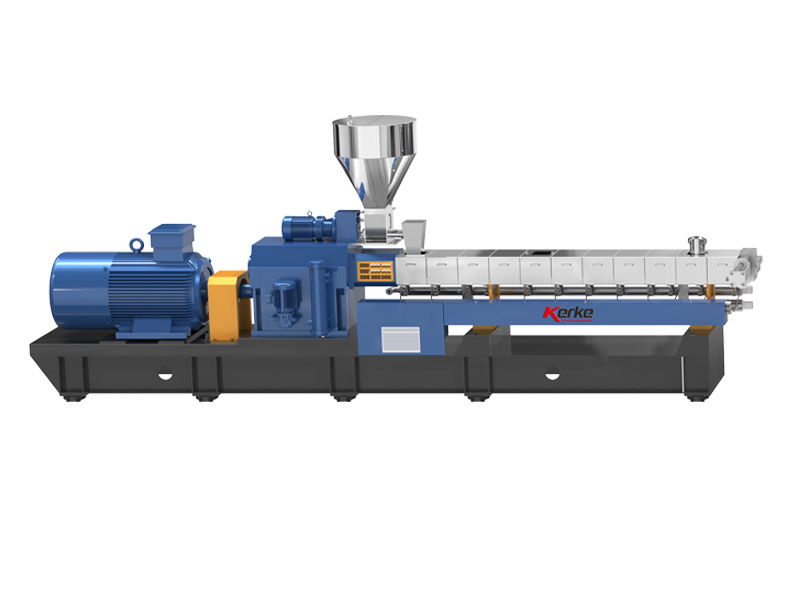
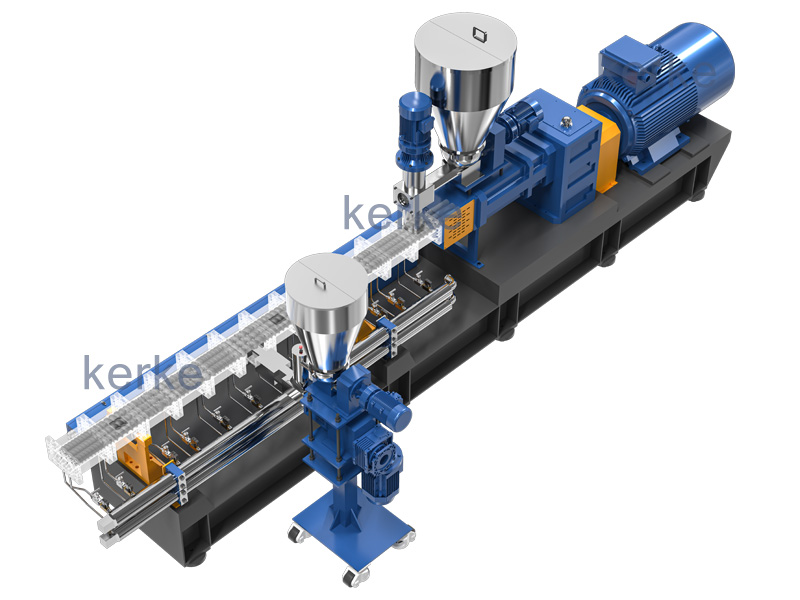
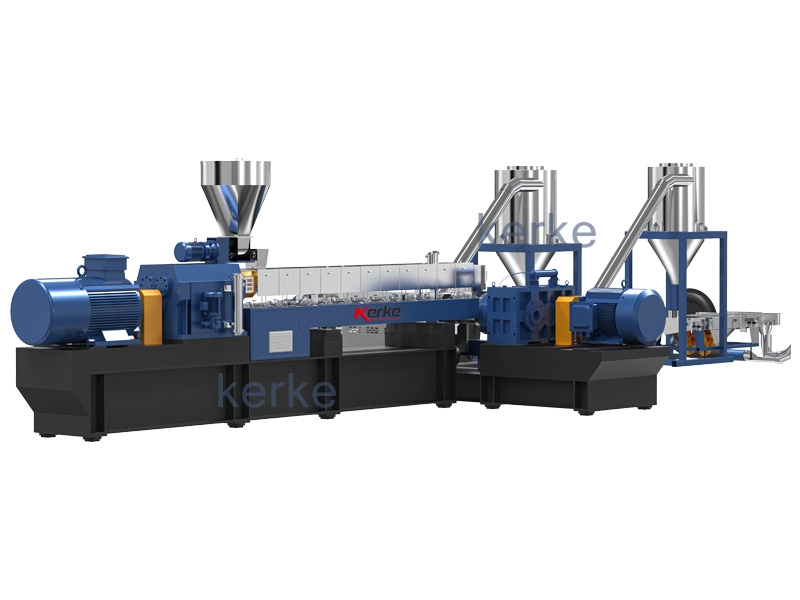
コンパウンディング押出機は非常に汎用性の高い機械であるが、その性能は特定のレオロジー特性にどれだけ適合しているか entirelyに依存する。ポリプロピレン(PP)タルクフィラーに完璧に機能するレシピは、ポリアミド(PA)ガラス繊維コンパウンドに切り替えると完全に失敗する可能性がある。この移行には、製品品質を維持し、スループットを最大化し、比エネルギー消費を最小化するためのプロセスパラメータの大幅な調整が必要である。これらの調整を習得することはプロセスエンジニアにとって重要なスキルである。本ガイドは、現代のKerkeコンパウンディング押出機の高度な制御能力を参考点として、オペレータが調整しなければならない主要パラメータの詳細な技術的概要を提供する。パラメータを正しく調整しないと、サージング、劣化、分散不良、および機械の過度な摩耗を招く可能性がある。
温度プロファイルの理解と設定
温度プロファイルは押出制御の基礎である。それは単一の数値ではなく、バレルに沿った温度の勾配であり、通常、供給ゾーン、圧縮ゾーン、混合ゾーン、および計量ゾーンに分割される。PVCやTPU等の熱感受性材料の場合、供給および圧縮ゾーンは架橋(ブリッジング)と早期溶融を防ぐため、比較的低温に保たなければならず、これによりトルク不安定を引き起こす可能性がある。一般的な誤りはホッパ温度を高く設定しすぎることであり、これによりペレットが固着して流れが止まる。
For semi-crystalline polymers like Nylon or PET, the barrel temperature must be set above the melting point but safely below the degradation threshold. In a Kerke extruder, the barrel is divided into 8 to 12 independent heating zones. When switching formulations, the operator must ramp temperatures up or down gradually to avoid thermal shock to the steel components. The cost of incorrect temperature settings is high: too low leads to unmelted “fish eyes” and high torque; too high leads to polymer degradation, gels, and yellowing. A typical adjustment might involve increasing the mixing zone temperature by 10 to 15 degrees Celsius to lower viscosity and improve dispersion, but this must be balanced against the risk of thermal degradation. The heating bands themselves consume significant power; optimizing the profile to use the minimum necessary heat saves electricity and reduces cooling water usage.
スクリュー回転数とせん断速度の管理
Screw speed, measured in revolutions per minute (RPM), is the primary lever for controlling throughput and shear rate. Higher speeds generate more frictional heat (viscous dissipation), which can raise the melt temperature without external heating. This is beneficial for energy saving but dangerous for heat-sensitive formulations like PVC or EVA, where high speeds can cause “fish eyes” or gas formation. The relationship between speed and torque is linear in the feed-limited region but becomes pressure-limited at higher speeds.
Operators must adjust the speed to maintain the amperage within the motor’s safe operating range, typically 80-90% of the maximum rating for optimal efficiency. For high-viscosity compounds like UHMWPE or heavily filled masterbatches (70% CaCO3), high torque is required, and the speed may need to be reduced to prevent stalling the motor. Kerke extruders use high-power inverter-controlled motors that allow for precise speed adjustments from 0 to maximum RPM. The “sweet spot” is where throughput is maximized without exceeding the torque limit or causing excessive melt temperature rise. Adjusting speed is “free” in terms of direct cost, but running too fast for a given formulation increases specific energy consumption (kW/kg) and wear on the screws. The cost of excessive wear includes more frequent screw and barrel replacement, which can cost thousands of dollars per changeover.
供給速度と重量式制御システム
The feed rate determines the fill factor of the extruder. If the feed rate is too low, the screws are not fully filled, leading to poor mixing, self-heating issues, and surging. If the feed rate is too high, the motor will overload, and material will back up into the hopper, potentially causing a safety hazard. Modern compounding lines use loss-in-weight (LIW) gravimetric feeders that communicate directly with the extruder’s main drive via fieldbus protocols.
When changing formulations, especially those with different bulk densities (e.g., switching from heavy calcium carbonate to light carbon black or glass fibers), the feeder calibration and screw speed must be adjusted. Kerke systems allow for the storage of hundreds of recipes in the HMI touchscreen. The operator simply selects the new formulation, and the feeders automatically adjust their speed to match the target throughput and ratio. This automation reduces setup time from hours to minutes. The cost benefit here is a massive reduction in material giveaway during start-up and changeover. Incorrect feed rates can lead to “starving” the extruder, which causes surging and inconsistent product dimensions, leading to entire batches being scrapped. The cost of scrap material alone justifies the investment in high-precision gravimetric feeders, which typically cost between $10,000 and $20,000 per feeder.
真空およびベントパラメータ
脱揮(水分、モノマー、または溶媒の除去)を要するコンパウンドの場合、真空レベルとベントブロック構成は重要なパラメータである。真空が高すぎると、ポリマーがベントから吸い出され(キャリーオーバー)、汚れと相当の製品損失を生む。真空が低すぎると、水分と揮発分が溶融物に残り、最終ペレットや成形部品に気泡(ボイド)を引き起こす。これはPC、ABS、またはPET等のエンジニアリングプラスチックに特に重要である。
調整は溶融物の粘度に大きく依存する。高粘度材料は揮発分を逃がすのが困難なため、より深い真空(より低い絶対圧、例:10〜20 mbar)を要する。Kerke押出機は、揮発性有機物を真空ポンプに到達する前に捕捉する凝縮器を備えた多段真空システムをしばしば使用する。吸湿性の高いナイロン6等の材料を加工する際、真空ポンプ容量は除去される水蒸気の体積(スループットの数%になる場合がある)を処理するのに十分でなければならない。真空調整が不適切なコストは相当である:発泡や加水分解劣化による廃棄バッチは、インシデントあたり5,000〜10,000ドルかかる可能性がある。高性能真空システム(サイズにより約5,000〜15,000ドルの追加コスト)への投資は、乾燥材料と高品質出力を確保することで元が取れ、特に水分が許容されない医療や食品接触用途でそうである。
ダイ圧力とペレタイジング速度の同期
ダイヘッドの圧力は、混合品質と溶融温度の重要な指標である。それはダイ孔を通る流れの抵抗の結果である。オペレータは、安全範囲(典型的なストランドペレタイザで100〜200 bar)内に留まるようダイ圧力を監視する。圧力が突然スパイクすると、スクリーンパックの詰まりや、溶融温度低下による粘度上昇を示す可能性がある。圧力が低すぎると、材料が十分に圧縮されず、空気を含み低密度のペレットとなり、浮いたり簡単に割れたりする。
ペレタイザー(ウォーターリング、水中、またはストランドカッター)は押出機速度と完全に同期していなければならない。押出機がスループットを上げるために高速になると、ペレタイザーカッターは正しいペレット長を維持するよう比例して高速にならなければならない。Kerkeシステムは、ペレタイザー駆動が主押出機駆動に追従する完全自動同期を提供する。手動調整は規格外のペレット長(長すぎるとホッパでの架橋、短すぎると粉塵)を招く。粉塵は再利用が容易でなく、失われた材料を意味するため重大な問題である。自動システムは高い初期コスト(制御システムで約10〜15%増)を要するが、廃棄と労務介入を最小化することで運転コストを大幅に削減する。手動での同期ずれのコストは、失われた材料で総生産の5〜10%になり得る。
一般的な配合シナリオの特定パラメータ調整
Let us analyze three common scenarios. First, for Glass Fiber Reinforced (LFT) compounds: Screw speed should be kept moderate to prevent fiber breakage (typically 200-300 RPM for a 75mm machine). The temperature should be kept on the lower end of the polymer’s melting range to minimize moisture absorption. Special low-shear screw elements with wide flights are used. Second, for Flame Retardant (FR) ABS: High mixing intensity is needed to disperse the FR agent (often a powder). Temperatures must be controlled tightly (within +/- 2 degrees) to prevent degradation of the brominated compounds. A high-shear kneading block section is essential. Third, for Color Masterbatch: High shear in the kneading zones is essential to break down pigment agglomerates. The temperature profile is often higher to ensure good wetting of the pigment by the carrier resin. Each of these requires a unique “recipe” of speed, temperature, and feed rates. The cost of developing these recipes is time, but once saved in the Kerke PLC, they become a valuable intellectual property asset that ensures consistent production regardless of which operator is on shift.
トラブルシューティングおよび一般的な調整誤りのコスト
パラメータ調整の誤りは、コンパウンディング工場で最もコストのかかる問題の1つである。例えば、TPU等の感受性ポリマーに対しバレル温度を20度高く設定しすぎると、バッチ全体が劣化し、原材料損失(しばしば2,000〜5,000ドル)に加え廃棄費用と機械停止時間をもたらす。供給速度を反応押出に対し10%高く設定しすぎると、滞留時間が短すぎて反応が不完全になり、規格外製品となりスクラップとして販売または再コンパウンド(エネルギーコスト倍増)されなければならない。真空の過調整は高価な添加剤をベントから吸い出し、文字通り金を捨てることになる。
A well-trained operator using a Kerke extruder’s advanced control system with data logging can avoid these pitfalls. The system can trend torque and pressure over time, allowing the operator to see if a parameter change is having a negative effect before it ruins a batch. The investment in training operators (approx. $2,000 per person for a certified course) is minimal compared to the cost of scrap. A rule of thumb in the industry is that scrap should not exceed 2% of total production. Good parameter adjustment and process control keep this number low, directly impacting the bottom line. The cost of poor control is not just the scrap itself, but the inefficiency of running a line that is constantly stopping and starting to fix problems.
結論
Adjusting a compounding extruder is a complex science that requires a deep understanding of polymer rheology, additive characteristics, and mechanical engineering. It is not a “set it and forget it” process. By mastering temperature profiles, screw speeds, feed rates, and vacuum levels, manufacturers can produce a wide variety of high-quality compounds on a single machine. Kerke Extruder’s advanced control systems, with their recipe storage, data logging, and automation capabilities, simplify this process significantly. While the initial cost of a programmable, precision extruder is higher than a basic model, the flexibility and reduction in waste make it a financially sound choice for any serious compounding business. Proper parameter adjustment is the key to unlocking the full profitability and quality potential of your extrusion asset. It transforms the machine from a simple conveyor of plastic into a precision chemical reactor.