개요
열가소성 폴리에스터 엘라스토머(TPEE)는 상업적으로 Hytrel로 알려진 고무와 플라스틱의 특성을 결합한 고성능 블록 공중합체입니다. 이는 자동차 부츠, 케이블 및 산업용 호스에 사용됩니다. TPEE 마스터배치 생산은 재료의 높은 용융 점도, 전단 이력에 대한 민감성 및 금속 표면에 달라붙는 경향으로 인해 도전적입니다. 동회전 트윈스크류 압출기는 점성 매트릭스에서 첨가제를 분산시키기 위해 필요한 높은 전단을 제공하면서 열화를 방지하기 위한 정밀한 온도 제어를 허용하므로 TPEE의 산업 표준입니다. 이 기사는 동회전 기술, 특히 이러한 까다로운 엘라스토머 처리에 필요한 견고성을 제공하는 Nanjing Kerke KTE 시리즈를 사용하여 TPEE 마스터배치를 생산하는 방법을 자세히 설명합니다.
배합 비율(유형별)
TPEE용 컬러 마스터배치
TPEE는 본질적으로 불투명/황색을 띱니다. 착색에는 고열 안정성 안료가 필요합니다. 배합: 30-40% 안료(TPEE의 불투명도로 인해 높은 충전량), 60-70% TPEE 캐리어. TPEE는 강인하기 때문에 최종 성형 부품에 '오렌지 필(orange peel)' 현상이 발생하지 않도록 분산제(왁스 또는 스테아레이트)가 중요하며(1-2%), 이를 통해 방지할 수 있습니다.
강화 충전재 마스터배치
강성 향상을 위해 카본블랙 또는 유리섬유를 사용합니다. 배합: 20-30% 카본블랙(전도성 등급), 70-80% TPEE. 카본블랙은 구조가 높고 많은 양의 고분자를 흡수하여 점도를 현저히 증가시킵니다. 압출기는 토크 과부하 없이 이 높은 부하를 처리할 수 있어야 합니다.
난연성 TPEE 마스터배치
전기 케이블 용도에 사용됩니다. 배합: 50% TPEE, 30% 수산화마그네슘(MDH – 높은 충전량 필요), 15% 상승제, 5% 가공 보조제. MDH는 화합물을 매우 딱딱하고 마모성 있게 만드는 고충전 충전재입니다.
생산 공정
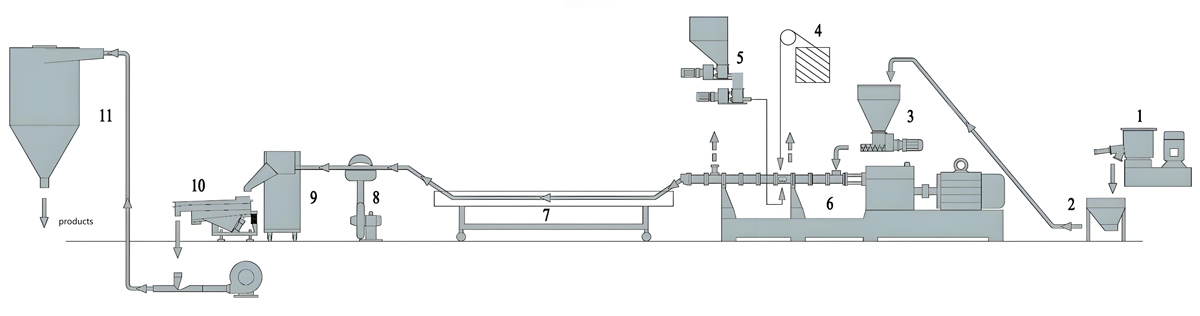
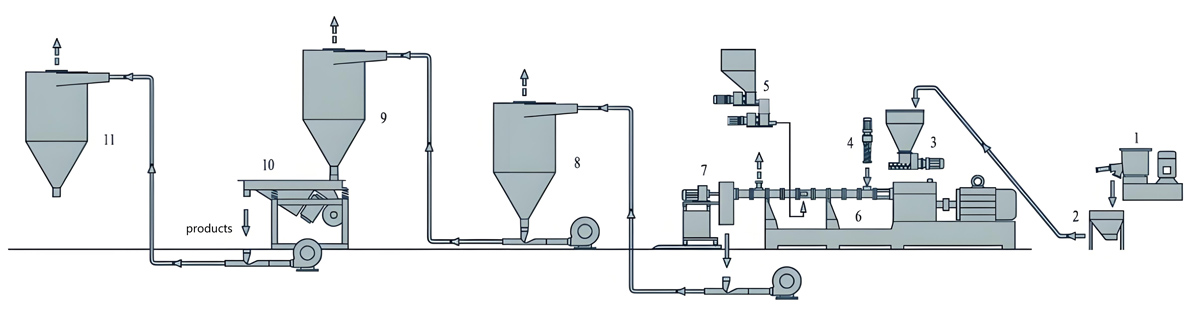
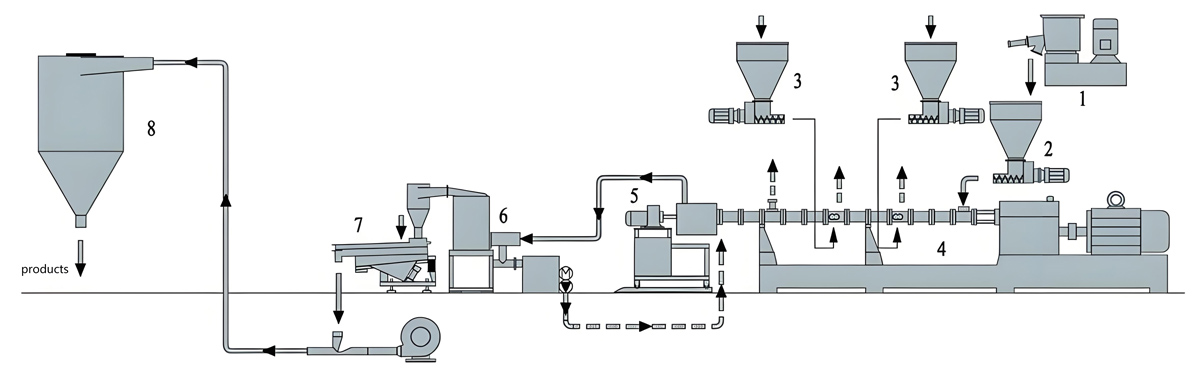
TPEE는 흡습성이 있어 처리 전에 최소 4시간 동안 100°C-120°C에서 건조해야 합니다. 건조된 TPEE는 동회전 KTE 압출기에 공급됩니다. 동회전 스크류는 맞물려 배럴 벽을 닦아내어 점착성 있는 TPEE가 부착되거나 열화되는 것을 방지합니다. 공정에서는 TPEE의 결정 구조를 분해하고 첨가제를 혼합하기 위해 혼합 구역에서 높은 전단이 필요합니다. 온도는 200°C와 240°C 사이로 유지됩니다. TPEE는 넓은 가공 윈도우를 가지고 있으므로, 과소 용융(겔) 또는 과전단(점도 저하)을 피하기 위해 세심한 제어가 필요합니다. 용융물은 필터링되고 과립화됩니다. TPEE의 '메모리'(원래 형태로 돌아가려는 경향)로 인해 일관된 과립 형태를 보장하기 위해 스트랜드 과립화보다 워터링 과립화가 선호되는 경우가 많습니다. 과립은 내부 응력을 완화하기 위해 어닐링(열처리)이 필요할 수 있습니다.
생산 장비 소개
Nanjing Kerke KTE 시리즈 동회전 압출기는 TPEE 처리의 핵심입니다. '동회전'은 두 스크류가 같은 방향으로 회전한다는 의미로, 점착성 있는 재료에 이상적인 맞물림 및 닦아내기 작용을 생성합니다. TPEE용 KTE 시리즈는 특수한 형상의 스크류를 특징으로 합니다: 용융 구역의 고전단 니딩 블록과 분산 혼합용 톱니형 혼합 요소. 배럴은 카본블랙이나 MDH와 같은 충전재의 마모성 특성에 저항하기 위해 일반적으로 질화 처리되거나 바이메탈릭입니다. 기어박스는 고점도 TPEE 용융 시 갑작스러운 토크 변화에 대응할 수 있도록 높은 관성으로 설계되었습니다. 시스템에는 다이 앞의 유동과 압력을 안정화하여 균일한 과립 밀도를 보장하기 위해 기어 펌프(TPEE에 권장되지만 선택 사항)가 포함됩니다. 제어 시스템은 엘라스토머에서 흔히 발생하는 '스티크-슬립(stick-slip)' 현상을 감지하기 위해 용융 압력과 온도를 면밀히 모니터링합니다.
파라미터 설정
온도 프로파일
TPEE는 약 200°C에서 용융되지만 유동성을 위해 열이 필요합니다. Zone 1: 120°C(브리지 방지), Zone 2-3: 180°C – 200°C, Zone 4-6: 210°C – 230°C, 다이: 220°C. 탄성 손실인 에스터 결합 열화를 방지하기 위해 240°C를 초과하지 않도록 주의하십시오.
스크류 속도 및 전단율
동회전 압출기는 중간 속도(300-600 rpm)로 작동합니다. 핵심은 전단율입니다. TPEE의 경우 용융을 위해 초기에 높은 전단이 필요하지만, 하류에서의 과도한 전단은 고분자 사슬을 열화시켜 복원 탄성을 감소시킬 수 있습니다. 토크를 모니터링해야 하며, 갑작스러운 하락은 열화를 나타냅니다.
진공 시스템
수분을 제거하기 위해 강한 진공(-0.09 MPa)이 필수적입니다. TPEE 용융물은 상당한 양의 수분을 보유할 수 있으며, 이는 최종 제품에 기포(스프레이)를 유발합니다. 고품질 TPEE 마스터배치를 위해 종종 2단계 진공이 사용됩니다.
장비 가격
Nanjing Kerke KTE 시리즈(TPEE 적용) 참고 가격:
- 모델 KTE-75 (동회전): $170,000 – $200,000 USD. TPEE용 표준 구성.
- 모델 KTE-95 (기어 펌프 포함 헤비 듀티): $280,000 – $340,000 USD. 용융 펌프 및 내마모성 라이닝 포함.
참고: '동회전' 구성은 KTE 시리즈의 표준입니다. 가격은 내마모성 요구 사항(예: 카본블랙용)에 따라 달라집니다. FOB Nanjing.
Production Problems, Solutions, and Avoidance
Problem: Sticky Pellets / Agglomeration
Cause Analysis: TPEE is an elastomer with inherent tackiness. If the pellet temperature is too high when it contacts the cutter or water, it will deform and stick. Another cause is insufficient cooling or anti-block agent in the formulation. High moisture content can also cause surface stickiness.
Solution: Use an underwater pelletizing system which cuts the melt stream directly into cold water, creating a “skin” on the pellet instantly. If using strand pelletizing, ensure the water bath is chilled (<10°C) and the strands are dried thoroughly. Add 0.5-1% inorganic anti-block agent (synthetic silica) to the formulation. Reduce the melt temperature by 10°C if possible.
Avoidance Method: Optimize the die face design; polished dies reduce adhesion. Do not let the extruder sit idle with hot material inside; purge immediately on shutdown. Use a release agent spray on the cutter face (automated system). Ensure the drying of TPEE is perfect; wet TPEE is much stickier than dry TPEE.
Problem: Viscosity Drop (Degradation)
Cause Analysis: TPEE is susceptible to mechanical degradation. If the shear rate is too high or the residence time is too long, the polymer chains break (chain scission). This results in a masterbatch with lower molecular weight, leading to poor mechanical properties in the final product (e.g., reduced tensile strength or elongation at break).
Solution: Reduce screw speed. Change the screw configuration to use less aggressive kneading blocks (e.g., 45° instead of 90°) in the metering zone. Lower the barrel temperature. Check if the cooling water on the barrel is sufficient; overheating barrels contribute to degradation. Perform a Melt Flow Rate (MFR) test; if MFR increases significantly, degradation has occurred.
Avoidance Method: Use a co-rotating extruder rather than counter-rotating or Banbury mixers, as co-rotating provides better control over shear. Install a melt temperature alarm that trips the heater if it exceeds 240°C. Minimize re-grind usage; re-grind TPEE has already been sheared and is more prone to further degradation. Use stabilizers specifically designed for polyesters (carbodiimides) to protect the end groups.
Problem: Gels / Unmelted Particles
Cause Analysis: TPEE is semi-crystalline and has a high melting point. If the heating capacity is insufficient or the mixing is poor, “gels” (unmelted polymer chunks) remain in the masterbatch. This is common when starting up or if the feed rate is too high for the available heat.
Solution: Increase the barrel temperature in the melting zone. Reduce the feed rate to allow more residence time for melting. Ensure the screw elements in the feeding zone are designed to maximize heat transfer (e.g., barrier flights). Check the heaters; if one zone is not working, the melting profile is disrupted. Purge the extruder to remove the gels.
Avoidance Method: Use a screw design with a strong melting section. Preheat the barrel to the set temperature for at least 30 minutes before feeding material. Use a hopper loader with a heating jacket to keep the pellets warm. For highly crystalline TPEE grades, consider adding a small amount of plasticizer to aid melting, if compatible with the end application.
Maintenance
TPEE maintenance focuses on preventing material buildup and managing wear. Because TPEE can carbonize on hot surfaces, the barrel and screws must be cleaned regularly with a reactive polymer cleaner. The screws should be inspected for “stick-slip” marks or corrosion. The gearbox needs frequent oil analysis because the high torque loads can generate metal particles. The thrust bearing is critical; any axial movement of the screws will cause rapid wear. For filled TPEE (carbon black/MDH), the barrel and screw tips should be hardened or coated with Stellite to resist abrasion. The die head should be polished regularly to prevent material drag-out.
FAQ
Q: What is the difference between Co-rotating and Counter-rotating for TPEE?
A: Co-rotating extruders have higher shear and self-wiping capability, which is better for sticky polymers like TPEE to prevent them from adhering to the roots of the screws. Counter-rotating extruders have lower shear and higher pressure, better for PVC powder but generally less suitable for TPEE masterbatches where dispersion is key.
Q: Can I use a single screw extruder for TPEE masterbatch?
A: It is difficult. Single screws rely on friction to melt, which generates excessive heat for TPEE, leading to degradation. They also lack the dispersive mixing needed for high-loading additives. A twin screw (co-rotating) is highly recommended for quality TPEE masterbatches.
Q: Why is underwater pelletizing preferred for TPEE?
A: TPEE pellets have a “memory” and tend to stick together if cut while warm. Underwater pelletizing cuts the melt strands directly into a water chamber, instantly cooling them and transporting them to a centrifuge dryer. This prevents agglomeration and produces perfect spherical pellets, essential for consistent feeding in downstream injection molding machines.
결론
The production of TPEE masterbatches demands an extruder capable of handling high viscosity, sticky polymers, and high shear requirements without causing degradation. The Nanjing Kerke KTE Series Co-rotating Twin Screw Extruder is specifically engineered to meet these challenges with its robust gearbox, optimized screw geometry, and precise temperature control. By managing the delicate balance between sufficient shear for dispersion and avoiding mechanical degradation, manufacturers can produce high-performance TPEE masterbatches for demanding automotive and industrial applications. The investment in a co-rotating system ensures consistent melt quality, excellent additive dispersion, and the ability to process high-loading formulations that simpler machines cannot handle. Proper maintenance, especially regarding cleaning sticky residues and managing abrasion from fillers, is essential for long-term reliability and product quality.