개요
아크릴로니트릴 스티렌(AS), SAN으로도 알려진 이 소재는 투명하고 강성이 있는 고분자로 가정용품, 포장재 및 전자제품에 사용됩니다. ABS와 유사하지만 고무 상(phase)이 없어 더 단단하고 취성(brittle)이 높습니다. 마스터배치 생산, 특히 소형에서 중형 규모의 컴파운더나 실험실 환경에서는 컴팩트 트윈 스크류 압출기가 효율성과 설치 면적 사이의 완벽한 균형을 제공합니다. '컴팩트' 설계는 L/D 비율(길이 대 직경)을 단축하고 바닥 공간을 줄이면서도 혼합 능력을 희생하지 않는 통합 제어 시스템을 의미합니다. 본 기사는 Nanjing Kerke KTE 시리즈 컴팩트 모델을 AS 마스터배치 생산에 사용하는 것을 다루며, 이 특정 수지에 대한 공간 효율성, 빠른 변경(changeover), 공정 최적화에 중점을 둡니다.
배합 비율 (유형별)
범용 컬러 마스터배치
AS는 본래 투명하므로 컬러 마스터배치가 가장 일반적입니다. 표준 배합에는 20-30%의 안료(일반적으로 프탈로시아닌 계열의 청색/녹색 또는 아조계 황색)와 70-80%의 AS 캐리어가 포함됩니다. AS는 강성이 높으므로, 최종 제품이 너무 취성해지지 않도록 방지하기 위해 때때로 충격 개질제(MBS 등)를 5-10% 추가하여 안료와 함께 사용합니다.
열 안정제 마스터배치
AS는 고온에 장시간 노출될 경우 가공 중 분해될 수 있습니다. 안정제 마스터배치는 50%의 AS 캐리어와 50%의 열 안정제 패키지(페놀계 산화 방지제 및 인산염)를 포함할 수 있습니다. 이러한 높은 첨가제 함량은 안정제가 균일하게 분산되도록 하기 위해 우수한 혼합이 필요합니다.
정전기 방지 마스터배치
전자제품 하우징의 경우 정전기 방지 특성이 요구됩니다. 배합에는 AS 캐리어(60%), 정전기 방지제(30% – 일반적으로 에톡실화 아민), 그리고 10%의 상용화제가 포함됩니다. 정전기 방지제는 액체 또는 페이스트 형태일 수 있으며, 이는 종종 컴팩트 시스템에 통합되는 특수 공급 장비를 필요로 합니다.
생산 공정
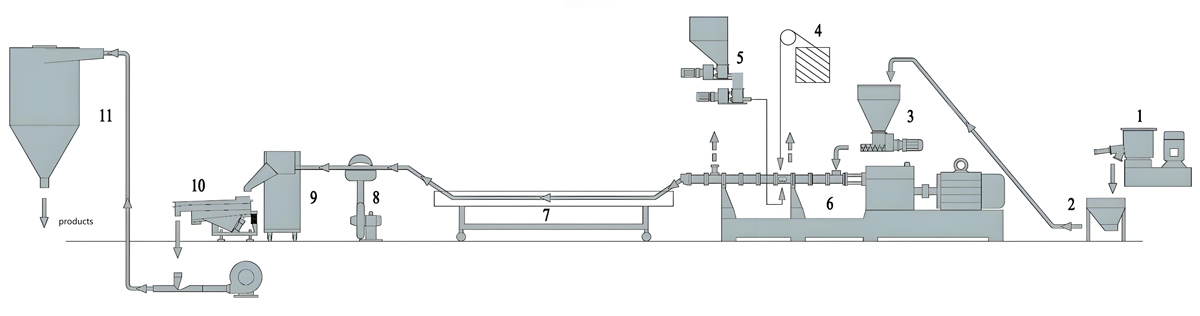
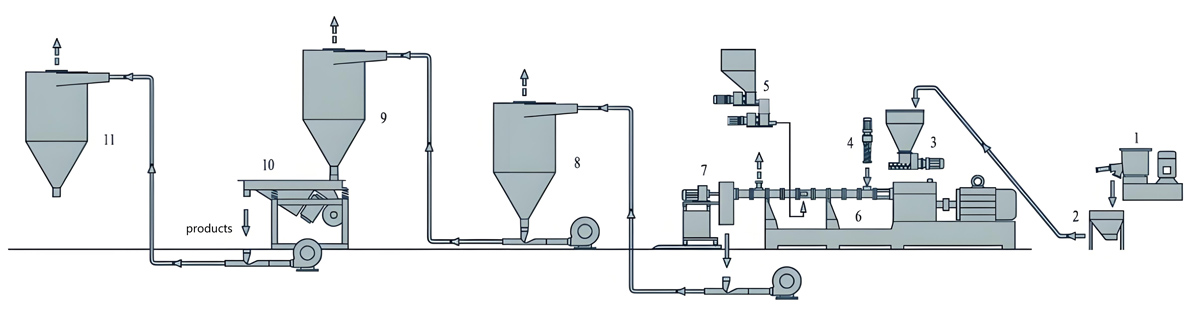
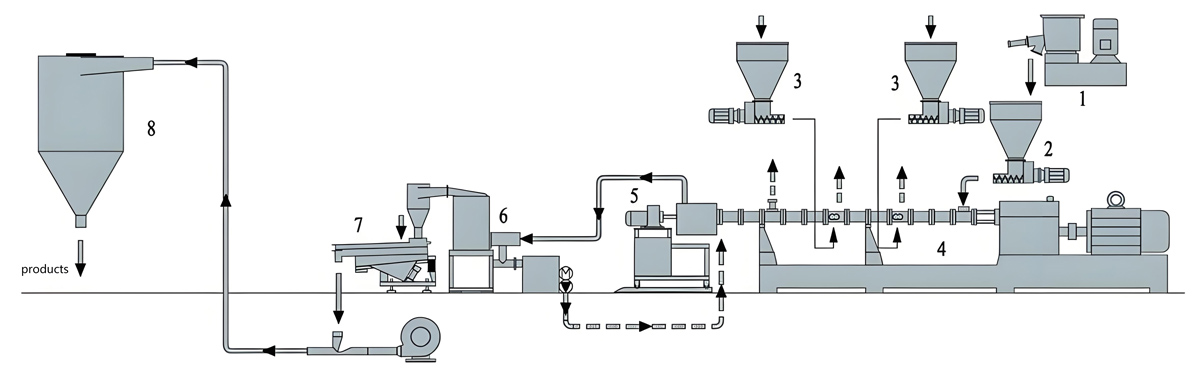
컴팩트 압출기를 이용한 AS 마스터배치 생산은 효율성을 강조합니다. AS 펠릿은 건조(수분 < 0.1%)된 후 컴팩트 KTE 압출기에 투입됩니다. 컴팩트 설계는 일반적으로 L/D가 36:1에서 40:1로, 표준 컴파운딩 라인보다 짧습니다. 짧은 체류 시간을 보상하기 위해 스크류 속도는 약간 높게 설정되고 혼합 요소는 강화됩니다. 공정은 빠른 용융, 안료 분산을 위한 고전단 혼합, 그리고 여과를 위한 즉각적인 압력 상승을 포함합니다. 용융물은 워터링(water-ring) 또는 스트랜드 펠레타이저로 펠레타이징됩니다. 컴팩트 유닛은 종종 공급기, 압출기 및 펠레타이저가 단일 스키드(skid)에 설치되어 있어 재료 이동 거리와 냉각 시간을 최소화하며, 이는 열에 민감한 AS에 유리합니다.
생산 장비 소개
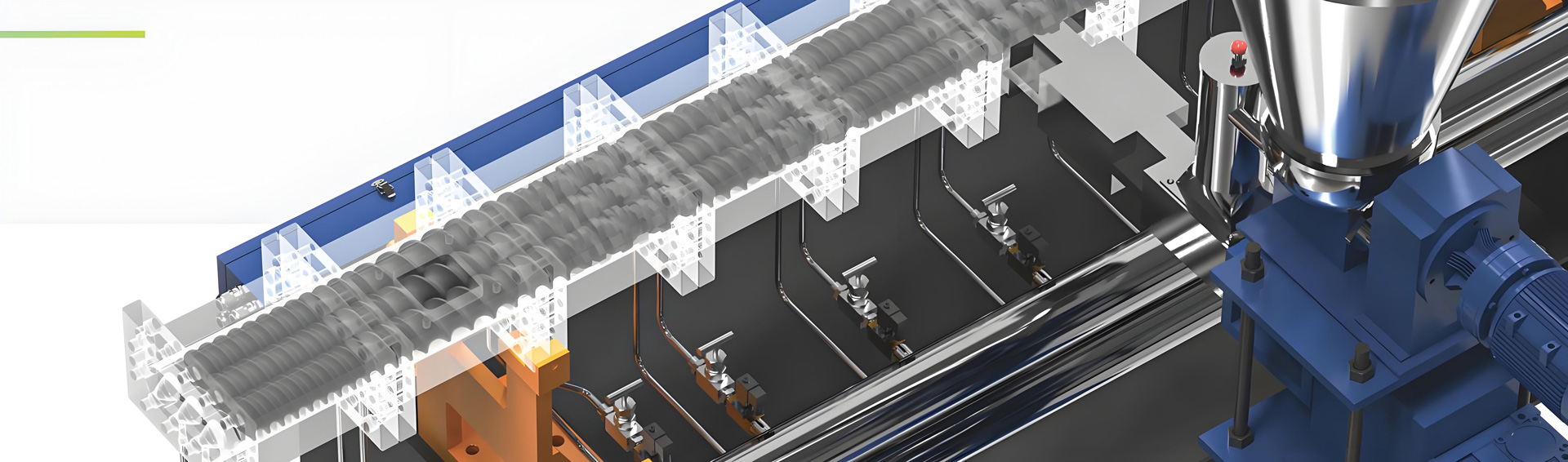
Nanjing Kerke KTE 시리즈 컴팩트 압출기(예: KTE-50 또는 KTE-65)는 작은 설치 면적(총 길이 4미터 미만인 경우가 많음)을 위해 설계되었습니다. 크기가 작음에도 불구하고 대형 모델과 동일한 고품질 기어박스와 스크류 제조 정밀도를 사용합니다. 배럴은 짧지만 빠른 열 응답을 보장하기 위해 최적화된 가열/냉각 존을 갖추고 있습니다. 제어 캐비닛은 일반적으로 압출기에 직접 또는 소형 사이드카(side-car) 프레임에 장착되어 배선 복잡성을 줄입니다. AS 가공의 경우, 강성이 높은 AS가 빠르게 용융되도록 배럴 초기 단계에서 강한 혼합 요소를 갖춘 스크류 구성이 사용됩니다. 시스템에는 종종 진공 벤트가 포함되지만, PVA 또는 PETG 시스템보다는 짧을 수 있습니다. 구동 모터는 소형 배치 생산에서 에너지를 절약하기 위해 고효율입니다.
파라미터 설정
온도 프로파일
AS는 200°C와 240°C 사이에서 용융됩니다. Zone 1: 150°C, Zone 2: 190°C, Zone 3-4: 220°C – 230°C, Zone 5-6: 230°C, 다이(Die): 235°C. 짧은 배럴 내 열 축적을 방지하기 위해 프로파일은 상대적으로 평탄합니다.
스크류 속도 및 처리량
컴팩트 압출기는 용량을 달성하기 위해 더 높은 속도로 운전됩니다. AS의 경우 속도는 400에서 800 rpm 범위입니다. 처리량은 낮으며(50-300 kg/h), 특수 배치에 이상적입니다. 작은 기어박스에 과부하를 주지 않으면서 우수한 혼합을 보장하기 위해 토크는 50-70% 사이로 유지해야 합니다.
체류 시간
컴팩트 시스템에서는 체류 시간이 중요합니다. 일반적으로 30-60초입니다. 이는 정밀한 공급이 필요함을 의미하며, 공급이 중단되면 재료 분해를 방지하기 위해 배럴을 신속히 비워야 합니다. 자동 퍼지(purge) 시스템은 종종 컴팩트 설계에 포함됩니다.
장비 가격
Nanjing Kerke KTE 시리즈(컴팩트 모델) 참고 가격:
- 모델 KTE-50 (실험실/파일럿 규모): $65,000 – $85,000 USD. 출력: 50-150 kg/h.
- 모델 KTE-65 (소규모 생산): $95,000 – $120,000 USD. 출력: 200-400 kg/h.
참고: 이 모델들은 스키드 마운트(skid-mounted) 및 플러그 앤 플레이(plug-and-play) 방식입니다. 가격은 풀사이즈 컴파운딩 라인보다 현저히 낮습니다. FOB Nanjing.
Production Problems, Solutions, and Avoidance
Problem: Inconsistent Color (Streaking)
Cause Analysis: In a compact system with a shorter L/D, there is less room for distributive mixing. If the screw configuration is not optimized, or if the pigment feeding is not synchronized with the main feed, streaks of unmixed pigment can appear. Another cause is temperature fluctuation in the shorter barrel, leading to inconsistent melting.
Solution: Increase the number of kneading blocks or use toothed mixing elements to improve distributive mixing. Use a liquid pigment injection system instead of solid feeding for better dispersion. Stabilize the feeding rate; use loss-in-weight feeders with high refresh rates. Check heater bands for tight contact; loose bands cause temperature swings.
Avoidance Method: Optimize the screw design specifically for AS rheology before manufacturing. Use masterbatching software to calculate the required mixing energy. Pre-blend the pigment with a small amount of AS carrier in a high-speed mixer to create a “pre-mix” before feeding into the extruder. This reduces the mixing burden on the compact extruder.
Problem: Pellet Deformation (Sticking to Cutter)
Cause Analysis: AS has a relatively low melt strength. If the strands from the die are not cooled quickly enough, or if the water bath is too warm, the soft strands can flatten or stick to the pelletizer cutter. This is more common in compact lines where the distance from die to cutter is short, leaving less cooling time.
Solution: Lower the water temperature significantly (use chilled water if necessary, around 10-15°C). Increase the water flow rate around the strands. Apply a very light coating of silicone oil or water-based release agent to the strands (if approved by the end-user). Reduce the cutter speed to match the output exactly so there is no tension on the strands.
Avoidance Method: Use an underwater pelletizing system instead of a water bath for compact lines. Underwater systems cut the melt directly into water, ensuring perfect spherical pellets and immediate cooling. Design the die face with a larger number of small holes rather than a few large ones to increase surface area for cooling. Ensure the take-up roller (if used) is synchronized perfectly with the extruder speed.
Problem: Brittle Masterbatch Pellets
Cause Analysis: AS is inherently brittle. If the extrusion process involves excessive shear or if the material degrades (chain scission), the final masterbatch pellets will be dusty or break easily during handling. Over-drying or overheating can also cause embrittlement.
Solution: Reduce screw speed to lower shear heat. Lower barrel temperatures by 10°C. Check if an impact modifier is needed in the formulation (if not restricted). Ensure the drying temperature is not too high; 80°C for 2 hours is usually sufficient for AS.
Avoidance Method: Monitor the intrinsic viscosity (IV) of the AS carrier regularly. If IV drops, the material has degraded. Use a gentler screw profile with fewer high-shear elements. Avoid reprocessing AS multiple times; use virgin carrier for high-quality masterbatches. Incorporate a small amount of elastomer if the application allows to improve toughness.
Maintenance
Compact extruders require diligent maintenance because they operate at higher speeds and loads relative to their size. Daily inspection of the seals and oil levels is critical. Because the system is integrated, any leak (hydraulic or thermal oil) can contaminate the product. The screw elements should be inspected weekly for wear, as the higher speeds cause faster abrasion. The die face should be cleaned regularly to prevent “die drool” (oxidized material buildup). The electrical cabinet cooling fans must be kept clean to prevent overheating of the PLC and drives. Since compact systems are often used for frequent color changes, a good purge compound procedure is essential to minimize downtime between batches.
FAQ
Q: Is a compact extruder suitable for filled AS compounds?
A: It is suitable for light filling (up to 20% talc or calcium carbonate). For heavy filling (>30%), the torque requirements might exceed the capacity of a compact gearbox, and a full-size high-torque extruder (KTE-75 or larger) is recommended.
Q: How fast can I change colors on a compact line?
A: Compact lines have less volume in the barrel, so color changes are relatively fast (15-30 minutes depending on the screw design and purge compound used). Using a color-changing valve or purging with a low-melting-point polymer speeds this up.
Q: Can I run AS on a single screw extruder?
A: Yes, for very simple color batches with low pigment loading. However, for consistent dispersion and to handle additives like antistatic agents or stabilizers, a twin screw (even a compact one) provides significantly better mixing and product consistency.
결론
The Compact Twin Screw Extruder from the Nanjing Kerke KTE Series offers an ideal solution for manufacturers needing flexibility and space efficiency in AS masterbatch production. While the L/D ratio is shorter, careful screw design and optimized process parameters allow for high-quality compounding of rigid AS polymers. The compact footprint makes it perfect for pilot plants, specialty compounders, or facilities with limited space. By understanding the limitations (torque capacity) and advantages (quick response, easy cleaning) of compact systems, producers can efficiently manufacture AS masterbatches with excellent color dispersion and thermal stability. The lower initial investment compared to full-scale lines makes it an attractive option for entering the masterbatch market or producing smaller, specialized batches.