개요
폴리비닐 알코올(PVA)은 세탁용 비닐봉지부터 농업용 필름에 이르기까지 다양한 용도로 사용되는 독특한 수분해성 고분자입니다. PVA 마스터배치 제조는 PVA의 높은 융점, 전단 민감도 및 극심한 흡습성으로 인해 어려운 공정입니다. '통합형(Integrated)' 트윈 스크류 압출기 시스템은 이러한 과제를 해결하기 위해 압출기, 공급 시스템 및 후처리 펠릿화 장치를 동기화된 컴팩트 유닛으로 결합하여 설계되었습니다. 이 통합 구조는 PVA에 있어 중요한 체류 시간과 주변 습도 노출을 최소화합니다. 본 기사는 난징 Kerke KTE 시리즈에서 제공하는 정밀 제어 기능을 활용하여 이 난이도 높은 소재를 생산하기 위한 고급 트윈 스크류 기술을 통한 PVA 마스터배치 생산에 중점을 둡니다.
배합 비율 (유형별)
PVA 마스터배치는 일반적으로 다른 고분자에 수분해성 또는 차단 특성을 부여하는 데 사용됩니다. 배합은 목표 용도에 따라 다릅니다.
수분해성 마스터배치 (블로우 필름용)
가장 일반적인 유형입니다. 배합은 보통 60%에서 80%의 PVA 수지(가수분해도는 다양하며, 일반적으로 88% 또는 98%), 취성을 줄이기 위한 가소제(글리세롤 또는 소르비톨) 15%에서 30%, 그리고 첨가제 패키지(안티블록제, 안료) 5%에서 10%로 구성됩니다. 높은 가소제 함량은 상분리를 방지하기 위해 우수한 혼합을 요구합니다.
차단/산소 흡수 마스터배치
다층 포장재의 경우 PVA는 산소 차단제로 사용됩니다. 배합에는 50%의 PVA, 굴곡도(tortuosity) 향상을 위한 점토 또는 실리카 40%, 그리고 PE 또는 PP와 같은 비극성 층에 PVA가 부착되도록 돕는 상용화제(말레산 무수물 그래프트 폴리올레핀 등) 10%가 포함됩니다. 충전제 함량이 높아 압출기에 높은 토크를 요구합니다.
생분해성 퇴비화 가능 마스터배치
PVA는 종종 전분 또는 PLA와 블렌딩됩니다. 일반적인 비율은 PVA 40%, 변성 전분 40%, PLA 15%, 가공 보조제 5%입니다. 이 배합은 수분에 매우 민감하며 높은 휘발성 부하를 처리할 수 있는 진공 시스템을 요구합니다.
생산 공정
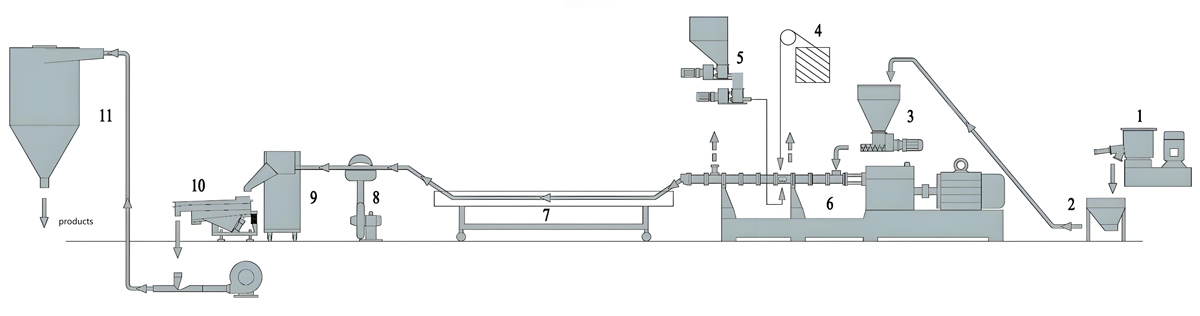
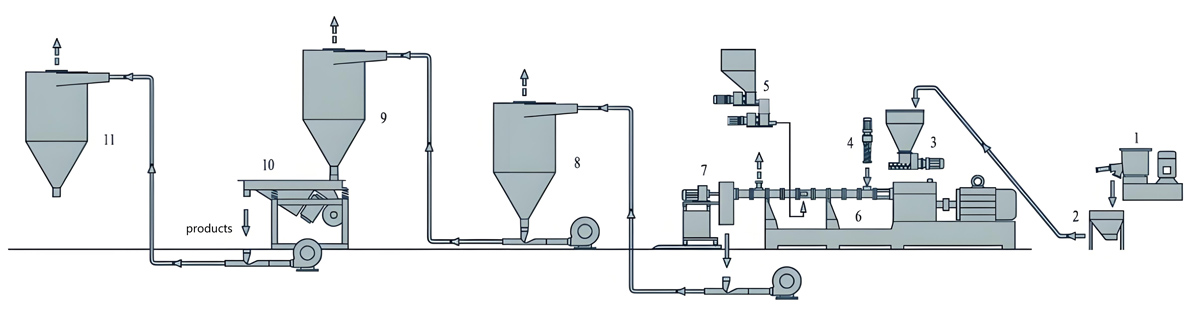
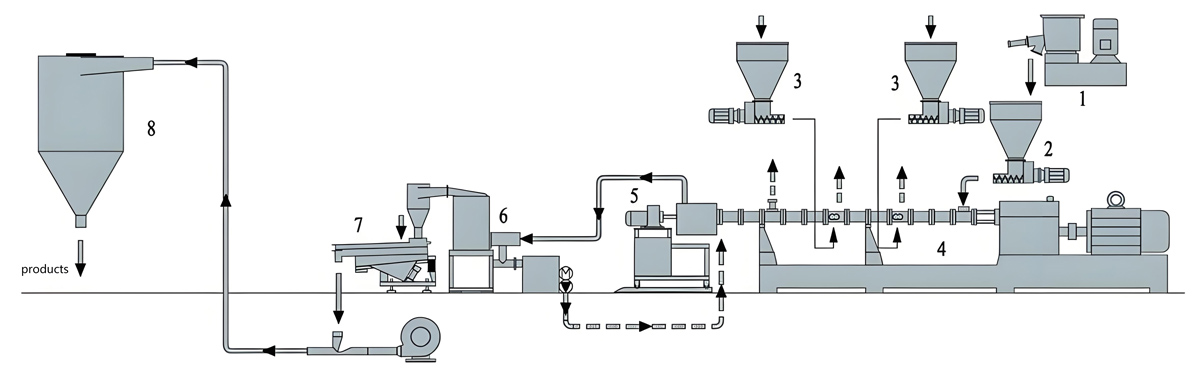
PVA 마스터배치의 제조 공정은 소재의 열 불안정성으로 인해 독특합니다. 먼저 PVA 펠릿을 컨디셔닝해야 합니다. PETG와 달리 PVA는 고온에서 건조하면 가교 결합이 일어나므로 고온 건조가 불가능합니다. 습도와 온도를 60-80°C 수준으로 유지하는 특수 컨디셔닝 시스템이 종종 사용됩니다. 컨디셔닝된 PVA는 통합형 트윈 스크류 압출기로 공급됩니다. '통합형'이라는 측면은 공기 중 수분 흡수를 방지하기 위해 압출기 호퍼에 직접 장착된 중량 손실(loss-in-weight) 피더를 의미합니다. 배럴 내부에서는 분해를 피하기 위해 상대적으로 낮은 온도(160°C – 190°C)에서 소재가 용융됩니다. 고전단 구간은 최소화되며, 대신 분산 혼합(distributive mixing)이 우선시됩니다. 용융물은 필터링되어 워터 링 펠릿화기(underwater pelletizing; PVA의 부착 방지를 위해 수중 펠릿화가 선호됨)로 보내집니다. 이후 펠릿은 즉시 방습 포장재에 포장됩니다.
생산 장비 소개
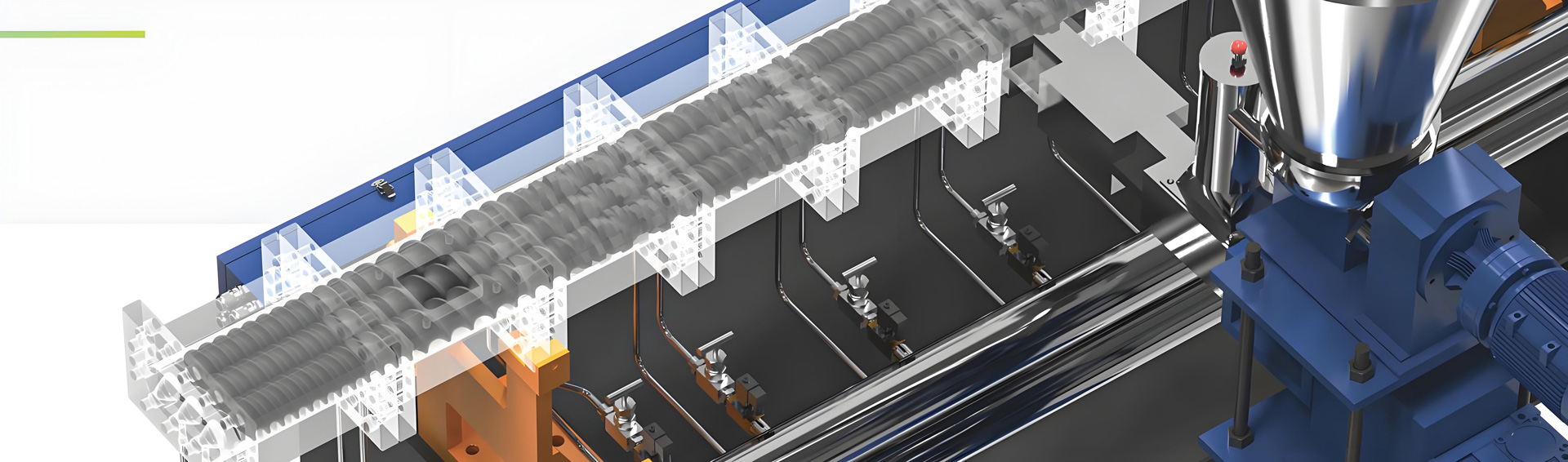
핵심 장비는 PVA용으로 구성된 난징 Kerke KTE 시리즈 동회전 트윈 스크류 압출기입니다. PVA용 KTE 시리즈는 높은 전단 없이 용융을 위한 충분한 체류 시간을 제공하기 위해 더 긴 L/D 비율(일반적으로 48:1 또는 52:1)을 특징으로 합니다. 배럴은 PVA가 용융될 때 발생하는 수증기를 제거하기 위해 대용량 진공 벤트(종종 2단계)를 갖추고 있습니다. 스크류는 '멜트 프랙처(melt fracture)' 또는 겔 형성을 유발할 수 있는 압력 축적을 방지하기 위해 넓은 니딩 블록(kneading block)과 낮은 압축비를 갖도록 설계되었습니다. 통합 제어 시스템은 피더, 압출기 속도 및 펠릿화기 컷터 속도를 일체로 관리합니다. 압출기가 감속하면 피더는 플러딩(flooding)을 방지하기 위해 공급량을 자동으로 줄입니다. 기어박스는 전단 가열을 최소화하기 위해 저속(100-400 rpm)에서의 부드러운 운전을 위해 설계된 고정밀 유닛입니다.
파라미터 설정
PVA 가공에는 온도, 속도 및 진공의 섬세한 균형이 필요합니다.
온도 프로파일
PVA는 급격히 용융됩니다. 온도는 낮게 유지해야 합니다. Zone 1: 40°C (브리지 현상 방지), Zone 2-3: 120°C – 140°C, Zone 4-6: 160°C – 180°C, Zone 7-8: 170°C – 180°C, 다이: 175°C. 190°C를 초과하면 PVA가 분해되고 변색(갈색/검정색으로 변함)됩니다.
스크류 구성 및 속도
스크류 속도는 150에서 350 rpm 사이로 상대적으로 낮게 유지됩니다. 높은 속도는 마찰열을 너무 많이 생성합니다. 토크는 약 50-60%로 중간 수준이어야 합니다. 스크류 요소는 공격적인 90° 블록보다는 전방 이송 블록과 부드러운 니딩 블록(30° 또는 45° 각도)으로 구성되어야 합니다.
진공 시스템
2단계 진공 시스템을 권장합니다. 1단계는 표면 수분을 제거하기 위해 -0.06 MPa에서 작동하며, 2단계는 결합수(bound water)를 제거하기 위해 -0.09 MPa에서 작동합니다. 오일 오염을 방지하기 위해 진공 펌프는 수증기에 대한 높은 용량(가스 발라스트 펌프)을 가져야 합니다.
장비 가격
난징 Kerke KTE 시리즈(PVA 적용) 참고 가격:
- 모델 KTE-75 (통합 시스템): $180,000 – $220,000 USD. 중량 손실 피더 및 진공 시스템 포함.
- 모델 KTE-95 (대용량): $260,000 – $320,000 USD. 높은 충전제 함량 및 2단계 진공용으로 설계됨.
참고: '통합형(Integrated)' 옵션은 동기화 제어 소프트웨어 및 보조 장비 통합으로 인해 프리미엄 가격이 책정됩니다. 가격은 FOB 난징 기준입니다.
Production Problems, Solutions, and Avoidance
Problem: Pellets Sticking Together (Blocking)
Cause Analysis: PVA is hygroscopic and sticky when warm. If the pellets are not cooled sufficiently or if there is residual moisture on the surface, they will agglomerate. This is common in water-bath pelletizing systems where the water temperature is too high or the drying cycle is insufficient.
Solution: Lower the temperature of the cooling water to below 15°C. Increase the residence time in the centrifugal dryer. If using a water-ring pelletizer, ensure the water flow rate is adequate. Add a small amount (0.5%) of anti-block agent (like talc or silica) to the formulation if permitted by the end-use application.
Avoidance Method: Use an underwater pelletizing system with a high-efficiency dryer. Ensure the final moisture content of the pellets is below 1% before packaging. Package immediately in aluminum-lined bags with desiccants. Avoid storing pellets in high-humidity environments.
Problem: Gels and Black Specks
Cause Analysis: PVA degrades rapidly if localized shear or temperature is too high. Gels are often caused by stagnant material in the barrel or cross-linked PVA. Black specks indicate carbonization due to overheating or metal-on-metal wear in the screw elements.
Solution: Reduce barrel temperatures by 10°C across the board. Purge the extruder thoroughly with a low-melting point polymer (like LDPE) to remove degraded material. Inspect screw elements for damage; replace any worn or damaged kneading blocks. Check heater bands for “runaway” heating (stuck in ON position).
Avoidance Method: Use a screw design with self-wiping capabilities to prevent stagnant zones. Install a melt temperature sensor in the die head as a safety interlock to shut down the heater if the melt exceeds 190°C. Regularly maintain the cooling fans on the barrel to prevent heat creep.
Problem: Poor Solubility of Final Masterbatch
Cause Analysis: If the PVA is over-heated or sheared too much during extrusion, it can lose its water-soluble properties due to degradation of the polymer chain or cross-linking. Another cause is poor dispersion of the plasticizer, leading to localized insoluble zones.
Solution: Optimize the mixing section. Ensure the plasticizer is added downstream where the temperature is lower to prevent volatilization. Reduce screw speed to minimize mechanical degradation. Test the solubility in a lab beaker before full production.
Avoidance Method: Use co-rotating screws which provide gentle but effective mixing compared to counter-rotating or single screw machines. Pre-blend the PVA and plasticizer in a high-speed mixer before feeding into the extruder to ensure initial distribution. Strictly control the residence time in the barrel.
Maintenance
PVA processing is demanding on maintenance. Because PVA can corrode steel if wet, the extruder must be cleaned and dried immediately after shutdown. The “purge” procedure is critical: flush with a non-corrosive, moisture-free polymer. The vacuum system requires frequent cleaning of the condensate trap to prevent water from being sucked back into the barrel. Heater bands should be checked weekly for proper contact with the barrel. The screw elements should be inspected for signs of corrosion or wear, especially if filled PVA compounds are run. The gearbox oil should be changed more frequently (every 3 months) due to the potential for moisture ingress.
FAQ
Q: Why is a twin screw extruder better than a single screw for PVA?
A: A single screw extruder relies on high friction to melt PVA, which causes severe degradation. A twin screw extruder, particularly the co-rotating KTE series, melts PVA through conductive heat and gentle shear, preserving the polymer’s solubility and mechanical properties.
Q: Can I use recycled PVA in the masterbatch?
A: Yes, but it must be cleaned and re-plasticized. Recycled PVA often has higher moisture content and degraded properties. It is usually limited to 10-20% of the formulation to avoid quality issues.
Q: What is the biggest challenge in PVA masterbatch production?
A: Moisture control is the biggest challenge. PVA absorbs water from the air instantly. The entire process—from feeding to packaging—must be isolated from ambient humidity, or the final product will be hazy, sticky, or brittle.
결론
Manufacturing PVA masterbatches is a sophisticated process that demands equipment specifically tailored for heat-sensitive and hygroscopic polymers. The Nanjing Kerke KTE Series integrated twin screw extruder provides the necessary control over temperature, shear, and vacuum to produce high-quality PVA compounds. By focusing on low-temperature processing, efficient devolatilization, and rigorous moisture control, producers can overcome the inherent difficulties of PVA. The investment in an integrated system pays off through higher yields, reduced degradation, and a masterbatch that retains the critical water-soluble properties required by the market.