최근 몇 년간
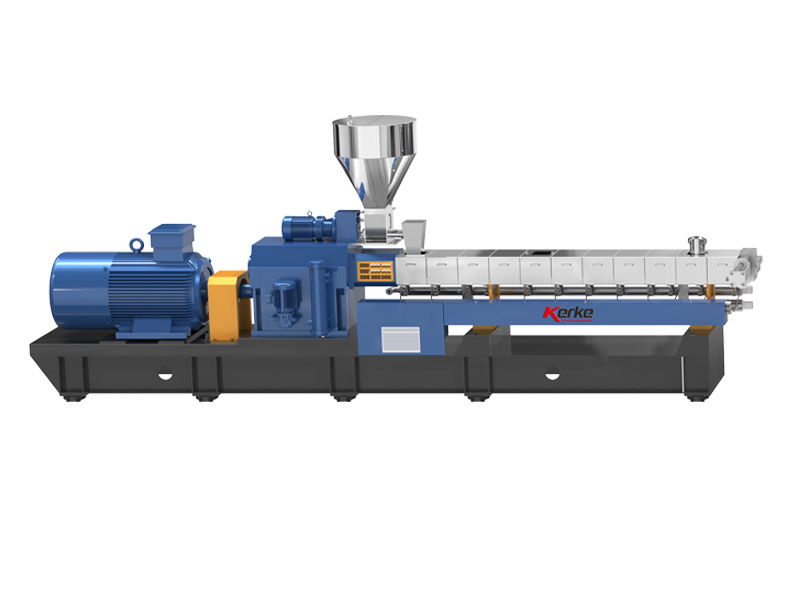
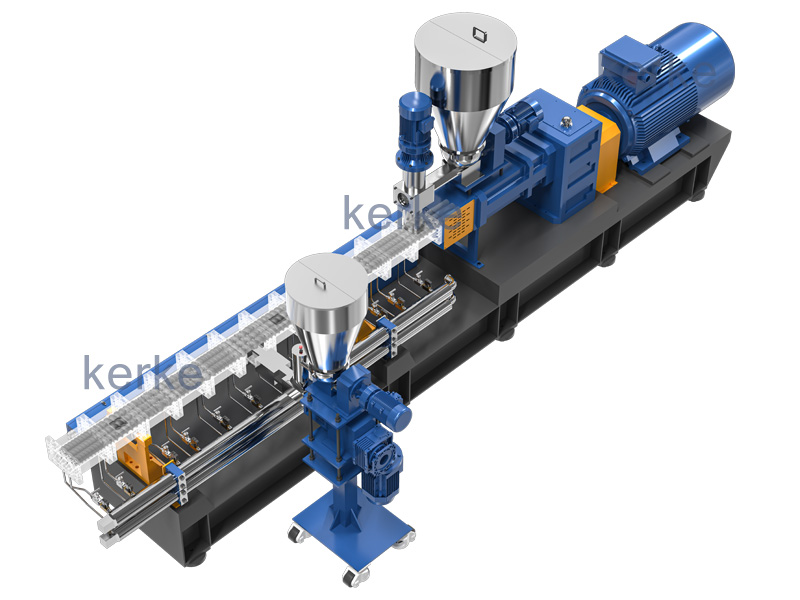
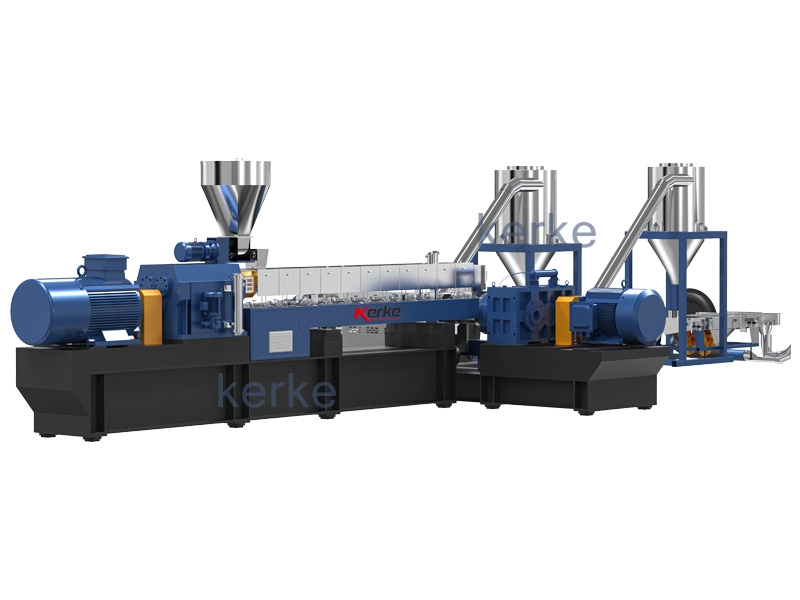
전통적인 플라스틱 개질 시장에서 새로운 유형의 플라스틱 컴파운딩 및 펠릿화 장비인 트리플 스크류 압출기가 등장했습니다. 기존 트윈 스크류 압출기와 비교할 때, 트리플 스크류 압출기는 단순히 '스크류 하나를 더한 것'이 아닙니다. 특정 응용 분야에서 분산 효율과 생산 용량에서 상당한 향상을 제공합니다.
트리플 스크류 압출기의 분류
1. 병렬 맞물림 공회전 트리플 스크류 압출기
세 개의 스크류가 병렬로 배열되어 서로 맞물리며 공회전하여, 세 개의 맞물림 이송 및 전단 영역을 형성합니다. 이는 트윈 스크류 압출기의 확장 버전으로 간주될 수 있습니다.
장점: 강한 전단 작용, 우수한 분산 혼합 및 분배 혼합, 그리고 좋은 균질화.
2. 삼각형 맞물림 공회전 트리플 스크류 압출기
스크류 표면이 전체 길이에 걸쳐서만은 아니더라도 부분적으로 겹치거나 단단하게 맞물립니다. 일부 섹션은 집중적인 혼합을 제공하며, 다른 섹션은 이송, 탈기 또는 냉각용으로 설계됩니다.
특징: 강한 혼합 영역과 부드러운 처리 영역을 결합한 균형 잡힌 또는 하이브리드 설계.
3. V형 비맞물림 공회전 트리플 스크류 압출기
스크류가 상대적으로 큰 간격을 두고 V자로 배열되어 완전히 맞물리지 않습니다. 이송 및 혼합 메커니즘은 맞물림 유형과 다르며, 주로 이송과 약한 전단에 중점을 둡니다.
응용 분야: 전단 민감성 소재에 적합; 소재 흐름은 주로 층류입니다. (이 유형은 트리플 스크류 설계에서 덜 흔하며 일반적으로 특수 장비에서 나타납니다.)

주요 성능 비교: 트리플 스크류 대 트윈 스크류 압출기
| Performance Dimension | Triple-Screw Extruder (Co-rotating) | Twin-Screw Extruder (Co-rotating) |
| Shear Strength / Dispersion | Usually stronger, with more contact and shear events per rotation. Provides superior dispersion for high-filler, pigment, and masterbatch formulations. Ideal for applications requiring intensive dispersion. | Excellent dispersion as well, but with fewer shear events per rotation. Dispersion and shear can be precisely controlled through screw element configuration. |
| Output / Energy Efficiency | At the same screw speed, the barrel can accommodate a higher material load, resulting in greater throughput and lower specific energy consumption. Well-suited for high-output and standardized formulations. | Stable and scalable output; higher process flexibility through modular screw element design. Can adapt to a wider range of processing requirements. |
| Reactive Extrusion / Residence Time / Vacuum Degassing | Typically less effective for precise reactive extrusion or deep vacuum degassing. Twin-screw systems are more established for chemical reactions, dynamic vulcanization, and crosslinking processes. | Superior in reactive extrusion, degassing, precise temperature control, and residence time distribution (RTD) management. |
| High-Viscosity or Heat-Sensitive Materials | Strong shear may cause localized overheating; caution required when processing heat-sensitive materials (can be mitigated by lower speed or optimized screw design). | More flexible control of temperature rise and plastification by adjusting compression ratio or lengthening the melting section. |
| Maintenance / Technological Maturity | Less globally widespread; limited standardization of screw elements and spare parts, which may affect maintenance response time. | Mature technology with standardized components and extensive global 서비스 networks. Proven performance supported by abundant lab and production data. |
| Suitable Processing Applications | Best for: masterbatch, color masterbatch, high-filler compounds (CaCO₃, talc), and other formulations requiring strong dispersion. | Best for: reactive extrusion (TPV, thermoplastic reactions), processes requiring efficient degassing/vacuum venting, and precise rheological or RTD control. |
트리플 스크류 압출기의 장점은 트윈 스크류 압출기보다 더 높은 분산 효율을 제공할 수 있는 능력에 있으며, 동시에 더 큰 생산량과 더 낮은 비에너지 소비를 달성합니다.
그러나 그 단점은 더 복잡한 스크류 구성으로, 검증되고 잘 최적화된 설계를 제공하기 위해 숙련된 제조업체가 필요합니다.
반면, 트윈 스크류 압출기는 수십 년간의 기술적 성숙도와 유연한 모듈식 설계의 이점을 누리고 있어, 더 넓은 범위의 소재 컴파운딩, 반응성 압출, 가교 결합 및 탈휘발 공정에 적합합니다.
플라스틱 컴파운딩 및 펠릿화에서 다양한 유형의 트리플 스크류 압출기의 기능적 비교
| Performance Indicator | Co-rotating Parallel Intermeshing | Co-rotating Triangular Intermeshing | Co-rotating V-type Non-Intermeshing |
| Mixing / Dispersive Capability | ★★★★Strong — multiple intermeshing zones and high shear frequency ensure thorough dispersion of pigments and fillers. | ★★★Moderate — intensive mixing can be achieved in specific sections, but overall uniformity is lower than full intermeshing types. | ★★Weak — mainly relies on screw conveying and backflow vortices; shear is uneven. |
| Distribution mixing | ★★★★Excellent — three interacting flow fields enable highly uniform distribution. | ★★★Good — mixing achieved through partial intermeshing zones. | ★Poor — material tends to flow in layers within screw channels. |
| Energy Consumption / Shear Heat | ★★Relatively high — more friction in intermeshing zones leads to temperature rise. | ★★Medium-high — can be locally controlled. | ★Energy-efficient — mild shear but limited mixing. |
| Suitable Materials | High-filled compounds, color masterbatch, CaCO₃, glass fiber modification, TPU, TPV, etc. | Filled compounds, general-purpose masterbatch, heat-sensitive polymers. | Heat-sensitive plastics, PVC paste, foaming masterbatch, etc. |
| Degassing / Venting Capability | ★★★Average — dense material packing in intermeshing zones makes gas release more difficult. | ★★★Good — vacuum venting can be designed in non-intermeshing sections. | ★★★★Excellent — loose material flow enhances degassing efficiency. |
| Residence Time Distribution (RTD) | ★★Short — strong shear and efficient mixing but narrow residence time range. | ★★★Moderate — controllable and balanced. | ★★★★Wide — uniform residence time distribution and smooth material flow. |
| Mechanical Complexity / Cost | ★★★★High — requires precision machining and has higher production cost. | ★★★Medium — moderately complex design. | ★Simple structure — low manufacturing cost. |
| Maintenance / Wear of Parts | ★★★★High — concentrated wear in intermeshing zones. | ★★Controllable — moderate wear. | ★Low wear — simple maintenance. |
| Typical Application Scenarios | High-filler masterbatch, engineering plastics modification (PP+CaCO₃, PA+GF, ABS+color masterbatch, etc.) | General compounding, TPR/TPU blending, filled masterbatch | Heat-sensitive plastics (PVC, EVA foam), foamed compounds, thermoplastic elastomers |
| Advantages | Strong dispersion, uniform mixing, high throughput, ideal for continuous large-scale production lines. | Balanced performance between mixing and energy efficiency; flexible screw design. | Mild shear, excellent degassing, low thermal buildup. |
| Disadvantages | High shear heat, limited degassing performance, not ideal for heat-sensitive materials. | Complex structure; process tuning requires experience. | Limited mixing capacity, uneven particle distribution, suitable for low-speed production. |