
Introdução
ABS (Acrylonitrile Butadiene Styrene) resin is one of the most widely used engineering thermoplastics in the global plastics industry, serving as the base material for countless high-performance plastic products, ranging from automotive interior components and consumer electronics housings to medical device panels and children's toys. The integral mechanical properties, surface finish quality, and processing stability of ABS directly determine the overall performance of the final molded product, as well as the cost efficiency of subsequent manufacturing operations.
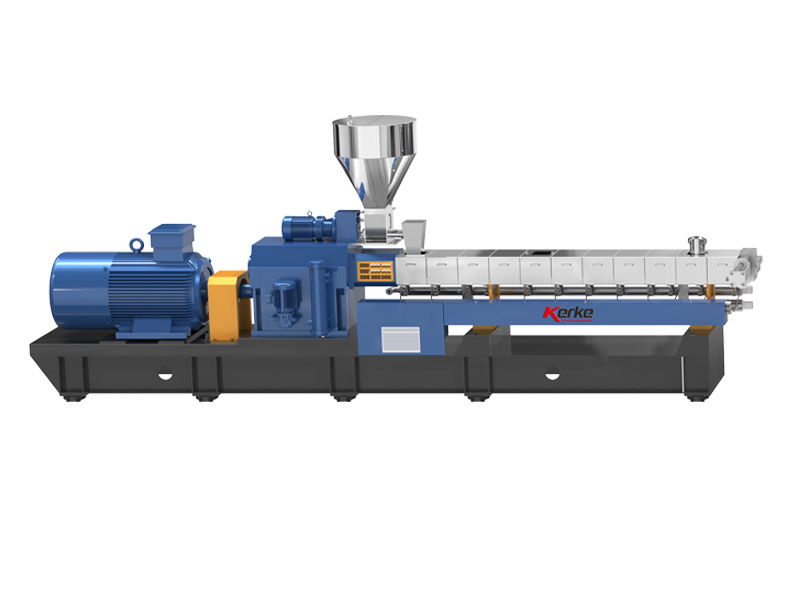
To produce high-quality modified ABS compounds and masterbatches with uniform dispersion, consistent color, and precise dimensional stability, plastic processors must master the fundamental logic of formulation design, production process control, and, most critically, extrusion equipment selection. As a leading manufacturer of professional extrusion equipment with over 20 years of industry-specific experience, Kerke provides turnkey production solutions tailored exactly to the high-wear, high-shear, and precise mixing requirements of ABS modification and blending production lines, with a focus on the industry-preferred high-torque double-screw extrusion system.
This guide covers all the essential aspects of ABS resin, from its basic definition, key advantages and main classifications, to practical applications, proven production formulas, optimized manufacturing processes, equipment selection criteria, real price factors, and recommendations for trusted suppliers. It is designed to help you make informed and cost-effective decisions for your ABS modification or blending production line.
1. O que é a resina ABS?
The ABS (Acrylonitrile Butadiene Styrene) resin is a synthetic thermoplastic made from three main monomers: acrylonitrile, butadiene, and styrene. It is a versatile, amorphous engineering thermoplastic that balances the rigidity of styrene and acrylonitrile with the toughness of polybutadiene rubber. This unique molecular structure creates a material that combines exceptional mechanical strength, chemical resistance, and processability, qualities that have made it a basic element in both general-purpose and high-performance industrial applications.
The precise ratio of these three monomers can be adjusted during production to create specialized grades of ABS, each tailored to specific application requirements. For example, increasing the acrylonitrile content improves chemical resistance and surface hardness, while a higher proportion of butadiene increases impact strength and low-temperature toughness. Adjusting the styrene content, in turn, improves processability and the aesthetic quality of the final product. This level of customization sets ABS apart from many other commodity plastics and explains its widespread use in demanding industries.
Generally supplied as cylindrical granules of ivory or pale yellow color, ABS has a melting point ranging from 217 °C to 237 °C, with a thermal decomposition temperature that begins at approximately 250 °C. It is odorless, non-toxic, and has extremely low moisture absorption, critical properties for maintaining consistent performance during high-temperature molding and extrusion. For both converters and end users, ABS represents a balanced and cost-effective solution that offers reliable performance without sacrificing design flexibility.
2. Principais vantagens da resina ABS
ABS resina se tornou o plástico de engenharia preferido para aplicações industriais de alto valor devido ao seu equilíbrio único de desempenho mecânico, versatilidade estética e eficiência de processamento, características que, juntas, reduzem os custos totais do sistema para fabricantes e usuários finais. Suas principais forças se refletem principalmente nas seguintes sete dimensões:
- Superior resistência ao impacto:ABS exhibits a 3 to 5 times higher impact strength than common commodity plastics, with an Izod impact strength of 200 to 500 J/m. It maintains impressive toughness even at sub-zero temperatures; high-impact modified grades retain an Izod impact strength of over 120 J/m at -40 °C, far exceeding polypropylene (PP), which becomes brittle near the freezing point. This strength is due to its two-phase microstructure: a rigid continuous phase of styrene-acrylonitrile (SAN) absorbs the impact energy, while dispersed particles of polybutadiene rubber deform to prevent crack propagation, which is critical for components that must withstand strong shocks or vibrations during use.
- Excelente rendimento a alta temperatura:General-purpose ABS has a glass transition temperature (Tg) ranging from 85 °C to 110 °C, while specialized heat-resistant grades can maintain stable mechanical performance at temperatures up to 115 °C. For even more demanding applications, post-processing by annealing can further increase the Tg by 10 °C. This thermal stability prevents deformation, warping or structural failures in components exposed to sustained high temperatures, such as automotive interior panels near heating systems or appliance enclosures containing motors and heat-generating circuits.
- Qualidade estética superficial Premium:The styrene component of ABS gives it an exceptional surface gloss, with a Rockwell R hardness of 100 to 115, which is hard enough to withstand scratches and minor abrasions during assembly or daily use. In addition to its direct molding finish, ABS is also highly compatible with secondary processing, including painting, electroplating, UV coating, and hot stamping. This allows manufacturers to achieve high-end decorative or functional surfaces, from matte black automotive moldings to consumer electronics cases with a shiny metallic finish, without the need for costly post-processing or surface preparation.
- Propriedades funcionais ajustáveis:ABS can be blended with a wide range of additives, fillers and modifiers to precisely tailor its performance to the extreme requirements of each application. Flame retardant grades, for example, can achieve a UL 94 V-0 flammability rating with a thickness of just 1.5 mm, critical for use in electronic and electrical enclosures where fire safety is a priority. By incorporating conductive or antistatic additives, ABS can also be designed to dissipate static electricity or even provide electromagnetic shielding for sensitive electronic components. This customizability means that ABS can be optimized for use cases ranging from sterile medical equipment to explosion-proof industrial enclosures.
- Processabilidade Excepcional:ABS oferece propriedades moderadas de fluxo de fusão e amplas janelas de processamento, o que o torna ideal para o processo padrão da indústria de extrusão de dois tornos + pelletização por fio de água. Oferece uma alta estabilidade dimensional consistente em todas as condições de processamento, com uma taxa de contração de moldagem de apenas 0,4% a 0,7%. Isso minimiza o risco de alabeo, desvio dimensional ou defeitos de montagem no produto final, um requisito essencial para a produção em volume de componentes de precisão.
- Boa estabilidade química:ABS demonstrates excellent resistance to water, most inorganic salts, alkalis, and a wide range of dilute acids. It is also insoluble in most common alcohols and hydrocarbon solvents, which means it will not degrade or lose structural integrity when exposed to typical cleaning agents, lubricants, or aqueous solutions during use. This broad chemical resistance makes it a reliable choice for components that require frequent disinfection, such as medical device housings, or those exposed to splashes of mild chemicals in industrial environments.
- Rendimento confiável de isolamento elétrico:ABS exhibits stable electrical insulation properties over a wide range of frequencies and environmental conditions. This means that it reliably resists the flow of electrical current, making it a safe and cost-effective choice for insulating components in electrical and electronic equipment, from internal structural supports in household appliances to the enclosures of power tools and portable electronic devices.
3. Tipos comuns de resina ABS
O material ABS pode ser classificado a partir de três dimensões principais de acordo com suas características de desempenho, composição modificada e requisitos de aplicação, para satisfazer as necessidades de produção personalizada de diferentes produtos plásticos posteriores.
3.1 Classificação por características de desempenho
Este é o marco de classificação mais utilizado na indústria do ABS, pois alinha diretamente as propriedades do material com os requisitos funcionais da aplicação final. Os principais tipos disponíveis no mercado são os seguintes:
- ABS de Uso Geral:It balances mechanical strength, impact resistance, and processability to serve as a cost-effective base for high-volume consumer applications. It is typically used in electronic device housings, small appliance components, toys, and general-purpose automotive interior parts. This grade represents 39.1% of the global ABS market, which is worth $13.5 billion in 2026.
- ABS de Alto Impacto:Formulated with a higher proportion of butadiene rubber to provide superior toughness, with an Izod impact strength of over 400 J/m. This grade is designed for components that must withstand heavy static or dynamic loads, such as automotive bumpers, door thresholds and motorcycle fenders. It is also commonly used in electric tool housings and industrial equipment components, where resistance to high-impact forces is an uncompromising requirement.
- ABS Resistente ao Calor:Designed to maintain stable mechanical performance at elevated temperatures, with an HDT of up to 115°C, 10 to 15°C higher than general-purpose ABS. This makes it ideal for components exposed to sustained heat during operation, such as automotive dashboard panels, appliance housing parts and internal components of hair dryers.
- ABS retardador de chamas:Modified with halogenated or halogen-free flame retardants to achieve UL 94 V-0 or V-1 flammability ratings, with low smoke and low toxicity properties. This grade is specifically designed for applications with strict fire safety standards, including electronic enclosures, 5G communication equipment enclosures, and automotive interior components.
- ABS de Alto Brillo:Formulated to provide a smooth, high-gloss surface finish directly from the molding, eliminating the need for secondary surface treatments such as painting or polishing. It is widely used in high-end consumer applications where visual appeal is a key purchasing factor, including the outer housings of home appliances, smart speaker enclosures, laptop covers, and toy parts.
3.2 Classificação por composição modificada
Para atender aos requisitos de desempenho cada vez mais rigorosos de indústrias emergentes, como veículos de nova energia e comunicações 5G, o ABS é frequentemente misturado ou misturado com outros polímeros ou cargas funcionais para superar as limitações inerentes do ABS de base única. As principais composições de ABS modificado comercializadas são as seguintes:
- Aleações de ABS:ABS blends with other polímeros de engenharia que combinam as melhores propriedades de ambos materiais de base. Exemplos comuns incluem as aleações ABS/PC (policarbonato), que equilibram a excelente processabilidade do ABS com a rigidez e a resistência ao calor excepcionais do PC; e as aleações ABS/PBT (tereftalato de polibutileno), que oferecem uma resistência química e estabilidade dimensional melhoradas em condições húmidas.
- ABS Repleto:ABS misturado com cargas inorgânicas, como carbonato de cálcio, talco ou fibra de vidro, para melhorar propriedades específicas ou reduzir os custos gerais do material. O ABS recheado com carbonato de cálcio, por exemplo, pode reduzir o custo do componente final em 20% a 40%, mantendo uma resistência mecânica suficiente para aplicações de uso geral.
- ABS reforçado:Modified ABS with high-strength synthetic fibers, including glass fiber, carbon fiber, or aramid fiber, to significantly increase tensile strength, flexural modulus, and thermal deflection temperature. This type of modified ABS is typically used in automotive structural components and electrical equipment housings, where it can replace more expensive engineering materials to reduce system costs.
- ABS funcionalizado:ABS misturado com aditivos especiais para conferir propriedades funcionais específicas além do desempenho mecânico ou térmico padrão. Isso inclui graus antiescala, condutivos, de blindagem eletromagnética ou até mesmo resistentes à radiação, cada um adaptado para cumprir os rigorosos requisitos de funcionamento de indústrias especializadas.
3.3 Classificação por indústria de aplicação
The technical requirements for ABS vary significantly between different industries, making this classification framework critical for material suppliers and converters to adjust product performance to the needs of the end user. The main application-specific grades are as follows:
- ABS de grau automotivo:A specialized modified grade designed to meet the unique requirements of the automotive industry, with improved low-temperature toughness, heat resistance, and weatherability. It also requires excellent processability for the manufacture of complex thin-wall components, as well as low volatility and odor emissions to meet global automotive interior air quality standards. This sector alone will account for more than 44% of global ABS consumption by 2026.
- ABS de grau elétrico/elettrônico:Formulado com propriedades superiores de isolamento elétrico, estabilidade dimensional e resistência à chama, para cumprir os rigorosos requisitos de segurança e desempenho da indústria elétrica e eletrônica. Também deve ser compatível com o processamento secundário, como revestimento superficial e pintura eletrostática, para cumprir tanto as especificações funcionais como estéticas.
- ABS de Graduação Médica:A highly purified, specialized grade that meets strict international regulatory standards for medical devices, including ISO 10993 biocompatibility testing and FDA food contact safety requirements. It exhibits high resistance to commonly used high-level disinfectants (including 75% ethanol and disinfectants with 500 ppm available chlorine), without surface degradation or discoloration after repeated cycles of friction disinfection.
- ABS de grau para brinquedos:A safe, food-grade, impact-resistant grade, specifically formulated for the toy manufacturing industry. It must meet strict global safety standards, including the EU EN 71-3 standard and the US CPSIA regulations, which require low levels of emissions of volatile organic compounds (VOCs) and no harmful substances that can be licked. It must also be tough enough to withstand breakage into small, sharp pieces following an impact, reducing the risk of injury during use.
4. Principais aplicações da resina ABS
A resina ABS é um plástico de engenharia indispensável em quase todos os campos da fabricação industrial, e seus principais cenários de aplicação se concentram nas seguintes cinco indústrias:
4.1 Indústria automotiva
The automotive industry is currently the largest global end market for ABS resin, accounting for 33.2% of total global demand by 2026. This widespread adoption is driven by the unique combination of lightweight design flexibility, impact resistance, and heat resistance of ABS, properties that enable automotive manufacturers to reduce vehicle weight (and thus improve fuel efficiency or the range of electric vehicles) while maintaining safety and performance standards.
ABS is used in both interior and exterior automotive components, with the most common applications being instrument panel frames, door panel inserts, centre console housings, air deflector grilles and ventilation outlets. In these components, high-impact ABS grades are typically specified to meet occupant protection requirements in the event of a collision. For example, the instrument panel frames of the BMW 3 Series use a high-impact ABS composite material + glass fibre, which meets the impact performance requirements of global automotive safety standards. The growth of new energy vehicles has further expanded the application frontier for ABS resin. In electric vehicles, ABS is also used in battery pack protection housings and charging port covers, applications that require the material to withstand long-term environmental ageing while providing sufficient electrical insulation and mechanical protection.
4.2 Indústria elétrica e eletrónica
The electrical and electronics industry is the second largest end market for ABS resin, accounting for 29.5% of global demand by 2026. This demand is driven primarily by the material’s excellent electrical insulation properties, dimensional stability, and adaptability to high-volume precision molding processes. In this industry, ABS is widely used to manufacture the casings and internal structural supports of large and small appliances, including refrigerators, washing machines, air conditioners, and rice cookers. It is also the material of choice for the outer casings of consumer electronics such as laptops, tablets, and mobile phones, as well as for the casings of 5G communication base stations and smart home devices.
In these applications, ABS is frequently modified to meet the industry’s strict safety standards. For example, flame-retardant grades of ABS are required for 5G base station enclosures to comply with fire safety regulations, while high-impact grades are specified for the internal structural frames of washing machines, which must withstand significant vibration stress during operation. The rapid growth of the global market for 5G infrastructure and smart home devices is expected to further drive demand for special grades of ABS, particularly high-flow and flame-retardant grades that enable the thin-wall molding requirements of modern electronic device designs.
4.3 Indústria de brinquedos e bens de consumo
The toy and consumer goods industry is the third largest end market for ABS resin, representing 13.1% of global demand by 2026, which is equivalent to approximately USD 4.5 billion in market value. This widespread use is driven by the unique combination of ABS’ safety performance, impact resistance, and surface finish quality, all of which are critical requirements for children’s products and consumer goods.
The most common application of ABS in this sector is the manufacture of toys, where it is used to produce building blocks, car models, action figure accessories and a wide range of other children's products. For example, the interlocking plastic blocks produced by the Danish toy manufacturer Lego are made from a specially modified high-transparency, high-impact grade of ABS that meets the strict toy safety standards of the EU and the United States. Beyond toys, ABS is also widely used in consumer goods applications, such as the cases of electric toothbrushes, hair dryer covers, kitchen knife handles and the bodies of power tools. In these applications, ABS is frequently chosen for its ability to be molded into complex, ergonomic shapes with a high-quality surface finish, eliminating the need for costly secondary processing.
4.4 Indústria de dispositivos médicos
The medical device industry is one of the fastest-growing niche markets for ABS resin, with demand growing at an annual rate of more than 5%, significantly above the overall industry average. This growth is driven by the unique combination of sterilization resistance, mechanical strength, and design flexibility offered by medical-grade ABS, all of which are critical to the demanding manufacturing and use requirements of medical devices.
In this industry, ABS is widely used to manufacture the outer casings and functional components of a wide range of diagnostic and therapeutic devices, including the main casings of portable patient monitors, handle components of surgical power saws, ultrasound machine casing panels, and covers for in vitro diagnostic equipment. For these applications, medical-grade ABS is typically specified to meet global regulatory standards, including ISO 10993 biocompatibility testing and U.S. FDA food contact safety requirements. This grade of ABS also exhibits high resistance to commonly used high-level disinfectants, with no surface degradation or discoloration after repeated cycles of friction disinfection. For example, the Chinese medical device manufacturer Mindray uses a specialized, heat-resistant and galvanized grade of ABS for the control panels of its ultrasound systems. This material maintains stable performance even after more than 1,000 cycles of friction disinfection with 75% ethanol or disinfectants with 500 ppm available chlorine, and meets the industry’s strict total organic carbon (TOC) precipitation requirements, with a TOC release level of less than 50 ppm.
4.5 Indústria do Embalagem
The packaging industry is a small but stable niche market for ABS resin, with demand growing steadily in line with the global expansion of the food and beverage, pharmaceutical, and consumer electronics sectors. In this industry, ABS is mainly used to manufacture specialized packaging components that require exceptional mechanical strength, impact resistance, or antistatic properties, characteristics that commodity plastics such as polyethylene (PE) or polystyrene (PS) cannot always provide.
The most common applications of ABS in this sector are reusable and durable transportation packaging components, including trays used to transport precision electronic components such as semiconductor chips or surface-mount technology (SMT) parts, as well as reusable plastic transport boxes used to ship automotive parts between manufacturing facilities. In these applications, ABS is frequently modified to have antistatic or conductive properties, which are critical for preventing electrostatic discharge (ESD) damage to sensitive electronic components during handling and transportation. Another key application of ABS in the packaging industry is the production of high-end specialized packaging containers, such as jars used for premium cosmetics or bottles used for high-end personal care products. In these use cases, ABS is frequently chosen for its ability to be molded into complex shapes with a high-quality, glossy finish, enhancing the perceived value of the products inside.
5. Formulários recomendados de ABS
A fórmula da resina ABS deve ser personalizada e otimizada de acordo com o tipo de resina portadora, a carga de enchimento, os requisitos funcionais e a capacidade real de processamento do equipamento de extrusão. A seguir, apresentamos três formulações típicas e maduras, que estão perfeitamente adaptadas à linha de produção de extrusão de duplo rolo de alto par da Kerke (L/D 40/44:1) com sistema de pelletização por fio de água.
5.1 Fórmula 1: ABS de Uso Geral para Carcaças Eletrónicas
This formulation is designed for general-purpose ABS applications, such as electronic device housings and appliance components, that require a balanced combination of mechanical strength, impact resistance, and surface finish quality. It is composed of 100 phr of ABS resin (a blend of general-purpose and high-impact grades), which serves as the base polymer matrix to provide the fundamental balance of rigidity and toughness; 15-25 phr of a brominated flame retardant (such as deca-bromodiphenylethane or brominated epoxy resin), which acts as the primary flame-resistant component; 5-8 phr of antimony trioxide (Sb2O3), which functions as a flame retardant synergist to enhance the efficiency of the brominated flame retardant, with the two components typically formulated in a 3:1 ratio; 3-5 phr of a metacrylic-butadiene-styrene impact modifier (MBS), which further improves the toughness of the compound to meet the impact strength requirements of thin-walled housing parts; and 1.5-3 phr of processing aids (including lubricants such as polyethylene wax and dispersants such as bis-stearamide of ethylene (EBS)), which improve the melt flow of the material during processing and prevent the flame retardant or other additives from migrating to the surface of the final product. In terms of processing adaptability, this formulation blends perfectly with a Kerke high-speed mixer + double-screw corrotational extruder with L/D 40:1 (high torque configuration) + water-line pelletizing system with gantry cutter, supporting conventional production of 200 to 800 kg/h.
5.2 Formula 2: ABS de Alto Impacto para Peças Internas de Automóveis
This formulation is developed for high-impact ABS applications, such as automotive interior parts, that require exceptional low-temperature toughness, heat resistance, and weather resistance. Its precise composition includes 100 phr of ABS resin (a high-impact grade with a butadiene content of more than 18%), which provides the base material with excellent low-temperature toughness; 8-12 phr of a halogen-free phosphorus-nitrogen-based flame retardant, which meets the strict low-vapor and odor emission standards of the automotive industry; 5-10 phr of a chlorinated polyethylene impact modifier (CPE), which further improves the low-temperature toughness of the compound; 3-8 phr of a maleic anhydride grafted onto styrene-ethylene-butylene-styrene (SEBS-g-MAH) compatibilizer, which improves the compatibility between the ABS matrix and the flame retardant and impact modifier, ensuring long-term performance stability; 1-2 phr of an ultraviolet (UV) stabilizer, which improves the material’s resistance to UV aging and prevents discoloration or fragility during prolonged outdoor use; and 1.5-3 phr of processing aids (including lubricants such as pentaerythritol tetrastearate (PETS) and dispersants such as EBS), which improve the melt flow of the material and ensure a consistent, high-quality surface finish on the final molded component. This formulation is optimized for a Kerke high-speed mixer + double-screw corrotational extruder with an L/D ratio of 44:1 (high torque drive system) + water-jet pelletizing system with a gate cutter, offering a conventional production capacity of 300 to 1,200 kg/h.
5.3 Fórmula 3: ABS recheado com carbonato de cálcio para peças industriais de uso geral
This formulation is designed for general-purpose industrial applications sensitive to cost, such as toy parts, electrical tool housings, and non-critical internal components of household appliances. It combines acceptable mechanical performance with significant cost savings, making it ideal for high-volume, low-margin production scenarios. Its precise composition includes 100 phr of ABS resin (a blend of recycled and virgin ABS grades), which serves as the base polymer matrix; 30-70 phr of finely ground calcium carbonate (with a particle size range of 3 to 10 μm), which acts as the primary cost-reducing filler; 1-5 phr of a surface treatment agent (such as stearic acid or a titanate coupling agent), which modifies the surface of the calcium carbonate filler to improve compatibility with the ABS polymer matrix; 5-8 phr of an MBS impact modifier, which counteracts the inherent fragility effect of the calcium carbonate filler to maintain acceptable impact strength; and 1.5-3 phr of processing aids (including lubricants such as polyethylene wax and dispersants such as EBS), which improve the melt flow of the material and prevent the filler from settling or agglomerating during processing. For production, this formulation is fully adapted to a Kerke high-speed mixer + double-screw rotational extruder with L/D 40:1 (high torque configuration) + waterjet pelletizing system with gantry cutter, supporting conventional production of 500 to 1,500 kg/h.
6. Processo de Produção de ABS
O processo de produção de compostos modificados de ABS é um processo contínuo de mistura e plastificação física, que consegue a dispersão uniforme de aditivos funcionais na resina ABS através do funcionamento coordenado de equipamentos de pré-tratamento, mistura, extrusão e pelletização. O processo de produção padrão da indústria, centrado na extrusão de duplo parafuso de alto par + pelletização por fio de água, é o seguinte:
- Secagem prévia da matéria-prima:ABS resin has a certain degree of moisture absorption, with a typical saturation moisture content of 0.3% to 0.8%. If the moisture content exceeds 0.1% during processing, the molecular chain of ABS will be hydrolyzed during high-temperature extrusion, causing serious defects such as silver streaks, bubbles, or even cracks in the final product. Therefore, before mixing, ABS resin must be dried to a moisture content below 0.02%, well below the industry's general threshold. This drying process is typically carried out in a specialized dehumidification drying hopper at a temperature of 80°C to 90°C for 3 to 4 hours.
- Pesagem e mistura a alta velocidade:According to the precise formula proportion designed in advance, the dry ABS resin, functional additives (such as flame retardants, impact modifiers, and thermal stabilizers), and fillers (such as calcium carbonate or glass fiber) are accurately weighed using a precision weight feeder or a similar dosing system. The heavy materials are then automatically transported to a high-speed mixer for pre-mixing. Under the action of high-speed agitation, the internal temperature of the material rapidly rises to 110°C-130°C, achieving the preliminary uniform dispersion of the additives and fillers in the ABS resin. This pre-mixing process typically takes 10 to 15 minutes to complete.
- Molhagem e dispersão por extrusão:The uniformly mixed premix is automatically transported to the double-screw corotational extruder with L/D 40/44:1 (equipped with a high-torque motor) for intensive shearing mixing. The high-torque drive system (typically with a torque rating of 11-13 Nm/cm³) ensures sufficient power for material transport even with high filler loads, while the optimized screw configuration (wide-passage conveying elements + interrupted kneading blocks) provides a gentle but effective shearing action, avoiding excessive shearing of the butadiene rubber phase that would reduce impact strength. The extrusion temperature profile is precisely adjusted according to the specific formula requirements, with a typical range of 180 °C to 230 °C, and the screw speed is generally set between 200 and 500 RPM.
- Desgasificação e eliminação de substâncias voláteis:Para eliminar a umidade residual, o ar e os compostos orgânicos voláteis (COV) gerados pela decomposição térmica dos aditivos ou da resina durante o processo de fusão, o extrusor está equipado com uma zona de desgasificação, tipicamente localizada na seção média do canhão, após a etapa de mistura inicial. Esta zona de desgasificação está conectada a uma bomba de vácuo de alta potência, que mantém um nível de vácuo de 600 a 760 mmHg de pressão absoluta dentro do canhão. Este ambiente de pressão negativa elimina eficazmente todos os contaminantes voláteis do material fundido, prevenindo a formação de vácuos, bolhas ou defeitos superficiais no produto final.
- Pelletização por Hilo de Agua e Formação:The melt transported steadily through the extruder is filtered through a high-precision mesh changer to remove impurities and unbroken agglomerates, and then extruded through a row of wires to form uniform cylindrical wires. The wires are cooled and solidified immediately in a water bath (typically 3 to 5 meters long) to maintain dimensional stability, and then transported to a gantry pelletizer with high-speed rotating blades. The gantry design ensures stable feed of the wire and precise cutting, producing cylindrical granules with uniform length (typically 2-3 mm) and smooth surfaces, critical for consistent feeding in subsequent injection molding processes.
- Desidratação e Secagem:The granular material with surface moisture is transported to a centrifugal dehydrator for high-speed dehydration, removing most of the surface water from the granules. The material is then fed into a fluidized bed dryer for secondary drying, using a high-temperature, low-humidity air flow to remove any remaining surface moisture. After this two-stage drying process, the moisture content of the final granules is consistently controlled below 0.02%, meeting the stringent quality requirements for subsequent processing.
- Tamizado e Envasado:The dry granules are conveyed to a vibrating sifter equipped with multiple layers of precision sieves to remove abnormal granules of excessive or insufficient size, ensuring a uniform particle size distribution of the final product. After sieving, the qualified finished ABS granules are conveyed to a large-volume silo for temporary storage, and then automatically dosed and packaged into 25 kg or 500 kg moisture-resistant bags or packaging boxes. The packaged products are finally conveyed to a temperature- and humidity-controlled warehouse for storage, pending delivery to subsequent customers.
7. Como escolher o equipamento de extrusão adequado para a produção de ABS?
The production of high-quality modified ABS compounds places extremely high demands on the dispersion performance, wear resistance, and process control accuracy of extrusion equipment. For ABS engineering plastics, industry consensus focuses on twin-screw, corrotational extruders with an L/D ratio of 40/44:1 and high-torque motors + water-jet pelletizing systems with gantry cutters, a configuration that balances mixing efficiency, material protection, and production stability.
7.1 Requisitos Fundamentais para o Equipamento de Extrusão de ABS
- Sistema de acionamento de alto desempenho:ABS processing (especially with high filler loads or alloy mixtures) requires sufficient torque to ensure stable material transport and mixing without overloading the motor. A torque rating of 11-13 Nm/cm³ is recommended, as it allows the processing of high-viscosity castings at lower temperatures, reducing the risk of thermal degradation while maintaining uniform dispersion.
- Configuração otimizada do parafuso com L/D 40/44:1:The long L/D ratio of 40-44:1 provides an adequate residence time for the plasticization of the material and the dispersion of additives, while avoiding excessive heat accumulation. The screw should use modular distribution mixing elements (instead of intensive dispersing elements) to protect the butadiene rubber phase from shear degradation, ensuring that the final product retains its impact resistance.
- Design profissional de resistência ao desgaste:Formulations containing inorganic fillers (such as calcium carbonate or glass fiber) can cause significant abrasive wear to the screw and barrel during continuous long-term operation. Therefore, the screw, barrel, and other central parts in direct contact with the material must be made of special wear-resistant alloy materials (such as bimetallic alloy coating or nitrided steel) to reduce the wear rate and extend the service life of the equipment.
- Sistema de Controle de Temperatura Preciso:A temperatura de processamento deve ser controlada com precisão dentro de ±1,5 °C do valor objetivo para garantir que a resina ABS se plástica completamente sem causar degradação térmica. Este nível de precisão é uma condição necessária para garantir o efeito de dispersão dos aditivos e cargas, bem como a estabilidade das propriedades mecânicas do produto final.
- Capacidade estável de geração de pressão:The extruder must generate a stable and uniform melting pressure to ensure consistent fiber formation during the pelletizing stage. Fluctuations in the melting pressure will directly lead to uneven fiber diameter, abnormal particle shapes, and even affect the normal operation of the gantry pelletizer, causing serious production losses.
- Capacidade de desvolatilização de alto rendimento:O equipamento deve estar equipado com um sistema de desgasificação a vácuo de alta precisão e alta potência para eliminar de forma eficaz a umidade residual, o ar e os COV gerados durante o processamento dos materiais modificados de ABS. Isso é crítico para evitar defeitos superficiais, como manchas de prata, bolhas ou até mesmo rachaduras no produto moldado final.
7.2 Soluções de equipamento de extrusão recomendadas pela Kerke
Como fabricante profissional de equipamentos de extrusão com vasta experiência na produção de modificação e mistura de ABS, a Kerke desenvolveu uma solução chave na mão especializada adaptada ao método de processamento preferido pela indústria para os plásticos de engenharia de ABS:
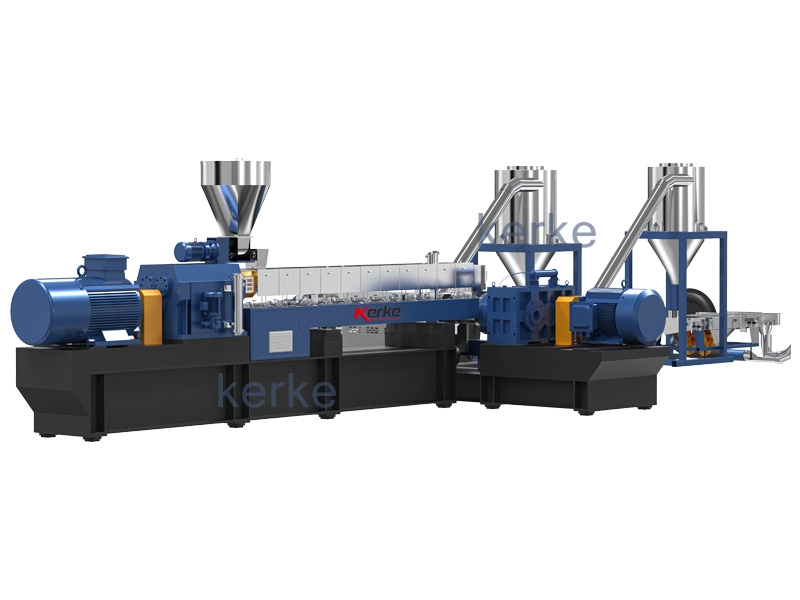
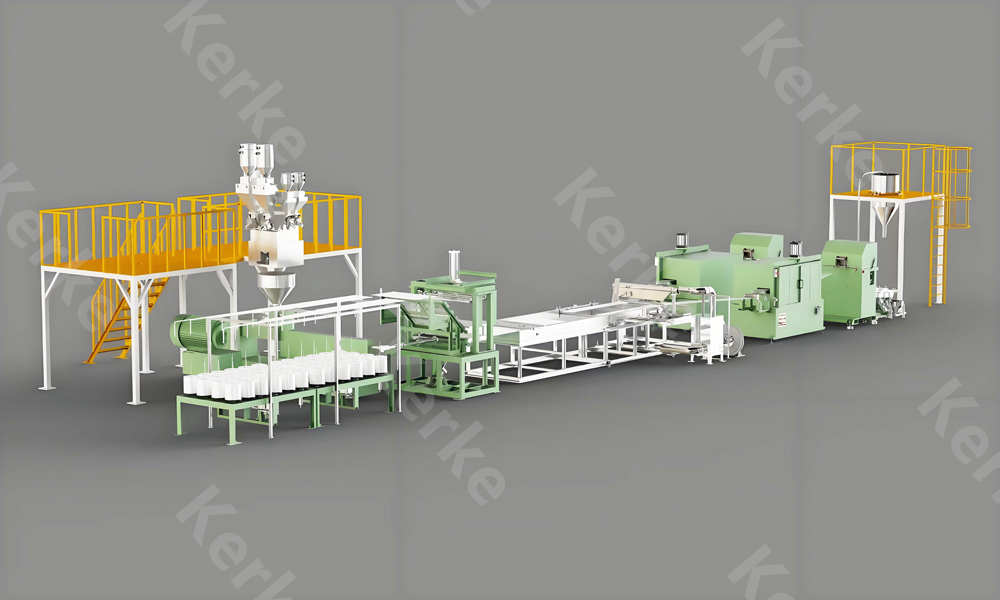
Solução principal: Mezclador de alta velocidade + extrusor rotativo de duplo parafuso com L/D 40/44:1 (alto par) + sistema de pelotização por fio de água com cortador de porta.
Esta solução está optimizada para todos os principais cenários de produção de ABS, desde ABS de uso geral e retardante de chama até graus de alto relleno e modificados com aleações, e incorpora componentes testados na indústria:
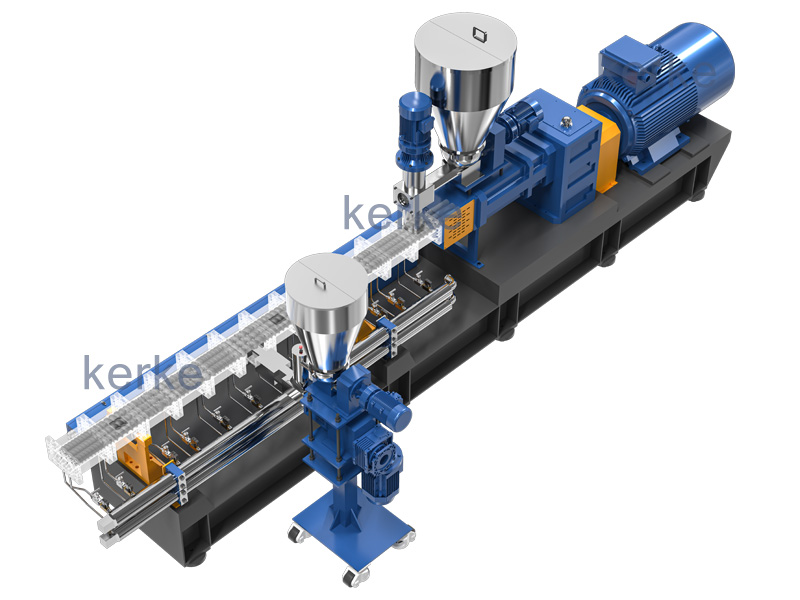
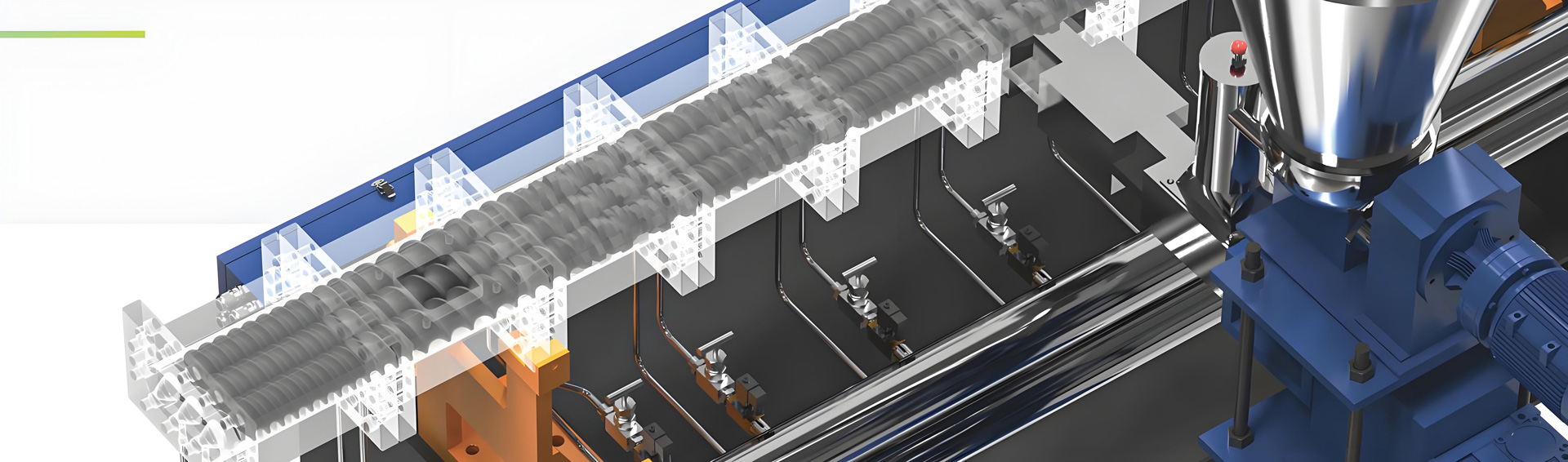
- Extrusor de dupla torção de alto desempenho:Available in L/D ratios of 40:1 and 44:1, equipped with a heavy-duty gearbox and a high-torque motor (11-13 Nm/cm³ torque rating). The modular screw design uses wide-pitch conveying elements and interrupted kneading blocks to achieve a uniform mix without excessive shear, protecting the butadiene phase of the ABS. The barrels and screws are made of wear-resistant bimetallic alloy to withstand formulations with high filler loading.
- Sistema de Alimentação de Precisão:Equipado com alimentadoras de perda de peso para a resina principal e os aditivos, garantindo um controle preciso da proporção da fórmula (precisão de alimentação de ±0,1%) para manter a consistência do produto.
- Sistema de pelotização por fio de água:It includes a row of wires with uniform flow channels, a multi-stage water bath for precise cooling, and a gantry pelletizer with hardened steel blades. The gantry design ensures stable wire tension and clean cuts, producing granules with consistent length and minimal fines.
- Sistema de Controle Inteligente:O controle baseado em PLC com interface de tela táctil suporta controle de temperatura multizona (precisão de ±1 °C), regulagem da velocidade do parafuso e monitorização da desgasificação por vácuo. O sistema armazena mais de 100 programas de receitas para troca rápida de fórmula e inclui alarmes de falha em tempo real para a segurança da produção.
Esta solução suporta capacidades de produção entre 200 kg/h e 1.500 kg/h, adaptando-se tanto à personalização em pequenos lotes como à produção em massa a grande escala. Foi validada em mais de 300 projetos de processamento de ABS em todo o mundo, com clientes que relataram um aumento de 35% na eficiência de produção e uma redução de 78% na taxa de defeitos do produto em comparação com equipamentos não especializados.
8. Quais são os fatores que afetam o preço dos produtos de ABS?
O preço da resina ABS no mercado varia consideravelmente, o que é afetado principalmente pelos seguintes cinco fatores-chave:
- Custo da matéria-prima:The type and quality of the ABS base resin, the fillers, and the functional additives are the most important factors affecting the cost of the final modified ABS product. The cost of the base resin typically represents 60% to 80% of the total production cost; for example, virgin ABS resin is significantly more expensive than recycled ABS resin. Special additives, such as halogen-free flame retardants, UV stabilizers, or impact modifiers, also have a significant impact on the final cost; these high-performance additives can be 2 to 5 times more expensive than general-purpose alternatives.
- Carga de recheio:The higher the filler content in the formula, the lower the cost of raw materials per unit weight of the product. However, higher filler loads also require higher torque extrusion equipment to achieve the required dispersion effect, which increases the initial investment in equipment and the energy consumption costs of production. The balance between these two factors determines the overall profitability of the formulation.
- Requisitos Funcionais:Conventional general-purpose ABS has a relatively low price, while specialized ABS (such as high-impact, flame retardant, or weather-resistant grades) requires the addition of special functional additives and more stringent process control, so the price is significantly higher. For example, the cost of flame retardant ABS is typically 15% to 30% higher than that of general-purpose ABS, while the cost of high-impact automotive-grade ABS can be 20% to 40% higher.
- Quantidade do pedido:Large-volume orders can reduce a company’s overall production costs through standardized, high-volume production, reducing the frequency of equipment downtime and material changes, and improving overall production efficiency. Therefore, the unit price of large-volume orders is typically 5% to 15% lower than that of custom orders in small batches.
- Processo de Produção e Equipamento:The modified ABS compounds produced by high-precision extrusion equipment (such as the high-torque double-screw extrusion line with L/D 44:1 from Kerke) have a more uniform additive dispersion, more stable mechanical properties, and a lower defect rate than those produced by ordinary equipment. This reduces overall production losses, so the product price will be correspondingly higher.
In terms of market price ranges, the price of conventional general-purpose ABS typically ranges between USD 1.6 and 2.7 per kilogram in 2026, while the price of high-performance specialized ABS (such as flame retardant or high-impact automotive-grade ABS) is between USD 2.8 and 4.2 per kilogram. By 2027, these prices are expected to increase slightly by 3% to 5% due to fluctuations in raw material costs. For the specific quotation of modified ABS compounds, it is necessary to provide the detailed formula, carrier type, functional requirements, and order quantity to the manufacturer for customized calculation.
9. Fornecedor de confiança de máquinas de extrusão de ABS: Kerke
Ao escolher o equipamento de extrusão para a produção de modificação ou mistura de ABS, a força técnica do fornecedor, sua experiência em aplicações industriais e sua capacidade de serviço pós-venda são os fatores-chave que determinam o funcionamento estável a longo prazo da linha de produção. A Kerke (nome completo: Kerke Extrusion Equipment Co., Ltd.) é um fabricante líder de equipamentos de extrusão profissional, focado na pesquisa, desenvolvimento, produção e venda de equipamentos de extrusão de duplo parafuso de alto par, e possui ampla experiência em projetos no campo da modificação e mistura de ABS.
9.1 Por que escolher a Kerke como seu fornecedor de equipamentos de extrusão?
- Otimização técnica específica para ABS:Kerke’s R&D team has a deep understanding of the processing characteristics of modified ABS materials, such as sensitivity to tearing, the risk of thermal degradation, and high filler load requirements. The company’s double-screw extruders with L/D 40/44:1 are specially optimized with high-torque drives and smooth mixing screw configurations to ensure uniform dispersion while protecting the butadiene rubber phase from degradation.
- Serviço de Linha de Produção Pronta para Utilização:Kerke fornece um conjunto completo de soluções chave-na-mão para a produção de compostos modificados de ABS, integrando misturadores de alta velocidade, alimentadores de precisão, extrusores de dupla hélice de alto par, sistemas de pelletização por fio de água com cortadores de porta e equipamentos de desidratação e secagem. Todos os componentes estão perfeitamente combinados para evitar problemas de compatibilidade, e não é necessário equipamento auxiliar adicional para a instalação.
- Estrito Sistema de Controle de Qualidade:All parts of Kerke's equipment undergo strict quality inspection and testing before leaving the factory. Key components, such as the screw and barrel, are made of high-quality bimetallic alloy materials, which have been processed through precision machining and special processes, ensuring that the equipment can operate stably 24 hours a day, 7 days a week, under high-load conditions.
- Capacidade de Design Personalizado:The Kerke technical team can perform customized configuration and optimization based on the customer's actual production capacity, formula characteristics, and workshop conditions. For example, for customers producing high-fill ABS (≥50% filler content), Kerke can increase the torque rating and add specialized feed sections; for the production of flame retardant ABS, the extruder is equipped with improved degassing systems to remove the volatile by-products of the flame retardant.
- Sistema de Serviço Pós-Venda Efetivo:Kerke estabeleceu um sistema completo de serviço pós-venda. A equipe técnica da empresa pode fornecer aos clientes uma gama completa de serviços, incluindo instalação de equipamentos, comissionamento, formação técnica e manutenção. Em caso de falha do equipamento, a equipe de serviço local pode responder rapidamente e chegar ao local do cliente em até 48 horas para garantir a rápida recuperação da produção.
9.2 Casos de sucesso da Kerke na indústria
At present, Kerke has served numerous global plastic processing manufacturers in the field of ABS modification and blending. Our professional twin-screw extrusion production lines have been widely applied in the production of general-purpose ABS, flame retardant ABS, high-impact ABS, filler-modified ABS and other main grades. A large number of cooperative companies have achieved stable product quality, standardized production processes and optimized production costs after adopting Kerke's customized extrusion solutions.
Como referência, muitas empresas nacionais e internacionais de novos materiais adotaram o extrusor de dupla roda de alto par da Kerke com a configuração profissional de L/D 44:1 e o sistema de pelotização por fio de água para a produção de materiais modificados de ABS. A linha de produção está perfeitamente adaptada às diversas demandas de processamento de fórmulas de ABS, incluindo a modificação com preenchimento, a modificação com retardantes de chama e a modificação de tenacificação. Após a entrada em funcionamento e a produção formal, os clientes conseguiram uma dispersão mais uniforme de aditivos e propriedades mecânicas mais estáveis dos grânulos de ABS acabados. Ao mesmo tempo, a estabilidade geral da produção melhorou significativamente, reduzindo efetivamente os produtos defeituosos e o consumo integral de produção, proporcionando benefícios de produção estáveis e a longo prazo para as fábricas de mistura de ABS.
Para obter mais informações sobre as soluções de extrusão de ABS da Kerke, visite a Biblioteca Oficial de Soluções de Extrusão da Kerke.
Conclusão
ABS resin is a versatile and cost-effective engineering plastic that balances mechanical performance, aesthetic quality, and processability, making it an indispensable material in the global plastics industry. With the market projected to reach $37.25 billion by 2027, its demand in the automotive, electronics, and medical sectors continues to grow rapidly. Its unique performance tuning capability enables it to meet the demanding application requirements of a wide range of high-value components. To produce modified ABS compounds with consistent performance, companies must not only design a scientific and reasonable formula, but also be equipped with professional extrusion production equipment, specifically high-torque double-screw extruders with an L/D ratio of 40/44:1 and water-line pelletizing systems, that match the formula and process requirements.
As a leading company in the field of extrusion equipment manufacturing, Kerke has a deep understanding of the production process requirements of modified ABS materials and provides customers with cost-effective turnkey extrusion solutions. Whether it is a small-scale company planning to build a new production line or a large-scale company seeking to upgrade existing equipment, Kerke can provide you with a professional equipment solution and full-cycle technical support.
¿Pronto para otimizar sua linha de produção de ABS?
A equipe técnica profissional da Kerke pode fornecer soluções personalizadas de equipamentos de extrusão, de acordo com as características da sua fórmula, os requisitos de capacidade de produção e seu orçamento. Também oferecemos consultoria técnica gratuita, sugestões de otimização da fórmula de processo e uma cotação precisa de equipamentos.
[Entre em contato com Kerke hoje!] para obter a solução específica para o seu projeto de produção de ABS.