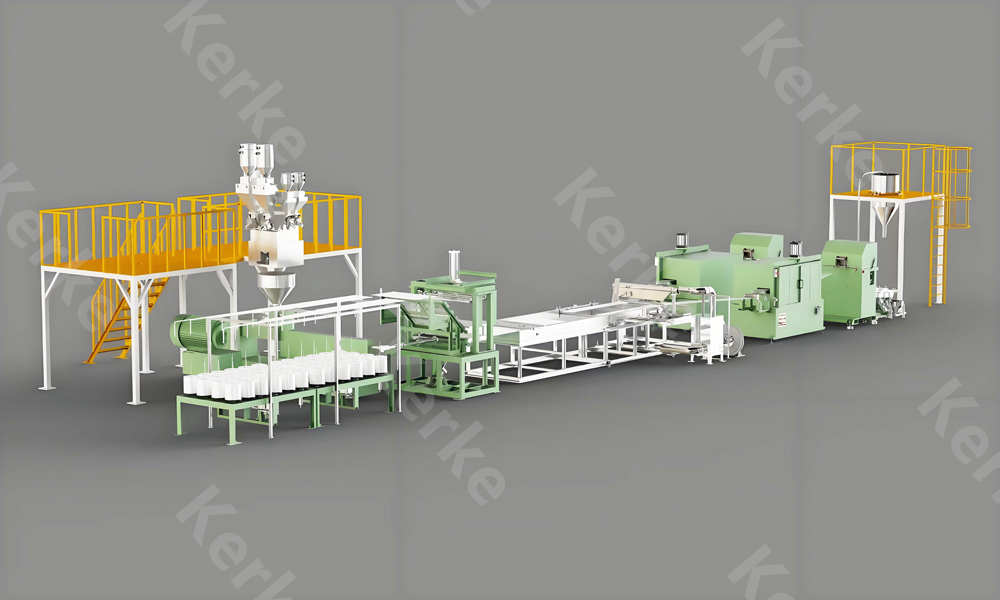
Einführung in die Ökonomie der Masterbatch-Produktion
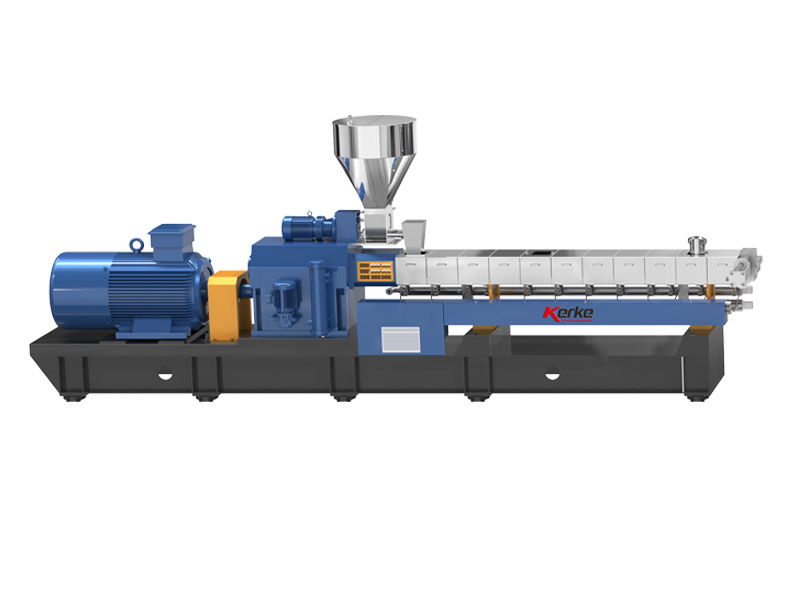
In the highly competitive plastics industry, the margin for error is razor-thin. For plastic master factories—facilities dedicated to producing color concentrates, additive masterbatches, and filling compounds—profitability is not just about selling price; it is about the efficiency of every kilogram produced. The masterbatch extruder is the heart of this operation. It is not merely a piece of machinery; it is a financial engine that converts raw polymers and pigments into high-value products. The difference between a profitable quarter and a loss often comes down to the specific energy consumption, the dispersion quality, and the throughput capacity of the extrusion line. This article provides a comprehensive analysis of how investing in a high-performance masterbatch extruder, specifically from a reputable manufacturer like Nanjing Kerke Extrusion Equipment Co., Ltd., can transform a factory’s financial outlook by reducing operational costs and increasing product value.
Die direkte Auswirkung des Hochdrehmoment-Designs auf Rohmaterialkosten
Einer der bedeutendsten Kostentreiber in der Masterbatch-Produktion sind die Rohmaterialkosten, speziell das Trägerharz and teure Pigmente oder Additive. Herkömmliche Einschneckenextruder oder Niedrigdrehmoment-Doppelschneckenmaschinen haben oft Schwierigkeiten, hohe Beladungen von Pigmenten oder Füllstoffen einzuarbeiten. Sie benötigen einen höheren Prozentsatz an Trägerharz, das als Schmiermittel hilft, das Material fließfähig zu machen, was das Produkt verwässert and die Kosten pro Kilogramm erhöht.
Eine moderne, hochdrehmomentige Masterbatch-Extrudermaschine, wie sie von Kerke produziert wird, ändert diese Gleichung. Diese Maschinen sind mit gleichläufigen, ineinandergreifenden Schnecken konstruiert, die enorme Scherung and Dehnströmung erzeugen. Dies ermöglicht die Verarbeitung von Rezepturen mit Pigmentbeladungen von bis zu 70 % bis 80 % in einigen Fällen and reduziert so den Bedarf an teurem Trägerharz deutlich. Wenn beispielsweise eine Fabrik 1.000 Tonnen Schwarz-Masterbatch jährlich produziert, kann die Reduzierung des Trägerharzanteils um nur 5 % durch bessere Dispergierung and höhere Beladungsfähigkeit allein zehntausende US-Dollar an Rohmaterialkosten einsparen. Die anfänglichen Kapitalkosten für eine Hochdrehmomentmaschine sind höher, doch die Amortisationszeit wird oft in Monaten statt Jahren gemessen, dank dieser Materialeinsparungen.
Energieeffizienz und spezifischer Energieverbrauch (SEC)
Energie ist nach den Rohstoffen die zweitgrößte Betriebsausgabe. Ältere Extrusionslinien arbeiten oft mit spezifischen Energieverbräuchen (SEC) von 0,15 bis 0,20 kWh pro Kilogramm. Moderne Masterbatch-Extruder von Kerke integrieren mehrere energie sparende Technologien. Erstens sind die Getriebe mit hochpräziser Schleifung and effizienten Schmiersystemen ausgelegt, die mechanische Wirkungsgrade von bis zu 98 % erreichen. Dies minimiert Energieverluste durch Reibung and Wärmeentwicklung innerhalb des Getriebes selbst.
Second, the barrel heating and cooling systems are optimized. Instead of simple on/off band heaters, modern systems use ceramic heaters with insulation jackets that reduce thermal radiation loss to the environment. Furthermore, advanced process control systems utilize “viscous dissipation” or self-heating. By optimizing the screw profile, the mechanical work done on the polymer generates heat internally, reducing the need for external electric heating. In high-speed compounding, up to 40% of the required heat can come from shear, drastically lowering electricity bills. A detailed cost analysis shows that upgrading from a standard 110kW line to a Kerke energy-efficient model can reduce power consumption by 15% to 20%. For a factory running 24/7, this translates to an annual saving of approximately $15,000 to $20,000 per extrusion line, depending on local electricity rates.
Senkung der Arbeitskosten durch Automatisierung und intelligente Regelung
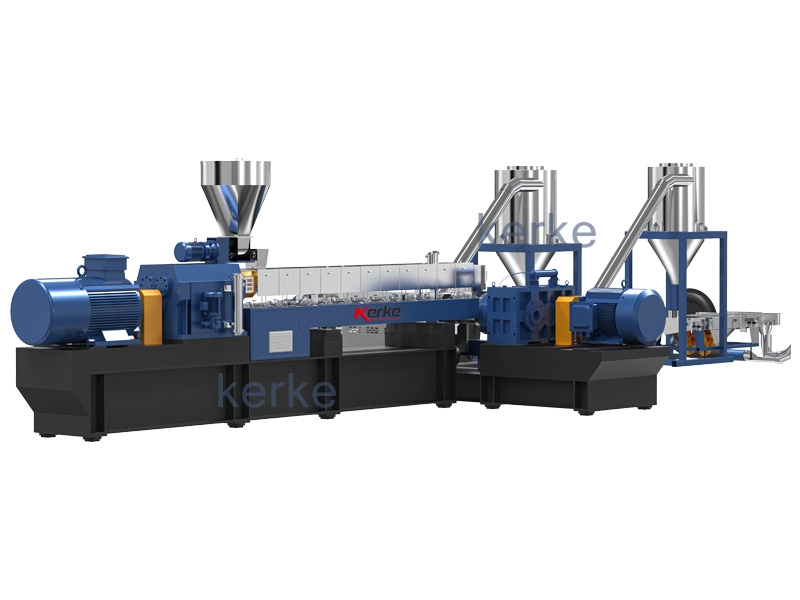
Die Arbeitskosten steigen weltweit, and die Extrusionsindustrie bildet keine Ausnahme. Eine traditionelle Extrusionslinie könnte zwei bis drei Bediener pro Schicht benötigen, um Dosierung, Temperaturanpassungen and Granulierung zu verwalten. Eine vollautomatisierte Masterbatch-Extruderanlage mit SPS and SCADA-Schnittstelle kann dies auf einen einzigen Bediener reduzieren, der mehrere Linien überwacht. Kerke-Extruder sind serienmäßig mit fortschrittlichen Regelsystemen ausgestattet, die die Rezepturspeicherung ermöglichen. Beim Wechsel von einer roten zu einer blauen Farbe passt das System automatisch Dosiererraten, Schneckendrehzahl and Vakuumpegel basierend auf der vorprogrammierten Rezeptur an.
This automation eliminates the “guesswork” and the variability caused by human error. Consistent recipes mean consistent product quality, which drastically reduces the rate of off-spec production and customer returns. The cost of scrap is often underestimated; a single off-spec batch of 500kg can cost $1,000 in materials plus disposal fees. By automating the process, the scrap rate can be reduced from 3-5% down to less than 1%. Over a year, this reduction in waste alone can cover the cost of the automation upgrade. Additionally, remote monitoring capabilities allow engineers to diagnose issues without being physically present, further optimizing labor utilization.
Gesamtbetriebskosten: Wartung und Langlebigkeit
Bei der Bewertung der Profitabilität muss man über den Kaufpreis hinaus auf die Gesamtbetriebskosten (TCO) blicken. Günstige Extruder mögen einen niedrigeren Vorabpreis haben, leiden aber oft unter vorzeitigem Verschleiß, häufigen Ausfällen and mangelnder Ersatzteilverfügbarkeit. Ein Kerke-Masterbatch-Extruder ist auf Langlebigkeit ausgelegt. Die Schnecken and Zylinder bestehen aus Schnellarbeitsstahl (wie W6Mo5Cr4V2) mit Vakuumhärtung and Nitrierung, was ihnen überlegene Verschleißfestigkeit verleiht.
The modular design of the barrel means that instead of replacing the entire barrel when a section wears out, only the worn segment needs to be replaced. This modular approach can reduce maintenance costs by 50% over the machine’s life. For instance, replacing a full barrel on a large extruder might cost $20,000, whereas replacing a single modular segment might cost only $3,000. Furthermore, the drive systems use high-quality bearings and seals from international brands, reducing the frequency of unplanned downtime. Downtime is the silent profit killer; if a line goes down for 24 hours, the loss includes not just production volume but also potential penalty clauses for late delivery. Investing in a machine with a robust service network and a solid warranty minimizes this risk.
Marktflexibilität und hochwertige Spezialcompounds
Der Markt für Masterbatches verschiebt sich von generischen Commodities hin zu hochwertigen Spezialcompounds. Dazu zählen technische Kunststoff-Verträglichkeitsvermittler, hochkonzentrierte Additive and reaktive Extrusionsprodukte. Ein Standardextruder kann die komplexen Rezepturen, die diese Nischenmärkte erfordern, nicht bewältigen. Ein vielseitiger Doppelschnecken-Compoundierextruder erlaubt einer Fabrik, sich schnell umzustellen. Beispielsweise kann eine Fabrik unter der Woche Standard-PE-Füllstoff-Masterbatch produzieren and am Wochenende auf hochwertige Nylon-Glasfaser-Compounds umschalten.
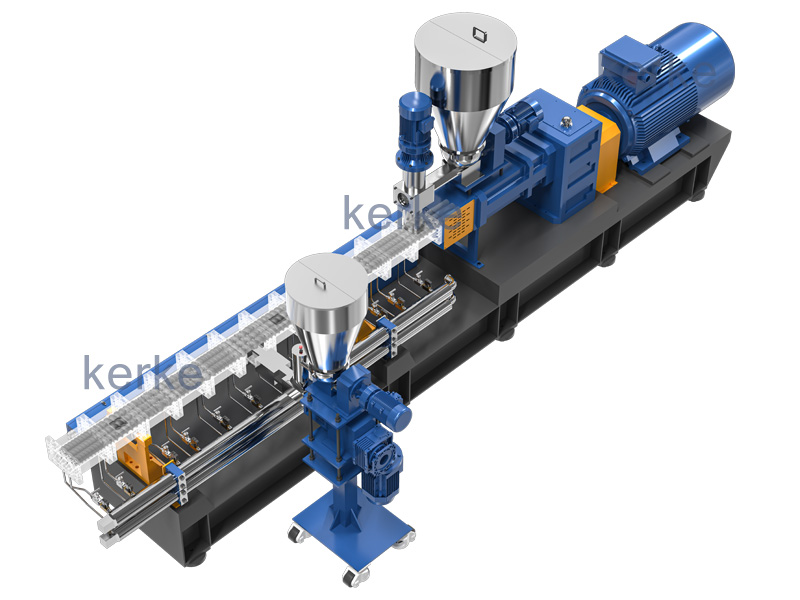
The ability to produce these specialty compounds commands a much higher margin. While a standard color masterbatch might sell for a premium of $0.20 per kg over the raw material cost, a specialty additive masterbatch might command a premium of $1.50 per kg. The flexibility of the Kerke extruder, with its ability to handle multiple feeders, side stuffers, and reactive injection ports, enables this diversification. The cost of this flexibility is the initial investment in the machine’s complexity, but the revenue potential from entering new market segments often dwarfs this cost. A factory that can offer “one-stop-shop” compounding services becomes indispensable to its clients, securing long-term contracts and stable cash flow.
Detaillierte Kostenanalyse und ROI-Berechnung
Um die finanzielle Auswirkung zu verstehen, betrachten wir eine hypothetische ROI-Berechnung für eine mittelgroße Kunststoff-Masterfabrik, die ihre Linie aufrüstet. Die Fabrik produziert 500 Tonnen Masterbatch pro Monat. Ihre aktuelle Maschine ist 10 Jahre alt, verbraucht 0,18 kWh/kg, hat eine Ausschussrate von 4 % and benötigt 2 Bediener pro Schicht. Sie erwägen einen neuen Kerke-75-mm-gleichläufigen Doppelschneckenextruder.
The new machine costs approximately $120,000. It promises an SEC of 0.14 kWh/kg, a scrap rate of 1%, and requires only 1 operator per shift due to automation. Assuming an electricity cost of $0.12/kWh and an average labor cost of $15/hour (including benefits), the calculations are as follows. Energy savings: (0.18 – 0.14) kWh/kg * 500,000 kg/month * $0.12 = $2,400 per month. Labor savings: Reducing 1 operator per shift for 24 hours saves 24 hours * $15 = $360 per day, or roughly $10,800 per month (assuming 30 days). Material savings from reduced scrap: 3% reduction on 500 tons is 15 tons per month. At a material cost of $1,500/ton, this saves $22,500 per month. Total monthly savings amount to roughly $35,700. The payback period for the $120,000 machine is just over 3 months. After that, the savings contribute directly to the bottom line, potentially increasing net profit margins by 15-20%.
Qualitätskonsistenz und Markenruf
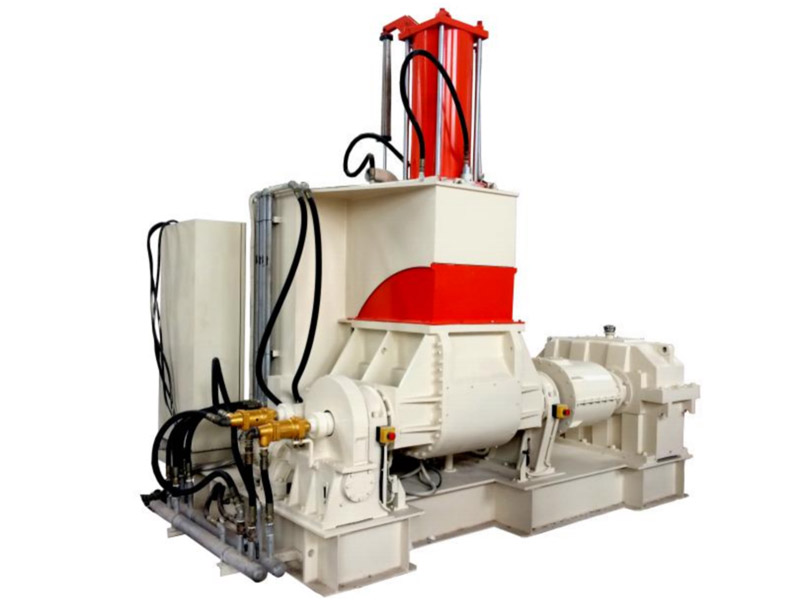
In der B2B-Kunststoffindustrie ist der Ruf alles. Eine einzige Charge mit inkonsistenter Farbe oder schlechter Dispergierung kann dazu führen, dass ein Kunde die Lieferung ablehnt and den Lieferanten wechselt. Masterbatch-Extruder sichern die Qualität, indem sie ein enges Verweilzeitspektrum (RTD) bieten. Das bedeutet, dass jedes Kunststoffpartikel fast die gleiche Zeit in der Maschine verbringt and die gleiche Scher- and Thermogeschichte erfährt. Dies ist in Batch-Mischern oder Einschneckenextrudern unmöglich.
Kerke extruders are equipped with online monitoring systems that can track torque, pressure, and temperature in real-time. If the torque spikes, indicating a lump of unmixed pigment, the system can alert the operator or even automatically adjust the screw speed to break it up. This level of control ensures that the final pellets have a consistent Melt Flow Index (MFI) and color strength. For the factory owner, this consistency translates to fewer customer complaints, fewer re-work orders, and the ability to charge a premium for “guaranteed quality” products. The intangible value of a strong brand reputation for quality is a significant asset that protects market share against low-cost competitors.
Fazit
Die Entscheidung, in einen neuen Masterbatch-Extruder zu investieren, sollte nicht als Kapitalausgabe, sondern als strategische Investition in die Profitabilität betrachtet werden. Die Vorteile sind vielfältig: direkte Einsparungen bei Rohmaterialien durch hohe Beladungsfähigkeit, signifikante Reduzierung des Energieverbrauchs, niedrigere Arbeitskosten durch Automatisierung and die Fähigkeit, hochmargen-Spezialprodukte zu produzieren. Berücksichtigt man zudem die Reduzierung von Ausschuss and den Wert konsistenter Qualität, ist das ROI überzeugend. Für Kunststoff-Masterfabriken, die in einer Ära steigender Kosten and harten Wettbewerbs gedeihen wollen, ist das Upgrade auf einen modernen, effizienten and zuverlässigen Extruder eines vertrauenswürdigen Partners wie Kerke Extrusion der wirksamste Weg, um langfristigen finanziellen Erfolg zu sichern. Die Maschine bezahlt sich selbst, indem sie den gesamten Produktionsprozess schlanker, schneller and leistungsfähiger macht.