Introduction
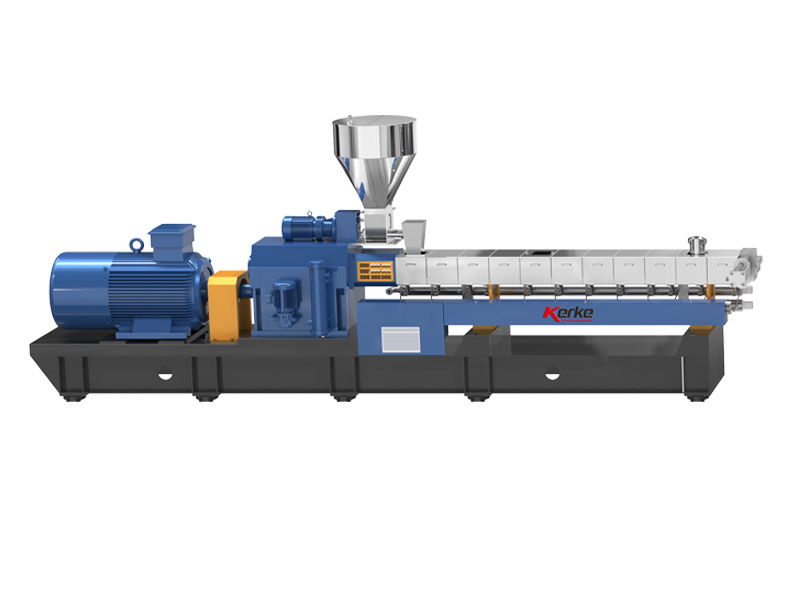
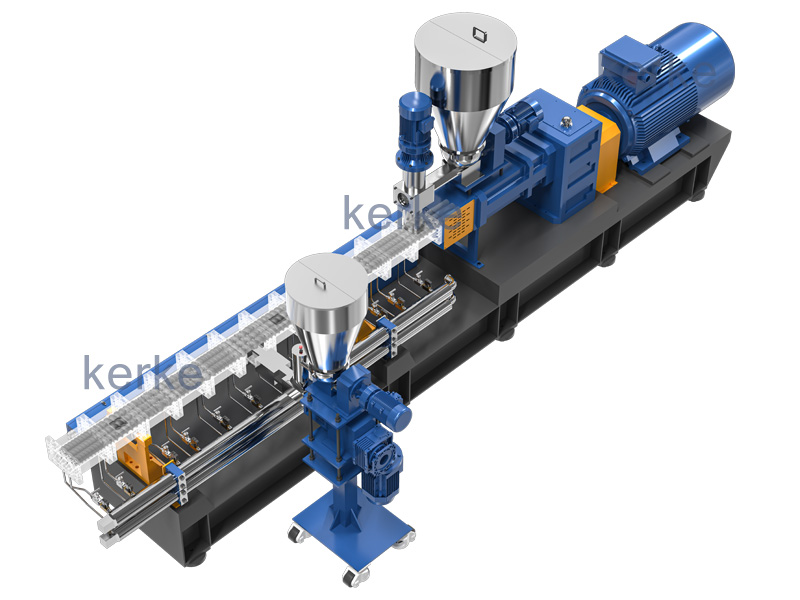
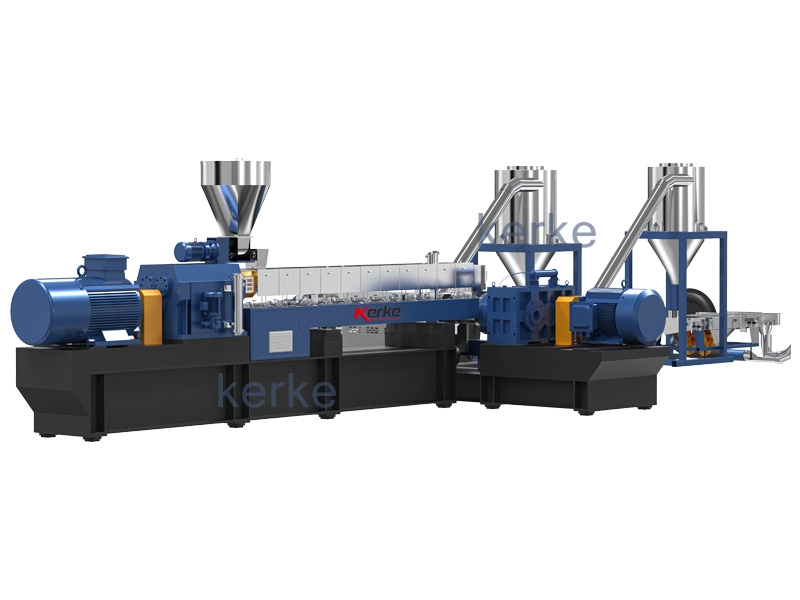
Purchasing a compounding extruder represents substantial investment for any plastics processing operation, with typical costs ranging from $150,000 for smaller models to $600,000 or more for large, high-capacity systems. The quality and performance of chosen extruder directly affects production efficiency, product quality, and operational costs over equipment life of 10-15 years or more. Therefore, thorough quality verification before purchase is absolutely essential to ensure the selected equipment meets requirements and delivers expected performance. Quality verification encompasses multiple aspects including mechanical construction, electrical systems, control capabilities, and actual performance testing with customer materials.
Kerke Extruder hat umfassende Qualitätsverifikationsprotokolle entwickelt, die Kunden bei der Bewertung von Zwillingsschneckenextrudern und Compoundieranlagen befolgen können. Unsere Produktionsanlage verfügt über eine ISO 9001-Zertifizierung, die eine konsistente Qualität aller von uns produzierten Geräte gewährleistet. Der Verifikationsprozess umfasst eine detaillierte Inspektion der mechanischen Komponenten, der elektrischen Systeme und der Steuerungssoftware, gefolgt von Leistungsprüfungen unter realistischen Bedingungen. Kerke bietet Kunden die Möglichkeit, die Produktionsprüfungen zu beobachten und an umfassenden Akzeptanzverfahren teilzunehmen, bevor die Geräte versendet werden. Dieser transparente Ansatz gewährleistet vollständiges Vertrauen in die Gerätequalität und -leistung, bevor ein endgültiges Kaufengagement erfolgt.
Die wirtschaftlichen Auswirkungen einer gründlichen Qualitätsprüfung vor dem Kauf können nicht genug betont werden. Mangelhafte Geräte können sofortige Reparaturen erforderlich machen, Produktionsverzögerungen verursachen und zu einer unterdurchschnittlichen Produktqualität führen. Die Kosten für Qualitätsprobleme können im ersten Betriebsjahr leicht 50-100% des ursprünglichen Kaufpreises an zusätzlichen Ausgaben übersteigen. Die Investition von Zeit und Ressourcen in eine ordnungsgemäße Qualitätsprüfung vor dem Kauf verhindert diese kostspieligen Probleme und sorgt dafür, dass die Investition in Geräte die erwarteten Ergebnisse liefert. Dieser Leitfaden bietet einen umfassenden Rahmen für die Qualitätsprüfung, der alle kritischen Aspekte der Bewertung von Compoundier-Extrudern abdeckt.
Mechanical Construction Quality Assessment
Die mechanische Konstruktion bildet die Grundlage für die Qualität und Zuverlässigkeit eines Compoundierextruders. Eine gründliche Bewertung der mechanischen Komponenten, der Materialien, der Fertigungsqualität und der Montagegenauigkeit bietet wichtige Einblicke in die Lebensdauer und Leistungsfähigkeit der Ausrüstung. Eine schlechte mechanische Konstruktion führt unweigerlich zu vorzeitigem Verschleiß, übermäßigen Wartungsanforderungen und unterdurchschnittlicher Produktqualität.
Prüfung der Schrauben- und Zylinderqualität
Die Schraube und der Behälter sind die wichtigsten mechanischen Komponenten in jedem Compoundierextruder und beeinflussen direkt die Mischleistung, die Verschleißfestigkeit und die Produktqualität. Eine gründliche Inspektion dieser Komponenten während der Herstellung oder bei der Fabrikakzeptanztests bietet eine wertvolle Qualitätssicherung.
Die Qualität der Schrauben sollte durch eine dimensionale Inspektion, die Überprüfung des Materials und die Bewertung der Oberflächenqualität bewertet werden. Zu den dimensionalen Prüfungen gehören die Messung der Schraubendurchmesser, der Flugtiefe, der Flugbreite und der Schrägstellung an mehreren Stellen entlang der Schraubenlänge. Toleranzen sollten nicht über 0,02 mm für kritische Abmessungen liegen. Die Materialprüfung bestätigt, dass die angegebenen Materialien, einschließlich Werkzeugstähle, nitriderte Stähle oder bimetallische Liner, tatsächlich wie angegeben verwendet werden. Materialzertifikate sollten überprüft und, wenn möglich, die Materialhärte an kritischen Verschleißflächen getestet werden. Die Oberflächenfinishprüfung untersucht die Schraubenoberflächen auf Bearbeitungsmarken, Schleiffeinbußen oder Oberflächenunregelmäßigkeiten, die das Materialfluss beeinträchtigen oder zu Verschleiß führen könnten.
Die Qualitätsprüfung von Rohren umfasst die Überprüfung des Bohrens, der Oberflächenqualität und der Linerqualität, wenn eine bimetallische Konstruktion vorgesehen ist. Der Bohrendurchmesser sollte an mehreren Stellen entlang der Rohrlänge gemessen werden, um die Konsistenz zu überprüfen. Die Toleranz für den Bohrendurchmesser sollte bei den meisten Anwendungen nicht mehr als 0,03 mm betragen. Die Oberflächenqualität sollte auf Unebenheiten oder Bearbeitungsfehler geprüft werden, die den Materialfluss beeinträchtigen oder zur Abnutzung führen könnten. Bimetallische Liner sollten auf die Bindungskraft zwischen dem Basismaterial und dem Hartbeschichtungsmaterial geprüft werden, wobei besonderes Augenmerk auf die Kanten und Endbereiche gelegt werden sollte, an denen Bindungsfehler am häufigsten auftreten.
Kerke Extruder maintains strict quality standards for screws and barrels, with dimensional tolerances better than industry averages. Our screws are manufactured from premium tool steels with hardness exceeding 60 HRC at wear surfaces. Barrel bores are honed to surface finish better than 0.4 micrometers Ra, ensuring smooth material flow and extended service life. Kerke offers customers the opportunity to inspect screw and barrel components during manufacturing or during final assembly, providing complete confidence in component quality.
Drive System Evaluation
Domäne: Herstellung von Maschinen für die Kunststoffextrusion und -Verarbeitung. Verwenden Sie präzise technische/industrielle Begriffe. Halten Sie Standardscodes (ISO, ASTM, UL, RoHS, REACH), Einheiten (°C, MPa, mm, g/cm³, kV/mm), Polymerabkürzungen (PP, PE, PVC, ABS, PC, PA, PET, PBT, POM, TPU, PPS, PEEK), Markennamen und Modell-/Teilnummern genau so, wie sie geschrieben sind – übersetzen Sie sie nicht. Bewahren Sie alle HTML-Tags, {Einfügemöglichkeiten} und Klammern auf. Formelles technisches Register. Text: Das Antriebsystem liefert die Kraft zum Drehen der Schrauben und muss während längerer Betriebszeiten ein gleichbleibendes Drehmoment liefern. Die Qualität des Antriebsystems hat direkten Einfluss auf die Produktionskapazität, die Energieeffizienz und die Wartungsanforderungen. Eine umfassende Bewertung der Antriebsystemkomponenten gewährleistet eine zuverlässige Leistung und minimiert die Ausfallzeiten.
Die Motorbewertung umfasst die Überprüfung des Motortyps, der Leistungsklasse und der thermischen Schutzfunktionen. AC-Vektor-Motoren mit geschlossenem Regelkreis bieten eine überlegene Geschwindigkeitsregelung im Vergleich zu standardmäßigen AC-Motoren. Auf dem Motortagblatt sollte die Leistungsklasse mit der Spezifikation für die beabsichtigte Anwendung übereinstimmen. Thermischer Schutz, einschließlich thermischer Überlastrelais und Temperatursensoren, sollte vorhanden sein, um den Motor vor Überhitzung zu schützen. Kerke-Extruder verwenden erstklassige Motoren führender Hersteller wie Siemens, ABB oder gleichwertige, mit Leistungsklassen, die einen Sicherheitsmargin von 20 bis 30 % über der maximalen erwarteten Last bieten.
Transmission components including couplings, gearboxes, and belt drives should be inspected for quality and proper sizing. Couplings should be inspected for proper alignment capability and damping of vibration. Gearboxes, if used, should be sized for at least 200% of maximum expected torque to ensure adequate service life. Belt drives should utilize appropriate belt types for power transmission requirements, with tensioning mechanisms for proper belt adjustment. Kerke extruders feature direct drive configurations where possible to maximize efficiency and minimize maintenance. Where gearboxes or belt drives are necessary, Kerke specifies premium components from manufacturers such as Flender, SEW, or equivalent.
Bearing quality and installation directly affects drive system reliability. Main shaft bearings should be high-quality spherical roller bearings or angular contact bearings capable of handling combined radial and axial loads. Bearing housing design should provide proper alignment and easy access for maintenance. Kerke extruders utilize premium bearings from manufacturers including SKF, FAG, or Timken, with service life exceeding 40,000 hours under normal operating conditions. Bearing installation should be verified to ensure proper shaft alignment and preload.
Frame and Structural Components
The extruder frame and structural components provide foundation for all other systems and must maintain precise alignment and stability throughout equipment life. Evaluation of frame quality, structural rigidity, and alignment precision provides assurance of long-term equipment performance.
Frame construction quality should be assessed through inspection of welding quality, material thickness, and structural design. Welding should be examined for penetration, lack of porosity or inclusions, and proper stress relief. Material thickness for structural components should be adequate for expected loads without excessive deflection. Structural design should include appropriate bracing and reinforcement to maintain rigidity under operating loads. Kerke extruder frames are constructed from heavy-gauge steel with thickness ranging from 15mm to 30mm depending on model size. All structural weldments undergo stress relief to prevent distortion and ensure dimensional stability.
Structural rigidity should be evaluated through measurement of deflection under simulated load conditions. Frame deflection under maximum expected torque load should not exceed 0.1mm per meter of frame length. Excessive deflection leads to misalignment of screws and barrels, causing accelerated wear and reduced product quality. Kerke extruders undergo rigorous structural analysis during design phase and are tested to verify deflection remains within specified limits under worst-case loading conditions.
Alignment precision between screws and barrels is critical for proper intermeshing and prevents premature wear. Alignment should be measured using precision dial indicators or laser alignment equipment. Screw centerline alignment to barrel centerline should be within 0.05mm for most applications. Alignment of multiple barrel sections should be verified to maintain straightness of entire extruder length. Kerke extruders feature precise alignment control during assembly, with alignment maintained by precision machined locating surfaces and hardened dowel pins between barrel sections.
Electrical System Quality Verification
Electrical systems power all extruder functions and must provide reliable, safe, and efficient operation. Quality verification of electrical components, wiring, and protection systems ensures equipment operates safely and reliably over extended service life.
Power Distribution and Control
Power distribution systems including main power panels, motor starters, and variable frequency drives must be properly sized, protected, and configured for reliable operation. Comprehensive evaluation of these systems prevents electrical failures that can cause production interruptions and equipment damage.
Main power panel should be inspected for appropriate voltage and current ratings for all connected loads. Panel construction should use high-quality components including circuit breakers from reputable manufacturers. Wiring gauge should be adequate for connected loads with proper insulation for voltage and environment. Panel layout should provide adequate space for components and accessible conductor routing. Kerke extruders feature main power panels constructed from heavy-gauge steel with components from manufacturers including Schneider Electric, Siemens, or equivalent, with 25% safety margin on current ratings.
Variable frequency drives for main motor and feeders should be evaluated for proper sizing and functionality. Drive power rating should provide 20-30% margin above maximum motor power requirements. Drive should feature proper protection including overcurrent, overtemperature, and undervoltage protection. Drive functionality should be verified including speed regulation accuracy better than 0.5% of setpoint. Kerke extruders utilize premium drives from leading manufacturers including Siemens Sinamics, ABB ACS series, or equivalent, with functionality specifically configured for extrusion applications.
Electrical protection including thermal overload relays, circuit breakers, and ground fault protection should be verified for proper functionality and coordination. Protection coordination ensures that protective devices act in proper sequence to isolate faults while minimizing interruption of unaffected circuits. Ground fault protection should be provided to prevent electrical shock hazards. Kerke extruders feature comprehensive electrical protection designed to applicable international standards including IEC and NEC requirements.
Heating System Evaluation
Heating systems provide thermal energy required to melt and process polymers. Quality verification of heating elements, temperature controllers, and sensors ensures precise temperature control essential for consistent product quality.
Heating elements should be inspected for proper construction, power rating, and installation quality. Elements should be rated for appropriate voltage and power to achieve required heat output. Element construction should be appropriate for barrel mounting, typically using band heaters or ceramic heaters. Installation should provide good thermal contact with barrel and proper strain relief for electrical connections. Kerke extruders use high-quality band heaters from manufacturers including Watlow, Chromalox, or equivalent, with power density typically 2-4 watts per square centimeter of barrel surface.
Temperature controllers should be evaluated for functionality, accuracy, and ease of operation. Control accuracy should be within plus or minus 1 degree Celsius of setpoint under normal operating conditions. Controllers should feature autotuning capability for easy setup and optimal control response. Safety features including overtemperature protection should be verified. Kerke extruders feature PID temperature controllers from manufacturers including Eurotherm, West Control Solutions, or equivalent, with autotuning and dual display functions.
Temperature sensors including thermocouples and resistance temperature detectors should be inspected for proper type, accuracy, and installation. Sensor type should be appropriate for temperature range and application requirements, typically Type J or K thermocouples for extrusion applications. Sensor accuracy should be within plus or minus 0.5 degree Celsius. Installation should provide good thermal contact and proper shielding from electromagnetic interference. Kerke extruders use shielded thermocouples with accuracy better than plus or minus 0.3 degree Celsius, installed in thermal wells for accurate temperature measurement.
Control System Assessment
Control systems including PLC hardware, operator interfaces, and software govern all extruder functions and must provide reliable, user-friendly operation. Thorough evaluation of control systems ensures equipment meets operational requirements and can be maintained over equipment life.
PLC hardware should be evaluated for appropriate capacity, reliability, and support availability. PLC should have sufficient input and output capacity for all required control functions. Memory should be adequate for control programs and data storage. PLC should be from reputable manufacturer with established support network and spare parts availability. Kerke extruders utilize PLCs from leading manufacturers including Siemens S7 series, Allen-Bradley ControlLogix, or equivalent, with specifications exceeding minimum requirements for intended application.
Operator interface or HMI should be evaluated for screen size, display quality, and ease of operation. Screen size should be adequate for all required displays and operator inputs, typically 10-15 inches diagonal for main operator interface. Display quality should provide clear visibility under various lighting conditions. Operator interface should be intuitive with logical menu structure and touch screen functionality for easy operation. Kerke extruders feature HMIs with 12-15 inch touch screens with anti-glare coating and intuitive menu structure optimized for extrusion applications.
Control software functionality should be verified to ensure all required features are present and functioning properly. Required features typically include recipe storage and recall, alarm management, trend monitoring, data logging, and remote access capabilities. Software should be tested to verify all features function as specified. Kerke extruders feature comprehensive control software with recipe storage for up to 500 products, comprehensive alarm management with configurable priority levels, trend monitoring for up to 100 parameters, data logging with archiving capability, and remote access via Ethernet or internet connection.
Performance Testing and Validation
Performance testing under realistic conditions provides definitive verification that extruder meets requirements and performs as expected. Testing with actual customer materials when possible provides most accurate performance validation and reveals potential problems that may not be apparent during component inspection alone.
Functional Testing
Functional testing verifies that all extruder systems operate correctly individually and in coordination with each other. Systematic testing of each function ensures equipment performs as designed and meets specified requirements.
Motor and drive testing should verify correct rotation direction, smooth acceleration and deceleration, and proper speed regulation. Speed should be verified across entire operating range from minimum to maximum specified speed. Speed regulation should be verified by measuring speed accuracy at multiple setpoints, verifying accuracy better than 0.5% of setpoint. Torque should be measured at various speeds to verify adequate torque capability across operating range. Kerke extruders undergo comprehensive motor and drive testing during factory acceptance, with verification of speed regulation accuracy better than 0.3% of setpoint.
Heating system testing should verify accurate temperature control across all heating zones. Each zone should be set to various temperatures within specified range and actual temperature measured using calibrated reference thermometers. Temperature control accuracy should be verified to be within plus or minus 1 degree Celsius of setpoint. Temperature uniformity along barrel should be verified by measuring temperature at multiple locations along each zone. Kerke extruders are tested to verify temperature control accuracy better than plus or minus 0.5 degree Celsius and temperature uniformity within plus or minus 2 degrees Celsius along each zone.
Feeding system testing should verify accurate material delivery for main polymer and additives. Feed rates should be verified at various setpoints across operating range using calibrated scales. Feeder accuracy should be within plus or minus 0.5% of setpoint for gravimetric feeders or within plus or minus 2% for volumetric feeders. Feeder coordination should be verified to ensure proper ratio between main material and additives. Kerke extruders feature gravimetric feeders with accuracy better than plus or minus 0.3% of setpoint, verified during factory acceptance using calibrated test weights.
Production Capability Testing
Production capability testing verifies that extruder can achieve specified throughput and product quality with customer materials or representative test materials. This testing provides most meaningful verification of equipment capability for intended application.
Throughput testing should verify that extruder can achieve specified production rate while maintaining product quality. Testing should be conducted with materials representing actual production conditions. Throughput should be gradually increased to maximum specified rate while monitoring product quality parameters including melt temperature, pressure, and pellet quality. Kerke extruders are tested at 110% of rated throughput during factory acceptance to verify adequate performance margin. Typical throughput specifications for Kerke extruders range from 200 kg per hour for smaller models to 5000 kg per hour for large industrial models.
Product quality testing should verify that extruder produces material meeting required specifications. Quality parameters including dispersion quality, temperature uniformity, and pellet appearance should be evaluated. For masterbatch applications, pigment dispersion quality should be evaluated using microscopic analysis to verify agglomerate size below specified limits. Melt temperature uniformity should be verified by measuring temperature at multiple points across melt stream. Kerke extruders are tested to verify pigment dispersion with agglomerate size less than 10 micrometers for most applications and melt temperature uniformity within plus or minus 3 degrees Celsius across melt stream.
Process stability testing should verify that extruder can maintain consistent operation over extended period. Extended production run of at least 4-8 hours should be conducted while monitoring critical process parameters including temperature, pressure, motor load, and product quality. Parameter variations should remain within specified limits throughout extended run. Kerke extruders undergo 8-hour continuous operation testing during factory acceptance, verifying that all parameters remain within specified limits throughout test period.
Durability and Reliability Testing
Durability and reliability testing verifies that equipment can withstand extended operation without excessive wear or failure. While complete lifetime testing is not practical before purchase, accelerated testing and design verification provide confidence in equipment reliability.
Bearing life verification should be calculated based on actual load conditions and bearing specifications. Bearing manufacturer data should be used to calculate L10 life under actual operating conditions including load, speed, and lubrication. L10 life represents bearing life at which 10% of bearings would be expected to fail. For critical applications, L10 life should exceed 40,000 hours of operation. Kerke extruder bearings are selected to provide L10 life exceeding 50,000 hours under typical operating conditions, providing extended service life before bearing replacement.
Wear component life estimation should be calculated based on material properties and operating conditions. Screw and barrel wear life depends on abrasive filler content in processed materials. Kerke provides wear life estimates based on filler content, with typical screw life exceeding 10,000 hours for materials containing up to 30% fillers. For highly abrasive applications with filler content exceeding 50%, wear life may be reduced to 5,000-7,000 hours. Kerke offers hardfacing and wear-resistant material options to extend life in abrasive applications.
Reliability testing should verify that equipment can withstand normal operating conditions without premature component failure. Testing should include thermal cycling of heating systems, extended operation of drives at various loads, and cycling of control components. Kerke extruders undergo reliability testing simulating 6 months of operation in condensed timeframe, verifying that all components function correctly after accelerated operation equivalent to 3,000-4,000 hours of normal operation.
Documentation and Quality Certification Review
Documentation and quality certification provide evidence of manufacturing quality and compliance with applicable standards. Thorough review of documentation provides additional assurance that equipment meets quality requirements and can be maintained over service life.
Quality Certifications
Quality certifications demonstrate that manufacturer maintains quality management systems meeting international standards. Review of certifications provides assurance of consistent manufacturing quality and ongoing quality improvement.
ISO 9001 certification should be verified for extruder manufacturer. Certification scope should cover design, manufacturing, and testing of extrusion equipment. Certificate should be current and issued by accredited certification body. Kerke Extruder maintains ISO 9001:2015 certification covering design, manufacturing, and testing of twin screw extruders and compounding equipment. This certification ensures consistent quality across all products and processes.
CE certification should be verified for equipment intended for European market. CE mark indicates compliance with applicable European Union directives including Machinery Directive, Low Voltage Directive, and Electromagnetic Compatibility Directive. Technical documentation supporting CE certification should be reviewed to verify compliance with all applicable requirements. Kerke extruders carry CE certification for all models intended for European market, with technical documentation demonstrating compliance with all applicable directives.
Safety certifications including UL, CSA, or other regional certifications should be verified for equipment intended for specific markets. These certifications demonstrate compliance with local safety standards. Kerke extruders can be provided with appropriate safety certifications for various international markets, with UL listing available for equipment destined for North American market.
Technical Documentation Review
Technical documentation provides essential information for equipment installation, operation, and maintenance. Review of documentation completeness and quality ensures that adequate information is available to support equipment throughout service life.
Mechanical drawings should include general arrangement drawings, component drawings, and assembly drawings. General arrangement drawings should show overall extruder dimensions, connection points, and installation requirements. Component drawings should provide detailed dimensions for critical components including screws, barrels, and wear parts. Assembly drawings should show component relationships and assembly procedures. Kerke provides complete set of mechanical drawings in both paper and electronic format, with 3D CAD models available upon request.
Electrical drawings should include power distribution schematics, control system schematics, and wiring diagrams. Power schematics should show all power connections including motor connections, heater connections, and control power. Control schematics should show PLC input and output connections, controller wiring, and sensor connections. Wiring diagrams should show all electrical wiring with conductor identification and connection points. Kerke provides comprehensive electrical documentation including all required schematics and diagrams in both paper and electronic format.
Operating and maintenance manuals should be reviewed for completeness and clarity. Operating manuals should provide step-by-step procedures for equipment startup, normal operation, and shutdown. Maintenance manuals should provide maintenance schedules, procedures for routine maintenance, and troubleshooting guidance. Documentation should be clear, well-illustrated, and written in language understood by operating personnel. Kerke provides comprehensive operating and maintenance documentation, with manuals available in multiple languages upon request.
Quality Assurance Records
Quality assurance records provide evidence that specific equipment unit passed required inspections and tests during manufacturing. Review of these records provides assurance that purchased equipment meets quality standards.
Inspection records should be reviewed for critical components including screws, barrels, and precision-machined components. Records should include dimensional inspection results, material certification references, and nonconformance reports. Dimensional results should verify that components meet specified tolerances. Material certifications should reference certified test reports for materials used. Any nonconformances should be reviewed to ensure they were properly addressed and do not affect equipment quality.
Test records should be reviewed for functional testing, performance testing, and quality testing performed during manufacturing. Functional test records should verify that all systems operate correctly. Performance test records should document actual test results compared to specified requirements. Quality test records should document product quality achieved during testing. Kerke provides complete quality assurance records including inspection and test results for each equipment unit.
Calibration records should be reviewed for measurement equipment used during inspection and testing. Records should verify that measurement equipment including gauges, sensors, and test instruments were properly calibrated and within calibration validity period. Calibration certificates should be available for critical measurement equipment. Kerke maintains calibration program for all measurement equipment used during quality assurance activities, with calibration certificates available upon request.
Cost and Value Analysis
Quality verification should include analysis of equipment cost relative to features, quality, and expected performance. Cost analysis ensures that equipment investment provides good value and appropriate return on investment.
Initial Investment Analysis
Initial investment analysis compares equipment cost with features, quality, and performance provided. Understanding cost structure and value proposition ensures appropriate purchasing decision.
Equipment cost breakdown should be understood to verify that pricing aligns with features provided. Major cost components typically include base extruder, drive system, heating system, control system, and ancillary equipment. Pricing should be compared across multiple suppliers to ensure competitive pricing. Kerke extruder pricing is typically 20-30% lower than premium European brands while providing comparable quality and performance. For example, a compounding extruder with 65mm screws and 1000 kg per hour capacity might be priced at $180,000 from Kerke compared to $240,000-$280,000 from premium European manufacturers.
Feature comparison should verify that all required features are included in quoted price. Required features should be listed in technical specification and verified that they are included without additional charges. Optional features should be identified with separate pricing. Kerke provides transparent pricing with all required features included in base price, with optional features clearly identified and priced separately.
Quality comparison should consider construction quality, component quality, and manufacturing quality. Lower-priced equipment may use lower-quality materials or components that affect performance and service life. Kerke extruders use premium materials and components including tool steel screws, bimetallic barrels, bearings from SKF or FAG, motors from Siemens or ABB, and drives from leading manufacturers. While initial investment may be higher than some lower-priced alternatives, superior quality provides longer service life and lower lifetime cost.
Operating Cost Analysis
Operating cost analysis considers ongoing costs including energy, maintenance, and consumables over equipment life. Lower operating costs can justify higher initial investment through rapid payback and improved lifetime economics.
Energy consumption should be estimated based on equipment specifications and typical operating conditions. Specific energy consumption in kilowatt-hours per kilogram of production provides basis for energy cost calculation. Kerke extruders typically achieve specific energy consumption of 0.25-0.40 kWh per kilogram depending on material and processing conditions. At $0.12 per kilowatt-hour electricity cost, this represents energy cost of $0.03-$0.048 per kilogram of production. Lower energy consumption compared to alternative equipment can save $0.005-$0.01 per kilogram, which for 5,000 kg per hour production operating 6,000 hours annually represents annual savings of $150,000-$300,000.
Maintenance costs should be estimated based on equipment design and component quality. Annual maintenance costs typically range from 3-5% of initial investment for well-designed equipment. For Kerke extruder with initial investment of $180,000, annual maintenance costs of $5,400-$9,000 can be expected. Higher quality components including premium bearings and seals may extend maintenance intervals and reduce costs. Lower quality alternatives may have lower initial cost but higher maintenance costs, potentially 6-8% of initial investment annually.
Consumable costs including wear parts and spare parts should be considered. Screw and barrel replacement costs represent significant consumable expense over equipment life. Kerke screws typically cost $8,000-$15,000 depending on size and configuration, with service life of 8,000-12,000 hours for typical applications. Replacement barrels typically cost $12,000-$25,000 depending on size and material selection. Other consumables including seals, bearings, and heaters should be budgeted at 1-2% of initial investment annually.
Return on Investment Calculation
Return on investment analysis quantifies economic benefit of equipment investment relative to cost. ROI calculation considers productivity gains, quality improvements, and cost reductions against capital investment.
Productivity gains represent economic benefit from increased throughput or reduced downtime. If Kerke extruder provides 20% higher throughput compared to alternative, this represents 200 kg per hour additional production for 1000 kg per hour baseline. At $3.00 per kilogram product value, this represents additional revenue of $600 per hour or $3,600,000 annually assuming 6,000 operating hours. Even if only 50% of additional production can be sold, annual revenue increase of $1,800,000 substantially exceeds equipment investment of $180,000.
Quality improvements may enable premium pricing or reduce scrap and returns. Superior product quality from Kerke extruder may enable price premium of 5-10% for specialty products. For production valued at $3.00 per kilogram, 5% premium represents $0.15 per kilogram additional revenue. For 6,000,000 kg annual production, this represents $900,000 annual revenue increase. Reduced scrap from improved quality may save $0.02-$0.05 per kilogram, representing additional annual savings of $120,000-$300,000.
Cost reductions including energy, maintenance, and consumables provide direct economic benefit. Energy savings of $0.01 per kilogram compared to alternative equipment saves $60,000 annually for 6,000,000 kg production. Maintenance savings of 2% of investment or $3,600 annually provide modest benefit. Longer component service life reduces replacement frequency, saving significant costs over equipment life. For example, extending screw service life from 6,000 to 10,000 hours reduces replacement cost by 40%, saving $4,000-$6,000 per replacement over equipment life.
ROI calculation considering total economic benefit provides comprehensive payback period. Assuming annual benefits of $2,700,000 from productivity gains, quality improvements, and cost reductions against initial investment of $180,000, payback period is less than 1 month. Even conservative benefit estimation of 25% of projected benefits or $675,000 annually provides payback period of approximately 3 months. These short payback periods demonstrate excellent return on investment for quality equipment.
Conclusion
Quality verification before purchasing compounding extruder represents critical investment that prevents costly problems and ensures equipment meets requirements. Systematic verification of mechanical construction, electrical systems, performance, and documentation provides comprehensive assurance of equipment quality. Kerke Extruder supports thorough quality verification through transparent manufacturing processes, customer participation in testing, and comprehensive documentation provision.
The economic impact of proper quality verification extends far beyond preventing immediate problems. Quality equipment provides longer service life, lower operating costs, and better product quality that translates directly to improved profitability. Poor quality equipment may appear cheaper initially but quickly becomes more expensive through repairs, downtime, and substandard product quality. The cost of quality problems can easily exceed initial equipment investment in first year of operation alone.
Kerke Extruder invites customers to participate in comprehensive quality verification processes at our manufacturing facility. We welcome inspection of components during manufacturing, witness testing during final assembly, and review of all quality documentation. Our transparent approach and commitment to quality ensures complete customer confidence before equipment purchase. Contact Kerke Extruder today to schedule factory visit and witness quality verification process for your next compounding extruder purchase.