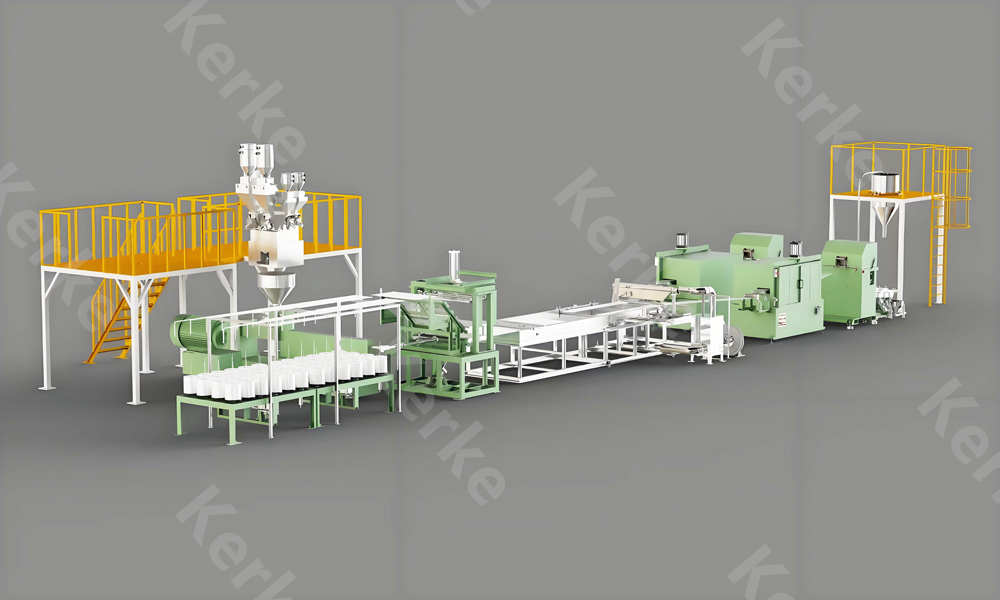
Einführung in Extruder-Garantien und Risikomanagement
Purchasing an industrial masterbatch extruder is a significant capital investment, often ranging from $50,000 for a small lab-scale unit to over $300,000 for a large, fully automated production line. The warranty period is a critical factor in the Total Cost of Ownership (TCO) because it protects the buyer against manufacturing defects and early failures, which can be catastrophic to a production schedule. However, warranty terms vary significantly between manufacturers, and the “fine print” can hide substantial costs. Understanding what is covered, for how long, and what is explicitly excluded is essential for risk management and financial planning. This article analyzes the standard warranty practices in the industry, with a specific focus on the policies offered by leading manufacturers like Nanjing Kerke Extrusion Equipment Co., Ltd., and provides a cost analysis of post-warranty ownership.
Standard-Garantiezeitraum für mechanische Kernkomponenten
Für die meisten renommierten Extruderhersteller, einschließlich Kerke Extruder, beträgt der Standard-Garantiezeitraum für die mechanischen und elektrischen Komponenten eines Doppelschneckenextruders in der Regel 12 bis 18 Monate ab dem Datum der Inbetriebnahme oder 18 bis 24 Monate ab dem Versanddatum (Konnossementsdatum). Dies ist der Branchenstandard für schwere Maschinen. Die teuerste Komponente – das Getriebe – trägt in der Regel eine längere oder robustere Garantie, oft 24 Monate oder bis zu 3 Jahre, je nach verwendeter Marke (z. B. Siemens, SEW oder Top-Marken aus China wie Guomao oder Hangzhou Advance). Die Garantie deckt Material- und Verarbeitungsfehler ab, die unter normalen Betriebsbedingungen auftreten. Fällt das Getriebe innerhalb dieses Zeitraums aufgrund eines Fertigungsfehlers (wie eines defekten Lagers oder Zahns) aus, stellt der Hersteller kostenlose Ersatzteile oder Reparaturdienste einschließlich der Arbeitskosten für einen Techniker vor Ort bereit.
It is crucial to understand that the warranty is usually void if the machine is operated outside of the specified parameters. For example, running the extruder at maximum torque for extended periods without adequate cooling, or processing corrosive materials (like PVC) without the optional corrosion-resistant coating, can void the warranty. The cost of a replacement gearbox for a mid-sized 75mm extruder can be as high as $15,000 to $25,000 if purchased out of warranty. Therefore, adhering to the operation manual is not just good practice; it is a financial necessity to maintain warranty coverage. The warranty essentially acts as an insurance policy against “infant mortality” failures in the first two years of operation.
Verschleißteile und Verbrauchsmaterialien: Die Ausschlussliste
Almost all extruder warranties explicitly exclude “wear parts” or consumables. This is the most common source of confusion for new buyers. In a masterbatch extruder, wear parts include the screw elements, barrel liners, heating bands, thermocouples, seals, and the pelletizer blades. These components are subject to abrasion and fatigue and are expected to be replaced during the machine’s life cycle. For example, the screw and barrel on a highly abrasive masterbatch line (like glass fiber or mineral filled compounds) might need replacement or refurbishment after processing 500 to 1,000 tons of material, which could be just 1-2 years of production.
The cost of a new set of screws and barrels is substantial. For a 65mm extruder, a full set might cost $5,000 to $8,000, while for a large 120mm industrial line, it can exceed $50,000. While not covered by the standard warranty, manufacturers like Kerke often offer a limited “quality assurance” period on wear parts, typically 3 to 6 months, to ensure they are free of casting defects or hardening issues upon arrival. Buyers must budget for the replacement of wear parts as a recurring operational expense. A common rule of thumb is to allocate $0.02 to $0.05 per kilogram of production for wear part amortization. Ignoring this cost can lead to budget shortfalls when the first major maintenance cycle is due.
Garantieabdeckung für das elektrische und steuerungstechnische System
Das Steuerungssystem, einschließlich der SPS (Speicherprogrammierbare Steuerung), Frequenzumrichter (VFDs), Touchscreen (HMI) und Sensoren, trägt in der Regel eine Garantie von 12 bis 24 Monaten. Diese Komponenten sind im Allgemeinen zuverlässig, aber Ausfälle können aufgrund von Produktionsausfallzeiten teuer sein. Ein typischer SPS-Ausfall kann erfordern, dass ein Techniker das System neu programmiert, was einen vollen Tag oder mehr dauern kann. Die Kosten für ein neues Bedienpult oder einen Ersatz-Frequenzumrichter können je nach Marke und Komplexität 3.000 bis 10.000 $ betragen. Es empfiehlt sich, einen Satz kritischer elektronischer Komponenten (wie I/O-Module oder Sicherungen) vor Ort bereitzuhalten oder einen Express-Versandservicevertrag beim Lieferanten zu erwerben.
Kerke Extruder typically uses well-known international brands for electrical components (like Siemens, Schneider, or ABB) or high-quality domestic equivalents. This ensures that spare parts are easy to source even after the warranty period expires. However, software licensing can be a hidden cost. Some advanced control systems require annual software maintenance fees to keep the system updated and secure. This cost is usually not covered by the hardware warranty and should be factored into the annual operating budget, typically around 1-2% of the machine’s value.
Garantie für Installations- und Inbetriebnahme-Support
The warranty period often includes on-site installation and commissioning services. This is a value-added service where the manufacturer sends engineers to the buyer’s factory to install the machine, level it, connect utilities, and run the first batches. This service usually lasts for 1 to 2 weeks and is covered by the warranty terms. The cost of this service, if purchased separately, can be $2,000 to $5,000 per day plus travel expenses, so including it in the warranty is a significant benefit. During commissioning, any issues found (like leaks or misalignments) are fixed under warranty. This phase is critical because improper installation (e.g., misalignment between motor and gearbox) can cause premature bearing failure, which might not be covered if deemed “installation error” by the manufacturer. The warranty ensures that the manufacturer has a vested interest in getting the installation right the first time.
Verlängerte Garantie und Serviceverträge: Eine Kosten-Nutzen-Analyse
For factories running 24/7 operations, the standard one-year warranty may not be sufficient to amortize the risk. Many manufacturers offer extended warranty packages. For a fee, typically 5% to 10% of the machine price per year, the warranty can be extended to 3 or 5 years. This covers parts and labor for mechanical and electrical failures. Let us analyze the cost-benefit. If a major bearing failure or gearbox issue occurs in year 3, the repair cost (parts + labor + downtime) could easily exceed $20,000. An extended warranty costing $10,000 over two years provides peace of mind and predictable maintenance budgeting. Kerke Extruder offers flexible service contracts that can be tailored to the customer’s production schedule and risk tolerance. For mission-critical lines, an extended warranty is highly recommended. For backup or secondary lines, it might be a cost that can be skipped.
Another option is a “Preventive Maintenance Contract” which is slightly different from a warranty. This involves the manufacturer visiting 2-4 times a year to perform inspections, change oil, and check alignment. This proactive approach prevents failures rather than just fixing them. The cost is similar to an extended warranty but focuses on prevention. The ROI on this is preventing unplanned downtime, which is the most expensive cost in manufacturing.
Kosten für Wartung und Ersatzteile nach Ablauf der Garantie
After the warranty expires, the owner is 100% responsible for all repair costs. The price of spare parts is a major consideration. Kerke Extruder maintains a stock of spare parts at their factory and regional warehouses, offering them at factory-direct prices, which are generally 20-30% lower than third-party distributors. For example, a set of kneading blocks might cost $500 from Kerke, whereas a generic supplier might charge $800 with uncertain quality. It is recommended to budget approximately 2% to 3% of the machine’s purchase price annually for maintenance and spare parts after the warranty period. For a $150,000 machine, this means setting aside $3,000 to $4,500 per year for maintenance.
Internationale Logistik ist ein weiterer Faktor. Für Käufer außerhalb Chinas kann der Versand eines schweren Getriebes oder Zylindersegments über den Ozean Tausende von Dollar an Fracht und Versicherung kosten. Die meisten seriösen Lieferanten, einschließlich Kerke, verwenden DDP- (Delivered Duty Paid) oder DAP-Bedingungen für Garantieansprüche, d. h. der Lieferant trägt die Versandkosten für Ersatzteile während der Garantie. Nach Ablauf der Garantie trägt der Käufer diese Kosten in der Regel jedoch selbst. Um dies zu mildern, lagern einige Käufer kritische Ersatzteile (wie ein Ersatzgetriebe oder einen Satz Schneckenelemente) vor. Dies bindet zwar Kapital (Lagerkosten), verringert aber das Ausfallzeitrissiko drastisch. Die Kosten für diese Lagerhaltung sollten als Teil der Finanzplanung berechnet werden, typischerweise mit einer Kapitalbindungskostenrate von 10–15 % pro Jahr.
Garantieanspruchsverfahren und erforderliche Dokumentation
Um einen gültigen Garantieanspruch geltend zu machen, muss der Käufer sorgfältige Dokumentation vorlegen. Dazu gehören der ursprüngliche Kaufvertrag, das Konnossement, der Installationsbericht und vor allem detaillierte Wartungsprotokolle. Die Protokolle müssen zeigen, dass die Maschine ordnungsgemäß betrieben wurde – insbesondere Temperaturprotokolle, Drehmomentprotokolle und Ölwechselintervalle. Das Fehlen ordnungsgemäßer Wartungsunterlagen (wie der Nachweis regelmäßiger Getriebeölwechsel) kann und lässt die Garantie oft erlöschen. Hersteller verlangen, dass nur ihre freigegebenen Schmierstoffe und Ersatzteile verwendet werden. Die Verwendung billigen, nicht freigegebenen Öls kann zu Zahnkorblochfraß führen, und der Garantieanspruch wird abgelehnt. Die Kosten für freigegebene Schmierstoffe sind geringfügig höher (ca. 10 % mehr), aber für den Garantieschutz unerlässlich. Kerke stellt eine detaillierte Betriebs- und Wartungsanleitung bereit, die die erforderlichen Serviceintervalle und freigegebenen Verbrauchsmaterialien umreißt. Die Führung eines digitalen Logbuchs ist eine kostenlose Maßnahme, die bei einem Ausfall Zehntausende von Dollar sparen kann.
Fazit
The warranty period for an industrial masterbatch extruder is a complex financial instrument, not just a promise of quality. While the standard warranty covers core defects for 12 to 24 months, the long-term cost of ownership depends heavily on the quality of wear parts and the availability of post-warranty support. Kerke Extruder offers a competitive warranty package, typically 18 months for the machine and 24 months for the drive system, backed by a strong spare parts network and global service engineers. For buyers, the key is to read the fine print, budget for consumables, and consider extended service contracts for critical production lines. A robust warranty not only protects the initial investment but also serves as an indicator of the manufacturer’s confidence in their product quality. Ultimately, the warranty is just one part of the equation; the real value lies in the machine’s reliability and the manufacturer’s support infrastructure over its 10-15 year lifespan.