Introduction
Wear-resistant masterbatches play a crucial role in enhancing the durability and lifespan of plastic products in various industries, including automotive, construction, and packaging. The manufacturing process of these masterbatches requires precise control over material composition, processing parameters, and equipment configuration. Twin screw extruders, particularly the KTE Series from Nanjing Kerke Extrusion Equipment Co., Ltd., are widely recognized as the ideal solution for producing high-quality wear-resistant masterbatches due to their superior mixing capabilities, precise temperature control, and efficient processing.
This article provides a comprehensive guide to manufacturing wear-resistant masterbatches using twin screw extruders, covering everything from formula design and production processes to equipment selection, parameter settings, troubleshooting, and maintenance.
Formula Proportions
The formula for wear-resistant masterbatches typically consists of a carrier resin, wear-resistant additives, processing aids, and optional colorants. The exact proportions depend on the specific application requirements, such as the desired level of wear resistance, mechanical properties, and processing conditions.
General Formula for Polyolefin-Based Wear-Resistant Masterbatches
- Carrier Resin (PP or PE): 50-70% – Provides the base matrix for the masterbatch and ensures compatibility with the final product.
- Wear-Resistant Additives: 20-40% – Includes materials such as molybdenum disulfide (MoS2), graphite, polytetrafluoroethylene (PTFE), or ceramic particles.
- Processing Aids: 5-15% – Improves melt flow and processing stability, such as lubricants and dispersants.
- Colorants: 0-5% – Optional, for achieving the desired color appearance.
High-Performance Formula for Engineering Plastics
- Carrier Resin (PA, POM, or PC): 40-60% – Offers excellent mechanical properties and heat resistance.
- Wear-Resistant Additives: 30-50% – May include advanced materials like boron nitride (BN) or tungsten disulfide (WS2).
- Processing Aids: 5-15% – Tailored to the specific carrier resin to ensure optimal processing.
- Impact Modifiers: 0-10% – Optional, to improve toughness if needed.
Production Process
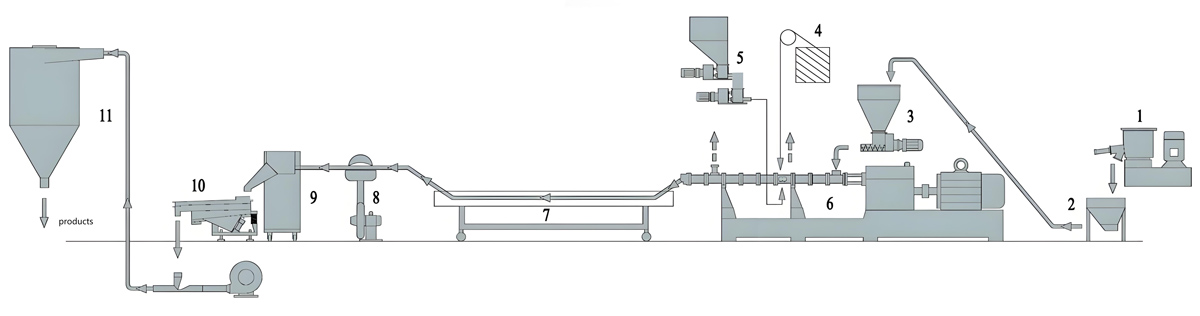
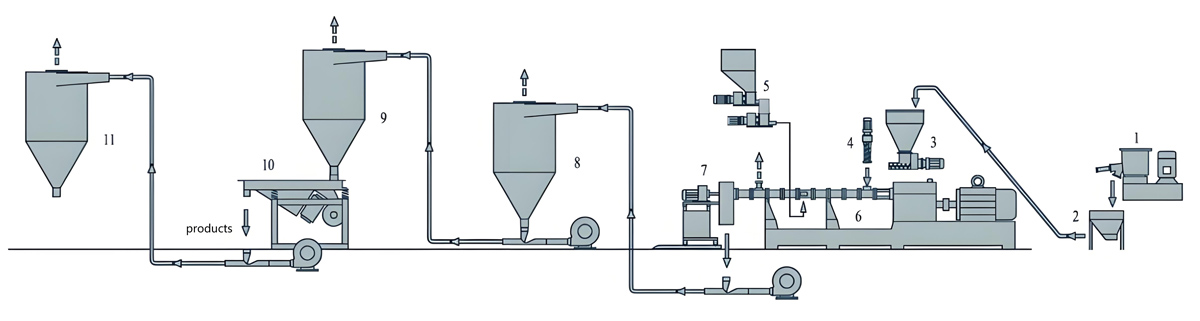
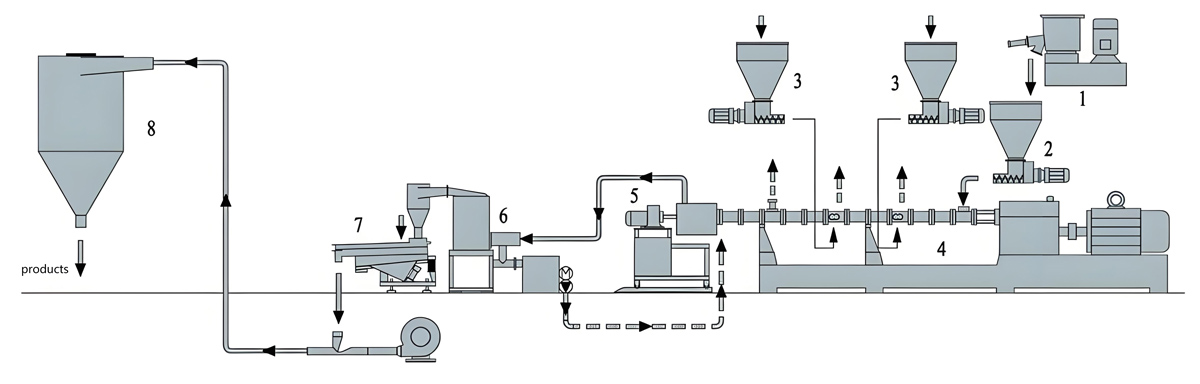
The production of wear-resistant masterbatches using twin screw extruders involves several key steps, each requiring careful control to ensure consistent product quality.
1. Raw Material Preparation
All raw materials should be properly dried to remove moisture, which can cause defects such as bubbles or inconsistent dispersion. Carrier resins and additives should be pre-mixed in a high-speed mixer to ensure uniform distribution before feeding into the extruder.
2. Feeding
The pre-mixed materials are fed into the twin screw extruder using a loss-in-weight feeder to ensure precise and consistent feeding rates. This helps maintain stable processing conditions and uniform product quality.
3. Melting and Mixing
As the materials pass through the extruder, they are heated to the melting temperature of the carrier resin. The twin screws rotate in a synchronized manner, creating intense shear forces that break down agglomerates and ensure uniform dispersion of the wear-resistant additives throughout the polymer matrix.
4. Extrusion and Pelletizing
The molten compound is extruded through a die to form strands, which are then cooled in a water bath and cut into pellets using a pelletizer. The resulting masterbatch pellets are then dried and packaged for storage or further processing.
Production Equipment Introduction
The key equipment for producing wear-resistant masterbatches includes twin screw extruders, feeders, mixers, and pelletizing systems. The KTE Series twin screw extruders from Nanjing Kerke Extrusion Equipment Co., Ltd. are specifically designed for masterbatch production, offering high torque, precise temperature control, and modular screw design.
KTE Series Twin Screw Extruder
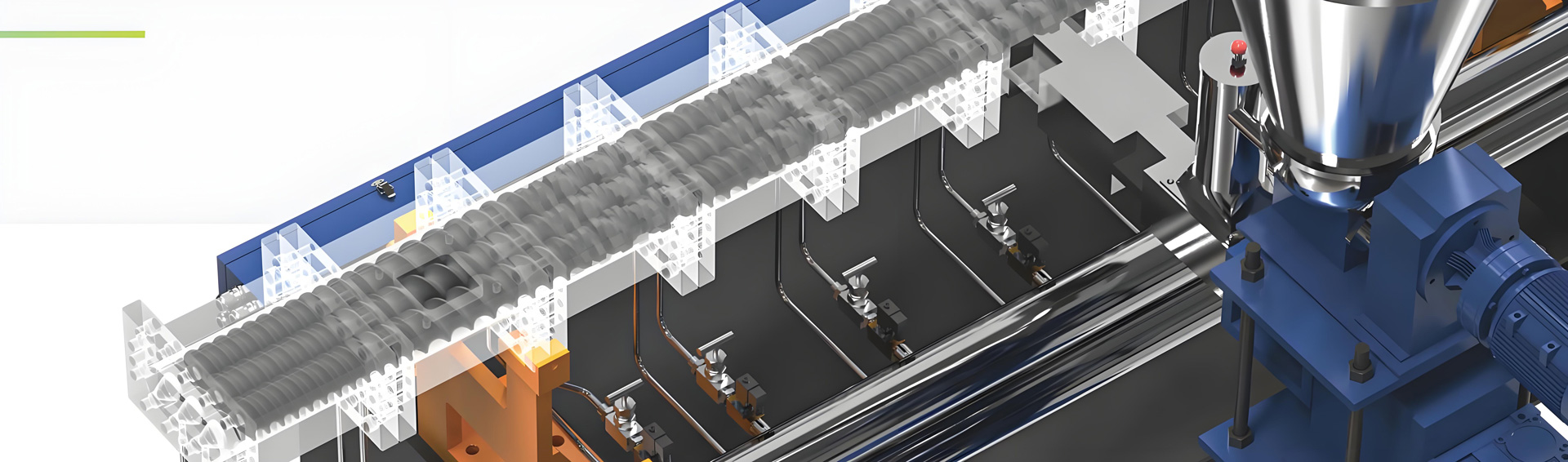
- Modular Screw Design – Allows for easy customization of screw configurations to meet specific processing requirements.
- High Torque Gearbox – Provides the necessary power to process high-viscosity materials and achieve efficient mixing.
- Precision Temperature Control – Multiple temperature zones ensure uniform heating and prevent material degradation.
- Wear-Resistant Components – Screw elements and barrels are made from high-quality materials to withstand the abrasive nature of wear-resistant additives.
Feeding Systems
Loss-in-weight feeders are recommended for precise control of material feeding rates, ensuring consistent product quality. For high-volume production, multiple feeders can be used to add different components simultaneously.
Pelletizing Systems
Water ring pelletizers or underwater pelletizers are commonly used for masterbatch production, providing high-quality pellets with uniform size and shape. The choice of pelletizing system depends on the specific requirements of the masterbatch and the production scale.
Parameter Settings
Optimal parameter settings are crucial for producing high-quality wear-resistant masterbatches. The following are general guidelines for setting up the twin screw extruder:
Temperature Settings
- Feed Zone: 120-150°C – Prevents material bridging and ensures smooth feeding.
- Melting Zone: 150-180°C – Melts the carrier resin and facilitates mixing.
- Mixing Zone: 180-200°C – Ensures uniform dispersion of wear-resistant additives.
- Die Zone: 190-210°C – Maintains proper melt viscosity for extrusion.
Screw Speed
Typically between 200-400 rpm. Higher speeds can improve mixing efficiency but may increase shear heat, which could degrade heat-sensitive materials.
Feeding Rate
Depends on the extruder size and production capacity, generally ranging from 100-500 kg/h for medium-scale production.
Vacuum Degree
-0.08 to -0.09 MPa, to remove moisture and volatile compounds from the melt.
Equipment Price
The price of twin screw extruders for wear-resistant masterbatch manufacturing varies depending on factors such as size, configuration, and additional features. The KTE Series from Nanjing Kerke Extrusion Equipment Co., Ltd. offers competitive pricing with high-quality performance.
Price Range for KTE Series Twin Screw Extruders
- Small-scale (≤50 mm screw diameter): $50,000 – $100,000
- Medium-scale (50-90 mm screw diameter): $100,000 – $250,000
- Large-scale (≥90 mm screw diameter): $250,000 – $500,000
Additional Costs
Additional costs may include feeding systems, pelletizing equipment, installation, and training. It is important to consider the total cost of ownership when selecting equipment.
Production Process Issues and Solutions
During the production of wear-resistant masterbatches, several issues may arise that can affect product quality. Below are common problems, their causes, solutions, and prevention methods.
Problem 1: Poor Dispersion of Wear-Resistant Additives
Cause:
Inadequate mixing, incorrect screw configuration, or insufficient shear forces. Additive agglomerates may form due to poor pre-mixing or high loading levels.
Solution:
Optimize screw configuration by adding more kneading blocks or increasing the number of mixing elements. Increase screw speed to enhance shear forces. Improve pre-mixing process to reduce agglomerate formation.
Avoid:
Use a well-designed pre-mixing system to ensure uniform distribution of additives before feeding into the extruder. Conduct regular checks on screw elements to ensure they are in good condition.
Problem 2: Material Degradation
Cause:
Excessive heat or prolonged residence time in the extruder. High shear forces may generate localized hot spots, leading to thermal degradation of the carrier resin or additives.
Solution:
Reduce barrel temperatures or screw speed to minimize shear heat. Adjust screw configuration to shorten residence time. Use heat stabilizers in the formula to improve thermal stability.
Avoid:
Ensure proper cooling of the extruder barrels to maintain consistent temperatures. Monitor melt temperature regularly to detect and address hot spots promptly.
Problem 3: Uneven Pellet Size
Cause:
Inconsistent feeding rates, unstable melt pressure, or issues with the pelletizing system. Variations in material viscosity can also affect pellet size uniformity.
Solution:
Calibrate feeders to ensure precise and consistent feeding rates. Adjust die temperature and screw speed to stabilize melt pressure. Check and maintain the pelletizer blades to ensure sharpness and proper alignment.
Avoid:
Use high-quality raw materials with consistent properties. Regularly inspect and maintain the pelletizing system to prevent downtime and ensure uniform pellet production.
Problem 4: High Energy Consumption
Cause:
Overly aggressive screw configuration, high screw speed, or poor insulation leading to heat loss. Inefficient motor or drive system can also contribute to increased energy consumption.
Solution:
Optimize screw configuration to balance mixing efficiency and energy usage. Adjust screw speed to the minimum required for achieving adequate dispersion. Improve insulation of the extruder barrels to reduce heat loss.
Avoid:
Choose energy-efficient motors and drive systems. Conduct regular energy audits to identify areas for improvement and optimize operational parameters.
Maintenance and Care
Proper maintenance of twin screw extruders is essential for ensuring long-term performance, reducing downtime, and extending equipment lifespan.
Daily Maintenance
- Check and clean the feed hopper to remove any debris or material residues.
- Inspect the screw elements and barrels for signs of wear or damage.
- Monitor temperature and pressure readings to ensure they are within normal ranges.
- Clean the pelletizer blades and check for any buildup of material.
Weekly Maintenance
- Check and lubricate all moving parts, including gears, bearings, and feed screws.
- Inspect the electrical components and connections for signs of wear or loose connections.
- Clean the cooling system to ensure efficient heat dissipation.
Monthly Maintenance
- Calibrate the feeders to ensure accurate feeding rates.
- Inspect the screw elements and barrels for signs of wear or corrosion.
- Check the vacuum system for leaks and ensure proper operation.
Annual Maintenance
- Perform a complete overhaul of the extruder, including disassembly and cleaning of all components.
- Replace worn or damaged parts, such as screw elements, bearings, and seals.
- Calibrate the temperature and pressure sensors to ensure accurate readings.
- Inspect the gearbox and replace the oil if necessary.
FAQ
Q1: What is the best carrier resin for wear-resistant masterbatches?
A1: The choice of carrier resin depends on the specific application requirements. Polyolefins (PP, PE) are commonly used for general-purpose applications due to their low cost and good processing properties. Engineering plastics (PA, POM) are preferred for high-performance applications where mechanical strength and heat resistance are critical.
Q2: How can I improve the dispersion of wear-resistant additives?
A2: Improve pre-mixing efficiency by using a high-speed mixer with proper operating parameters. Optimize screw configuration by adding more mixing elements or increasing the number of kneading blocks. Adjust processing parameters such as screw speed and temperature to enhance shear forces.
Q3: What is the optimal loading level for wear-resistant additives?
A3: Typically between 20-40% depending on the additive type and desired performance. Higher loading levels can improve wear resistance but may affect processing properties and mechanical strength.
Q4: How do I prevent material degradation during processing?
A4: Control barrel temperatures to avoid overheating. Use heat stabilizers in the formula to improve thermal stability. Optimize screw configuration to shorten residence time and reduce shear heat.
Q5: What factors should I consider when selecting a twin screw extruder for masterbatch production?
A5: Key factors include screw diameter, torque capacity, modular design for easy configuration, temperature control accuracy, and after-sales support. The KTE Series from Nanjing Kerke Extrusion Equipment Co., Ltd. offers a comprehensive solution with these features.
Conclusion
Manufacturing high-quality wear-resistant masterbatches requires careful attention to formula design, production processes, equipment selection, and maintenance. Twin screw extruders, especially the KTE Series from Nanjing Kerke Extrusion Equipment Co., Ltd., provide the necessary precision and efficiency to meet the demanding requirements of wear-resistant masterbatch production.
By following the guidelines outlined in this article, manufacturers can optimize their production processes, improve product quality, and reduce operational costs. Regular maintenance and troubleshooting are essential for ensuring long-term equipment performance and consistent product quality.