Introduction
Plastic toughening and nucleating masterbatch production represents one of the most demanding segments in the masterbatch industry, requiring equipment capable of handling high-viscosity formulations, achieving excellent dispersion of reinforcing agents, and maintaining consistent quality at high throughput rates. High capacity twin screw extruders designed for these applications must deliver exceptional mixing performance while operating at production scales that meet commercial requirements.
Toughening masterbatch formulations incorporate elastomeric modifiers such as ethylene-propylene-diene monomer (EPDM), ethylene-vinyl acetate (EVA), or maleic anhydride grafted polymers that dramatically improve impact resistance and toughness in base polymers. Nucleating agents including sodium benzoate, sorbitol derivatives, or specialized organic compounds enhance crystallization behavior, improving clarity, stiffness, and processing characteristics of semi-crystalline polymers.
The combination of toughening and nucleating functionality in single masterbatch systems creates unique processing challenges that require specialized equipment design. Modern high capacity twin screw extruders from Kerke Extrusion Equipment Company incorporate advanced screw configurations, robust drive systems, and precise temperature control capabilities necessary for these demanding applications. This comprehensive guide explores the complete production process for toughening and nucleating masterbatch using high capacity equipment.
Formulation Proportions (Different Types)
Formulation development for toughening and nucleating masterbatch requires careful consideration of additive loading levels, carrier resin selection, and the synergistic interactions between toughening agents and nucleating compounds. Different application requirements dictate varying concentration ranges and additive combinations.
EPDM-Based Toughening Formulations
Ethylene-propylene-diene monomer represents the most widely used toughening agent for polypropylene applications due to excellent compatibility and proven performance characteristics. Standard formulations contain 20% to 30% EPDM in polypropylene homopolymer carrier resin, with the exact concentration determined by the target impact resistance improvement requirements.
For automotive interior components requiring exceptional impact strength, formulations may incorporate up to 35% EPDM to achieve Izod impact values exceeding 100 J/m. These high loading levels require specialized processing conditions to ensure proper dispersion and prevent excessive viscosity increase. The molecular weight of EPDM typically ranges from 80,000 to 150,000 g/mol, with higher molecular weight versions providing better toughening efficiency but processing challenges.
When combined with nucleating agents, EPDM-based formulations typically include 0.1% to 0.5% sodium benzoate or similar nucleating compounds. The nucleating agent concentration must be carefully balanced against EPDM loading, as higher elastomer content can reduce nucleating effectiveness. Most manufacturers target nucleating agent concentrations of 0.2% to 0.3% in formulations containing 20% to 25% EPDM.
EVA-Based Toughening Systems
Ethylene-vinyl acetate copolymer toughening agents provide alternatives to EPDM, particularly for applications requiring better compatibility with polyethylene systems or improved clarity characteristics. Standard EVA-based formulations contain 15% to 25% EVA with vinyl acetate content ranging from 12% to 28%, depending on the desired balance of toughness and compatibility.
Packaging film applications requiring improved tear resistance and flexibility often employ formulations with 18% to 22% EVA containing 18% to 22% vinyl acetate. These formulations provide excellent dispersion clarity and processability while delivering significant toughness improvements. For more demanding applications, formulations may incorporate up to 30% EVA, though processing becomes more challenging at these higher loading levels.
Nucleating agent selection for EVA-based systems differs from EPDM formulations due to compatibility considerations. Sorbitol-based nucleating agents such as 1,2,3,4-di-O-benzylidene-D-sorbitol (DBS) derivatives provide excellent performance in polyethylene-based systems. Typical concentrations range from 0.1% to 0.4%, with most applications using 0.15% to 0.25% to achieve optimal nucleating effects without compromising dispersion clarity.
Polypropylene Toughening with Functionalized Polymers
Maleic anhydride grafted polypropylene (PP-g-MA) or ethylene-propylene copolymers provide superior toughening efficiency through improved interfacial adhesion between the toughening phase and matrix polymer. These functionalized polymers enable toughening at lower loading levels compared to non-functionalized elastomers.
Standard PP-g-MA formulations contain 10% to 20% grafted polymer, delivering toughness equivalent to 20% to 30% EPDM due to improved interfacial bonding. The grafted polymer typically contains 0.5% to 2% maleic anhydride, with higher grafting levels providing better toughening efficiency but more challenging processing due to increased polarity.
Nucleating agent selection for these formulations must consider the polar nature of grafted polymers. Organic phosphate nucleating agents demonstrate better compatibility with functionalized polymer systems. Concentration ranges of 0.05% to 0.2% provide optimal nucleating effects while maintaining good dispersion characteristics.
High Loading Hybrid Formulations
Advanced applications requiring both exceptional toughness and rapid crystallization often employ hybrid formulations combining multiple toughening agents with synergistic nucleating systems. These high loading formulations may contain total additive loadings of 30% to 40%, requiring specialized processing conditions and equipment capabilities.
Automotive exterior components requiring both impact resistance and dimensional stability may employ formulations containing 20% EPDM, 10% PP-g-MA, and 0.2% to 0.3% nucleating agent. The combination of toughening agents provides synergistic effects through complementary toughening mechanisms, while the nucleating agent ensures rapid crystallization and improved heat resistance.
Processing these hybrid formulations requires carefully optimized screw configurations and temperature profiles to achieve proper dispersion of both toughening phases while maintaining nucleating agent effectiveness. The processing challenges increase significantly with additive loading levels above 35%, often requiring specialized equipment with enhanced mixing capabilities.
Clear Applications with Minimal Haze
Clarity-critical applications such as food packaging and consumer goods require formulations that minimize haze while delivering toughness and nucleating benefits. These formulations employ carefully selected additives and carrier resins that maintain transparency while providing functional performance.
Clear formulations typically use refined EPDM with low gel content and narrow molecular weight distribution to minimize light scattering. Total additive loading rarely exceeds 20%, with nucleating agent concentrations maintained below 0.2% to prevent crystallite-related haze. Polypropylene random copolymer carrier resins with ethylene content of 2% to 5% provide improved clarity while maintaining compatibility with toughening agents.
Processing clarity-critical formulations requires exceptional dispersion quality to prevent additive agglomeration that causes haze. Equipment must provide sufficient distributive mixing without excessive shear that could degrade additives or carrier resin. Temperature profile optimization prevents additive migration to the surface, which can cause surface defects and haze formation.
Production Process
The production process for toughening and nucleating masterbatch on high capacity equipment requires carefully controlled conditions to achieve excellent dispersion of high-loading additives while maintaining nucleating agent effectiveness. High throughput rates demand equipment capable of delivering consistent quality at production scales.
Raw Material Handling and Preparation
High capacity operations require sophisticated raw material handling systems to ensure consistent feeding and minimize material contamination. Bulk storage silos for carrier resins provide continuous supply to production lines, with typical capacities ranging from 20 to 100 tons depending on production requirements and material turnover rates.
Toughening agents, particularly EPDM and EVA, present unique handling challenges due to their low bulk density and tendency to static charge accumulation. Dedicated feeding systems with flow aids and anti-static measures ensure consistent feeding to the extruder. High capacity operations typically employ gravimetric feeding systems with capacities from 50 to 500 kg/hr to maintain precise additive dosing at high throughput rates.
Nucleating agents require special handling due to their fine particle size and tendency to form dust. These materials are often pre-blended with carrier resin or fed through specialized loss-in-weight feeders designed for fine powders. Proper ventilation and dust collection systems prevent airborne contamination and maintain clean operating environments.
Pre-Compounding and Pre-Blending
For formulations with high additive loadings, pre-compounding or pre-blending steps can improve final dispersion quality and reduce processing requirements in the main extruder. Pre-compounding of toughening agents with a portion of carrier resin creates master-concentrates that are easier to incorporate in the final compounding step.
Pre-blending using high-intensity mixers such as Henschel mixers or high-speed tumblers can improve initial distribution of nucleating agents and prevent agglomeration. These mixing systems operate at 500 to 1500 RPM for 3 to 5 minutes, achieving homogeneous distribution of fine additives within the carrier resin matrix.
High capacity operations may incorporate dedicated pre-compounding lines for toughening agent master-concentrates, allowing the main production lines to operate more efficiently. This approach requires additional equipment investment but can improve overall capacity utilization and reduce energy consumption per ton of product.
High Throughput Feeding Systems
Feeding systems for high capacity production must deliver material at rates matching the extruder throughput while maintaining precise composition control. Gravimetric feeding systems with capacities from 200 to 3000 kg/hr provide the accuracy required for consistent masterbatch composition at production scales.
These feeding systems typically employ multiple feeders for different material streams, with the main carrier resin fed through a large-capacity feeder and minor components such as nucleating agents fed through smaller, high-accuracy feeders. The feeder capacities must be oversized relative to actual throughput to provide adequate margin for rate variations and future production increases.
Side feeding capabilities become particularly important for high capacity operations, allowing direct injection of heat-sensitive nucleating agents downstream of the melting zone. This reduces thermal exposure and prevents degradation while maintaining high throughput rates. Side feeders with capacities from 10 to 100 kg/hr provide sufficient capacity for nucleating agent addition.
Advanced Screw Configurations
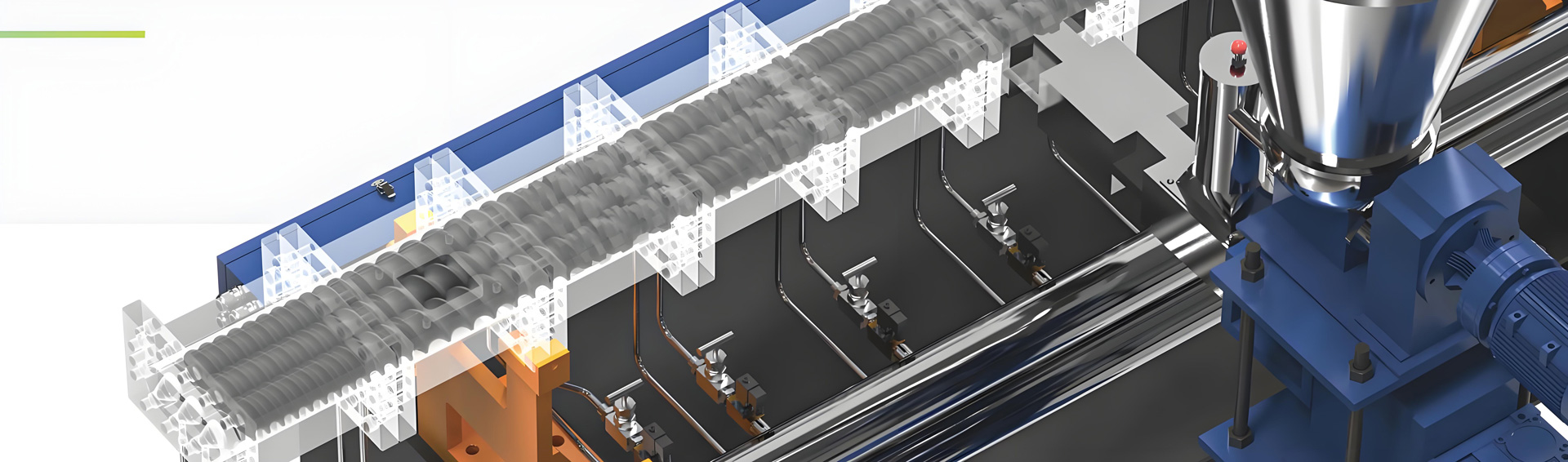
High capacity screw configurations must achieve excellent dispersion of high-loading toughening agents while maintaining throughput rates of 500 to 3000 kg/hr. Standard configurations incorporate conveying elements in the feed section to ensure consistent material transport, followed by intensive mixing zones with multiple kneading block combinations.
The melting zone typically employs forward conveying kneading blocks with staggered angles (30° to 60°) to promote polymer melting and initial dispersion of toughening agents. The distributive mixing zone downstream incorporates mixing elements such as gear mixers or Maddock mixers to achieve homogeneous distribution of additives throughout the matrix.
For formulations with very high additive loadings (30% to 40%), screw configurations may include multiple mixing sections separated by conveying sections to prevent overheating and maintain adequate distributive mixing without excessive shear. The length-to-diameter ratio of 48:1 provides sufficient mixing length for these demanding formulations, though some applications may require L/D ratios up to 60:1.
Temperature Profile Optimization
Temperature profile optimization for toughening and nucleating masterbatch must balance the melting characteristics of carrier resin with the thermal sensitivity of additives. Standard profiles for polypropylene-based formulations range from 180°C to 230°C, with specific temperatures depending on the molecular weight of materials and processing rate.
Feed zone temperatures typically range from 180°C to 200°C to prevent premature melting and ensure consistent feeding. The melting zone operates at 200°C to 220°C to achieve complete polymer melting and initial dispersion. The mixing zone temperatures are maintained at 210°C to 225°C to ensure sufficient polymer mobility for additive dispersion without thermal degradation.
For formulations with heat-sensitive nucleating agents, temperature profiles may be reduced to 180°C to 215°C, particularly in the mixing and die zones. These lower temperatures require higher screw speeds or increased residence time to achieve adequate dispersion, demonstrating the trade-offs between throughput and thermal protection.
High Capacity Pelletizing Systems
Pelletizing systems for high capacity production must handle throughput rates of 500 to 3000 kg/hr while producing uniform pellets. Water ring pelletizers provide the highest capacity, utilizing rapidly rotating knives and water spray cooling to produce spherical pellets suitable for high-speed processing.
Standard water ring pelletizers for high capacity applications feature cutter head diameters from 300mm to 600mm with knife counts from 6 to 12. Cutter speeds range from 1000 to 3000 RPM, depending on throughput rate and pellet size requirements. The water flow rates of 50 to 300 m³/hr ensure rapid cooling and pellet solidification.
Strand pelletizing systems can also handle high capacity when properly configured, requiring multiple strand die configurations with hole counts from 20 to 100. Water bath cooling systems with lengths of 3 to 8 meters provide adequate cooling for high throughput rates. However, water ring systems generally provide better performance for high capacity operations due to lower labor requirements and more consistent pellet dimensions.
Cooling and Solidification
Rapid cooling and solidification are critical for maintaining nucleating agent effectiveness and preventing additive migration. Water ring pelletizers achieve cooling times of 1 to 3 seconds, minimizing the time at elevated temperatures where additive migration could occur.
The cooling water temperature is maintained at 15°C to 25°C to achieve rapid solidification without causing thermal shock that could lead to pellet cracking or internal stresses. Water quality must be carefully controlled to prevent contamination of pellet surfaces, with filtration systems removing particles larger than 50 μm.
For formulations containing nucleating agents that are particularly sensitive to thermal history, additional cooling methods such as chilled air tunnels or chilled water baths may be employed after initial water ring cooling. These secondary cooling stages reduce pellet temperature to below 40°C before drying and packaging, preventing post-processing crystallization or additive migration.
Production Equipment Introduction
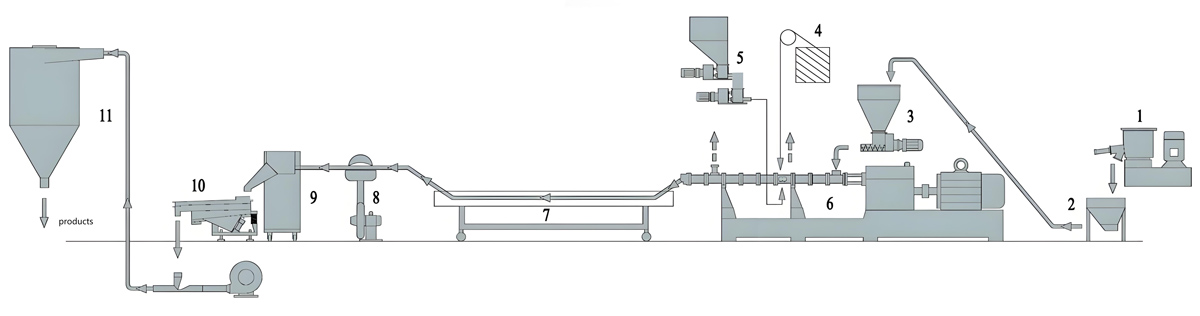
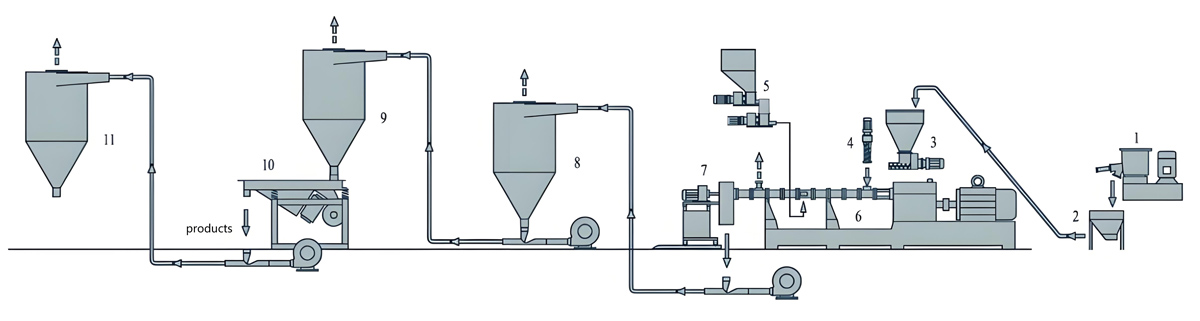
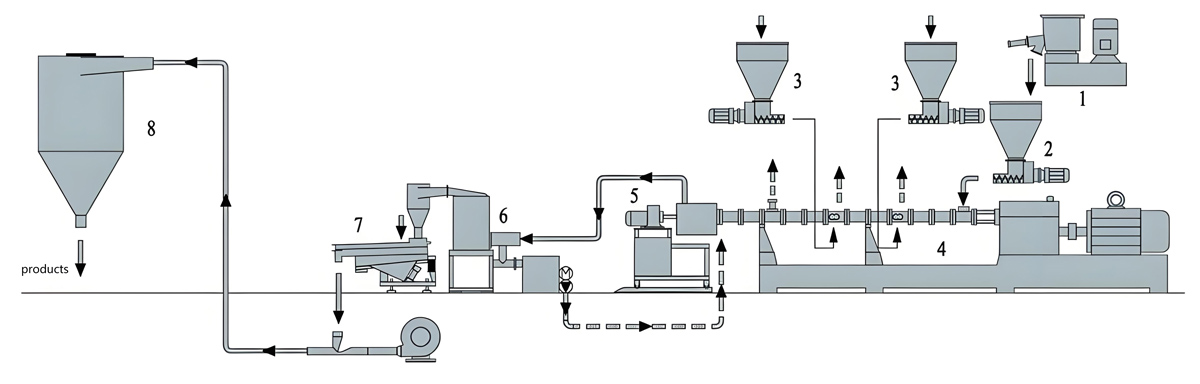
High capacity twin screw extruders designed for toughening and nucleating masterbatch production incorporate specialized features to handle demanding processing requirements while maintaining high throughput rates and product quality.
KTE Series High Capacity Extruders
The KTE Series parallel twin screw extruders from Kerke Extrusion Equipment Company include models specifically designed for high capacity masterbatch production. These extruders feature screw diameters from 90mm to 133mm, providing throughput capacities from 800 to 3000 kg/hr for standard masterbatch formulations.
The KTE-90 model with 90mm screw diameter delivers typical throughput rates of 800 to 1200 kg/hr for toughening and nucleating formulations. The KTE-110 model with 110mm screw diameter achieves 1200 to 2000 kg/hr, while the KTE-133 model with 133mm screw diameter provides capacities from 1800 to 3000 kg/hr. All models feature L/D ratios of 40:1 to 48:1, providing sufficient mixing length for high-loading formulations.
Advanced drive systems on these high capacity models include AC vector motors with power ratings from 200 to 500 kW, providing the torque necessary for processing high-viscosity formulations. Heavy-duty gearboxes with helical gearing ensure smooth power transmission and extended service life under demanding operating conditions.
Feeding System Integration
High capacity extruders integrate with sophisticated feeding systems capable of handling multiple material streams at high rates. Gravimetric feeding systems with digital load cells provide accuracy within ±0.3% of setpoint, essential for maintaining consistent composition at high throughput rates.
Multiple feeder mounting points on the extruder barrel allow side feeding of heat-sensitive additives downstream of the melting zone. These side feeders typically feature capacities from 20 to 200 kg/hr, providing sufficient capacity for nucleating agent addition even at high production rates. Loss-in-weight feeding technology ensures precise dosing of minor components such as nucleating agents, which may constitute less than 0.5% of total formulation.
Advanced Temperature Control
Temperature control systems for high capacity extruders feature multiple independent heating zones, typically 8 to 12 zones along the barrel length. Each zone employs multiple heating elements arranged circumferentially to ensure uniform heating across the barrel diameter. Cooling systems with water circulation provide rapid temperature response and precise temperature control within ±1°C of setpoint.
The die zone temperature control is particularly critical for nucleating masterbatch production, where excessive temperatures can degrade nucleating agents. Advanced die designs incorporate multiple heating zones and internal temperature sensing to ensure uniform melt temperature across the die face, preventing local overheating that could affect product quality.
High Capacity Die Systems
Die systems for high capacity production must handle melt flows of 500 to 3000 kg/hr while producing uniform strand dimensions. Strand die configurations feature hole counts from 20 to 100, with hole diameters from 2mm to 6mm depending on the desired strand dimensions and throughput rate.
Water ring die systems feature circular die faces with specially designed breaker plates and distributor channels that ensure uniform flow distribution across the entire die face. These dies incorporate water-cooled housing that prevents overheating and maintains proper melt viscosity for pelletizing. The die face may be coated with wear-resistant materials such as tungsten carbide to extend service life when processing abrasive formulations.
Auxiliary Equipment
High capacity production lines include comprehensive auxiliary equipment that supports the main extruder and enables continuous operation. Material drying systems with capacities from 500 to 5000 kg/hr ensure proper drying of hygroscopic materials before processing. Chilled water systems with cooling capacities from 100 to 1000 kW provide adequate cooling for extruders, die systems, and pelletizers.
Dust collection and material handling systems maintain clean operating environments and prevent material contamination. Conveying systems transport finished pellets to storage silos or packaging systems, with typical capacities matching the extruder throughput rate. Packaging equipment including automatic baggers, bulk bag fillers, and palletizing systems complete the production line.
Parameter Settings
Optimal parameter settings for high capacity toughening and nucleating masterbatch production must balance throughput requirements with dispersion quality and additive stability. These parameters require careful optimization based on formulation characteristics and equipment capabilities.
Temperature Profile Configuration
Temperature profiles vary based on the specific formulation and desired throughput rate. For standard polypropylene-based formulations containing 20% to 25% toughening agent and 0.2% nucleating agent, typical temperature profiles include: feed zone 180°C to 190°C, melting zone 200°C to 210°C, mixing zone 210°C to 220°C, and die zone 215°C to 225°C.
Higher throughput rates may require slightly elevated temperatures to compensate for reduced residence time. For formulations with 30% to 35% toughening agent, temperature profiles may be reduced by 5°C to 10°C throughout to prevent excessive shear heating and additive degradation. The die temperature should be maintained as low as possible while ensuring proper melt flow, typically 10°C to 20°C above the melting zone temperature.
Screw Speed and Throughput Optimization
Screw speed and throughput rate must be optimized to achieve adequate mixing and dispersion while maintaining target production rates. For high capacity operations, screw speeds typically range from 200 to 400 RPM, with higher speeds required for formulations with higher additive loadings to achieve adequate mixing within shorter residence times.
Throughput rates depend on screw diameter, screw configuration, and formulation characteristics. The KTE-90 model typically operates at 200 to 280 RPM, achieving 800 to 1200 kg/hr. The KTE-110 model operates at 180 to 250 RPM for 1200 to 2000 kg/hr. The KTE-133 model operates at 150 to 220 RPM for 1800 to 3000 kg/hr.
Optimization involves balancing screw speed, throughput rate, and residence time to achieve the target quality while maximizing production efficiency. Higher throughput rates reduce residence time, requiring higher screw speeds or more aggressive mixing configurations to maintain dispersion quality.
Feeding Rate Calibration
Feeding rates must be precisely calibrated to maintain formulation consistency across the high throughput range. Gravimetric feeders typically achieve accuracy within ±0.3% of setpoint, but this tolerance represents significant absolute quantities at high throughput rates.
For a production rate of 2000 kg/hr with a formulation containing 25% toughening agent, a ±0.3% feeder accuracy represents ±1.5 kg/hr variation in toughening agent feeding, or ±0.075% absolute concentration variation. Regular feeder calibration, typically monthly for high capacity operations, ensures continued accuracy and consistent product quality.
Vent and Vacuum Configuration
Many toughening formulations release volatile components during processing, particularly when using functionalized polymers or when processing at elevated temperatures. Vent ports positioned along the barrel enable removal of these volatiles, preventing foaming, die build-up, and quality problems.
Vacuum vent pressures typically range from -0.5 to -0.8 bar, providing adequate removal of volatiles without excessive material loss. For formulations with minimal volatile content, open vents with appropriate filters may be sufficient. The vent zone temperature should be maintained at 180°C to 200°C to prevent condensation of volatiles while preventing excessive material loss.
Pelletizing Equipment Settings
Water ring pelletizer settings must be optimized for the specific formulation and throughput rate. Cutter head speeds typically range from 1500 to 3000 RPM, with higher speeds required for higher throughput rates and smaller pellet sizes. The water flow rate should be sufficient to achieve rapid cooling without excessive turbulence that could cause pellet damage.
Typical water flow rates range from 100 to 300 m³/hr, with the specific rate determined by the throughput rate and cooling requirements. The water temperature should be maintained at 15°C to 25°C to achieve rapid solidification. Cutter blade sharpness and proper alignment are critical for producing uniform pellets with minimal fines generation.
Equipment Pricing
Investment in high capacity twin screw extruder equipment for toughening and nucleating masterbatch production represents substantial capital expenditure. Understanding the cost structure enables proper budgeting and investment planning.
Main Extruder Investment
KTE Series high capacity twin screw extruders represent the largest component of total investment. The KTE-90 model with 90mm screw diameter typically costs from $400,000 to $600,000 depending on configuration and options. The KTE-110 model with 110mm screw diameter ranges from $600,000 to $900,000. The KTE-133 model with 133mm screw diameter represents the largest investment, typically from $800,000 to $1,200,000.
These prices include the basic extruder configuration with standard drive system, barrel heating, and control system. Optional features such as advanced feeding systems, specialized die configurations, and enhanced automation increase the total investment by 20% to 40% depending on the selected options.
Feeding System Costs
Feeding systems for high capacity operations represent significant additional investment. Main carrier resin gravimetric feeders with capacities from 500 to 3000 kg/hr typically cost from $30,000 to $80,000 each. Minor component feeders for nucleating agents and additives typically cost from $15,000 to $40,000 depending on capacity and sophistication.
High capacity operations typically require multiple feeding systems to handle different material streams. A complete feeding system for a toughening and nucleating masterbatch line may cost from $80,000 to $200,000 depending on the number of feeders and their capacities.
Pelletizing System Investment
Water ring pelletizing systems for high capacity applications cost from $150,000 to $400,000 depending on capacity and configuration. This includes the pelletizer head, cutter assembly, water circulation system, and pellet cooling and drying equipment.
Strand pelletizing systems for high capacity applications typically cost from $100,000 to $300,000, including the die, strand handling equipment, strand pelletizer, and cooling system. While strand systems may have lower initial cost, water ring systems often provide better long-term value for high capacity operations due to lower operating costs and better pellet quality consistency.
Complete Line Investment
Complete high capacity production lines for toughening and nucleating masterbatch, including extruder, feeding systems, pelletizing equipment, and all auxiliary systems, typically represent investments from $800,000 to $2,500,000. The specific investment depends on production capacity, automation level, and equipment options.
Additional costs including installation, commissioning, operator training, and initial raw materials add 10% to 20% to the base equipment investment. These costs must be considered when planning the total capital investment for a new production line.
Production Problems and Solutions
High capacity production of toughening and nucleating masterbatch presents unique challenges that require prompt identification and resolution to maintain product quality and production efficiency.
Inadequate Dispersion of Toughening Agents
Problem Description: Toughening agents appear as visible particles or create domains larger than 10 μm in cross-section analysis. This results in inconsistent toughening performance and visible defects in final products, particularly in transparent applications.
Causes: Insufficient distributive mixing due to inadequate screw configuration or screw speed that is too low. Inadequate residence time for high-loading formulations prevents complete dispersion. Temperature profile that is too low reduces polymer mobility, hindering additive wetting and dispersion. Feeder inconsistencies create localized high additive concentrations that cannot disperse properly.
Solutions: Optimize screw configuration by adding or repositioning mixing elements to enhance distributive mixing. Increase screw speed to improve mixing intensity while maintaining adequate residence time. Adjust temperature profile to increase polymer mobility, particularly in the mixing zone. Verify feeder calibration and ensure consistent feeding rates across all material streams.
Prevention Methods: Develop formulation-specific screw configurations optimized for additive loading and dispersion requirements. Establish residence time specifications based on formulation complexity and additive characteristics. Implement regular feeder calibration and monitoring programs. Develop standard operating procedures for temperature profile setup based on formulation characteristics.
Nucleating Agent Degradation
Problem Description: Masterbatch exhibits reduced nucleating effectiveness evidenced by slower crystallization rates, higher crystallization temperatures, or reduced clarity in final applications. This problem may be accompanied by discoloration or odor development.
Causes: Excessive temperature in the mixing or die zones causes thermal degradation of heat-sensitive nucleating agents. Excessive residence time at elevated temperatures accelerates degradation. Screw configuration creating excessive local shear heating causes localized overheating. Contamination from previous formulations, particularly colored materials, can interfere with nucleating agent function.
Solutions: Reduce temperature in mixing and die zones, particularly for formulations containing heat-sensitive nucleating agents. Increase throughput rate to reduce residence time, or optimize screw configuration to reduce local shear heating. Implement side feeding of nucleating agents downstream of the melting zone to reduce thermal exposure. Thoroughly clean the system when changing formulations to prevent cross-contamination.
Prevention Methods: Establish maximum temperature limits based on nucleating agent thermal stability specifications. Implement residence time monitoring to prevent excessive thermal exposure. Develop screw configurations that minimize local shear heating. Establish comprehensive cleaning procedures for formulation changeovers.
Vent Line Blockages
Problem Description: Vent lines become blocked with polymer or additives, reducing effectiveness of volatile removal. This can cause foaming, die build-up, and product quality issues including voids and surface defects.
Causes: Excessive vent temperatures cause polymer to melt and migrate into vent lines. Inadequate vent filter capacity or improper filter media selection leads to rapid blockage. High throughput rates with formulations containing significant volatiles exceed vent system capacity. Screw configuration creates excessive material carryover into vent zones.
Solutions: Reduce vent zone temperature to prevent polymer melting and migration. Install larger capacity vent filters or more appropriate filter media. Reduce throughput rate or optimize formulation to reduce volatile content. Modify screw configuration to reduce material carryover into vent zones.
Prevention Methods: Establish vent zone temperature limits based on formulation characteristics. Implement regular vent filter maintenance and replacement schedules. Monitor vent system performance and establish replacement criteria. Develop screw configurations that minimize material carryover into vent zones.
Die Build-Up and Flow Instability
Problem Description: Polymer builds up on die surfaces, causing flow disturbances, strand dimension variations, and product quality issues. This problem often accompanies vent line blockages or volatile condensation issues.
Causes: Inadequate venting causes volatile condensation on die surfaces. Die surface temperature is too low, causing premature solidification. Screw configuration creates excessive backflow at the die entrance. Formulation contains components with low molecular weight that volatilize and condense on die surfaces.
Solutions: Improve venting system performance to remove volatiles before they reach the die. Increase die surface temperature to prevent condensation and build-up. Optimize screw configuration near the die to reduce backflow. Consider formulation modifications to reduce low molecular weight content or improve thermal stability.
Prevention Methods: Establish die temperature maintenance procedures to prevent temperature fluctuations. Implement regular die cleaning schedules based on formulation characteristics. Monitor die pressure and flow patterns to detect developing problems. Develop formulation guidelines that minimize low molecular weight content.
Water Ring Pelletizer Performance Issues
Problem Description: Pellet size distribution becomes inconsistent, with excessive fines generation, oversized pellets, or irregular pellet shapes. This reduces product quality and creates feeding problems in downstream processing.
Causes: Cutter blade wear or damage causes inconsistent cutting. Water flow patterns become uneven, affecting pellet cooling and cutting. Melt temperature variations affect pellet formation and solidification. Throughput rate variations cause pellet size inconsistencies.
Solutions: Replace worn or damaged cutter blades according to maintenance schedule. Optimize water flow distribution and adjust nozzle positions to ensure uniform water coverage. Stabilize melt temperature through precise temperature control. Implement throughput rate control to minimize variations.
Prevention Methods: Establish cutter blade inspection and replacement schedules based on operating hours. Implement regular water flow system maintenance including nozzle cleaning and replacement. Monitor melt temperature and implement automated control. Develop throughput rate control procedures to minimize variations.
High Torque Requirements
Problem Description: Extruder torque approaches or exceeds equipment limits, particularly when processing formulations with high additive loadings or high viscosity. This can cause drive system overloading, reduced throughput, and potential equipment damage.
Causes: High additive loading increases formulation viscosity beyond design limits. Temperature profile is too low, reducing polymer mobility. Screw configuration creates excessive resistance to material flow. Throughput rate is too high for formulation viscosity characteristics.
Solutions: Reduce additive loading or modify formulation to reduce viscosity. Increase temperature profile to improve polymer mobility. Optimize screw configuration to reduce resistance while maintaining dispersion quality. Reduce throughput rate to match formulation characteristics.
Prevention Methods: Develop viscosity specifications for formulations and establish maximum loading limits. Create formulation-specific temperature profiles and screw configurations. Implement torque monitoring and establish maximum torque limits. Develop throughput guidelines based on formulation characteristics.
Maintenance and Care
High capacity twin screw extruders require comprehensive maintenance programs to ensure reliable operation and extend equipment life. Preventive maintenance schedules must address the increased mechanical stresses and operating hours typical of high capacity production.
Daily Maintenance Procedures
Daily maintenance for high capacity operations includes comprehensive inspection of all major systems. Operators should verify all temperature readings are within specified tolerances and check for any unusual temperature variations that could indicate heater element problems or thermocouple failures. Monitor all motor current readings and compare to baseline values to detect developing problems.
Inspect all drive components for unusual vibration, noise, or temperature. Check feeder readings to ensure accurate feeding rates and detect any calibration drift. Examine vent systems for proper operation and check filters for signs of blockage. Document all observations in daily maintenance logs.
Weekly Maintenance Tasks
Weekly maintenance includes detailed inspection and preventive maintenance on critical systems. Check all belt drives and couplings for proper tension, alignment, and wear. Inspect screw and barrel surfaces through access ports during planned shutdowns to identify wear patterns or damage. Verify cooling system performance including water flow rates and temperatures.
Test all safety systems including emergency stops and interlock functions. Lubricate bearings and other moving components according to manufacturer specifications. Clean and inspect feeding system components, removing any material buildup that could affect feeding accuracy. Inspect pelletizing equipment components including cutter blades and water circulation systems.
Monthly Maintenance Activities
Monthly maintenance includes calibration and more extensive inspection. Perform detailed calibration of all feeding systems using standard calibration weights. Verify temperature sensor accuracy using reference thermometers and adjust as necessary. Check all electrical connections and control systems for proper operation.
Inspect die and wear parts for wear patterns and replace components showing excessive wear. Analyze torque and motor current trends to identify developing problems before they cause failures. Review maintenance logs to identify recurring problems that may require engineering solutions or equipment modifications.
Quarterly and Semi-Annual Maintenance
Quarterly maintenance should include component replacement based on usage patterns and manufacturer recommendations. Replace worn bearings, seals, and wear parts before they cause failures. Service gearboxes and drives according to manufacturer schedules, typically requiring oil changes and bearing inspections every 3,000 to 5,000 operating hours.
Semi-annual maintenance may include screw and barrel inspection and potential replacement. High capacity extruders typically require screw and barrel replacement after 8,000 to 15,000 operating hours depending on formulation abrasiveness and operating conditions. Early replacement prevents catastrophic failures that could cause extended downtime and product quality problems.
Auxiliary Equipment Maintenance
Auxiliary equipment including feeding systems, pelletizers, and cooling systems require regular maintenance to ensure reliable operation. Gravimetric feeders require monthly calibration and regular sensor cleaning. Pelletizing equipment requires blade replacement every 500 to 1,000 operating hours depending on formulation characteristics and cutter quality.
Cooling systems including water circulation and chilling equipment require regular maintenance including water treatment, filter replacement, and heat exchanger cleaning. Preventive maintenance on auxiliary equipment prevents unexpected failures that could shut down the entire production line.
FAQ
What is the maximum additive loading for toughening masterbatch?
The maximum loading depends on the specific formulation and equipment capabilities. Standard EPDM-based formulations typically contain 20% to 30% toughening agent, though some applications may require up to 35% for maximum toughness. High loading formulations above 35% are possible but require specialized equipment and processing conditions. The practical maximum loading must balance toughness requirements with processability and dispersion quality.
How do I select the right nucleating agent concentration?
Nucleating agent concentration depends on the desired crystallization behavior, nucleating agent type, and formulation composition. Standard concentrations range from 0.1% to 0.5%, with most applications using 0.15% to 0.3%. The optimal concentration should be determined through differential scanning calorimetry testing of crystallization behavior and application testing of final product performance. Higher concentrations may provide marginal improvements but increase cost and potential processing difficulties.
What causes inconsistent pellet size in high capacity production?
Inconsistent pellet size typically results from pelletizing equipment issues or upstream process variations. Common causes include cutter blade wear or damage, uneven water flow in water ring pelletizers, melt temperature variations, and throughput rate fluctuations. Regular maintenance of pelletizing equipment and stable process control minimize pellet size variations. Water ring pelletizers generally provide more consistent pellet sizing than strand systems at high throughput rates.
How do I achieve adequate dispersion of high loading formulations?
Adequate dispersion requires optimization of multiple parameters including screw configuration, screw speed, temperature profile, and residence time. Screw configurations with multiple mixing sections and appropriate mixing element types provide the necessary distributive and dispersive mixing. Screw speeds must be high enough to achieve adequate mixing intensity without excessive residence time reduction. Temperature profiles must provide sufficient polymer mobility for additive wetting and dispersion. Residence time must be sufficient for complete dispersion without excessive thermal exposure.
What is the typical energy consumption for high capacity production?
Energy consumption depends on throughput rate, formulation viscosity, and equipment efficiency. For toughening and nucleating masterbatch formulations, specific energy consumption typically ranges from 0.3 to 0.6 kWh/kg of product. A production line operating at 2000 kg/hr typically consumes 600 to 1200 kW of electrical power, including extruder, feeding systems, pelletizing equipment, and auxiliary systems. Energy consumption monitoring helps identify optimization opportunities and process problems.
How do I prevent vent system blockages?
Vent system blockages can be prevented through proper temperature control, appropriate vent filter selection, and regular maintenance. Maintain vent zone temperatures high enough to prevent polymer condensation but low enough to minimize material loss. Select vent filter media appropriate for the formulation and operating conditions. Implement regular vent filter inspection and replacement based on operating hours and pressure drop monitoring. Monitor vent system performance to detect developing problems before complete blockage occurs.
What maintenance does high capacity equipment require?
High capacity equipment requires more frequent maintenance than smaller equipment due to higher operating hours and mechanical stresses. Daily inspections and parameter monitoring are essential. Weekly maintenance includes detailed component inspection and preventive tasks. Monthly maintenance includes calibration and more extensive inspection. Quarterly maintenance includes component replacement based on usage patterns. Semi-annual to annual maintenance may include screw and barrel replacement and major overhauls. Establish a comprehensive preventive maintenance schedule based on manufacturer recommendations and actual operating patterns.
How do I optimize throughput for toughening and nucleating masterbatch?
Throughput optimization requires balancing production rate with dispersion quality and additive stability. Maximize throughput while maintaining adequate mixing and residence time by optimizing screw configuration and screw speed. Implement process automation to maintain consistent operating conditions. Minimize changeover time between formulations through quick-change systems and optimized procedures. Regular preventive maintenance prevents unplanned downtime. Monitor key performance indicators including torque, melt pressure, and motor current to identify optimal operating conditions.
What causes high torque requirements during processing?
High torque requirements typically result from formulation viscosity characteristics and processing conditions. High additive loading, particularly with high-viscosity toughening agents, increases overall formulation viscosity. Temperature profiles that are too low reduce polymer mobility, increasing resistance to flow. Screw configurations that create excessive resistance to material flow can increase torque. Excessive throughput rates for the formulation viscosity characteristics can push torque beyond equipment limits. Optimization of formulation, temperature profile, screw configuration, and throughput rate can reduce torque requirements.
How do I ensure consistent nucleating agent effectiveness?
Consistent nucleating agent effectiveness requires precise temperature control, proper dispersion, and prevention of thermal degradation. Maintain temperature profiles below nucleating agent degradation limits while ensuring adequate dispersion. Implement side feeding of heat-sensitive nucleating agents to reduce thermal exposure. Ensure excellent dispersion to prevent localized high concentrations that could cause inhomogeneous nucleation. Regular quality testing including crystallization temperature measurement and optical clarity assessment ensures consistent performance.
Conclusion
High capacity production of toughening and nucleating masterbatch demands sophisticated equipment and comprehensive process knowledge. The KTE Series twin screw extruders from Kerke Extrusion Equipment Company provide the necessary capabilities to handle high-loading formulations while maintaining excellent dispersion quality and high throughput rates.
Success in this competitive market segment requires careful formulation development based on application requirements, optimization of processing parameters for each specific formulation, and rigorous quality control throughout the production process. Regular preventive maintenance and monitoring of equipment performance ensures reliable operation and extends equipment life, protecting the substantial capital investment represented by high capacity production equipment.
As automotive, packaging, and consumer goods industries continue demanding higher performance materials, the market for toughening and nucleating masterbatch will continue growing. Manufacturers who invest in advanced high capacity equipment and develop comprehensive processing expertise will maintain competitive advantages in this dynamic and technically demanding market segment.