Polyvinyl chloride (PVC) calcium carbonate filled masterbatch production stands as a crucial segment in the plastics manufacturing industry, offering manufacturers an effective strategy to reduce material costs while enhancing product properties. The integration of calcium carbonate as a functional filler in PVC formulations requires sophisticated processing equipment and precise control over production parameters. Twin screw extruders have established themselves as the preferred technology for compounding PVC with calcium carbonate due to their exceptional mixing capabilities and ability to maintain the thermal sensitivity of PVC while achieving homogeneous filler dispersion. This comprehensive exploration delves into the technical aspects of producing PVC calcium carbonate filled masterbatch, providing manufacturers with detailed insights into formulation strategies, equipment selection, process optimization, and quality assurance practices.
Introduction
The utilization of calcium carbonate filled masterbatch in PVC applications serves multiple strategic purposes ranging from raw material cost reduction to enhancement of physical properties such as rigidity, dimensional stability, and thermal conductivity. PVC calcium carbonate masterbatch has found extensive applications across various sectors including construction materials, wire and cable insulation, flooring products, and consumer goods manufacturing. The unique processing characteristics of PVC, particularly its sensitivity to thermal degradation and shear history, demand specialized extrusion equipment and carefully controlled processing conditions to achieve consistent masterbatch quality.
The twin screw extrusion technology has evolved significantly to meet the demanding requirements of PVC compounding. Modern twin screw extruders incorporate specialized barrel and screw designs that provide excellent distributive and dispersive mixing while maintaining precise temperature control essential for PVC processing. The co-rotating twin screw configuration offers superior performance for PVC masterbatch production due to its positive displacement characteristics and ability to handle high filler loadings without compromising polymer integrity. The selection of appropriate equipment, combined with optimized processing parameters, enables manufacturers to produce high-quality masterbatch that meets the stringent requirements of end-use applications.
The growing demand for cost-effective PVC materials with enhanced properties has driven innovation in masterbatch formulation and production technology. Manufacturers continually seek ways to maximize calcium carbonate loading while maintaining acceptable processing characteristics and end-product performance. This optimization challenge requires deep understanding of PVC polymer chemistry, calcium carbonate particle characteristics, and their interaction during the compounding process. The integration of advanced twin screw extrusion technology with sophisticated control systems enables precise management of the complex variables involved in PVC calcium carbonate masterbatch production.
Formulation Ratios (Different Types)
The formulation of PVC calcium carbonate filled masterbatch encompasses a wide spectrum of compositions designed to meet specific application requirements and cost objectives. Different calcium carbonate loading levels are employed depending on the targeted properties and processing constraints. Standard formulations for general-purpose applications typically range from 50% to 80% calcium carbonate content by weight, with specific ratios selected based on the balance between cost reduction and property maintenance requirements. Higher loading formulations require careful optimization of processing conditions and may incorporate specialized additives to maintain processability.
Standard loading formulations containing 60-70% calcium carbonate represent the most common approach for general PVC applications. These formulations typically consist of 65% calcium carbonate, 30-35% PVC resin, 2-3% stabilizers, and 1-2% lubricants. The PVC resin selected as the carrier usually has a relatively low K-value to facilitate good flow and dispersion while maintaining compatibility with the final application. The calcium carbonate used in these formulations typically has a median particle size of 1-3 microns to achieve optimal balance between packing density and dispersion requirements. Surface treatment of the calcium carbonate with stearic acid improves compatibility with the PVC matrix and reduces moisture sensitivity.
High-loading formulations with calcium carbonate content ranging from 75-85% are employed when maximum cost reduction is the primary objective. These masterbatches present significant processing challenges and require extensive optimization of equipment configuration and processing parameters. The formulation often includes higher levels of external lubricants and processing aids to maintain acceptable viscosity and prevent excessive wear on processing equipment. The calcium carbonate used in high-loading formulations typically has a broader particle size distribution to improve packing density and reduce viscosity increase. Such formulations may also incorporate coupling agents to enhance the interaction between filler particles and PVC matrix.
Low-loading formulations containing 40-50% calcium carbonate are designed for applications where minimal impact on PVC properties is required. These formulations focus on maintaining excellent processability and mechanical performance while still providing meaningful cost benefits. The carrier PVC resin typically has a higher K-value to maintain mechanical properties, and the formulation may include impact modifiers to compensate for any reduction in toughness. The calcium carbonate used in low-loading formulations often has a smaller particle size and tighter size distribution to ensure uniform dispersion and prevent surface defects in finished products.
Specialized formulations for specific applications may incorporate additional functional additives alongside the calcium carbonate filler. For applications requiring enhanced thermal stability, additional heat stabilizers beyond the minimum required for PVC processing may be included. For exterior applications requiring UV resistance, UV stabilizers and light stabilizers are incorporated into the formulation. Flame retardant formulations include appropriate additives to meet fire safety requirements. Each functional addition requires careful evaluation of compatibility and potential interference with the primary function of the calcium carbonate filler.
Production Process
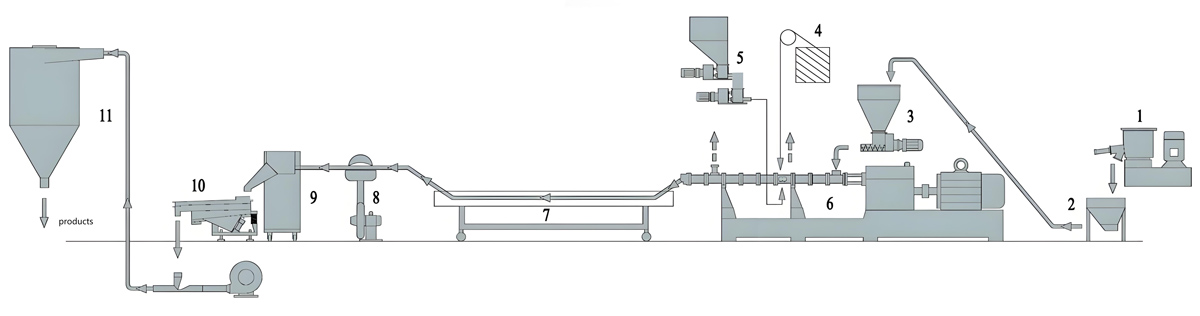
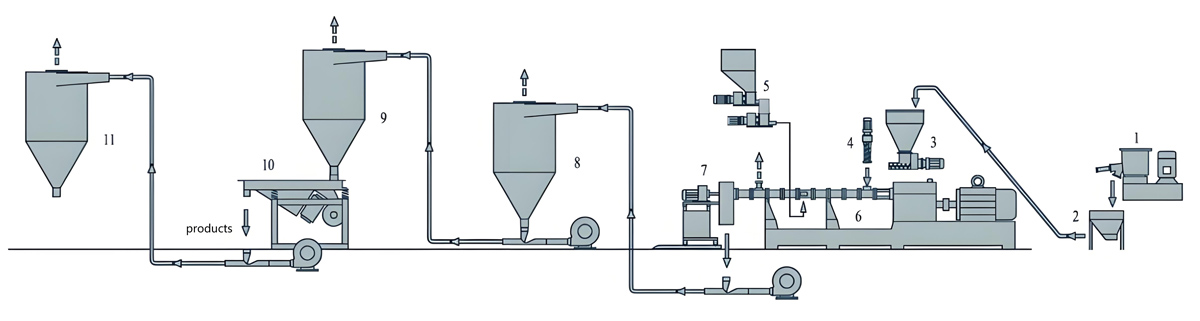
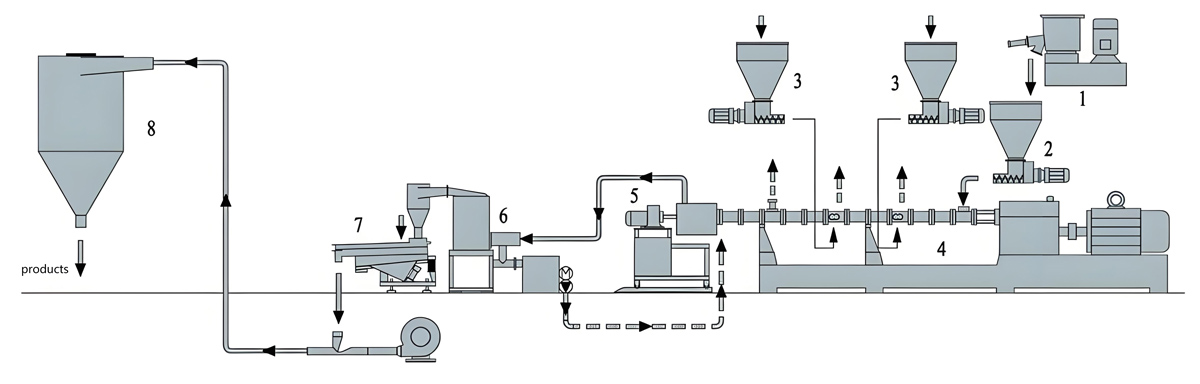
The production of PVC calcium carbonate filled masterbatch follows a carefully sequenced process that begins with raw material preparation and proceeds through compounding, cooling, and pelletizing. Each stage of the process requires precise control and monitoring to ensure consistent product quality and optimal performance characteristics. The twin screw extruder serves as the central processing unit, providing the mixing, melting, and dispersion capabilities necessary for high-quality masterbatch production while protecting the thermal sensitivity of the PVC polymer.
Raw material preparation constitutes the foundation of the production process and significantly influences final product quality. Calcium carbonate must be thoroughly dried to moisture content below 0.05% to prevent hydrolytic degradation of PVC during processing. Pre-blending of all solid components, including calcium carbonate, PVC resin, stabilizers, and lubricants, ensures homogeneous distribution before introduction to the extruder. For formulations containing liquid additives or processing aids, appropriate injection systems must be prepared to ensure accurate metering and uniform distribution. The weighing accuracy of all components must be verified to maintain formulation integrity.
The compounding process within the twin screw extruder occurs through multiple distinct functional zones, each optimized for specific processing requirements. The feed zone ensures consistent introduction of pre-blended materials into the extruder barrel. Progressive melting zones gradually heat the PVC to its processing temperature range of 160-190°C, depending on formulation and PVC grade. The thermal sensitivity of PVC requires careful temperature control throughout the barrel to prevent degradation. Dispersion zones incorporate specialized screw elements designed to break down calcium carbonate agglomerates and distribute particles uniformly throughout the PVC matrix while providing adequate distributive mixing.
Temperature control throughout the extrusion process is critical for achieving optimal PVC processing while preventing thermal degradation. PVC typically processes effectively in the range of 160-190°C, though specific temperature profiles vary based on formulation complexity and PVC grade. The temperature should increase gradually from feed to die zones to facilitate progressive melting while preventing excessive thermal exposure that could lead to dehydrochlorination and polymer degradation. The presence of adequate thermal stabilizers in the formulation provides protection against degradation, but proper temperature control remains essential for consistent product quality.
The residence time distribution in the extruder significantly affects product quality, particularly for thermal-sensitive PVC formulations. Longer residence times provide additional opportunity for mixing and dispersion but also increase thermal stress on the polymer. Optimization of screw design and processing parameters balances mixing requirements with minimal thermal exposure. The screw configuration and speed must be selected to achieve adequate dispersion while keeping residence time within acceptable limits for PVC stability.
After exiting the extruder die, the molten masterbatch undergoes rapid cooling in a water bath or air cooling system before pelletizing. The cooling rate must be carefully controlled to prevent formation of internal stresses and ensure consistent pellet characteristics. Pelletizing equipment must be properly adjusted to produce uniformly sized pellets that flow freely during subsequent processing. Final quality inspection includes verification of calcium carbonate content, particle dispersion analysis, assessment of thermal stability, and measurement of rheological properties.
Production Equipment Introduction
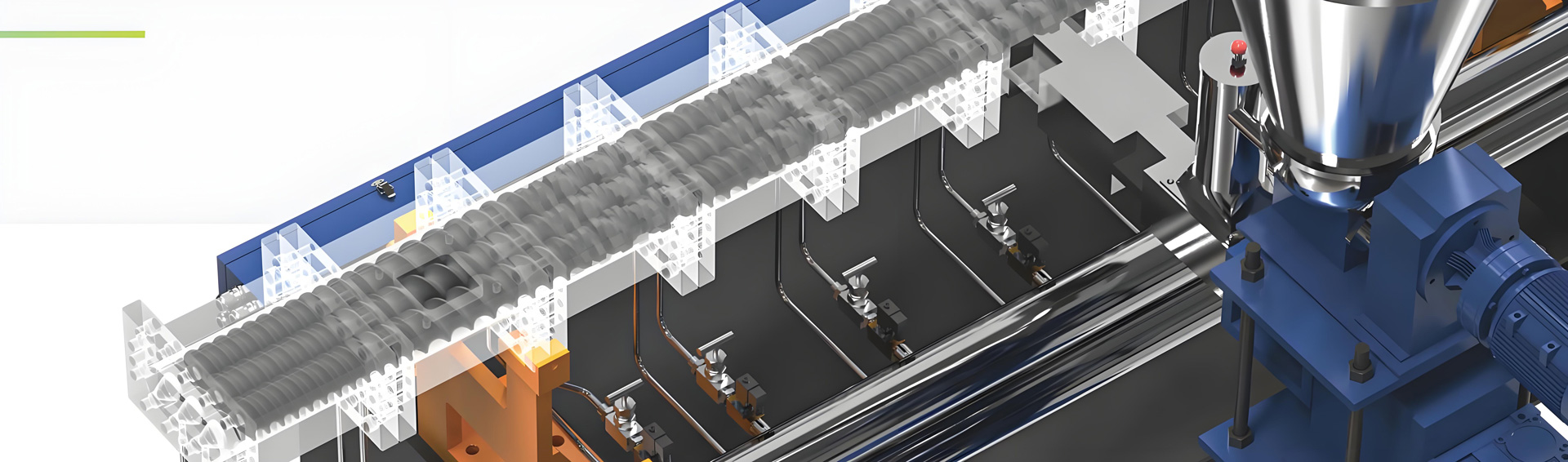
The twin screw extruder constitutes the core equipment for PVC calcium carbonate filled masterbatch production, offering superior performance compared to single screw alternatives. Co-rotating twin screw extruders are particularly well-suited for PVC compounding applications due to their positive displacement characteristics, excellent mixing efficiency, and gentle treatment of thermal-sensitive polymers. The modular construction of modern twin screw extruders enables flexible configuration of screw elements and barrel sections to optimize performance for specific PVC formulations and production requirements.
Feeding systems play a critical role in PVC masterbatch production, ensuring consistent material introduction into the extruder. Gravimetric feeders provide precise control of individual component feed rates, essential for maintaining accurate formulation ratios. For calcium carbonate feeding, loss-in-weight feeders are commonly employed due to their accuracy and ability to handle low-bulk-density powders. Multi-stream feeding systems allow controlled introduction of different components at various points along the barrel length, enabling optimization of dispersion and minimization of residence time for thermal-sensitive additives. Liquid additive injection systems enable accurate metering of liquid stabilizers, lubricants, or processing aids.
The barrel and screw configuration of the twin screw extruder must be carefully designed to accommodate the specific requirements of PVC calcium carbonate masterbatch production. Standard screw configurations for PVC applications include conveying elements for material transport, kneading blocks for dispersive mixing, and mixing elements for distributive mixing. However, PVC processing requires particular attention to screw design to minimize excessive shear and residence time that could lead to degradation. The sequence and placement of screw elements significantly affect mixing efficiency, dispersion quality, and thermal history. For high calcium carbonate loadings, additional mixing sections may be necessary to achieve adequate dispersion without excessive temperature increase.
Nanjing Kerke Extrusion Equipment Company offers KTE Series twin screw extruders specifically designed for PVC masterbatch production applications. These machines feature modular barrel sections with precise temperature control through independent heating and cooling zones, allowing optimal thermal management throughout the process. The KTE Series incorporates advanced screw geometries optimized for PVC processing, providing excellent mixing performance while maintaining gentle treatment of the thermal-sensitive polymer. The robust construction and corrosion-resistant materials ensure long-term reliability even under the demanding conditions of PVC compounding, where chlorine presence can accelerate equipment wear.
Downstream equipment complements the extruder to form a complete production line for PVC masterbatch. Strand die systems with water bath cooling are commonly used for PVC masterbatch pelletizing, though strand dies must be designed to accommodate the relatively low melt strength of PVC formulations. Water bath systems require careful design to prevent water absorption by the masterbatch pellets. Pelletizing equipment must be matched to production throughput and provide consistent pellet size and shape without generating excessive fines. Conveying systems, storage silos, and packaging equipment complete the production line, ensuring efficient material handling and product delivery while protecting the masterbatch from moisture contamination.
Parameter Settings
Optimal parameter settings are fundamental to successful PVC calcium carbonate filled masterbatch production and vary based on specific formulation, equipment design, and desired output quality. Temperature profiles represent the most critical parameters for PVC processing due to the thermal sensitivity of the polymer. Typical PVC processing temperatures range from 160°C in the feed zone to 180-190°C in the die zone for rigid PVC applications. The temperature should increase gradually along the barrel length to facilitate progressive melting while preventing excessive thermal exposure in later zones. For formulations with high thermal stabilizer content, slightly higher processing temperatures may be employed, but temperatures above 200°C should generally be avoided to prevent degradation.
Screw speed significantly influences mixing efficiency, residence time, shear intensity, and product quality. Typical screw speeds for PVC calcium carbonate masterbatch production range from 150 to 300 RPM, depending on extruder size and formulation complexity. Higher screw speeds increase shear rates and dispersive mixing but also increase mechanical heating and reduce residence time. For PVC applications, screw speed must be balanced against thermal stability requirements to prevent degradation. The optimal screw speed provides adequate mixing energy while maintaining melt temperature within acceptable ranges and providing sufficient residence time for complete dispersion of calcium carbonate particles.
Throughput rates must be matched to equipment capacity and formulation requirements to achieve optimal performance. Operating at excessive throughput can result in inadequate mixing and poor dispersion, while operating below optimal capacity may result in excessive thermal history and potential polymer degradation. Typical throughput rates for KTE Series twin screw extruders in PVC masterbatch applications range from 150 to 800 kg/h, depending on model size and formulation characteristics. Feed rate consistency is critical for maintaining uniform product quality, particularly for formulations with precise stabilizer requirements where small variations in component ratios can significantly affect thermal stability.
Vacuum venting parameters are important for removing volatile components, moisture, and low molecular weight materials from the melt. PVC formulations may release small amounts of volatile components during processing, and moisture from calcium carbonate can create vapor if not adequately dried. Vent port vacuum levels typically range from 0.05 to 0.09 MPa absolute pressure. The location of vent ports along the barrel length and the vacuum level must be optimized to ensure effective removal of volatiles without excessive polymer loss. For PVC formulations, vent zones should be positioned after adequate melting has occurred but before significant thermal degradation can develop.
Die pressure and melt pressure monitoring provide valuable insight into process stability and product quality. Typical die pressures for PVC calcium carbonate masterbatch production range from 1.5 to 4 MPa, depending on formulation viscosity and die design. Maintaining consistent pressure profiles is essential for achieving uniform output and product quality. Sudden pressure changes may indicate feeding irregularities, formulation inconsistencies, or equipment issues requiring immediate attention. Pressure fluctuations can also indicate approaching thermal degradation, as PVC degradation products often affect melt viscosity and pressure characteristics.
Motor current monitoring provides insight into process conditions and equipment load. Unexpected increases in motor current may indicate excessive viscosity due to inadequate heating or approaching degradation. Decreases in motor current may indicate feeding problems or formulation inconsistencies. Establishing baseline current values for normal operation enables early detection of developing issues.
Equipment Price
The investment in twin screw extruder equipment for PVC calcium carbonate filled masterbatch production varies significantly based on capacity, configuration, and level of automation. Complete production lines including feeding systems, extruder, cooling equipment, and pelletizing systems typically range from $180,000 to over $600,000, depending on production requirements and equipment sophistication. Base model twin screw extruders with 40mm screw diameter and appropriate length-to-diameter ratio for PVC masterbatch production start around $100,000 to $140,000, excluding auxiliary equipment.
Nanjing Kerke KTE Series twin screw extruders offer competitive pricing in the market while providing performance characteristics specifically optimized for PVC applications. A typical KTE Series extruder configured for PVC calcium carbonate masterbatch production, including basic feeding systems and control systems, is priced in the range of $110,000 to $200,000 depending on screw diameter and barrel length. Models with larger screw diameters (50mm to 75mm) capable of higher throughput rates command premium pricing, typically ranging from $220,000 to $400,000 for complete configurations. The corrosion-resistant construction materials and specialized screw geometries for PVC processing contribute to the investment value.
Auxiliary equipment costs must be considered alongside the extruder investment. Gravimetric feeding systems typically cost $18,000 to $45,000 per unit, depending on capacity and features. Liquid additive injection systems for PVC stabilizers and lubricants range from $12,000 to $30,000. Strand die systems with water baths and pelletizers designed for PVC applications range from $40,000 to $90,000. Complete control systems with advanced monitoring and automation capabilities add $25,000 to $70,000 to equipment costs but provide significant benefits in process control and operational efficiency, particularly important for thermal-sensitive PVC processing.
Used equipment options provide cost-effective alternatives for budget-constrained operations, with prices typically 35-55% of new equipment costs. However, used equipment for PVC applications carries additional considerations, including potential chlorine-induced corrosion that may not be visible externally. Thorough inspection of barrel and screw components is essential before purchasing used equipment for PVC applications. Leasing options are also available from many manufacturers, allowing lower upfront investment in exchange for monthly payments over extended terms.
Equipment selection should balance performance requirements with budget considerations while ensuring adequate capacity for production needs. The thermal sensitivity of PVC justifies investment in equipment with precise temperature control and proven performance in PVC applications. The corrosive nature of chlorine in PVC compounds warrants consideration of corrosion-resistant materials in construction, which may increase initial cost but provide longer service life and reduced maintenance. Total cost of ownership analysis should consider energy consumption, maintenance requirements, expected service life, and the cost of potential quality issues from inadequate equipment.
Production Problems and Solutions
Inadequate Dispersion of Calcium Carbonate Particles
Inadequate dispersion of calcium carbonate particles represents one of the most common problems in PVC calcium carbonate masterbatch production, resulting in visible defects, inconsistent properties, and reduced performance. This problem typically manifests as specks or agglomerates visible in finished products, uneven color distribution, surface roughness, and poor mechanical properties. The root causes often include insufficient mixing energy, inappropriate screw configuration for PVC requirements, improper temperature profile, or poor compatibility between filler and PVC matrix.
Causes analysis reveals that inadequate dispersion frequently stems from insufficient dispersive mixing energy in the mixing zones of the extruder. When screw configuration lacks adequate kneading blocks or mixing elements, or when the placement of these elements is suboptimal, calcium carbonate particles may not receive sufficient energy to break apart agglomerates and distribute uniformly. The thermal sensitivity of PVC limits the shear intensity that can be applied, creating a constraint on mixing strategies. Insufficient temperature can increase melt viscosity, reducing mixing efficiency even when screw configuration is appropriate, but excessive temperature risks PVC degradation. Poor compatibility between untreated calcium carbonate and PVC matrix can also lead to agglomeration and poor wetting of particles.
Solutions to inadequate dispersion begin with optimization of screw configuration to provide adequate dispersive mixing energy within PVC thermal constraints. This may involve adding additional kneading blocks in mixing zones, adjusting the stagger angle of kneading elements to optimize shear intensity for PVC processing, or extending the mixing section length to provide more mixing time. Temperature profile adjustments to maintain optimal melt viscosity for effective mixing while staying within PVC stability limits improve mixing efficiency. The use of surface-treated calcium carbonate or addition of coupling agents improves compatibility and dispersion quality. Selection of calcium carbonate with appropriate particle size distribution and surface characteristics reduces dispersion difficulty.
Avoidance of dispersion problems requires proactive formulation and equipment design optimized for PVC processing. Selection of calcium carbonate with appropriate particle size distribution and surface treatment reduces dispersion difficulty while meeting application requirements. Regular inspection and replacement of worn screw elements ensures consistent mixing performance. Implementation of quality control procedures to monitor dispersion quality, such as microscopic analysis of pellet cross-sections and surface quality testing on molded samples, enables early detection of dispersion issues before they impact downstream processing. Maintaining consistent feeding and processing parameters prevents variations that could affect dispersion quality.
PVC Degradation and Discoloration
PVC degradation and discoloration during masterbatch production represents a serious quality concern that affects both appearance and mechanical properties. This problem typically appears as yellowing, brown discoloration, black specks, or reduced thermal stability in the masterbatch. The causes generally relate to excessive thermal exposure, insufficient stabilizer levels, shear degradation beyond the PVC’s stability limits, or contamination with catalytic materials that accelerate dehydrochlorination.
Analysis of degradation causes often points to excessive barrel temperatures or prolonged residence time at elevated temperatures. When temperature profiles are set too high, particularly in later barrel zones, the PVC experiences thermal stress that leads to dehydrochlorination and formation of colored degradation products. Insufficient stabilizer levels or inappropriate stabilizer types in the formulation can accelerate thermal degradation, especially when processing at high temperatures. Mechanical degradation can occur due to excessive shear in high-shear mixing zones, particularly when screw speed is increased beyond optimal levels for PVC stability. Contamination with metals such as copper or iron can catalyze PVC degradation even at normal processing temperatures.
Solutions for PVC degradation include optimization of temperature profiles to reduce thermal stress while maintaining adequate melting and mixing. This often involves lowering maximum temperatures, especially in die zones, and potentially reducing overall temperature increase through the extruder. Addition of increased levels of heat stabilizers, particularly mixed metal stabilizers or organotin stabilizers appropriate for the application, provides enhanced thermal protection. Reduction of screw speed or modification of screw configuration to reduce shear intensity in high-shear zones minimizes mechanical degradation. Improved venting to remove degradation byproducts, particularly HCl if degradation occurs, helps maintain PVC quality and prevents autocatalytic degradation.
Avoidance of degradation problems requires careful formulation design and process control specific to PVC requirements. Including adequate heat stabilizer systems from the outset, with consideration for end-use requirements, provides baseline protection against thermal degradation. Implementation of strict temperature control procedures prevents accidental temperature excursions that could cause degradation. Regular monitoring of thermal stability characteristics, such as Congo red test time or static heat stability test, enables early detection of degradation trends before they become severe. Maintenance of equipment to ensure accurate temperature control and consistent screw geometry prevents local overheating and excessive shear that could lead to degradation. Use of corrosion-resistant construction materials prevents metal contamination that could catalyze degradation.
Inconsistent Masterbatch Quality
Inconsistent masterbatch quality between production runs or within a single production run presents significant challenges for end users who require predictable processing and performance. Variations in calcium carbonate content, thermal stability, dispersion quality, or pellet size distribution can all contribute to quality inconsistency. The underlying causes typically involve feeding inaccuracies, equipment control issues, raw material variability, or PVC degradation variations.
Causes of inconsistent quality often begin with feeding system inaccuracies. Gravimetric feeders that are not properly calibrated or maintained can deliver inconsistent component ratios, leading to variations in final product composition. For PVC formulations, small variations in stabilizer content can significantly affect thermal stability and processability. Inconsistent raw material properties, such as calcium carbonate particle size or bulk density variations, also cause feeding difficulties and quality variations. PVC resin batch-to-batch variations in K-value or molecular weight distribution can affect processing characteristics. Temperature control inconsistencies or barrel hotspots can create local variations in melt quality and thermal degradation. Wear in screw elements over time changes mixing characteristics and gradually affects dispersion quality.
Solutions for inconsistent quality focus on improving control and monitoring systems. Implementation of gravimetric feeding with regular calibration ensures accurate component delivery. Use of bulk density compensation systems for calcium carbonate feeding maintains consistent mass flow despite bulk density variations. Advanced temperature control systems with multiple independent zones eliminate temperature fluctuations and prevent local hotspots. Regular maintenance and scheduled replacement of wear components maintain consistent mixing characteristics. Implementation of real-time quality monitoring systems, including thermal stability testing and color measurement, enables immediate adjustment of process parameters when quality deviations are detected.
Avoidance of quality inconsistencies requires investment in robust process control and quality assurance procedures. Establishing raw material specifications and supplier quality requirements reduces incoming material variability. Implementation of statistical process control with regular sampling and testing identifies trends before they cause significant quality problems. Standard operating procedures with clear parameter specifications and change control prevent unauthorized modifications that could affect quality. Regular equipment calibration and maintenance programs maintain consistent equipment performance over time. For PVC formulations, particular attention to stabilizer content and thermal stability testing ensures consistent thermal performance across production batches.
Moisture and Volatile Defects
Moisture and volatile-related defects represent a significant problem in PVC calcium carbonate masterbatch production, particularly when using untreated calcium carbonate or processing in humid environments. Defects typically appear as surface imperfections, bubbles, voids, or surface roughness in the final product, and can significantly affect both appearance and mechanical properties. The root causes relate to moisture presence in raw materials, insufficient drying, or inadequate venting during processing.
Analysis of moisture and volatile problems often identifies inadequate drying of calcium carbonate before processing as the primary cause. Untreated calcium carbonate can contain significant moisture from storage or production processes, and when not properly dried, this moisture vaporizes in the extruder, creating defects and potentially accelerating PVC degradation through hydrolysis. Environmental humidity during processing can also introduce moisture into the process through feed systems or exposed material. PVC formulations may release low molecular weight volatiles or degradation products during processing, and inadequate venting allows these volatiles to remain in the melt, causing defects as the material exits the die.
Solutions for moisture and volatile defects begin with implementation of proper drying procedures for calcium carbonate. Pre-drying to moisture content below 0.05% using desiccant dryers or hopper dryers significantly reduces moisture-related problems. Use of surface-treated calcium carbonate with hydrophobic coatings reduces moisture absorption. Implementation of closed feeding systems and environmental controls minimizes moisture pickup during processing. Addition of vent zones with adequate vacuum capacity removes moisture and volatiles from the melt before extrusion. Increased barrel temperature in vent zones can help drive off volatiles but must be balanced against PVC degradation concerns. Optimization of vacuum level and vent location ensures effective removal without excessive polymer loss.
Avoidance of moisture and volatile problems requires establishment of comprehensive control procedures. Raw material specifications should include maximum allowable moisture content, and incoming testing should verify compliance. Dedicated drying equipment with temperature and dew point monitoring ensures consistent drying results. Storage procedures that protect hygroscopic materials from environmental humidity prevent moisture pickup. Regular verification of moisture content in production batches enables early detection of moisture problems before they cause defects. Maintenance of venting systems ensures continued effective moisture and volatile removal capacity. For PVC formulations, monitoring of melt appearance and thermal stability provides early indication of moisture-related degradation.
Maintenance and Care
Proper maintenance and care of twin screw extruder equipment used for PVC calcium carbonate masterbatch production is essential for maintaining consistent product quality, maximizing uptime, and extending equipment service life. The corrosive nature of chlorine compounds in PVC formulations adds additional maintenance considerations beyond general extrusion requirements. A comprehensive maintenance program addresses preventive maintenance, routine inspections, and predictive maintenance activities to ensure reliable operation while protecting equipment from chlorine-induced corrosion.
Daily maintenance routines focus on monitoring equipment performance and identifying potential issues before they cause problems. Operators should verify temperature accuracy across all barrel zones and compare readings to setpoints, paying particular attention to consistency between zones to detect developing heating problems. Monitoring of motor current, screw speed, and throughput rates provides insight into equipment condition. Visual inspection for leaks, unusual sounds, or vibration helps identify developing problems. Cleaning of feed systems and removal of material buildup prevents feeding inconsistencies and contamination. End-of-shift cleaning procedures are particularly important for PVC processing to prevent polymer degradation and accumulation of chlorine compounds that could accelerate corrosion.
Weekly maintenance activities include more thorough inspection of critical components with attention to corrosion prevention. Screw and barrel wear should be assessed through measurement of screw flight clearance and barrel inner diameter, with particular attention to signs of pitting or corrosion. Gearbox oil levels and condition should be checked, and oil analysis may be performed to detect contamination or degradation. Electrical connections should be inspected for tightness and signs of overheating or corrosion. Cooling system performance should be verified through temperature monitoring and flow measurements, ensuring adequate cooling capacity to maintain temperature control. Calibration of temperature sensors and pressure transducers ensures accurate control and monitoring.
Monthly maintenance routines address replacement of wear components and deep cleaning activities with focus on corrosion prevention. Worn screw elements, particularly in high-shear mixing zones, should be replaced or refurbished to maintain mixing performance. Die components and screen packs should be inspected and replaced as needed, with attention to chlorine-induced corrosion. Thorough cleaning of vent ports and vacuum systems ensures effective removal of volatiles and prevents corrosion buildup. Lubrication of bearings, slides, and other moving components should use corrosion-resistant lubricants where exposed to PVC compounds. Inspection and replacement of seals in hydraulic and pneumatic systems prevents leaks and pressure loss, with attention to chemical compatibility with PVC compounds.
Annual maintenance overhauls provide opportunity for comprehensive inspection and renewal of major components. Complete disassembly and inspection of screw and barrel assemblies enables detailed assessment of wear and corrosion damage and determination of necessary replacements. For PVC applications, special attention should be paid to detection of chlorine-induced corrosion patterns that may not be visible from external inspection. Gearbox inspection and servicing, including oil changes and bearing inspection, extends gearbox service life. Electrical system inspection, including motor testing and control system verification, ensures reliable operation. Calibrations of all sensors and instruments maintain accurate control and monitoring. Performance testing against baseline specifications provides objective assessment of equipment condition.
Documentation and record keeping support effective maintenance programs, particularly important for PVC applications where corrosion monitoring is critical. Maintenance logs should record all maintenance activities, observations, and component replacements, with particular attention to corrosion-related findings. Performance data collected over time enables trend analysis and prediction of maintenance requirements, including corrosion progression. Spare parts inventory management ensures critical components are available when needed, minimizing downtime. Operator training in basic maintenance procedures enables early problem detection and appropriate response to developing issues. Safety procedures must be followed during all maintenance activities to protect personnel and equipment, with particular attention to handling of PVC compounds and chlorine-containing residues.
FAQ
What is the optimal calcium carbonate loading level for PVC masterbatch? The optimal loading level depends on the specific application and processing requirements. For general rigid PVC applications, 60-70% calcium carbonate provides a good balance between cost reduction and property maintenance. Higher loadings up to 85% are possible for applications where maximum cost reduction is the priority, though these require optimized processing and may impact certain properties. Flexible PVC formulations typically use lower loadings in the 30-50% range to maintain flexibility and mechanical properties.
How can I prevent PVC degradation during masterbatch production? Preventing PVC degradation requires attention to multiple factors. Maintain processing temperatures below 200°C for most rigid PVC formulations. Include adequate heat stabilizers appropriate for the application and processing conditions. Optimize screw configuration to provide adequate mixing without excessive shear. Ensure good venting to remove degradation byproducts. Use corrosion-resistant equipment to prevent metal contamination that could catalyze degradation. Regular monitoring of thermal stability enables early detection of degradation trends.
What type of screw configuration works best for PVC calcium carbonate masterbatch? Effective configurations for PVC typically combine conveying elements for material transport with kneading blocks for dispersive mixing, but with attention to minimizing excessive shear. The mixing section should provide adequate dispersive energy to break up calcium carbonate agglomerates while avoiding high shear zones that could cause degradation. Multiple mixing zones often prove beneficial, with initial mixing for polymer melting and filler wetting followed by final mixing for uniform dispersion. Screw elements should be designed to provide good distributive mixing with minimal mechanical heating.
How should I handle moisture in calcium carbonate for PVC masterbatch production? Proper drying is essential for calcium carbonate used in PVC masterbatch production. Dry to moisture content below 0.05% using appropriate drying equipment. Consider using surface-treated calcium carbonate with hydrophobic coating to reduce moisture sensitivity. Implement closed feeding systems to prevent moisture pickup after drying. Ensure adequate venting capacity in the extruder to remove any residual moisture. For PVC applications, moisture control is particularly important as moisture can accelerate hydrolytic degradation of the polymer.
What causes black specks in PVC masterbatch? Black specks in PVC masterbatch typically result from localized degradation of the polymer. Causes may include local overheating due to poor heat transfer, stagnation points where material accumulates and degrades, contamination with catalytic materials, or excessive shear in localized areas. Solutions include optimization of screw design to eliminate stagnation points, maintenance of proper temperature control, use of corrosion-resistant materials, and adjustment of screw speed to reduce excessive shear. Regular cleaning of the extruder helps prevent material accumulation and degradation.
How does calcium carbonate particle size affect PVC masterbatch quality? Calcium carbonate particle size significantly affects dispersion quality, final product properties, and processing characteristics. Smaller particles provide better dispersion and surface finish but may increase viscosity and require more mixing energy. Larger particles reduce viscosity and processing requirements but may cause surface roughness and reduced mechanical properties. Optimal particle size depends on application requirements, typically ranging from 1-3 microns for general applications. Particle size distribution also affects packing density and viscosity characteristics.
What maintenance considerations are specific to PVC masterbatch production? PVC applications require special attention to corrosion prevention due to chlorine compounds in the formulations. Use of corrosion-resistant construction materials in barrel and screw components helps extend service life. Regular inspection for signs of chlorine-induced corrosion enables early intervention before significant damage occurs. Thorough cleaning procedures remove accumulated chlorine compounds that could accelerate corrosion. Lubricant selection should consider chemical compatibility with PVC residues. Monitoring of screw and barrel wear patterns may reveal corrosion progression even when wear measurements appear normal.
Conclusion
The production of PVC calcium carbonate filled masterbatch using twin screw extruders represents a sophisticated manufacturing process that demands careful attention to formulation, equipment selection, process parameters, and maintenance practices, with particular attention to the thermal sensitivity and corrosive characteristics of PVC. Successful production requires integration of material science knowledge, equipment engineering expertise, and operational excellence tailored to PVC processing requirements. The KTE Series twin screw extruders from Nanjing Kerke provide the performance capabilities needed for demanding PVC masterbatch applications while offering corrosion-resistant construction suitable for chlorine-containing compounds.
Optimization of formulation ratios based on application requirements establishes the foundation for product quality. Selection of appropriate calcium carbonate characteristics, PVC resin grade, stabilizer systems, and lubricant packages determines the ultimate performance of the masterbatch. Production processes must be carefully controlled to achieve consistent dispersion, maintain thermal stability, and minimize degradation risks. Equipment selection, particularly screw and barrel configuration with attention to corrosion resistance and thermal management, significantly impacts production efficiency and product consistency.
Process parameter optimization is essential for achieving target performance while maximizing production efficiency and maintaining PVC stability. Temperature profiles, screw speed, throughput rate, and venting conditions all interact to determine final product quality. Regular monitoring and adjustment based on product testing and process observations enable continuous improvement. Understanding common problems specific to PVC processing and their solutions empowers operators to quickly address issues and minimize production disruptions.
Comprehensive maintenance programs ensure continued reliable performance and extend equipment service life while protecting against chlorine-induced corrosion. Preventive maintenance, routine inspections, and predictive maintenance activities work together to minimize unexpected downtime and maintain optimal processing conditions. Investment in quality equipment with corrosion-resistant construction, supported by proper maintenance and operational practices, provides the foundation for successful PVC calcium carbonate masterbatch production.
As the demand for cost-effective PVC materials continues to grow across construction, automotive, and consumer goods markets, the importance of efficient masterbatch production processes increases. Manufacturers who master the technical aspects of PVC calcium carbonate masterbatch production, with particular attention to thermal stability requirements and corrosion prevention, position themselves to capture market opportunities while delivering consistent, high-quality products to their customers. Continuous improvement in formulation, processing technology, and operational practices ensures competitiveness in this demanding market segment.