Flame retardant and heat resistant masterbatch formulations address critical safety requirements across electrical, automotive, construction, and consumer product applications. Twin screw extrusion technology provides the precise processing conditions necessary for incorporating flame retardant additives and heat stabilizers into polymer matrices while maintaining product quality and performance characteristics. This comprehensive guide covers formulation considerations, production processes, equipment selection, and operational best practices for manufacturing high-performance flame retardant masterbatch.
Introduction
Polymer materials burn readily when exposed to ignition sources, creating fire hazards that regulatory requirements and safety standards seek to minimize. Flame retardant additives reduce material flammability by interfering with combustion chemistry, extending time to ignition, limiting flame spread, and reducing smoke generation during fire events.
Heat resistant masterbatch addresses applications requiring sustained or intermittent exposure to elevated temperatures without property degradation. These formulations incorporate heat stabilizers that protect polymer chains from thermal oxidation and decomposition processes that occur at elevated temperatures.
The combination of flame retardancy and heat resistance proves essential for electrical and electronic applications where components must operate safely at elevated temperatures while meeting stringent fire safety requirements. Wire and cable insulation, electronic housing, and automotive components represent major application areas driving demand for these specialized masterbatch products.
Understanding Flame Retardancy Mechanisms
Flame retardant mechanisms fall into several categories based on how additives interfere with combustion chemistry. Gas phase mechanisms involve release of flame-inhibiting gases that interrupt free radical reactions sustaining combustion. Solid phase mechanisms create protective char layers that insulate underlying material from heat and exclude oxygen.
Endothermic degradation mechanisms absorb heat energy while releasing water vapor or incombustible gases, cooling the material below ignition temperatures. Physical barrier mechanisms create surfaces that slow heat transfer and oxygen diffusion to underlying polymer.
Effective flame retardant systems often combine multiple mechanisms to achieve required performance levels. The specific mechanism emphasis depends on polymer type, application requirements, and regulatory specifications governing the target market.
Formulation Ratio for Flame Retardant and Heat Resistant Masterbatch
Halogenated Flame Retardant Systems
Halogenated flame retardants remain widely used despite regulatory pressure in some regions, offering excellent performance at relatively low addition levels. Brominated flame retardants provide particularly effective flame suppression across diverse polymer systems.
Typical halogenated flame retardant masterbatch formulations contain 40 to 60 percent brominated compound content, 30 to 45 percent carrier resin, 5 to 10 percent antimony trioxide synergist, and 1 to 5 percent processing aids and dispersing agents. The specific ratio depends on required flame retardancy level and polymer system compatibility.
Decabromodiphenyl oxide and brominated epoxy oligomers represent common brominated flame retardants used in engineering polymers. These materials achieve high effectiveness at moderate loading levels while maintaining acceptable polymer property retention.
Phosphorus-Based Flame Retardant Systems
Phosphorus-based flame retardants offer environmental advantages over halogenated alternatives while providing effective flame retardancy through solid phase and gas phase mechanisms. These systems generate less smoke and toxic gases during fire events compared to halogenated materials.
Formulation ratios for phosphorus-based flame retardant masterbatch include 25 to 45 percent phosphorus additive content, 45 to 65 percent carrier resin, and 5 to 15 percent co-additives including char formers and processing stabilizers. Loading levels typically exceed halogenated systems due to lower intrinsic effectiveness per unit weight.
Red phosphorus, phosphates, and phosphonates represent major phosphorus flame retardant categories. Ammonium polyphosphate and melamine phosphate find extensive use in polyolefin and polyurethane applications requiring flame retardancy.
Mineral and Intumescent Flame Retardant Systems
Mineral flame retardants including aluminum trihydroxide and magnesium hydroxide provide flame retardancy through endothermic decomposition that absorbs heat while releasing water vapor. These materials offer excellent smoke suppression and low toxicity characteristics.
High loading requirements characterize mineral flame retardant masterbatch formulations. Typical ratios include 50 to 70 percent mineral flame retardant, 25 to 40 percent carrier resin with specialized surface treatment for mineral compatibility, and 2 to 5 percent coupling agents ensuring adequate polymer-filler bonding.
Intumescent flame retardant systems combine acid catalysts, carbon sources, and blowing agents that create expanded char layers protecting underlying materials. These systems offer effective flame retardancy with reduced mineral loading compared to purely endothermic approaches.
Heat Resistant Additive Systems
Heat resistance requirements vary substantially based on application temperature ranges and exposure duration. Heat stabilizer formulations must address the specific degradation mechanisms active at target temperature conditions.
For moderate temperature applications (up to 150 degrees Celsius), standard antioxidant packages provide adequate protection through radical scavenging and hydroperoxide decomposition mechanisms. Typical formulations include 0.5 to 2 percent primary antioxidant and 0.3 to 1 percent phosphite secondary antioxidant.
High temperature applications require specialized stabilizers including hindered phenolics, thioesters, and custom stabilizers designed for specific polymer-temperature combinations. Heat resistant masterbatch for engineering polymers may incorporate 2 to 10 percent specialized heat stabilizer content depending on performance requirements.
Production Process for Flame Retardant and Heat Resistant Masterbatch
Raw Material Handling Considerations
Flame retardant masterbatch production requires attention to raw material handling that addresses both processing requirements and safety considerations. Many flame retardant additives are supplied as powders requiring dust control measures to protect workers and ensure accurate feeding.
Closed material handling systems minimize airborne dust while ensuring complete transfer of expensive additives to mixing equipment. Gravimetric feeding systems provide precise additive introduction rates while reducing operator exposure to potentially hazardous materials.
Carrier resin preparation addresses moisture content and physical form requirements for optimal extrusion processing. Resin drying ensures moisture levels below 0.02 percent for hygroscopic polymers, preventing hydrolysis during processing that could compromise mechanical properties.
Pre-Mixing and Compounding
Pre-mixing operations ensure uniform distribution of flame retardant additives before extrusion processing. High-intensity mixing equipment provides rapid blending of additive concentrates with carrier resin while minimizing segregation during handling.
Surface treatment of mineral flame retardants improves compatibility with polymer matrices and dispersion efficiency during extrusion. Silane coupling agents and specialized dispersants enhance interfacial bonding between mineral fillers and polymer carriers.
Masterbatch concentrates enable efficient handling of high additive loadings through let-down into appropriate carrier systems during final compounding. This approach provides manufacturing flexibility while maintaining consistent additive quality.
Twin Screw Extrusion Processing
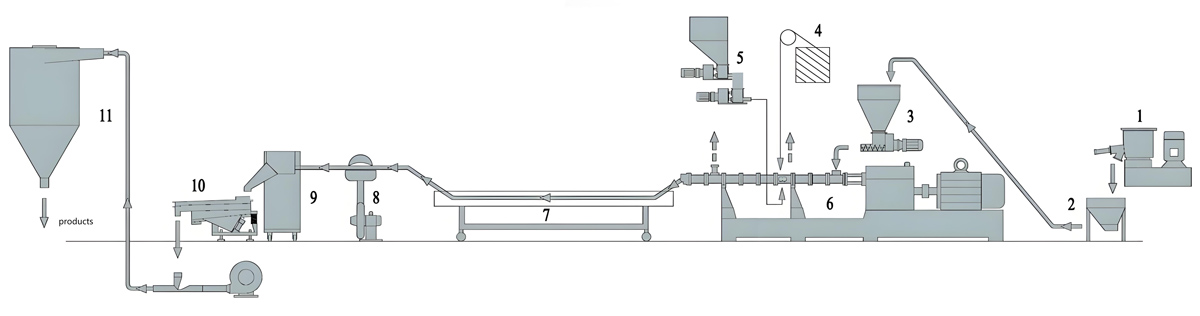
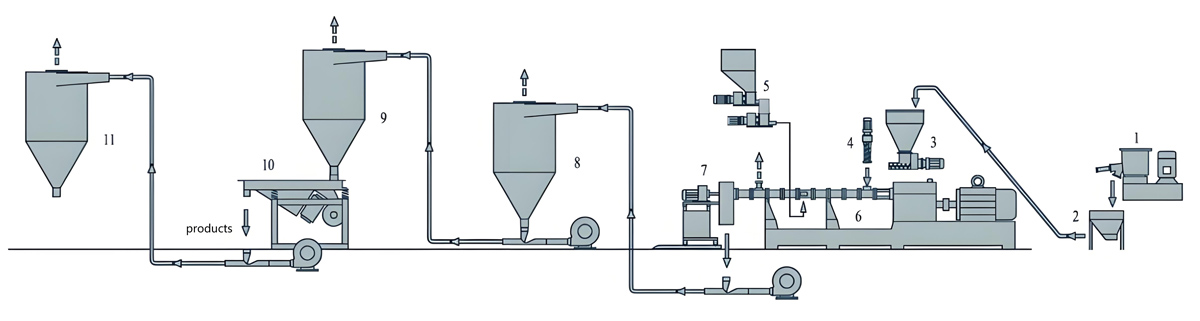
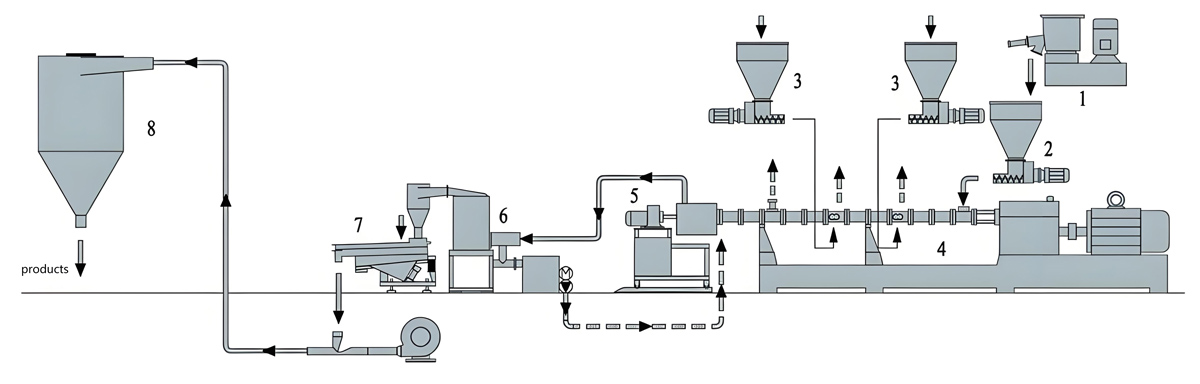
The twin screw extrusion process transforms flame retardant formulations into homogeneous masterbatch suitable for downstream application. Process optimization addresses the unique requirements of flame retardant materials including dust control, additive dispersion, and thermal stability.
Feeding systems introduce formulation components at controlled rates maintaining appropriate extruder fill levels. Side feeders enable introduction of high loadings of flame retardant additives at barrel locations offering optimal processing conditions. Gravimetric feeding provides continuous formulation verification through real-time weight monitoring.
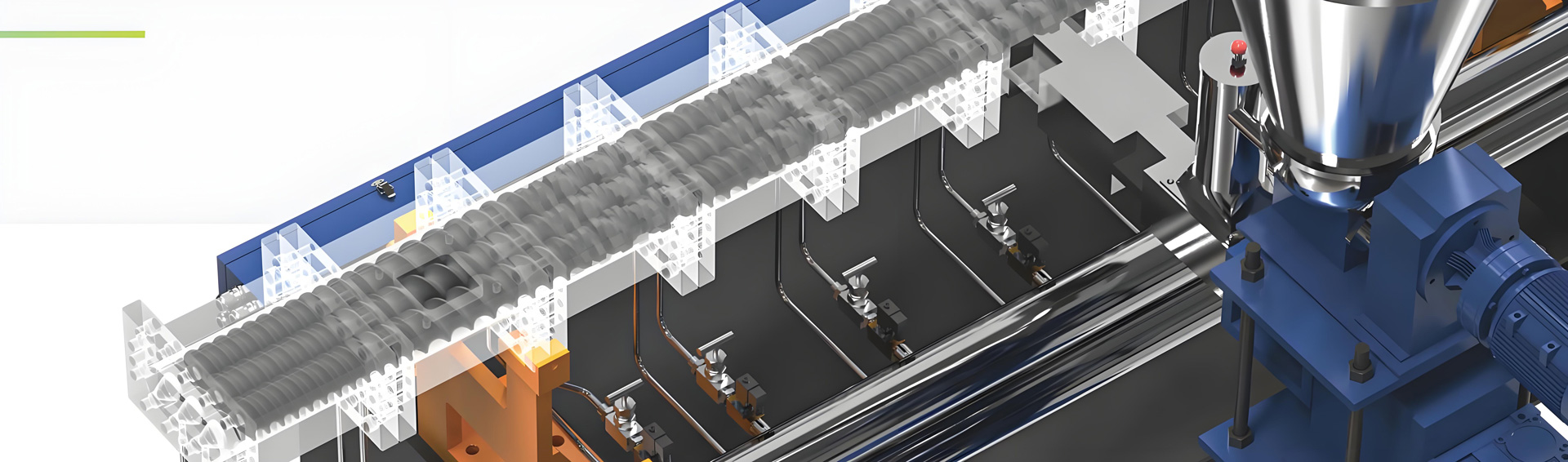
Mixing zones incorporate specialized screw elements that distribute flame retardant additives throughout the polymer matrix. Kneading blocks create high shear zones for breaking up agglomerates while specialized conveying elements transport high-mineral-loading formulations without excessive shear stress.
The pumping zone maintains consistent throughput while developing pressure for die extrusion. This zone requires screw elements providing uniform delivery without additional mixing that could generate excessive shear heating in thermally sensitive formulations.
Pelletizing and Quality Verification
Pelletizing systems transform extruded melt into uniform pellet forms suitable for handling, storage, and subsequent application. Underwater pelletizing provides consistent pellet quality with minimal dust generation compared to strand pelletizing alternatives.
Pellet cooling must be controlled to prevent thermal shock that could cause cracking or warping in formulations with high mineral loadings. Water spray cooling systems provide gentle temperature reduction without the rapid cooling that creates internal stresses.
Quality verification testing confirms flame retardant content, dispersion quality, and physical properties meet specifications before product release. Particle size distribution analysis verifies pellet characteristics while analytical methods confirm additive content accuracy.
Production Equipment Introduction
Kerke KTE Series Twin Screw Extruders
Kerke KTE series twin screw extruders provide the processing capabilities required for flame retardant masterbatch production. The series encompasses models suited to various production scales from laboratory development through industrial volume manufacturing.
The KTE-36B extruder features 35.6mm screw diameter and achieves throughput rates of 20 to 100kg per hour. This compact machine suits formulation development, pilot production, and small volume specialty masterbatch manufacturing. The precise control capabilities enable optimization of challenging flame retardant formulations.
The KTE-50B extruder provides 50.5mm screw diameter with production rates of 80 to 200kg per hour. This mid-range model balances processing quality with production efficiency for moderate volume commercial flame retardant masterbatch production.
The KTE-65B extruder offers 62.4mm screw diameter and throughput of 200 to 450kg per hour. This capacity level addresses commercial production requirements for established flame retardant masterbatch suppliers serving electrical and construction applications.
The KTE-75B extruder features 71mm screw diameter with production capabilities of 300 to 800kg per hour. This higher capacity model suits dedicated production facilities serving volume flame retardant polymer markets with consistent quality requirements.
The KTE-95D extruder provides the largest production capacity in the series with 93mm screw diameter and throughput of 1000 to 2000kg per hour. This industrial scale machine meets high volume production requirements for major flame retardant polymer applications while maintaining quality consistency.
Feeding and Material Handling Equipment
Gravimetric feeding systems provide the precise ingredient introduction rates required for consistent flame retardant masterbatch formulations. These systems incorporate loss-in-weight technology that continuously measures and adjusts feed rates to maintain formulation accuracy throughout production.
Side feeder equipment enables controlled introduction of high flame retardant loadings at specific barrel locations. The side feeder design must provide sufficient capacity for high feed rates while maintaining accurate feeding of flame retardant materials.
Dust collection systems protect worker safety and equipment reliability by capturing airborne particles generated during material handling. Effective dust control proves essential for maintaining production efficiency and equipment cleanliness.
Pelletizing and Downstream Equipment
Underwater pelletizing systems produce the pellets preferred for flame retardant masterbatch applications. These systems maintain precise water temperature and flow control to produce pellets with consistent geometry and surface quality.
Water ring pelletizing systems offer alternative pellet quality characteristics for specific formulation types. These systems produce cylindrical pellets with high surface quality suitable for applications requiring specific handling characteristics.
Centrifugal dryers remove surface water while minimizing mechanical stress that could damage pellets containing high mineral loadings. Integrated classification systems remove oversized and undersized particles to ensure consistent product quality.
Parameter Settings for Flame Retardant and Heat Resistant Masterbatch
Temperature Profile Configuration
Temperature profile settings significantly impact flame retardant masterbatch quality and production efficiency. The profile must facilitate complete polymer melting while avoiding thermal degradation of flame retardant additives and maintaining appropriate melt viscosity for effective mixing.
Typical temperature profiles for halogenated flame retardant masterbatch using polypropylene carrier begin at 180 to 200 degrees Celsius in the feeding zone, increase to 200 to 220 degrees through mixing sections, and maintain 200 to 210 degrees in pumping and die zones. Lower processing temperatures protect thermally sensitive flame retardant additives from decomposition.
Phosphorus-based flame retardant formulations may require slightly higher temperatures for adequate melt flow while avoiding decomposition of phosphorus compounds. Red phosphorus formulations particularly require careful temperature control to prevent oxidation and discoloration.
Mineral flame retardant formulations can typically tolerate higher processing temperatures since mineral fillers exhibit excellent thermal stability. However, carrier resin thermal stability limits still constrain maximum processing temperatures in most cases.
Screw Speed and Mixing Intensity
Screw speed selection influences mixing efficiency, melt temperature development, and production throughput. Higher speeds increase shear rates that improve additive dispersion but also increase melt temperature and potentially degrade sensitive flame retardants.
Optimal screw speeds for flame retardant masterbatch typically range from 150 to 350 revolutions per minute depending on formulation requirements and equipment configuration. Lower speeds protect heat-sensitive additives while higher speeds enable faster production rates when additive stability permits.
Screw element selection creates specific mixing intensity profiles throughout the barrel. Kneading blocks generate high shear zones for breaking up flame retardant agglomerates. Conveying elements transport high-mineral-loading formulations without excessive shear heating. Mixing element positioning throughout the barrel profile must balance dispersion requirements against potential for thermal degradation.
Throughput and Residence Time
Throughput rate selection must consider the extruder fill level required for effective mixing of high-viscosity flame retardant formulations. Mineral-filled and high-concentration flame retardant formulations create higher melt viscosities requiring careful balance of throughput against screw speed.
Residence time within the extruder must provide sufficient thermal and mechanical energy for complete melting and additive dispersion while avoiding thermal degradation of sensitive flame retardants. Mean residence times of 45 to 120 seconds typically achieve adequate processing for flame retardant formulations.
Narrow residence time distribution improves product consistency by ensuring all material receives similar processing. Screw design optimization through barrier elements and specialized pumping sections narrows the distribution and reduces product quality variation.
Pressure and Vacuum Settings
Barrel pressure monitoring provides valuable feedback regarding melt homogeneity and potential contamination. Sudden pressure changes often indicate formulation inconsistencies or equipment issues requiring immediate attention.
Vacuum ventilation removes moisture and volatile degradation products that could compromise masterbatch quality or create processing problems. Vacuum levels of 50 to 100 millibars effectively remove volatiles while preventing excessive polymer loss through the vent system.
Vent zone positioning requires consideration of when volatiles reach maximum concentration during melting of flame retardant formulations. Positioning vents appropriately captures moisture and degradation products released during the melting process.
Equipment Price
Equipment investment for flame retardant masterbatch production varies based on production capacity requirements and formulation complexity. The Kerke KTE series provides equipment options spanning research to industrial production scales.
The KTE-36B twin screw extruder represents the entry level investment at $25,000 to $35,000. This model suits research and development applications, pilot production, and small volume specialty flame retardant masterbatch manufacturing.
The KTE-50B twin screw extruder requires an investment of $40,000 to $60,000. This mid-range equipment balances processing capability with production efficiency for moderate volume commercial production.
The KTE-65B twin screw extruder costs between $50,000 and $80,000. This model addresses commercial production requirements for established flame retardant masterbatch suppliers.
The KTE-75B twin screw extruder commands prices ranging from $70,000 to $100,000. This higher capacity model suits dedicated production facilities serving volume flame retardant polymer markets.
The KTE-95D twin screw extruder represents the premium equipment tier with prices of $120,000 to $200,000. This industrial scale machine enables high volume production for major flame retardant polymer markets while maintaining quality consistency.
Complete production system investment extends beyond extruder purchase to include feeding systems with dust collection, pelletizing equipment, material handling, quality control instrumentation, and facility requirements. Total system investments typically range from 1.5 to 3 times the extruder purchase price depending on automation level and safety system requirements.
Problems in Production Process and Solutions
Flame Retardant Decomposition During Processing
Problem Description: Thermal decomposition of flame retardant additives during extrusion reduces their effectiveness in finished applications. This manifests as inadequate flame retardancy performance in certified products, discoloration, and release of decomposition gases creating safety hazards.
Root Cause Analysis: Excessive barrel temperatures, extended residence time at elevated temperatures, or excessive shear heating can decompose flame retardant compounds. Brominated compounds particularly may decompose to release hydrogen bromide gas when exposed to excessive temperatures or shear stress.
Solution Approach: Reduce barrel temperatures throughout the profile, particularly in zones containing flame retardant additives. Increase throughput rate to reduce material residence time in high temperature zones. Modify screw configuration to reduce shear heating in sensitive zones. Consider split feeding where flame retardants are introduced downstream of the highest temperature zones.
Prevention Methods: Establish validated temperature profiles and throughput limits for each flame retardant formulation based on additive thermal stability data. Implement temperature monitoring with alarms that identify excursions before significant decomposition occurs. Document process parameters for each production run to enable traceability and optimization.
Poor Mineral Dispersion and Agglomeration
Problem Description: Inadequate dispersion creates agglomerates that reduce flame retardant effectiveness and create surface defects in finished products. Agglomerates also create stress concentrations that may reduce mechanical properties in compounded polymers.
Root Cause Analysis: Insufficient mixing intensity, inadequate surface treatment of mineral fillers, or formulation issues causing particle agglomeration can all produce dispersion problems. High mineral loadings particularly challenge dispersion efficiency as particle-particle interactions increase.
Solution Approach: Review screw element configuration to ensure adequate mixing elements for high-viscosity formulations. Verify surface treatment of mineral flame retardants and adjust treatment levels if dispersion problems persist. Increase mixing intensity through additional kneading blocks or higher screw speeds if thermal limits permit.
Prevention Methods: Establish standard screw configurations for each mineral flame retardant formulation type. Monitor product quality trends to identify gradual degradation indicating equipment wear or formulation changes. Conduct periodic dispersion efficiency validation testing.
Dust Generation and Handling Issues
Problem Description: Excessive dust generation during material handling and feeding creates worker safety concerns, production inefficiencies, and potential quality issues from additive loss or contamination.
Root Cause Analysis: Powder flame retardant additives with fine particle size distributions generate dust during handling. Inadequate dust collection systems, improper material transfer procedures, and worn feeding equipment can all contribute to excessive dust generation.
Solution Approach: Implement closed material handling systems that minimize airborne dust generation. Review and upgrade dust collection equipment to handle the specific dust loads from flame retardant materials. Modify transfer procedures to reduce dust generation during material movement.
Prevention Methods: Establish standard material handling procedures that minimize dust generation. Maintain dust collection equipment according to manufacturer recommendations. Monitor dust levels during production to identify issues before they create significant problems.
Corrosion and Equipment Wear
Problem Description: Some flame retardant additives, particularly brominated compounds, can contribute to corrosive wear of processing equipment. This manifests as accelerated barrel and screw wear, equipment failure, and potential contamination of product with metallic particles.
Root Cause Analysis: Decomposition of brominated flame retardants can release hydrogen bromide that creates corrosive conditions within the extruder. Moisture contamination can accelerate corrosive attack on metal surfaces.
Solution Approach: Ensure adequate drying of raw materials and carriers to prevent moisture-related corrosion. Maintain proper temperature control to prevent flame retardant decomposition and acid release. Consider corosion-resistant barrel and screw coatings for aggressive flame retardant formulations.
Prevention Methods: Implement regular equipment inspection for signs of corrosion and wear. Monitor for increased metallic contamination that may indicate accelerated wear. Maintain material moisture levels below specified limits throughout production.
Inconsistent Color and Appearance
Problem Description: Color variation between production batches or within individual batches creates quality concerns for applications where appearance specifications may apply. This also indicates potential formulation inconsistency that could affect flame retardancy performance.
Root Cause Analysis: Additive degradation, cross-contamination from previous productions, or variable dispersion can produce color shifts. Some flame retardant additives may undergo color changes during processing or storage due to thermal exposure or light sensitivity.
Solution Approach: Implement comprehensive cleaning procedures between production runs. Verify raw material quality through incoming inspection testing. Adjust processing conditions to minimize thermal stress on color-sensitive additives. Consider alternative additive grades with improved color stability.
Prevention Methods: Establish cleaning validation protocols specifying procedures for different formulation transitions. Maintain raw material specifications and incoming quality verification. Document color measurements for each production lot to enable trend analysis.
Maintenance
Daily Operational Maintenance
Daily maintenance activities ensure consistent product quality and equipment reliability for flame retardant masterbatch production. Operator inspections at shift start verify equipment readiness and identify any issues requiring attention before production begins.
Temperature controller verification confirms accurate temperature measurement and control throughout the barrel profile. Recording actual temperatures against setpoints enables trend analysis that identifies developing problems. Any significant deviations require investigation and correction before production continues.
Feeding system inspection verifies smooth material flow and proper function of feeding equipment. Hopper level monitoring ensures adequate material supply throughout production runs. Dust collection system inspection confirms proper operation and filter condition.
Die plate inspection and cleaning removes accumulated material that could restrict flow or cause contamination. Visual inspection of startup pellets verifies product quality before releasing production for packaging.
Weekly Maintenance Activities
Weekly maintenance extends equipment care beyond daily activities to address components requiring less frequent attention. Gravimetric feeding system calibration verification using certified test weights confirms continued accuracy within specification limits.
Vacuum system inspection examines filters, seals, and connections for condition and proper function. Filter inspection and replacement maintains vacuum efficiency and prevents material loss through the vent system.
Screw torque indicator inspection identifies any loosening that could allow element rotation during operation. Torque measurements provide baseline data for detecting changes over time indicating potential mechanical issues.
Pelletizing system inspection examines knife wear, die plate condition, and water system function. Regular knife sharpening maintains cutting quality while die inspection identifies wear patterns requiring attention.
Monthly and Quarterly Maintenance
Monthly maintenance addresses wear patterns and component conditions requiring periodic assessment. Barrel and screw wear inspection identifies sections approaching replacement thresholds based on accumulated operating hours and historical wear rates.
Gearbox oil analysis provides early warning of contamination or degradation that could lead to mechanical failure. Oil replacement schedules maintain transmission health while analysis results guide maintenance timing decisions.
Electrical system inspection examines connections, motor condition, and control system calibration. Temperature controller calibration verification ensures accurate temperature measurement throughout the barrel profile.
Quarterly maintenance encompasses comprehensive equipment assessment addressing all major systems. Extruder barrel inspection using borescope equipment documents internal wear patterns and accumulated deposits affecting product quality. Performance qualification testing verifies equipment capability to produce product meeting specifications.
Annual and Long-Term Maintenance
Annual maintenance represents comprehensive equipment overhaul ensuring continued reliability and quality performance. Complete extruder disassembly and inspection examines all internal components for wear, damage, or accumulated material affecting performance.
Screw element replacement planning considers accumulated operating hours and historical wear patterns to optimize replacement timing. Proactive replacement prevents quality problems emerging from excessive wear while enabling scheduled maintenance during planned downtime.
Control system updates and calibration ensure continued accurate equipment operation. Process parameter documentation enables rapid recovery following control system maintenance or upgrades.
Performance qualification testing documents equipment capability for quality system compliance purposes. These records demonstrate continued ability to produce flame retardant masterbatch meeting demanding fire safety requirements.
FAQ
What flame retardant types work best for different polymer systems?
Brominated flame retardants provide excellent effectiveness across diverse polymers including ABS, polystyrene, and polyolefins at moderate loading levels. Phosphorus-based flame retardants suit polyesters, polyurethanes, and polyamides with good environmental profiles. Mineral flame retardants including ATH and MDH work well in polyolefins and PVC with excellent smoke suppression. Selection depends on polymer type, required fire test performance, and regulatory requirements governing specific applications.
How do I achieve UL94 V-0 rating with flame retardant masterbatch?
UL94 V-0 rating requires specific flame extinguishment times and no dripping during standardized burning tests. Achieving V-0 ratings depends on polymer type, flame retardant system selection, and addition levels appropriate for section thickness. Consultation with flame retardant suppliers and testing laboratory evaluation guides formulation optimization for specific applications.
What carrier resins are suitable for flame retardant masterbatch?
Carrier resin selection depends on final application polymer compatibility and processing requirements. Polypropylene and polyethylene carriers offer broad compatibility and cost-effective performance. ABS carriers suit application in ABS and related polymers. Specialty carriers including polycarbonate and polyamide address engineering polymer applications requiring specific performance characteristics.
How do I prevent discoloration in flame retardant masterbatch?
Discoloration prevention requires attention to processing temperatures, additive selection, and raw material quality. Lower processing temperatures minimize thermal degradation that causes discoloration. UV stabilizers and antioxidants help prevent discoloration during storage and use. Raw material quality verification ensures that starting materials do not contribute color bodies to finished products.
What quality control tests are essential for flame retardant masterbatch?
Essential quality tests include flame retardant content verification through analytical methods, thermal stability testing, moisture content determination, and dispersion evaluation. Physical property testing of compounded samples confirms that masterbatch let-down maintains expected performance. Fire test validation using standardized procedures verifies performance meets specifications.
How do flame retardant loadings affect mechanical properties?
High flame retardant loadings typically reduce mechanical properties including impact strength, tensile strength, and elongation. Mineral flame retardants particularly affect impact resistance and flexibility. Impact modifiers and processing optimization help maintain acceptable property levels while achieving flame retardancy requirements. Formulation balancing addresses trade-offs between flame retardancy and mechanical performance.
What are the environmental considerations for flame retardant masterbatch?
Environmental regulations increasingly restrict certain flame retardant types, particularly brominated compounds facing phase-out in some applications and regions. Phosphorus-based and mineral flame retardants offer more favorable environmental profiles. Life cycle assessment and regulatory compliance evaluation guide formulation decisions for specific markets and applications.
How should I store flame retardant masterbatch?
Flame retardant masterbatch storage requires protection from moisture, heat, and direct sunlight that could degrade additive effectiveness. Airtight packaging prevents moisture uptake and preserves additive stability. FIFO inventory practices ensure oldest material is used first. Storage at temperatures below 30 degrees Celsius and relative humidity below 60 percent maintains product quality during storage periods.
Conclusion
Flame retardant and heat resistant masterbatch production through twin screw extrusion technology addresses critical safety requirements across numerous industries. The combination of effective flame retardant additives and heat stabilizers provides protection against ignition, flame spread, and thermal degradation that extends product service life and meets regulatory requirements.
Successful flame retardant masterbatch manufacturing requires careful attention to formulation design, process optimization, and quality control. The Kerke KTE series provides processing equipment capable of producing consistent, high-quality masterbatch across the production capacity range required by different market segments.
Equipment investment considerations must account for the specialized requirements of flame retardant production including dust control, corrosion resistance, and process control precision. Supporting systems including feeding equipment, pelletizing systems, and quality control instrumentation all contribute to effective production operations.
Ongoing process optimization based on product quality feedback and maintenance activities ensure continued production of masterbatch meeting demanding fire safety requirements. Investment in operator training, quality systems, and equipment maintenance yields returns through consistent product quality and reduced production problems.
The technical knowledge presented in this guide provides a foundation for developing flame retardant masterbatch manufacturing capabilities. Organizations pursuing opportunities in electrical, construction, automotive, and consumer product applications requiring fire safety compliance can leverage this knowledge to establish effective production operations serving markets demanding long-term durability and performance under fire exposure conditions.