Marine grade anti-corrosion masterbatch represents one of the most technically demanding segments of the masterbatch industry, serving critical applications in shipbuilding, offshore structures, port infrastructure, and coastal installations where materials face relentless exposure to salt spray, ocean atmosphere, and demanding environmental conditions. These specialized masterbatches must provide exceptional corrosion protection while maintaining mechanical integrity, UV stability, and aesthetic appearance over extended service lifetimes measured in decades rather than years.
The marine environment presents perhaps the most aggressive corrosion challenge of any application sector. Salt-laden air, wave splash, tidal immersion, and biological fouling combine to create conditions that rapidly degrade unprotected materials. Marine-grade masterbatch formulations must address all these degradation mechanisms through carefully engineered additive packages that protect polymer materials throughout their service life.
Twin screw extrusion technology has proven essential for producing high-quality marine-grade anti-corrosion masterbatch. The intensive mixing capabilities enable uniform dispersion of corrosion inhibitors, UV stabilizers, and other protective additives. Precise temperature control protects heat-sensitive active components. Flexible processing configurations accommodate the varied additive systems required for comprehensive marine protection.
Introduction
The maritime industry operates in one of the most challenging environmental conditions imaginable, where salt, moisture, UV radiation, and biological factors combine to accelerate material degradation at rates far exceeding normal atmospheric exposure. The masterbatch used in marine plastic applications must provide sustained protection against all these degradation mechanisms while maintaining functional and aesthetic properties throughout demanding service lifetimes.
Marine applications for plastic materials span a remarkable range of uses, from hull and superstructure components to deck fittings, from piping systems to electrical enclosures, from buoys and floats to offshore platform components. Each application presents unique requirements based on exposure conditions, mechanical demands, and performance expectations that influence masterbatch formulation design.
Corrosion protection in marine applications extends beyond simple material preservation to encompass safety, environmental compliance, and economic considerations. Structural failures caused by corrosion create safety hazards and environmental risks. Frequent maintenance and replacement due to accelerated degradation significantly increases lifecycle costs. High-quality marine-grade masterbatch enables polymer materials to achieve the service lifetimes necessary for economically viable marine applications.
The additive systems required for marine-grade masterbatch include corrosion inhibitors, UV stabilizers, antioxidant packages, hydrolysis stabilizers, and often specialized surface modification additives. Achieving uniform dispersion of these varied additives while preserving their effectiveness requires processing capabilities that twin screw extrusion uniquely provides.
Nanjing Kerke Extrusion Equipment Company’s KTE series twin screw extruders offer the processing capabilities necessary for high-quality marine-grade anti-corrosion masterbatch production. The equipment flexibility, precise control systems, and robust construction support the demanding requirements of this specialized market segment.
This comprehensive guide examines all essential aspects of marine grade anti-corrosion masterbatch production using twin screw extrusion technology. Detailed formulation guidance, production process descriptions, equipment recommendations, parameter guidelines, and practical troubleshooting advice support manufacturers seeking to serve this demanding and rewarding market segment.
Formulation Ratio
Marine grade anti-corrosion masterbatch formulations must provide comprehensive protection against the multiple degradation mechanisms present in marine environments. Understanding these mechanisms and the additive systems that address them enables development of effective formulations for specific application requirements.
Salt Spray and Atmospheric Corrosion Protection
Salt spray represents the primary corrosion challenge in marine environments. Sodium chloride particles carried by wind and waves deposit on surfaces and accelerate corrosion processes. Marine-grade masterbatch formulations must incorporate additive systems that resist salt-induced degradation.
Corrosion inhibitor additives provide active protection against salt spray attack. Several inhibitor systems are available for marine masterbatch formulations.
Organic corrosion inhibitors based on amine compounds and fatty acid derivatives create protective surface layers that inhibit salt penetration and electrochemical corrosion processes. These additives are typically incorporated at 1-5% concentration depending on the specific compound and protection requirements.
Barrier-forming additives including specialty waxes and polymeric coatings create hydrophobic surface layers that repel moisture and limit salt deposition. These additives migrate to the surface during processing, creating protective surface characteristics that enhance corrosion resistance. Concentrations typically range from 2-8% depending on the specific additive system.
Metal deactivators prevent catalytic degradation caused by trace metal contamination in polymer formulations. These additives bind metal ions that would otherwise catalyze oxidative degradation, particularly important in marine applications where metal contamination from processing equipment or handling can accelerate corrosion.
UV Radiation Protection
Marine environments combine salt spray exposure with intense UV radiation, particularly for applications on water surfaces and coastal installations. UV degradation causes surface chalking, color fading, embrittlement, and loss of mechanical properties. Comprehensive UV protection is essential for marine-grade masterbatch.
Hindered amine light stabilizers (HALS) form the foundation of effective marine UV protection systems. These additives are particularly effective in marine environments where their resistance to salt-induced loss provides sustained protection. HALS concentrations for marine applications typically range from 0.8-2.0%, higher than standard outdoor applications due to the aggressive nature of marine UV exposure.
UV absorber compounds provide complementary UV protection by absorbing harmful radiation before it reaches the polymer matrix. Benzotriazole and triazine UV absorbers are effective in marine applications. Concentrations typically range from 0.3-1.0%, with synergistic combinations of HALS and UV absorbers providing optimal protection.
The combination of salt spray resistance and UV stability makes HALS the preferred primary stabilizer for marine applications. Standard UV absorbers may be supplemented with HALS to achieve comprehensive UV protection under demanding marine conditions.
Hydrolysis and Moisture Resistance
Marine environments subject materials to continuous moisture exposure through humidity, condensation, and direct water contact. Moisture can cause hydrolysis degradation in certain polymer systems and promote biological fouling on exposed surfaces.
Hydrolysis stabilizers protect ester-based polymers including polyesters, thermoplastic polyurethanes, and polycarbonate alloys from moisture-induced chain scission. Carbodiimide additives are particularly effective hydrolysis stabilizers, incorporated at 0.5-2.0% concentration.
Moisture barrier additives enhance resistance to water penetration and absorption. Fatty acid amides and other hydrophobic additives reduce water uptake and accelerate moisture release from polymer matrices. These additives are typically incorporated at 1-3% concentration.
Anti-fouling additives prevent biological settlement on submerged or frequently wet marine surfaces. These additives release bioactive compounds that deter algae, barnacles, and other organisms from attaching to surfaces. Regulatory-approved anti-fouling additives are incorporated at concentrations appropriate for specific fouling challenges and service requirements.
Marine Hardware and Fastener Masterbatch
Marine hardware applications including cleats, hinges, handles, and fasteners require masterbatch formulations that provide corrosion protection while meeting demanding mechanical requirements and aesthetic standards.
Impact modification additives enhance toughness for applications subject to mechanical stress, wave impact, or thermal cycling. EPDM modifiers and maleic anhydride-grafted polyolefins provide impact modification suitable for marine hardware applications at 10-20% concentration.
Color masterbatch for marine hardware often employs dark, saturated colors that hide dirt accumulation and maintain appearance in marine conditions. High lightfastness inorganic pigments are preferred for colorants in marine applications. Pigment concentrations vary from 1-4% depending on color requirements and lightfastness specifications.
Surface modification additives enhance scratch resistance and maintain surface appearance through extended service. Silicone-based additives at 1-3% concentration improve surface lubricity and scratch resistance while providing some additional corrosion protection through hydrophobic surface characteristics.
Offshore Structure and Platform Masterbatch
Offshore oil and gas platforms, wind turbine foundations, and other offshore structures present extreme marine exposure conditions requiring the most comprehensive protection systems.
Enhanced corrosion inhibitor packages for offshore applications may combine multiple inhibitor systems to address the multiple corrosion mechanisms present in these demanding environments. Total inhibitor concentrations may reach 5-10% for the most demanding offshore applications.
UV stabilization for offshore applications requires premium-grade stabilizer systems capable of providing decades of service under continuous UV exposure. The combination of high UV intensity at sea, salt spray exposure, and temperature extremes creates particularly demanding stabilization requirements. HALS concentrations of 1.5-3.0% combined with complementary UV absorbers provide the protection necessary for offshore service.
Flame retardancy may be required for offshore applications due to fire safety regulations. Specialized flame retardant marine masterbatch formulations combine corrosion protection with flame retardant performance, presenting significant formulation and processing challenges.
Production Process
Marine grade anti-corrosion masterbatch production requires careful attention to additive handling, processing conditions, and quality verification to achieve the consistent quality necessary for demanding marine applications.
Raw Material Preparation
Corrosion inhibitors and other performance additives require specific preparation procedures to ensure proper incorporation and effectiveness in finished masterbatch.
Corrosion inhibitors may be supplied in liquid or solid form, each requiring appropriate handling procedures. Liquid inhibitors require proper storage to prevent settling or separation and appropriate metering equipment for accurate addition. Solid inhibitors may require pre-blending or grinding to achieve appropriate particle size for dispersion.
UV stabilizers and other performance additives should be protected from moisture absorption during storage and handling. Desiccant storage or humidity-controlled environments may be necessary for hygroscopic additives. Pre-drying procedures should be established for moisture-sensitive materials.
Carrier resin preparation includes appropriate drying procedures based on polymer type and moisture sensitivity. Polyolefin carriers typically require 2-4 hours drying at 50-60 degrees Celsius. Engineering polymer carriers may require extended drying at higher temperatures to achieve the moisture levels necessary for quality processing.
Extrusion Processing
The twin screw extrusion process for marine-grade anti-corrosion masterbatch must accommodate multiple additive systems while achieving uniform dispersion and preserving additive effectiveness.
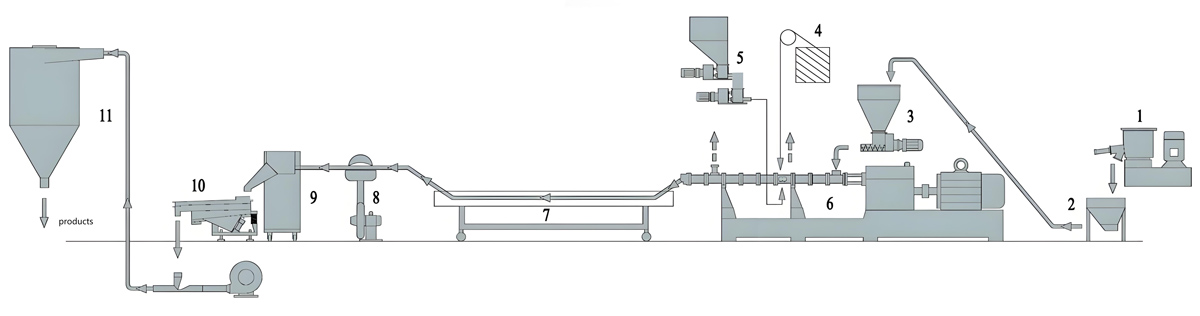
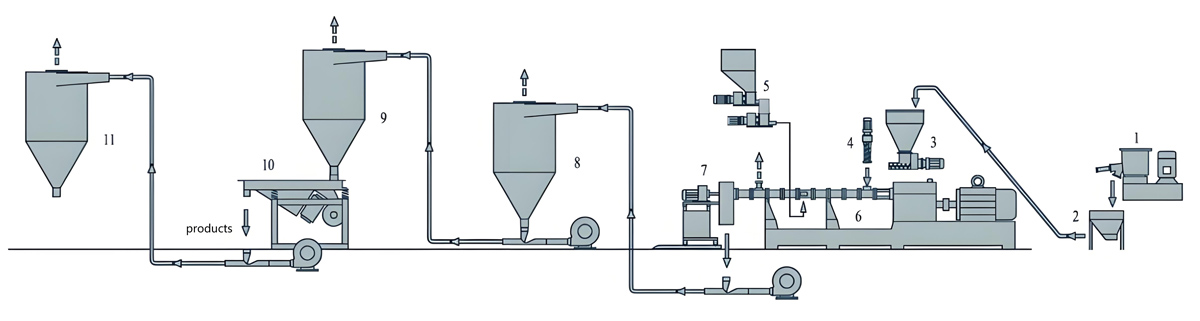
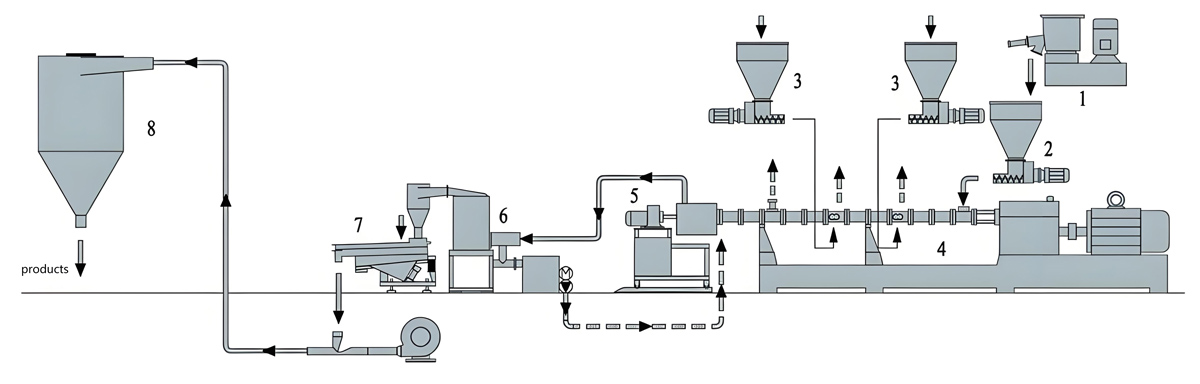
Feeding configurations for multi-additive marine formulations often employ multiple feed ports along the barrel length. Heat-sensitive additives such as certain corrosion inhibitors and UV stabilizers may be added downstream through side-feeders to minimize thermal exposure. This technique preserves active functionality while enabling incorporation of comprehensive additive packages.
Mixing zone configurations balance dispersion requirements against additive sensitivity. Kneading block elements provide the shear forces necessary for uniform additive dispersion, but configuration optimization is essential to achieve adequate mixing without causing thermal or mechanical degradation of sensitive active components.
Temperature profiles for marine masterbatch typically employ moderate temperatures that provide adequate melt flow while minimizing thermal degradation of active additives. Specific profiles depend on the additive systems employed, with particular attention to heat-sensitive components. Temperature monitoring throughout the barrel and at the die provides essential data for process optimization.
Quality Assurance
Quality assurance for marine-grade anti-corrosion masterbatch extends beyond standard tests to include application-specific performance verification appropriate for demanding marine service conditions.
Corrosion resistance testing using salt spray chamber exposure provides accelerated verification of corrosion protection effectiveness. Standardized test protocols such as ASTM B117 specify test conditions including salt solution composition, temperature, and exposure duration. Testing of masterbatch compounds and finished products provides verification of protection effectiveness.
UV stability testing using xenon arc or metal halide accelerated weathering chambers verifies long-term UV protection capability. Extended exposure durations of 2000-5000 hours may be necessary to verify performance for long-lifetime marine applications.
Mechanical property testing including tensile strength, impact resistance, and flexural properties verifies that the masterbatch does not compromise base polymer performance. Testing before and after accelerated aging provides verification of retained properties following environmental exposure.
Pelletization and Packaging
Pelletization of marine-grade anti-corrosion masterbatch follows standard procedures with attention to maintaining additive effectiveness and preventing contamination.
Underwater pelletization is generally preferred for marine masterbatch due to superior pellet quality and lower thermal shock to heat-sensitive additives. Die and water temperatures should be carefully controlled to prevent additive migration or surface bloom that could affect pellet quality and handling characteristics.
Packaging for marine masterbatch should provide moisture protection and physical protection during storage and transport. Airtight packaging prevents moisture absorption that could affect processing or performance. Clear labeling identifying formulation characteristics, active additive concentrations, and recommended storage conditions supports proper product handling and use.
Production Equipment Introduction
Equipment selection for marine-grade anti-corrosion masterbatch production must address the specific requirements of these demanding formulations, including multiple additive systems, heat-sensitive components, and stringent quality standards.
KTE-50B Twin Screw Extruder
The KTE-50B with 50.5mm screw diameter and 80-200kg per hour output capacity provides excellent capabilities for medium-scale marine masterbatch production. This model balances processing capacity with the flexibility necessary for complex multi-additive formulations.
The modular barrel system enables configuration optimization for marine masterbatch formulations. Side-feeder ports accommodate downstream addition of heat-sensitive additives. Extended mixing zones achieve uniform dispersion of multiple additive systems. Devolatilization zones remove moisture and volatiles that could affect final product quality.
Advanced temperature control systems with multiple independent zones provide the precise thermal management essential for processing heat-sensitive marine additive packages. Digital control systems enable accurate monitoring and documentation of processing parameters for quality assurance purposes.
KTE-65B Twin Screw Extruder
For higher-volume production, the KTE-65B with 62.4mm screw diameter and 200-450kg per hour output capacity provides the throughput necessary for cost-effective production of standard marine masterbatch products.
The larger processing capacity accommodates higher additive loadings typical of marine formulations while maintaining quality consistency. Extended barrel length provides additional processing flexibility for complex formulations requiring multiple processing stages or extended mixing.
The KTE-65B incorporates robust mechanical design engineered for continuous production operation, supporting the extended production runs necessary for efficient volume manufacturing of marine masterbatch products.
KTE-75B Twin Screw Extruder
The KTE-75B with 71mm screw diameter and 300-800kg per hour output capacity serves high-volume production requirements for standard marine masterbatch products. This model provides favorable production economics for operations with substantial volume requirements.
Despite high production capacity, the KTE-75B maintains the processing quality and flexibility necessary for demanding marine formulations. Screw configurations can be optimized for specific additive systems and quality requirements.
Support Equipment
Marine masterbatch production requires specialized support equipment addressing the unique requirements of these formulations.
Salt spray testing chambers enable quality verification of corrosion protection performance. These accelerated testing systems simulate marine exposure conditions and enable verification of protection effectiveness within practical timeframes.
Material handling equipment must accommodate various additive forms including powders, liquids, and pre-blends. Loss-in-weight feeding systems provide accurate addition rates essential for maintaining precise additive concentrations in marine formulations. Enclosed handling systems protect operators and maintain clean production environments.
Quality testing equipment includes impact testing apparatus, UV weathering chambers, and analytical instruments for formulation verification. Investment in comprehensive testing capabilities supports quality assurance and customer technical support activities.
Parameter Settings
Optimization of processing parameters for marine-grade anti-corrosion masterbatch requires balancing multiple considerations including additive dispersion, thermal sensitivity, and production efficiency.
Temperature Profile Guidelines
Temperature profiles for marine masterbatch must accommodate the heat sensitivity of many corrosion inhibitors and UV stabilizers while providing adequate melt flow for effective mixing.
For marine masterbatch formulations based on polypropylene carrier with comprehensive additive packages, temperature profiles typically range from 180-200 degrees Celsius in the feeding zone, 200-220 degrees Celsius in the mixing zones, and 210-230 degrees Celsius at the die. These temperatures provide processing conditions while minimizing degradation of sensitive additives.
Formulations with particularly heat-sensitive additives may require further temperature reductions throughout the profile. Temperature monitoring of the melt, not just barrel zones, provides more accurate assessment of actual thermal exposure experienced by additives.
Polyethylene-based marine masterbatch typically processes at slightly lower temperatures, typically 170-210 degrees Celsius throughout the profile. Engineering polymer carriers require higher temperatures of 240-280 degrees Celsius with appropriate drying procedures.
Screw Speed Optimization
Screw speed affects shear stress, residence time, and processing severity. Optimization considers the specific additive systems and quality requirements of marine formulations.
Marine masterbatch with heat-sensitive corrosion inhibitors typically processes well at moderate screw speeds of 200-300 rpm. These speeds provide adequate mixing for dispersion while limiting mechanical energy input and associated shear heating.
Higher screw speeds may be appropriate for formulations with more thermally stable additives or when throughput optimization takes priority. Speed increases should be evaluated against observed quality results and monitoring of processing severity indicators.
Throughput Optimization
Throughput rates should balance production efficiency against quality requirements. Marine masterbatch formulations with comprehensive additive packages may require reduced throughput to achieve adequate residence time for dispersion.
For KTE-50B equipment processing marine masterbatch, throughput rates typically range from 80-150kg per hour depending on formulation complexity and quality requirements. Higher quality requirements for demanding marine applications may necessitate reduced throughput to achieve optimal results.
Equipment Price
Investment planning for marine-grade anti-corrosion masterbatch production requires consideration of capacity requirements, formulation complexity, and quality assurance needs.
KTE-50B Investment
The KTE-50B twin screw extruder is priced from $40,000 to $60,000, providing an excellent balance of capability and investment for medium-scale marine masterbatch production.
Complete production line investment for KTE-50B-based systems typically ranges from $85,000 to $140,000, including material handling, pelletization, quality testing equipment, and salt spray testing capabilities.
KTE-65B Investment
The KTE-65B with higher production capacity is priced from $50,000 to $80,000. This model supports cost-effective production of standard marine masterbatch products at higher volumes.
Complete production facilities based on KTE-65B typically require investment ranging from $100,000 to $170,000 depending on support equipment specifications and facility configuration.
KTE-75B Investment
The KTE-75B for high-volume production is priced from $70,000 to $100,000. This model provides favorable production economics for operations with substantial volume requirements.
Complete production lines based on KTE-75B typically require investment ranging from $140,000 to $220,000.
Quality Assurance Investment
Marine masterbatch production requires specialized testing capabilities beyond standard production equipment. Salt spray testing chambers, UV weathering equipment, and specialized analytical instrumentation represent additional investment requirements of $40,000 to $100,000 depending on testing scope and capability requirements.
Problems in Production Process and Solutions
Marine grade anti-corrosion masterbatch production presents specific challenges requiring systematic understanding and effective management approaches.
Corrosion Inhibitor Effectiveness Loss
Thermal degradation or mechanical damage to corrosion inhibitors during processing reduces protection effectiveness in finished masterbatch and customer products.
Solutions focus on reducing processing severity. Lower temperature profiles decrease thermal exposure. Reduced screw speed decreases mechanical energy input. Downstream addition of heat-sensitive inhibitors through side-feeders minimizes thermal exposure time. Screw configuration review may identify elements causing excessive shear stress.
Prevention requires careful formulation design selecting inhibitors with appropriate thermal and mechanical stability for processing conditions. Temperature monitoring throughout the process identifies excursions that might cause degradation.
UV Stabilizer Degradation
Processing-induced degradation of UV stabilizers reduces long-term UV protection effectiveness, particularly problematic for long-lifetime marine applications.
Corrective actions include temperature profile reduction throughout the process. Screw speed optimization reduces mechanical energy input. Reformulation with more thermally stable UV stabilizer grades may be necessary for demanding applications.
Prevention requires selecting premium-grade UV stabilizers with demonstrated thermal stability for processing conditions. Temperature monitoring and process control systems help maintain processing conditions within established specifications.
Additive Dispersion Problems
Inadequate dispersion of corrosion inhibitors, UV stabilizers, or other additives results in inconsistent protection performance and potential quality failures in marine applications.
Solutions involve increasing mixing effectiveness through screw configuration modification. Additional kneading block elements increase shear and residence time for dispersion. Reducing throughput increases material fill level and mixing efficiency.
Prevention requires establishing optimized screw configurations for marine formulations and maintaining these configurations through regular inspection and component replacement. Quality testing verification ensures adequate dispersion in production samples.
Moisture-Related Defects
Moisture in raw materials or inadequate drying causes surface defects, void formation, and reduced mechanical properties in marine masterbatch and finished products.
Corrective actions include extending drying time and increasing drying temperature for moisture-sensitive materials. Checking drying equipment function and verifying material moisture content before processing prevents moisture-related defects.
Prevention requires rigorous drying procedures for all hygroscopic materials, with verification of moisture content before processing. Material storage and handling procedures should minimize moisture exposure throughout the production process.
Salt Spray Testing Failures
Failure to pass salt spray testing requirements indicates inadequate corrosion protection in the masterbatch formulation or processing issues affecting additive effectiveness.
Systematic investigation identifies whether failures result from formulation deficiencies or processing issues. Reformulation with enhanced inhibitor packages may be necessary for demanding applications. Processing adjustments may improve inhibitor dispersion or reduce degradation.
Prevention requires comprehensive formulation design based on specific service requirements, rigorous process control to maintain additive effectiveness, and quality testing verification before product release.
Maintenance
Maintenance requirements for marine masterbatch production follow general twin screw extruder maintenance principles with attention to formulation-specific considerations and quality assurance requirements.
Equipment Hygiene
Maintaining production hygiene is particularly important for marine masterbatch due to the sensitivity of these demanding applications and potential regulatory compliance requirements for marine equipment.
Equipment cleaning between production runs should follow documented procedures appropriate for the specific formulation transitions. Extended purging runs may be necessary when switching between formulations with significantly different additive systems. Some facilities maintain dedicated equipment for specific marine formulation families to eliminate cross-contamination concerns.
Standard Maintenance Procedures
Daily maintenance includes visual inspection, parameter monitoring, and routine cleaning. Verification of feeding system accuracy, temperature control function, and pelletizer performance supports consistent production quality. Production records and quality data monitoring help identify trends that might indicate developing issues.
Weekly and monthly maintenance encompasses detailed inspection activities including screw element examination for wear, temperature system verification, and drive component inspection. Quality testing verification ensures that equipment continues to produce product meeting specifications.
Annual maintenance includes comprehensive equipment overhaul, wear component replacement, and calibration verification. Complete inspection of barrels, screws, and critical components supports reliable long-term operation. Documentation of maintenance activities supports future planning and identifies patterns suggesting design improvements.
FAQ
What corrosion inhibitor systems are available for marine masterbatch?
Corrosion inhibitor systems for marine masterbatch include organic amine-based inhibitors, fatty acid derivatives, and barrier-forming additives. Selection depends on the polymer system, processing conditions, and specific corrosion mechanisms to be addressed. Multi-component inhibitor systems often provide more comprehensive protection than single additive approaches.
What UV stabilizer concentrations are required for marine applications?
Marine applications typically require higher UV stabilizer concentrations than standard outdoor applications due to the aggressive nature of marine exposure. HALS concentrations of 0.8-2.0% are common, with combinations of HALS and UV absorbers providing optimal protection. Severe offshore applications may require HALS concentrations of 1.5-3.0%.
How do we verify corrosion protection performance of marine masterbatch?
Salt spray testing according to ASTM B117 or similar standards provides accelerated verification of corrosion protection performance. Testing durations of 500-2000 hours typically correlate with 5-20 years of natural marine exposure depending on test conditions and correlation factors. Field exposure testing provides ultimate verification but requires impractical time durations.
What is the typical service lifetime for marine masterbatch formulations?
Marine masterbatch formulations are typically designed for service lifetimes of 15-30 years depending on application requirements and exposure conditions. Offshore structures and demanding applications may require formulations designed for 30+ year service life. Quality verification through accelerated testing helps ensure formulations meet lifetime requirements.
What testing is recommended for marine masterbatch quality assurance?
Recommended quality tests include salt spray testing, UV weathering exposure, mechanical property testing (tensile, impact, flexural), melt flow measurement, and color verification. Physical property retention testing after environmental exposure verifies long-term performance capability. Specific testing requirements depend on customer specifications and application requirements.
Conclusion
Marine grade anti-corrosion masterbatch production represents one of the most technically demanding segments of the masterbatch industry, requiring comprehensive formulation capabilities, precise processing control, and rigorous quality assurance to achieve the protection performance necessary for demanding marine service conditions.
The marine environment presents unique and severe challenges including salt spray corrosion, intense UV radiation, moisture exposure, and biological fouling. Effective masterbatch formulations must address all these degradation mechanisms through carefully engineered additive packages that provide sustained protection throughout service lifetimes measured in decades.
Twin screw extrusion technology provides the processing capabilities necessary for high-quality marine masterbatch production. The intensive mixing capabilities enable uniform dispersion of multiple additive systems. Precise temperature control protects heat-sensitive active components. Flexible barrel configurations accommodate varied additive packages and enable downstream addition of sensitive compounds.
The Kerke KTE series offers equipment options suitable for marine masterbatch production across all volume scales. From compact KTE-50B systems for specialty production to high-capacity KTE-75B equipment for volume manufacturing, these machines provide the capabilities necessary to serve this demanding market effectively.
Success in marine masterbatch production requires deep understanding of marine degradation mechanisms, formulation capabilities for comprehensive protection systems, processing expertise for sensitive additive handling, and quality assurance systems that verify protection performance. Manufacturers who develop these competencies will be well-positioned to capture growth opportunities in the marine market segment.
As offshore energy development, maritime infrastructure, and coastal construction continue to expand worldwide, demand for high-quality marine-grade anti-corrosion masterbatch will continue to grow. Investment in manufacturing capabilities, technical expertise, and quality systems positions manufacturers for sustained success in this rewarding and demanding market segment where material performance directly impacts safety, environmental protection, and economic viability of critical marine infrastructure.