Agricultural film grade masterbatch represents one of the most critical components in modern farming operations, enabling the production of high-performance plastic films that protect crops, regulate temperature, retain moisture, and extend growing seasons. The manufacturing of these specialized masterbatches demands precision equipment capable of achieving uniform pigment dispersion, optimal additive incorporation, and consistent granule quality. Twin screw extruders have emerged as the preferred machinery for agricultural film grade masterbatch production, offering superior mixing capabilities, precise temperature control, and scalable output options that meet the rigorous demands of the agricultural industry.
The development of agricultural films has evolved significantly over the past decades, with modern films incorporating sophisticated additive packages that provide UV stabilization, anti-fog properties, thermal regulation, and durability enhancement. These advanced formulations require processing equipment that can handle sensitive additives without degradation, achieve thorough dispersion of expensive pigments and fillers, and produce granules with consistent quality characteristics. Twin screw extruders, particularly those manufactured by companies like Nanjing Kerke Extrusion Equipment Company with their KTE series, have proven themselves to be exceptionally well-suited for these demanding applications, providing manufacturers with the flexibility and performance necessary to produce premium agricultural film masterbatches.
Introduction
The agricultural sector worldwide has increasingly embraced plastic film technology as an essential tool for enhancing crop yields, reducing water consumption, and protecting plants from environmental stressors. Agricultural films are utilized in various applications including greenhouse coverings, mulching, silage wrapping, and tunnel cultivation. The performance characteristics of these films directly depend on the quality of the masterbatch used in their production, making the manufacturing process for agricultural film grade masterbatch a critical factor in agricultural productivity.
Masterbatch for agricultural films differs significantly from masterbatches designed for other applications. These specialized formulations must incorporate specific additives that protect the film from ultraviolet radiation, prevent condensation droplet formation on film surfaces, resist degradation from exposure to agricultural chemicals, and maintain structural integrity throughout extended outdoor service periods. Additionally, agricultural film masterbatches often require careful attention to thermal stability during processing, as many of the critical additives can degrade if exposed to excessive temperatures or prolonged heat exposure.
The selection of appropriate production equipment plays a fundamental role in determining the final quality of agricultural film masterbatch. Twin screw extruders offer several inherent advantages that make them particularly suitable for this application. The intermeshing, co-rotating screw design creates intense mixing and kneading actions that effectively disperse pigments and additives throughout the polymer matrix. The modular barrel configuration allows processors to customize the processing section based on the specific requirements of each formulation, enabling precise control over residence time, shear stress, and mixing intensity.
Nanjing Kerke Extrusion Equipment Company has developed the KTE series specifically to address the demanding requirements of masterbatch manufacturers across various industries. The KTE series encompasses models with different capacity ranges and specifications, allowing manufacturers to select equipment that optimally matches their production volume requirements and budget considerations. For agricultural film grade masterbatch production, the KTE-50B and KTE-65B models have proven particularly popular due to their favorable balance of output capacity and processing flexibility.
This comprehensive guide examines every aspect of agricultural film grade masterbatch production using twin screw extruders, providing detailed formulation guidelines, production process descriptions, equipment specifications, parameter recommendations, and practical troubleshooting advice. Whether you are establishing a new masterbatch production facility or optimizing existing operations, the information presented here will help you achieve superior results in agricultural film masterbatch manufacturing.
Formulation Ratio
The formulation of agricultural film grade masterbatch requires careful consideration of the intended application, processing requirements, and final film performance characteristics. Different types of agricultural films require distinct additive packages and carrier resin selections, necessitating a thorough understanding of formulation principles.
Greenhouse Film Masterbatch Formulation
Greenhouse films demand masterbatch formulations that provide exceptional UV protection, thermal retention, and light diffusion properties. The typical formulation ranges for greenhouse film masterbatch include the following components.
Carrier resin selection forms the foundation of any masterbatch formulation. For greenhouse film applications, low-density polyethylene (LDPE) with melt flow index between 2-4 g/10min is commonly employed as the carrier resin. Linear low-density polyethylene (LLDPE) may be blended with LDPE to enhance mechanical properties of the final film. The carrier resin typically constitutes 70-85% of the masterbatch formulation by weight, depending on the concentration of additives required.
UV stabilizers represent critical additives for greenhouse film masterbatch. Hindered amine light stabilizers (HALS) are most commonly employed due to their excellent performance in polyethylene-based films. UV absorber additives such as benzophenones or triazines may also be incorporated for enhanced protection. The concentration of UV stabilizers typically ranges from 0.3-1.5% depending on the required service life of the film and local UV radiation intensity. Films intended for multi-season use in high-UV environments require higher stabilizer concentrations.
Titanium dioxide serves dual functions in greenhouse film masterbatch as a white pigment and infrared radiation blocker. The use of rutile titanium dioxide at concentrations of 3-8% helps reflect excessive sunlight while also blocking infrared radiation that causes greenhouse overheating. Special surface-treated titanium dioxide grades designed for agricultural applications are recommended to ensure compatibility with the polymer matrix and other additives.
Anti-fog additives are essential for greenhouse films to prevent condensation droplet formation that can reduce light transmission and drip onto plants. Glycerol esters, sorbitan esters, and polyglycerol fatty acid esters are commonly employed anti-fog agents. Typical addition levels range from 0.3-1.0%, with higher concentrations needed for films in humid growing environments.
Light diffusing agents, typically in the form of very fine particles or specialized crystalline materials, help scatter light evenly throughout the greenhouse, promoting more uniform plant growth. These additives are typically incorporated at 0.5-2.0% concentration levels.
Mulch Film Masterbatch Formulation
Mulch films serve multiple functions including weed suppression, soil temperature regulation, moisture retention, and in some cases pest control. The masterbatch formulations for mulch films must address these specific requirements while also considering the film’s interaction with soil and agricultural practices.
Black mulch films typically employ carbon black as the primary colorant, with concentrations ranging from 2-3% for standard black films. Carbon black provides excellent UV protection while creating the light-blocking surface necessary for weed control. Specialized carbon black grades with appropriate particle size distribution are essential to ensure proper dispersion and optimal UV screening performance.
Biodegradable mulch films require different formulation approaches, typically utilizing organic-based carrier resins such as polybutylene succinate (PBS), polycaprolactone (PCL), or starch-based blends. These films often incorporate natural pigments and require specialized additive packages that support controlled degradation while maintaining adequate film performance during the growing season.
Photo-selective mulch films utilize specific pigment combinations to manipulate the light spectrum reaching the soil surface. Aluminum-pigmented films reflect infrared radiation while transmitting visible light, helping to reduce soil temperature. Colored mulch films, including silver, red, and blue varieties, employ specific pigment combinations to influence insect behavior and plant growth patterns through spectral manipulation.
Silage Film Masterbatch Formulation
Silage films require masterbatch formulations that provide exceptional mechanical strength, UV stability for outdoor storage, and oxygen barrier properties. These demanding requirements necessitate careful additive selection and higher processing quality standards.
The carrier resin for silage film masterbatch typically employs metallocene-based linear low-density polyethylene (mLLDPE) or blends of LLDPE with very low-density polyethylene (VLDPE). These resins provide the exceptional tear resistance and puncture resistance required for silage applications. The carrier resin typically constitutes 75-80% of the masterbatch formulation.
UV stabilizer packages for silage film must provide multi-year outdoor stability, as silage bales may remain in the field for extended periods. Higher concentrations of HALS stabilizers, typically 0.8-2.0%, are employed compared to greenhouse film applications. The use of synergistic stabilizer combinations, including both HALS and antioxidant systems, is recommended for optimal long-term performance.
White pigment or dye systems are employed in silage film masterbatch to create light-reflecting surfaces that minimize heat absorption and help maintain optimal fermentation temperatures within the bale. Titanium dioxide is the primary white pigment, typically incorporated at 3-6% concentration levels.
Production Process
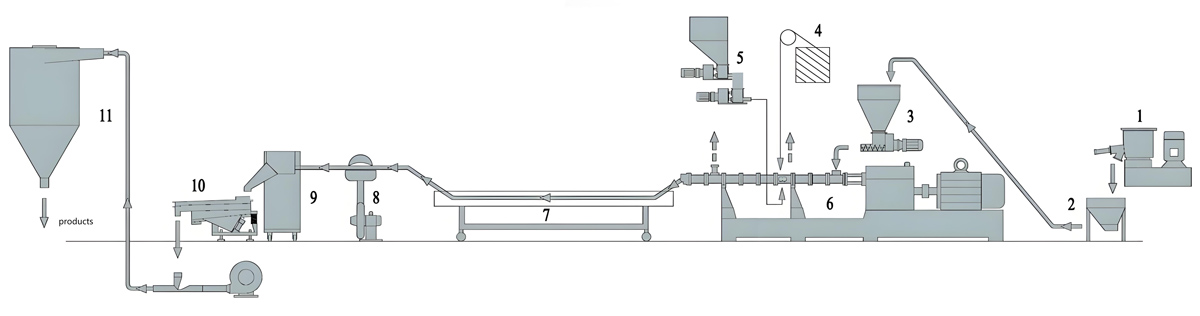
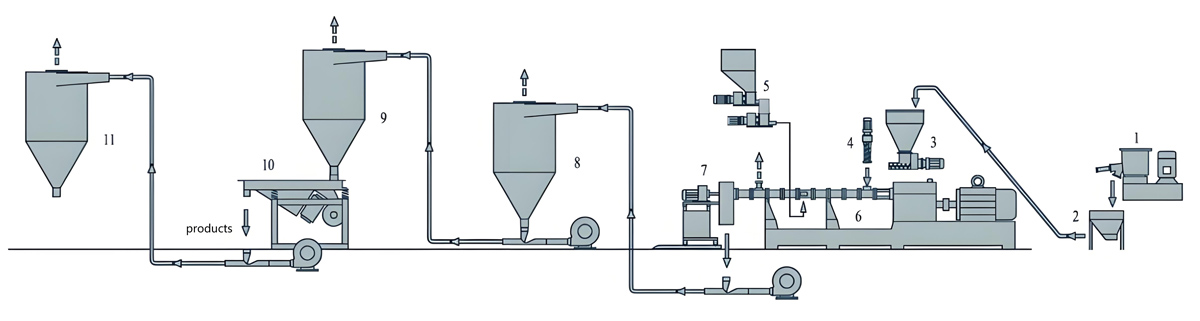
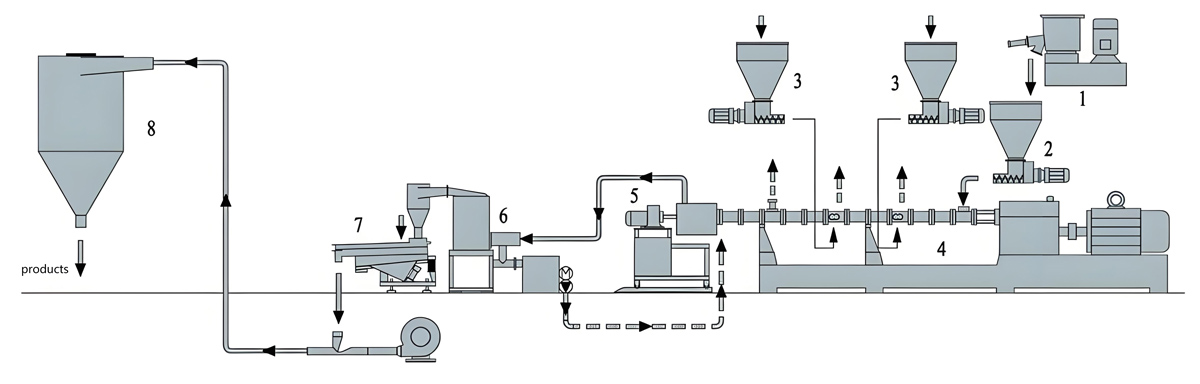
The production of agricultural film grade masterbatch using twin screw extruders involves a carefully orchestrated series of processing steps, each of which must be optimized to achieve the desired final product characteristics. Understanding this production process in detail is essential for achieving consistent, high-quality output.
Raw Material Preparation
The production process begins with meticulous raw material preparation, which significantly impacts the quality of the final masterbatch. All polymer resins should be pre-dried if they exhibit moisture sensitivity, with LDPE and LLDPE typically requiring 2-4 hours of drying at 50-60 degrees Celsius to remove surface moisture.
Pigments and additives must be properly pre-treated before incorporation into the extrusion process. Powdered pigments should be sieved to remove agglomerates and ensure uniform particle size. Liquid additives require appropriate metering equipment and may benefit from pre-dispersal in a portion of the carrier resin to facilitate incorporation.
The master formulation must be accurately weighed according to the target formulation ratio. For production batches, a pre-weighed formulation package prepared according to standard operating procedures helps ensure consistency across production runs. The use of automated weighing systems with appropriate tolerances is recommended for larger production facilities.
Extrusion Process
The extrusion process itself consists of several distinct zones within the twin screw extruder, each performing specific functions in the transformation of raw materials into homogeneous masterbatch granules.
In the feeding zone, raw materials are introduced into the extruder barrel through carefully designed feeders. The twin screw configuration creates positive displacement that ensures consistent material introduction. For agricultural film masterbatch production, a loss-in-weight feeder for the carrier resin combined with a separate feeder for additive pre-mixes provides optimal feeding accuracy and formulation control.
The compression zone serves to compact the material, eliminate air pockets, and initiate melting of the polymer component. The screw compression ratio, typically ranging from 1.5:1 to 2.5:1 depending on the formulation and equipment configuration, must be appropriately set to ensure complete melting without excessive shear heating that could degrade sensitive additives.
The mixing zones are where the critical dispersion and homogenization processes occur. The kneading block elements employed in these zones create the high-shear mixing necessary for pigment dispersion and additive incorporation. For agricultural film masterbatch, multiple mixing zones with staggered kneading block configurations are typically employed to achieve thorough dispersion without excessive thermal degradation.
The devolatilization zones, positioned strategically along the extruder barrel, serve to remove moisture, residual monomers, and other volatile components from the melt. For moisture-sensitive formulations or when processing hygroscopic additives, vacuum devolatilization ports can be incorporated to enhance volatile removal efficiency.
The melt exits the extrusion system through a die plate featuring precisely machined holes that shape the material into cylindrical strands. These strands are subsequently cooled in a water bath or air-cooled conveyor system before entering the pelletizer for size reduction.
Pelletization and Finishing
The pelletization process transforms the extruded strands into the final masterbatch granules. Two primary pelletization methods are employed in masterbatch production: strand pelletization and underwater pelletization.
Strand pelletization involves cooling the extruded strands in a water bath maintained at appropriate temperature, followed by cutting with rotating knives in a strand pelletizer. This method offers simplicity and cost-effectiveness but may result in higher residual moisture content in the pellets.
Underwater pelletization provides superior pellet quality with lower moisture content and more uniform pellet shape and size. The die face is maintained at processing temperature while cut pellets are conveyed away by circulating water. This method is preferred for agricultural film masterbatch production where consistent quality and low moisture content are essential.
Following pelletization, the masterbatch granules are dried to remove surface moisture and then screened to remove fines, agglomerates, and any contamination. The finished product is then packaged in appropriate containers, typically woven polypropylene bags with polyethylene liner bags, and labeled with relevant production information including formulation details, batch number, and manufacture date.
Production Equipment Introduction
The selection of appropriate production equipment significantly influences the quality, efficiency, and economics of agricultural film masterbatch manufacturing. Twin screw extruders from the Kerke KTE series provide an excellent range of options to meet various production requirements.
KTE-50B Twin Screw Extruder
The KTE-50B represents an ideal choice for medium-scale agricultural film masterbatch production, offering a螺杆直径 of 50.5mm and output capacity ranging from 80-200kg per hour. This model provides an excellent balance between processing capability and operational flexibility, making it suitable for manufacturers producing specialized agricultural film masterbatches in moderate quantities.
The co-rotating, intermeshing twin screw configuration ensures thorough mixing and dispersion, critical for achieving the uniform pigment distribution required in agricultural film applications. The modular barrel design allows processors to configure the processing section according to specific formulation requirements, incorporating additional mixing elements, kneading blocks, or devolatilization ports as needed.
The KTE-50B features advanced temperature control systems with individually controlled heating zones along the barrel, enabling precise thermal management throughout the extrusion process. This capability is particularly important for agricultural film masterbatch production, where sensitive additives require careful temperature control to prevent thermal degradation.
KTE-65B Twin Screw Extruder
For higher-volume production requirements, the KTE-65B provides increased capacity with a螺杆直径 of 62.4mm and output ranging from 200-450kg per hour. This model offers the processing power necessary for large-scale agricultural film masterbatch production while maintaining the quality standards required for premium agricultural applications.
The larger barrel diameter provides enhanced throughput capacity while maintaining appropriate shear rates for effective pigment dispersion. The extended barrel length allows for more processing zones and greater flexibility in barrel configuration, supporting complex formulations with multiple additive components.
Both the KTE-50B and KTE-65B benefit from Nanjing Kerke’s expertise in extrusion technology, incorporating features such as energy-efficient motor drives, advanced control systems, and robust mechanical designs engineered for continuous production operation.
Support Equipment
Beyond the twin screw extruder itself, comprehensive agricultural film masterbatch production requires supporting equipment including material handling systems, cooling and pelletization equipment, and quality control instrumentation.
Material handling equipment encompasses raw material storage silos or hoppers, drying systems, and metering feeders. Loss-in-weight feeders provide accurate material addition rates essential for maintaining precise formulation control. Central vacuum conveying systems offer clean, efficient material transport within the production facility.
The cooling and pelletization system typically includes water cooling baths or conveyors for strand cooling, along with appropriate pelletizing equipment. Underwater pelletization systems, while requiring higher initial investment, provide superior pellet quality and lower energy consumption compared to traditional strand pelletization methods.
Quality control equipment includes spectrophotometers for color measurement, melt flow index testers, and laboratory-scale extrusion equipment for formulation development and quality verification. Investment in comprehensive quality control systems helps ensure consistent product quality and reduces the risk of customer complaints or product returns.
Parameter Settings
Optimization of processing parameters is essential for achieving consistent, high-quality agricultural film masterbatch production. The following parameter guidelines provide a starting point for process optimization, with adjustments based on specific formulations and equipment configurations.
Temperature Profile Settings
The barrel temperature profile must be carefully configured to achieve complete polymer melting while avoiding thermal degradation of sensitive additives. For LDPE and LLDPE-based agricultural film masterbatch formulations, the following temperature profile serves as a general guideline.
The feeding zone should be maintained at relatively low temperatures, typically 140-160 degrees Celsius, to prevent premature melting and ensure consistent material feed. The first compression zone is typically set at 160-180 degrees Celsius, where initial melting and compaction occur.
The mixing zones, where dispersion and homogenization take place, should be maintained at temperatures between 180-210 degrees Celsius. These temperatures provide adequate melt viscosity for effective mixing while remaining below the degradation threshold for most agricultural film additives.
The final zones and die area are typically set at 200-220 degrees Celsius to ensure complete melting and smooth extrusion. For formulations containing heat-sensitive additives such as certain anti-fog agents, temperatures may need to be reduced by 10-20 degrees Celsius throughout the profile.
Screw Speed Settings
Screw speed influences both throughput capacity and the shear stress experienced by the formulation components. For agricultural film masterbatch production, screw speeds typically range from 200-400 revolutions per minute depending on the equipment size and specific formulation requirements.
Higher screw speeds increase throughput but also increase shear heating and mechanical stress on formulation components. For formulations containing shear-sensitive additives or pigments, lower screw speeds in the range of 200-300 rpm may be necessary to prevent degradation.
The relationship between screw speed and throughput must be balanced against product quality requirements. Operating at excessively high speeds to maximize output can result in poor dispersion, excessive shear heating, and degraded additive performance in the final masterbatch.
Feed Rate and Throughput
The feed rate must be synchronized with screw speed and temperature settings to achieve optimal processing conditions. For KTE-50B equipment processing LDPE-based agricultural film masterbatch, feed rates typically range from 100-250kg per hour depending on the specific formulation and target output quality.
Dosing of additive pre-mixes should be precisely controlled to maintain accurate formulation ratios. The additive feeder rate should be adjusted based on the primary resin feed rate to ensure consistent additive concentration throughout the production run.
Equipment Price
Investment in twin screw extrusion equipment for agricultural film masterbatch production requires careful evaluation of equipment costs, production capacity requirements, and expected return on investment. The following pricing information provides guidance for budgeting and equipment selection decisions.
KTE-50B Pricing
The Kerke KTE-50B twin screw extruder, with its 50.5mm螺杆直径 and output capacity of 80-200kg per hour, is priced in the range of $40,000 to $60,000. This price range reflects variations in configuration options, control system specifications, and included support equipment.
When budgeting for a complete production line based on the KTE-50B, additional equipment costs should be considered including material handling systems, pelletization equipment, cooling systems, and quality control instrumentation. A comprehensive production line configuration typically requires total investment in the range of $80,000 to $120,000 depending on the level of automation and support equipment selection.
KTE-65B Pricing
The larger KTE-65B model, featuring a 62.4mm螺杆直径 and output capacity of 200-450kg per hour, is priced between $50,000 and $80,000. This higher-capacity model offers improved production economics for larger-volume operations.
A complete production line based on the KTE-65B typically requires total investment ranging from $100,000 to $160,000 when accounting for all necessary support equipment and systems. The per-unit production cost advantage of larger equipment can provide attractive return on investment for operations with sufficient market demand.
Total Investment Considerations
Beyond the core extrusion equipment, successful agricultural film masterbatch production operations require investment in multiple supporting systems. Raw material storage and handling systems typically cost $15,000 to $40,000 depending on the scale and automation level. Laboratory equipment for quality control adds $10,000 to $30,000 to the investment requirement. Installation, commissioning, and facility modifications should budget an additional 10-15% of total equipment cost.
While the initial investment may appear substantial, the production economics for agricultural film masterbatch typically support attractive return on investment timelines, particularly for operations serving growing agricultural markets with increasing demand for high-performance film products.
Problems in Production Process and Solutions
Agricultural film masterbatch production presents specific challenges that require understanding and proactive management. The following sections address common production problems, their root causes, and effective solutions.
Pigment Dispersion Issues
Inadequate pigment dispersion manifests as color variation in finished granules, uneven coloration in downstream film production, or visible specks and streaks in extruded film. The causes of dispersion problems typically relate to insufficient mixing energy, improper screw configuration, or inadequate pre-treatment of pigment concentrates.
The primary solution for dispersion problems involves optimizing the screw configuration to include additional kneading block elements in the mixing zones. Increasing the number and intensity of mixing elements enhances the shear forces responsible for breaking apart pigment agglomerates and distributing particles throughout the polymer matrix.
Reducing screw speed temporarily can also improve dispersion by increasing the material fill level in the mixing section, thereby increasing residence time and mixing energy per unit of material. Additionally, ensuring proper pre-drying of pigments and using appropriate pigment concentrates or liquid colorants can significantly improve dispersion quality.
To avoid dispersion problems, establish standard screw configurations for each formulation type and maintain detailed records of successful processing parameters. Regular inspection and replacement of worn screw elements, particularly kneading blocks, helps maintain consistent mixing performance over time. Quality control procedures should include regular checks of dispersion quality using techniques such as filter pressure rise testing or microscopy examination.
Additive Degradation
Thermal or shear degradation of sensitive additives results in reduced effectiveness of UV stabilizers, anti-fog agents, or other functional additives in the final masterbatch. This degradation may not be immediately apparent in the masterbatch itself but becomes evident in downstream film applications where performance is compromised.
When additive degradation is suspected, the primary corrective action involves reducing processing temperatures throughout the barrel profile. Even modest temperature reductions of 10-15 degrees Celsius can significantly reduce degradation of heat-sensitive additives. Increasing screw speed slightly while reducing temperature can help maintain throughput while protecting additive performance.
For severely heat-sensitive formulations, consider redesigning the formulation to use more thermally stable additive alternatives or implementing specialized processing techniques such as downstream additive addition after the primary melt has been formed.
Prevention of additive degradation requires careful formulation design that accounts for the thermal history the additives will experience during processing. Selecting additives specifically formulated for extrusion applications, with appropriate thermal stability ratings, helps ensure adequate performance margin. Implementing temperature monitoring throughout the barrel and die area enables early detection of temperature excursions that could cause degradation.
Moisture-Related Defects
Moisture in raw materials or insufficient drying can cause various defects in agricultural film masterbatch including surface roughness, voids in pellets, inconsistent coloration, and reduced mechanical properties in downstream film applications.
When moisture-related defects are observed, immediate corrective actions include extending drying time for raw materials, increasing drying temperature within manufacturer recommendations, and checking drying equipment for proper function. For existing product, reprocessing through the extruder with appropriate venting zones may partially remediate moisture issues, though some quality loss is inevitable.
Moisture-related problems are best prevented through rigorous raw material handling procedures. Establish minimum drying specifications for all hygroscopic materials and verify dryer performance through regular checks. Implement material staging procedures that ensure materials have adequate drying time before use. Consider installing moisture measurement equipment to verify material dryness prior to processing.
Color Variation Between Batches
Inconsistent coloration between production batches creates customer complaints and potentially costly product rejections. Batch-to-batch color variation can result from formulation weighing errors, feeder inconsistencies, or variation in raw material properties.
Addressing color variation requires systematic investigation to identify the root cause. Check weighing procedures and verify calibration of scales and feeders. Review raw material specifications and consider implementing tighter incoming material quality controls. Examine feeder performance and adjust settings to ensure consistent material addition rates.
Preventive measures include implementing statistical process control for color measurements, establishing clear procedures for formulation preparation, and maintaining detailed production records that enable traceability of any quality issues. Standardizing raw material suppliers and specifications helps reduce variability in input materials.
Maintenance
Regular maintenance of twin screw extrusion equipment is essential for consistent product quality, equipment longevity, and safe operation. A comprehensive maintenance program encompasses daily, weekly, monthly, and annual activities designed to keep equipment operating at peak performance.
Daily Maintenance Procedures
Daily maintenance activities should focus on visual inspection and operational monitoring. At the start of each production shift, inspect the feeding system for proper material flow and check that all feeders are properly calibrated. Examine the extruder barrel and die area for any signs of material leakage or unusual noise during startup.
Monitor processing parameters throughout the production run, watching for any unexplained variations in temperature, pressure, or motor load that might indicate developing problems. Check the pelletizer knife blades for sharpness and proper adjustment. Verify cooling water temperature and flow rates to ensure adequate pellet cooling.
At the end of each production run, clean the die plate and breaker plate to prevent material buildup that could cause problems in subsequent runs. Remove any accumulated material from the barrel feeding area. Record production data and any observations for trend analysis and continuous improvement.
Weekly and Monthly Maintenance
Weekly maintenance should include more thorough inspection activities and calibration verification. Check the condition of screw elements, particularly kneading blocks and transfer elements, for signs of wear or damage. Verify temperature controller accuracy using calibrated instruments. Inspect and clean vacuum systems if equipped.
Monthly maintenance activities encompass more comprehensive equipment inspection and component replacement as needed. Lubricate all specified bearing points according to manufacturer recommendations. Inspect drive system components including motors, gearboxes, and couplings for proper operation. Check electrical connections and control system components for any signs of wear or loose connections.
Perform a complete color consistency check using standard samples to verify ongoing product quality. Review production records and quality data to identify any trends that might indicate developing equipment issues requiring attention.
Annual Maintenance and Overhaul
Annual maintenance typically involves more comprehensive equipment inspection and potential component replacement. Consider scheduling major maintenance during planned production downtime to minimize operational impact. This is an appropriate time for complete inspection of screw elements, barrel liners, and other wear components.
Replace wear components that have reached end-of-service life, even if they appear functional, to prevent unexpected failures during production. Calibrate all measurement and control systems against traceable standards. Review and update standard operating procedures based on operational experience.
Document all annual maintenance activities and their results. This documentation provides valuable information for future maintenance planning and helps identify patterns that might indicate design improvements or specification changes for future equipment purchases.
FAQ
What is the typical production capacity range for agricultural film masterbatch using twin screw extruders?
Production capacity varies significantly based on equipment size and formulation characteristics. Using Kerke KTE series equipment, a KTE-50B can produce 80-200kg per hour, while a KTE-65B achieves output of 200-450kg per hour. Actual production rates depend on formulation density, processing conditions, and product quality specifications.
What is the recommended carrier resin for agricultural film masterbatch?
Low-density polyethylene (LDPE) with melt flow index of 2-4 g/10min is the most common carrier resin for agricultural film masterbatch. Linear low-density polyethylene (LLDPE) may be blended with LDPE for enhanced mechanical properties. The specific carrier selection depends on the target film application and processing requirements.
How can we prevent UV stabilizer degradation during extrusion processing?
UV stabilizer degradation can be minimized by reducing processing temperatures, particularly in the mixing zones where shear heating occurs. Operating at lower screw speeds reduces mechanical energy input. Selecting UV stabilizers specifically formulated for extrusion applications with adequate thermal stability ratings helps ensure sufficient performance margin during processing.
What is the typical concentration of additives in agricultural film masterbatch?
Additive concentrations vary based on formulation design and target application. UV stabilizers typically range from 0.3-1.5%, anti-fog agents from 0.3-1.0%, and titanium dioxide from 3-8%. The masterbatch is typically designed to be let down at 2-5% in the final film formulation, meaning the actual additive levels in the finished film are much lower than in the masterbatch.
How often should screw elements be replaced?
Screw element replacement intervals depend on production volume, formulation abrasiveness, and material being processed. Worn kneading blocks typically show signs such as rounded edges, reduced mixing efficiency, and increased motor load. Regular inspection during scheduled maintenance helps identify elements approaching replacement criteria before they cause quality or production problems.
What quality control tests should be performed on agricultural film masterbatch?
Essential quality control tests include color measurement using spectrophotometry, melt flow index determination, moisture content analysis, and dispersion quality assessment. Filter pressure rise testing provides quantitative evaluation of dispersion quality. For critical applications, film extrusion trials can verify performance in actual use conditions.
Conclusion
The production of agricultural film grade masterbatch using twin screw extruders represents a sophisticated manufacturing process requiring careful attention to formulation design, equipment selection, process optimization, and quality control. Twin screw extruders, with their superior mixing capabilities, precise temperature control, and scalable capacity options, have established themselves as the preferred equipment for this demanding application.
Successful agricultural film masterbatch production requires understanding the specific requirements of different film applications, from greenhouse coverings requiring UV stabilization and anti-fog properties to mulch films needing weed control and soil interaction characteristics to silage films demanding exceptional mechanical strength and outdoor durability. Each application requires tailored formulation approaches and optimized processing parameters.
The Kerke KTE series twin screw extruders, manufactured by Nanjing Kerke Extrusion Equipment Company, provide manufacturers with reliable, high-performance equipment options for agricultural film masterbatch production. From the compact KTE-50B for moderate production volumes to the high-capacity KTE-65B for larger operations, these machines deliver the processing capability and flexibility necessary to produce consistently high-quality masterbatch products.
Investment in appropriate production equipment, combined with rigorous process control, comprehensive quality assurance, and proactive maintenance programs, enables manufacturers to produce agricultural film masterbatch products that meet the demanding requirements of modern farming operations. As agricultural practices continue to evolve toward greater efficiency and sustainability, the importance of high-performance agricultural films—and the masterbatch that makes them possible—will only continue to grow.
The information presented in this guide provides a foundation for achieving excellence in agricultural film masterbatch production. Continued learning, operational experience, and ongoing optimization efforts will further enhance production capabilities and product quality, positioning manufacturers for success in this important and growing market segment.