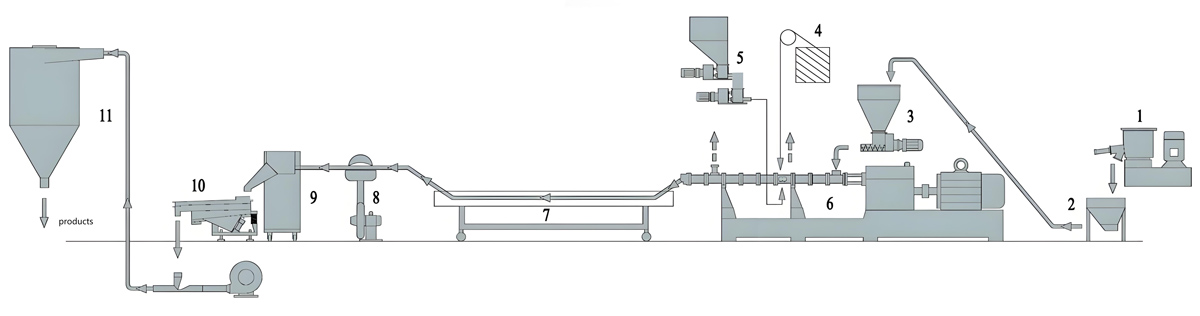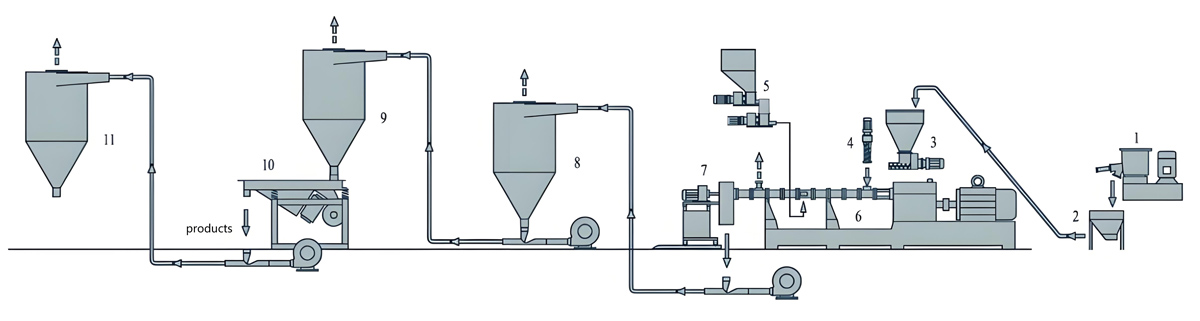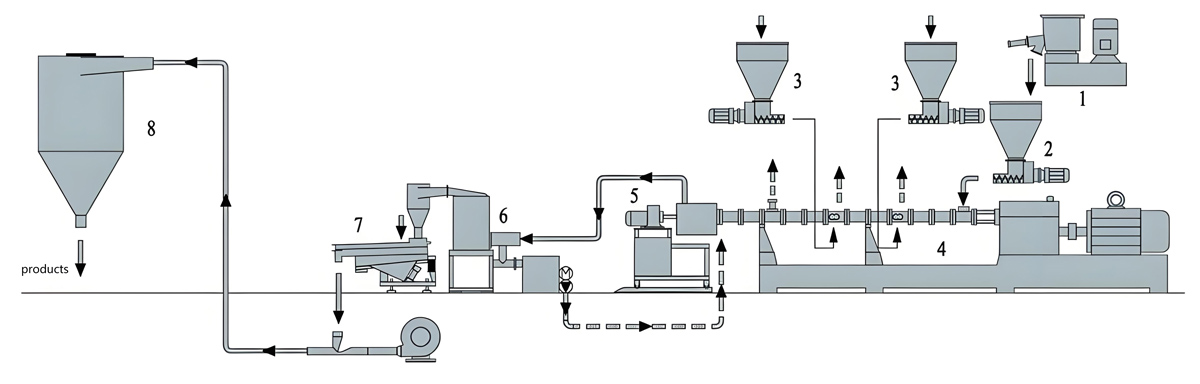
Toy grade environmental masterbatch represents one of the most demanding categories in the plastics industry, requiring exceptional material purity, stringent safety compliance, and environmentally responsible formulation approaches. The production of masterbatch for toy applications must address multiple regulatory frameworks, safety standards, and sustainability expectations that distinguish this segment from general-purpose masterbatch production. Twin screw extrusion technology provides the processing capabilities necessary to achieve the quality, consistency, and safety compliance that toy applications demand. This comprehensive guide examines the technical considerations, formulation strategies, regulatory requirements, and production practices essential for successful toy grade environmental masterbatch manufacturing.
Introduction to Toy Grade Environmental Masterbatch
The toy industry represents a significant market for plastic materials, with toys being one of the most highly regulated product categories worldwide. Children represent a uniquely vulnerable population, making toy safety a paramount concern that drives stringent material requirements across the entire supply chain. Toy grade masterbatch must not only deliver the color and functional properties required for toy applications but must also ensure that finished toys meet the comprehensive safety standards that protect children during normal use and reasonably foreseeable abuse conditions.
Environmental considerations increasingly influence toy grade masterbatch formulations, driven by consumer demand for sustainable products and regulatory pressure to reduce environmental impact. This dual focus on safety and sustainability creates formulation challenges that require careful balance of performance, cost, and environmental responsibility. Masterbatch producers serving the toy industry must navigate these competing requirements while maintaining the quality consistency that manufacturing operations demand.
Toy applications span diverse product categories, from infant toys with strict oral exposure requirements to action figures and play sets with complex functional requirements. Each category presents specific masterbatch requirements that must be addressed through appropriate formulation design and manufacturing practices. Understanding these diverse requirements enables masterbatch producers to serve the toy market effectively while ensuring compliance with applicable safety and environmental standards.
Regulatory Framework and Safety Standards
Toy grade masterbatch production operates within a comprehensive regulatory framework that governs material selection, manufacturing practices, and quality verification. Understanding these requirements is essential for any producer serving the toy industry.
European Safety Standards
The European Union maintains comprehensive toy safety regulations through the Toy Safety Directive 2009/48/EC, which establishes requirements for chemical safety, physical properties, and flammability across all toy products sold in EU member states. Chemical safety requirements specifically address substances that may migrate from toys during normal use, including colorants, stabilizers, and other additive components that may pose health risks to children.
REACH (Registration, Evaluation, Authorisation and Restriction of Chemicals) regulations establish additional requirements for chemical substances used in toy manufacturing. Specific restrictions address phthalate plasticizers, certain heavy metals, and other substances that may pose risks to children’s health. Masterbatch formulations intended for toy applications in the European market must ensure compliance with these comprehensive chemical safety requirements.
The EN 71 series of standards provides detailed testing protocols and limit values for toy safety verification. EN 71-3 specifically addresses migration of certain elements from toy materials, establishing strict limits for heavy metals including lead, cadmium, mercury, and other substances that may present ingestion hazards. Masterbatch formulations must be designed and tested to ensure compliance with these migration limits.
United States Safety Standards
The United States Consumer Product Safety Commission (CPSC) oversees toy safety through the Consumer Product Safety Improvement Act (CPSIA) and associated regulations. These requirements establish testing and certification requirements for children’s products, including toys, that ensure compliance with applicable safety standards.
The ASTM F963 standard provides detailed specifications for toy safety, including requirements for chemical content, physical properties, and flammability. This standard addresses similar concerns to European requirements while establishing specific testing protocols and limit values that differ in some details from European specifications.
State-level regulations, particularly California’s Proposition 65, establish additional requirements for chemical exposure that affect toy formulations sold in California and products manufactured with materials that may expose California residents. Comprehensive compliance requires attention to both federal and state-level requirements.
International Standards
The ISO 8124 series of standards provides international specifications for toy safety, establishing test methods and limit values recognized across multiple markets. These standards facilitate international trade by providing harmonized safety requirements that reduce the need for market-specific testing and certification.
Regional standards in Asia, Latin America, and other markets may establish additional or alternative requirements that affect toy masterbatch formulations for those markets. Comprehensive market coverage requires understanding and compliance with applicable regional standards alongside primary regulatory frameworks.
Formulation Ratio for Toy Grade Environmental Masterbatch
Toy grade environmental masterbatch formulations require careful component selection and optimization to achieve safety compliance, environmental objectives, and performance requirements simultaneously. The following sections detail typical formulation approaches for toy applications.
Infant Toy Masterbatch Formulation
Infant toys, designed for children under three years of age, present the most stringent material safety requirements due to the mouthing behavior characteristic of this age group. Masterbatch formulations for infant toys must ensure complete safety for oral exposure scenarios while maintaining the visual appeal and processing characteristics required for manufacturing.
Base resin selection for infant toys typically focuses on high-purity grades with minimal residual monomer content and documented heavy metal specifications. Polypropylene homopolymer grades designated for food contact or medical applications often provide appropriate purity levels for infant toy masterbatch. Polyethylene and other polymers with established infant safety profiles may also serve specific application requirements.
Pigment selection for infant toys requires particular attention to heavy metal content and toxicity characteristics. Many conventional pigments contain trace heavy metals that may present compliance challenges for infant toy applications. Specialty high-purity pigment grades, including heavy metal-free organic pigments and precisely controlled inorganic pigments, provide color options while maintaining safety compliance. Pigment loadings typically range from 5% to 30% depending on color requirements and specific pigment characteristics.
Additive packages for infant toy masterbatch require similar scrutiny. Plasticizers, if used, must be specifically selected for infant exposure safety. Heat stabilizers, antioxidants, and processing aids must demonstrate compliance with applicable migration limits and toxicity requirements. Total additive content typically remains below 5% to minimize exposure concerns and maintain formulation purity.
General Toy Masterbatch Formulation
General toy applications, including toys for children over three years of age, maintain significant safety requirements while allowing some formulation flexibility compared to infant toy applications. Color development, durability, and cost considerations receive greater emphasis while maintaining safety compliance.
Base resin selection for general toy applications encompasses broader material options compared to infant toys, including standard polymer grades with appropriate purity documentation. Impact copolymers, filled compounds, and other engineering materials may serve specific toy application requirements while maintaining safety compliance.
Pigment systems for general toys may utilize broader pigment selections compared to infant applications, with documented compliance testing providing safety verification. Loadings typically range from 10% to 40% depending on color requirements and specific formulation characteristics. Light fastness and heat stability requirements depend on specific toy applications and manufacturing processes.
Additive packages address functional requirements including UV stabilization for toys with light exposure, impact modification for durable toys, and processing aids for efficient manufacturing. Additive selection continues to emphasize safety compliance while enabling broader formulation optimization compared to infant toy applications.
Sustainable Toy Masterbatch Formulation
Sustainable toy formulations address environmental objectives through recycled content incorporation, bio-based material utilization, and formulation approaches that minimize environmental impact throughout the product lifecycle. These formulations must balance sustainability objectives with safety compliance and performance requirements.
Recycled content incorporation requires careful material sourcing and verification to ensure consistent quality and safety compliance. Post-consumer recycled materials present particular challenges due to variable composition and potential contamination, requiring extensive testing and quality verification programs. Bio-based polymers, including polylactic acid and bio-based polyethylene, offer renewable content alternatives for specific toy applications.
Sustainable pigment systems address environmental objectives through reduced pigment loading, enhanced durability for extended product life, and selection of environmentally responsible pigment sources. Total formulation optimization balances environmental impact reduction with performance and cost requirements.
Production Process for Toy Grade Environmental Masterbatch
Toy grade environmental masterbatch production requires manufacturing practices that ensure safety compliance, quality consistency, and environmental responsibility throughout the production process. These requirements influence equipment selection, process design, and quality systems.
Clean Production Requirements
Clean production practices are essential for toy grade masterbatch manufacturing, ensuring that products meet stringent safety requirements without contamination from production environment, equipment, or handling procedures. Production facility design incorporates features that prevent contamination and enable thorough cleaning verification.
Production scheduling for toy masterbatch often includes dedicated production runs that prevent cross-contamination with non-toy formulations. When equipment sharing is necessary, comprehensive cleaning procedures and verification testing ensure absence of contamination from previous production runs. Color change procedures receive particular attention to prevent pigment carryover that could affect safety compliance.
Material handling procedures maintain product purity throughout the production process. Closed material handling systems prevent environmental contamination during storage and transfer. Personal protective equipment and hygiene procedures prevent operator contact contamination. Quality verification at each production stage ensures maintained purity standards.
Quality System Requirements
Quality systems for toy masterbatch production extend beyond standard manufacturing quality control to address the comprehensive safety verification requirements that toy applications demand. Documentation, traceability, and testing programs ensure compliance with applicable safety standards.
Incoming material verification establishes baseline quality for raw materials, including purity specifications and supplier compliance documentation. Each raw material component must demonstrate compliance with applicable safety requirements before use in toy masterbatch production.
Production process controls maintain consistent quality throughout manufacturing operations. Statistical process control techniques monitor critical parameters that affect product quality and safety compliance. Process deviations trigger investigation and corrective action before affected product proceeds to shipment.
Final product testing verifies that finished masterbatch meets specifications, including color requirements, physical properties, and safety compliance testing. Testing programs address applicable regulatory requirements, including heavy metal migration testing for European compliance and total lead content requirements for US compliance.
Twin Screw Compounding Process
Twin screw compounding for toy masterbatch follows established principles while incorporating specific considerations for purity requirements and safety compliance. Equipment selection and configuration support clean production and quality verification requirements.
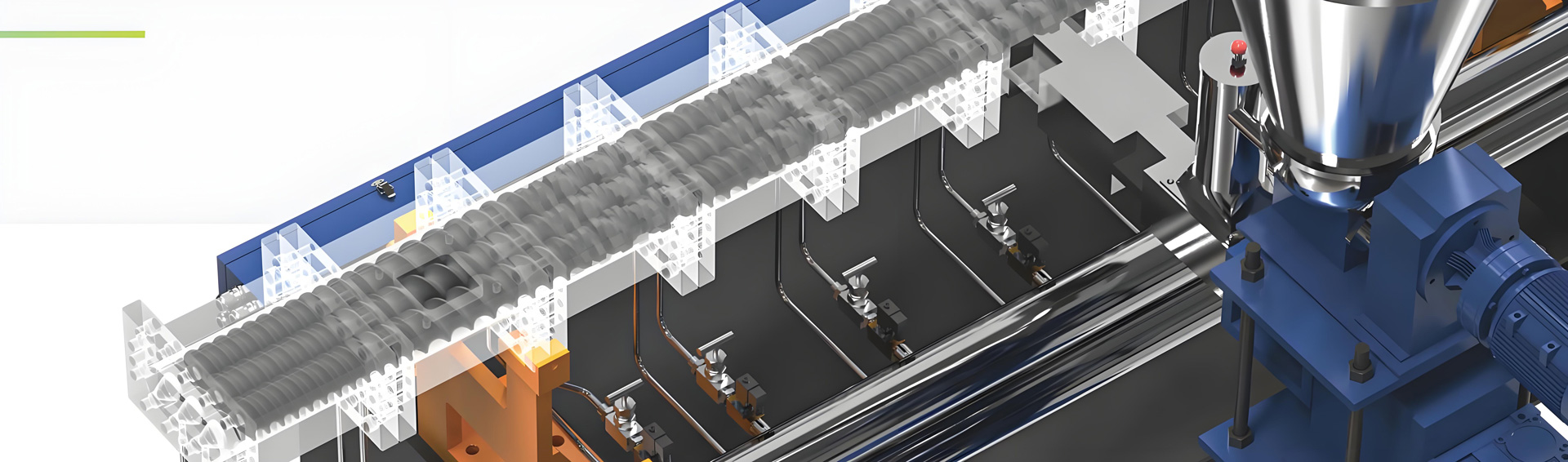
Screw configuration design emphasizes thorough mixing and uniform distribution of all components while maintaining controlled processing conditions that prevent thermal degradation. The specific configuration depends on formulation requirements, with high-purity formulations often requiring modified screw designs that reduce potential contamination sources.
Temperature profile optimization balances processing requirements with thermal stability considerations. Lower processing temperatures may be employed for formulations with heat-sensitive components while maintaining adequate mixing efficiency through modified screw configurations and adjusted throughput parameters.
Documentation and Traceability
Comprehensive documentation and traceability systems support safety compliance verification and quality assurance for toy masterbatch products. These systems enable verification that specific production batches meet applicable requirements while providing information for incident investigation if quality issues arise.
Batch documentation records all production parameters, material lots, quality test results, and handling information for each production batch. This documentation supports compliance verification while enabling investigation of any quality concerns that arise during customer use.
Material traceability systems track raw material lots from supplier through production to finished product shipment. This traceability enables rapid identification of affected products if raw material quality issues are identified, supporting efficient recall execution if necessary.
Production Equipment Introduction
Equipment selection for toy grade environmental masterbatch production addresses the specific requirements of safety-compliant manufacturing while providing necessary production capabilities. The Kerke KTE series offers equipment options suitable for toy masterbatch production.
Kerke KTE Series for Toy Masterbatch
The Kerke KTE series provides processing equipment suitable for toy grade environmental masterbatch production across various capacity requirements. Equipment selection considers production volume needs, formulation complexity, and quality verification requirements.
The KTE-36B model, featuring 35.6mm screw diameter and 20 to 100 kg/h throughput, suits pilot production, development activities, and small-scale commercial manufacturing. This equipment enables product development and market testing while maintaining the quality standards toy applications demand.
The KTE-50B model, with 50.5mm screw diameter and 80 to 200 kg/h throughput capability, addresses small to medium-scale production requirements. The capacity range supports regional toy masterbatch service with meaningful production volumes while maintaining formulation flexibility for diverse product requirements.
The KTE-65B, featuring 62.4mm screw diameter and 200 to 450 kg/h throughput, serves medium-scale production operations. This capacity suits established toy masterbatch suppliers with consistent demand across product lines.
The KTE-75B, with 71mm screw diameter and 300 to 800 kg/h throughput, provides higher capacity for larger operations. This equipment enables significant production volumes while maintaining quality control necessary for safety-critical toy applications.
The KTE-95D, the largest model with 93mm screw diameter and 1000 to 2000 kg/h throughput capability, addresses high-volume production requirements for major toy masterbatch operations. This capacity supports dedicated production facilities serving substantial market demand.
Supporting Equipment Considerations
Supporting equipment for toy masterbatch production includes material handling systems, quality testing instrumentation, and documentation systems that address the comprehensive requirements of safety-compliant manufacturing.
Material handling equipment emphasizes contamination prevention through closed systems, clean equipment construction, and material segregation capabilities. Dosing equipment with enhanced accuracy supports precise formulation control that ensures consistent product quality.
Quality testing instrumentation for toy masterbatch includes heavy metal analysis equipment, migration testing apparatus, and comprehensive chemical characterization capabilities. These systems enable verification of safety compliance throughout production operations.
Parameter Settings for Toy Masterbatch Production
Parameter optimization for toy grade environmental masterbatch balances processing efficiency with the specific requirements of safety-compliant manufacturing. Careful parameter control ensures consistent quality while maintaining formulation safety characteristics.
Screw Configuration for Clean Production
Screw configuration for toy masterbatch emphasizes clean production through design choices that minimize contamination risk and ensure thorough mixing. Standard configurations provide appropriate mixing capability while specific modifications address formulation requirements.
Length-to-diameter ratios of 40:1 to 48:1 provide adequate residence time for complete melting and mixing while maintaining production efficiency. Screw configurations with moderate compression ratios, typically 2.5:1 to 3:1, ensure proper melting without excessive shear that might affect sensitive formulation components.
Mixing section design incorporates kneading blocks and distributive elements that achieve uniform component distribution while maintaining controlled shear exposure. Reduced-shear mixing elements may be employed for formulations with components sensitive to mechanical or thermal stress.
Temperature Profile Optimization
Temperature profile optimization for toy masterbatch prioritizes thermal stability and purity maintenance over maximum throughput. Processing temperatures are typically maintained at the lower end of acceptable ranges to preserve formulation integrity.
Typical processing temperatures for polypropylene-based toy masterbatch range from 180 to 240 degrees Celsius across barrel zones, with specific profiles adjusted according to formulation characteristics. Lower temperatures may be necessary for formulations with heat-sensitive pigment or additive components.
Temperature gradient design ensures progressive melting and controlled processing throughout the barrel. Reduced temperature differentials between zones prevent localized overheating while maintaining processing efficiency.
Throughput and Speed Control
Throughput optimization for toy masterbatch typically operates at reduced rates compared to standard masterbatch production to ensure adequate quality verification and processing control. Operating throughputs commonly range from 50% to 75% of maximum extruder capacity.
Screw speed optimization similarly emphasizes controlled processing over maximum output. Operating speeds typically range from 150 to 400 RPM depending on equipment size and formulation requirements. Reduced speeds ensure adequate residence time and controlled shear exposure.
Equipment Price Guide
Equipment investment for toy grade environmental masterbatch production considers the specific requirements of safety-compliant manufacturing alongside standard equipment cost factors. The Kerke KTE series provides options across the capacity spectrum.
The KTE-36B, priced from $25,000 to $35,000, suits development and small-scale production for toy applications. This equipment investment enables quality toy masterbatch production while managing capital requirements for new market entry.
The KTE-50B, priced from $40,000 to $60,000, provides intermediate capacity for established small to medium-scale operations. The throughput capability of 80 to 200 kg/h accommodates regional market service.
The KTE-65B, priced from $50,000 to $80,000, addresses medium-scale production requirements with 200 to 450 kg/h throughput. This investment suits operations with established toy masterbatch customer bases.
The KTE-75B, priced from $70,000 to $100,000, provides higher capacity for larger operations with substantial production volumes. The 300 to 800 kg/h throughput capability supports significant market presence.
The KTE-95D, priced from $120,000 to $200,000, offers maximum capacity for high-volume production facilities. The 1000 to 2000 kg/h throughput capability enables efficient service for major toy industry customers.
Problems in Production Process and Solutions
Toy grade environmental masterbatch production presents specific challenges related to safety compliance, quality consistency, and regulatory verification. Addressing these challenges requires systematic understanding and effective resolution approaches.
Heavy Metal Contamination Issues
Heavy metal contamination in toy masterbatch may result from raw material impurities, equipment corrosion, or processing conditions that introduce contamination. This issue directly threatens safety compliance, potentially causing regulatory non-conformance and consumer safety risks.
Root cause investigation examines raw material sources, equipment condition, and processing practices to identify contamination sources. Heavy metal testing at various production stages enables contamination source identification. Raw material lot testing, equipment material verification, and process auditing contribute to comprehensive root cause determination.
Resolution approaches depend on contamination source identification. Raw material reformulation may be necessary if contamination originates from pigment or additive sources. Equipment modifications address contamination from wear products or material incompatibility. Process changes prevent recurrence from procedural contamination sources.
Prevention strategies emphasize raw material qualification programs that verify heavy metal content before use, equipment maintenance that prevents corrosion-related contamination, and production controls that eliminate procedural contamination risks.
Migration Testing Failures
Migration testing failures indicate that toy masterbatch formulations release substances at levels exceeding regulatory limits during standardized exposure testing. This failure mode directly threatens market compliance and requires immediate investigation and resolution.
Diagnostic testing characterizes the specific substances migrating and their migration rates under various exposure conditions. This information guides reformulation strategies that address specific migration concerns while maintaining formulation performance.
Resolution approaches include reformulation with lower-migration components, additive adjustments that reduce migration rates, and barrier approaches that reduce migration from finished products. Collaboration with material suppliers often provides alternative component options that address migration concerns.
Prevention requires comprehensive testing during product development, establishing formulation safety margins relative to regulatory limits. Regular production testing verifies ongoing compliance while material qualification programs ensure consistent raw material quality.
Colorant Safety Compliance Challenges
Colorant selection for toy applications presents challenges related to regulatory restrictions, heavy metal content, and purity requirements. Many conventional colorants are restricted or prohibited for toy applications, limiting available options for certain colors.
Addressing colorant compliance challenges requires formulation redesign using alternative colorants that meet regulatory requirements. Specialty high-purity colorants, including heavy metal-free organic pigments and precisely specified inorganic pigments, provide compliant options for most color requirements.
Prevention strategies emphasize comprehensive colorant qualification before product development, ensuring that selected colorants meet all applicable requirements. Collaboration with colorant suppliers provides access to compliant colorant options and technical support for formulation development.
Purity and Contamination Control
Maintaining formulation purity throughout production operations presents ongoing challenges for toy masterbatch manufacturing. Contamination from production environment, equipment, handling, or material transfer may affect product purity and safety compliance.
Resolution approaches address identified contamination sources through facility design modifications, equipment changes, procedural improvements, or handling system upgrades. Comprehensive contamination control programs identify and address potential sources proactively.
Prevention requires clean production facility design, documented hygiene procedures, equipment selection that minimizes contamination risk, and quality verification systems that detect contamination before product release.
Maintenance Requirements
Maintenance practices for toy masterbatch production emphasize contamination prevention and consistent quality assurance. Enhanced maintenance requirements reflect the heightened quality standards necessary for safety-critical toy applications.
Enhanced Cleaning Procedures
Cleaning procedures for toy masterbatch production equipment receive enhanced attention compared to standard masterbatch operations. Thorough cleaning verification ensures absence of contamination from previous production runs or environmental sources.
Production changeover procedures include comprehensive equipment cleaning with documented verification testing. Solvent flushing, purging compound exposure, and visual inspection verify cleanliness before proceeding with toy masterbatch production.
Environmental cleaning maintains production area cleanliness that supports product purity. Regular cleaning schedules, contamination monitoring, and documentation verify ongoing environmental control.
Equipment Maintenance Protocols
Equipment maintenance for toy masterbatch production emphasizes contamination prevention alongside standard maintenance requirements. Component selection considers material compatibility and contamination risk alongside mechanical performance.
Wear monitoring and replacement prevent contamination from worn components. Screw and barrel inspection frequency may be increased compared to standard operations to ensure early detection of wear-related contamination risk.
Documentation of maintenance activities supports quality system requirements and enables traceability for safety compliance verification. Maintenance records are maintained as quality records subject to applicable retention requirements.
Frequently Asked Questions
What regulatory requirements affect toy masterbatch formulations?
Toy masterbatch formulations must comply with applicable toy safety regulations, including the EU Toy Safety Directive, US CPSIA requirements, and relevant international standards. Specific requirements address chemical safety, heavy metal content, migration limits, and documentation requirements that vary by target market.
How do I select safe pigments for toy applications?
Pigment selection requires verification of heavy metal content, migration characteristics, and regulatory compliance documentation. Specialty high-purity pigments designated for toy applications provide compliant options for most color requirements. Supplier documentation and independent testing support compliance verification.
What testing is required for toy masterbatch compliance?
Required testing varies by target market but typically includes heavy metal content analysis, migration testing under standardized exposure conditions, and comprehensive safety assessment. Testing protocols should address all applicable regulatory requirements for target markets.
How do sustainable formulations address toy safety requirements?
Sustainable toy formulations must balance environmental objectives with safety compliance through careful material selection, comprehensive testing, and formulation optimization. Recycled content, bio-based polymers, and reduced-impact additives require same safety verification as conventional materials.
What documentation supports toy masterbatch compliance?
Compliance documentation includes material safety data sheets, regulatory compliance certificates, heavy metal testing reports, migration testing results, and production batch records. Documentation requirements vary by market but typically require comprehensive material and compliance information.
How do I verify supply chain compliance for toy materials?
Supply chain verification includes supplier qualification programs, material testing requirements, compliance documentation review, and audit programs. Traceability systems enable verification of material origins and processing history for compliance documentation.
What quality systems are necessary for toy masterbatch production?
Quality systems for toy masterbatch include comprehensive documentation, traceability systems, incoming material verification, process controls, final product testing, and compliance documentation management. System requirements may be specified by customers or regulatory requirements.
Conclusion
Toy grade environmental masterbatch production demands exceptional attention to safety compliance, quality assurance, and environmental responsibility. The comprehensive regulatory framework governing toy materials creates requirements that permeate every aspect of formulation design, manufacturing practice, and quality verification. Twin screw extrusion technology, exemplified by the Kerke KTE series equipment, provides the processing capabilities necessary for successful toy masterbatch production when combined with appropriate quality systems and regulatory compliance practices.
Success in the toy masterbatch market requires understanding of diverse regulatory requirements, commitment to clean production practices, and comprehensive quality systems that ensure consistent safety compliance. The environmental dimension adds complexity that must be balanced with safety and performance requirements throughout formulation development and production optimization.
Investment in appropriate equipment, quality systems, and technical expertise enables manufacturers to serve the demanding toy industry effectively. The combination of capable processing technology, rigorous compliance verification, and environmental responsibility positions producers to address the evolving requirements of toy manufacturers while maintaining the safety standards that protect children worldwide.