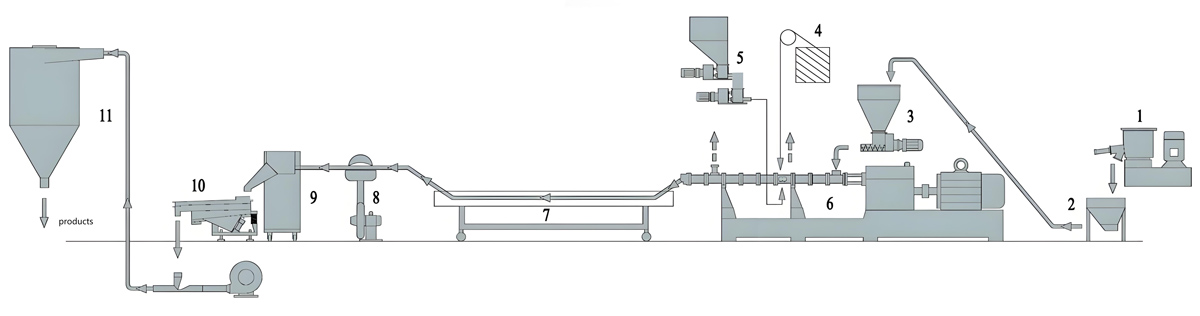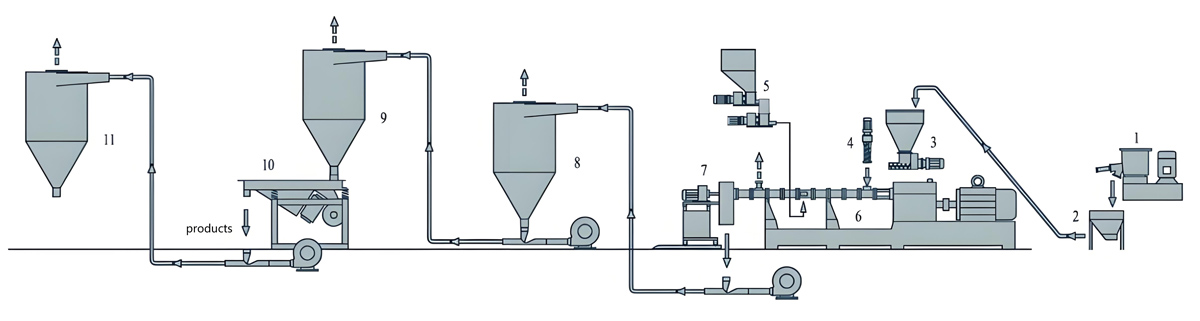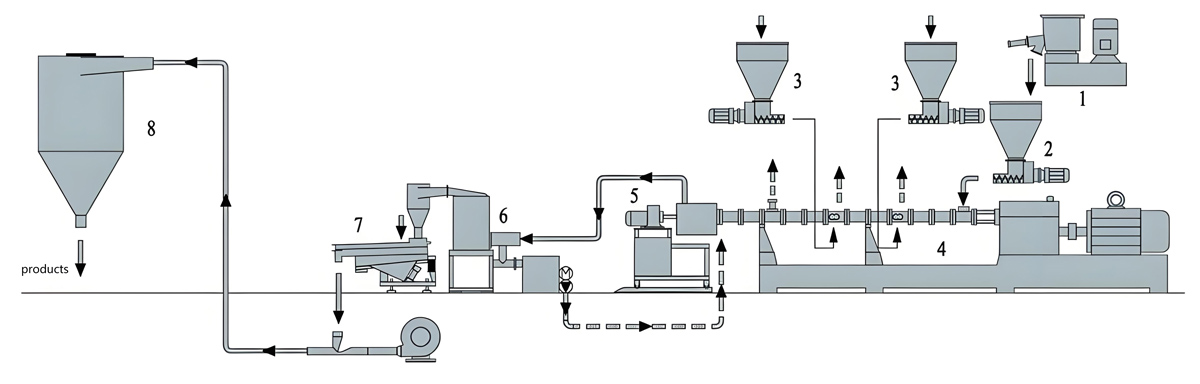
Furniture plastic grade masterbatch represents a specialized segment of the plastics industry serving the diverse requirements of furniture manufacturing applications. From injection molded chair components to extruded profile sections and decorative elements, furniture applications demand masterbatch formulations that combine aesthetic appeal with functional performance characteristics. Twin screw extrusion technology has become the standard for manufacturing furniture plastic masterbatch, providing the mixing efficiency, formulation flexibility, and production consistency that furniture market requirements demand. This comprehensive guide explores the technical considerations, formulation strategies, and production practices essential for successful furniture plastic masterbatch manufacturing.
Introduction to Furniture Plastic Grade Masterbatch
The furniture industry consumes significant volumes of plastic materials across diverse application categories, including structural components, decorative elements, hardware items, and complete furniture pieces. These applications present varied requirements for masterbatch performance, ranging from aesthetic color development to functional property modification. Understanding the specific requirements of furniture applications enables formulation optimization that serves market needs effectively.
Furniture plastic applications span multiple manufacturing processes, including injection molding of solid components, profile extrusion for framing and support structures, rotational molding of hollow articles, and thermoforming of sheet materials. Each process imposes specific requirements on masterbatch processing characteristics, including melt flow properties, thermal stability during processing, and final product appearance. Masterbatch formulations must address both aesthetic and functional requirements while maintaining compatibility with high-speed manufacturing processes that characterize furniture production.
The furniture market emphasizes visual appeal and surface quality, with color consistency and surface appearance significantly influencing product acceptance. Furniture plastic masterbatch must deliver excellent dispersion quality to achieve uniform coloration and surface appearance. Surface defect sensitivity varies with application, with visible components requiring higher quality standards than hidden structural elements. Manufacturing processes must balance quality requirements with production efficiency to maintain competitive positioning in cost-sensitive furniture markets.
Formulation Ratio for Furniture Plastic Grade Masterbatch
Furniture plastic masterbatch formulations address diverse application requirements through carefully optimized component combinations. The following sections detail typical formulations for key furniture application categories.
Injection Molded Furniture Component Formulation
Injection molded furniture components, including chair seats, backs, armrests, and structural elements, require masterbatch formulations optimized for high-speed injection molding processes. These applications demand excellent melt flow characteristics, consistent color development, and appropriate impact properties for furniture service requirements.
Base resin selection typically involves polypropylene homopolymer or impact copolymer grades with melt flow rates matched to the specific molding requirements. For thin-walled furniture components, high melt flow resins (MFI 20 to 40 g/10min) enable rapid filling of complex cavities. Structural components with thicker walls may employ moderate melt flow grades (MFI 8 to 20 g/10min) that provide improved mechanical properties while maintaining acceptable processing characteristics.
Pigment loadings for injection molded furniture masterbatch typically range from 15% to 40% depending on color strength requirements and cost considerations. Common furniture colors, including black, white, and neutral tones, often employ higher pigment loadings to achieve desired color depth economically. Specialty colors may use lower loading有机 pigments at 10% to 25% to achieve specific color targets while managing cost considerations.
Additive packages for furniture applications may include impact modifiers at 3% to 8% for enhanced toughness, UV stabilizers at 0.3% to 0.8% for interior applications with incidental light exposure, and processing aids at 0.3% to 0.5% for improved mold release and surface quality. Anti-static additives at 0.5% to 2% address furniture applications where static charge accumulation presents concerns.
Extruded Furniture Profile Formulation
Extruded furniture profiles, including chair legs, frame components, and decorative trim pieces, require masterbatch formulations suited to extrusion processes. These applications emphasize color consistency through extended cross-sections, surface quality for visible applications, and appropriate mechanical properties for structural service.
Base resin selection for extrusion applications typically involves polypropylene homopolymer or copolymer grades with moderate melt flow rates (MFI 2 to 10 g/10min) that provide adequate melt strength for stable extrusion. PVC compounds also serve furniture extrusion applications, particularly for window profile-adjacent furniture components where material matching provides aesthetic coordination.
Pigment systems for extruded furniture profiles must demonstrate excellent dispersion and thermal stability at extrusion temperatures. Organic pigments provide vibrant color options while inorganic pigments offer excellent light fastness for applications with significant light exposure. Pigment loadings typically range from 10% to 35%, adjusted according to color requirements and processing conditions.
UV stabilizer packages are essential for furniture applications with significant light exposure, typically involving UV absorber and HALS combinations at total loadings of 0.3% to 1%. Impact modification at 3% to 6% ensures adequate toughness for furniture service conditions. Processing aids, including fluoropolymers for polyolefin extrusion or acrylic processing aids for PVC, improve melt stability and surface quality at loadings of 0.3% to 1%.
Scratch-Resistant Furniture Masterbatch Formulation
Scratch-resistant formulations address the specific requirement for furniture surfaces that maintain appearance despite daily use and cleaning. These advanced formulations incorporate specialized additives that enhance surface durability and scratch resistance.
Base resins for scratch-resistant formulations typically involve polypropylene compounds with carefully selected molecular weight distributions that optimize the balance between impact resistance and surface hardness. The masterbatch carrier system must ensure proper incorporation and distribution of scratch-resistant additives throughout the polymer matrix.
Scratch-resistant additive packages may include specialty fillers such as talc or calcium carbonate for hardness modification, fluoropolymer additives for surface energy reduction, and nano-scale reinforcement for enhanced surface properties. Total additive loadings typically range from 2% to 8% depending on the specific property enhancement targets and cost considerations.
Pigment systems for scratch-resistant formulations must maintain compatibility with the enhanced additive packages while achieving the color requirements for specific furniture applications. Formulation development requires careful evaluation to ensure that scratch-resistant additive incorporation does not compromise color quality or processing characteristics.
Production Process for Furniture Plastic Masterbatch
The production of furniture plastic masterbatch follows established compounding principles while incorporating specific considerations for furniture market requirements. Systematic process development ensures consistent quality that furniture manufacturers expect.
Formulation Development and Validation
Formulation development for furniture masterbatch begins with understanding specific application requirements, including color targets, performance specifications, processing conditions, and cost targets. Initial formulation concepts undergo laboratory evaluation to verify achievement of color and performance targets before production scale-up.
Color matching procedures utilize spectrophotometric analysis to achieve precise color targets while establishing acceptable color tolerance windows that guide production quality control. Masterbatch formulations must achieve color accuracy within specified tolerances while maintaining consistent production characteristics across extended manufacturing runs.
Performance validation testing confirms that formulations meet application requirements, including color retention, impact resistance, and processing compatibility. Furniture applications with specific performance requirements, such as outdoor furniture or children’s furniture, require additional testing to verify compliance with relevant standards and specifications.
Material Preparation and Pre-Mixing
Material preparation for furniture masterbatch production ensures that raw materials are in appropriate condition for compounding operations. Resin drying follows manufacturer recommendations, typically at 80 to 120 degrees Celsius for 4 to 6 hours depending on the specific polymer grade and moisture sensitivity.
Pigment preparation may involve pre-drying to remove surface moisture and ensure free-flowing characteristics that facilitate accurate feeding. For high-concentration masterbatch formulations, carrier resin pre-blending creates homogeneous pigment concentrates that feed consistently and disperse effectively during extrusion processing.
Pre-mixing operations combine prepared components in appropriate proportions before introduction to the twin screw extruder. The pre-mix composition should achieve adequate preliminary distribution while maintaining material handling characteristics suitable for feeding equipment. For formulations with multiple additive types, staged pre-mixing may improve component distribution and reduce segregation risk.
Twin Screw Compounding Operations
Twin screw compounding transforms prepared materials into finished masterbatch through controlled melting, mixing, and homogenization. The compounding process requires optimization of equipment configuration and operating parameters to achieve consistent quality at production throughput rates.
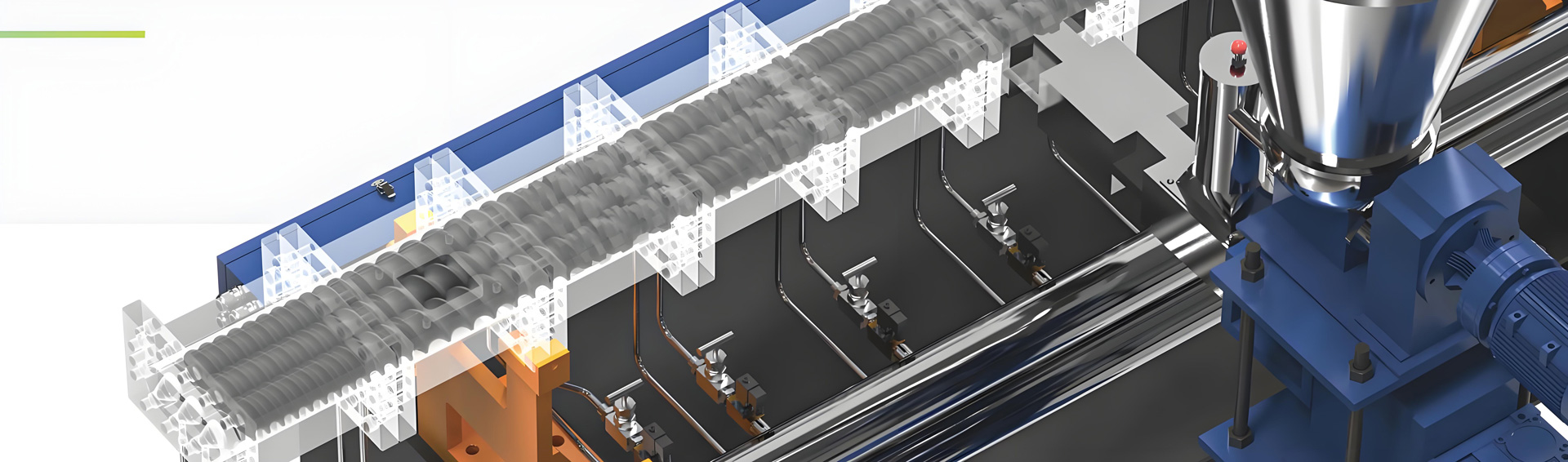
Screw configuration design addresses the specific mixing requirements of each furniture masterbatch formulation. Typical configurations incorporate feed sections with adequate depth for reliable material transport, compression sections that achieve progressive melting and compaction, and mixing sections with kneading blocks and distributive mixing elements that achieve uniform additive distribution.
Temperature profile optimization balances melt viscosity requirements against thermal stability limits. Typical processing temperatures for polypropylene furniture masterbatch range from 200 to 260 degrees Celsius across barrel zones, with specific profiles adjusted according to formulation characteristics and throughput requirements.
Cooling, Pelletizing, and Packaging
Cooling and pelletizing operations prepare compounded material for packaging and shipment to furniture manufacturing customers. Strand cooling systems provide controlled temperature reduction, with water temperature and flow rates adjusted for the specific output rate and strand dimensions.
Pelletizing equipment, typically strand pelletizers with hardened cutting blades, produces uniform cylindrical pellets suitable for handling and subsequent processing. Knife clearance and cutting speed require optimization for each formulation to minimize fines generation and achieve consistent pellet dimensions.
Finished pellets undergo quality verification before packaging, with conforming product transferred to sealed containers or bags that protect against moisture ingress and contamination. Package labeling includes product identification, manufacturing date, and recommended storage conditions that ensure extended shelf life under appropriate storage conditions.
Production Equipment Introduction
Equipment selection for furniture plastic masterbatch production addresses the throughput requirements and quality standards appropriate for furniture market service. The Kerke KTE series provides equipment options suited to various production scale requirements.
Kerke KTE Series for Furniture Masterbatch Production
The Kerke KTE series encompasses equipment options spanning a wide capacity range, enabling appropriate equipment selection for specific production requirements. Capacity matching ensures that equipment investment aligns with market opportunities and operational efficiency targets.
The KTE-36B model, featuring 35.6mm screw diameter and 20 to 100 kg/h throughput, serves development, pilot production, and small-scale commercial manufacturing requirements. This equipment suits operations focused on specialty furniture colors, custom formulations, or emerging market development where flexibility and formulation development capability take priority over maximum throughput.
The KTE-50B model, with 50.5mm screw diameter and 80 to 200 kg/h throughput capability, addresses small to medium-scale production requirements common in regional furniture masterbatch service. This capacity range provides meaningful production volumes while maintaining the flexibility necessary for serving diverse furniture market segments with varying color and formulation requirements.
The KTE-65B, featuring 62.4mm screw diameter and 200 to 450 kg/h throughput, serves medium-scale production operations with consistent demand for furniture masterbatch products. The throughput capability accommodates established customer bases while maintaining processing flexibility for multi-product operations.
The KTE-75B, with 71mm screw diameter and 300 to 800 kg/h throughput, provides higher capacity for operations with significant volume requirements. This equipment suits dedicated furniture masterbatch production facilities serving substantial regional markets with consistent demand for standard product lines.
The KTE-95D, the largest model with 93mm screw diameter and 1000 to 2000 kg/h throughput capability, addresses high-volume production requirements for major furniture masterbatch operations. This equipment investment supports large-scale dedicated production with maximum efficiency and throughput capability.
Supporting Equipment Considerations
Supporting equipment for furniture masterbatch production includes material handling systems, quality control instrumentation, and packaging equipment. The specific configuration depends on production scale, product variety, and operational requirements.
Material handling systems for production-scale operations include resin dryers with appropriate capacity, loss-in-weight feeding systems for accurate ingredient control, and material transfer equipment that maintains cleanliness and prevents contamination. The variety of formulations typical in furniture masterbatch operations requires flexible material handling that accommodates frequent product changes.
Quality control instrumentation supports the color verification and dispersion evaluation essential for furniture applications where appearance quality directly impacts customer acceptance. Spectrophotometric color measurement equipment provides objective color verification, while melt flow testing and dispersion evaluation equipment verify processing characteristics and blend quality.
Parameter Settings for Furniture Masterbatch Production
Parameter optimization for furniture masterbatch production ensures consistent quality while maintaining production efficiency. The specific settings depend on formulation characteristics, equipment configuration, and quality requirements.
Screw Configuration Guidelines
Screw configuration design for furniture masterbatch addresses the specific mixing requirements of the formulation while maintaining throughput capability. Configuration optimization requires understanding the relationship between screw elements, mixing performance, and output characteristics.
Standard configurations for furniture masterbatch typically employ length-to-diameter ratios of 40:1 to 48:1, providing adequate residence time for complete melting and mixing while maintaining acceptable throughput rates. Screw compression ratios of 2.5:1 to 3.5:1 ensure proper melting and compaction of the polymer matrix before mixing sections.
Mixing section design incorporates kneading blocks and distributive mixing elements that achieve uniform pigment and additive distribution. The specific configuration depends on formulation complexity, with more complex additive packages requiring enhanced mixing sections. Right-angle mixing elements, Z-shaped elements, and varied pitch configurations contribute to effective mixing while preventing material stagnation.
Temperature Profile Development
Temperature profile optimization balances melt viscosity requirements, thermal stability considerations, and mixing efficiency goals. Each formulation requires specific profile development that addresses its particular thermal and rheological characteristics.
Typical temperature profiles for polypropylene-based furniture masterbatch range from 180 degrees Celsius in the feeding zone to 250 to 260 degrees Celsius in the high-shear mixing and pumping zones. The specific profile shape depends on formulation characteristics, with higher filler loadings often requiring adjusted profiles to ensure complete melting and proper mixing.
Temperature adjustments for specific formulation variations include increased temperatures for high-viscosity formulations that require reduced melt viscosity for adequate mixing, decreased temperatures for heat-sensitive pigment systems that may degrade at elevated temperatures, and adjusted gradients between zones to maintain appropriate melting progression.
Throughput and Speed Optimization
Throughput optimization balances production efficiency with mixing quality requirements. The optimal operating point depends on formulation complexity, quality requirements, and equipment capabilities.
Typical operating throughputs for furniture masterbatch range from 60% to 80% of maximum extruder capacity. Simple formulations with straightforward additive packages may achieve higher throughput rates, while complex formulations with multiple additives or high loadings require reduced throughput to ensure adequate mixing.
Screw speed optimization similarly varies with formulation requirements. Typical operating speeds range from 200 to 500 RPM depending on equipment size and formulation characteristics. Higher speeds increase shear rates and mixing intensity while reducing residence time, requiring optimization for each specific formulation to achieve the desired balance.
Equipment Price Guide
Equipment investment for furniture masterbatch production requires evaluation of capacity requirements, quality standards, and budget constraints. The Kerke KTE series provides options across the price and capacity spectrum.
The KTE-36B model, priced from $25,000 to $35,000, provides entry-level production capability suitable for development operations, specialty product focus, or market testing activities. This investment level enables quality furniture masterbatch production without requiring major capital commitment.
The KTE-50B model, priced from $40,000 to $60,000, delivers intermediate capacity for established small to medium-scale operations. The 80 to 200 kg/h throughput range accommodates regional furniture market service with meaningful production volumes.
The KTE-65B, priced from $50,000 to $80,000, addresses medium-scale production requirements with 200 to 450 kg/h throughput capability. This investment suits operations with established customer bases requiring consistent production volumes.
The KTE-75B, priced from $70,000 to $100,000, provides higher capacity for operations with substantial volume requirements. The 300 to 800 kg/h throughput capability supports significant regional market presence.
The KTE-95D, priced from $120,000 to $200,000, represents the high-capacity option for major production operations. The 1000 to 2000 kg/h throughput capability enables large-scale dedicated production with maximum efficiency.
Problems in Production Process and Solutions
Furniture masterbatch production presents specific challenges requiring systematic understanding and effective resolution. Addressing these issues ensures consistent quality and reliable production performance for furniture market service.
Color Streaking and Dispersion Problems
Color streaking in furniture masterbatch manifests as inconsistent coloration in molded or extruded products, indicating inadequate dispersion of pigment or additive components. This quality issue directly impacts furniture appearance and may result in customer rejection of finished products.
Root cause investigation examines formulation characteristics, screw configuration, and processing parameters. Common causes include insufficient mixing intensity in screw configuration, excessive throughput rates that reduce residence time, inadequate pre-mixing that prevents proper preliminary distribution, and screw or barrel wear that affects mixing efficiency.
Resolution approaches include screw configuration modifications to increase mixing intensity, throughput reduction to increase residence time, improved pre-mixing procedures, and equipment repair or component replacement to restore mixing capability. Specific solutions depend on the identified root cause and formulation requirements.
Prevention strategies emphasize systematic process qualification for each formulation, establishing validated parameters that achieve consistent dispersion quality. Regular equipment maintenance, including screw wear inspection, prevents quality degradation from equipment condition changes. Quality monitoring throughout production runs enables early detection of dispersion issues.
Surface Defects in Finished Furniture Products
Surface defects in furniture products incorporating masterbatch may include sink marks, flow lines, weld lines, or surface blemishes that compromise appearance quality. These issues may originate from masterbatch formulation or processing characteristics that affect flow behavior or surface formation during manufacturing.
Troubleshooting surface defect issues requires characterization of the specific defect type and correlation with masterbatch characteristics. Formulation adjustments, including processing aid additions or viscosity modifications, often resolve surface quality issues. Incompatible additive combinations may cause surface defects that require fundamental reformulation to address.
Processing parameter optimization, including temperature adjustments and injection molding or extrusion parameter changes, addresses many surface defect issues. Collaboration between masterbatch supplier and furniture manufacturer enables efficient issue resolution through combined technical expertise.
Impact Resistance Variation
Variation in impact resistance of furniture components may indicate inconsistency in impact modifier performance, which can result from formulation variation, dispersion problems, or processing conditions that affect impact modifier effectiveness.
Diagnostic testing characterizes impact performance and identifies potential root causes. Impact modifier quality verification ensures that incoming materials meet specifications. Processing condition evaluation identifies conditions that may degrade impact modifier effectiveness, including excessive shear or temperature exposure.
Solutions include formulation adjustments to optimize impact modifier loading and selection, processing parameter modifications to preserve impact modifier performance, and quality system enhancements to ensure consistent formulation execution.
Fading and Color Stability Issues
Color fading in furniture products results from inadequate light fastness of the masterbatch pigment system or insufficient UV protection for the specific exposure conditions. This issue particularly affects furniture applications with significant light exposure, including pieces near windows or in outdoor applications.
Troubleshooting color stability issues requires characterization of the specific exposure conditions and correlation with masterbatch formulation light fastness specifications. Testing under actual or simulated exposure conditions provides data for root cause determination.
Resolution approaches include reformulation with enhanced light fastness pigments, addition of UV stabilization packages to protect color stability, and collaboration with furniture manufacturers to establish appropriate exposure specifications for specific applications.
Maintenance Requirements
Consistent maintenance practices ensure reliable equipment performance and consistent furniture masterbatch quality. Systematic maintenance programs prevent unplanned downtime and maintain production efficiency.
Daily Maintenance Operations
Daily maintenance activities establish the foundation for reliable equipment operation. Operator inspections during shift changes verify equipment condition and identify issues requiring attention. Routine cleaning maintains equipment cleanliness that affects product quality.
Feeding system inspection verifies proper material flow and feeder calibration status. Any changes in feeding behavior warrant investigation before they affect product quality. Hopper condition, including residue buildup and contamination, requires attention during daily operations.
Granulator maintenance, including knife edge inspection and adjustment, maintains pellet quality throughout production runs. The frequency of knife inspection depends on formulation characteristics, with highly filled or pigmented formulations accelerating knife wear compared to standard compounds.
Weekly and Monthly Maintenance
Weekly maintenance activities extend equipment inspection and service beyond daily requirements. These activities address components with longer service intervals while providing opportunity for comprehensive condition assessment.
Weekly feeder calibration verification ensures continued accuracy of ingredient addition. Formulation accuracy directly impacts product quality, making feeder calibration verification an essential quality assurance activity. Gravimetric feeder systems require regular calibration verification to maintain accuracy specifications.
Monthly maintenance encompasses more comprehensive equipment inspection, including screw and barrel condition assessment. Wear in mixing sections particularly affects furniture masterbatch quality, requiring monitoring and timely component replacement when wear reaches significant levels.
Periodic and Annual Service
Periodic maintenance addresses components requiring less frequent service, including gearbox oil analysis and replacement, drive system component inspection, and control system verification. Annual maintenance provides opportunity for comprehensive equipment evaluation and planned component replacement.
Screw element replacement for worn components restores mixing efficiency that deteriorates with equipment wear. Maintaining spare screw inventory minimizes downtime when replacement becomes necessary. Barrel inspection and liner condition assessment ensure continued processing capability.
Control system updates address obsolescence and capability enhancement opportunities identified during annual maintenance review. Software updates and calibration verification ensure accurate control and monitoring of production operations.
Frequently Asked Questions
What pigment loadings are typical for furniture masterbatch?
Typical pigment loadings for furniture masterbatch range from 10% to 40% depending on color requirements, cost targets, and processing considerations. Standard colors often employ higher loadings for economic efficiency, while specialty colors may use lower concentrations to achieve specific color targets.
How do I achieve consistent color matching for furniture applications?
Consistent color matching requires spectrophotometric color measurement, established color standards with appropriate tolerance windows, validated formulation procedures, and quality control verification at production. Regular color measurement against reference standards throughout production runs ensures batch-to-batch consistency.
What impact modifier systems work well for furniture applications?
Impact modifier selection depends on the base polymer and performance requirements. Ethylene-propylene impact modifiers work well with polypropylene, while styrenic block copolymers address specific requirement ranges. Selection should consider compatibility, processing effects, and cost-performance balance for the specific application.
How does furniture masterbatch processing differ for various manufacturing processes?
Different furniture manufacturing processes impose specific requirements on masterbatch characteristics. Injection molding applications require high melt flow and thermal stability for rapid cycling. Extrusion applications emphasize melt strength and die swell control. Thermoforming applications need consistent sheet properties and formability.
What quality tests are essential for furniture masterbatch?
Essential quality tests include color measurement against reference standards, dispersion evaluation through microscopy or melt index testing, melt flow characterization, and impact testing for formulations with impact modification requirements. Application testing under actual manufacturing conditions provides final quality verification.
How do I prevent quality variation in multi-shift production?
Preventing multi-shift quality variation requires standardized operating procedures, shift handover protocols that ensure parameter continuity, regular equipment calibration across shifts, and quality monitoring systems that detect variation promptly. Clear documentation and communication support consistent execution across operational teams.
What storage conditions are recommended for furniture masterbatch?
Furniture masterbatch should be stored in clean, dry conditions below 40 degrees Celsius, away from direct sunlight and contamination sources. Original sealed packaging should be maintained until use. Storage time should be minimized through appropriate inventory management practices.
Conclusion
Furniture plastic grade masterbatch manufacturing combines technical formulation expertise with production capabilities aligned with furniture market requirements. Twin screw extrusion technology, exemplified by the Kerke KTE series equipment, provides the processing foundation for successful furniture masterbatch production. Success in this market segment requires understanding the specific requirements of furniture applications, including aesthetic quality standards, functional performance requirements, and manufacturing process compatibility.
The furniture industry continues evolving with changing design trends, sustainability requirements, and manufacturing practices. Masterbatch producers must maintain technical capabilities that address emerging requirements while delivering the consistent quality that furniture manufacturers expect. Equipment investment decisions should consider both current requirements and future market development opportunities.
Comprehensive quality systems, systematic process optimization, and responsive technical support establish the foundation for competitive furniture masterbatch production. Manufacturers prepared with capable equipment, trained personnel, and customer-focused service capabilities will successfully serve the diverse requirements of furniture industry customers while building sustainable business relationships in this substantial market segment.