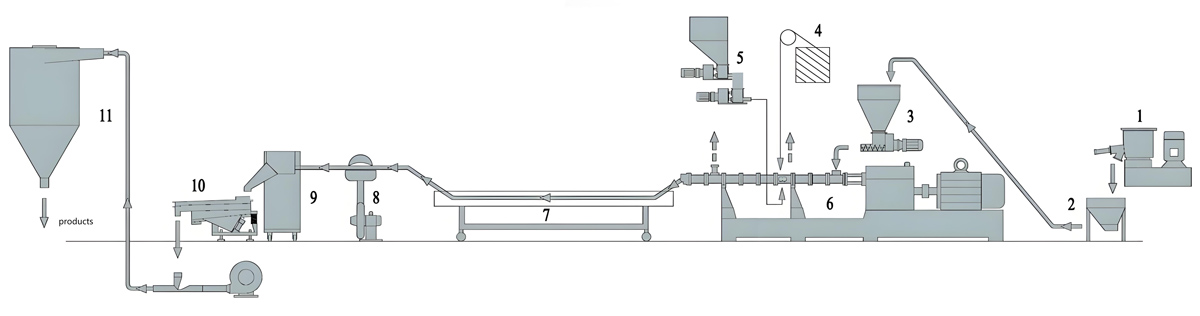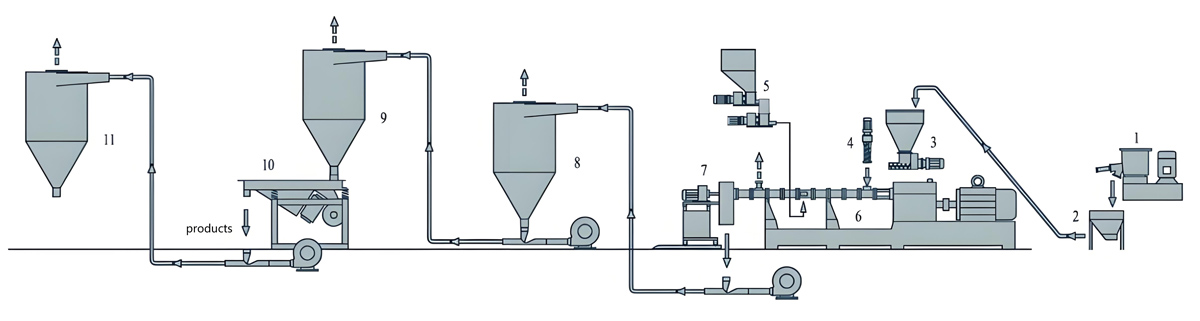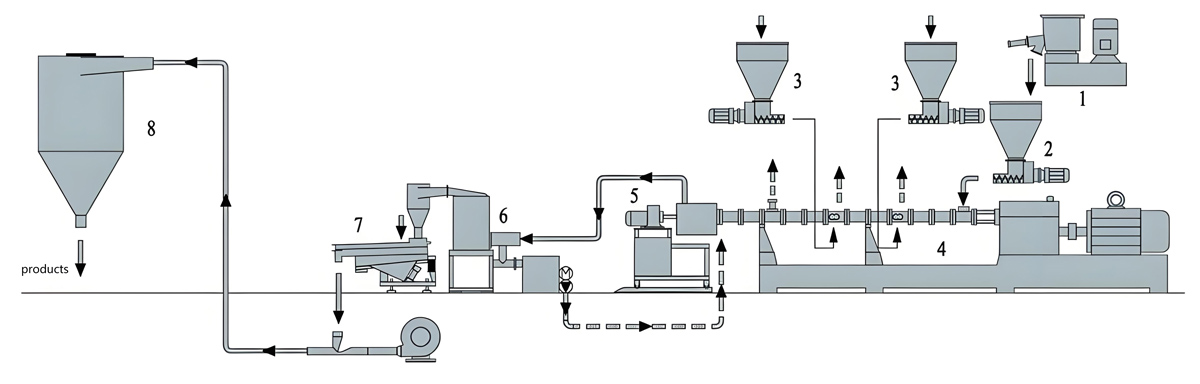
This comprehensive technical guide addresses the specialized requirements for manufacturing fully biodegradable masterbatch using PLC controlled twin screw extrusion technology. Fully biodegradable masterbatch represents one of the most dynamically growing product categories within the plastic additives industry, driven by increasing environmental awareness, regulatory pressures, and consumer demand for sustainable material solutions. Understanding the science of biodegradable polymers, equipment requirements, and production optimization strategies enables manufacturers to deliver high-performance products that address critical sustainability objectives across packaging, agriculture, consumer products, and industrial applications.
The global transition toward sustainable materials has accelerated dramatically as governments implement plastic regulations, corporations commit to sustainability targets, and consumers increasingly prefer environmentally responsible products. Fully biodegradable masterbatch technology provides the concentrated additive solutions that enable processors to convert conventional polymer products to biodegradable alternatives efficiently and economically. Nanjing Kerke’s PLC controlled twin screw extruders deliver the precise process control and operational flexibility that sensitive biodegradable polymer processing demands, making these machines the preferred choice for manufacturers committed to premium quality biodegradable masterbatch production.
Understanding Fully Biodegradable Polymers and Masterbatch Technology
Fully biodegradable polymers represent a distinct category of materials designed to undergo complete biological degradation under environmental conditions, transforming into natural substances including carbon dioxide, water, biomass, and inorganic salts through the action of naturally occurring microorganisms. Unlike conventional plastics that persist in the environment for centuries, fully biodegradable polymers break down completely within defined timeframes ranging from months to a few years depending on polymer type, environmental conditions, and product design.
The biodegradation process involves multiple stages that occur sequentially as microorganisms colonize polymer surfaces and secrete enzymes that catalyze depolymerization reactions. Initial colonization creates biofilm formation on polymer surfaces, preparing the material for enzymatic attack. Enzymatic hydrolysis breaks polymer chains into smaller oligomers and monomers that microorganisms can metabolize. Microbial metabolism converts these breakdown products into cellular biomass, energy, and ultimate degradation products including carbon dioxide and water under aerobic conditions or methane under anaerobic conditions.
Types of Fully Biodegradable Polymers
Polylactic acid represents the most widely utilized fully biodegradable polymer, derived from renewable agricultural resources including corn starch and sugarcane through fermentation and polymerization processes. PLA offers excellent transparency, good stiffness, and reasonable processing characteristics that make it suitable for diverse applications including packaging, disposable serviceware, and agricultural films. PLA’s processing requirements differ from conventional polymers, requiring specific temperature control and moisture management to achieve optimal product quality.
Polyhydroxyalkanoates encompass a family of naturally occurring polyesters produced by bacterial fermentation, including polyhydroxybutyrate and polyhydroxyvalerate with properties ranging from stiff crystalline materials to flexible elastomers depending on composition. PHA polymers offer excellent biodegradability under diverse environmental conditions including marine environments where many other biodegradable polymers perform poorly. Commercial PHA grades provide processing characteristics compatible with conventional extrusion and injection molding equipment.
Polybutylene succinate and its copolymers represent biodegradable polyesters with excellent mechanical properties and processing characteristics that rival conventional polyethylene. PBS offers good flexibility, thermal stability, and melt strength that make it suitable for film extrusion, injection molding, and fiber production. Blends with PLA and other biodegradable polymers enable property optimization for specific application requirements.
Thermoplastic starch and starch-based polymers provide cost-effective biodegradable solutions derived from renewable agricultural resources. Starch modification through plasticization and blending with other biodegradable polymers creates processable materials suitable for disposable packaging applications where ultimate biodegradability and compostability are primary concerns. These materials offer attractive cost-performance balances for price-sensitive applications.
Industrial Applications and Market Drivers
Packaging applications represent the largest market for fully biodegradable polymers and masterbatch technology, with applications spanning food packaging, agricultural mulch films, shopping bags, and disposable serviceware. Regulatory mandates requiring reduced conventional plastic use drive adoption across these applications, with biodegradable alternatives providing compliant solutions that maintain functional performance while addressing environmental concerns. The European Union Single-Use Plastics Directive and similar regulations worldwide accelerate market growth for biodegradable packaging solutions.
Agricultural applications utilize biodegradable mulch films, planting pots, and twines that eliminate the retrieval and disposal challenges associated with conventional plastic agricultural products. Biodegradable mulch films decompose in soil after the growing season, eliminating removal labor costs and plastic pollution concerns that increasingly affect agricultural sustainability. Controlled degradation timing ensures film breakdown occurs after the crop production cycle concludes, maintaining functional performance throughout the growing period.
Consumer products applications include disposable items, promotional products, and short-life products where biodegradability provides end-of-life convenience and environmental benefit. Food service disposables including cutlery, plates, and containers represent significant market opportunities as foodservice operators seek compliant alternatives to conventional plastic products. Personal care packaging, toys, and promotional items increasingly incorporate biodegradable materials as brands pursue sustainability commitments.
Biodegradable Masterbatch Formulation Science
Carrier Resin Selection for Biodegradable Masterbatch
Carrier resin selection for fully biodegradable masterbatch presents unique challenges compared to conventional masterbatch production, as the carrier must be fully compatible with biodegradable polymer substrates while providing adequate processing performance and property characteristics. The fundamental requirement for carrier biodegradability eliminates conventional polyethylene, polypropylene, and polystyrene carriers that would compromise the biodegradable character of finished products.
PLA-based carriers provide excellent compatibility with PLA substrates and acceptable compatibility with many other biodegradable polymers. PLA carriers offer good processing characteristics and reasonable mechanical properties, though brittleness at low loadings may require modification for applications requiring flexibility. Commercial PLA masterbatch carrier grades provide optimized flow characteristics and compatibility with common biodegradable polymer substrates including PLA, PBS, and PBAT.
PBAT-based carriers offer excellent flexibility and processing characteristics compatible with film extrusion and injection molding applications. PBAT provides good compatibility with PLA and other biodegradable polymers, enabling carrier selection flexibility for different end-use applications. The flexibility of PBAT carriers complements PLA’s stiffness, with PLA/PBAT blends providing balanced property profiles for many applications.
Blended carrier systems combining multiple biodegradable polymers enable optimization of carrier characteristics for specific formulation requirements and end-use applications. These carrier blends can be precisely formulated to match target substrate polymers, ensuring maximum compatibility and consistent quality in customer processing operations.
Biodegradable Additive Systems
Biodegradable additive systems for masterbatch formulations must themselves meet biodegradability requirements while providing functional performance that enables effective product performance. Pro-oxidant additive systems accelerate photodegradation and thermal oxidation of conventional polymers, though these materials face increasing regulatory scrutiny and market rejection due to concerns about incomplete degradation and microplastic formation.
Enzyme-based degradation promoters including lipases, proteases, and cellulases catalyze specific degradation reactions that accelerate polymer breakdown under appropriate environmental conditions. These biological additives work synergistically with naturally occurring microorganisms to enhance degradation rates and ensure complete material conversion. Enzyme selection and concentration optimization addresses specific polymer types and target degradation conditions.
Natural plasticizer and flexibilizer systems derived from plant oils, epoxidized vegetable oils, and bio-based plasticizers enable property modification while maintaining biodegradability requirements. Acetyl tributyl citrate, epoxidized soybean oil, and triethyl citrate provide plasticization for biodegradable polymers while meeting regulatory requirements for food contact and compostable applications. Glycerol, sorbitol, and other polyols serve as plasticizers for starch-based systems.
Pigment and Colorant Selection for Biodegradable Masterbatch
Pigment and colorant selection for fully biodegradable masterbatch requires attention to both color performance and environmental compliance requirements. Many conventional pigments contain heavy metals or organic compounds that may not meet biodegradability or compostability standards, requiring alternative colorant selections for biodegradable applications.
Bio-based colorants derived from plant and mineral sources provide environmentally responsible coloring for biodegradable masterbatch formulations. Natural colorants including anthocyanins, carotenoids, chlorophylls, and curcumin provide earth-tone coloration suitable for many applications. Iron oxide pigments offer excellent stability and environmental profiles for red, yellow, brown, and black colorations. Titanium dioxide and other mineral pigments provide white coloration and opacity adjustments.
Carbon black alternatives present challenges for black coloration in biodegradable applications, as conventional carbon black often contains PAH compounds that may not meet strict compostability requirements. Bio-based carbon alternatives including biochar and vegetable-based black colorants provide sustainable black coloration options, though color depth and stability may differ from conventional carbon black performance.
Filler and Reinforcement Systems for Biodegradable Masterbatch
Bio-based filler systems provide cost reduction and property modification while maintaining biodegradability requirements. Wood flour and wood fiber fillers derived from forestry byproducts offer attractive cost-performance balances and maintain compostability certification. Cellulose fiber fillers provide reinforcement and property modification with excellent environmental profiles and biodegradation characteristics.
Mineral fillers including calcium carbonate, talc, and kaolin can be incorporated into biodegradable masterbatch formulations, though total formulation biodegradability depends on filler loading and specific regulatory requirements. Low loading levels typically maintain compostability certification, while higher loadings may require specific testing to verify end-of-life behavior. Calcium carbonate additions can accelerate biodegradation by providing nucleation sites for polymer chain cleavage reactions.
PLC Controlled Twin Screw Extrusion Technology
Understanding PLC Control Systems in Twin Screw Extrusion
PLC controlled twin screw extrusion represents the standard of modern polymer processing equipment, providing precise, reliable process control through industrial programmable logic controller systems. Unlike basic analogue control systems, PLC technology enables sophisticated control algorithms, comprehensive data management, and integration capabilities that support modern manufacturing operations demanding consistent quality, regulatory compliance, and operational efficiency.
The programmable logic controller serves as the central control element, executing control programs that monitor process parameters, implement control algorithms, and coordinate equipment functions throughout production operations. Modern PLC systems feature high-speed processing capabilities that enable precise real-time control of temperature, speed, pressure, and other critical parameters. Redundant safety systems ensure safe equipment operation even if primary control systems experience failures.
PLC control architecture for twin screw extrusion typically incorporates multiple control loops coordinated by the central PLC system. Temperature control loops regulate barrel zone temperatures through PID algorithms that respond to temperature sensor inputs and adjust heating and cooling outputs. Speed control loops regulate screw speed and feeder rates through coordinated control of drive systems. Pressure control loops monitor melt pressure and implement protective responses if pressure exceeds safe operating limits.
Advanced Control Features for Biodegradable Polymer Processing
Biodegradable polymer processing requires precise control capabilities that address the specific sensitivity of these materials to thermal exposure, moisture content, and processing conditions. PLC controlled systems provide the precise temperature control necessary for temperature-sensitive biodegradable polymers that may undergo degradation if exposed to excessive temperatures even for brief periods.
Adaptive control algorithms analyze process data in real-time and adjust control parameters to maintain optimal operating conditions despite disturbances or variations in input materials. For biodegradable polymer processing, adaptive control can compensate for variations in raw material characteristics, ambient conditions, and equipment condition to maintain consistent product quality throughout production campaigns.
Recipe management capabilities enable storage and recall of validated operating parameters for multiple biodegradable polymer formulations. PLC systems can store extensive parameter sets including temperature profiles, speed settings, pressure limits, and alarm configurations for each product type. Recipe selection through operator interface or automated material identification enables rapid product changeovers while maintaining validated quality specifications for each formulation.
Data logging and traceability functions record all process parameters throughout production operations, supporting quality documentation requirements and regulatory compliance for biodegradable products. Detailed records of temperature profiles, screw speeds, throughput rates, and quality verification results enable complete traceability from raw material lot through finished product batch.
KTE Series PLC Controlled Equipment Specifications
The KTE-50 PLC controlled twin screw extruder provides an effective production platform for biodegradable masterbatch manufacturing, featuring 50 millimeter screw diameter and approximately 40 liters effective barrel volume. This model achieves throughput rates ranging from 120 to 350 kilograms per hour depending on formulation characteristics and operating parameters, making it suitable for medium-scale biodegradable masterbatch production operations serving diverse application markets.
The KTE-50 incorporates comprehensive PLC control features including Siemens S7-based control platform with intuitive operator interface through high-resolution color touchscreen panels. Temperature control with precision PID algorithms maintains zone temperatures within plus or minus one degree Celsius of setpoint values. Speed control with vector drive technology provides responsive speed regulation and precise torque control. Comprehensive alarm management and safety interlock systems ensure safe operation under all conditions.
The KTE-70 PLC controlled model provides enhanced production capacity with 70 millimeter screw diameter and approximately 75 liters effective barrel volume. Throughput rates ranging from 350 to 750 kilograms per hour support higher-volume production operations while maintaining the precise control necessary for consistent biodegradable masterbatch quality. Base pricing for KTE-70 PLC controlled systems typically ranges from $200,000 to $260,000, with complete installed systems ranging from $380,000 to $550,000.
The KTE-100 PLC controlled production-scale extruder provides maximum capacity with 100 millimeter screw diameter and approximately 160 liters effective barrel volume. Throughput rates exceeding 1500 kilograms per hour enable efficient production for large-scale biodegradable masterbatch manufacturing operations. Base pricing for KTE-100 systems typically ranges from $400,000 to $500,000, with complete installed systems ranging from $650,000 to $900,000.
Production Process Technology for Biodegradable Masterbatch
Raw Material Handling for Biodegradable Polymers
Biodegradable polymer processing requires meticulous attention to raw material quality and handling procedures that ensure consistent formulation characteristics and optimal processing performance. PLA and other biodegradable polymers exhibit high moisture sensitivity that requires strict moisture control throughout material handling operations. Moisture absorption causes hydrolysis reactions during processing that reduce molecular weight, compromise mechanical properties, and create processing instabilities.
Pre-drying procedures for biodegradable polymers must achieve moisture contents below 0.05% before processing, typically requiring 4 to 8 hours of drying at temperatures between 80 and 100 degrees Celsius in desiccant dryer systems. Material storage in sealed containers with desiccant protection prevents moisture reabsorption between drying and processing operations. Hoppers equipped with drying capability maintain material dryness throughout production operations.
Bio-based additive components require similar handling attention to ensure consistent quality and prevent degradation from moisture exposure or thermal exposure during storage. Natural colorants and enzyme systems may require refrigerated storage to maintain activity and effectiveness. Proper inventory rotation ensures that materials are used within their effective shelf life periods.
Extrusion Compounding Optimization for Biodegradable Polymers
The extrusion compounding stage for biodegradable masterbatch requires precise process control that addresses the specific sensitivity of biodegradable polymers to thermal exposure and processing conditions. The PLC controlled KTE Series extruder’s precise control capabilities enable optimization of processing parameters for each biodegradable formulation type, ensuring consistent quality and maximum retention of biodegradable polymer properties.
Temperature profile configuration for biodegradable masterbatch requires careful optimization that balances melting requirements against thermal degradation concerns. PLA-based formulations typically employ maximum processing temperatures between 180 and 200 degrees Celsius, with lower temperatures in initial zones to prevent material sticking and higher temperatures in mixing zones to achieve adequate melting. PBS and PBAT formulations may tolerate slightly higher processing temperatures, typically ranging from 190 to 220 degrees Celsius depending on specific grade characteristics.
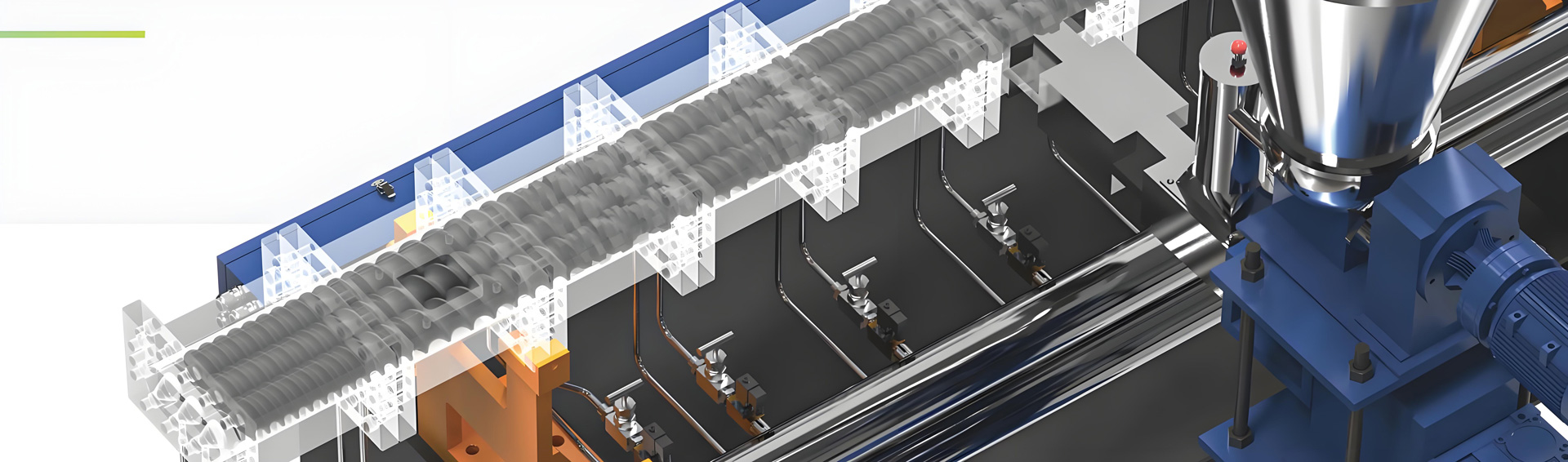
Screw configuration for biodegradable masterbatch employs moderate mixing intensity that achieves adequate component dispersion without excessive shear heating that might cause thermal degradation. Feed zone elements with forward transport geometry ensure consistent material intake and compression. Transition zone elements with gradual depth reduction achieve progressive melting without excessive pressure development. Mixing zones employ kneading blocks and distributive mixing elements that achieve uniform additive dispersion without the high shear rates that could degrade sensitive biodegradable polymer components.
Residence time management requires particular attention for biodegradable polymer processing, as extended thermal exposure accelerates degradation reactions regardless of temperature levels. Screw configurations that maintain forward material flow without excessive backmixing ensure appropriate residence time distribution. Throughput optimization balances production rate requirements against residence time considerations that affect product quality.
Pelletizing and Quality Verification
Underwater pelletizing systems transform molten biodegradable masterbatch into finished pellet forms suitable for storage and subsequent processing. Pellet size selection typically targets 2.5 to 3.5 millimeter diameter pellets that provide practical handling characteristics while maintaining surface area appropriate for effective additive release during customer processing. Strand pelletizing offers an alternative approach for certain biodegradable formulations with specific processing characteristics.
Water temperature control during pelletizing requires careful attention for biodegradable materials that may exhibit different cooling behavior compared to conventional polymers. Moderate water temperatures ensure complete solidification without thermal shock that might cause pellet cracking or surface defects. Extended cooling water residence may be beneficial for formulations with higher thermal mass or slower crystallization rates.
Quality verification procedures for biodegradable masterbatch include specific testing that validates biodegradability alongside standard quality parameters. Compostability testing according to standardized methods including ISO 14855 and ASTM D6400 verifies that products meet compostability certification requirements. Biodegradation rate testing confirms that degradation occurs within expected timeframes under appropriate environmental conditions. Mechanical property testing validates that masterbatch incorporation does not compromise substrate polymer properties. Color measurement and dispersion evaluation verify aesthetic quality characteristics.
Process Parameter Configuration for Biodegradable Masterbatch
Temperature Profile Optimization
Temperature profile optimization for biodegradable masterbatch requires balancing multiple considerations including polymer melting characteristics, additive thermal stability limits, and processing efficiency requirements. The interconnected nature of temperature settings with screw speed, throughput rate, and product quality requires systematic optimization approaches that consider formulation-specific characteristics.
A typical temperature profile for PLA-based biodegradable masterbatch employs the following zone configuration. The feed zone operates between 160 and 175 degrees Celsius, providing sufficient heating for initial polymer softening without causing material sticking in the feed throat area. The compression zone, comprising approximately 30% of total barrel length, employs temperatures between 175 and 190 degrees Celsius where progressive heating achieves complete melting and initial additive incorporation. The mixing zones operate between 190 and 200 degrees Celsius, precisely maintained to achieve adequate melting and mixing without exceeding thermal degradation limits. Die zone temperatures typically range from 195 to 205 degrees Celsius, maintained to ensure smooth melt flow through die openings.
Screw Speed and Throughput Optimization
Screw speed selection for biodegradable masterbatch balances mixing intensity requirements against thermal considerations and product quality preservation. Operating speeds typically range from 150 to 300 RPM depending on model size and formulation characteristics, with lower speeds reducing shear heating that might compromise biodegradable polymer integrity.
Throughput optimization considers the interdependencies between production rate, quality characteristics, and operating efficiency. Specific throughput values provide normalized measures of equipment utilization that enable comparison across different operating conditions. Typical specific throughput values for biodegradable masterbatch range from 0.8 to 2.0 kilograms per hour per RPM depending on formulation density and processing characteristics. Quality validation testing throughout throughput optimization ensures that production rate increases do not compromise biodegradable polymer properties or additive effectiveness.
Moisture Management Throughout Processing
Moisture management throughout biodegradable masterbatch processing requires continuous attention from raw material preparation through finished product packaging. Pre-drying verification confirms that materials meet moisture specifications before processing. Hopper drying maintains material dryness throughout production operations. Processing parameter monitoring detects moisture-related problems including excessive steam formation, pressure variations, and product quality degradation.
Post-processing drying of finished pellets may be necessary for moisture-sensitive formulations, particularly if pellet cooling conditions introduced residual moisture. Desiccant drying after pelletizing ensures that finished products meet moisture specifications for storage stability and customer processing performance. Sealed packaging with desiccant protection maintains product quality during storage and transportation.
Equipment Investment and Economic Considerations
KTE-50 PLC Controlled System Investment
The KTE-50 PLC controlled twin screw extruder system provides an accessible entry point for biodegradable masterbatch production, with base pricing typically ranging from $130,000 to $170,000 for the complete extrusion and pelletizing system including standard PLC control features. This investment supports throughput rates of 120 to 350 kilograms per hour suitable for specialty production serving targeted market segments or dedicated supply arrangements with specific customers.
Total installed system costs for complete biodegradable masterbatch production capability based on KTE-50 equipment typically range from $260,000 to $390,000 depending on auxiliary equipment specifications and installation requirements. Auxiliary equipment investments include desiccant drying systems for moisture control, material handling and storage equipment, finished product packaging systems, and quality control laboratory equipment for biodegradability verification testing.
KTE-70 and KTE-100 Investment Analysis
The KTE-70 PLC controlled twin screw extruder provides enhanced production capacity with base pricing typically ranging from $200,000 to $260,000 for the complete system. Throughput rates of 350 to 750 kilograms per hour support higher-volume production operations. Total installed costs for complete KTE-70 production lines typically range from $380,000 to $550,000.
The KTE-100 represents the highest capacity option for biodegradable masterbatch production, with base pricing typically ranging from $400,000 to $500,000 for complete extrusion and pelletizing systems. This investment supports annual production volumes exceeding 6,000 metric tons for dedicated high-volume operations. Total installed costs for comprehensive KTE-100 production facilities typically range from $650,000 to $900,000.
Return on investment analysis considers biodegradable masterbatch pricing typically ranging from $4.00 to $12.00 per kilogram depending on formulation complexity and market positioning, against production costs including raw materials, energy, labor, and overhead allocation. At typical production rates and operating schedules, annual production volumes support attractive return on investment timelines as market demand for biodegradable products continues to grow.
Production Problems, Solutions, and Prevention Strategies
Problem: Thermal Degradation and Molecular Weight Reduction
Problem Analysis
Thermal degradation in biodegradable masterbatch manifests as reduced molecular weight, compromised mechanical properties, discoloration, and processing instability that compromise product quality and customer satisfaction. Biodegradable polymers exhibit greater thermal sensitivity than conventional polymers, requiring careful process control to prevent degradation that affects product performance and biodegradability characteristics. Degradation may occur during masterbatch production or subsequently during customer processing operations.
The consequences of thermal degradation include reduced mechanical strength in finished products, altered biodegradation rates that may not meet specification requirements, discoloration that compromises aesthetic quality, processing difficulties including reduced melt strength and increased viscosity variations, and customer complaints about performance below expectations. Degradation-related quality issues may develop progressively, with initial effects barely perceptible that worsen over production campaigns or storage periods.
Root Cause Analysis
Thermal degradation originates from excessive processing temperatures, extended residence times at elevated temperatures, high shear stress that generates localized heating, or combinations of these factors that exceed the thermal stability limits of biodegradable polymer components. Temperature profile misconfigurations that maintain excessive temperatures in mixing or die zones create conditions favorable for degradation reactions. Equipment malfunctions including failed temperature controllers or stuck heating elements can cause runaway temperature conditions that cause severe degradation.
Inadequate moisture control allows hydrolysis reactions to proceed alongside thermal degradation, with combined effects causing more severe property degradation than either mechanism alone. Formulation compositions with inadequate thermal stabilization systems provide insufficient protection against processing-induced degradation. Material quality problems including degraded raw materials or materials stored under improper conditions may exhibit reduced thermal stability regardless of processing conditions.
Solution Implementation
Addressing thermal degradation requires process optimization that reduces thermal exposure throughout production operations. Temperature profile modifications reduce maximum processing temperatures while maintaining adequate melting and mixing. Screw configuration modifications reduce residence time in high-temperature zones and eliminate dead spots where material might experience extended thermal exposure. Throughput optimization may increase production rate to reduce mean residence time while maintaining quality characteristics.
Moisture management improvements address hydrolysis contributions to degradation by ensuring adequate pre-drying, maintaining hopper drying throughout production, and implementing post-production drying for sensitive formulations. Formulation modifications may include increased antioxidant and thermal stabilizer concentrations to provide enhanced protection against processing-induced degradation. Raw material qualification enhancements ensure that incoming materials meet thermal stability requirements for target processing conditions.
Prevention Strategies
Preventing thermal degradation requires comprehensive process control systems that maintain processing conditions within validated limits throughout production operations. PLC control features including precise temperature control, adaptive algorithms, and comprehensive alarm management provide protection against degradation-inducing conditions. Equipment maintenance programs ensure that heating systems, temperature sensors, and control systems function reliably throughout production campaigns. Raw material qualification ensures that materials meet thermal stability requirements before production commitment.
Problem: Biodegradability Certification Failures
Problem Analysis
Biodegradability certification failures occur when masterbatch products or customer products incorporating masterbatch fail to meet compostability or biodegradability certification requirements established by regulatory authorities or industry organizations. These failures create significant problems including product recalls, certification revocation, customer disputes, and reputational damage that affects future business development. Certification requirements vary by market and application, requiring clear understanding of applicable standards and thorough verification testing.
The consequences of certification failures include inability to market products as biodegradable or compostable, potential regulatory violations in jurisdictions requiring certified products, customer claims and product rejection, and damage to brand reputation for sustainability claims. Certification requirements often mandate specific testing protocols, documentation, and quality systems that ensure ongoing compliance alongside initial product certification.
Root Cause Analysis
Certification failures originate from multiple potential causes spanning formulation composition, processing conditions, and quality system inadequacies. Formulation components that do not meet biodegradability requirements compromise the entire product certification regardless of other formulation constituents. Conventional additives, pigments, or fillers incorporated without biodegradability verification may cause certification failures. Carrier resin selection errors may introduce non-biodegradable components that disqualify products from certification.
Processing conditions that cause degradation of biodegradable components may alter degradation behavior sufficiently to cause certification failures. Excessive processing temperatures or extended residence times may cause chain scission that fragments polymers into sizes that biodegrade differently than intended. Contamination from previous production runs or auxiliary equipment may introduce non-biodegradable materials that cause certification failures.
Solution Implementation
Addressing certification failures requires comprehensive reformulation review and quality system improvements. All formulation components must be verified for biodegradability compliance through supplier documentation and independent testing. Carrier resin reselection to fully biodegradable options addresses common failure sources. Processing parameter optimization ensures that biodegradable components are not degraded beyond specification requirements during production.
Quality system improvements include comprehensive incoming inspection that verifies biodegradability documentation for all raw materials, production controls that prevent contamination, and testing protocols that verify biodegradability performance for each production batch. Third-party certification through recognized testing organizations provides independent verification that supports marketing claims and regulatory compliance.
Prevention Strategies
Preventing certification failures requires comprehensive quality systems that address all potential failure sources throughout the production and supply chain. Supplier qualification programs that verify biodegradability compliance for all components provide the foundation for consistent product certification. Formulation approval processes ensure that new formulations undergo complete biodegradability testing before commercial production. Production controls including equipment cleaning, material handling procedures, and process monitoring prevent contamination and processing conditions that might compromise biodegradability.
Problem: Moisture-Related Processing Defects
Problem Analysis
Moisture-related processing defects in biodegradable masterbatch manifest as excessive steam formation during extrusion, surface defects on finished pellets, porosity in extruded strands, inconsistent melt behavior, and mechanical property degradation that indicates hydrolytic chain scission. These defects compromise product quality and may indicate underlying moisture control problems that require systematic investigation and correction.
The consequences of moisture-related defects include customer complaints about processing difficulties, quality variations between batches, product rejection due to quality below specifications, and potential biodegradability issues if hydrolysis significantly alters polymer molecular weight. Moisture-related problems often worsen progressively over production campaigns as moisture accumulates in recycling material or hopper systems.
Root Cause Analysis
Moisture-related defects originate from inadequate pre-drying of raw materials, moisture absorption during handling or storage, inadequate hopper drying during production, or moisture introduction through contaminated material handling equipment. Drying system failures including inadequate drying time, insufficient drying temperature, or desiccant system malfunctions allow moisture to persist in materials before processing. Humid ambient conditions may overwhelm drying capability if material exposure times are excessive.
Material handling procedures that expose dried materials to humid air before processing negate drying efforts and introduce moisture that causes processing defects. Recycled material with higher moisture content may introduce moisture that accumulates in production systems. Equipment maintenance failures including damaged seals, inadequate insulation, or malfunctioning dryers can create moisture introduction pathways that compromise drying system effectiveness.
Solution Implementation
Addressing moisture-related defects requires comprehensive moisture management improvements throughout the production operation. Drying procedure review and optimization ensures adequate drying time and temperature for all materials. Drying equipment verification confirms that dryer systems function correctly and achieve target dew point values. Material handling procedure modifications minimize exposure time and moisture introduction between drying and processing.
Hopper drying verification ensures that drying hoppers maintain material dryness throughout production operations. Moisture monitoring throughout production enables rapid identification of moisture-related problems before significant quality impacts occur. Post-production drying of finished pellets addresses moisture that may have been introduced during pelletizing operations. Sealed packaging with desiccant protection maintains product quality during storage and transportation.
Prevention Strategies
Preventing moisture-related defects requires comprehensive moisture management systems that control moisture from raw material delivery through finished product shipment. Drying procedures validated for each material type ensure adequate moisture removal before processing. Continuous moisture monitoring provides real-time verification that moisture levels remain within acceptable ranges. Equipment maintenance programs ensure that drying systems function reliably throughout production campaigns. Storage and handling procedures minimize moisture exposure that might compromise dried materials.
Maintenance Procedures for PLC Controlled Equipment
PLC System Maintenance and Calibration
PLC controlled twin screw extrusion equipment requires specialized maintenance practices that address both standard mechanical components and the electronic control systems that distinguish PLC equipment from conventional extruders. PLC system maintenance ensures continued reliable control and accurate process monitoring throughout production operations.
Regular PLC maintenance activities include verification of program integrity through backup comparison, inspection and cleaning of electrical enclosures, verification of wiring connections and terminal tightness, and testing of safety interlock functions. Control system calibration verification ensures that temperature sensors, pressure transducers, and other measurement devices provide accurate inputs to control algorithms. Calibration records support regulatory compliance and quality documentation requirements.
PLC software maintenance includes program backup and versioning control, function testing following program modifications, and documentation of program changes for quality and regulatory purposes. Control parameter trending and analysis identifies gradual changes in control performance that might indicate developing problems requiring attention.
Standard Mechanical Component Maintenance
Beyond PLC-specific maintenance, standard extrusion mechanical component maintenance ensures continued reliable operation and product quality. Gearbox maintenance includes oil analysis for wear particle detection and bearing inspection at specified intervals. Screw element maintenance includes dimensional verification and surface condition inspection. Barrel liner inspection assesses wear patterns and clearance conditions. Bearing maintenance includes inspection and replacement at specified intervals.
Maintenance scheduling based on production volume and operating conditions ensures that preventive maintenance occurs before failures compromise product quality or cause unplanned production interruptions. Maintenance records enable tracking of component condition and prediction of future maintenance requirements.
Frequently Asked Questions
What biodegradable certification standards apply to fully biodegradable masterbatch products?
Fully biodegradable masterbatch products may require certification to various standards depending on target markets and applications. Key certification standards include European EN 13432 for compostable packaging materials, US ASTM D6400 for compostable plastics, Australian AS 4736 for biodegradable plastics, Japanese Green PLA certification standards, and China’s GB/T 20197 for biodegradable plastics. Products claiming biodegradation in specific environments such as marine environments may require additional testing per standards including ASTM D6691 or ISO 18830. Certification requirements vary by application and jurisdiction, requiring clear understanding of applicable requirements for specific target markets.
What is the maximum biodegradable filler loading achievable in biodegradable masterbatch formulations?
Maximum biodegradable filler loading depends on specific formulation requirements, target application properties, and applicable certification requirements. PLA-based biodegradable masterbatch can typically incorporate fillers up to 40% to 60% while maintaining compostability certification depending on filler type and certification requirements. Higher loadings may be achievable for applications not requiring certification or where reduced mechanical properties are acceptable. Starch-based formulations can achieve higher loadings up to 70% while maintaining biodegradability, though moisture sensitivity increases correspondingly. Nanjing Kerke’s application engineering support provides guidance for specific formulation optimization to meet target property and certification requirements.
How does PLC control improve biodegradable masterbatch production quality?
PLC control improves biodegradable masterbatch production quality through multiple capabilities that address the specific sensitivity of biodegradable polymers to processing conditions. Precise temperature control maintains processing temperatures within narrow limits that prevent thermal degradation while achieving adequate melting and mixing. Adaptive control algorithms compensate for process variations that might otherwise cause quality degradation. Comprehensive data logging provides traceability documentation that supports quality assurance and regulatory compliance. Recipe management ensures consistent processing parameters for each formulation, eliminating operator variation that might affect product quality. Alarm and interlock systems prevent processing conditions that would cause quality problems or equipment damage.
What are the processing temperature requirements for biodegradable polymers?
Processing temperature requirements for biodegradable polymers vary by polymer type and specific grade characteristics. PLA typically processes between 180 and 210 degrees Celsius, with specific grades optimized for processing at lower or higher temperatures. PBS and PBAT process between 190 and 230 degrees Celsius depending on grade. PHA polymers typically process between 160 and 190 degrees Celsius. Starch-based materials process between 150 and 180 degrees Celsius. Specific temperature requirements depend on grade selection and should be confirmed with material suppliers. Nanjing Kerke’s PLC controlled equipment enables precise temperature control across the range required for different biodegradable polymer types.
What shelf life can be expected from biodegradable masterbatch products?
Biodegradable masterbatch products typically maintain quality characteristics for 6 to 12 months when stored under recommended conditions including protection from moisture, prevention of direct sunlight exposure, and storage at temperatures below 30 degrees Celsius. Moisture sensitivity may reduce shelf life for certain formulations, requiring sealed packaging with desiccant protection and climate-controlled storage in humid environments. Accelerated aging testing during product qualification predicts shelf life under various storage conditions. Inventory rotation practices ensure that products are used within their effective shelf life periods.
Can biodegradable masterbatch be used with conventional polymer substrates?
Biodegradable masterbatch intended for fully biodegradable applications should not be mixed with conventional non-biodegradable polymer substrates, as this mixture would compromise the biodegradable character of the combined material. Biodegradable masterbatch formulations are designed for use with biodegradable polymer substrates that will decompose under appropriate environmental conditions. Blending biodegradable masterbatch with conventional polymers creates materials that will not biodegrade as intended. Application-specific formulation selection ensures that masterbatch and substrate polymers are compatible for intended end-of-life scenarios.
What quality testing is required for biodegradable masterbatch certification?
Quality testing for biodegradable masterbatch certification includes multiple test categories addressing both product quality and biodegradability characteristics. Physical property testing includes melt flow rate, mechanical properties, and color measurements. Biodegradation testing includes compostability testing per applicable standards including ASTM D6400 and EN 13432. Heavy metal content testing verifies that products meet regulatory limits for toxic substances. ecotoxicity testing verifies that degradation products do not harm plant growth or soil organisms. Regular production testing verifies ongoing compliance with certification requirements.
What are the environmental benefits of using PLC controlled equipment for biodegradable masterbatch?
PLC controlled equipment provides environmental benefits for biodegradable masterbatch production through improved process efficiency that reduces energy consumption and material waste. Precise temperature control minimizes over-processing that wastes energy and may cause degradation. Adaptive control algorithms optimize processing conditions for each batch, reducing reject rates and material waste from quality failures. Data management capabilities enable continuous improvement programs that identify opportunities for additional efficiency gains. Consistent product quality ensures that biodegradable masterbatch performs as intended, maximizing the environmental benefit from substituting biodegradable materials for conventional plastics.
Conclusion
Fully biodegradable masterbatch production using PLC controlled twin screw extrusion technology enables manufacturers to deliver consistent, high-performance products that address critical sustainability objectives across packaging, agriculture, consumer products, and industrial applications. The specialized equipment requirements, formulation science, and quality considerations covered in this guide provide the technical foundation for successful biodegradable masterbatch manufacturing operations.
Nanjing Kerke’s KTE Series PLC controlled twin screw extruders deliver the precise process control, operational flexibility, and data management capabilities that demanding biodegradable polymer processing requires. Combined with comprehensive quality management practices, certification support, and customer-focused technical service, these equipment capabilities enable manufacturers to build competitive positions in rapidly growing biodegradable masterbatch markets.
Success in biodegradable masterbatch production requires commitment to formulation technology advancement, processing optimization, quality systems, and regulatory compliance that ensure products meet the stringent requirements for biodegradability certification. Manufacturers who establish comprehensive technical capabilities position themselves to capture market opportunities as global demand for sustainable materials continues to accelerate, driven by regulatory pressures, corporate sustainability commitments, and consumer preferences for environmentally responsible products.