Welcome to the definitive industry guide on utilizing high speed twin screw extruders for plastic hardening masterbatch production. This comprehensive article provides manufacturers, plant managers, and technical professionals with actionable insights into producing superior quality hardening masterbatches using advanced extrusion technology. The plastic additives industry continues to evolve rapidly, with hardening masterbatch representing one of the most critical segments for applications requiring enhanced material durability, surface hardness, and wear resistance. Understanding the intricate relationship between extrusion equipment specifications and masterbatch formulation optimization has become essential for companies seeking competitive advantages in demanding applications across automotive, industrial packaging, construction materials, and consumer goods sectors.
Modern plastic processing demands materials that can withstand extreme conditions while maintaining structural integrity and aesthetic qualities. Hardening masterbatch serves as the fundamental solution for achieving these objectives, enabling processors to incorporate specialized additives that significantly improve the mechanical properties of virgin and recycled polymer substrates. The selection of appropriate twin screw extrusion equipment plays a decisive role in determining final product quality, production efficiency, and overall manufacturing cost structure. Nanjing Kerke Extrusion Equipment Company’s KTE Series high speed twin screw extruders have established themselves as industry-leading solutions for demanding masterbatch production applications, offering unprecedented control over critical process parameters while delivering consistent, high-quality output across extended production runs.
Introduction to Hardening Masterbatch and Its Industrial Significance
Hardening masterbatch represents a specialized category of polymer additives designed to enhance the surface hardness, abrasion resistance, and durability of plastic materials. These concentrates contain carefully selected inorganic fillers and hardening agents dispersed within a carrier resin matrix, typically at concentrations ranging from 40% to 80% by weight depending on application requirements and processing capabilities. The primary objective of incorporating hardening masterbatch into polymer processing operations is to improve product performance characteristics without fundamentally altering the base polymer’s other desirable properties.
The industrial applications of hardening masterbatch span numerous sectors where component longevity, surface integrity, and resistance to mechanical stress are paramount concerns. In the automotive industry, hardened plastic components require superior scratch resistance and surface stability to maintain aesthetic appearance throughout vehicle service life. Interior trim components, dashboard elements, and exterior decorative pieces benefit significantly from hardened polymer formulations that resist daily wear patterns while maintaining color stability and surface finish quality. The furniture manufacturing sector relies on hardening masterbatch technology to produce durable surface layers for injection molded and extruded components that must withstand repeated use without visible degradation.
Industrial equipment manufacturers increasingly specify hardened polymers for components subject to continuous mechanical stress, sliding contact, and environmental exposure. Conveyor system components, gear mechanisms, bearing surfaces, and structural elements benefit from enhanced hardness characteristics that extend service intervals and reduce maintenance requirements. The construction industry employs hardened plastic materials in applications ranging from window frame profiles to pipe systems, where long-term durability and resistance to environmental factors determine overall system performance and lifecycle costs. Consumer electronics manufacturers utilize hardening masterbatch technology for device housings, structural components, and protective enclosures that must maintain dimensional stability and surface appearance throughout product service life.
Formulation Proportions and Composition Strategies for Hardening Masterbatch
Calcium Carbonate Based Hardening Formulations
Calcium carbonate represents the most widely utilized hardening agent in masterbatch production due to its cost-effectiveness, availability, and excellent dispersion characteristics when properly processed. Standard calcium carbonate based hardening masterbatch formulations typically employ precipitated calcium carbonate (PCC) or ground calcium carbonate (GCC) particles with median particle sizes ranging from 1.0 to 5.0 micrometers depending on the target application and processing equipment capabilities. The formulation proportions for calcium carbonate hardening masterbatch generally follow established guidelines that balance performance requirements against processing considerations and final product economics.
A typical high-performance calcium carbonate hardening masterbatch formulation might comprise the following component proportions expressed as weight percentages of the final concentrate. Calcium carbonate filler loading generally ranges from 60% to 80% of total formulation weight, with the specific concentration determined by target application requirements and processing equipment specifications. The carrier resin system typically constitutes 15% to 30% of the formulation, with linear low-density polyethylene (LLDPE), low-density polyethylene (LDPE), or polypropylene homopolymer serving as common carrier materials. The selection of carrier resin depends on the target polymer substrate for the final application, with compatibility between carrier and end-use polymer influencing dispersion quality and mechanical property development.
Coupling agents and dispersing aids comprise 1% to 3% of the formulation, playing critical roles in ensuring adequate wetting of inorganic filler particles by the organic polymer matrix. Silane-based coupling agents such as aminopropyltriethoxysilane or mercaptopropyltrimethoxysilane form chemical bonds with calcium carbonate surfaces while simultaneously interacting with polymer chains, creating effective interfacial adhesion that translates to improved mechanical properties in final products. Stearic acid and its derivatives serve as dispersing agents that reduce particle agglomeration and facilitate uniform distribution throughout the carrier matrix during extrusion processing. Processing aids including waxes, fatty acid esters, and proprietary lubricant systems contribute an additional 0.5% to 2% of formulation weight, optimizing melt flow characteristics and preventing material sticking during granulation operations.
Talc Enhanced Hardening Formulations
Talc-filled hardening masterbatch formulations offer distinct advantages for applications requiring enhanced stiffness, dimensional stability, and heat deflection properties alongside improved surface hardness. Talc particles exhibit platelet morphology that creates effective reinforcement mechanisms within the polymer matrix, contributing to improved flexural modulus and reduced thermal expansion coefficients in finished products. Formulation proportions for talc-based hardening masterbatch typically include talc concentrations ranging from 40% to 70% depending on desired property enhancement levels and processing constraints.
The carrier resin system for talc masterbatch formulations often incorporates polypropylene-based carriers when targeting polypropylene substrate applications, enabling direct compatibility without requiring carrier exchange reactions during let-down operations. Polypropylene homopolymer, impact copolymer, and random copolymer carriers each offer distinct property profiles that influence final masterbatch characteristics. Ethylene-propylene rubber modified carriers provide enhanced impact resistance for formulations destined for demanding applications requiring both hardness and toughness characteristics.
High Concentration Specialty Formulations
Advanced hardening masterbatch formulations may incorporate multiple hardening agents to achieve synergistic performance benefits that exceed capabilities achievable through single-filler systems. Combination formulations featuring calcium carbonate alongside minor proportions of talc, wollastonite, or other mineral fillers can optimize the balance between hardness improvement, stiffness enhancement, and impact resistance retention. These sophisticated formulations typically require careful attention to particle size distribution compatibility and interfacial adhesion optimization to achieve homogeneous dispersion and consistent performance across production batches.
Nanocomposite hardening formulations represent the cutting edge of masterbatch technology, incorporating layered silicate clays, nano-calcium carbonate, or other nanoscale additives that provide significant property improvements at relatively low loading concentrations. The extremely high surface area of nano-scale fillers creates extensive interfacial zones within the polymer matrix, enabling substantial property modifications while maintaining processing compatibility and final product aesthetics. However, nanocomposite formulations require specialized processing equipment capable of achieving adequate exfoliation and dispersion of nanoscale particles, placing additional demands on extrusion system specifications and operational parameters.
Production Process Technology for Hardening Masterbatch Manufacturing
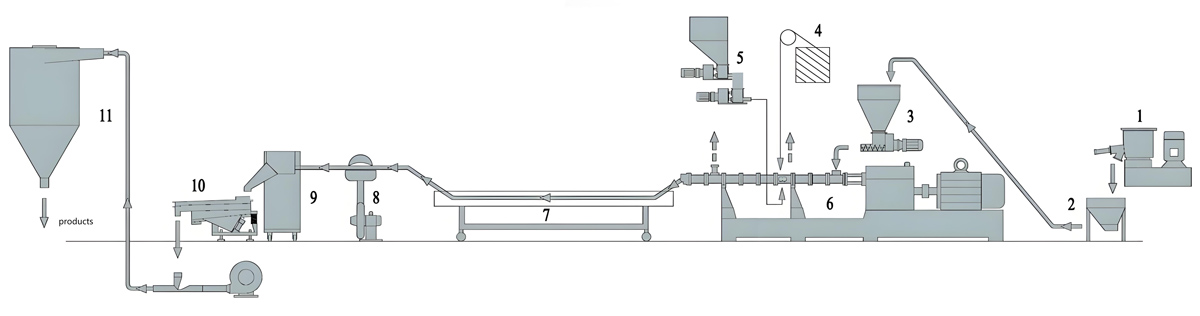
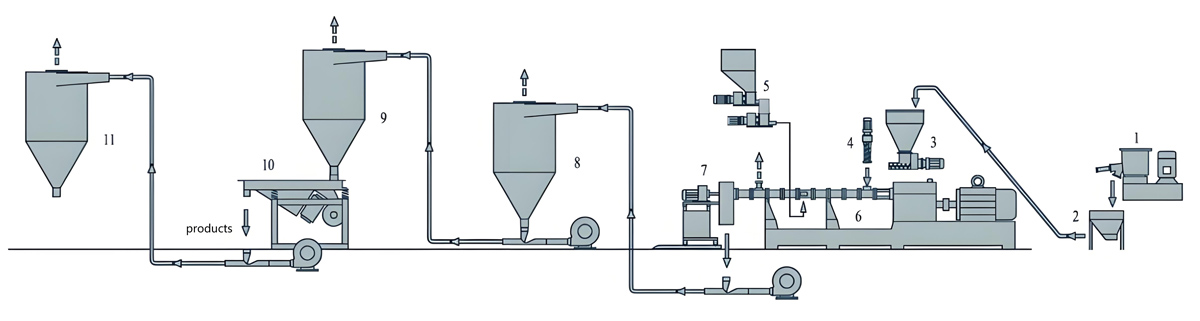
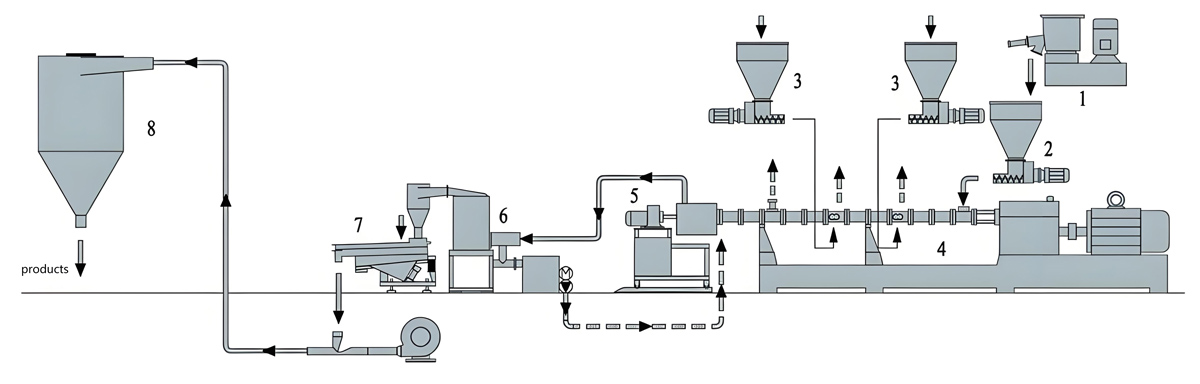
The manufacturing process for hardening masterbatch encompasses multiple stages, each requiring careful optimization to achieve consistent product quality and processing efficiency. Understanding the complete production workflow enables manufacturers to identify optimization opportunities and troubleshoot production challenges effectively. The primary stages include raw material preparation and pre-blending, extrusion processing and compounding, melt filtration and devolatilization, underwater pelletizing and drying, and final product quality verification and packaging.
Raw Material Preparation and Pre-Blending Operations
Successful hardening masterbatch production begins with proper raw material preparation and pre-blending procedures that ensure consistent formulation composition and optimal processing characteristics. Calcium carbonate, talc, and other hardening agents arrive at production facilities in various forms including powder, granular, or pelletized materials with differing moisture contents and particle size distributions. Initial material assessment includes moisture determination using standardized oven methods or Karl Fischer titration, particle size analysis through laser diffraction or sieve analysis techniques, and impurity screening to verify material purity and consistency.
Pre-blending operations combine formulation components in precise proportions before extrusion processing, ensuring homogeneous distribution of additives within the carrier resin matrix. High-intensity mixers equipped with high-shear mixing elements achieve rapid and uniform blending of solid additives with pelletized or granular carrier resins. The pre-blending sequence typically begins with carrier resin introduction, followed by incremental addition of hardening agents while maintaining continuous mixing action. Coupling agents and dispersing aids are generally introduced during later blending stages to maximize effectiveness and prevent premature reaction or degradation.
Moisture management represents a critical aspect of pre-blending operations, as residual moisture in hardening agents and carrier resins can cause hydrolysis reactions, void formation, and surface defects in final masterbatch products. Pre-drying of hygroscopic materials using dehumidified air dryers or vacuum drying systems removes absorbed moisture to levels below 0.1% before blending operations. Non-hygroscopic hardening agents such as specially coated calcium carbonate grades may require minimal drying but benefit from temperature-controlled storage to prevent moisture absorption during handling operations.
Extrusion Compounding and Melt Processing
The extrusion compounding stage transforms pre-blended formulations into homogeneous masterbatch concentrates through controlled melting, mixing, and conveyance within the twin screw extruder barrel assembly. Nanjing Kerke’s KTE Series high speed twin screw extruders employ co-rotating, intermeshing screw configurations that generate intensive mixing action through a combination of distributive and dispersive mixing mechanisms. The high-speed rotation capability of KTE Series equipment enables exceptional throughput rates while maintaining excellent dispersion quality, making these machines particularly well-suited for high-volume hardening masterbatch production.
The compounding process begins with material feeding into the extruder feed throat, where gravity and screw suction draw pre-blended formulation into the screw flight channels. The feed zone typically comprises screws with shallow flight depths that facilitate material intake and initial compression. As material advances through the transition zone, gradually deepening flights compress the material mass while external heating elements and viscous dissipation begin the melting process. The melting section achieves complete polymer melting and initial filler incorporation before material enters the mixing zones where intensive distributive and dispersive mixing occurs.
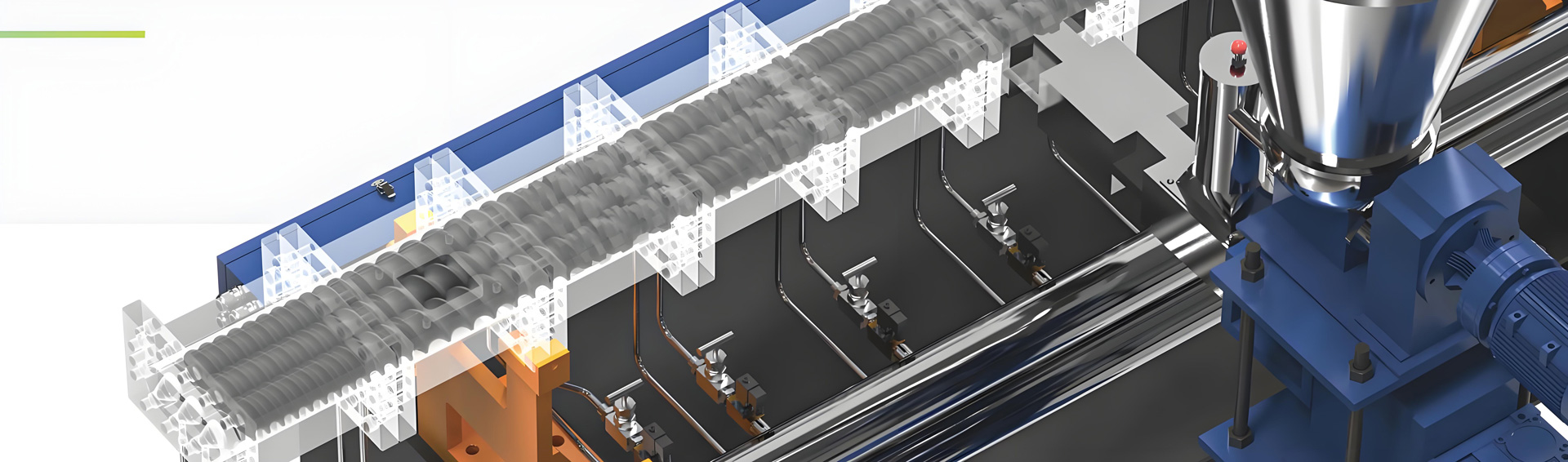
Hardening agent dispersion represents the most critical aspect of extrusion compounding, requiring sufficient shear stress and mixing intensity to break down agglomerates and achieve uniform particle distribution throughout the polymer matrix. The KTE Series twin screw extruder’s modular screw element configuration enables precise optimization of mixing intensity at specific barrel locations. Kneading block elements with staggered disc angles generate high shear stress zones effective for dispersive mixing, while transport elements and neutral disc arrangements provide distributive mixing that redistributes material across the screw channel width and depth.
Melt Filtration and Devolatilization Systems
Melt filtration systems remove contamination and oversized particles from the polymer melt before pelletizing, ensuring clean, consistent masterbatch products suitable for demanding end-use applications. Screen changers equipped with fine mesh filter elements ranging from 20 to 120 microns capture metallic contaminants, undispersed agglomerates, and foreign particles that would compromise product quality or processing performance in downstream applications. Automatic screen changers enable continuous filtration without production interruption, cycling fresh filter screens into position as pressure differential indicates screen loading.
Devolatilization systems remove volatile components including residual monomers, processing byproducts, moisture, and other volatile substances that accumulate during extrusion compounding. Vented barrel sections create zones of reduced pressure where volatiles flash from the melt stream and are removed through vacuum extraction systems. Hardening masterbatch formulations containing moisture-sensitive components or materials prone to volatile release benefit significantly from multi-stage devolatilization systems that ensure thorough removal of volatile contaminants before final processing stages.
Underwater Pelletizing and Product Drying
Underwater pelletizing systems transform molten masterbatch into uniform pellet forms suitable for storage, transportation, and subsequent let-down processing. The pelletizing system consists of a precision die plate with multiple holes sized to produce pellets of target dimensions, a rotating knife assembly that cuts extruded strands as they emerge from die openings, and a water-filled chamber that solidifies and transports cut pellets for subsequent processing. Water circulation systems maintain consistent temperatures and remove heat from formed pellets before mechanical dewatering and drying operations.
Pellet quality parameters including size consistency, shape uniformity, and surface finish directly influence handling characteristics and dispersion performance in downstream applications. The KTE Series extruder’s precise melt temperature control and consistent throughput characteristics contribute to excellent pellet quality by minimizing variations in melt viscosity and flow rate during pelletizing operations. Die plate hole sizes typically range from 2.0 to 4.0 millimeters depending on target pellet dimensions, with smaller holes producing more uniform pellets but requiring higher extrusion pressures and more precise temperature control.
Mechanical dewatering systems remove bulk water from formed pellets using vibrating screens, centrifugal dryers, or combination systems that achieve moisture contents below 0.5%. Thermal drying systems provide additional moisture removal, typically employing desiccant dryers or dehumidified air systems to reduce pellet moisture to levels below 0.1% for moisture-sensitive applications. Proper drying ensures stable storage characteristics and prevents moisture-related processing problems in downstream applications.
Equipment Specifications: Nanjing Kerke KTE Series Twin Screw Extruders
Nanjing Kerke Extrusion Equipment Company has established a leading position in the global twin screw extrusion equipment market through decades of engineering excellence, manufacturing quality, and customer support excellence. The KTE Series represents the company’s flagship product line, incorporating advanced design features and precision manufacturing techniques that deliver exceptional performance for demanding masterbatch production applications. KTE Series extruders combine high-speed operation capability with superior mixing performance, reliable mechanical design, and advanced process control systems that enable manufacturers to achieve consistent product quality at competitive production costs.
KTE-65 High Speed Twin Screw Extruder Specifications
The KTE-65 model serves as an ideal production platform for medium-scale hardening masterbatch manufacturing operations, offering an effective barrel volume of approximately 65 liters and screw diameter of 65 millimeters. This model achieves throughput rates ranging from 300 to 600 kilograms per hour depending on formulation characteristics and operating parameters, making it suitable for production volumes typical of regional masterbatch suppliers and dedicated end-user manufacturing facilities. The 65 millimeter screw diameter provides adequate processing capacity while maintaining the mixing intensity and control resolution necessary for consistent quality hardening masterbatch production.
The KTE-65 features a length-to-diameter ratio of 48:1, providing extended processing zones that enable thorough mixing, devolatilization, and melt conditioning before final extrusion. The modular barrel section design allows configuration of barrel elements in various sequences to optimize processing characteristics for specific formulation requirements. Standard barrel sections incorporate bimetallic inner liners with wear-resistant alloy coatings that withstand the abrasive characteristics of calcium carbonate and talc fillers while maintaining surface smoothness throughout extended production campaigns.
Screw elements employ high-speed steel or tool steel materials with precision-ground flight surfaces that maintain tight tolerances throughout extended service life. The modular screw element system includes over twenty distinct element types including forward transport elements, reverse pitch elements for build-up prevention, kneading blocks in various stagger angles, and specialty mixing elements optimized for specific mixing requirements. This comprehensive element library enables processors to configure screw assemblies precisely matched to their formulation characteristics and quality requirements.
KTE-72 and KTE-95 Production Scale Extruders
Larger KTE Series models address high-volume production requirements for hardening masterbatch manufacturers serving global markets. The KTE-72 model features 72 millimeter screw diameter with effective barrel volume exceeding 80 liters, enabling throughput rates from 500 to 1000 kilograms per hour depending on formulation and operating conditions. This model provides an effective balance between production capacity and mixing performance for manufacturers requiring significant volume without sacrificing quality capability.
The KTE-95 represents the production-scale option within the KTE Series lineup, incorporating 95 millimeter screw diameter and approximately 140 liters effective barrel volume. Throughput rates ranging from 1000 to 2000 kilograms per hour make this model suitable for large-scale masterbatch production facilities serving international markets or dedicated captive production operations within large plastic processing enterprises. The KTE-95 maintains the same quality and reliability characteristics as smaller models while providing substantially increased production capacity for high-volume applications.
Process Control and Automation Systems
KTE Series extruders incorporate advanced process control and automation systems that enable precise management of critical process parameters throughout production operations. The Siemens S7-based control system provides intuitive operator interface through high-resolution touchscreen panels, enabling operators to monitor and adjust process parameters including barrel temperature zones, screw speed, motor load, melt pressure, and throughput rate. Recipe storage functionality enables quick recall of validated operating parameters for specific formulations, minimizing setup time and reducing opportunities for operator error.
Advanced process monitoring capabilities include real-time torque measurement on both drive shafts, melt temperature measurement using precision thermocouples and infrared sensors, and melt pressure monitoring at critical process locations. These monitoring capabilities enable proactive process optimization and rapid identification of deviation conditions that might affect product quality. Data logging functions record process parameters throughout production runs, enabling detailed analysis of process stability and quality trends for continuous improvement initiatives.
Critical Process Parameter Settings for Hardening Masterbatch Production
Optimization of process parameters significantly influences hardening masterbatch quality characteristics including dispersion quality, mechanical properties, color stability, and processing performance in downstream applications. The interconnected nature of process parameters requires systematic optimization approaches that consider interactions between multiple variables while targeting overall product quality objectives. Understanding the influence of each parameter enables processors to establish validated operating windows that consistently produce quality products while maximizing equipment utilization and production efficiency.
Temperature Profile Configuration
Barrel temperature profile configuration significantly influences melting behavior, viscosity development, mixing efficiency, and product quality characteristics throughout the extrusion process. The typical temperature profile for calcium carbonate hardening masterbatch production employs a progressive increase from feed throat to die outlet, with temperature differences between zones ranging from 10 to 30 degrees Celsius depending on formulation characteristics and throughput requirements. The feed zone typically operates at temperatures between 160 and 180 degrees Celsius, providing sufficient heat input to initiate polymer softening while avoiding premature melting that would cause material sticking in the feed throat area.
Compression and melting zones employ intermediate temperatures ranging from 180 to 200 degrees Celsius, where external heating and viscous dissipation combine to achieve complete polymer melting and initial filler incorporation. The mixing zones operate at the highest temperatures within the processing window, typically 200 to 220 degrees Celsius for polyethylene-based formulations, where reduced melt viscosity facilitates intensive mixing and dispersion processes. The kneading and mixing sections benefit from slightly elevated temperatures that decrease viscosity and increase polymer chain mobility, improving the ability of the polymer matrix to penetrate and wet filler particle surfaces.
Die zone temperatures must balance melt flow requirements against thermal degradation considerations, typically maintained at temperatures between 200 and 230 degrees Celsius depending on polymer type and residence time characteristics. Die temperature directly influences melt pressure, surface quality of extruded strands, and cutting characteristics during underwater pelletizing. Precise die temperature control within plus or minus one degree Celsius ensures consistent melt flow behavior and prevents temperature-related variations in pellet quality.
Screw Speed and Throughput Optimization
Screw speed in high speed twin screw extruders directly influences shear stress development, mixing intensity, and throughput rate, requiring careful optimization to balance these competing factors against product quality requirements and equipment capabilities. The KTE Series extruders achieve maximum screw speeds ranging from 300 to 600 RPM depending on model size, with the high-speed operation capability enabling exceptional mixing intensity and throughput rates that substantially exceed conventional twin screw extruder performance.
Typical operating screw speeds for hardening masterbatch production range from 200 to 400 RPM, with the specific speed determined by formulation characteristics, quality requirements, and equipment configuration. Higher screw speeds generate increased shear stress that improves filler dispersion but also elevate melt temperature through viscous dissipation, potentially requiring temperature profile adjustments to maintain target melt temperatures. Lower screw speeds reduce shear heating and improve temperature control but may compromise mixing efficiency for formulations with challenging dispersion requirements.
Throughput optimization considers the interaction between screw speed, feed rate, and back pressure development throughout the processing system. The specific throughput, expressed as kilograms per hour per RPM, provides a normalized measure of equipment utilization efficiency that enables meaningful comparison across different operating conditions. Typical specific throughput values for calcium carbonate hardening masterbatch range from 1.5 to 3.0 kilograms per hour per RPM, with the specific value depending on formulation characteristics and process configuration.
Residence Time and Mixing Intensity Management
Mean residence time and residence time distribution significantly influence hardening masterbatch quality by determining the duration of thermal exposure and mixing treatment experienced by formulation components. Mean residence time in KTE Series extruders typically ranges from 30 to 90 seconds depending on screw configuration, operating speed, and throughput rate. Longer mean residence times provide additional mixing opportunity but increase thermal exposure that may affect heat-sensitive formulation components.
Mixing intensity characterization employs parameters including energy input per unit mass, shear stress development, and mixing element density to quantify the effectiveness of dispersion and distributive mixing processes. The specific mechanical energy input, calculated from drive motor power consumption and throughput rate, provides an integrated measure of total mixing energy delivered to the formulation during processing. Typical specific mechanical energy values for hardening masterbatch production range from 0.15 to 0.30 kilowatt-hours per kilogram, with higher values indicating more intensive mixing treatment.
Equipment Pricing and Investment Considerations
Equipment pricing for KTE Series high speed twin screw extruders reflects the advanced engineering, quality materials, and manufacturing precision that characterize Nanjing Kerke’s production standards. Pricing varies according to model size, configuration options, and included accessories, enabling manufacturers to select systems matched to their production requirements and budget constraints. Understanding the total cost of ownership including installation, operation, and maintenance expenses enables accurate investment evaluation and return-on-investment calculation.
KTE-65 System Pricing
The KTE-65 high speed twin screw extruder system represents a mid-range investment option suitable for dedicated hardening masterbatch production operations and captive manufacturing facilities within larger plastic processing enterprises. Base system pricing for the KTE-65 typically ranges from $180,000 to $220,000 depending on configuration and included accessories. This pricing encompasses the main extruder unit including drive motor, gearbox, barrel assembly, screw elements, die plate, and underwater pelletizing system, along with standard control system and operator interface.
Additional equipment investments required for complete production capability include material handling systems for raw material preparation and finished product handling, extrusion tooling and die plate options for various pellet specifications, auxiliary equipment including dryers, feeders, and material conveying systems, and installation and commissioning services. Total installed system costs for a complete hardening masterbatch production line based on KTE-65 equipment typically range from $350,000 to $500,000 depending on auxiliary equipment specifications and installation complexity.
KTE-72 and KTE-95 System Pricing
The KTE-72 system provides enhanced production capacity for higher-volume operations, with base pricing typically ranging from $280,000 to $350,000 for the complete extrusion and pelletizing system. The additional processing capacity relative to KTE-65 models provides improved economies of scale for operations requiring significant production volumes, with per-unit production costs decreasing as throughput increases while quality characteristics remain consistent.
The KTE-95 production-scale extruder represents the highest capacity option in the KTE Series lineup, with base system pricing typically ranging from $450,000 to $550,000. This investment provides throughput rates exceeding 1500 kilograms per hour for standard hardening masterbatch formulations, enabling efficient production at volumes that support large-scale distribution operations and dedicated captive production within major manufacturing enterprises. Total installed costs for complete KTE-95 production lines typically range from $700,000 to $950,000 when including auxiliary equipment, installation, and commissioning services.
Return on Investment Considerations
Return on investment analysis for KTE Series twin screw extrusion equipment considers production revenue, operating costs, and equipment lifecycle factors to determine investment attractiveness and payback period. Production revenue depends on masterbatch selling prices, typically ranging from $1.50 to $4.00 per kilogram depending on formulation complexity and market positioning, multiplied by annual production volumes achievable with the equipment investment.
Operating cost factors include raw material expenses, energy consumption, labor requirements, maintenance and wear part replacement, and overhead allocation. Energy consumption represents a significant operating cost component, with KTE Series high speed extruders typically consuming 0.25 to 0.40 kilowatt-hours per kilogram of production depending on formulation and operating conditions. At typical electricity pricing of $0.08 to $0.12 per kilowatt-hour, energy costs range from $0.02 to $0.05 per kilogram of production output.
Production Problems, Solutions, and Prevention Strategies
Problem: Inadequate Filler Dispersion and Agglomerate Formation
Problem Analysis
Inadequate filler dispersion represents one of the most common and consequential quality problems in hardening masterbatch production, manifesting as visible agglomerates, inconsistent coloration, poor mechanical properties, and processing difficulties in downstream applications. Agglomerate defects appear as localized concentrations of hardening agent particles that have failed to separate into individual particles and disperse uniformly throughout the polymer matrix during extrusion processing. These defects compromise product quality and performance, potentially causing rejection of entire production batches and customer complaints that damage supplier reputation.
The consequences of inadequate dispersion extend beyond immediate visual defects to include compromised mechanical properties, inconsistent processing behavior, and unpredictable performance in end-use applications. Masterbatch products with dispersion deficiencies fail to deliver expected property improvements when let down into polymer substrates, potentially causing finished product performance that falls below specification requirements. Processing problems including nozzle clogging, filter fouling, and surface defects in molded or extruded products may result from the presence of oversized particles that resist dissolution and dispersion during downstream processing operations.
Root Cause Analysis
Inadequate dispersion originates from multiple potential causes spanning formulation design, raw material characteristics, equipment configuration, and process parameter settings. Formulation-related causes include excessive filler loading concentrations that exceed the polymer matrix’s wetting and dispersion capacity, inadequate coupling agent or dispersing aid concentrations that fail to provide sufficient interfacial interactions between filler particles and polymer matrix, and incompatible carrier resin selection that prevents proper wetting of filler surfaces.
Raw material quality factors including excessive moisture content, contamination with oversized particles or foreign materials, and inconsistent particle size distribution can compromise dispersion quality regardless of extrusion processing conditions. Equipment configuration problems including inadequate mixing element density, incorrect mixing element selection for specific formulation requirements, and excessive barrel wear that creates bypass channels for unmixed material all contribute to dispersion deficiencies.
Process parameter issues including insufficient screw speed that fails to generate adequate shear stress, inappropriate temperature profiles that result in excessive or insufficient melt viscosity, inadequate throughput that causes excessive residence time and potential degradation, and improper feeding that creates uneven material introduction all compromise dispersion quality. The interaction between multiple minor factors can collectively result in dispersion quality falling below acceptable thresholds even when individual parameters appear within normal ranges.
Solution Implementation
Addressing dispersion problems requires systematic investigation to identify root causes, followed by targeted interventions to correct identified deficiencies. Formulation optimization adjustments include reducing filler loading concentration until adequate dispersion is achieved and quality validated, increasing coupling agent or dispersing aid concentrations to improve interfacial interactions, and reformulating with alternative carrier resins better suited to the specific filler system and application requirements.
Equipment configuration modifications for improved dispersion include increasing mixing element density in critical mixing zones through addition of kneading block elements or specialty mixing screws, replacing worn barrel liners and screw elements that create bypass channels or reduce mixing efficiency, and adjusting screw element sequence to provide additional dispersive mixing stages. Screw configuration optimization often requires iterative adjustment and quality validation to achieve target dispersion characteristics.
Process parameter adjustments include increasing screw speed to elevate shear stress and mixing intensity, modifying temperature profiles to reduce melt viscosity and improve filler wetting, optimizing throughput rate to achieve adequate residence time for complete dispersion, and adjusting feeding parameters to ensure uniform material introduction. Temperature and speed adjustments typically require coordination to maintain appropriate melt viscosity while achieving target shear stress levels.
Prevention Strategies
Preventing dispersion problems requires comprehensive quality management practices throughout the production operation. Raw material qualification procedures should establish minimum quality specifications for all formulation components, including particle size distribution limits, moisture content maximums, and contamination screening protocols. Supplier qualification and ongoing quality monitoring ensure consistent raw material quality that supports reproducible dispersion results.
Process validation procedures should establish validated operating parameter ranges for each formulation, with statistical process control methods monitoring key parameters throughout production runs. Equipment maintenance programs should include regular inspection and replacement of wear parts including barrel liners, screw elements, and die components that directly influence dispersion quality. Preventive maintenance schedules based on production volume and formulation abrasiveness ensure equipment condition remains optimal for quality production.
Quality verification procedures including regular sampling and laboratory testing verify dispersion quality throughout production campaigns. Automated inspection systems using image analysis or particle size measurement provide objective quality assessment that supplements manual inspection methods. Documentation of quality results and process parameters enables traceability and trend analysis that identifies emerging quality concerns before they result in defective production output.
Problem: Melt Temperature Instability and Viscosity Variation
Problem Analysis
Melt temperature instability manifests as fluctuations in melt temperature measured at the extruder die or along the barrel length, causing viscosity variations that affect mixing efficiency, throughput consistency, and final product quality. Temperature fluctuations may appear as periodic oscillations with frequencies ranging from seconds to minutes, irregular variations that resist pattern identification, or gradual trends toward higher or lower temperatures over extended production periods. Each pattern indicates different underlying causes and requires different remediation approaches.
The consequences of melt temperature instability include inconsistent mixing efficiency that manifests as quality variations within and between production batches, throughput fluctuations that complicate inventory planning and customer commitments, and potential equipment damage from sustained overtemperature conditions. Viscosity variations affect dispersive mixing efficiency, potentially causing localized dispersion quality differences that compromise overall product consistency. Downstream customers may experience processing difficulties when temperature-related quality variations cause unexpected changes in let-down behavior and processing characteristics.
Root Cause Analysis
Cooling system deficiencies represent a common cause of melt temperature instability, including inadequate cooling water flow rates, improper cooling water temperature settings, scale buildup in cooling channels that reduces heat transfer efficiency, and cooling system control valve failures that prevent proper flow regulation. When cooling systems cannot remove heat at rates matching heat input from heaters and viscous dissipation, melt temperatures rise progressively until thermal equilibrium is reached at elevated temperatures or safety interlocks activate.
Heating system problems including failing heating elements, loose electrical connections, and temperature controller malfunctions can cause erratic temperature behavior that manifests as instability in melt temperature measurements. Sensor-related problems including damaged thermocouples, improper sensor insertion depth, and electrical interference affecting temperature signal transmission cause apparent temperature variations that may not reflect actual melt temperature conditions.
Process-related causes including fluctuations in feed rate or formulation composition cause variations in heat generation rates that cooling systems cannot perfectly compensate, resulting in temperature oscillations that follow feed variations with time delays determined by thermal mass characteristics. Screw wear or damage can cause mixing efficiency variations that change viscous dissipation rates, creating feedback loops that amplify initial disturbances into sustained oscillations.
Solution Implementation
Addressing melt temperature instability begins with diagnostic procedures that identify the underlying cause of the instability pattern. Cooling system inspection should verify adequate flow rates through all barrel cooling zones, clean cooling channels free of scale deposits, and functional control valves that respond appropriately to controller signals. Cooling water supply conditions including temperature and pressure should meet equipment specifications throughout production operations.
Temperature measurement system verification ensures accurate temperature indication by checking sensor condition, calibration, and electrical integrity. Replacement of suspected faulty sensors, even when readings appear reasonable, eliminates sensor-related uncertainty from troubleshooting efforts. Temperature controller verification confirms proper function of control outputs and communication with heating and cooling systems.
Process optimization adjusts temperature profile settings to provide stable melt temperatures under prevailing production conditions, potentially requiring different target temperatures than initially configured. Feed system maintenance ensures consistent feed rates that prevent feed-related temperature variations. Screw inspection identifies wear or damage that might cause mixing variations and temperature instability, with worn elements replaced as indicated by inspection findings.
Prevention Strategies
Preventing melt temperature instability requires proactive maintenance of cooling systems including regular inspection and cleaning of cooling channels, testing of control valves and flow indicators, and verification of cooling water supply conditions. Temperature measurement system calibration on regular schedules ensures accurate temperature indication throughout production operations.
Process monitoring systems should include temperature stability trending that identifies gradual changes in temperature behavior before they cause quality problems. Statistical process control charts on melt temperature data provide early warning of developing instability conditions that maintenance interventions can address before production quality is affected. Operator training ensures understanding of temperature stability indicators and appropriate response procedures when instability conditions develop.
Problem: Pellet Quality Defects and Handling Problems
Problem Analysis
Pellet quality defects in hardening masterbatch production include size inconsistency, irregular shape, surface defects, and contamination that compromise product functionality and customer acceptance. Size inconsistency manifests as excessive variation in pellet dimensions, potentially including oversized agglomerates, undersized dust and fines, and irregular distributions that complicate handling and metering in downstream applications. Irregular shape including elongated pellets, flattened pellets, and fused masses indicates problems in pelletizing operations or melt characteristics.
Surface defects including roughness, voids, and discoloration indicate problems with melt quality, cutting mechanism function, or cooling conditions during pellet formation. Contamination with foreign materials, burned particles, or degraded polymer compromises product purity and may cause customer rejection and quality complaints. These defects collectively affect product value and may indicate underlying problems in extrusion processing that require investigation and correction.
Root Cause Analysis
Pellet size inconsistency originates from die plate problems including worn or damaged holes, improper die temperature that affects melt flow consistency, and fluctuating melt pressure that causes variable flow rates through die openings. Underwater pelletizer problems including knife blade condition, knife-to-die clearance, knife rotational speed, and water temperature all influence cut quality and resulting pellet dimensions. Melt viscosity variations cause changes in strand formation and cutting behavior that produce size variations even when mechanical systems function properly.
Irregular pellet shape results from improper cutting mechanism adjustment, worn components in the pelletizing system, or melt temperature conditions that prevent clean strand cutting. Fused pellets indicate inadequate cooling, excessive melt temperature, or water temperature too high to properly solidify pellets before handling. Elongated pellets suggest excessive die plate temperature that prevents rapid solidification or knife problems that drag rather than cut melt strands.
Surface defects originate from contamination in the melt stream, thermal degradation from excessive temperature or residence time, moisture in the formulation causing steam formation during pelletizing, and mechanical damage from improper handling after pelletizing. Void formation indicates moisture or volatile release during cooling or insufficient melt pressure during extrusion that allows gas formation within pellets.
Solution Implementation
Addressing pellet quality defects requires systematic diagnosis to identify specific causes and appropriate corrections. Die plate inspection verifies hole dimensions, surface condition, and temperature uniformity across the die face. Worn or damaged die plates require replacement to restore proper flow characteristics and cutting conditions. Die temperature optimization ensures appropriate melt viscosity for uniform flow through all die holes while maintaining temperatures low enough for rapid cooling after cutting.
Pelletizer inspection and adjustment includes knife blade replacement when cutting edges show wear, verification of knife-to-die clearance to manufacturer specifications, knife rotational speed optimization for the specific melt characteristics, and water temperature adjustment to achieve appropriate cooling without thermal shock that might cause pellet cracking. Water flow patterns within the pelletizing chamber should provide uniform cooling and rapid removal of formed pellets.
Melt quality improvements address contamination and degradation sources including filtration system verification to ensure adequate contamination removal, temperature profile optimization to prevent thermal degradation, devolatilization system function verification, and raw material quality verification to eliminate contaminated or degraded input materials. Processing parameter adjustments including screw speed, throughput rate, and residence time optimization may improve melt quality characteristics that directly influence pellet formation and quality.
Prevention Strategies
Preventing pellet quality defects requires comprehensive quality management throughout the production process. Regular inspection and replacement of wear parts including knife blades, die plates, and pelletizing chamber components prevents quality degradation from mechanical wear. Process monitoring for pellet quality indicators enables rapid identification of developing problems before significant quantities of defective product are produced.
Quality verification procedures including regular sampling and laboratory testing of pellet size distribution, shape characteristics, and surface quality provide objective assessment of product conformity. Automated inspection systems using imaging technology enable continuous monitoring that supplements periodic manual inspection. Customer feedback integration identifies subtle quality characteristics that affect customer satisfaction even when products meet published specifications.
Maintenance Procedures and Best Practices
Effective maintenance programs ensure consistent production quality, maximize equipment availability, and extend equipment service life for KTE Series twin screw extruders engaged in hardening masterbatch production. The demanding processing conditions associated with highly filled formulations including abrasive fillers, high temperatures, and extended operating periods require maintenance practices that address specific wear mechanisms and performance degradation modes associated with these conditions.
Daily and Shift-Based Maintenance Requirements
Daily maintenance activities ensure continued proper function of critical systems throughout production operations. Operator inspection checklists should include verification of cooling water flow and temperature indicators, observation of melt temperature and pressure stability, inspection of pellet quality and consistency, verification of material feed system function, and monitoring of drive system operating parameters including motor current and temperature. Any abnormalities identified during daily inspection should receive immediate attention to prevent escalation into production problems.
Shift-based maintenance includes cleaning of die plate and pelletizing chamber to remove accumulated material deposits, verification of knife blade condition and adjustment, inspection of feeding system components including hoppers, feeders, and connection points, and removal of accumulated dust and debris from equipment surfaces. Documentation of shift-based maintenance activities enables tracking of equipment condition and identification of developing maintenance requirements.
Weekly and Monthly Maintenance Procedures
Weekly maintenance encompasses more detailed inspection and service activities that address components subject to gradual wear or degradation. Cooling system inspection includes flow rate verification, pressure checking, and water quality assessment to ensure adequate cooling capacity throughout barrel assemblies. Electrical system inspection verifies terminal tightness, identifies loose connections, and checks heating element continuity. Lubrication verification ensures adequate lubricant supplies and proper distribution to all lubricated components.
Monthly maintenance includes comprehensive inspection of barrel interiors using borescopic examination to assess liner wear patterns, verification of screw element tightness and positioning on drive shafts, inspection and cleaning of temperature sensors and pressure transducers, and calibration verification of measurement and control systems. Detailed maintenance records enable trend analysis that predicts future maintenance requirements and schedules preventive interventions before failures occur.
Periodic Overhaul and Component Replacement
Periodic overhaul intervals depend on production volume, formulation characteristics, and operating conditions, with typical schedules ranging from 8,000 to 15,000 operating hours between major overhauls for hardening masterbatch applications. Overhaul procedures include complete barrel disassembly and inspection, liner condition assessment with replacement of worn or damaged liners, complete screw element inspection and replacement of worn or damaged elements, gearbox and bearing inspection with lubricant replacement, and drive system component inspection including couplings and motors.
Bearing replacement intervals depend on operating conditions and load characteristics, with typical replacement intervals of 20,000 to 40,000 operating hours under normal hardening masterbatch production conditions. Gearbox overhaul or replacement typically occurs at 30,000 to 50,000 operating hours depending on maintenance quality and operating conditions. Investment in high-quality replacement parts and professional installation services ensures reliable equipment function following overhaul procedures.
Frequently Asked Questions
What is the maximum calcium carbonate loading achievable in hardening masterbatch using KTE Series extruders?
KTE Series high speed twin screw extruders can achieve calcium carbonate loadings up to 85% by weight in optimized hardening masterbatch formulations. However, practical loading levels typically range from 60% to 80% depending on the specific application requirements, carrier resin compatibility, and quality specifications for the target end-use application. Higher loadings require careful formulation optimization including coupling agent selection and concentration, dispersing aid addition, and processing parameter adjustment to achieve adequate dispersion and quality characteristics. Loadings above 80% may compromise mechanical properties and processing characteristics unless formulations receive specialized optimization for high filler content applications.
How does screw speed affect hardening masterbatch quality in high speed twin screw extrusion?
Screw speed influences hardening masterbatch quality through multiple mechanisms including shear stress development, mixing intensity, residence time, and viscous dissipation heating. Higher screw speeds increase shear stress that improves dispersion of filler agglomerates but also generate additional heat through viscous dissipation that may require temperature profile adjustments to maintain target melt temperatures. The KTE Series extruders achieve speeds up to 500 to 600 RPM depending on model size, enabling exceptional mixing intensity for demanding formulations. Optimal screw speed depends on formulation characteristics, with typical operating ranges of 200 to 400 RPM providing the best balance between mixing quality and thermal management for hardening masterbatch production.
What maintenance frequency is recommended for KTE Series extruders producing hardening masterbatch?
Maintenance frequency for KTE Series extruders in hardening masterbatch applications depends on production volume, formulation characteristics, and operating conditions. Daily visual inspections and shift-based maintenance activities should occur throughout production operations. Weekly maintenance includes cooling system verification, electrical system checks, and lubrication inspection. Monthly procedures encompass detailed component inspection including barrel liner assessment and screw element verification. Major overhauls typically occur at 8,000 to 15,000 operating hour intervals depending on formulation abrasiveness and operating severity. High-speed operation with abrasive calcium carbonate formulations accelerates wear, potentially requiring shorter maintenance intervals than less demanding applications.
Can KTE Series extruders process multiple masterbatch formulations on the same equipment?
KTE Series twin screw extruders can process multiple formulations on the same equipment through proper cleaning and configuration changeover procedures. Formulation changeover involves purging the extruder with a compatible cleaning compound or the new formulation at elevated temperatures to remove residual material from barrel walls, screw flights, and die components. Complete purge cycles typically require 3 to 5 barrel volumes of purge material depending on formulation similarities and quality requirements. Color changeovers may require additional purging cycles or specialized color-change-optimized purge compounds to achieve target color specifications. KTE Series modular screw element design enables configuration changes for different formulation requirements, though most hardening masterbatch formulations can be processed with similar screw configurations with minor adjustments.
What is the typical energy consumption for hardening masterbatch production on KTE Series equipment?
Energy consumption for hardening masterbatch production on KTE Series equipment typically ranges from 0.25 to 0.40 kilowatt-hours per kilogram of production output depending on formulation characteristics, operating parameters, and equipment configuration. Calcium carbonate loaded formulations generally fall in the lower portion of this range due to the inert nature of the filler, while talc and specialty formulations may require slightly higher energy input for adequate dispersion. Specific mechanical energy values between 0.15 and 0.30 kilowatt-hours per kilogram indicate effective mixing with reasonable energy consumption. Energy optimization opportunities include operating at validated throughput maximums, optimizing screw configuration for reduced energy consumption, and maintaining equipment condition to ensure efficient power transmission.
What cooling system requirements apply to KTE Series extruders for hardening masterbatch production?
KTE Series extruders require adequate cooling water supply to maintain stable melt temperatures throughout demanding production operations. Typical cooling requirements range from 2 to 4 liters per minute per barrel zone depending on model size and operating conditions. Cooling water supply temperature should range from 25 to 35 degrees Celsius depending on ambient conditions and production intensity. Water quality specifications require hardness below 150 parts per million and pH between 6.5 and 8.0 to prevent scale formation in cooling channels. Centralized cooling systems with water treatment provide consistent supply quality across multiple machines, while individual chiller units may be required for high-speed operation or environments with challenging ambient conditions. Regular cooling system maintenance including scale removal and flow verification ensures reliable cooling performance throughout production campaigns.
What particle size specifications apply to hardening agents for high-speed extrusion processing?
Particle size specifications for hardening agents in twin screw extrusion applications typically require median particle sizes between 1.0 and 5.0 micrometers for calcium carbonate and 1.0 to 10.0 micrometers for talc depending on application requirements and quality specifications. Particle size distribution should exhibit minimal oversized particles exceeding 20 micrometers, as these particles resist dispersion and may cause quality defects. Surface treatment of filler particles with coupling agents improves dispersion characteristics and interfacial adhesion with polymer matrices. Nano-scale fillers with particle sizes below 100 nanometers offer exceptional property enhancement but require specialized processing equipment and conditions to achieve adequate dispersion. Laser diffraction analysis provides comprehensive particle size distribution data that enables qualification of filler materials for extrusion processing.
What quality testing methods apply to hardening masterbatch production verification?
Quality testing for hardening masterbatch production includes multiple analytical methods that assess different quality characteristics. Dispersion quality evaluation employs microscopy techniques including optical microscopy and scanning electron microscopy to visualize filler particle distribution and identify agglomerates. Melt flow index testing verifies flow characteristics that predict processing behavior in downstream applications. Mechanical property testing of specimen plaques produced with known let-down ratios validates property enhancement effectiveness. Thermal analysis including differential scanning calorimetry assesses thermal characteristics and compatibility. Color measurement ensures consistent coloration when applicable. Particle size analysis of finished pellets verifies dispersion quality objectively. Regular quality testing according to established sampling plans ensures consistent product quality throughout production campaigns and enables rapid identification of quality deviations.
Conclusion
Hardening masterbatch production using high speed twin screw extrusion technology offers plastic processors access to superior quality concentrates that enhance material properties across demanding application sectors. Nanjing Kerke’s KTE Series twin screw extruders provide the processing capability, precision control, and reliability that modern masterbatch production operations require to compete effectively in global markets. Understanding the intricate relationships between formulation design, equipment configuration, process parameters, and quality outcomes enables manufacturers to optimize their production operations for maximum efficiency and product quality.
The comprehensive coverage provided in this guide addresses the complete spectrum of considerations relevant to hardening masterbatch production, from formulation fundamentals through production process optimization, equipment selection and configuration, problem diagnosis and resolution, and ongoing maintenance requirements. Armed with this knowledge, manufacturers can approach hardening masterbatch production with confidence that their equipment investments will deliver the quality results and production performance that competitive market conditions demand.
Success in hardening masterbatch production requires commitment to continuous improvement across all operational dimensions. Equipment capability must be matched by formulation expertise, process optimization discipline, quality management rigor, and maintenance practices that preserve equipment condition throughout extended production campaigns. The investment in comprehensive understanding of these factors pays dividends through consistent quality, efficient production, and satisfied customers who rely on hardening masterbatch products to enhance their own manufacturing operations and end-use product performance.