Introduction
Air-cooled twin screw extruders represent a significant advancement in PC/PBT alloy masterbatch production, offering efficient thermal management while maintaining excellent processing capabilities. Polycarbonate and polybutylene terephthalate alloys combine the exceptional impact strength and heat resistance of PC with the chemical resistance and processing ease of PBT. This combination creates a versatile engineering plastic widely used in automotive components, electrical enclosures, and consumer goods. The thermal sensitivity of PC/PBT alloys requires precise temperature control throughout the extrusion process, making cooling systems as critical as heating systems for successful production.
Air cooling technology provides several advantages for PC/PBT alloy processing including reduced water consumption, simplified equipment layout, and improved temperature gradient control. Unlike traditional water cooling systems, air cooling enables rapid thermal response while eliminating water-related issues such as contamination or water treatment requirements. The air-cooled design also facilitates better temperature uniformity across the extruder barrel, which is particularly important for PC/PBT alloys where excessive temperature variations can cause phase separation or property degradation. Advanced air cooling systems incorporate variable speed fans, heat exchangers, and intelligent thermal management to maintain optimal processing conditions.
Understanding the complete air cooling system design and operational parameters enables manufacturers to optimize PC/PBT alloy masterbatch production while maintaining material properties. The balance between heating and cooling throughout the extruder length determines thermal history, which directly influences alloy morphology, dispersion quality, and final product performance. This guide explores all aspects of air-cooled twin screw extruder operation for PC/PBT alloy masterbatch production, from cooling system technology through process optimization and maintenance requirements.
Formulation Ratios (Different Types)
PC/PBT alloy masterbatch formulation requires careful consideration of component ratios and additive compatibility. The formulation approach must address the different thermal behaviors of PC and PBT while ensuring proper alloy morphology development. Different PC/PBT ratios and additive systems require specific processing considerations in air-cooled systems.
PC to PBT Ratios
PC/PBT alloy ratios significantly affect processing behavior and cooling requirements in masterbatch formulations. Common commercial ratios include 70/30, 50/50, and 30/70 PC to PBT depending on desired properties. High PC content formulations above 60% PC provide better impact strength and heat resistance but require more precise cooling control due to PC’s higher glass transition temperature approximately 150°C compared to PBT at approximately 40-50°C.
PC/PBT ratio affects melt viscosity and thermal characteristics influencing cooling requirements. Higher PC content increases melt viscosity requiring more intensive cooling to maintain proper temperature profile. PBT content increases crystallization behavior requiring controlled cooling rates to optimize morphology. The phase compatibility between PC and PBT components depends on proper compatibilizer selection and processing conditions. Air cooling systems must accommodate the different cooling requirements of each phase while maintaining appropriate thermal history.
Carrier Material Considerations
Carrier material selection for PC/PBT alloy masterbatch involves choosing appropriate PC/PBT ratio matching the target application material. Carrier properties significantly affect processing requirements and cooling system operation. Melt flow index typically ranges 8-25 g/10min depending on PC/PBT ratio and grade. Higher PBT content provides lower melt viscosity and easier processing but requires careful crystallization control.
PC component provides heat resistance and impact strength while requiring higher processing temperatures typically 260-290°C. PBT component provides chemical resistance and easier processing with lower temperature requirements 240-270°C. The blend must achieve appropriate thermal compromise ensuring both components properly melted and mixed. Carrier moisture content must be controlled below 0.02% for both PC and PBT components requiring thorough drying before processing.
Compatibilizer Systems
Compatibilizer selection crucial for PC/PBT alloy masterbatch determines phase morphology and dispersion quality. Epoxy-based compatibilizers commonly used at 2-8% to improve PC/PBT compatibility. Styrene-acrylonitrile-glycidyl methacrylate (SAN-GMA) copolymers provide excellent compatibilization at 3-6% loading. Maleic anhydride grafted polymers offer alternative compatibilization at 2-5% loading depending on molecular weight.
Compatibilizer content affects thermal behavior and cooling requirements. Higher compatibilizer content generally improves compatibility but may affect processing viscosity and cooling requirements. The compatibilizer distribution during processing requires proper residence time and mixing intensity. Air cooling systems must maintain appropriate temperature profile to ensure compatibilizer activation and proper dispersion. Compatibilizer effectiveness depends on thermal history requiring controlled cooling to preserve developed morphology.
Pigment and Additive Loading
Pigment and additive loading in PC/PBT alloy masterbatch considers thermal stability and compatibility. Organic pigment loading typically 15-30% depending on color strength and dispersion requirements. Inorganic pigments including titanium dioxide typically 25-45% for white masterbatches requiring higher shear and cooling management. Carbon black loading typically 8-20% for conductive or UV protection applications.
Thermal stabilizers essential for PC/PBT processing include phosphite stabilizers at 0.5-2% for PC component and stabilizers for PBT component. UV stabilizers for outdoor applications typically 1-3% may affect thermal behavior requiring cooling adjustment. Flame retardant additives for specific applications typically 15-30% significantly affect thermal characteristics and cooling requirements. Each additive category influences thermal behavior requiring formulation optimization for air-cooled processing.
Specialized PC/PBT Alloy Masterbatches
Specialized PC/PBT alloy masterbatches require unique formulation approaches based on application requirements. Glass fiber reinforced masterbatches incorporate 10-40% glass fiber requiring specialized cooling management due to exothermic curing and increased thermal conductivity. Glass fiber addition increases melt viscosity affecting cooling requirements and temperature profile.
Mineral-filled masterbatches incorporating talc, calcium carbonate, or other fillers at 10-35% loading affect thermal conductivity and cooling requirements. Higher filler content increases thermal conductivity potentially requiring cooling system adjustment. Electrically conductive masterbatches incorporating carbon black or carbon fibers at 10-25% require careful temperature management to maintain conductivity development. Each specialized type requires formulation optimization balancing application requirements with air-cooled processing capabilities.
Production Process
PC/PBT alloy masterbatch production on air-cooled twin screw extruders leverages efficient thermal management for optimal quality. The production process takes advantage of air cooling capabilities while managing the specific thermal requirements of PC/PBT alloys.
Thermal Profile Management
Thermal profile management for PC/PBT alloy processing requires careful balancing of heating and cooling throughout the extruder. Feed zone temperature typically 60-80°C prevents premature melting while managing material flow. Compression zone heating to 200-220°C initiates melting of PBT component. Melting zone temperatures 240-260°C ensure complete melting of both PC and PBT components.
Mixing zone temperatures 260-280°C provide optimal conditions for alloy development and pigment dispersion. Die zone temperature typically 260-275°C ensures proper melt flow. Air cooling systems maintain these temperatures by removing heat generated from shear and mechanical energy input. The cooling system must respond quickly to thermal variations from different formulations and processing conditions.
Pre-Drying Requirements
Pre-drying of PC and PBT components critical for PC/PBT alloy masterbatch quality. PC typically requires drying at 120°C for 4-6 hours to achieve moisture content below 0.02%. PBT requires drying at 100-120°C for 3-5 hours to similar moisture specification. Moisture content in either component can cause hydrolytic degradation during processing reducing molecular weight and material properties.
Drying systems for PC/PBT alloy production typically include desiccant dryers with moisture indicators. Material handling after drying requires heated hoppers or dry air conveyance to prevent moisture absorption. Pre-dried material flow from dryer to extruder must be rapid to minimize moisture uptake. The drying process significantly influences processing stability and product quality requiring consistent procedures.
Melting and Alloy Development
The melting zone in air-cooled twin screw extruders achieves efficient PC and PBT melting with proper thermal management. Screw configuration includes progressive compression elements for gradual melting of both components. PC component melts at higher temperatures requiring adequate residence time at elevated temperature. PBT component melts earlier providing easier flow for PC melting.
Alloy development occurs during melting and initial mixing phases. The thermal history during this stage influences phase morphology and compatibilizer effectiveness. Air cooling in melting zone removes excess heat preventing thermal degradation while maintaining proper melting rate. Temperature uniformity across barrel width ensures consistent melting and alloy development.
High Shear Mixing Zone
Mixing zone operation in air-cooled extruders provides proper dispersion for PC/PBT alloy masterbatch. High shear mixing elements distribute pigments throughout the carrier ensuring uniform color development. The elevated shear provides energy input requiring removal through air cooling system. Temperature in mixing zone typically 260-280°C for optimal PC/PBT processing.
Mixing intensity depends on PC/PBT ratio and additive requirements. Higher pigment loading requires more intensive mixing generating more shear heat. Air cooling capacity must match shear heat generation to maintain temperature stability. The rapid thermal response of air cooling enables quick compensation for shear heat variations from different formulations.
Crystallization Control Zone
Crystallization control zone manages PBT component crystallization affecting final product properties. PBT crystallization occurs during cooling from melt temperature requiring controlled cooling rate. Air cooling system provides precise control over cooling rate optimizing PBT crystallinity. Cooling rate affects crystalline structure influencing mechanical properties and appearance.
Crystallization zone temperature typically reduced from mixing zone temperature to 200-230°C allowing controlled crystallization. The air cooling system maintains uniform cooling across pellet preventing surface defects. Cooling rate optimization balances crystallinity requirements with production throughput. Too rapid cooling can cause poor crystallization while too slow cooling can cause excessive crystallinity affecting clarity and impact properties.
Air-Cooled Granulation
Granulation operation for PC/PBT alloy masterbatch benefits from air cooling through consistent pellet quality. Die temperature 260-275°C ensures proper melt flow. Strand die designs produce uniform strands for subsequent cutting. Air cooling systems for strand cooling replace water baths eliminating water-related issues.
Air strand cooling systems use controlled air flow to cool strands uniformly. Cooling air temperature typically 15-25°C provides adequate heat removal. Air flow velocity 2-5 m/s provides optimal cooling rate. The air cooling prevents moisture pickup during solidification maintaining low moisture content. Cut pellet quality benefits from consistent solidification without water marks or contamination.
Production Equipment Introduction
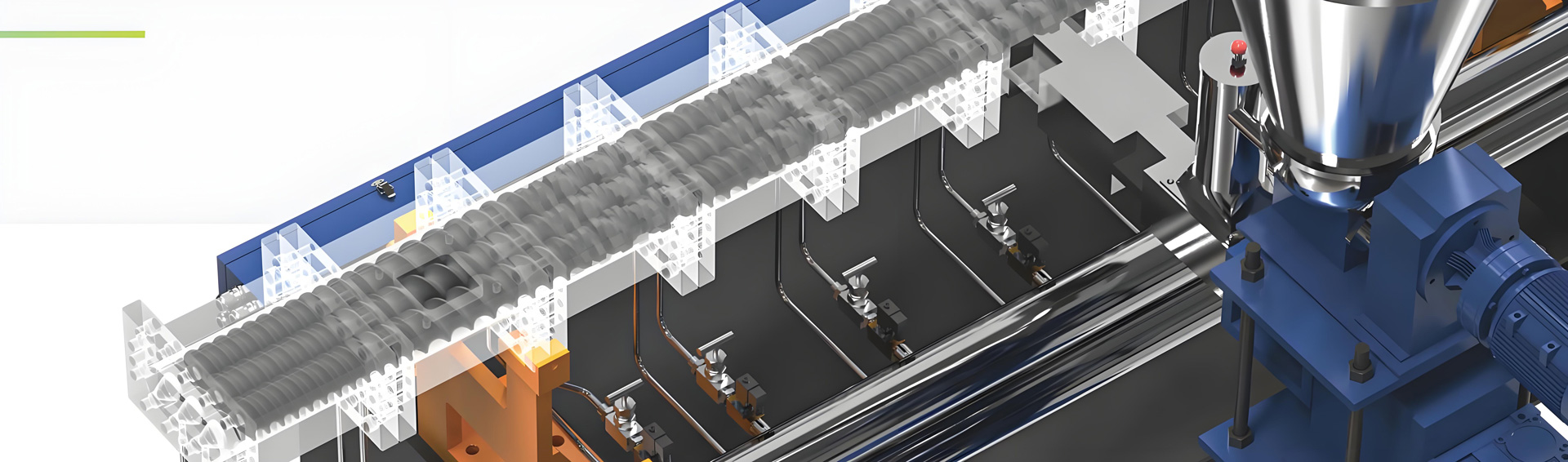
Modern air-cooled twin screw extruders for PC/PBT alloy masterbatch incorporate advanced cooling technology and thermal management. The KTE Series twin screw extruder from Nanjing Kerke Extrusion Equipment Company offers excellent air cooling capabilities specifically designed for engineering plastic alloy processing. These extruders feature integrated air cooling systems, variable speed fans, and intelligent thermal management.
Equipment specifications for PC/PBT alloy production include barrel L/D ratio typically 40:1 to 48:1 providing sufficient processing length while enabling thermal control. Screw diameters range from 35mm to 90mm accommodating production capacities from 200 kg/hr to 2500 kg/hr. Air cooling capacity typically 30-50 kW depending on equipment size and cooling requirements. Temperature control accuracy within ±1°C across all zones ensures precise PC/PBT alloy processing conditions.
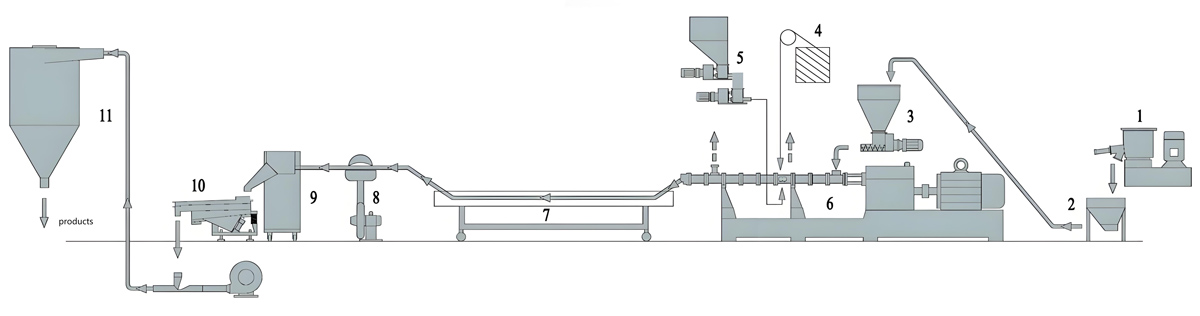
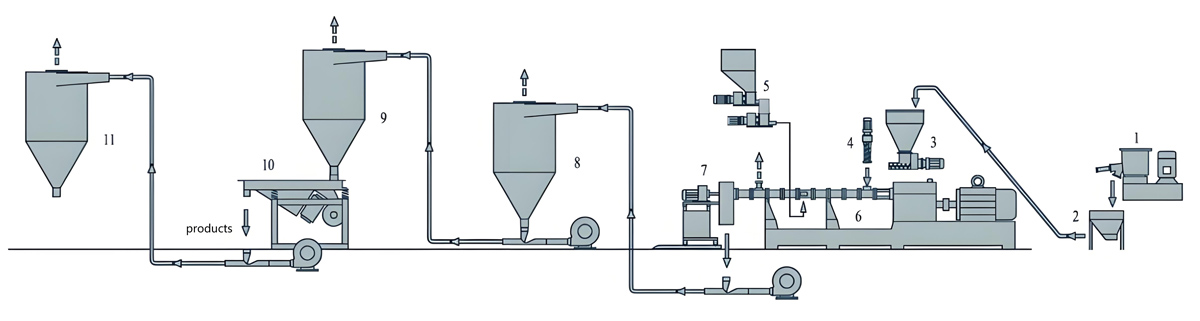
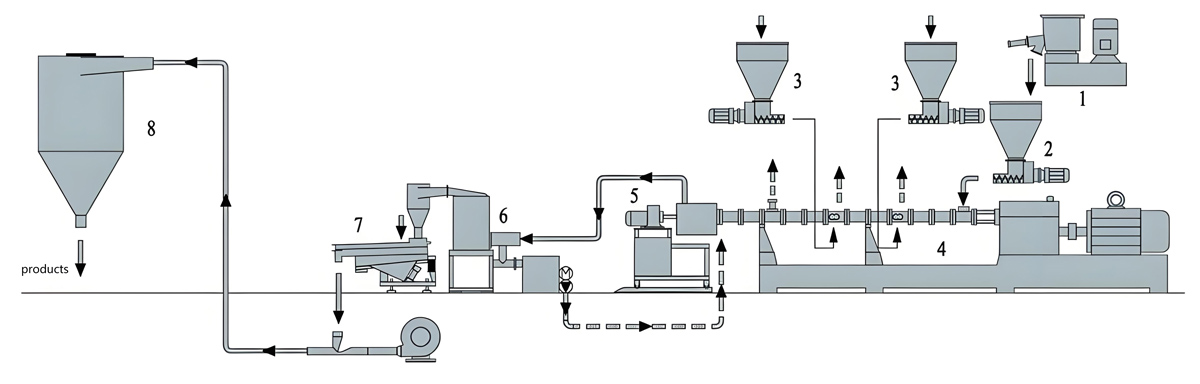
Specialized features for PC/PBT alloy processing include high-temperature barrel components capable of 300°C operation. Advanced control systems with thermal management algorithms optimize heating and cooling balance. Quick-change screw designs enable rapid configuration changes between different alloy types. Complete production lines integrate air-cooled extruders with auxiliary equipment including drying systems, feeding systems, and automated pelletizing systems designed for air-cooled operation.
Parameter Settings
Optimal parameter settings for air-cooled twin screw extruders in PC/PBT alloy masterbatch production leverage efficient thermal management. Temperature profiles, cooling settings, and processing speeds require optimization to balance quality requirements with production efficiency.
Temperature Profile Configuration
Temperature profile configuration for PC/PBT alloy processing balances heating and cooling requirements. Feed zone temperature 60-80°C prevents premature melting while managing material flow. Compression zone temperature progression 150-180°C initially then 200-220°C for PBT melting. Melting zone temperature 240-260°C ensures complete melting of both PC and PBT.
Mixing zone temperature 260-280°C provides optimal conditions for alloy development and dispersion. Crystallization zone temperature 200-230°C controls PBT crystallization. Die zone temperature 260-275°C ensures consistent melt flow. Temperature uniformity across barrel width and length ensures consistent processing conditions. Air cooling system removes shear heat maintaining target temperatures.
Cooling System Parameters
Air cooling system parameters determine thermal management effectiveness for PC/PBT alloy processing. Air flow rate typically 3000-8000 m³/h depending on equipment size and cooling requirements. Fan speed control enables cooling capacity adjustment based on processing conditions. Air temperature maintained 15-25°C provides adequate cooling capacity.
Cooling zone distribution matches heating zones providing balanced thermal management. Air flow uniformity across barrel width ensures consistent cooling. Variable speed fans enable capacity modulation based on shear heat generation. Cooling system response time typically 30-60 seconds enabling quick thermal adjustments. Cooling power consumption typically 5-10 kW per cooling zone depending on size.
Screw Speed and Thermal Generation
Screw speed settings for PC/PBT alloy masterbatch production consider cooling capacity and thermal requirements. Typical screw speeds 150-300 rpm provide adequate residence time for alloy development. Lower speeds 150-200 rpm for complex formulations requiring longer mixing. Higher speeds 250-300 rpm for simpler formulations where cooling capacity allows.
Screw speed affects shear heat generation requiring cooling system adjustment. Higher screw speeds increase shear heat requiring more cooling capacity. The air cooling system modulates fan speed based on screw speed and temperature requirements. Thermal balance optimization ensures adequate mixing without excessive thermal degradation. Screw speed changes require corresponding cooling system adjustments.
Feed Rate and Throughput
Feed rate settings for PC/PBT alloy production consider thermal management and dispersion requirements. Specific feed rates typically 2.5-4.5 kg/hr/rpm depending on PC/PBT ratio and formulation. Higher feed rates require more intensive cooling to maintain temperature stability. Feed rate synchronization with screw speed and cooling ensures consistent processing conditions.
Throughput calculations for air-cooled extruders consider thermal management capacity. Cooling-limited throughput determined by air cooling system capacity. Production capacity typically 70-85% of theoretical capacity due to thermal management requirements. Throughput optimization balances cooling system capabilities with formulation requirements.
Cooling Control Algorithms
Advanced cooling control algorithms optimize PC/PBT alloy thermal management. Predictive cooling control anticipates thermal changes based on formulation and production rate changes. Adaptive cooling adjusts to changing conditions maintaining optimal temperature profile. Zone-specific cooling management enables independent control across different zones.
Temperature feedback from multiple sensors per zone provides cooling system input. Feedforward cooling based on screw speed and feed rate changes anticipates thermal load changes. Learning algorithms optimize cooling parameters over time for specific formulations. Integrated heating and cooling control ensures thermal balance throughout processing.
Equipment Price
Air-cooled twin screw extruder pricing for PC/PBT alloy masterbatch production reflects advanced cooling technology and thermal management. Understanding cost factors enables proper budgeting and investment analysis.
Air-Cooled Extruder Pricing
Air-cooled twin screw extruder pricing varies based on capacity and cooling system sophistication. Medium capacity extruders 35-50mm screw diameter for PC/PBT alloy 200-1000 kg/hr cost $70,000-170,000 with air cooling systems. Large capacity extruders 65-90mm screw diameter for 1500-2500 kg/hr cost $170,000-420,000. Air cooling systems add 15-25% premium compared to water-cooled systems.
Cooling system options affect pricing significantly. Standard air cooling systems provide adequate capacity for most PC/PBT applications. Enhanced air cooling with variable speed fans and heat exchangers costs 20-30% more than standard systems. Intelligent thermal management systems add 15-25% to base cost. Energy-efficient cooling options provide long-term operating cost savings with 10-20% additional upfront cost.
Complete Production Line Pricing
Complete production line pricing for air-cooled PC/PBT alloy masterbatch includes extruder, drying systems, feeding systems, and pelletizing. Medium capacity complete lines 200-1000 kg/hr cost $140,000-300,000. Large capacity lines 1500-2500 kg/hr cost $300,000-700,000. Air cooling capabilities typically add 12-20% to complete line cost compared to water-cooled systems.
Auxiliary equipment costs include drying systems $25,000-60,000 for PC and PBT pre-drying, gravimetric feeding systems $15,000-40,000, and air-cooled pelletizing systems $22,000-58,000. Material handling systems for PC/PBT alloy $20,000-45,000. Complete line integration and automation $28,000-70,000 depending on complexity.
Installation and Commissioning
Installation costs for air-cooled extruders typically $12,000-40,000 depending on equipment size and facility requirements. Electrical installation including upgraded power supply $18,000-50,000. Air cooling system installation and ductwork $10,000-28,000. Commissioning for air-cooled systems includes thermal optimization $6,000-18,000.
Training for air cooling system operation typically $4,000-10,000 including thermal management optimization. Thermal system validation and calibration $5,000-14,000. Startup optimization to achieve target thermal profiles $5,000-15,000. Total installation and commissioning typically 20-30% of equipment cost for air-cooled systems.
Operating Cost Analysis
Operating costs for air-cooled PC/PBT alloy masterbatch production include energy consumption, maintenance, and efficiency factors. Energy consumption for air cooling typically 0.3-0.6 kWh/kg including fan power. Total energy consumption 1.2-1.8 kWh/kg including heating and auxiliary equipment. Maintenance costs for air cooling systems 2.0-4.0% of equipment cost annually including fan maintenance and system cleaning.
Air cooling eliminates water treatment costs and water consumption. Fans typically last 5-8 years in PC/PBT alloy applications. Control system maintenance typically 1.5-3.0% of equipment cost annually. Reduced maintenance compared to water-cooled systems provides additional savings. Energy recovery systems can capture waste heat for pre-drying materials.
ROI and Payback Analysis
ROI analysis for air cooling systems considers water savings, maintenance reduction, and environmental benefits. Payback period typically 2.0-4.0 years for air cooling upgrade over water-cooled systems. Water treatment and consumption savings typically $12,000-35,000 annually depending on local water costs. Maintenance reduction savings $8,000-25,000 annually from eliminated water system maintenance.
Quality improvements from consistent air cooling reduce waste typically 1-3% of production value. Environmental compliance benefits from reduced water usage $5,000-18,000 annually in reduced compliance costs. Combined value of improvements typically justifies air cooling investment for operations seeking water reduction or improved thermal control.
Production Problems and Solutions
Production problems in air-cooled PC/PBT alloy masterbatch production require specialized understanding of thermal management. Problems related to cooling capacity, thermal gradients, and material behavior under controlled cooling need specific solutions.
Insufficient Cooling Capacity
Insufficient cooling capacity in air-cooled systems causes temperature excursions affecting PC/PBT alloy quality. Causes include inadequate air flow, excessive shear heat, or cooling system degradation. Temperature excursions can cause thermal degradation of PC or poor PBT crystallization. Air cooling systems must have adequate capacity for maximum processing conditions.
Solutions include air flow rate increase through fan speed adjustment or additional fans. Cooling system optimization including cleaning air filters and ductwork improves airflow efficiency. Screw speed reduction reduces shear heat generation lowering cooling requirements. Feed rate adjustment reduces throughput decreasing thermal load. Cooling capacity upgrade may be necessary for high-throughput applications.
Preventive measures include proper cooling system sizing based on maximum processing requirements. Regular maintenance ensures cooling components operate at rated capacity. Air flow monitoring identifies capacity reduction before temperature excursions. Cooling system design includes safety margins for unexpected conditions. Operator training on thermal limit recognition enables early intervention.
Temperature Non-Uniformity
Temperature non-uniformity in air-cooled extruders causes inconsistent PC/PBT alloy quality across product cross-section. Causes include uneven air distribution, inadequate air velocity, or barrel insulation problems. Temperature variations across barrel width can cause inconsistent melting, mixing, or crystallization.
Solutions include air distribution system redesign ensuring uniform air flow across barrel width. Air velocity adjustment through fan speed or duct design optimization improves uniformity. Barrel inspection and insulation repair reduces heat losses causing gradients. Temperature mapping identifies problem areas for targeted correction. Zone-specific cooling adjustment enables local temperature uniformity improvement.
Preventive measures include regular air flow verification using anemometers or thermal imaging. Air system cleaning prevents blockages causing non-uniformity. Insulation inspection maintains thermal isolation from ambient. Temperature monitoring across multiple points identifies developing non-uniformity. Design optimization during equipment selection ensures adequate cooling uniformity.
PC Thermal Degradation
PC thermal degradation in air-cooled systems occurs at elevated temperatures causing molecular weight reduction and property loss. Causes include excessive temperature, prolonged residence time at high temperature, or cooling system failure. PC is more sensitive to thermal degradation than PBT requiring careful temperature control.
Solutions include temperature profile adjustment reducing maximum temperature to 260-270°C. Residence time reduction through screw speed adjustment decreases thermal exposure. Cooling system improvement prevents temperature excursions. Screw configuration optimization reduces shear heat generation. Molecular weight monitoring identifies degradation before property loss.
Preventive measures include maximum temperature limits enforced through control systems. Temperature monitoring with high-accuracy sensors provides early detection of excursions. Stabilizer system optimization provides additional thermal protection. Regular material quality verification catches degradation problems. Operator training on PC thermal sensitivity enables proper operation.
Poor PBT Crystallization
Poor PBT crystallization in PC/PBT alloys results from improper cooling rate causing property variations. Causes include too rapid cooling preventing proper crystal formation or too slow cooling causing excessive crystallinity. Crystallization control critical for PBT component properties and overall alloy performance.
Solutions include cooling rate adjustment through air flow control optimizing crystallization. Crystallization zone temperature 200-230°C provides proper conditions for crystal development. Residence time adjustment provides sufficient time for crystallization. Crystallization monitoring through differential scanning calorimetry (DSC) verifies crystallinity levels. Nucleating agent addition at 0.1-0.5% improves crystallization consistency.
Preventive measures include consistent cooling rate control maintaining uniform processing conditions. Temperature control in crystallization zone within ±2°C ensures repeatable crystallinity. Process documentation ensures consistent cooling parameters between runs. Regular crystallinity testing catches problems before production release. Training on crystallization principles enables proper cooling control.
Phase Separation Issues
Phase separation in PC/PBT alloys occurs when components become immiscible causing property loss. Causes include insufficient compatibilizer, improper thermal history, or cooling rate problems. Phase separation manifests as opacity, property variation, or poor dispersion quality.
Solutions include compatibilizer content increase to 5-8% for improved compatibility. Thermal profile optimization ensures proper melting and mixing history. Cooling rate control maintains developed morphology during solidification. Residence time adjustment provides adequate compatibilizer activation. Phase compatibility testing verifies proper alloy formation.
Preventive measures include compatibilizer selection based on PC/PBT ratio and application requirements. Process parameter control ensures consistent thermal history. Thermal management prevents temperature variations causing separation. Quality testing including microscopy identifies phase separation before product release. Material handling prevents contamination affecting phase compatibility.
Cooling System Fan Failures
Cooling system fan failures in air-cooled extruders cause immediate temperature rise requiring shutdown. Causes include motor failure, bearing wear, or electrical problems. Fan failure can cause rapid temperature rise potentially damaging material or equipment.
Solutions include immediate shutdown preventing thermal damage. Fan motor replacement with suitable replacement unit. Bearing repair or replacement restores fan operation. Electrical troubleshooting identifies and corrects electrical problems. Backup fan installation provides redundancy for critical applications.
Preventive measures include regular fan maintenance including bearing lubrication and motor inspection. Fan vibration monitoring detects bearing wear before failure. Electrical system maintenance prevents electrical failures. Spare fan inventory enables quick replacement minimizing downtime. Redundant fan systems provide backup capacity during primary fan failure.
Maintenance
Maintenance of air-cooled twin screw extruders for PC/PBT alloy requires attention to cooling systems, thermal management, and specific material concerns. Preventive maintenance schedules must address cooling components, air handling systems, and thermal monitoring equipment.
Daily Maintenance
Daily maintenance tasks ensure air-cooled systems operate effectively. Air flow verification confirms proper cooling operation. Fan operation check identifies unusual sounds or vibration. Temperature verification across all zones ensures thermal control. Visual inspection for air leaks or ductwork damage identifies problems.
Daily cleaning procedures remove PC/PBT residue from surfaces. Air filter inspection and cleaning prevents airflow restriction. Cooling air intake inspection ensures proper air supply. Documentation review ensures maintenance tasks completed and recorded. Daily maintenance prevents minor cooling issues from developing into major thermal problems.
Weekly Maintenance
Weekly maintenance includes detailed inspection of cooling systems. Fan bearing lubrication ensures smooth operation. Air distribution system inspection for blockages or damage. Temperature sensor calibration verification ensures accurate readings. Cooling system performance verification identifies capacity reduction.
Air ductwork inspection for leaks or damage affecting flow. Control system performance ensures proper cooling response. Air intake inspection ensures proper air supply and cleanliness. Documentation review ensures maintenance tasks completed. Weekly maintenance prevents minor cooling system issues from developing into major problems.
Monthly Maintenance
Monthly maintenance addresses components requiring periodic service. Fan motor testing identifies degradation. Air flow measurement verifies capacity compared to specifications. Temperature mapping of barrel identifies thermal uniformity problems. Cooling system cleaning including fans and ductwork removes buildup.
Air filter replacement maintains air quality and flow. Cooling system performance testing identifies efficiency loss. Thermal control system calibration ensures proper operation. Screw inspection for wear affecting thermal characteristics. Monthly maintenance provides detailed assessment of cooling system condition.
Quarterly Maintenance
Quarterly maintenance provides comprehensive cooling system evaluation. Complete fan system testing and service. Air distribution system overhaul and optimization. Temperature sensor testing and replacement of degraded units. Control system tuning optimization ensures thermal performance.
Screw and barrel inspection for PC/PBT-specific wear patterns. Complete air system inspection including ductwork and intakes. Electrical system testing detects developing issues. Documentation update includes maintenance records and system modifications. Quarterly maintenance provides opportunity for major cooling component service.
Annual Maintenance
Annual maintenance provides complete system evaluation and major service. Complete cooling system teardown for thorough inspection. Fan motor replacement based on testing results. Air distribution system overhaul or replacement based on condition. Control system upgrade and calibration.
Screw and barrel replacement based on wear and performance. Complete electrical system service including control panel overhaul. Thermal monitoring system overhaul and recertification. Documentation update includes complete system history and modifications. Annual maintenance provides opportunity for system upgrades and capacity expansion planning.
FAQ
Frequently asked questions address common concerns about air-cooled twin screw extruders for PC/PBT alloy masterbatch production.
Is air cooling sufficient for PC/PBT alloy processing?
Air cooling is sufficient for most PC/PBT alloy masterbatch applications providing adequate thermal management. Modern air cooling systems with variable speed fans and advanced thermal management provide cooling capacity comparable to water cooling for PC/PBT processing temperatures 240-280°C. The key advantages include simplified installation, reduced water consumption, and better temperature uniformity. However, extremely high throughput applications may require enhanced cooling capacity through system design optimization or supplemental cooling.
What are the advantages over water cooling?
Air cooling offers several advantages over water cooling for PC/PBT alloy processing. Water consumption elimination reduces operating costs and environmental impact. Water treatment systems not required saving capital and operating expense. Simplified installation without water piping and treatment equipment. Reduced maintenance without water system components like pumps, filters, and treatment equipment. Better temperature uniformity without water-related thermal gradients. Eliminated water contamination risk to material or environment.
How does cooling capacity affect throughput?
Cooling capacity directly affects throughput in air-cooled systems by limiting maximum production rate. Shear heat generation increases with throughput requiring proportional cooling capacity. The cooling-limited maximum throughput occurs when cooling system reaches capacity maintaining target temperatures. Throughput optimization balances production rate against thermal management requirements. Enhanced cooling capacity through fan upgrades or system modifications can increase cooling-limited throughput.
What maintenance does air cooling require compared to water cooling?
Air cooling maintenance is generally simpler and less frequent than water cooling. Fan systems require bearing lubrication every 3-6 months and motor inspection annually. Air filters require monthly inspection and cleaning. Air ductwork requires annual inspection for leaks and damage. Overall, air cooling maintenance costs are 30-50% lower than water cooling systems due to eliminated water system components. No water treatment, pump maintenance, or corrosion concerns reduce maintenance complexity.
Can air cooling be retrofitted to existing extruder?
Retrofitting air cooling to existing extruders is possible but cost-effectiveness depends on equipment condition and cooling requirements. Basic retrofit including air cooling system installation typically costs 40-60% of new air-cooled extruder cost. Complete retrofit including thermal management upgrades may approach 70-85% of new equipment cost. Retrofit feasibility depends on extruder design, thermal load, and facility requirements. Economic analysis should compare retrofit cost to new equipment benefits considering water savings and maintenance reduction.
Summary
Air-cooled twin screw extruders provide efficient thermal management for PC/PBT alloy masterbatch production offering significant advantages over traditional water cooling systems. The simplified cooling system design eliminates water consumption, reduces maintenance requirements, and provides improved temperature uniformity. Advanced air cooling technology with variable speed fans and intelligent thermal management enables precise control over thermal history critical for PC/PBT alloy quality.
Key success factors include proper cooling system sizing for thermal load requirements, regular maintenance of cooling components, and operator training on thermal management principles. The KTE Series twin screw extruders from Nanjing Kerke Extrusion Equipment Company provide excellent air cooling capabilities specifically designed for PC/PBT and other engineering plastic alloy processing. Investment in air cooling technology typically provides payback in 2-4 years through water savings, maintenance reduction, and environmental benefits.
PC/PBT alloy masterbatch production with air-cooled extruders enables manufacturers to produce high-quality alloys with consistent properties while reducing environmental impact and operating complexity. The balance between PC and PBT components, controlled thermal history, and proper cooling management determines final alloy properties. Continuous improvement through thermal monitoring and optimization maximizes benefits over equipment lifetime. Air cooling represents the future of efficient thermal management for engineering plastic processing.