Introduction
Outdoor plastic masterbatch production represents critical segment in compounding industry focused on providing UV protection, weather resistance, and long-term durability for plastic products exposed to outdoor conditions. Energy saving twin screw extruders have become essential equipment for outdoor masterbatch production due to their ability to reduce energy consumption while maintaining excellent product quality and processing performance. Outdoor applications including garden furniture, building materials, agricultural products, outdoor containers, automotive exterior components, and construction materials demand masterbatches with exceptional UV stability, weather resistance, and color retention properties. Nanjing Kerke Extruder Equipment Company KTE Series energy saving twin screw extruders provide advanced capabilities specifically optimized for outdoor masterbatch production where energy efficiency and long-term performance are critical requirements.
Outdoor applications present unique challenges for masterbatch production due to intense UV exposure, temperature extremes, moisture, environmental pollutants, and long service life requirements. Masterbatches for outdoor applications must provide UV protection through UV absorbers and light stabilizers, color retention despite prolonged sun exposure, thermal stability through temperature cycling, and resistance to weathering and environmental degradation. Energy efficient extrusion enables cost-effective production of these technically demanding masterbatches while maintaining or improving product quality. The combination of energy savings and high performance makes energy saving twin screw extruders ideal for outdoor masterbatch applications.
Market dynamics in outdoor plastic applications emphasize sustainability, cost reduction, and environmental responsibility while maintaining performance standards that improve year over year. Energy saving extrusion technology reduces operating costs, reduces carbon footprint, and supports sustainability initiatives while maintaining product quality. Regulatory pressures and environmental standards continue driving requirements for more energy-efficient manufacturing processes. KTE Series energy saving twin screw extruders provide the technology and capabilities needed to meet these evolving requirements while delivering outdoor masterbatches meeting demanding performance specifications.
Formulation Ratios for Outdoor Plastic Masterbatch
Formulation development for outdoor masterbatch must balance UV protection, weather resistance, color development, processing requirements, and cost-effectiveness while meeting outdoor application performance requirements.
UV protection masterbatch formulations typically incorporate UV absorbers at 10 to 30 percent, hindered amine light stabilizers at 5 to 15 percent, carrier polymer at 60 to 85 percent, and processing aids at 1 to 3 percent. UV absorbers provide immediate protection by absorbing UV radiation before it can degrade polymer and color. Hindereded amine light stabilizers provide long-term protection by scavenging free radicals generated during photo-oxidation. The ratio of UV absorbers to HAL stabilizers is optimized based on polymer type, exposure conditions, and required service life. High-end outdoor applications with extended service life requirements may use higher total loading up to 45 percent. Short-term outdoor applications may use 15 to 25 percent total loading.
Weather resistant masterbatch formulations incorporate UV stabilizers at 10 to 25 percent, thermal stabilizers at 3 to 8 percent, carrier polymer at 70 to 87 percent, and processing aids at 1 to 2 percent. Weather resistant masterbatches must protect against multiple degradation factors including UV radiation, temperature cycling, moisture, and environmental pollutants. Thermal stabilizers prevent thermal degradation during temperature extremes experienced in outdoor applications. Carrier polymer selection must match end-use polymer and provide compatibility with additive systems. Weather resistant formulations for harsh environments may include additional stabilizers including hydrolysis stabilizers for moisture protection.
Color retention masterbatch formulations include automotive-grade pigments at 5 to 20 percent, UV stabilizers at 5 to 15 percent, light stabilizers at 2 to 8 percent, carrier polymer at 70 to 88 percent, and dispersants at 1 to 3 percent. Color retention requires pigments with excellent light fastness and weather resistance complemented by stabilizer systems protecting both polymer and pigment from UV degradation. Pigment selection focuses on inorganic pigments for maximum weather resistance or carefully selected organic pigments with proven outdoor performance. Higher pigment loading may require increased stabilizer loading to protect pigment from UV degradation. Color retention is particularly important for architectural applications and consumer products where appearance maintenance is critical.
Building material masterbatch formulations include UV stabilizers at 8 to 20 percent, thermal stabilizers at 3 to 6 percent, pigments at 5 to 15 percent, carrier polymer at 70 to 84 percent, and processing aids at 1 to 3 percent. Building materials including siding, decking, fencing, roofing materials, and exterior trim have long service life requirements often exceeding 10 years. These applications require comprehensive stabilization packages protecting against UV, thermal cycling, moisture, and biological degradation. High-performance building materials may require total stabilizer loading up to 30 percent to ensure long-term performance. Building material formulations often require compliance with building codes and fire safety regulations affecting additive selection.
Agricultural masterbatch formulations include UV stabilizers at 10 to 25 percent, antioxidant stabilizers at 2 to 5 percent, pigments at 3 to 12 percent, carrier polymer at 70 to 85 percent, and processing aids at 1 to 3 percent. Agricultural applications including greenhouse film, mulch film, irrigation components, and agricultural containers experience intense UV exposure combined with chemical exposure from fertilizers and pesticides. These applications require UV protection, chemical resistance, and often antimicrobial properties. Agricultural formulations must also consider potential food contact requirements for applications touching food crops. Service life requirements vary from single season to multiple years affecting stabilizer loading levels.
Automotive exterior masterbatch formulations incorporate UV stabilizers at 8 to 18 percent, thermal stabilizers at 3 to 7 percent, pigments at 5 to 15 percent, carrier polymer at 75 to 84 percent, and processing aids at 1 to 2 percent. Automotive exterior components including bumpers, trim, exterior panels, and exterior trim must maintain appearance and performance through vehicle lifetime typically exceeding 10 years. Automotive applications require compliance with automotive manufacturer specifications for UV resistance, thermal stability, and color retention. High-performance exterior components may require total stabilizer loading up to 25 percent. Automotive exterior formulations must also survive manufacturing processes including painting and thermal cycling during assembly.
Carrier polymer selection for outdoor masterbatch must match end-use polymer and provide appropriate processing characteristics. Polyethylene carrier grades should match density and melt flow of end-use polyethylene materials with typical MFR range from 0.5 to 10 grams per 10 minutes. Polypropylene carrier grades should match melt flow characteristics of end-use polypropylene with MFR range from 2 to 30 grams per 10 minutes. PVC carrier grades require appropriate plasticizer levels and thermal stability matching end-use requirements. Carrier polymer must have inherent weather resistance or be adequately protected by additive systems. Carrier selection also considers processing requirements for additive incorporation including high loading capabilities and good pigment wetting characteristics.
Production Process for Outdoor Masterbatch
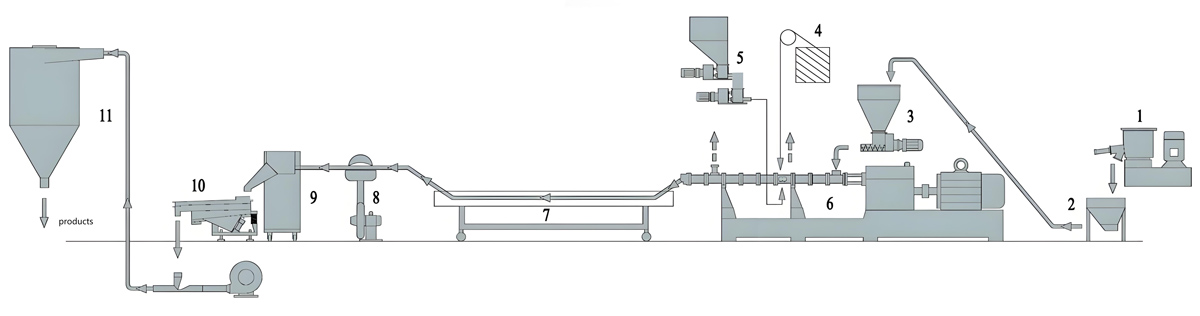
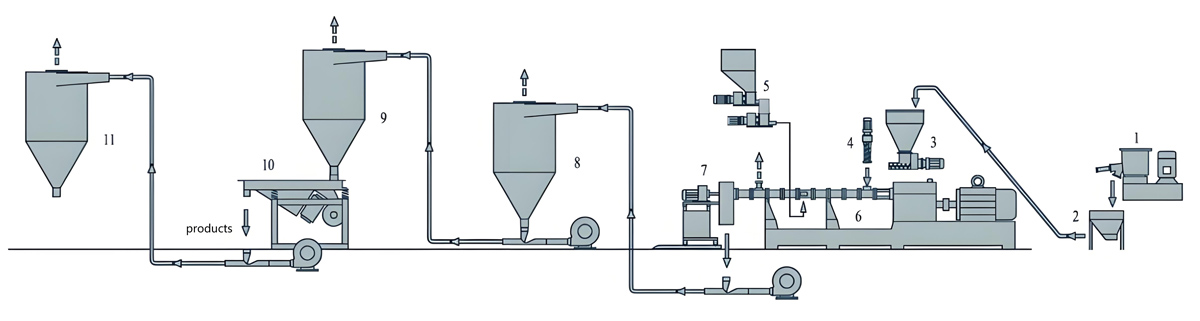
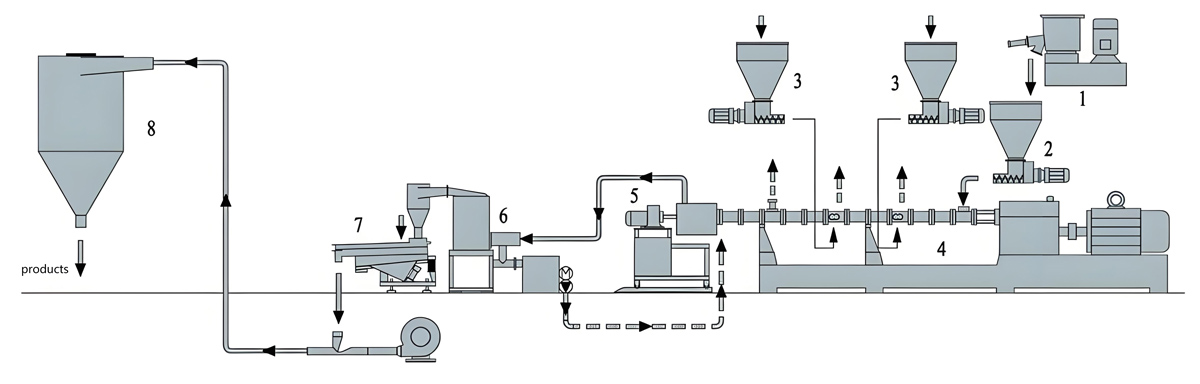
Outdoor masterbatch production requires careful process control to ensure proper additive incorporation while minimizing energy consumption. Energy saving twin screw extruders provide efficiency while maintaining the quality needed for demanding outdoor applications.
Material preparation procedures for outdoor masterbatch focus on efficiency and additive incorporation. Carrier polymers for outdoor applications may require drying depending on polymer type and storage conditions. Polyethylene and polypropylene typically do not require drying but may benefit from preheating to improve energy efficiency during extrusion. PVC carrier may require drying and thermal conditioning before processing. UV stabilizers and other additives are typically in powder or liquid form requiring appropriate handling and feeding systems. Pre-mixing of solid components can improve initial distribution and feeding consistency but must consider additive sensitivity to heat and shear.
Feeding system efficiency contributes to overall energy consumption. Gravimetric feeding systems with energy-efficient designs minimize energy consumption while maintaining accurate feeding. Separate feeding for carrier polymer and different additive types enables optimization of feeding conditions for each component. Liquid additive feeders require appropriate pumping systems with energy-efficient operation. Feeding systems should be designed to minimize material spillage and waste reducing energy waste associated with material loss. Automated feeding with PLC integration optimizes feeder operation and reduces energy consumption through coordinated operation.
Extrusion temperature optimization for energy efficiency balances processing requirements with energy consumption. Temperature profiles should be set to the minimum levels necessary for proper melting and mixing rather than using excessive temperatures. For polyethylene-based outdoor masterbatch, typical energy-efficient profiles range from 150 to 200 degrees Celsius with gradual heating through feed, melting, mixing, and metering zones. Polypropylene-based masterbatch typically processes at 170 to 210 degrees Celsius. PVC-based masterbatch requires temperatures of 160 to 200 degrees Celsius with careful control to prevent thermal degradation. Each zone should be set to the minimum temperature providing adequate melting and flow for that processing stage.
Screw speed optimization for energy efficiency balances throughput requirements with power consumption. Screw speed directly affects motor power consumption with higher speeds consuming more power. However, higher speeds also increase throughput potentially reducing energy consumption per kilogram. Optimal screw speed balances these factors to minimize specific energy consumption. For outdoor masterbatch production, typical energy-efficient screw speeds range from 150 to 300 rpm depending on material characteristics and loading levels. The relationship between screw speed and specific energy consumption should be analyzed for each specific formulation to identify optimal operating point.
Mixing efficiency affects energy consumption directly. More efficient mixing achieves required dispersion with less energy consumption. KTE Series energy saving extruders feature optimized screw geometries providing high mixing efficiency reducing energy requirements. Modular screw configuration enables selection of mixing elements optimized for specific outdoor masterbatch formulations achieving required dispersion with minimal energy input. Proper mixing section configuration reduces need for excessive screw speed or temperature to achieve mixing requirements. Energy-efficient mixing designs can reduce energy consumption by 15 to 25 percent compared to conventional designs.
Drive system efficiency significantly affects overall energy consumption. AC vector drives with high-efficiency motors provide 15 to 30 percent energy savings compared to older DC drive technology. Drive efficiency varies with load, so operating at appropriate load levels maximizes efficiency. Variable frequency drives enable operation at optimal speed for each formulation rather than fixed speed operation. Regenerative braking capabilities recover energy during deceleration providing additional energy savings. Drive system selection should consider efficiency ratings and optimal operating ranges for specific applications.
Thermal management optimization reduces energy consumption for heating and cooling. Barrel insulation reduces heat loss to environment reducing heating requirements. Advanced control systems minimize temperature overshoot and undershoot reducing unnecessary heating and cooling cycles. Efficient cooling systems including optimized water flow and heat exchanger design reduce energy consumption for cooling. Proper zone sizing and heating element selection ensure efficient heat transfer. Thermal management optimization can reduce heating energy consumption by 20 to 35 percent compared to unoptimized systems.
Production Equipment Introduction
Energy saving twin screw extruders for outdoor masterbatch production incorporate specialized features designed to minimize energy consumption while maintaining excellent product quality required for demanding outdoor applications.
KTE Series energy saving twin screw extruders from Nanjing Kerke Extruder Equipment Company provide comprehensive energy-saving capabilities specifically optimized for outdoor masterbatch applications. The co-rotating twin screw configuration provides excellent mixing characteristics essential for achieving uniform UV stabilizer and pigment distribution required for outdoor applications. Energy-saving features are integrated throughout equipment design including drive systems, thermal management, and process control. The extruders maintain excellent product quality while reducing energy consumption by 25 to 40 percent compared to conventional designs. Throughput capacities range from 500 to 3000 kg per hour depending on extruder size and material characteristics.
Drive system design for energy efficiency uses high-efficiency motors and variable frequency drives providing optimal performance across operating range. Motors with IE3 or higher efficiency ratings reduce electrical energy consumption. Vector drives provide precise speed control from 10 to 100 percent of maximum speed with efficiency maintained across speed range. Drive power sizing considers optimal loading for maximum efficiency rather than oversizing which reduces efficiency at normal operation. Drive systems include power factor correction improving overall electrical efficiency. Regenerative braking capabilities recover energy during deceleration or braking operations. Overall drive system efficiency improvements can reduce energy consumption by 15 to 25 percent compared to standard drive systems.
Barrel insulation significantly reduces heat loss and energy consumption. KTE Series extruders feature high-efficiency barrel insulation using advanced insulating materials providing thermal resistance while maintaining compact design. Insulation reduces heat loss by 60 to 80 percent compared to uninsulated barrels. Reduced heat loss allows lower heating power consumption and reduces cooling requirements. Insulation also improves temperature stability reducing control system energy consumption. Barrel insulation is particularly effective for outdoor masterbatch production requiring stable temperature control for proper additive incorporation and dispersion.
Temperature control system optimization reduces energy consumption for heating and cooling. Multi-zone electric heating with individual zone control includes zone sizing optimized for heating requirements minimizing excess heating capacity. Advanced PID control algorithms with auto-tuning provide precise temperature control minimizing temperature overshoot and undershoot reducing unnecessary heating and cooling cycles. Heating elements use high-efficiency designs with optimal heat transfer. Cooling systems incorporate high-efficiency water cooling with variable speed pumps reducing energy consumption. Temperature control optimization can reduce heating and cooling energy consumption by 25 to 35 percent compared to standard systems.
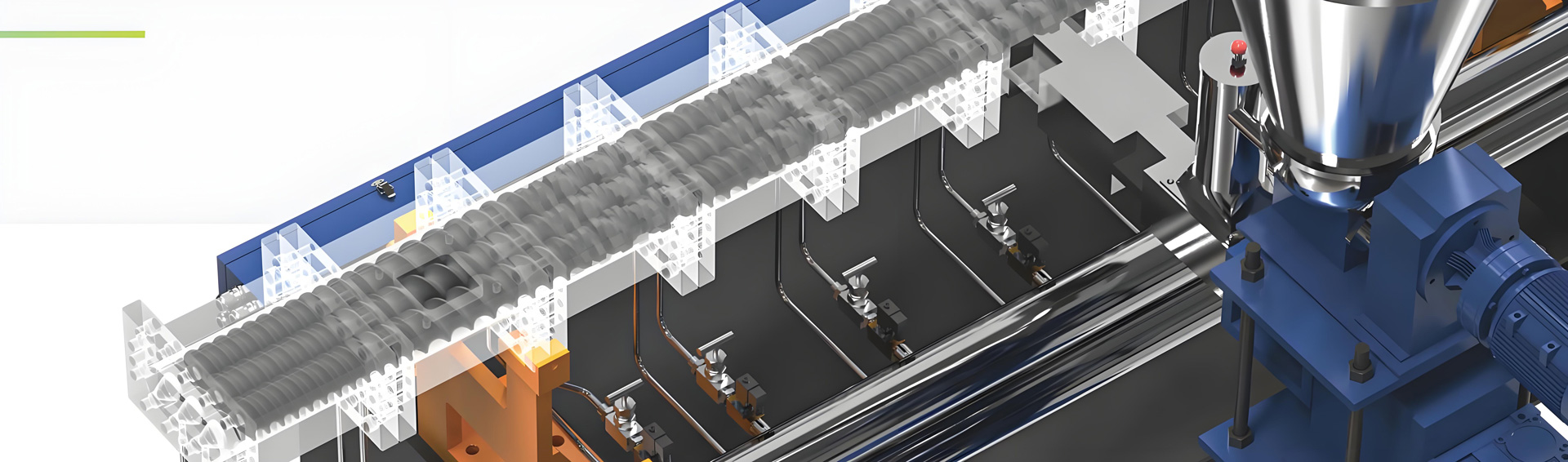
Screw and barrel design for energy efficiency reduces specific energy consumption. Optimized screw geometry reduces mechanical resistance and power requirements. Barrel channel design improves material flow reducing energy needed for conveying. Mixing elements are designed for high efficiency achieving required mixing with minimal energy input. Surface treatments and coatings reduce friction and wear reducing energy consumption. Efficient screw design can reduce specific energy consumption by 10 to 20 percent compared to conventional designs. Screw configuration is optimized for specific outdoor masterbatch formulations ensuring energy efficiency while maintaining product quality.
Process control optimization reduces energy consumption through intelligent operation. Advanced PLC systems monitor energy consumption in real-time identifying optimization opportunities. Automatic parameter adjustment maintains optimal operating conditions for energy efficiency. Load-based control adjusts operating parameters based on actual processing conditions avoiding unnecessary energy consumption. Predictive algorithms anticipate processing needs enabling optimized energy consumption. Energy management systems provide comprehensive monitoring and optimization of energy use across all equipment functions. Process control optimization can reduce energy consumption by 10 to 15 percent through intelligent operation.
Parameter Settings
Optimal parameter settings for energy efficiency balance processing requirements with energy consumption minimization. Proper parameter optimization can reduce energy consumption while maintaining product quality for outdoor applications.
Temperature profile optimization for energy efficiency minimizes heating requirements while ensuring proper processing. For polyethylene-based UV masterbatch with 20 percent stabilizer loading, energy-efficient settings include feed zone at 150 to 165 degrees Celsius, melting zone at 165 to 180 degrees Celsius, mixing zone at 175 to 190 degrees Celsius, and die zone at 175 to 190 degrees Celsius. For polypropylene-based masterbatch with 15 percent stabilizer loading, energy-efficient settings include feed zone at 170 to 180 degrees Celsius, melting zone at 180 to 190 degrees Celsius, mixing zone at 185 to 200 degrees Celsius, and die zone at 185 to 200 degrees Celsius. PVC-based masterbatch with 10 percent stabilizer loading uses feed zone at 160 to 170 degrees Celsius, melting zone at 170 to 180 degrees Celsius, mixing zone at 175 to 185 degrees Celsius, and die zone at 175 to 185 degrees Celsius. Temperature settings should be the minimum providing adequate processing for each stage.
Screw speed optimization for energy efficiency finds optimal operating point balancing throughput and power consumption. For most outdoor masterbatch formulations, the relationship between screw speed and specific energy consumption follows a curve where specific energy consumption decreases with increasing speed up to an optimal point then increases. Optimal speed for energy efficiency typically ranges from 180 to 280 rpm depending on material characteristics and extruder size. Higher stabilizer loadings may require lower speeds for adequate mixing but should be optimized for energy efficiency where possible. Energy consumption should be monitored at various speeds to identify optimal operating point for each formulation.
Feed rate optimization matches throughput requirements while maintaining appropriate residence time. For energy efficiency, feed rate should be set to achieve target throughput while maintaining sufficient residence time for proper mixing and additive incorporation. Insufficient feed rate increases residence time increasing specific energy consumption without quality benefit. Excessive feed rate reduces residence time potentially affecting quality. Optimal feed rate for energy efficiency typically provides residence time of 30 to 60 seconds depending on formulation complexity. Feed rate optimization should consider motor load efficiency which is typically best at 80 to 90 percent of rated load.
Vent settings for energy efficiency manage volatile removal while minimizing vacuum energy consumption. First vent typically positioned after melting zone at 50 to 60 percent of barrel length. Vent temperature setting should be 15 to 25 degrees Celsius above melt temperature to prevent condensation while minimizing energy consumption. Vent vacuum level should be the minimum achieving required volatile removal typically ranging from atmospheric to 500 mm Hg absolute. Vacuum pump selection should consider energy efficiency with variable speed pumps reducing energy consumption at partial load. Vent settings should be optimized for each formulation balancing volatile removal with energy consumption.
Die settings for energy efficiency maintain consistent strand formation with minimal pressure drop. Die temperature setpoint should be 3 to 8 degrees Celsius above final zone temperature ensuring smooth flow with minimal temperature elevation reducing energy consumption. Die pressure should be optimized for consistent strand formation at minimum pressure level typically ranging from 50 to 150 bar depending on formulation viscosity. Strand take-away speed should be coordinated with throughput to maintain proper strand tension without excessive energy consumption. Die gap settings should provide desired strand diameter with minimal restriction reducing pressure requirements.
Cooling system optimization reduces energy consumption for pellet cooling. Water bath temperature should be optimized to provide adequate cooling while minimizing energy for heating water if temperature control is required. Water flow rate should be sufficient for cooling without excessive pumping energy. Cooling tower or chiller systems should be sized appropriately for cooling load and operated efficiently. Heat recovery from cooling systems can provide energy savings by recovering waste heat for other uses. Cooling system optimization can reduce energy consumption by 15 to 25 percent compared to unoptimized systems.
Equipment Pricing
Equipment investment for energy saving twin screw extruder systems varies based on energy efficiency features, production capacity, and specific requirements for outdoor masterbatch production. Energy efficiency features provide return on investment through reduced operating costs.
KTE Series energy saving twin screw extruder base machine pricing depends on screw diameter and energy efficiency features. Models with 65 mm screw diameter and standard energy saving features typically range from USD 85,000 to USD 110,000. Models with 90 mm screw diameter and comprehensive energy saving features typically range from USD 130,000 to USD 170,000. Models with 110 mm screw diameter and advanced energy saving features typically range from USD 190,000 to USD 250,000. Large capacity models with 130 to 150 mm screw diameter and maximum energy efficiency features range from USD 280,000 to USD 400,000 depending on specific energy efficiency features and production capacity.
Energy efficiency features add to base equipment cost but provide return through reduced operating costs. High-efficiency motor systems add USD 8,000 to USD 15,000 to equipment cost. Advanced vector drive systems with regenerative braking add USD 12,000 to USD 25,000. Barrel insulation systems add USD 5,000 to USD 12,000. Advanced temperature control systems with optimization algorithms add USD 8,000 to USD 18,000. Energy management and monitoring systems add USD 6,000 to USD 15,000. Total energy efficiency feature cost typically represents 15 to 25 percent of base equipment cost but provides 25 to 40 percent reduction in energy consumption.
Feeding systems for energy efficiency contribute to overall energy performance. Gravimetric feeding systems with energy-efficient designs typically cost USD 12,000 to USD 30,000 depending on number of feeders and capacity. Liquid additive feeding systems with efficient pump designs cost USD 8,000 to USD 20,000. Multi-feeder configurations for separate component feeding add USD 6,000 to USD 15,000 per additional feeder. Energy-efficient feeding systems reduce energy consumption through optimized operation and reduced material waste.
Pelletizing system energy efficiency considerations affect total investment. Standard strand pelletizing systems typically cost USD 18,000 to USD 35,000. Energy-efficient pelletizing systems with optimized motor drives and controls cost USD 25,000 to USD 45,000. Underwater pelletizing systems providing high quality at good energy efficiency cost USD 45,000 to USD 80,000. Pelletizing system selection should balance quality requirements, energy efficiency, and total cost of ownership.
Complete system costs including extruder, energy efficiency features, feeding, pelletizing, and necessary ancillary equipment typically range from USD 140,000 to USD 550,000 for outdoor masterbatch production. Medium capacity systems with 65 to 90 mm extruders and moderate energy efficiency features typically range from USD 160,000 to USD 280,000. High-capacity systems with 110 to 150 mm extruders and comprehensive energy efficiency features typically range from USD 300,000 to USD 600,000. Additional costs for installation, training, and optimization typically add 8 to 12 percent to equipment costs. Energy efficiency features typically provide return on investment within 1 to 3 years through reduced energy costs depending on local energy prices and production volume.
Production Problems and Solutions
Outdoor masterbatch production may encounter various problems affecting quality, energy efficiency, or production costs. Understanding problems and implementing energy-efficient solutions supports sustainable production.
Energy consumption above expected levels indicates suboptimal operation affecting production economics. This problem manifests as higher than expected energy bills or specific energy consumption exceeding design specifications. Root causes may include parameter settings not optimized for energy efficiency, equipment wear increasing energy requirements, or process variations requiring higher energy input. Excessive energy consumption reduces profitability and undermines environmental sustainability goals.
Solutions for high energy consumption include parameter optimization analysis identifying opportunities to reduce energy use while maintaining quality. Temperature profile optimization reducing zone temperatures to minimum levels providing adequate processing typically provides 10 to 20 percent energy savings. Screw speed optimization finding optimal operating point for minimum specific energy consumption provides additional savings. Drive system inspection identifies efficiency losses from worn components or suboptimal operation. Barrel and screw wear increases energy consumption and should be monitored. Process control optimization through automatic parameter adjustment maintains optimal conditions for energy efficiency. Avoiding excessive energy consumption requires regular energy monitoring, parameter optimization, and maintenance preventing efficiency losses.
Additive dispersion problems affect outdoor masterbatch performance particularly UV protection and color retention. Inadequate dispersion of UV stabilizers reduces protection effectiveness leading to premature failure in outdoor applications. Pigment dispersion problems affect color uniformity and retention. Root causes include insufficient mixing energy, inappropriate screw configuration, or excessive throughput reducing mixing effectiveness. Poor dispersion compromises product performance despite proper formulation.
Solutions for additive dispersion problems include screw configuration optimization ensuring adequate mixing for stabilizer and pigment loading. Mixing elements specifically designed for high additive loading provide better dispersion without excessive energy consumption. Reducing throughput increases residence time and mixing effectiveness but affects productivity and energy per kilogram. Temperature profile optimization improving material flow and viscosity can enhance mixing. Using dispersants or surface-treated additives can improve dispersion characteristics. For energy-efficient operation, mixing section design should provide high dispersion efficiency reducing need for excessive energy input. Avoiding dispersion problems requires proper screw configuration, throughput optimization, and formulation optimization including dispersant selection.
Stabilizer degradation during processing reduces outdoor performance despite proper formulation. Thermal degradation during extrusion can reduce stabilizer effectiveness compromising UV protection and weather resistance. This problem is particularly challenging for high-temperature formulations and sensitive stabilizer types. Degraded stabilizers may cause color changes or property issues in final products. Stabilizer degradation undermines formulation effectiveness despite proper design and loading.
Solutions for stabilizer degradation include temperature profile optimization minimizing maximum temperatures and thermal exposure time. Reducing screw speed reduces shear heating and thermal stress. Using thermal stabilizers in formulation provides protection during processing. Vent systems remove degradation products preventing further degradation. Screw configuration optimization reduces mechanical heating. For energy-efficient operation, thermal management should balance degradation prevention with energy consumption. Using more stable stabilizer types may allow higher processing temperatures enabling energy efficiency while maintaining performance. Avoiding stabilizer degradation requires understanding thermal limits of specific stabilizers, implementing appropriate thermal management, and selecting stabilizers with adequate thermal stability for processing conditions.
Equipment wear increasing energy consumption reduces long-term energy efficiency. Screw and barrel wear increases mechanical resistance requiring more energy for same throughput. Drive system wear reduces efficiency increasing energy consumption. Worn components may also affect product quality requiring parameter adjustments increasing energy use. Progressive energy consumption increase over time often indicates wear issues.
Solutions for wear-related energy consumption increase include regular inspection and measurement of screw and barrel wear. Early detection of wear enables preventive maintenance before energy consumption significantly increases. Using wear-resistant materials and coatings extends service life and maintains energy efficiency. Drive system maintenance including bearing replacement and lubrication maintains drive efficiency. Predictive maintenance technologies monitoring equipment condition enable proactive maintenance preventing efficiency losses. Spare parts inventory for critical components ensures prompt replacement when needed. Avoiding wear-related efficiency losses requires regular inspection, use of wear-resistant materials, preventive maintenance, and monitoring of energy consumption trends indicating wear.
Pellet quality problems affecting downstream processing increase overall energy consumption in product manufacturing. Pellets with inconsistent size or shape cause processing problems in downstream extrusion and molding operations increasing energy use and reducing productivity. Root causes may include pelletizing equipment limitations, parameter imbalances, or material issues. Poor pellet quality can cause feeding problems requiring additional energy in downstream processing.
Solutions for pellet quality problems include pelletizing system optimization ensuring consistent operation. Die maintenance and replacement maintains consistent strand formation. Knife sharpening and proper alignment ensure clean cutting. Water bath temperature and flow optimization maintains proper strand cooling. Automated monitoring and control of pelletizing parameters maintains consistency. For energy efficiency, pelletizing should be optimized while maintaining quality rather than over-processing consuming excess energy. Avoiding pellet quality problems requires regular maintenance of pelletizing components, process optimization, and monitoring of pellet quality.
Maintenance and Care
Energy saving twin screw extruders for outdoor applications require comprehensive maintenance programs preserving energy efficiency while ensuring product quality. Regular maintenance maintains energy efficiency and extends equipment life.
Daily maintenance tasks focus on energy efficiency monitoring and basic equipment care. Operators should monitor energy consumption metrics including total power consumption and specific energy consumption comparing to expected values. Temperature readings should be checked for consistency and proper operation. Drive system operation should be monitored for efficiency indicators including motor temperature, drive efficiency, and power factor. Feeding system operation should ensure accurate feeding without excessive energy consumption. Pelletizing system operation should be observed for consistent operation and energy efficiency. Daily maintenance logs should record energy consumption data and any observations affecting efficiency.
Weekly maintenance tasks include more detailed energy efficiency assessment and maintenance. Energy consumption analysis should identify trends indicating efficiency changes. Temperature sensor calibration verification ensures temperature control accuracy affecting energy efficiency. Drive system efficiency checks including motor current, drive efficiency, and power factor identify potential losses. Feeder calibration ensures accurate feeding preventing waste and unnecessary energy consumption. Electrical system inspection checks for losses including loose connections, poor power factor, and excessive harmonic distortion. Weekly maintenance provides opportunity to catch efficiency problems before they significantly increase operating costs.
Monthly maintenance tasks address more comprehensive efficiency assessment and preventive maintenance. Drive system detailed inspection includes bearing condition, coupling alignment, lubrication condition, and efficiency testing. Temperature control system inspection includes heating element efficiency testing, cooling system efficiency assessment, and control loop tuning. Screw and barrel wear assessment measures diameter changes and surface condition affecting energy consumption. Electrical system testing includes thermal imaging identifying heat losses, efficiency testing of major energy-consuming components, and verification of protective device operation. Monthly maintenance helps maintain energy efficiency and prevent efficiency degradation.
Quarterly maintenance tasks involve more extensive maintenance requiring production downtime but critical for energy efficiency. Screw and barrel detailed inspection determines wear extent and impact on energy consumption. Drive system major maintenance may include bearing replacement, coupling service, and efficiency testing. Temperature control system overhaul may include heating element replacement, cooling system maintenance, and control system optimization. Electrical system overhaul may include connection verification, power factor correction maintenance, and efficiency testing of drives and motors. Quarterly maintenance provides thorough service maintaining energy efficiency and equipment performance.
Semi-annual maintenance tasks represent comprehensive service requiring significant planning and possibly vendor support. Complete screw and barrel service determines if reconditioning or replacement is needed based on wear assessment and energy efficiency impact. Drive system rebuild includes bearing replacement, coupling service, motor testing, and efficiency verification. Temperature control system major service may include heating element replacement, cooling system replacement, and complete control system optimization. Electrical system major service includes efficiency testing of all energy-consuming components, power factor correction system verification, and efficiency optimization. Semi-annual maintenance supports continued energy efficiency and equipment reliability.
Annual maintenance tasks represent most comprehensive service supporting long-term energy efficiency. Complete system energy audit identifies all opportunities for energy efficiency improvement. Screw and barrel replacement may be warranted if wear has significantly increased energy consumption. Drive system major overhaul ensures maximum efficiency. Temperature control system review and optimization ensures efficient heating and cooling. Electrical system comprehensive audit and optimization ensures maximum electrical efficiency. Annual maintenance supports continued energy efficiency and may identify additional opportunities for efficiency improvements through technology upgrades or system modifications.
FAQ
Q: What are the primary energy saving features in energy saving twin screw extruders?
A: Primary energy saving features include high-efficiency motors and vector drives providing 15 to 30 percent savings, advanced barrel insulation reducing heat loss by 60 to 80 percent, optimized temperature control systems reducing heating and cooling energy by 25 to 35 percent, efficient screw and barrel designs reducing mechanical energy requirements, and intelligent process control optimizing operating parameters for minimum energy consumption. Combined, these features can reduce total energy consumption by 25 to 40 percent compared to conventional extruder designs while maintaining or improving product quality.
Q: How much energy can be saved using energy saving twin screw extruders?
A: Total energy savings typically range from 25 to 40 percent compared to conventional twin screw extruder designs. Actual savings depend on specific features implemented, operating conditions, and application requirements. Drive system improvements provide 15 to 25 percent savings. Thermal management including insulation and control optimization provides 20 to 35 percent savings for heating and cooling. Efficient screw design provides 10 to 20 percent reduction in mechanical energy. Process control optimization provides additional 10 to 15 percent savings through intelligent operation. Overall energy savings provide significant reduction in operating costs and carbon footprint.
Q: What is typical specific energy consumption for outdoor masterbatch production?
A: Specific energy consumption for outdoor masterbatch typically ranges from 0.15 to 0.25 kilowatt hours per kilogram of product depending on formulation complexity, stabilizer loading, and equipment efficiency. Conventional extruder designs typically consume 0.20 to 0.30 kilowatt hours per kilogram. Energy saving extruders with comprehensive efficiency features can reduce consumption to 0.12 to 0.18 kilowatt hours per kilogram. Specific energy consumption should be monitored and optimized for each formulation and operating condition to achieve minimum energy use while maintaining quality.
Q: How does barrel insulation contribute to energy savings?
A: Barrel insulation reduces heat loss to environment by 60 to 80 percent compared to uninsulated barrels. Reduced heat loss allows lower heating power consumption reducing electrical energy for heating. Insulation also reduces temperature variation improving control system efficiency reducing unnecessary heating and cooling cycles. Improved temperature stability also helps maintain consistent processing conditions supporting product quality. Barrel insulation is particularly effective for outdoor masterbatch production requiring stable temperature control for proper additive incorporation. Insulation typically provides 10 to 15 percent reduction in total energy consumption.
Q: What maintenance is most important for maintaining energy efficiency?
A: Most important maintenance for energy efficiency includes regular monitoring of energy consumption metrics identifying efficiency trends, prompt maintenance addressing equipment wear that increases energy consumption, calibration of temperature sensors and control systems ensuring accurate operation, drive system maintenance maintaining motor and drive efficiency, and screw and barrel maintenance preventing efficiency losses from wear. Preventive maintenance addressing efficiency issues before they significantly increase energy consumption provides best return on maintenance investment. Energy monitoring should be incorporated into daily and weekly maintenance routines.
Q: How does screw configuration affect energy efficiency?
A: Screw configuration significantly affects energy consumption through mechanical resistance and mixing efficiency. Optimized screw geometries reduce mechanical resistance lowering energy required for conveying and mixing. Efficient mixing elements achieve required dispersion with less energy input compared to conventional designs. Proper mixing section configuration reduces need for excessive screw speed or temperature to achieve mixing requirements reducing energy consumption. Surface treatments and coatings reduce friction and wear lowering energy requirements. Screw configuration should be optimized for specific formulation and processing requirements to achieve minimum energy consumption while maintaining product quality.
Q: What is the payback period for energy efficiency features?
A: Payback period for energy efficiency features typically ranges from 1 to 3 years depending on local energy costs, production volume, and specific features implemented. Comprehensive energy efficiency packages providing 25 to 40 percent energy reduction typically achieve payback in 1 to 2 years at typical production volumes and energy prices. Individual features may have payback from 6 months to 2 years depending on cost and savings. Energy efficiency features provide ongoing savings throughout equipment life providing long-term economic benefits and reducing environmental impact.
Q: How can energy consumption be monitored and optimized?
A: Energy monitoring systems measure total power consumption, specific energy consumption per kilogram of product, and efficiency metrics for major energy-consuming components. Real-time monitoring identifies immediate opportunities for optimization. Trend analysis identifies gradual efficiency decline indicating maintenance needs. Comparative analysis between formulations and operating conditions identifies optimization opportunities. Process control systems can automatically adjust parameters to maintain optimal energy efficiency. Energy management software provides comprehensive analysis and reporting supporting continuous improvement. Regular energy audits identify additional optimization opportunities.
Q: Does energy efficiency affect product quality in outdoor masterbatch?
A: Energy efficiency features should not adversely affect product quality when properly implemented. Properly optimized energy saving maintains or improves product quality by providing more stable processing conditions. Efficient mixing designs achieve better dispersion with less energy. Improved temperature control provides more consistent thermal history. However, energy efficiency must be balanced with processing requirements to ensure adequate mixing, additive incorporation, and thermal exposure for proper stabilizer function. KTE Series energy saving extruders are designed to maintain or improve product quality while reducing energy consumption.
Conclusion
Energy saving twin screw extruders provide essential capabilities for outdoor masterbatch production enabling sustainable manufacturing while maintaining exceptional product quality required for demanding outdoor applications. The comprehensive energy-saving features integrated throughout equipment design address the growing emphasis on sustainability, cost reduction, and environmental responsibility while delivering masterbatches meeting stringent outdoor performance requirements. KTE Series energy saving twin screw extruders from Nanjing Kerke Extruder Equipment Company offer specialized capabilities specifically optimized for outdoor masterbatch production where energy efficiency and long-term performance are critical.
Successful implementation of energy saving extrusion for outdoor masterbatch requires comprehensive approach addressing equipment selection, formulation development, process optimization, energy management, and maintenance. Proper equipment selection balances energy efficiency features with performance requirements and investment considerations. Formulation development considers energy-efficient processing while maintaining outdoor performance requirements. Process optimization identifies operating conditions achieving minimum energy consumption while maintaining quality. Energy management systems monitor consumption and identify optimization opportunities. Maintenance programs preserve energy efficiency throughout equipment life.
The investment in energy saving extrusion technology provides significant returns through reduced operating costs, lower carbon footprint, and enhanced sustainability credentials. Energy consumption reductions of 25 to 40 percent provide substantial cost savings while supporting environmental responsibility. While energy efficiency requires careful optimization and maintenance, properly designed and maintained systems can achieve excellent product quality at significantly lower energy consumption. By implementing energy saving twin screw extrusion technology, outdoor masterbatch producers can reduce environmental impact, lower operating costs, and maintain the quality required for demanding outdoor applications supporting sustainable manufacturing practices.