Introduction
Antistatic ABS masterbatch production represents a critical segment of the plastics compounding industry, serving applications ranging from electronic component housings to clean room equipment, automotive interiors, and consumer electronics packaging. The incorporation of antistatic additives into ABS polymer requires specialized equipment capable of handling conductive materials safely while achieving uniform dispersion that ensures consistent static dissipation properties. Explosion-proof twin screw extruders have become essential equipment for this application due to the fire and explosion hazards associated with conductive additives and the accumulation of static charges during processing. The integration of explosion-proof technologies in twin screw extruders addresses stringent safety requirements while maintaining the mixing performance necessary for high-quality antistatic masterbatch production.
The significance of antistatic ABS masterbatches extends beyond static dissipation to include considerations of color stability, thermal stability, and mechanical properties. These masterbatches typically contain conductive additives such as carbon black, carbon fibers, or antistatic agents in concentrations ranging from 5% to 30% by weight, presenting challenges in terms of dispersion quality, equipment safety, and processing consistency. The development of explosion-proof twin screw extruders has enabled manufacturers to produce antistatic masterbatches safely in compliance with international safety standards, making these machines suitable for installation in hazardous areas and facilities requiring explosion-proof equipment.
Wanplas Group, through its partnership with Nanjing Kerke Extrusion Equipment Company, provides advanced explosion-proof twin screw extruders specifically designed for antistatic masterbatch production. The Kerke KTE Series twin screw extruders incorporate comprehensive explosion-proof technologies including ground and bonding systems, spark-resistant construction, explosion-proof electrical components, and safety interlocks that meet ATEX, IECEx, and other international explosion protection standards. These machines are particularly well-suited for antistatic ABS masterbatch production where safety and consistent dispersion quality are essential for achieving product specifications while maintaining compliance with hazardous area regulations.
Formulation Ratios (Different Types)
The formulation of antistatic ABS masterbatches varies significantly depending on the required surface resistivity, processing conditions, end-use environment, and regulatory requirements. Antistatic masterbatches typically fall into several categories based on the type of antistatic additive used, including carbon black-based masterbatches, conductive polymer masterbatches, and migratory antistatic agent masterbatches. Each category requires different formulation approaches and processing considerations to achieve optimal performance and safety.
Carbon black-based antistatic masterbatches are the most common type, utilizing conductive carbon black particles to achieve surface resistivity values ranging from 10^6 to 10^12 ohms per square. A typical formulation for carbon black antistatic ABS masterbatch consists of 20% to 30% conductive carbon black, 60% to 70% ABS carrier, 5% to 8% dispersing agent, 2% to 5% processing aid, and 1% to 3% antioxidant. The carbon black loading directly affects the final surface resistivity, with higher loadings achieving lower resistivity. For applications requiring surface resistivity of 10^6 to 10^8 ohms per square, carbon black loading typically ranges from 25% to 30%. For applications requiring surface resistivity of 10^8 to 10^10 ohms per square, carbon black loading typically ranges from 15% to 20%. For applications requiring surface resistivity of 10^10 to 10^12 ohms per square, carbon black loading typically ranges from 10% to 15%. The choice of ABS carrier grade depends on the compatibility with the final application and processing conditions, with high-impact ABS grades commonly used for applications requiring mechanical strength.
Carbon fiber-based antistatic masterbatches offer advantages over carbon black in terms of mechanical reinforcement and lower additive loading requirements. These masterbatches typically contain 10% to 20% carbon fibers, 70% to 85% ABS carrier, 3% to 5% coupling agent, and 2% to 4% dispersing agent. The coupling agent is critical for ensuring good adhesion between the carbon fibers and the ABS matrix, which improves both mechanical properties and dispersion quality. A typical formulation for carbon fiber antistatic ABS masterbatch might include 15% carbon fibers with fiber lengths of 3mm to 6mm, 78% high-impact ABS carrier, 4% maleic anhydride grafted polyolefin coupling agent, and 3% polymeric dispersing agent. The fiber length must be carefully controlled, as longer fibers provide better conductivity but are more difficult to disperse and can cause equipment wear. Fiber lengths below 2mm typically provide insufficient conductivity, while fibers above 6mm are difficult to disperse and can cause excessive equipment wear and processing difficulties.
Inherently conductive polymer antistatic masterbatches utilize specialized polymers with inherent conductive properties, such as polyaniline or polypyrrole, blended with ABS to achieve static dissipation. These masterbatches typically contain 10% to 25% conductive polymer, 65% to 80% ABS carrier, 5% to 10% compatibilizer, and 2% to 5% dispersing agent. The compatibilizer is essential for achieving compatibility between the conductive polymer and ABS, as these materials have different surface energies and processing characteristics. A typical formulation for polyaniline-based antistatic ABS masterbatch might include 18% polyaniline, 70% ABS carrier, 8% styrene-maleic anhydride copolymer compatibilizer, and 4% dispersing agent. The conductive polymer loading directly affects the surface resistivity, with higher loadings achieving lower resistivity but potentially affecting the mechanical properties and color of the final masterbatch.
Migratory antistatic agent masterbatches use antistatic additives that migrate to the surface of the polymer over time, providing temporary static dissipation. These masterbatches typically contain 15% to 25% migratory antistatic agent, 65% to 80% ABS carrier, and 5% to 10% processing aid. The migratory agents are typically glycerol monostearate, ethoxylated amines, or other surfactant-type molecules. A typical formulation for migratory antistatic ABS masterbatch might include 20% ethoxylated amine antistatic agent, 72% ABS carrier, and 8% processing aid. The migratory nature of these antistatic agents means that the static dissipation properties may decrease over time as the additive is depleted through migration, washing, or other loss mechanisms. This type of masterbatch is typically used for applications requiring temporary antistatic protection or where the additive can be replenished through surface treatments.
Combinations of different antistatic additives can be used to achieve synergistic effects. For example, carbon black can be combined with migratory antistatic agents to provide both permanent and temporary static dissipation. A typical combination formulation might include 15% carbon black, 10% migratory antistatic agent, 60% ABS carrier, 8% dispersing agent, and 7% processing aid. The carbon black provides permanent conductivity, while the migratory agent provides enhanced surface conductivity that can help reduce the initial static charge on newly molded parts. Combination formulations can provide more balanced performance across different environmental conditions and end-use requirements.
Production Process
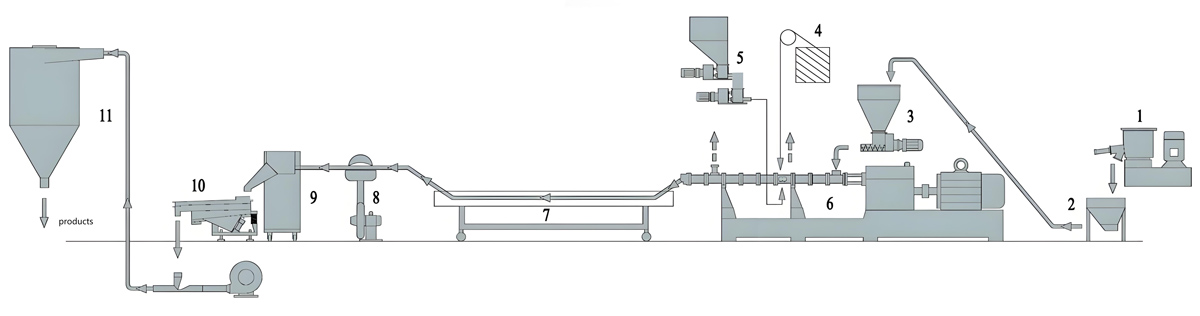
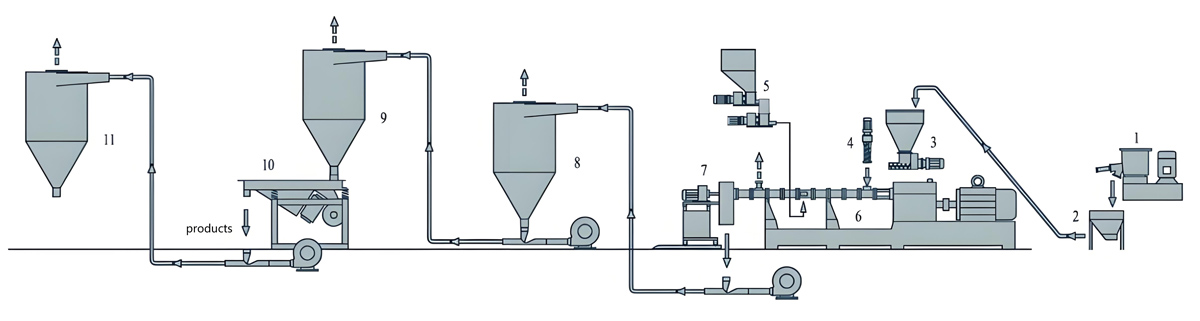
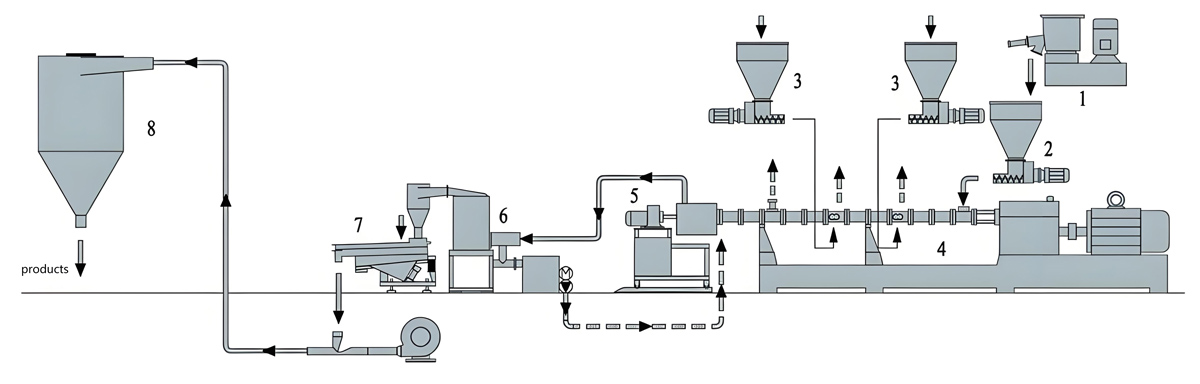
The production of antistatic ABS masterbatch using explosion-proof twin screw extruders involves multiple carefully controlled stages that must be optimized to achieve consistent quality while maintaining safety standards. The process begins with raw material preparation, progresses through compounding and pelletizing, and concludes with quality control and packaging. Each stage requires specific attention to process parameters and safety considerations to ensure optimal dispersion of conductive additives and prevent fire or explosion hazards.
Raw material preparation is a critical first step that significantly influences final product quality and safety. Antistatic additives, particularly carbon black and carbon fibers, must be stored in properly grounded containers to prevent static charge accumulation. Carbon black, being fine and conductive, requires special handling to prevent dust explosions. The storage area must be equipped with appropriate explosion protection systems and maintained with positive pressure to prevent dust accumulation. ABS carrier resin should be stored in dry conditions to prevent moisture absorption, which can cause processing defects and potentially contribute to hazardous conditions. All containers and handling equipment must be properly grounded to prevent static discharge. Raw materials must be weighed with high precision, typically to within 0.1% accuracy, to ensure consistent batch-to-batch composition. Carbon black, being extremely fine and prone to dust generation, requires enclosed weighing systems with dust collection to prevent airborne dust that could create explosion hazards.
Feeding of raw materials into the explosion-proof twin screw extruder requires precise metering and continuous grounding to prevent static charge accumulation. Carbon black is typically fed through enclosed gravimetric feeders with conductive liners and grounding connections. The feed system must be designed to prevent dust generation and ensure continuous grounding throughout the feeding process. Carrier polymer is fed through separate gravimetric feeders, with feeding rates adjusted based on polymer melt flow index and desired throughput. Dispersing agents and processing aids are typically fed through volumetric or gravimetric feeders depending on their form and accuracy requirements. The entire feed system must be interconnected with grounding systems to ensure all components maintain equipotential status. Feed zones must be equipped with explosion relief devices or containment systems to protect against potential deflagration events.
The compounding process in the explosion-proof twin screw extruder occurs through a series of carefully designed barrel zones, each optimized for specific processing functions. The initial feed zone operates at lower temperatures, typically 160°C to 180°C for ABS, to ensure smooth feeding without premature melting that could cause material bridging. As material progresses through the extruder, temperature gradually increases, with the melting zone reaching 190°C to 210°C for optimal melting of ABS resin. The high shear mixing zones, where dispersion of antistatic additives occurs, typically operate at peak processing temperatures of 210°C to 230°C. These temperatures must be carefully controlled to prevent thermal degradation of ABS while providing sufficient energy for dispersion of conductive additives. The exact temperature profile must be optimized for specific ABS grades and antistatic additive types, as different formulations have different thermal stability requirements.
Static charge control during processing is essential for safe operation of antistatic masterbatch production. All metal components in contact with the material must be continuously grounded through bonding systems that ensure equipotential status throughout the process. The extruder barrel, screws, die, and all metal components in the melt path must be bonded together and connected to the facility ground system. The grounding system must be regularly tested to verify that resistance to ground is below specified limits, typically less than 10 ohms. Monitoring systems can detect ground faults and alert operators to potential safety issues. The entire processing system must be maintained in an inert atmosphere or equipped with explosion suppression systems to prevent ignition of any combustible dust or vapors that may be generated during processing.
Melt filtration is an essential step in antistatic ABS masterbatch production, removing oversized particles, agglomerates, and contaminants that could affect product quality. Melt filters with mesh sizes ranging from 150 to 400 microns are commonly used, with the exact selection depending on the antistatic additive particle size and dispersion quality requirements. Filter changers must be equipped with explosion protection features, including containment systems to prevent exposure of hot material to atmosphere and automatic shutdown systems to prevent material flow during filter changes. The filtration system must be designed to prevent pressure surges that could cause mechanical failure or create hazardous conditions. Screen changers with continuous operation capabilities are preferred for antistatic masterbatch production to minimize the frequency of manual interventions that could create safety hazards.
Pelletizing of the compounded antistatic ABS masterbatch typically uses strand pelletizers or underwater pelletizers depending on the material characteristics and desired pellet shape. Strand pelletizing is common for ABS-based masterbatches due to the material’s tendency to form clean strands that cut cleanly. The pelletizing area must be equipped with appropriate explosion protection, including grounding of all metal components and fire suppression systems. Pelletizing knives must be inspected regularly for wear, as worn knives can create dust and sparks that could ignite combustible dust. The pelletizing process must be controlled to achieve consistent pellet size, typically 2mm to 4mm in diameter and 3mm to 6mm in length, which ensures uniform feeding in downstream processing equipment. Consistent pellet size is particularly important for antistatic masterbatches because variations in pellet size can lead to inconsistent additive distribution in the final molded or extruded product.
Cooling of the pellets after pelletizing is critical to prevent thermal degradation and maintain material properties. Air cooling systems with adjustable temperature control are typically used, with cooling air temperatures maintained between 20°C and 30°C. The cooling system must be designed to prevent static charge accumulation on the pellets, which could create static discharge hazards. The pellets must be cooled sufficiently to prevent sticking during subsequent handling, typically to below 50°C, but not overcooled to avoid thermal stress that could affect the antistatic properties. The cooling system must be properly grounded to prevent static charge accumulation on cooled pellets. Antistatic cooling lines or ionized air systems can be used to neutralize any static charge that may accumulate on the pellets during cooling.
Quality control procedures include measurement of surface resistivity, dispersion quality assessment, thermal property testing, and mechanical property evaluation. Surface resistivity is measured using specialized resistivity meters according to ASTM D257 or ISO standards, with acceptance criteria defined based on application requirements. Dispersion quality is assessed through microscopic examination of pellet cross-sections, looking for uniform distribution of conductive additives without significant agglomeration. Thermal properties including melt flow index and thermal stability are tested to ensure that the masterbatch will process consistently in customer applications. Mechanical properties including impact strength and tensile strength may be tested for formulations where the antistatic additives affect mechanical performance. Regular surface resistivity measurement is critical for ensuring that the masterbatch will provide the required static dissipation in the end application.
Production Equipment Introduction
The production of antistatic ABS masterbatch requires specialized explosion-proof twin screw extruders capable of handling conductive materials safely while achieving high dispersion quality. Explosion-proof twin screw extruders incorporate multiple advanced technologies to achieve safe operation in hazardous environments without sacrificing mixing performance or processing capabilities. These machines are particularly important for antistatic masterbatch production where the conductive nature of additives creates significant fire and explosion hazards that must be carefully managed.
Explosion-proof twin screw extruders feature comprehensive grounding and bonding systems that prevent static charge accumulation throughout the processing system. All metal components in contact with material are interconnected with bonding jumpers and connected to a common ground point that is ultimately connected to the facility ground. The grounding system must provide continuous equipotential status throughout the equipment, with resistance to ground maintained below 10 ohms to ensure effective charge dissipation. Grounding points are provided at multiple locations on the equipment, including the extruder barrel, die adapter, pelletizer frame, and all metal components in the material path. The grounding system is designed with redundant connections to ensure that the equipment remains grounded even if one connection fails. Ground monitoring systems continuously measure resistance to ground and alert operators to any ground faults that could create safety hazards.
Spark-resistant construction features are incorporated throughout explosion-proof extruders to prevent ignition of combustible atmospheres. All internal components that could create friction or impact are constructed from non-sparking materials such as aluminum, bronze, or brass where possible. Where steel components are necessary, they are treated with coatings or designed to prevent conditions that could create sparks. The screw and barrel are designed with minimal clearances to prevent metal-to-metal contact that could create sparks. Bearings are selected to minimize the risk of spark generation, and all rotating components are balanced to reduce vibration that could cause wear and potential spark generation. The drive system is enclosed in spark-resistant housings that prevent any sparks generated internally from reaching the atmosphere.
Explosion-proof electrical components are used throughout the equipment to ensure compliance with hazardous area requirements. Motors are rated for the specific hazardous area classification, typically Class I, Division 1 or 2, Group D for organic dusts and vapors. Motor enclosures are explosion-proof or flameproof depending on the area classification and risk assessment. Electrical enclosures for control components are rated for the hazardous area classification and include pressure relief devices and flame paths that prevent internal explosions from propagating to the external environment. All electrical connections are made in explosion-proof junction boxes with appropriate sealing and gasketing. Wiring within hazardous areas is installed in rigid or flexible metal conduit to provide mechanical protection and prevent damage that could create sparks.
Pressure relief systems are incorporated at strategic locations to protect against potential overpressure events. The feed zone and vent areas are equipped with explosion relief vents that open at predetermined pressure levels to prevent catastrophic equipment failure. These relief vents typically direct overpressure to a safe location away from personnel and other equipment. Melt pressure relief devices are installed in the melt stream to protect against excessive pressure buildup that could cause equipment rupture. All pressure relief devices are regularly inspected and tested to ensure proper operation. Relief system design complies with NFPA 68 and other applicable standards for explosion protection.
Inert atmosphere systems may be incorporated to provide an additional layer of protection against combustion. Nitrogen or other inert gases can be introduced at the feed zone, vent zone, and other critical locations to maintain oxygen concentrations below the minimum oxygen concentration for combustion. Oxygen monitoring systems continuously measure oxygen levels and alert operators if concentrations approach unsafe levels. Inert atmosphere systems are particularly valuable for processing highly combustible materials or when operating in particularly hazardous environments. The inert gas supply system must be designed to provide adequate flow and pressure to maintain the desired atmosphere throughout the processing system.
Kerke KTE Series twin screw extruders from Nanjing Kerke Extrusion Equipment Company represent advanced explosion-proof solutions specifically designed for antistatic masterbatch production. The KTE Series incorporates comprehensive explosion protection features including grounding and bonding systems, spark-resistant construction, explosion-proof electrical components, and pressure relief systems. These extruders are available in screw diameters from 20mm to 120mm, with length-to-diameter ratios of 40:1 to 60:1 to provide sufficient mixing length for antistatic additive dispersion. The KTE Series features modular construction that allows easy maintenance and reconfiguration for different masterbatch formulations, with quick-change barrel segments and screw elements that facilitate rapid product changeovers while maintaining explosion protection integrity.
Parameter Settings
Proper parameter settings are essential for achieving consistent quality in antistatic ABS masterbatch production using explosion-proof twin screw extruders. Temperature profiles, screw speeds, feed rates, grounding verification, and other process parameters must be optimized for each specific formulation to achieve optimal dispersion while maintaining safe operating conditions. Parameter optimization requires consideration of material properties, equipment capabilities, safety requirements, and product quality specifications.
Temperature profiles must be carefully configured to ensure proper melting, dispersion, and devolatilization while preventing thermal degradation of ABS. A typical temperature profile for ABS antistatic masterbatch production is: Feed zone 160°C to 180°C, melting zone 180°C to 200°C, mixing zone 200°C to 220°C, vent zone 190°C to 200°C, and die zone 210°C to 230°C. The exact temperatures must be adjusted based on the specific ABS grade, antistatic additive type, and required surface resistivity. Higher carbon black loadings may require slightly lower processing temperatures to prevent thermal degradation, while conductive polymer-based formulations may require different temperature profiles based on the conductive polymer characteristics. Temperature uniformity across the barrel cross-section is critical for consistent dispersion and processing, requiring proper heater sizing and control algorithms that maintain tight temperature control, typically within plus or minus 2°C of setpoint.
Screw speed significantly affects dispersion quality, residence time, and equipment wear. For antistatic ABS masterbatch production, screw speeds typically range from 150 to 350 rpm depending on screw diameter and material characteristics. Smaller extruders with 20mm to 40mm screw diameters typically operate at higher speeds of 250 to 350 rpm to achieve sufficient mixing intensity for conductive additive dispersion. Medium-sized extruders with 50mm to 80mm screw diameters typically operate at 200 to 300 rpm. Large extruders with 90mm to 120mm screw diameters typically operate at 150 to 250 rpm. The optimal screw speed balances mixing intensity with residence time, ensuring sufficient dispersion without causing excessive thermal degradation or equipment wear. Screw speed must be optimized in conjunction with the screw configuration to achieve the desired dispersion quality. Screw speed also affects residence time, which influences the extent of dispersion and the potential for thermal degradation of ABS resin.
Feed rates must be optimized to maintain consistent residence time and filling level in the extruder. Higher feed rates increase throughput but reduce residence time, potentially compromising dispersion quality. Lower feed rates improve dispersion but reduce productivity. For antistatic ABS masterbatch with 15% to 30% additive loading, typical feed rates range from 50 to 200 kg per hour for 20mm to 40mm extruders, 200 to 800 kg per hour for 50mm to 80mm extruders, and 800 to 3000 kg per hour for 90mm to 120mm extruders. The feed rate should be adjusted to maintain a partially filled condition in the mixing zones, which allows sufficient time for dispersion without causing excessive residence time that could degrade thermal stability. Feed rates also affect the degree of fill in the extruder, which influences dispersion quality and shear conditions. Overfilling the extruder can cause excessive back pressure and potentially hazardous conditions, while underfilling can reduce dispersion quality due to insufficient shear and residence time.
Grounding verification must be performed regularly to ensure safe operation of explosion-proof equipment. Ground resistance measurements should be taken at least once per shift, with acceptable values typically below 10 ohms to ground at all grounding points. Ground monitoring systems, if equipped, provide continuous measurement and alert operators to any ground faults that develop during operation. All grounding connections must be inspected regularly for tightness and corrosion resistance, with periodic resistance testing to verify proper grounding integrity. The grounding system must be interconnected with all metal components in the material path, including the extruder, feeder frames, die adapter, pelletizer, and all conveying systems. Bonding jumpers must be properly sized and installed to ensure low resistance connections between components. Grounding effectiveness can be affected by contamination, corrosion, or mechanical damage, requiring regular inspection and maintenance to ensure continuous protection.
Vent vacuum levels must be optimized to remove moisture, volatiles, and entrapped air from the melt. Inadequate venting can cause voids, bubbles, and surface defects in the pellets, while excessive venting can cause material loss and increased energy consumption. Typical vent vacuum levels range from 700 to 900 mbar absolute pressure for ABS antistatic masterbatch production. The vacuum level should be adjusted based on the moisture content of raw materials and the volatility of processing aids. Materials with higher moisture content require stronger vacuum to achieve effective drying, while volatile processing aids may require reduced vacuum to prevent excessive material loss through the vent. Vent systems must be equipped with explosion protection including relief devices and condensers to protect against potential deflagration events. The vent area must be maintained under negative pressure to prevent dust escape into the environment.
Die temperature and pressure settings affect pellet quality and consistency. Die temperatures are typically set 5°C to 10°C above the final barrel zone temperature to ensure proper flow through the die. For ABS antistatic masterbatch, die temperatures typically range from 220°C to 240°C. Die pressure typically ranges from 50 to 150 bar depending on material viscosity and throughput rate. Higher die pressures can improve pellet definition but increase equipment stress and potential safety hazards. The optimal die pressure balances pellet quality with equipment safety considerations. Die pressure monitoring systems should be installed with high-pressure alarms and automatic shutdown capabilities to prevent overpressure events that could compromise equipment safety. Die lip temperature must be controlled precisely to prevent material hang-up that could degrade and potentially create hazardous conditions.
Equipment Price
The investment required for explosion-proof twin screw extruder systems for antistatic ABS masterbatch production varies significantly based on equipment size, configuration, explosion protection classification, and optional accessories. Understanding the cost structure and pricing factors helps manufacturers make informed investment decisions and budget appropriately for equipment acquisition. Prices are typically quoted in US dollars for international transactions, though actual transaction prices may vary based on local conditions, currency exchange rates, and specific customer requirements.
Explosion-proof twin screw extruders are available in various size categories with corresponding price ranges. Small laboratory or pilot-scale extruders with 20mm to 25mm screw diameters typically range from USD 45,000 to USD 75,000 depending on explosion protection classification and configuration. These small extruders typically have throughput capacities of 10 to 50 kg per hour and are suitable for formulation development and small-scale production with appropriate explosion protection. Medium-sized production extruders with 40mm to 60mm screw diameters typically range from USD 120,000 to USD 250,000 depending on specifications and explosion protection level. These extruders typically achieve throughput rates of 100 to 500 kg per hour and represent the most common size range for antistatic ABS masterbatch production. Large production extruders with 80mm to 120mm screw diameters typically range from USD 350,000 to USD 800,000 or more depending on configuration and explosion protection requirements. These large extruders can achieve throughput rates of 800 to 3000 kg per hour and are suitable for high-volume production facilities.
Explosion-proof features represent a significant cost component, typically adding 25% to 50% to the base extruder price compared to standard extruders without explosion protection features. Grounding and bonding systems typically cost USD 10,000 to USD 30,000 depending on extruder size and complexity of the grounding system. Explosion-proof electrical components including motors, enclosures, and junction boxes typically add USD 20,000 to USD 60,000 compared to standard electrical components, depending on the hazardous area classification and component count. Pressure relief systems typically cost USD 8,000 to USD 20,000 depending on the number and size of relief devices. Inert atmosphere systems, if required, typically cost USD 15,000 to USD 40,000 depending on gas storage capacity and monitoring system sophistication. The total premium for explosion-proof features typically ranges from USD 50,000 to USD 150,000 depending on extruder size and the extent of explosion protection specified.
Kerke KTE Series twin screw extruders from Nanjing Kerke Extrusion Equipment Company offer competitive pricing in the market while providing comprehensive explosion protection capabilities. For KTE Series extruders with explosion protection, typical pricing includes: KTE-25 (25mm screw diameter) approximately USD 50,000 to USD 75,000 with basic explosion protection, KTE-40 (40mm screw diameter) approximately USD 130,000 to USD 180,000 with standard explosion protection, KTE-60 (60mm screw diameter) approximately USD 200,000 to USD 280,000 with comprehensive explosion protection, KTE-80 (80mm screw diameter) approximately USD 380,000 to USD 550,000 with full explosion protection system, and KTE-120 (120mm screw diameter) approximately USD 600,000 to USD 850,000 with complete explosion protection including optional inert atmosphere system. These prices typically include the extruder with explosion-proof features, standard control system with hazardous area rating, and basic accessories. Custom configurations, additional accessories, and higher protection classifications will increase the final price.
Feeding systems represent a significant additional cost for antistatic ABS masterbatch production. Explosion-proof gravimetric feeding systems typically cost USD 15,000 to USD 40,000 per feeder depending on accuracy requirements, material handling capacity, and explosion protection level. Antistatic masterbatch production typically requires at least two gravimetric feeders, one for the carrier polymer and one for the conductive additive, with additional feeders for additives if required. Enclosed feeder systems with dust collection and explosion protection are essential for carbon black feeding to prevent dust explosion hazards. Liquid dosing systems for processing aids typically cost USD 8,000 to USD 20,000 per dosing system with explosion-proof features. Bulk material handling systems including explosion-proof storage silos, conveyors, and feeders can cost an additional USD 30,000 to USD 100,000 depending on capacity and automation level.
Pelletizing systems represent another significant cost component with explosion protection requirements. Strand pelletizing systems typically cost USD 25,000 to USD 60,000 depending on throughput capacity and automation level, with additional costs for explosion protection of USD 10,000 to USD 25,000. Underwater pelletizing systems typically cost USD 40,000 to USD 90,000 depending on capacity, with explosion protection adding USD 15,000 to USD 35,000. Cooling systems for strand pelletizing typically cost USD 10,000 to USD 25,000 depending on capacity and temperature control requirements. Complete pelletizing packages including cutting, cooling, conveying, and explosion protection typically range from USD 40,000 to USD 130,000 depending on throughput and automation.
Complete turnkey production lines including extruder, explosion-proof feeding systems, pelletizing, material handling, and control systems typically cost: Small pilot-scale lines with 20mm to 25mm extruders approximately USD 120,000 to USD 200,000, medium-scale production lines with 40mm to 60mm extruders approximately USD 300,000 to USD 650,000, and large-scale production lines with 80mm to 120mm extruders approximately USD 700,000 to USD 1,800,000 or more. These complete line prices include all major equipment, explosion protection integration, startup support, and basic training. Additional costs for facility preparation, utilities installation, hazardous area classification, safety certifications, and operator training are not included in equipment prices and should be budgeted separately, typically adding 15% to 30% to the equipment investment depending on facility conditions and local regulations.
Production Problems and Solutions
Despite careful process optimization and safety measures, antistatic ABS masterbatch production can encounter various problems that affect product quality, equipment performance, operational safety, or regulatory compliance. Understanding common problems, their causes, and implementing effective solutions is essential for maintaining consistent production and minimizing hazards. Each problem requires specific diagnostic approaches and corrective actions to address root causes while maintaining safety compliance.
Inadequate surface resistivity in the finished masterbatch represents one of the most common quality problems. This problem can manifest as higher-than-specified surface resistivity, inconsistent resistivity between batches, or failure to achieve the required static dissipation performance. The most common cause is insufficient antistatic additive loading in the formulation, which can occur from weighing errors during raw material preparation, segregation during feeding, or additive degradation during processing. Another frequent cause is poor dispersion of conductive additives resulting in conductive pathways that are not continuous throughout the matrix. Inadequate dispersion can result from insufficient mixing intensity, improper screw configuration, or processing temperatures that prevent proper dispersion. Overprocessing can cause thermal degradation of conductive additives, particularly migratory antistatic agents, which can reduce conductivity. Inconsistent additive quality between batches can also cause resistivity variations.
Addressing inadequate surface resistivity requires systematic investigation of multiple potential causes. The first step is verification of the formulation by checking weighing records for raw material preparation and confirming that actual ingredient quantities match the target formulation. If formulation errors are identified, the batch should be recompounded with corrected ingredient quantities. For segregation problems, the feeding system should be inspected and modified to ensure uniform mixing of conductive additives with carrier polymer, possibly through the use of pre-mixing systems or improved feeder design. For dispersion problems, screw configuration should be reviewed to ensure sufficient mixing elements are present, and screw speed may be increased to enhance dispersion intensity. Temperature profiles should be reviewed to ensure that temperatures are optimized for dispersion without causing thermal degradation. If additive degradation is suspected, residence time may be reduced by adjusting feed rate or screw speed, or processing temperatures may be reduced if thermal stability is the concern. Material quality should be verified through testing of incoming additive conductivity and composition.
Preventing inadequate surface resistivity problems requires implementation of preventive measures during formulation development and ongoing quality control. Formulation development should include margin in antistatic additive loading to account for normal variations in raw material properties and processing conditions. Process validation should establish acceptable processing windows for temperature, screw speed, and residence time that prevent additive degradation while ensuring adequate dispersion. Regular quality control testing should include measurement of surface resistivity on each production batch to detect developing problems before they affect customer deliveries. Raw material specifications should include conductivity requirements that ensure incoming additives meet quality standards. Equipment maintenance programs should include regular inspection of mixing elements to ensure they are not worn, which can reduce mixing effectiveness. Process monitoring should include in-line conductivity measurement if available, providing real-time feedback on dispersion quality.
Static discharge incidents during production represent a serious safety problem in antistatic masterbatch production. These incidents can range from minor static shocks to serious fire or explosion events depending on the concentration of combustible dust or vapors present. The primary causes include inadequate grounding of equipment, accumulation of static charge on materials or components, inadequate bonding between equipment sections, or failure of grounding monitoring systems. Other contributing factors include dry environmental conditions that increase static charge accumulation, high-speed material handling that generates more static, and inadequate humidity control in the processing area. Static discharge can ignite combustible dust from antistatic additives or combustible vapors from processing aids, creating potentially catastrophic events.
Addressing static discharge incidents requires immediate corrective action to restore safe operating conditions. The first response to any static discharge incident should be immediate shutdown of processing equipment to prevent escalation of any fire or explosion event. The area should be evacuated and assessed for safety before re-entry. Grounding systems must be inspected and tested to identify any faults or discontinuities that may have contributed to the incident. All grounding connections should be cleaned and retightened to ensure low resistance connections. Bonding jumpers should be inspected for damage and replaced if necessary. If humidity is low, environmental controls should be adjusted to increase relative humidity, typically to 40% to 60%, which helps reduce static charge accumulation. Material handling procedures should be reviewed to reduce high-speed operations that generate static, possibly by reducing transfer speeds or using enclosed transfer systems. Ground monitoring systems should be tested and recalibrated if necessary to ensure proper operation.
Preventing static discharge incidents requires comprehensive attention to grounding, bonding, and environmental control during equipment design, installation, and operation. Equipment selection should include robust grounding and bonding systems designed for the specific hazard level of the materials being processed. Grounding systems should be oversized and redundant to ensure continuous protection even if one connection fails. Installation must include proper bonding between all equipment sections and connection to a low-impedance facility ground system. Regular maintenance programs should include inspection of all grounding and bonding connections, with resistance testing at least quarterly to verify that resistance to ground remains below specified limits. Environmental controls should maintain relative humidity above 40% in processing areas to help dissipate static charges. Material handling systems should be designed to minimize dust generation and high-speed operations that could generate static. Personnel training should include awareness of static hazards and procedures for reporting potential grounding or bonding issues immediately.
Dispersion problems resulting in agglomeration of antistatic additives represent a significant quality issue that can cause inconsistent resistivity and processing difficulties in downstream applications. Agglomerates appear as visible specks or dark spots in molded parts or extruded products and can cause variations in surface resistivity. The primary causes of agglomeration include insufficient dispersing agent concentration, inadequate mixing intensity, excessive screw speed causing additive degradation and reagglomeration, temperature profiles that cause dispersing agents to volatilize prematurely, or poor initial dispersion due to inadequate wetting of additives by the carrier polymer. High additive loadings, particularly with carbon black, increase the difficulty of achieving uniform dispersion and make agglomeration more likely if processing conditions are not optimized.
Solving agglomeration problems requires addressing the underlying dispersion issues through formulation and process adjustments. The first approach is to increase dispersing agent concentration in the formulation, typically by 2% to 5% depending on the severity of the problem. Different dispersing agents with improved wetting characteristics for the specific antistatic additive may be tested, including polymeric dispersants or surfactant-type dispersants with specific affinity for conductive particles. Screw configuration should be reviewed to ensure that sufficient mixing elements, particularly kneading blocks and reverse elements, are present to provide intensive mixing. The mixing zone may be extended by adding additional barrel segments if the extruder configuration allows. Temperature profiles should be adjusted to ensure that dispersing agents remain active throughout the mixing zones, which may require lower temperatures in early zones and higher temperatures in mixing zones to optimize dispersion efficiency. Screw speed may be adjusted to optimize shear conditions, with lower speeds sometimes providing better dispersion for materials that are sensitive to shear heating.
Preventing agglomeration problems requires attention to multiple factors throughout the production process. Raw material quality control should include particle size analysis of antistatic additives to ensure they meet specifications, as overly coarse additives are more difficult to disperse. Dispersing agent selection should consider compatibility with both the antistatic additive and carrier polymer, with testing performed on multiple candidates to identify the most effective options. Process development should include optimization of screw configuration and processing parameters specifically for dispersion quality, potentially using advanced mixing elements or multiple mixing zones. Regular quality control should include microscopic examination of pellet cross-sections to detect developing dispersion problems before they cause customer complaints. Equipment maintenance programs should include regular inspection of mixing elements to ensure they are not worn, which can reduce mixing effectiveness. Pre-mixing of additives with carrier polymer before feeding into the extruder can improve initial dispersion and reduce the likelihood of agglomeration.
Color contamination in antistatic ABS masterbatch represents a quality problem particularly important for applications where color consistency is required. Carbon black-based antistatic masterbatches naturally produce black color, but color contamination from previous production runs or cross-contamination between different additive types can cause unacceptable color variations. Causes include inadequate equipment cleaning between product changes, use of the same equipment for both pigmented and unpigmented products, insufficient purging between product changes, or cross-contamination in material handling systems. Color contamination can be particularly problematic for light-colored end products where even small amounts of carbon black can cause noticeable color changes.
Addressing color contamination requires thorough cleaning and purging procedures. The first step is complete disassembly and cleaning of the extruder, die, and all material contact surfaces when changing between significantly different products. Cleaning should include removal of screw elements for detailed cleaning if color contamination is severe. The die and adapter should be removed and cleaned thoroughly, with attention to corners and flow channels where material can accumulate. Pelletizing knives should be removed and cleaned or replaced if contaminated. After reassembly, extensive purging should be performed using appropriate purge compounds to remove residual material from the system. Multiple purge cycles may be necessary, with inspection of the purge material to determine when cleaning is complete. Material handling systems including feeders, hoppers, and conveying equipment should be cleaned to prevent cross-contamination.
Preventing color contamination requires establishing dedicated equipment for incompatible product types or implementing rigorous cleaning procedures. Where dedicated equipment is not practical, strict product changeover procedures should be implemented with documentation of cleaning steps and purge material inspection. Material handling systems should be designed to minimize cross-contamination, possibly with dedicated lines for different product categories. Product sequencing should be planned to minimize the need for extensive cleaning, grouping compatible products together in production schedules. Quality control should include color measurement on initial production after changeovers to ensure that contamination has been eliminated. Visual inspection of pellets and molded test specimens should be performed to detect color problems before product is released to customers.
Maintenance
Regular maintenance is essential for maintaining optimal performance and safety compliance in antistatic ABS masterbatch production. The conductive nature of antistatic additives, the safety requirements for explosion-proof operation, and the precision requirements for dispersion quality all contribute to the importance of comprehensive maintenance programs. Implementing preventive and predictive maintenance programs helps minimize unplanned downtime, maintain product quality, ensure safety compliance, and reduce total cost of ownership over the equipment lifespan.
Daily maintenance tasks focus on inspection and verification of safety-critical systems that ensure safe operation during the production shift. At the start of each shift, operators should perform visual inspections of grounding and bonding connections to ensure they are secure and free from corrosion. Ground resistance should be measured and recorded at all grounding points to verify that resistance remains below specified limits, typically below 10 ohms. Temperature readings from all barrel zones should be recorded and compared to normal operating ranges to identify developing temperature control problems. Pressure readings from the melt pressure transducer should be monitored to ensure consistent die pressure, with sudden pressure increases potentially indicating filter clogging or material problems. Noise and vibration monitoring should be performed to identify developing mechanical problems before they cause equipment failure. The feeding system should be inspected for proper material flow and accurate metering, with particular attention to feeders handling conductive additives to ensure they are not subject to bridging or dust accumulation that could create explosion hazards.
Weekly maintenance tasks involve more detailed inspections and preventive maintenance activities. The grounding and bonding system should be thoroughly inspected, with all connections cleaned and tightened as needed. Ground resistance measurements should be taken at multiple points to verify the integrity of the entire grounding system. Explosion relief devices should be inspected for proper operation, with functional testing performed on relief devices that can be tested without compromising safety. Electrical enclosures should be inspected for proper sealing and condition of explosion-proof features. The vent system should be inspected and cleaned if necessary to prevent accumulation of conductive dust that could reduce venting effectiveness or create explosion hazards. The die assembly should be disassembled for inspection of wear patterns and cleaning of flow surfaces, with attention to preventing dust generation during cleaning. Pelletizer knives should be inspected for sharpness and proper alignment, with resharpening or replacement as needed. Explosion protection features on the pelletizer should be inspected to ensure proper operation.
Monthly maintenance tasks focus on more extensive preventive maintenance and condition monitoring of safety-critical systems. The drive system including electric motor, gearbox, and couplings should be inspected for signs of wear, overheating, or abnormal vibration, with particular attention to explosion-proof features of motor enclosures. Motor current readings should be recorded and trended to identify developing problems. Gearbox oil should be sampled and analyzed for wear particles, with oil replacement scheduled based on analysis results or at least annually regardless of analysis results. Bearing temperatures should be monitored for elevations that could indicate lubrication problems or wear. Screw and barrel wear should be measured using appropriate gauges, with measurements recorded to track wear rates over time. Feed system calibration checks should be performed using standard weights and flow rates to verify accuracy. The complete extruder should be cleaned thoroughly to remove conductive dust accumulation that could create explosion hazards or cause contamination. Oxygen monitoring systems, if equipped, should be tested and calibrated to ensure proper operation.
Semi-annual maintenance tasks involve major component inspection and replacement based on condition monitoring results and safety requirements. Screw elements should be removed for detailed inspection and measurement of wear dimensions, with particular attention to wear patterns that could affect grounding integrity. Elements with wear exceeding specified tolerances should be replaced to maintain mixing effectiveness and prevent metal-to-metal contact that could create sparks. The barrel bore should be inspected for wear patterns, ovality, or damage, with re-boring or replacement scheduled if wear exceeds specifications. The die and adapter should be removed for thorough cleaning and inspection of flow surfaces, with replacement if flow surfaces are significantly worn or damaged. All bearings in the drive system should be replaced preventively based on operating hours or condition monitoring results, with attention to maintaining explosion-proof integrity of bearing arrangements. All seals and gaskets should be replaced to prevent leakage and maintain explosion-proof enclosure integrity. The grounding system should be thoroughly tested with resistance measurements at all points, with repair or replacement of any components that fail to meet specifications. Explosion protection features including relief devices, flame paths, and explosion-proof enclosures should be inspected and tested to ensure proper operation.
Annual maintenance tasks involve comprehensive equipment assessment and major overhauls as required to maintain safety compliance and equipment performance. The complete extruder should be disassembled for thorough inspection and measurement of all components. Wear measurements should be compared to previous measurements to track wear rates and identify components approaching end of life. Based on wear measurements and operating hours, a replacement schedule should be established for major components including screw, barrel, die, and drive system components. The control system should be thoroughly tested and calibrated, with verification of safety interlocks and emergency shutdown systems. All electrical explosion-proof features should be inspected and tested by qualified personnel to verify compliance with hazardous area requirements. The complete feeding system should be disassembled, cleaned, inspected, and recalibrated, with particular attention to explosion protection features. Safety devices including pressure relief systems, ground monitoring systems, and emergency shutdown systems should be comprehensively tested. Documentation should be reviewed and updated to ensure all maintenance activities are properly recorded and certifications are current.
Predictive maintenance technologies can significantly improve maintenance effectiveness and reduce unplanned downtime for antistatic ABS masterbatch production equipment. Vibration monitoring of the drive system can detect bearing or gearbox problems before they cause catastrophic failure. Ground resistance monitoring can detect degradation of grounding systems before they compromise safety compliance. Thermographic inspection can identify overheating problems in electrical components or bearings. Oil analysis can detect wear particles in gearbox oil before significant damage occurs. Regular microscopic examination of pellet cross-sections can detect changes in dispersion quality that may indicate screw wear. These predictive maintenance techniques, combined with preventive maintenance schedules, enable more efficient maintenance planning and reduce the likelihood of unexpected equipment failures or safety compliance issues.
FAQ
Q: What explosion protection classification is required for antistatic ABS masterbatch production?
A: The required explosion protection classification depends on the hazardous materials present and the area classification according to local regulations such as NFPA, ATEX, or IECEx. For carbon black-based masterbatch production, the classification is typically Class I, Division 1 or 2, Group D for combustible dusts. The equipment must be rated for the specific classification of the installation area. Kerke KTE Series extruders can be configured for various explosion protection classifications to meet specific requirements.
Q: How often should grounding systems be tested in antistatic masterbatch production?
A: Grounding systems should be tested at least once per shift during normal operation to verify that resistance to ground remains below specified limits, typically 10 ohms. More formal resistance testing should be performed weekly using calibrated measurement equipment. Annual comprehensive testing should include measurement of all grounding points and verification of the complete grounding system integrity. Ground monitoring systems provide continuous testing and can alert operators to ground faults as they develop.
Q: What is the typical energy consumption for antistatic ABS masterbatch production?
A: Energy consumption depends on extruder size, throughput rate, material viscosity, and operating parameters. Typical specific energy consumption ranges from 0.2 to 0.45 kWh per kilogram of product for small extruders, and 0.15 to 0.35 kWh per kilogram for larger extruders. Higher additive loadings typically increase energy consumption due to higher melt viscosity and increased mixing requirements. Energy consumption can be optimized by proper screw design, temperature profile optimization, and use of efficient drive systems.
Q: Can antistatic ABS masterbatch be produced on standard twin screw extruders without explosion protection?
A: Production of antistatic ABS masterbatch on standard extruders without explosion protection may be possible in some cases but creates significant safety hazards and regulatory compliance issues. The conductive nature of antistatic additives creates static discharge hazards, and fine carbon black dust can create explosion hazards. Production without appropriate explosion protection violates occupational safety regulations and may invalidate insurance coverage. For safe and compliant production, explosion-proof equipment such as the Kerke KTE Series is strongly recommended.
Q: What is the maximum antistatic additive loading that can be processed in twin screw extruders?
A: The maximum practical antistatic additive loading depends on the additive type, particle characteristics, carrier polymer, and screw design. For carbon black-based masterbatches, practical maximum loading ranges from 30% to 35%. For carbon fiber-based formulations, maximum loading is typically lower, ranging from 20% to 25% due to fiber length considerations. Loadings above these ranges typically cause excessive viscosity, poor dispersion, and accelerated equipment wear. The optimal loading balances performance requirements with processability.
Q: How can surface resistivity be consistently achieved in antistatic masterbatch production?
A: Consistent surface resistivity achievement requires attention to formulation consistency, process control, and quality monitoring. Formulation consistency requires precise weighing of all components and use of quality-controlled raw materials with consistent conductivity characteristics. Process control requires stable temperature profiles, screw speeds, and feed rates to achieve consistent dispersion quality. Quality monitoring requires regular measurement of surface resistivity on production batches using standardized test methods. In-line conductivity monitoring, if available, provides real-time feedback on dispersion quality. Maintaining equipment condition through regular maintenance ensures consistent mixing performance over time.
Q: What safety precautions are required when handling carbon black for antistatic masterbatch production?
A: Carbon black handling requires comprehensive safety precautions due to its combustible dust hazards and health concerns. All handling equipment must be properly grounded to prevent static discharge. Closed handling systems with dust collection should be used to prevent airborne dust. Personal protective equipment including respirators and protective clothing should be worn when handling carbon black. Storage areas must be designed for combustible dust with explosion protection systems. All handling procedures should be documented and personnel trained on safe practices. Regular cleaning and inspection of handling equipment prevents dust accumulation that could create explosion hazards.
Conclusion
The production of antistatic ABS masterbatches requires specialized explosion-proof equipment, carefully optimized formulations, and rigorous safety management. Explosion-proof twin screw extruders such as the Kerke KTE Series provide the necessary combination of mixing performance, safety features, and explosion protection compliance required for successful antistatic masterbatch production in hazardous environments. The selection of appropriate equipment, optimization of processing parameters, and implementation of comprehensive safety and maintenance programs are all essential for achieving consistent product quality and safe operation.
Formulation development must balance antistatic performance requirements with processability, equipment wear considerations, and regulatory compliance. The conductive nature of antistatic additives creates static discharge hazards that must be carefully managed through proper grounding, bonding, and explosion protection systems. High additive loadings present challenges in terms of dispersion quality, viscosity control, and equipment wear. Proper selection of dispersing agents, processing aids, and additive types is essential for achieving uniform dispersion while maintaining acceptable processability and safety compliance.
Production process optimization requires careful attention to temperature profiles, screw speeds, feed rates, and grounding systems to achieve optimal dispersion while maintaining safe operating conditions. The interaction between processing parameters is complex, and optimization often requires experimental iteration to find the optimal balance for each specific formulation. Regular quality control testing is essential for monitoring process consistency and detecting developing problems before they affect product quality or create safety hazards. Grounding system verification must be performed regularly to ensure continuous protection against static discharge hazards.
Safety management requires comprehensive attention to explosion protection throughout the production process. Equipment must be properly classified and certified for the specific hazardous area requirements. Grounding and bonding systems must be designed, installed, and maintained to provide continuous protection. Regular inspection and testing of safety-critical systems ensures that explosion protection remains effective throughout equipment life. Personnel training must include awareness of explosion hazards and procedures for safe operation and emergency response. Compliance with applicable regulations such as ATEX, IECEx, NFPA, and local codes is essential for legal operation and insurance coverage.
Maintenance programs must address both the accelerated wear caused by conductive additives and the critical importance of maintaining explosion protection systems. Regular inspection and testing of grounding, bonding, and explosion protection features is essential for ensuring safety compliance. Component inspection and replacement based on wear measurements helps optimize the balance between component cost and production impact. Predictive maintenance technologies can significantly improve maintenance effectiveness by enabling early detection of developing problems before they cause unplanned downtime or safety compliance issues.
For manufacturers seeking to establish or expand antistatic ABS masterbatch production capabilities, explosion-proof twin screw extruders offer the necessary combination of performance, safety, and regulatory compliance for modern production facilities. The Kerke KTE Series from Nanjing Kerke Extrusion Equipment Company provides advanced explosion-proof technology specifically designed for antistatic masterbatch applications, offering competitive pricing and proven reliability. By implementing appropriate equipment, optimized processes, comprehensive safety programs, and rigorous maintenance procedures, manufacturers can achieve consistent production of high-quality antistatic ABS masterbatches meeting the demanding requirements of electronics, automotive, clean room, and other static-sensitive applications while maintaining full compliance with explosion protection regulations.