Introduction
Thermoplastic polyester elastomer (TPEE) and thermoplastic vulcanizate (TPV) represent advanced thermoplastic elastomer materials combining exceptional mechanical properties, chemical resistance, and thermal stability with the processing advantages of thermoplastics. TPEE offers outstanding fatigue resistance, abrasion resistance, and high-temperature performance, while TPV provides excellent oil resistance, weather resistance, and elastic recovery. Masterbatch production for TPEE/TPV materials demands specialized equipment capable of handling high processing pressures, abrasive fillers, and challenging material characteristics.
High pressure resistant twin screw extruders have emerged as essential solutions for TPEE/TPV masterbatch manufacturing due to their ability to withstand high internal pressures generated during processing of these materials. The robust construction and reinforced components ensure reliable operation under demanding processing conditions involving high back pressure, abrasive fillers, and high-viscosity melts. The global thermoplastic elastomer market continues experiencing robust growth, projected to reach USD 42.5 billion by 2030, with TPEE and TPV commanding premium market segments driving demand for specialized production equipment.
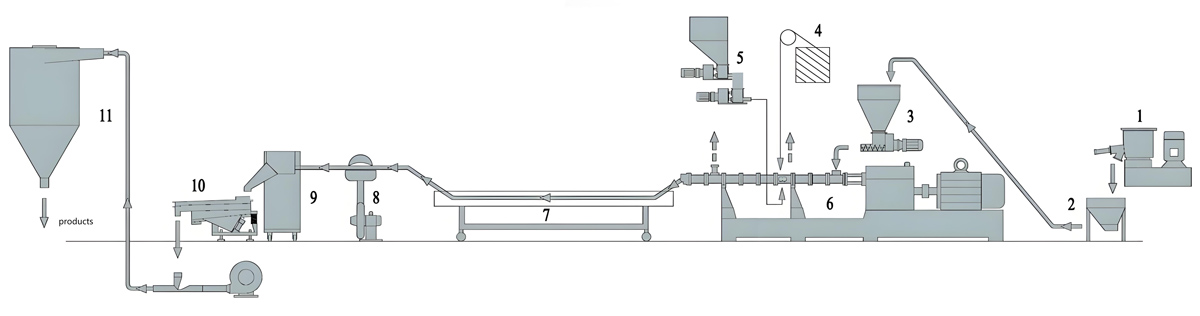
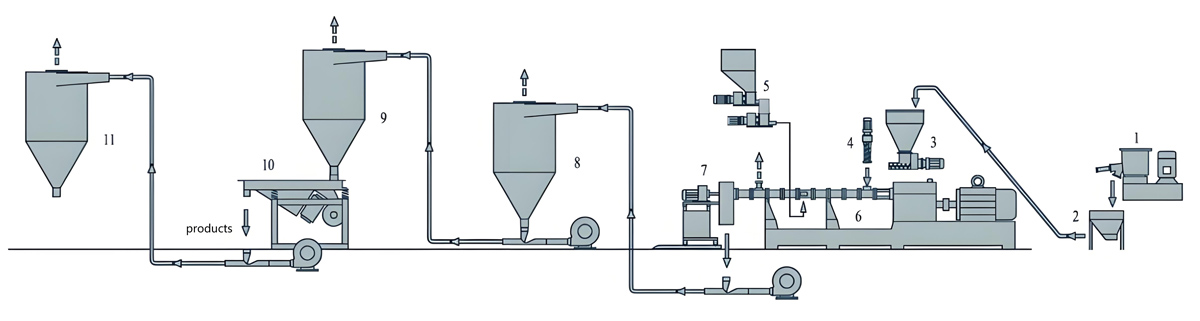
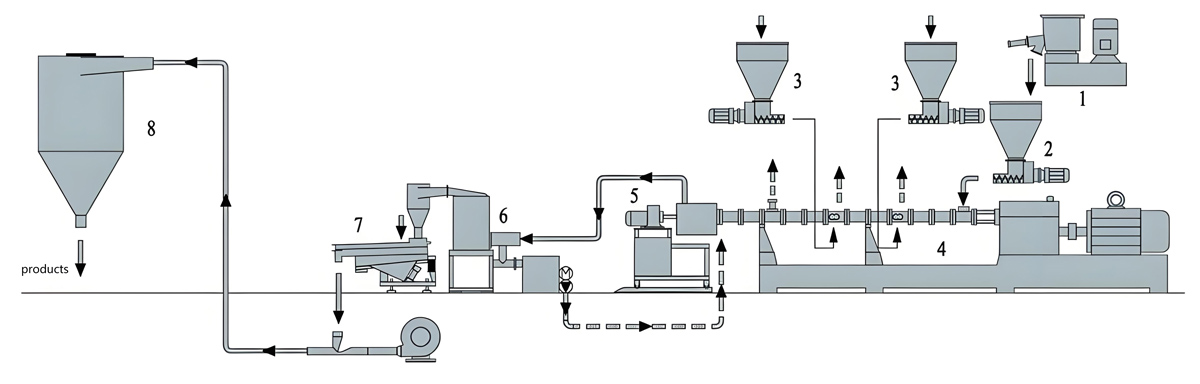
KTE Series high pressure resistant twin screw extruders specifically engineered for TPEE/TPV masterbatch production incorporate advanced design features addressing the high-pressure requirements and challenging processing characteristics of these materials. The equipment provides reinforced barrel construction, heavy-duty drive systems, and optimized screw configurations that handle high-viscosity materials while delivering excellent dispersion quality. Throughput capabilities range from 25 to 800 kg per hour, enabling production scale from pilot through commercial manufacturing capacity.
Formulation Ratios
TPEE Color Masterbatch Formulations
TPEE color masterbatch formulations accommodate the material’s high processing temperatures and thermal stability requirements while maintaining excellent mechanical properties. Standard TPEE color masterbatch formulations include colorant concentrations ranging from 5 to 35% depending on target application requirements and performance demands. Carrier resin typically constitutes 50-90% of total composition, with TPEE serving as the carrier matrix ensuring compatibility and maintaining high-temperature performance in final products.
High concentration color masterbatch formulations (25-35% pigment) for TPEE applications require specialized dispersing agents at 10-13% concentration to achieve adequate pigment dispersion at elevated loading levels while maintaining processing at high temperatures. These formulations typically use high-temperature stable pigments selected for compatibility with TPEE chemistry and thermal requirements. Carrier resin content decreases to 45-60% in high pigment loading formulations, with the balance comprising processing aids, heat stabilizers, and dispersants specifically selected for TPEE high-temperature processing.
Medium concentration formulations (15-20% pigment) represent the most common loading level for TPEE masterbatch production, balancing handling characteristics with economic efficiency and color intensity requirements while maintaining material properties. These formulations typically contain 9-11% dispersing agents selected for TPEE high-temperature compatibility, 6-8% processing aids including heat stabilizers and processing aids, with TPEE carrier resin comprising 61-70% of total composition. The moderate pigment loading enables excellent dispersion quality while maintaining adequate melt flow characteristics for high-temperature processing.
Low concentration formulations (5-8% pigment) facilitate easy metering and excellent dispersion quality particularly important for applications requiring minimal impact on mechanical properties. These formulations typically use 6-7% dispersing agents, 5-6% processing aids including antioxidants and heat stabilizers, with TPEE carrier resin constituting 80-84% of total composition. The low pigment loading enables excellent color development and uniformity while providing flexibility for dilution to various end-product concentrations without significantly affecting TPEE mechanical properties.
TPV Reinforcement Masterbatch Formulations
TPV reinforcement masterbatch formulations focus on enhancing mechanical properties, improving dimensional stability, or reducing material cost through strategic filler incorporation. Mineral filler masterbatch formulations typically contain 30-55% reinforcing filler, 11-15% dispersing agents, 7-10% processing aids and coupling agents, with TPV carrier resin constituting 20-52% of total composition. Common reinforcing fillers include calcium carbonate, talc, silica, or mica selected for compatibility with TPV crosslinked structure.
Flame retardant masterbatch for TPV incorporates halogen-free flame retardants meeting stringent environmental and safety requirements. These formulations typically contain 25-45% flame retardant system (including phosphorus-based, inorganic, or nitrogen-based flame retardants), 10-13% dispersing agents, 6-9% synergists and stabilizers, with TPV carrier resin constituting 34-59% of formulation. The flame retardant concentration depends on target flame rating (UL94 V-0, V-1, V-2) and intended application loading levels.
Conductive masterbatch formulations for TPV provide antistatic or conductive properties for applications requiring electrical conductivity or static dissipation. These formulations typically contain 20-40% conductive additive such as carbon black, carbon fibers, or metallic fillers, 10-14% dispersing agents, 6-8% processing aids, with TPV carrier resin constituting 38-64% of total composition. The conductive additive concentration depends on target resistivity requirements and intended application loading levels.
TPEE/TPV Composite Masterbatch Formulations
TPEE/TPV composite masterbatch formulations combine both thermoplastic elastomers to achieve balanced properties including enhanced oil resistance, improved high-temperature performance, and optimized cost structure. Typical formulations use TPEE/TPV ratios ranging from 70/30 to 30/70 depending on target properties and application requirements. Colorant or functional additives comprise 5-30% of formulation, with dispersing agents at 10-14% and processing aids at 6-10% tailored to the blend characteristics.
Heat stabilization masterbatch formulations for TPEE/TPV blends enhance thermal stability for high-temperature applications or extended processing conditions. These formulations typically contain 12-28% heat stabilizer systems (including hindered phenols, phosphites, or specialized high-temperature stabilizers), 10-12% dispersing agents, 5-7% processing aids, with TPEE/TPV blend carrier constituting 55-73% of total composition. The stabilizer selection considers processing temperatures and end-use temperature requirements.
Processing aid masterbatch formulations for TPEE/TPV blends optimize flow characteristics, reduce melt viscosity, and improve processability for complex geometries or high-fill formulations. These formulations typically contain 15-30% processing aids (including high-temperature waxes, silicone additives, or flow enhancers), 10-12% dispersing agents, 5-7% heat stabilizers, with TPEE/TPV blend carrier constituting 51-70% of total composition. The processing aid selection considers compatibility with both TPEE and TPV components and high-temperature processing requirements.
Production Process
Material Preparation and Pre-Drying
TPEE materials demonstrate moderate moisture sensitivity requiring pre-drying before masterbatch production to prevent processing defects and potential degradation. TPEE typically requires drying at 90-110 degrees Celsius for 4-5 hours to achieve moisture content below 0.03%, though requirements vary depending on specific TPEE grade and formulation. Proper drying prevents surface defects, potential hydrolytic degradation, and ensures consistent processing quality.
TPV materials generally exhibit lower moisture sensitivity than TPEE but still benefit from pre-drying to remove surface moisture and ensure consistent processing. TPV typically requires drying at 80-95 degrees Celsius for 2-4 hours to achieve moisture content below 0.05%, though requirements vary depending on TPV formulation and storage conditions. Adequate drying prevents surface defects, bubbles, and processing inconsistencies that would affect masterbatch quality.
Pigment and additive pre-mixing ensures uniform distribution before extrusion, improving dispersion quality and reducing processing time. Powder pigments and additives should be pre-mixed in high-speed blenders for 7-12 minutes to achieve homogeneous distribution. Larger agglomerates may require preliminary grinding using jet mills or air classification mills to achieve particle sizes below 12 microns for optimal dispersion quality in TPEE/TPV matrices with high processing pressures.
Feeding and Metering
Precision feeding systems ensure accurate formulation ratios throughout TPEE/TPV masterbatch production, critical for maintaining consistent product quality and performance characteristics. Gravimetric feeders provide superior accuracy compared to volumetric systems, maintaining feeding accuracy within plus or minus 0.4% for critical formulations requiring precise additive concentrations. The feeding system must handle materials with varying flow characteristics including pellets, powders, and potentially fibrous fillers.
Multi-component feeding systems enable separate feeding of different material streams, allowing flexible formulation adjustments and optimal processing conditions. TPEE/TPV masterbatch production typically uses separate feeders for elastomeric carrier resins, pigments, and functional additives. This approach enables individual optimization of feeding parameters for each material stream, improving overall dispersion quality and processing efficiency while maintaining formulation accuracy.
Feeding rate optimization considers screw design, L/D ratio, and desired throughput while maintaining adequate residence time for mixing and handling high-viscosity materials. For TPEE/TPV masterbatch production, feeding rates typically range from 6-80 kg per hour per feeding zone depending on machine size and formulation complexity. The feeding rate should be coordinated with screw speed to maintain optimal fill ratio between 55-75%, ensuring adequate mixing and residence time while handling high-viscosity materials that generate high processing pressures.
Melting and Mixing
Melting zone temperature profiling must accommodate the high processing temperatures of TPEE and the crosslinked structure of TPV while ensuring complete melting and homogenization under high pressure conditions. Temperature profiles typically start at 180-200 degrees Celsius in the feeding zone for TPEE-based formulations, increasing to 200-220 degrees Celsius in the transition zone, and reaching 210-240 degrees Celsius in the metering zone. TPV formulations typically use similar temperature profiles starting at 175-195 degrees Celsius, increasing to 195-215 degrees Celsius, and reaching 205-235 degrees Celsius in the metering zone.
Mixing intensity optimization balances dispersion quality with handling high-viscosity materials and high processing pressures. High pressure resistant twin screw extruders provide excellent mixing through their robust screw geometry that creates controlled mixing zones while withstanding high internal pressures. The screw configuration typically includes conveying elements in the feeding zone, followed by optimized kneading blocks and mixing elements in the transition and metering zones that provide adequate dispersion for pigments and additives under high-pressure conditions.
Vacuum venting in the metering zone removes volatiles, entrapped air, and decomposition products, improving product quality and preventing defects such as bubbles or surface imperfections. Vacuum levels typically range from 600-750 mmHg (absolute pressure 150-300 mmHg) for TPEE/TPV masterbatch production. The vent port should be positioned after complete melting and mixing, typically in the latter 1/3 of barrel length, to ensure effective removal of volatiles while maintaining material quality under high-pressure conditions.
Pelletizing and Cooling
Pelletizing system selection depends on production volume, product requirements, and TPEE/TPV material characteristics including high melt strength and viscosity. Strand pelletizing represents the most common method for TPEE/TPV masterbatch, offering good quality pellets suitable for most applications. The extrudate passes through water cooling baths maintained at 25-40 degrees Celsius for 1.5-2.5 meters length depending on throughput, then enters strand cutters with knife-edge gap settings optimized for high-viscosity elastomeric materials.
Water ring pelletizing offers advantages for higher production volumes, providing faster throughput and reduced floor space requirements. The water ring system uses circulating water at 20-35 degrees Celsius to solidify the extrudate as it exits the die, followed by centrifugal separation and drying. Water ring pelletizing for TPEE/TPV requires careful water quality management and appropriate die design to accommodate high-viscosity materials and high melt strength.
Pellet cooling and drying after cutting prevents agglomeration and ensures stable storage characteristics. Cooling systems may include air cooling on vibrating conveyors with air temperatures of 25-40 degrees Celsius, or combination water spray and air cooling systems. For TPEE masterbatch, adequate cooling and drying after pelletizing is essential to prevent pellet agglomeration and ensure stable storage characteristics.
Production Equipment Introduction
KTE Series High Pressure Resistant Extruder Features
KTE Series high pressure resistant twin screw extruders specifically engineered for TPEE/TPV masterbatch production incorporate advanced design features that optimize performance for high-pressure processing of thermoplastic elastomers. The reinforced barrel construction provides exceptional pressure resistance capable of withstanding operating pressures up to 250 bar, significantly higher than standard extruder designs. The heavy-duty drive system delivers consistent torque output for processing high-viscosity materials under demanding conditions.
Temperature control systems in KTE Series extruders provide precise temperature regulation across all barrel zones, essential for maintaining consistent processing of TPEE/TPV materials with high processing temperatures. The temperature control system uses high-efficiency cartridge heaters with multi-point thermocouple feedback, maintaining temperature stability within plus or minus 1.2 degrees Celsius of setpoints even under high-pressure conditions. Individual zone control allows optimization of thermal profiles along barrel length.
Drive systems on KTE Series extruders deliver consistent torque output with efficiency ratings exceeding 86%, providing adequate power for processing high-viscosity TPEE/TPV materials under high pressure. The drive system typically uses AC vector drives with power ratings from 22 kW for smaller models to 315 kW for production-scale equipment. Torque transducers and advanced amperage monitoring provide real-time feedback on processing conditions, enabling adjustments to maintain optimal performance under varying pressure conditions.
Reinforced Barrel Construction
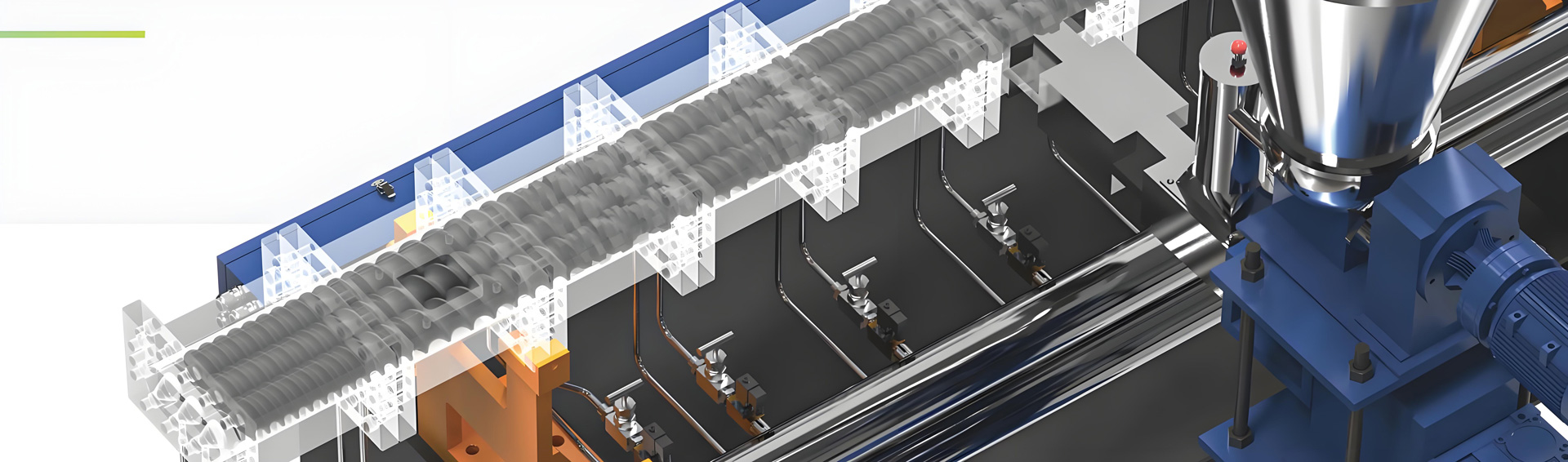
Barrel construction in KTE Series high pressure resistant extruders uses high-grade alloy steel with exceptional strength and thermal conductivity. Barrel bore diameter ranges from 20 mm for pilot scale equipment to 120 mm for high production capacity machines. The L/D ratio of 40:1 provides adequate length for complete melting, mixing, and homogenization while maintaining reasonable residence time for TPEE/TPV materials under high-pressure conditions.
Reinforced barrel design includes heavy wall thickness providing pressure resistance up to 250 bar operating pressure. The barrel incorporates reinforced flanges and high-strength fasteners capable of withstanding significant mechanical stresses generated during processing. The barrel construction also includes optimized heater element placement ensuring uniform heating despite thick wall sections required for pressure resistance.
Barrel material selection considers pressure resistance, wear resistance, thermal conductivity, and corrosion resistance for TPEE/TPV processing. Standard barrel material uses high-grade alloy steel with specialized heat treatment achieving yield strength exceeding 800 MPa. For applications with abrasive fillers, hardened or coated barrel options provide extended service life under high-pressure abrasive conditions.
Heavy-Duty Drive System
Drive system design in KTE Series high pressure resistant extruders provides robust torque transmission capable of handling high-viscosity materials under significant back pressure. The drive system includes high-capacity motors, heavy-duty gearboxes, and reinforced drive shafts designed for continuous operation under demanding conditions. The drive system torque ratings exceed standard extruder designs by 30-50% to accommodate high-pressure processing requirements.
Motor selection considers power requirements, torque characteristics, and duty cycle for TPEE/TPV masterbatch production. Motors typically feature torque ratings providing adequate power for high-viscosity materials while maintaining efficiency across operating range. Vector drive control enables precise speed control and torque management under varying processing conditions and pressure levels.
Gearbox construction uses heavy-duty helical or planetary gear designs providing reliable torque transmission with high efficiency. Gearbox service factors typically exceed 2.0 for continuous operation under high-pressure conditions. The gearbox incorporates reinforced bearings and shafts designed for significant axial and radial loads generated during high-pressure processing.
Parameter Settings
Temperature Profile
Temperature profile optimization for TPEE masterbatch production requires careful consideration of material thermal properties, high processing temperatures, and formulation characteristics. Standard temperature profiles for TPEE color masterbatch include zone temperatures starting at 180-200 degrees Celsius in the feeding zone, increasing to 200-220 degrees Celsius in the transition zones, and reaching 210-240 degrees Celsius in the metering zones. Die temperatures typically set 5-10 degrees Celsius above metering zone temperature to ensure proper flow under high-pressure conditions.
TPV masterbatch production requires temperature profiles accommodating the crosslinked structure and different thermal characteristics. Temperature profiles for TPV typically start at 175-195 degrees Celsius in the feeding zone, increase to 195-215 degrees Celsius in transition zones, and reach 205-235 degrees Celsius in metering zones. The temperature profile accommodates TPV material characteristics while maintaining adequate melt flow for processing and pigment dispersion under high-pressure conditions.
TPEE/TPV blend masterbatch production uses temperature profiles that accommodate both materials’ thermal characteristics while optimizing compatibility. Temperature profiles for blends typically start at 177-198 degrees Celsius in feeding zones, increase to 197-218 degrees Celsius in transition zones, and reach 207-238 degrees Celsius in metering zones. The specific temperature settings depend on blend ratio, specific TPEE and TPV grades, and formulation complexity, requiring optimization based on processing trials under high-pressure conditions.
Screw Speed and Throughput
Screw speed optimization balances mixing efficiency, residence time, throughput requirements, and high-pressure processing characteristics. For TPEE color masterbatch, screw speeds typically range from 45-95 rpm depending on machine size and formulation characteristics. Higher screw speeds increase throughput but also increase processing pressures and shear heating, potentially affecting dispersion quality or causing material degradation. The optimal screw speed achieves target throughput while maintaining adequate residence time and acceptable processing pressures.
TPV masterbatch production typically allows different screw speed ranges due to the material’s different rheological characteristics and crosslinked structure. Screw speeds for TPV formulations typically range from 50-105 rpm, providing adequate mixing while maintaining appropriate shear levels for TPV materials under high-pressure conditions. The screw speed optimization considers TPV grade, formulation complexity, and pressure handling requirements.
Throughput optimization considers formulation complexity, equipment capacity, pressure limitations, and quality requirements for TPEE/TPV masterbatch production. For standard color masterbatch formulations, throughput typically ranges from 25-800 kg per hour depending on equipment size and formulation. Complex formulations with high filler loading or multiple additives may require reduced throughput to maintain dispersion quality and prevent excessive processing pressures. Production scheduling should balance efficiency requirements with pressure limitations.
Pressure Management
Processing pressure management ensures operation within equipment design limits while achieving adequate mixing and dispersion quality. For TPEE/TPV masterbatch production, processing pressures typically range from 80-220 bar depending on material characteristics, formulation complexity, and throughput. Monitoring processing pressure through pressure transducers provides real-time feedback on system conditions and enables adjustments to maintain optimal pressure levels.
Back pressure settings affect mixing intensity, residence time, and processing pressure. For TPEE/TPV masterbatch production, back pressure typically maintained between 25-55 bar depending on formulation and throughput requirements. Higher back pressure increases mixing intensity but also increases overall processing pressure, requiring operation within equipment capabilities. Screen pack selection and die design influence back pressure levels and require optimization for specific formulations.
Pressure relief and safety systems protect equipment from excessive pressure conditions that could cause damage or safety hazards. Pressure relief valves set at appropriate levels below maximum design pressure provide protection against overpressure conditions. Monitoring systems with alarms alert operators to pressure approaching design limits, enabling proactive adjustments. Regular testing of pressure relief systems ensures proper function when needed.
Equipment Pricing
KTE Series High Pressure Resistant Extruder Pricing
KTE Series high pressure resistant twin screw extruder pricing varies based on size, pressure rating, reinforcement level, and included auxiliary equipment. Pilot scale models with 20-30 mm barrel diameter and throughput capacity of 10-40 kg per hour typically range from USD 45,000 to USD 75,000. These compact high pressure systems are ideal for research and development, formulation optimization, and small-scale production of TPEE/TPV masterbatch formulations requiring high-pressure processing capability.
Mid-range production models with 50-70 mm barrel diameter and throughput capacity of 100-400 kg per hour typically range from USD 120,000 to USD 280,000. These systems include reinforced barrel construction, heavy-duty drive systems, enhanced temperature control, and integrated auxiliary equipment suitable for commercial production. The pricing includes high pressure resistant extruder, advanced control system, and standard auxiliary equipment for TPEE/TPV processing.
Full production models with 90-120 mm barrel diameter and throughput capacity of 400-800 kg per hour typically range from USD 320,000 to USD 680,000. These production-scale high pressure systems include advanced features such as automated material handling, integrated pressure monitoring, and sophisticated control systems. The pricing varies based on specific pressure rating, reinforcement level, and included auxiliary equipment packages.
Complete Production Line Pricing
Complete TPEE/TPV masterbatch production lines including high pressure resistant extruder, feeding system, cooling system, pelletizing system, and pressure monitoring provide turnkey solutions for manufacturing operations. Pilot scale complete lines with capacity of 10-40 kg per hour typically range from USD 85,000 to USD 150,000. These complete high pressure systems include all necessary equipment for small-scale production with high-pressure processing capability.
Mid-range production lines with capacity of 100-400 kg per hour typically range from USD 250,000 to USD 550,000. These complete high pressure lines include appropriately sized extruder with pressure resistance, gravimetric feeding system, cooling system, pelletizing equipment, pressure monitoring systems, and control system integration. The complete line approach ensures compatibility between components and ability to handle high-pressure processing conditions.
High production capacity high pressure lines with throughput of 400-800 kg per hour typically range from USD 600,000 to USD 1,800,000 depending on configuration, pressure rating, and automation level. These comprehensive high pressure systems include large-capacity extruders, multi-component feeding systems, automated material handling, integrated pressure monitoring and control, and advanced process control. The investment reflects production capacity, pressure rating requirements, and automation features.
Auxiliary Equipment Pricing
Gravimetric feeding systems with multiple feeding heads specifically designed for high-pressure applications range from USD 18,000 to USD 65,000 depending on number of feeders and capacity. These feeding systems provide critical accuracy for maintaining formulation consistency in TPEE/TPV masterbatch production, justifying the investment through reduced material waste and improved product quality. Higher capacity systems with advanced features command premium pricing.
Pressure monitoring and control systems including pressure transducers, gauges, alarms, and relief devices range from USD 12,000 to USD 45,000 depending on system complexity and number of monitoring points. These systems provide critical protection against excessive pressure conditions that could damage equipment or create safety hazards. Multiple pressure monitoring points along the barrel and at the die enable comprehensive pressure management.
High-pressure compatible cooling and pelletizing systems range from USD 22,000 to USD 75,000 depending on throughput and configuration. These systems must handle high-viscosity materials and potential pressure variations during processing. Specialized die designs and reinforced pelletizing equipment accommodate high-pressure processing requirements. The investment ensures reliable operation under demanding processing conditions.
Production Problems and Solutions
Excessive Processing Pressure
Excessive processing pressure during TPEE/TPV masterbatch production causes equipment stress, potential damage, safety hazards, and processing difficulties. High-viscosity materials and complex formulations generate significant internal pressures that must be managed within equipment design limits. Uncontrolled pressure increases risk equipment failure, create safety concerns, and may require production interruption to prevent damage.
Causes of excessive processing pressure include overly complex formulations with high filler loading, excessively high throughput rates, inappropriate screw configuration for material viscosity, restricted flow due to die design or screen pack, or material characteristics including abnormally high viscosity. High filler loading significantly increases melt viscosity and processing pressure. Excessive throughput rates generate pressure exceeding equipment capabilities. Restricted flow through undersized dies or clogged screens creates pressure buildup.
Solutions for excessive pressure begin with formulation optimization. Reducing filler loading to minimum required levels decreases melt viscosity and processing pressure. Optimizing filler type selection using less abrasive or lower-viscosity fillers reduces pressure generation. Adjusting particle size distribution of fillers improves flow characteristics and reduces pressure. For formulations requiring high filler loading, gradual throughput increases allow pressure monitoring and adjustment.
Processing parameter optimization reduces pressure while maintaining product quality. Reducing screw speed decreases throughput and pressure generation. Adjusting temperature profile to optimize melt viscosity reduces processing pressure. Increasing temperature within material processing window typically reduces viscosity and pressure. Optimizing back pressure through screen pack selection or die modification reduces overall pressure while maintaining adequate mixing.
Equipment modification may be required for chronic pressure issues. Installing lower-pressure screen packs or eliminating screens if feasible reduces flow restriction. Modifying die design with larger flow channels or streamlined geometry reduces pressure drop. Considering equipment upgrade to higher pressure rating enables processing of demanding formulations within safe operating range. Pressure relief system installation provides additional safety protection.
Preventive measures include implementing pressure monitoring with alarms approaching design limits, establishing maximum throughput limits based on pressure characteristics, and conducting formulation trials to identify pressure issues before full production. Regular monitoring of pressure trends enables identification of gradual changes indicating equipment wear or material variations. Maintaining equipment within design parameters prevents pressure-related failures.
Equipment Wear and Damage
Equipment wear and damage in TPEE/TPV masterbatch production causes processing inconsistencies, quality defects, increased maintenance requirements, and potential equipment failure. High-pressure processing combined with abrasive fillers creates significant wear on barrel, screw, and other components. Wear gradually degrades processing performance and eventually requires component replacement to maintain quality and reliability.
Causes of equipment wear include abrasive filler materials causing barrel and screw wear, high-pressure processing generating mechanical stress, inadequate material lubricity causing metal-to-metal contact, or inadequate maintenance allowing accelerated wear. Abrasive fillers such as silica, talc, or mineral fillers create significant wear on barrel bore and screw surfaces. High-pressure operation accelerates wear through increased mechanical stress on components.
Solutions for equipment wear begin with material selection optimization. Using less abrasive filler materials where feasible reduces wear rates. Implementing filler surface treatment or coating reduces abrasiveness. Optimizing filler loading to minimum required levels reduces wear generation. For applications requiring abrasive fillers, selecting wear-resistant equipment materials extends service life.
Equipment material selection and surface treatment significantly affects wear resistance. Hardened barrel materials with surface hardness exceeding HRC 65 provide extended service life under abrasive conditions. Tungsten carbide or ceramic coating on wear surfaces provides exceptional wear resistance. Screw material selection considering wear resistance and toughness optimizes service life balance.
Preventive maintenance schedules based on wear monitoring enable planned component replacement before failure. Regular measurement of screw flight clearances and barrel bore dimensions tracks wear progression. Establishing replacement criteria based on measured wear ensures timely component replacement. Maintaining spare critical components enables quick replacement minimizing downtime.
Processing parameter optimization reduces wear rates. Operating at lowest feasible processing pressure reduces mechanical stress on components. Optimizing temperature profile reduces material viscosity and frictional wear. Maintaining proper lubricity through appropriate formulation reduces metal-to-metal contact. Avoiding excessive screw speed reduces shear stress and wear generation.
Preventive measures include implementing regular wear measurement and monitoring, establishing preventive maintenance schedules based on wear characteristics, and maintaining detailed equipment records tracking component wear patterns. Material testing for abrasiveness before formulation adoption identifies potential wear issues. Equipment design considering wear resistance and maintainability extends service life and reduces maintenance requirements.
Poor Dispersion Quality
Poor dispersion quality in TPEE/TPV masterbatch production causes streaks, color inconsistency, reduced additive effectiveness, and performance variability in final products. Achieving uniform dispersion presents challenges due to high material viscosity, complex formulations, and high-pressure processing conditions. Poor dispersion affects both aesthetic quality and functional performance of the masterbatch.
Causes of poor dispersion include inadequate mixing intensity for high-viscosity materials, insufficient dispersant levels or inappropriate dispersant selection, excessive additive loading exceeding dispersant capacity, improper additive particle size, or insufficient residence time for complete dispersion under high-pressure conditions. High-viscosity TPEE/TPV materials require significantly more mixing energy for dispersion compared to lower viscosity polymers.
Solutions for poor dispersion begin with screw configuration optimization for high-viscosity materials. Implementing screw configurations with aggressive kneading blocks provides increased mixing intensity. Adding reverse conveying elements extends residence time for dispersion. Optimizing kneading block arrangement and stagger creates effective distributive mixing under high-pressure conditions. For complex formulations, considering longer L/D barrel provides additional mixing length.
Dispersant optimization includes selecting dispersants specifically designed for high-temperature elastomer processing. Standard dispersants effective for lower temperature polymers may degrade or lose effectiveness at TPEE/TPV processing temperatures. Increasing dispersant concentration to 12-14% of formulation improves additive wetting and prevents agglomeration under high-pressure conditions. Testing dispersant types specifically designed for TPEE/TPV identifies optimal compatibility and performance.
Processing parameter optimization enhances dispersion quality while managing pressure limitations. Reducing throughput while maintaining screw speed increases residence time for dispersion. Optimizing temperature profile to achieve optimal melt viscosity improves dispersion effectiveness. Implementing staged temperature profiles creating lower viscosity zones enhances mixing. Managing back pressure to adequate levels without excessive restriction improves mixing efficiency.
Preventive measures include maintaining appropriate additive particle size below 12 microns for optimal dispersion in high-viscosity matrices, implementing quality monitoring to detect dispersion issues early through microscopic analysis or colorimetric measurement, and establishing optimal processing parameters for each formulation through systematic testing. Regular screw wear monitoring and replacement maintains mixing effectiveness under high-pressure conditions.
Material Degradation
Material degradation in TPEE/TPV masterbatch production causes discoloration, property reduction, processing difficulties, and performance degradation in final products. High processing temperatures required for these materials create potential for thermal degradation, particularly with extended residence times or excessive shear. Degradation affects product quality and material performance.
Causes of material degradation include excessive temperature settings above material degradation thresholds, extended residence time under high temperature, excessive shear heating from high screw speed or aggressive screw configuration, inadequate venting of degradation products, or material incompatibility causing degradation. Temperature settings above 240-250 degrees Celsius for TPEE accelerate thermal degradation. Extended residence time through overfilled screw or low throughput increases thermal exposure.
Solutions for material degradation begin with temperature profile optimization. Reducing zone temperatures to minimum levels required for melting and processing reduces thermal stress on TPEE/TPV materials. Keeping maximum zone temperature below 230-240 degrees Celsius prevents excessive thermal degradation while maintaining adequate melt flow. Implementing temperature gradients where early zones operate at lower temperatures reduces overall thermal exposure.
Residence time optimization prevents excessive thermal exposure leading to degradation. Adjusting screw speed to achieve optimal fill ratio between 55-75% maintains reasonable residence time while ensuring adequate mixing and dispersion. Reducing throughput without appropriately adjusting screw speed overfills the screw and increases residence time. Implementing proper venting removes degradation products that could catalyze further degradation.
Screw configuration optimization balances mixing requirements with shear generation. Using moderate kneading block angles and stagger reduces shear heating while maintaining mixing effectiveness. Avoiding excessive reverse conveying elements minimizes residence time extension. Selecting screw element materials and coatings with lower friction reduces shear heating and degradation potential.
Preventive measures include implementing strict temperature monitoring with alarms for excursions above setpoints, using heat stabilizers appropriate for processing temperatures, establishing maximum residence time limits based on material thermal stability, and implementing proper material storage preventing degradation before processing. Regular screw inspection ensures excessive wear not causing increased shear and degradation. Preventive maintenance ensures proper temperature control system function.
Inconsistent Melt Temperature
Inconsistent melt temperature during TPEE/TPV masterbatch production causes processing variations, quality inconsistencies, and product defects. Achieving uniform melt temperature presents challenges due to high processing temperatures, high-pressure conditions, and varying material properties. Temperature variations affect viscosity, mixing, and final product quality.
Causes of inconsistent melt temperature include heater element degradation causing uneven heating, thermocouple inaccuracy or misplacement, screw wear affecting shear heating patterns, material lot variations affecting thermal characteristics, or inadequate temperature control system response. Degraded heater elements create hot spots or cold zones affecting temperature uniformity. Inaccurate thermocouple feedback causes control system errors.
Solutions for inconsistent melt temperature begin with temperature control system verification and calibration. Checking all thermocouples against reference standards ensures accurate temperature measurement. Inspecting heater elements for degradation or failure and replacing as needed restores heating capability. Verifying temperature controller functionality ensures proper response to deviations from setpoints.
Heater system optimization ensures uniform heating despite high-pressure requirements. Implementing balanced heater element distribution provides uniform heat input. Using cartridge heaters with appropriate wattage and distribution ensures adequate heating capacity. Regular heater element inspection and replacement maintains heating performance. Consideration of external heating jackets for barrel sections improves temperature uniformity.
Temperature profile optimization based on thermal analysis identifies optimal zone temperatures for specific formulations. Conducting thermal profiling studies using multiple thermocouples along barrel length reveals temperature distribution patterns. Adjusting zone setpoints based on thermal analysis improves uniformity. Implementing temperature setpoint gradients compensating for heat loss or gain patterns improves overall uniformity.
Preventive measures include implementing regular thermocouple calibration schedules, heater element inspection and replacement programs, and temperature monitoring with statistical process control to detect variations before they affect product quality. Screw wear monitoring and replacement prevents changes in shear heating patterns affecting temperature uniformity. Material receiving testing ensures thermal consistency between material lots.
Maintenance and Care
Daily Maintenance Procedures
Daily maintenance procedures for TPEE/TPV masterbatch production equipment ensure reliable operation and prevent unexpected downtime under high-pressure processing conditions. These routine tasks address the unique requirements of high-pressure resistant extruders and elastomeric material processing. Implementing comprehensive daily maintenance procedures reduces emergency repairs, extends equipment service life, and maintains consistent product quality.
Visual inspection before startup should check pressure relief devices, verify barrel and die connections, and examine all high-pressure fittings for security. Checking pressure relief valve setpoints ensures proper function if overpressure occurs. Inspecting all safety guards and pressure containment devices ensures proper operation. Examining all high-pressure connections for leaks prevents potential safety hazards and material loss.
Temperature control system verification includes checking zone temperature indicators for accuracy, verifying temperature stability during startup, and checking alarm setpoints for pressure and temperature. Calibrating temperature sensors ensures accurate temperature measurement and control under high-pressure conditions. Verifying heater operation confirms proper heating capability.
Feeding system cleaning and inspection should occur daily or between product changeovers. Emptying feeder hoppers and removing residual TPEE/TPV materials prevents cross-contamination. Inspecting feeder components for wear or material buildup ensures proper feeding accuracy. Checking for material bridging in feeder hoppers enables proactive cleaning.
Weekly Maintenance Tasks
Weekly maintenance tasks provide deeper inspection and maintenance beyond daily procedures, addressing potential issues before they cause equipment failure or quality problems. These tasks require more time but provide significant value in preventing major issues in TPEE/TPV masterbatch production.
Screw and barrel inspection should include checking for wear patterns, excessive clearances, or damage from abrasive fillers. Measuring screw flight clearances at multiple positions along screw length identifies wear distribution. Inspecting barrel bore for scoring, grooving, or excessive wear identifies potential causes of quality issues. Documenting wear measurements enables prediction of replacement requirements.
Pressure system inspection includes checking pressure relief valves, pressure gauges, transducers, and high-pressure fittings. Testing pressure relief valve operation ensures proper function if overpressure occurs. Calibrating pressure gauges and transducers ensures accurate pressure monitoring. Inspecting high-pressure fittings for wear or damage prevents leaks and potential safety hazards.
Drive system inspection should include motor condition assessment, coupling inspection, and gearbox condition check. Checking motor bearings for vibration or unusual wear prevents motor failures during high-pressure operation. Inspecting coupling alignment and condition prevents drivetrain damage. Checking gearbox oil level and condition identifies potential problems requiring attention.
Monthly Maintenance Requirements
Monthly maintenance requirements provide comprehensive inspection and maintenance addressing components requiring less frequent attention. These tasks typically require longer time windows and may require partial equipment shutdown but are essential for maintaining high-pressure resistant extruders in optimal condition.
Complete drive system inspection should include motor bearing inspection, coupling replacement if needed, gearbox oil analysis, and drive belt or chain inspection. Checking motor bearings for wear prevents motor failures during demanding high-pressure operation. Replacing coupling components showing wear prevents drivetrain damage. Gearbox oil analysis identifies wear particles or degradation indicating potential problems.
Control system verification should include checking all electrical connections for security, testing all safety interlocks for proper function, verifying control system calibration, and testing alarm systems. Tightening electrical connections prevents loose connections causing intermittent problems. Testing safety interlocks ensures proper protection and regulatory compliance. Verifying control system calibration maintains processing parameter accuracy.
Complete pressure system maintenance includes testing all pressure relief devices, calibrating pressure instruments, and inspecting all high-pressure connections. Testing pressure relief valves confirms proper operation at set pressures. Calibrating pressure gauges and transducers ensures accurate pressure monitoring. Inspecting all high-pressure fittings and connections prevents leaks and ensures safety.
Annual Maintenance Overhaul
Annual maintenance overhaul for TPEE/TPV masterbatch production equipment provides comprehensive inspection and replacement of worn components, restoring equipment to optimal condition and preventing major failures. The annual overhaul represents significant time commitment but provides substantial value in preventing unexpected downtime under high-pressure operating conditions.
Complete screw and barrel inspection includes dimensional measurement of critical components, wear pattern analysis, and replacement as needed. Measuring screw diameter at multiple positions quantifies wear and determines replacement requirements. Measuring barrel bore diameter identifies wear and potential quality problems. Documenting measurements enables trend analysis and prediction of future replacement requirements.
Complete pressure system rebuild includes replacing all pressure relief valves, high-pressure seals, and worn fittings. Pressure relief valve replacement ensures reliable overpressure protection. Replacing all high-pressure seals prevents leaks and ensures pressure containment. Inspecting and replacing worn high-pressure fittings maintains system integrity and safety.
Complete drive system rebuild or replacement based on inspection findings ensures reliable operation for coming year. Motor bearing replacement prevents motor failures. Coupling replacement ensures proper torque transmission. Gearbox rebuild including bearing and seal replacement prevents unexpected failures. Complete system alignment ensures proper operation and minimizes wear on all components.
FAQ
What are the operating pressure limits for high pressure resistant extruders?
High pressure resistant twin screw extruders typically have maximum operating pressure ratings of 200-250 bar depending on specific equipment design and size. Continuous operating pressure typically stays below 180-200 bar for reliable long-term operation. Pilot scale equipment may have lower pressure ratings around 150-180 bar. Equipment should never be operated above maximum pressure ratings due to safety risks and potential equipment damage. Pressure monitoring systems with alarms approaching limits enable proactive management.
How does high pressure processing affect TPEE/TPV masterbatch quality?
High pressure processing affects TPEE/TPV masterbatch quality through enhanced mixing intensity and shear characteristics. Appropriate pressure levels improve dispersion quality and mixing effectiveness. However, excessive pressure can cause material degradation, increased equipment wear, and processing difficulties. Optimal pressure levels balance mixing requirements with equipment limitations and material sensitivity. Pressure management through processing parameter optimization ensures consistent quality.
What temperature range is appropriate for TPEE masterbatch production?
Appropriate temperature range for TPEE masterbatch depends on specific TPEE grade and formulation requirements. TPEE typically processes between 210-240 degrees Celsius maximum barrel temperature. Temperature profiles should start at lower temperatures in feeding zones (180-200 degrees Celsius) and increase gradually to maximum temperatures in metering zones. Processing at minimum temperatures required for adequate melting and mixing helps prevent thermal degradation while maintaining material properties.
How can I reduce equipment wear in TPEE/TPV masterbatch production?
Reducing equipment wear involves selecting less abrasive fillers where feasible, using wear-resistant equipment materials, optimizing processing parameters to minimize stress, and implementing preventive maintenance schedules. Hardened barrel materials and tungsten carbide or ceramic coatings provide extended service life. Operating at lowest feasible processing pressure reduces mechanical stress. Optimizing temperature profile reduces material viscosity and frictional wear. Regular wear measurement enables planned component replacement.
What causes excessive pressure in TPEE/TPV masterbatch processing?
Excessive pressure typically results from high filler loading, overly complex formulations, excessive throughput rates, restricted flow from die design or screen packs, or abnormally high material viscosity. High filler loading significantly increases melt viscosity and processing pressure. Restricted flow through undersized dies or clogged screens creates pressure buildup. Excessive throughput rates generate pressure exceeding equipment capabilities. Formulation optimization and processing parameter adjustment reduce excessive pressure.
How often should pressure relief valves be tested?
Pressure relief valves should be tested monthly to ensure proper operation and maintain safety protection. Testing involves verifying valve opening at set pressure and proper resealing. Annual replacement or professional recalibration ensures reliable operation. Pressure relief valves critical for equipment safety should never be bypassed or disabled. Regular testing and maintenance ensures protection against overpressure conditions that could damage equipment or create safety hazards.
What maintenance is required for high pressure resistant extruders?
High pressure resistant extruder maintenance includes daily visual inspection of pressure systems and high-pressure connections, weekly screw and barrel wear inspection, monthly pressure system testing and calibration, and annual complete overhaul including pressure system rebuild. Regular wear measurement enables planned component replacement before failure. Pressure relief valve testing ensures safety protection. Drive system inspection handles high torque requirements under pressure conditions.
How do I manage processing pressure during TPEE/TPV masterbatch production?
Managing processing pressure involves monitoring pressure through transducers and gauges, adjusting processing parameters to stay within limits, optimizing formulation to reduce viscosity, and modifying equipment if needed. Reducing throughput lowers pressure generation. Adjusting temperature profile optimizes viscosity and pressure. Optimizing filler loading and type reduces pressure. Die and screen pack selection affects pressure levels. Continuous monitoring with alarms enables proactive pressure management.
What are the advantages of reinforced barrel construction?
Reinforced barrel construction provides pressure resistance up to 250 bar, extended service life under high-pressure operation, improved reliability for demanding formulations, and ability to handle abrasive fillers. Heavy wall thickness provides exceptional strength. Reinforced flanges and fasteners withstand mechanical stresses. Reinforced construction enables processing of high-viscosity materials and complex formulations that would exceed standard equipment capabilities.
How can I improve dispersion quality in high viscosity TPEE/TPV materials?
Improving dispersion in high viscosity materials involves optimizing screw configuration with aggressive mixing elements, extending residence time, increasing dispersant levels to 12-14%, and maintaining appropriate additive particle size below 12 microns. Reverse conveying elements extend residence time for dispersion. Optimizing kneeding block arrangement creates effective distributive mixing. Reducing throughput while maintaining screw speed increases residence time. Selecting dispersants designed for high-temperature elastomer processing.
Conclusion
High pressure resistant twin screw extruders represent the optimal solution for TPEE/TPV masterbatch manufacturing, providing the robust construction and pressure handling capability required for processing these demanding thermoplastic elastomers. The reinforced design enables operation at pressures up to 250 bar, significantly exceeding standard extruder capabilities, while maintaining excellent mixing performance and product quality. The heavy-duty drive systems and reinforced components ensure reliable operation under the high mechanical stresses generated during processing of high-viscosity materials.
Successful TPEE/TPV masterbatch production requires comprehensive understanding of material characteristics including high processing temperatures, high viscosity, and pressure generation during processing. Formulation considerations must account for dispersion challenges in high-viscosity matrices, requiring specialized dispersants and processing aids. Equipment selection including pressure rating, screw configuration, and drive capacity must be matched to formulation requirements and processing conditions. Processing parameters including temperature profiles, screw speed, and pressure management require optimization for each specific formulation.
KTE Series high pressure resistant twin screw extruders specifically engineered for thermoplastic elastomer processing provide the foundation for successful TPEE/TPV masterbatch production. The equipment design incorporates reinforced barrel construction, heavy-duty drive systems, and screw configurations optimized for high-pressure, high-viscosity processing while delivering excellent dispersion quality. Equipment pricing varies widely based on size, pressure rating, and configuration, with complete production lines ranging from USD 85,000 for pilot systems to over USD 1,800,000 for high capacity systems.
The growing demand for high-performance thermoplastic elastomers across diverse industries including automotive, industrial, and consumer applications creates significant opportunities for specialized TPEE/TPV masterbatch producers. As application requirements become more demanding and quality requirements more stringent, masterbatch producers investing in high pressure resistant equipment and process knowledge position themselves for growth in this expanding market. The combination of processing capabilities and material properties makes TPEE/TPV increasingly attractive for demanding applications, creating sustained demand for high quality masterbatch production.