Introduction
Polyhydroxyalkanoates (PHA) are a class of biodegradable polyesters produced by microorganisms through fermentation processes. PHA masterbatch manufacturing plays a crucial role in developing sustainable materials for various applications, including packaging, agriculture, and medical devices. High speed twin screw extruders have emerged as the preferred equipment for PHA masterbatch production due to their ability to handle the unique processing requirements of PHA materials.
This article provides a comprehensive overview of PHA masterbatch making using high speed twin screw extruders. We will explore the formulation ratios, production processes, equipment specifications, parameter settings, pricing, common issues and solutions, maintenance practices, and frequently asked questions related to this specialized manufacturing process.
Formulation ratios (different types)
PHA masterbatch formulations vary depending on the specific application requirements, such as biodegradability rate, mechanical strength, and processing temperature. The primary components of PHA masterbatches include PHA resin, additives, and optional colorants or fillers.
Medical Grade PHA Masterbatch
- PHA resin: 90-98%
- Antioxidant: 0.5-2%
- Processing aid: 0.5-2%
- Biodegradation regulator: 0-5%
This formulation offers high purity and controlled biodegradability, making it suitable for medical applications such as sutures and implants.
Agricultural Grade PHA Masterbatch
- PHA resin: 80-90%
- Nutrient additive: 5-10%
- Biodegradation accelerator: 2-5%
- UV stabilizer: 1-3%
- Filler (starch): 5-10%
Designed for agricultural applications such as mulch films and seedling trays, this formulation provides enhanced UV resistance and controlled biodegradation rate.
Packaging Grade PHA Masterbatch
- PHA resin: 85-95%
- Processing aid: 1-3%
- UV stabilizer: 0.5-2%
- Colorant (optional): 0.5-5%
- Blowing agent (optional): 0-3%
This formulation offers balanced biodegradability and processability, making it suitable for flexible packaging applications such as bags and films.
Production process
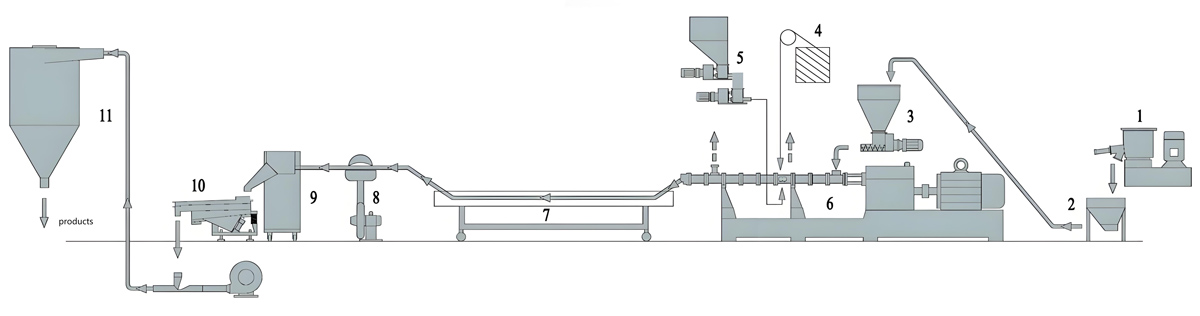
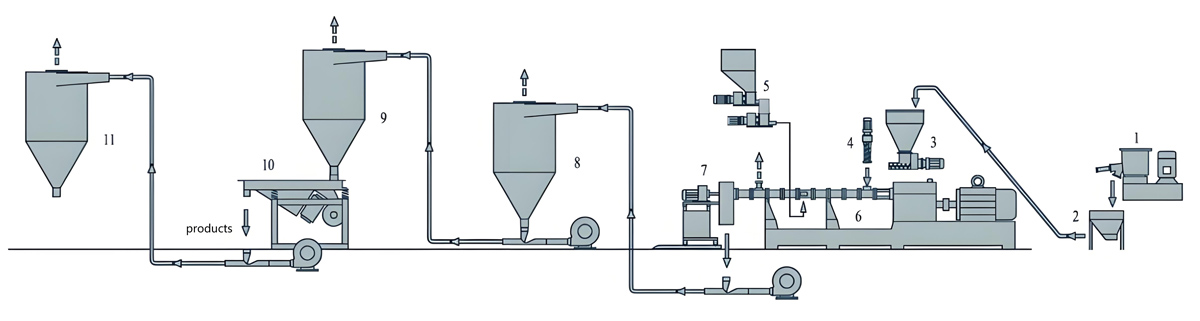
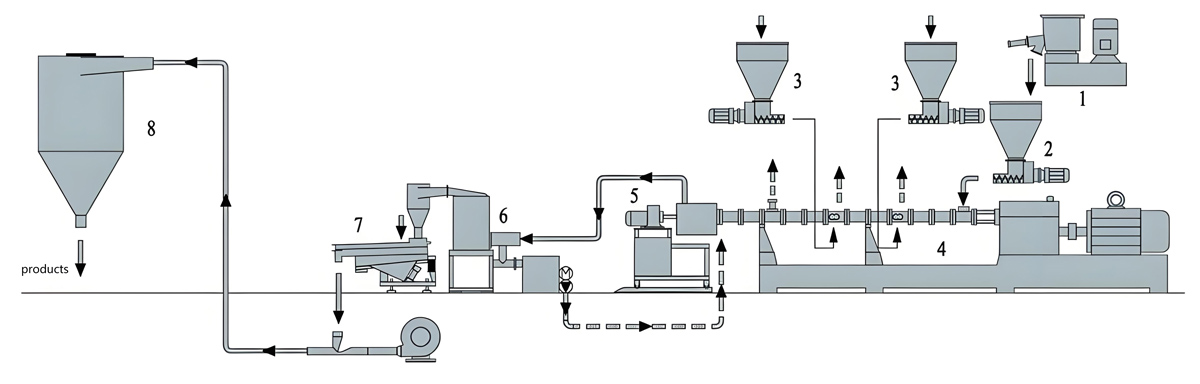
The production of PHA masterbatch using high speed twin screw extruders involves several key steps that ensure uniform dispersion of additives and consistent product quality.
Material Preparation
All raw materials, including PHA resin pellets, additives, and optional colorants, are carefully measured and pre-mixed before being fed into the extruder. This ensures uniform distribution of components and consistent product quality. It is important to control the moisture content of PHA resin to avoid hydrolysis during processing.
Feeding and Compounding
The pre-mixed material is fed into the high speed twin screw extruder. As the screws rotate at high speed, they convey the material through the barrel while applying shear and pressure. This process melts the PHA resin and disperses the additives throughout the polymer matrix. The high speed rotation of the screws provides intense mixing, ensuring uniform distribution of additives.
Devolatilization
Volatile components, such as water vapor and residual solvents, are removed from the melt through vacuum vents in the extruder barrel. This step is particularly important for PHA materials, which are sensitive to moisture and can undergo hydrolysis at high temperatures.
Pelletization
The fully compounded PHA melt is extruded through a die head and cut into pellets using a pelletizer system. The pellets are then cooled and dried to ensure proper handling and storage. Special care should be taken to avoid excessive cooling or drying, which can affect the physical properties of PHA pellets.
Production equipment introduction
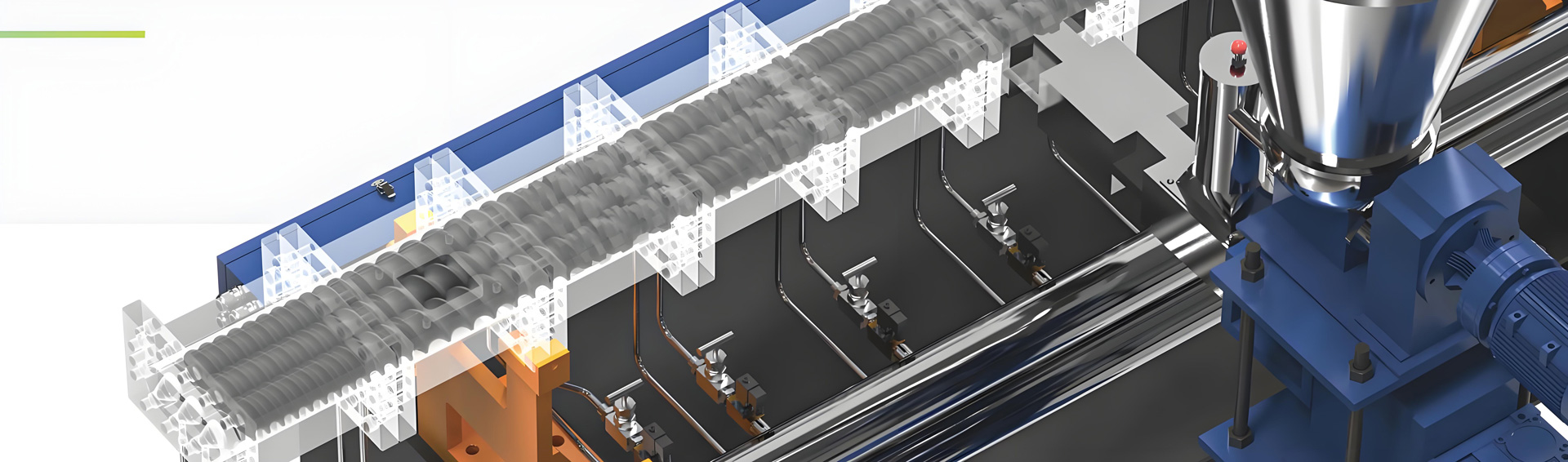
The high speed twin screw extruder is the heart of the PHA masterbatch making process. This section provides an overview of the key components and features of this specialized equipment.
Kerke KTE Series High Speed Twin Screw Extruder
Nanjing Kerke Extrusion Equipment Co., Ltd. offers the KTE Series high speed twin screw extruders, which are specifically designed for PHA masterbatch production. These machines feature:
- High speed screw design with rotation speeds up to 900 rpm
- High torque gearbox for efficient processing of high-viscosity materials
- Precision temperature control system with multiple heating zones
- Advanced screw geometry for optimal mixing and dispersion
- Integrated vacuum devolatilization system with multiple vacuum vents
- PLC control system for automated operation and parameter adjustment
Supporting Equipment
In addition to the main extruder, several supporting equipment are required for a complete PHA masterbatch manufacturing line:
- Material feeding system with gravimetric feeders for precise ingredient measurement
- Drying system to control moisture content of PHA resin before processing
- Pelletizer system for cutting the extrudate into uniform pellets
- Cooling system (water bath or air cooling) to solidify the pellets
- Post-drying system to remove residual moisture from the pellets
- Packaging system for final product handling and storage
Parameter settings
Proper parameter settings are crucial for achieving optimal PHA masterbatch quality and production efficiency. The key parameters to be controlled during the extrusion process include:
Temperature Profile
The temperature profile along the extruder barrel is carefully adjusted to ensure proper melting of the PHA resin and efficient dispersion of additives without causing thermal degradation. Typical temperature ranges for PHA masterbatch production are:
- Feed zone: 140-160°C
- Melting zone: 160-180°C
- Compounding zone: 180-200°C
- Die zone: 170-190°C
Screw Speed
The screw speed affects the residence time of the material in the extruder and the intensity of mixing. For PHA masterbatch production, typical screw speeds range from 300-900 rpm, depending on the specific formulation and desired properties. Higher screw speeds are often used to reduce residence time and minimize thermal degradation.
Feed Rate
The feed rate determines the production output and must be balanced with the screw speed and temperature profile to ensure proper compounding. Typical feed rates for PHA masterbatch production range from 150-800 kg/h, depending on the extruder size and formulation.
Vacuum Level
The vacuum level in the devolatilization zone is set to remove volatile components from the melt. Typical vacuum levels range from 0.08-0.1 MPa (absolute pressure) for effective devolatilization of PHA materials.
Equipment price
The cost of high speed twin screw extruders for PHA masterbatch making varies depending on the machine size, configuration, and optional features. Here are the typical price ranges for Kerke KTE Series extruders:
KTE-36D
Price range: $35,000 – $45,000 USD
Capacity: 100-200 kg/h
KTE-50D
Price range: $55,000 – $70,000 USD
Capacity: 200-400 kg/h
KTE-65D
Price range: $75,000 – $95,000 USD
Capacity: 300-600 kg/h
KTE-75D
Price range: $90,000 – $120,000 USD
Capacity: 400-1000 kg/h
Note: Prices are subject to change based on specific configuration requirements and market conditions. Additional costs may include installation, training, and after-sales support services.
Production process possible problems and solutions and prevention
PHA masterbatch production using high speed twin screw extruders can encounter various issues that affect product quality and production efficiency. This section discusses common problems, their root causes, and effective solutions and prevention strategies.
Problem: Thermal degradation of PHA resin
Cause: Excessive melt temperature, long residence time, or insufficient devolatilization leading to hydrolysis.
Solution: Reduce melt temperature by adjusting the temperature profile, increase screw speed to reduce residence time, or optimize the vacuum devolatilization process.
Prevention: Monitor melt temperature continuously, control screw speed and feed rate to minimize residence time, and ensure proper moisture control of raw materials.
Problem: Poor additive dispersion
Cause: Insufficient mixing intensity due to improper screw configuration, low screw speed, or incorrect temperature profile.
Solution: Adjust the screw configuration to increase mixing elements, increase screw speed, or optimize the temperature profile to improve melt viscosity and mixing efficiency.
Prevention: Regularly inspect and maintain screw elements, establish optimal process parameters based on formulation requirements, and conduct periodic quality checks to ensure proper dispersion.
Problem: Moisture-related defects
Cause: High moisture content in PHA resin leading to hydrolysis, or insufficient devolatilization of water vapor during processing.
Solution: Improve raw material drying process, increase vacuum level in devolatilization zone, or adjust temperature profile to enhance moisture removal.
Prevention: Implement strict moisture control measures for raw materials, monitor devolatilization efficiency continuously, and conduct regular moisture tests on PHA resin.
Problem: Poor processability
Cause: High melt viscosity due to low temperature or insufficient processing aid, or presence of contaminants in the feedstock.
Solution: Increase the melt temperature by adjusting the temperature profile, add appropriate processing aid to reduce viscosity, or implement strict raw material quality control measures.
Prevention: Monitor melt viscosity continuously, establish raw material acceptance criteria, and conduct regular checks for contaminants in the feedstock.
Problem: Pellet quality issues
Cause: Inconsistent pellet size or shape due to uneven melt flow, worn pelletizer blades, or improper cooling conditions.
Solution: Optimize die head temperature, replace worn pelletizer blades, or adjust cooling system parameters to ensure proper solidification.
Prevention: Regularly inspect and maintain pelletizer blades, monitor die head temperature stability, and ensure consistent cooling system performance.
Maintenance and care
Proper maintenance and care of high speed twin screw extruders are essential for ensuring long-term reliable operation, maximizing equipment lifespan, and minimizing production downtime. This section provides guidelines for effective maintenance practices.
Daily Maintenance
Perform the following daily maintenance tasks to keep the extruder operating at peak performance:
- Inspect the machine for any abnormal noises, vibrations, or leaks.
- Check oil levels in the gearbox and lubrication system.
- Clean the extruder barrel and screw after production runs to prevent material buildup.
- Verify the functionality of temperature sensors and control systems.
- Inspect pelletizer blades for wear and damage.
Weekly Maintenance
Conduct these weekly maintenance tasks to ensure optimal equipment performance:
- Check and tighten all bolts and connections.
- Inspect cooling system lines and filters for blockages.
- Test emergency stop functions and safety interlocks.
- Calibrate temperature controllers and pressure sensors.
- Clean and maintain the vacuum system.
Monthly Maintenance
Perform the following monthly maintenance tasks to prevent equipment issues and extend lifespan:
- Inspect screw and barrel components for wear and damage.
- Check and replace worn or damaged screw elements.
- Inspect gearbox seals and replace if necessary.
- Clean and lubricate all moving parts.
- Inspect electrical connections and wiring for wear or damage.
Annual Maintenance
Conduct these annual maintenance tasks to ensure long-term equipment reliability:
- Perform a comprehensive inspection of all machine components.
- Replace worn or damaged parts as needed.
- Overhaul the gearbox and lubrication system.
- Calibrate all sensors and control systems.
- Conduct performance testing to verify machine functionality.
FAQ
Q: What are the unique challenges of processing PHA materials in twin screw extruders?
A: Processing PHA materials presents several unique challenges, including:
- Thermal sensitivity: PHA materials can undergo thermal degradation at relatively low temperatures
- Moisture sensitivity: PHA materials are prone to hydrolysis in the presence of moisture at high temperatures
- High melt viscosity: PHA materials typically have higher melt viscosity compared to other thermoplastics
- Low melt strength: PHA materials may have lower melt strength, making processing at high speeds challenging
- Biodegradability variability: PHA materials can exhibit varying biodegradability rates depending on processing conditions
To address these challenges, specialized processing parameters and equipment configurations are required, including high speed extruders with precise temperature control and efficient devolatilization systems.
Q: Can PHA masterbatch be blended with other polymers to improve properties?
A: Yes, PHA masterbatch can be blended with other polymers to achieve specific property combinations. Common blending partners include:
- PLA (Polylactic Acid) to improve mechanical strength and processability
- PBAT (Polybutylene Adipate Terephthalate) to enhance flexibility and impact resistance
- PBS (Polybutylene Succinate) to improve thermal stability
- Starch to reduce cost and enhance biodegradability
However, compatibility between polymers must be carefully considered to ensure good blending performance and final product quality. It is recommended to conduct compatibility tests and adjust the formulation ratios accordingly.
Q: How can I ensure the biodegradability of my PHA masterbatch products?
A: To ensure the biodegradability of PHA masterbatch products, consider the following measures:
- Use high-quality PHA resin with proven biodegradability performance
- Incorporate appropriate biodegradation accelerators or regulators at recommended dosages
- Avoid adding non-biodegradable additives or fillers
- Conduct periodic biodegradation tests to verify performance
- Follow proper disposal guidelines to ensure natural biodegradation
Q: What safety precautions should be taken when operating high speed twin screw extruders?
A: Important safety precautions include:
- Wear appropriate personal protective equipment, such as safety glasses, gloves, and protective clothing.
- Ensure all safety guards and interlocks are in place and functional.
- Follow proper lockout/tagout procedures when performing maintenance or cleaning.
- Never reach into the extruder or moving parts during operation.
- Regularly inspect and maintain emergency stop systems.
- Provide proper training for all operators on safe machine operation and emergency procedures.
Q: How can I optimize the energy efficiency of my PHA masterbatch manufacturing process?
A: To improve energy efficiency, consider implementing the following measures:
- Optimize process parameters, such as screw speed and temperature profile, to minimize energy consumption while maintaining product quality.
- Use energy-efficient motors and control systems.
- Insulate the extruder barrel and heat zones to reduce heat loss.
- Implement a proper maintenance program to ensure all components are operating at peak efficiency.
- Consider using waste heat recovery systems to capture and reuse excess heat from the extrusion process.
Conclusion
High speed twin screw extruders play a vital role in the efficient and high-quality production of PHA masterbatches. By understanding the formulation ratios, production processes, equipment specifications, parameter settings, pricing, common issues and solutions, maintenance practices, and frequently asked questions related to this specialized manufacturing process, manufacturers can optimize their operations and achieve consistent product quality.
Nanjing Kerke Extrusion Equipment Co., Ltd.’s KTE Series high speed twin screw extruders offer advanced features and capabilities tailored for PHA masterbatch production. With proper installation, operation, and maintenance, these machines can provide years of reliable service and help manufacturers meet the growing demand for sustainable materials.
As the industry continues to evolve, ongoing advancements in extrusion technology and PHA formulation development will further improve the efficiency and quality of PHA masterbatch making processes.