Introduction
Anti-adhesion masterbatch represents a crucial additive category in the plastics industry, specifically engineered to reduce surface friction and prevent sticking between plastic films, sheets, and molded components. The production of high-quality anti-adhesion masterbatch requires sophisticated compounding equipment, particularly parallel twin screw extruders, which provide the precise mixing, dispersion, and temperature control necessary for optimal additive incorporation into the polymer matrix.
The global demand for anti-adhesion masterbatch continues growing steadily, driven by increasing requirements in packaging, automotive, and consumer goods industries where surface properties critically impact product performance and usability. Modern parallel twin screw extruders, such as the KTE Series from Kerke Extrusion Equipment Company, enable manufacturers to achieve consistent quality, high throughput rates, and excellent dispersion of anti-adhesion agents in various carrier resins.
This comprehensive guide explores the complete process of anti-adhesion masterbatch production using parallel twin screw extruders, covering formulation strategies, production parameters, equipment selection, troubleshooting, and maintenance practices essential for optimal manufacturing outcomes.
Formulation Proportions (Different Types)
Anti-adhesion masterbatch formulations vary significantly based on the specific application requirements, carrier resin selection, and desired slip agent concentration levels. Understanding the appropriate formulation proportions is fundamental for producing masterbatch that delivers consistent anti-adhesion performance without compromising other material properties.
Basic Polyethylene-Based Formulations
Low-density polyethylene (LDPE) and linear low-density polyethylene (LLDPE) serve as common carrier resins for anti-adhesion masterbatch due to their compatibility with most film applications. Standard formulations typically contain 5% to 15% anti-adhesion agents, primarily erucamide or oleamide as the active slip components. The most widely used formulation consists of 10% erucamide dispersed in LDPE, providing effective slip characteristics while maintaining good dispersion stability.
For high-temperature applications requiring thermal stability up to 260°C, formulations incorporating 8% to 12% stearamide in high-density polyethylene (HDPE) demonstrate superior performance. These formulations maintain anti-adhesion properties during processing temperatures that would degrade conventional erucamide-based systems. The carrier resin molecular weight typically ranges from 20,000 to 50,000 g/mol to ensure adequate mechanical properties and processing characteristics.
Polypropylene-Based Formulations
Polypropylene-based anti-adhesion masterbatch formulations require careful consideration of carrier resin compatibility with PP processing conditions and end-use applications. Standard formulations contain 6% to 12% oleamide or erucamide in polypropylene homopolymer, with melt flow indices between 2 and 10 g/10min to match typical PP processing requirements.
For applications requiring enhanced thermal stability, formulations incorporating 8% to 10% behenamide provide performance up to 280°C. These higher molecular weight amides exhibit reduced volatility and migration, making them suitable for food packaging applications where regulatory compliance is critical. The addition of 0.5% to 1% antioxidant stabilizers further enhances thermal stability during both masterbatch production and subsequent processing.
Specialty Formulations for Specific Applications
Packaging films requiring very low coefficient of friction (COF) often use masterbatch formulations with 12% to 18% slip agent concentration. These high-load formulations necessitate specialized processing conditions to ensure proper dispersion without additive migration issues. Film manufacturers targeting COF values below 0.2 typically incorporate 15% erucamide in LDPE carrier resin.
Automotive interior components demanding scratch resistance combined with anti-adhesion properties often employ masterbatch formulations containing 8% to 12% slip agent along with 2% to 5% anti-scratch additives. These hybrid formulations require precise temperature control during compounding to prevent additive interactions that could affect final performance characteristics.
Custom Formulation Development
Developing custom anti-adhesion masterbatch formulations requires systematic testing of different slip agent types, concentrations, and carrier resin combinations. Formulators typically evaluate erucamide, oleamide, and stearamide across concentration ranges from 2% to 20% to identify optimal performance for specific applications. Carrier resin selection considers molecular weight, melt flow characteristics, and compatibility with target applications.
Additive synergy effects must be carefully evaluated when combining anti-adhesion agents with other functional additives. Some combinations can enhance overall performance, while others may cause antagonistic effects that reduce effectiveness. Systematic formulation development protocols help manufacturers identify optimal additive packages for specific application requirements.
Production Process
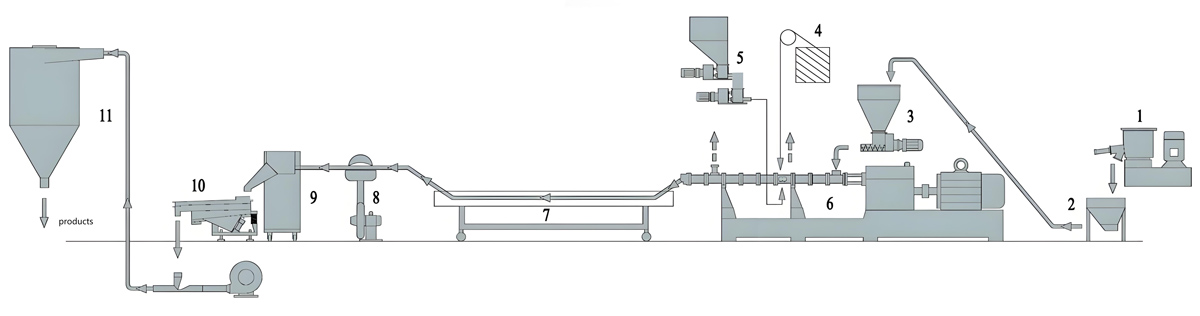
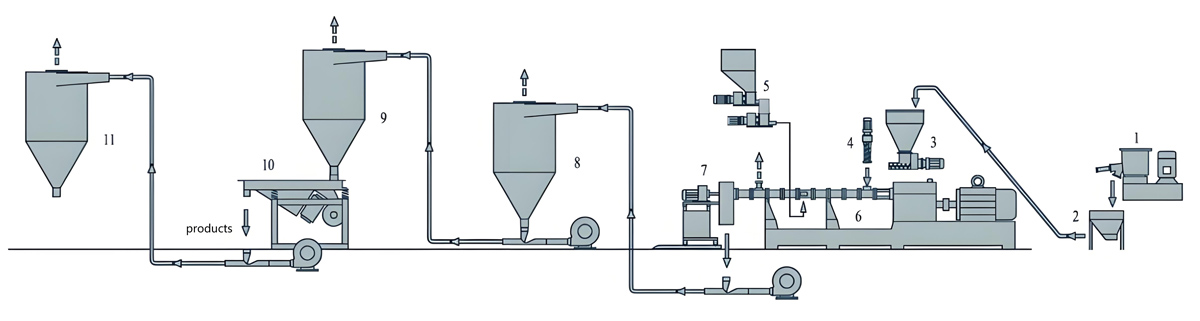
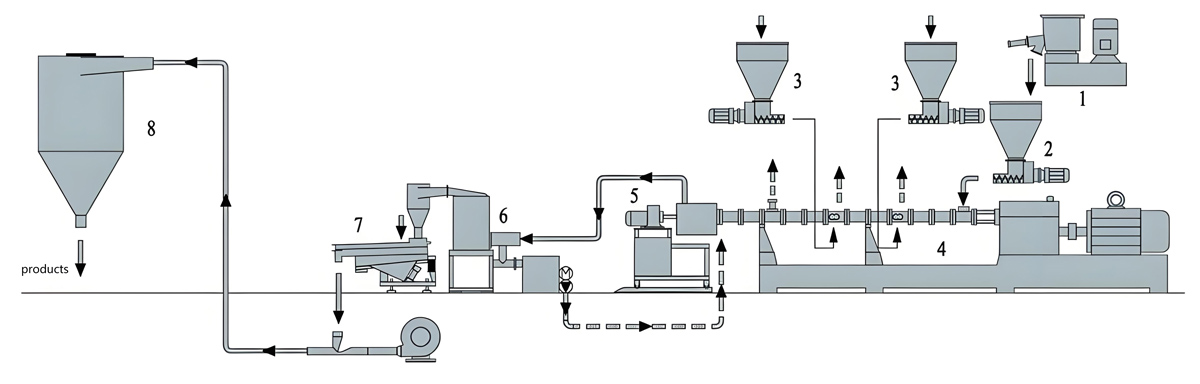
The production of anti-adhesion masterbatch using parallel twin screw extruders follows a carefully controlled sequence of operations designed to achieve optimal dispersion of slip agents while maintaining polymer integrity. The process begins with raw material preparation and progresses through multiple processing stages that ensure homogeneous distribution of additives throughout the carrier resin.
Raw Material Preparation
Successful masterbatch production starts with proper preparation of all raw materials. Carrier resin pellets should be pre-dried to moisture content below 0.02% to prevent hydrolytic degradation during processing. For polyolefin-based formulations, drying temperatures typically range from 80°C to 90°C for 2 to 4 hours in dehumidifying dryers.
Anti-adhesion agents, particularly amide-based slip agents, require careful handling to prevent moisture absorption and degradation. Erucamide and oleamide should be stored in moisture-proof containers and used within specified shelf life periods. Many manufacturers pre-blend slip agents with carrier resin using tumble blenders or similar mixing equipment to ensure uniform distribution before extrusion.
Feeding System Configuration
Parallel twin screw extruder feeding systems must precisely control the addition rate of both carrier resin and slip agents to maintain consistent masterbatch composition. Gravimetric feeding systems provide the highest accuracy, typically controlling feeding rates within ±0.5% of setpoint. For formulations containing 10% slip agent, feeding accuracy of ±0.05% absolute concentration is achievable with well-maintained gravimetric systems.
Volumetric feeders offer lower cost alternatives but provide reduced accuracy, typically ±1% to ±2% of setpoint. These systems require more frequent calibration and monitoring to maintain consistent masterbatch quality. Many manufacturers employ loss-in-weight feeding for slip agents to ensure precise additive dosing, especially for high-value formulations where concentration accuracy significantly impacts performance.
Compounding Temperature Profile
Temperature control throughout the extrusion process critically impacts masterbatch quality and additive stability. Standard anti-adhesion masterbatch production employs temperature profiles ranging from 180°C to 230°C, depending on the specific formulation and carrier resin characteristics. Lower temperatures near the feed zone (180°C to 200°C) prevent premature melting and ensure proper feeding consistency.
The melting and mixing zones typically operate at higher temperatures (200°C to 220°C) to ensure complete polymer melting and additive dispersion. However, temperatures exceeding 240°C can cause thermal degradation of amide-based slip agents, resulting in discoloration, odor formation, and reduced anti-adhesion effectiveness. Manufacturers must carefully balance temperature requirements for optimal processing with thermal stability limitations of slip agents.
Screw Configuration and Mixing Elements
Parallel twin screw extruder screw configuration significantly impacts dispersion quality and production efficiency for anti-adhesion masterbatch. Standard configurations incorporate conveying elements in the feed section to ensure consistent material transport, followed by kneading blocks in the melting zone to promote polymer melting and initial mixing.
Distributive mixing elements, such as gear mixers and special mixing discs, positioned downstream of the melting zone provide thorough dispersion of slip agents throughout the polymer matrix. The length-to-diameter ratio (L/D) of 40:1 to 48:1 provides sufficient mixing length for achieving uniform distribution. For formulations with higher slip agent concentrations (12% to 18%), more aggressive screw configurations with additional mixing sections ensure complete dispersion without requiring excessive screw speeds.
Residence Time Distribution
Residence time in the extruder affects both dispersion quality and thermal degradation potential. Anti-adhesion masterbatch production typically targets residence times of 2 to 4 minutes, balancing sufficient mixing time with thermal exposure limits. Residence time distribution should be as narrow as possible to ensure uniform processing of all material.
Longer residence times improve dispersion but increase thermal degradation risk for temperature-sensitive slip agents. Shorter residence times reduce thermal exposure but may compromise mixing quality. Manufacturers optimize residence time through screw speed adjustments, throughput rate optimization, and die design to achieve the ideal balance for specific formulations.
Strand Pelletizing and Cooling
Extruded strands exit the die and enter cooling systems designed to solidify the masterbatch for pelletizing. Water bath cooling is most common, maintaining water temperatures between 20°C and 40°C to ensure rapid solidification without thermal shock. Strand guides maintain proper strand spacing and prevent tangling before pelletizing.
Pelletizing equipment, typically strand pelletizers or water ring pelletizers, cuts cooled strands into uniform pellets with consistent dimensions. Standard pellet sizes range from 2mm to 4mm in diameter and 2mm to 5mm in length. Precise pellet dimensions ensure consistent feeding during subsequent processing operations. Pelletizing equipment settings must be optimized to prevent dust generation and minimize pellet fracture.
Product Screening and Packaging
Finished masterbatch pellets undergo screening to remove oversized or undersized particles and any strand fragments that may have been generated during pelletizing. Vibrating screeners with appropriate mesh sizes ensure uniform pellet size distribution. Typical screen mesh sizes range from 2mm to 5mm, depending on the target pellet dimensions.
Packaging systems protect masterbatch from moisture absorption and contamination during storage and transport. Moisture-proof bags with desiccant materials provide adequate protection for most formulations. For particularly moisture-sensitive formulations, multi-layer barrier packaging or vacuum packaging may be required. Package integrity testing ensures adequate protection throughout the storage and distribution chain.
Production Equipment Introduction
The selection of appropriate production equipment is fundamental to achieving consistent anti-adhesion masterbatch quality. Parallel twin screw extruders represent the industry standard for masterbatch production, offering superior mixing capabilities, precise temperature control, and high throughput rates essential for commercial production.
Parallel Twin Screw Extruder Fundamentals
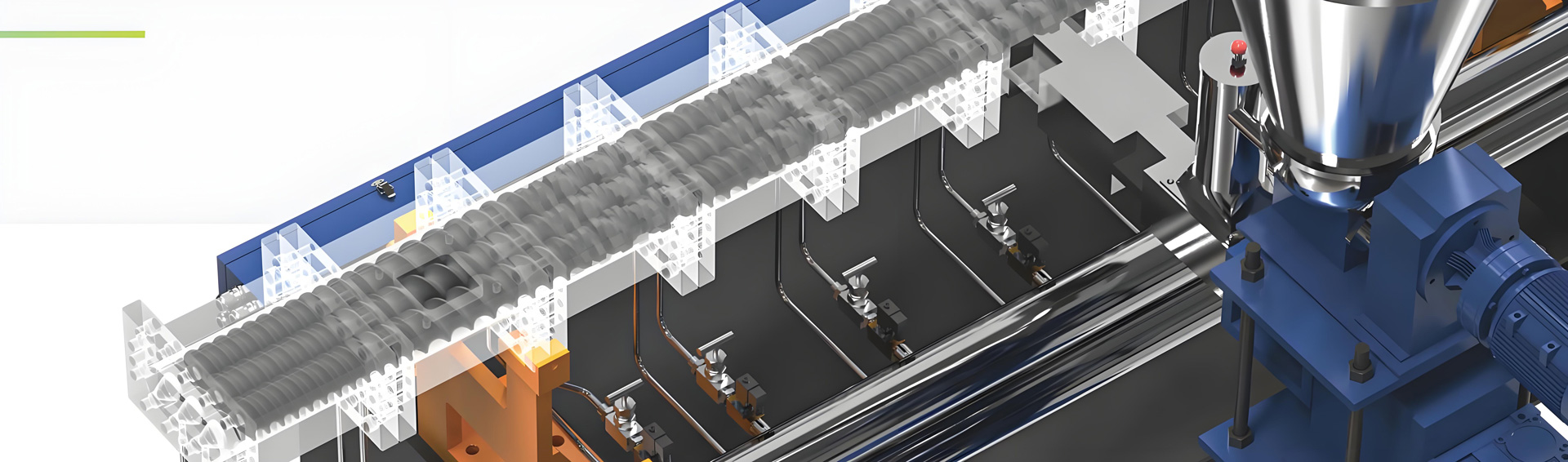
Parallel twin screw extruders feature two parallel screws rotating in the same direction (co-rotating) within a tightly fitting barrel. This configuration provides excellent distributive and dispersive mixing capabilities, essential for achieving homogeneous dispersion of slip agents throughout the carrier resin. The intermeshing screw design creates positive displacement action that ensures consistent material transport and residence time distribution.
Parallel configuration offers advantages over conical twin screw designs for masterbatch applications, including higher throughput rates, better mixing efficiency, and more flexible screw configuration options. The ability to customize screw configuration with various mixing elements and conveying sections enables manufacturers to optimize processing conditions for different formulations and production requirements.
KTE Series Parallel Twin Screw Extruders
The KTE Series parallel twin screw extruders from Kerke Extrusion Equipment Company represent state-of-the-art equipment specifically designed for masterbatch production applications. These machines incorporate advanced screw designs, precise temperature control systems, and modular construction that enables configuration optimization for specific applications.
KTE Series models range from laboratory-scale machines with 20mm screw diameters for formulation development to production equipment with 133mm screw diameters for high-volume manufacturing. The modular design allows screw length-to-diameter ratios from 32:1 to 48:1, providing flexibility to optimize mixing length for different formulation requirements. Standard configurations include 40:1 L/D for most masterbatch applications, offering an excellent balance between mixing capability and throughput efficiency.
Advanced features include segmented barrel sections with independent temperature control zones, enabling precise temperature profile optimization throughout the extrusion process. Screw speed ranges up to 600 RPM for smaller models and 300 RPM for larger production equipment, providing flexibility to process various formulations at optimal conditions. KTE Series extruders incorporate heavy-duty gearboxes and drives designed for continuous operation under demanding processing conditions.
Feeding and Metering Systems
Accurate feeding systems are critical for maintaining consistent masterbatch composition. KTE Series extruders support various feeding system configurations, including volumetric and gravimetric feeders for main and minor components. Gravimetric feeding systems provide the highest accuracy, essential for formulations with tight composition tolerances.
Side feeding capabilities enable direct injection of heat-sensitive slip agents downstream of the melting zone, reducing thermal exposure and preventing degradation. This feature is particularly valuable for temperature-sensitive slip agents or formulations with high additive concentrations. Loss-in-weight feeding systems for additives provide precise dosing control, typically achieving accuracy within ±0.5% of setpoint.
Die and Pelletizing Systems
Strand dies with appropriate hole counts and diameters enable optimization of strand dimensions for efficient cooling and pelletizing. Standard die configurations feature 2mm to 4mm diameter holes with hole counts ranging from 4 to 50, depending on throughput requirements. Die geometry optimization ensures uniform strand dimensions and consistent flow distribution across all holes.
Pelletizing systems include strand pelletizers for standard applications and water ring pelletizers for formulations requiring rapid cooling. Advanced pelletizing systems incorporate automatic strand tension control, ensuring consistent pellet dimensions even during rate changes. Water ring pelletizers provide advantages for heat-sensitive formulations by rapidly cooling strands in a water spray, reducing residence time at elevated temperatures.
Control Systems and Automation
Modern KTE Series extruders incorporate advanced control systems that provide precise control of all processing parameters, including temperature profile, screw speed, throughput rate, and feeder settings. Touchscreen interfaces enable easy operator access to process parameters and historical data. Integrated data logging capabilities facilitate process optimization and quality control.
Automated recipe management systems enable quick changeover between different formulations, reducing downtime and improving production efficiency. Advanced process control algorithms maintain consistent operating conditions despite variations in raw material properties or ambient conditions. Remote monitoring capabilities enable real-time process supervision and troubleshooting from central control rooms.
Parameter Settings
Optimal parameter settings are essential for achieving consistent anti-adhesion masterbatch quality while maximizing production efficiency. These parameters must be carefully selected based on formulation characteristics, equipment capabilities, and target quality specifications.
Temperature Profile Optimization
Temperature profile settings depend on the carrier resin type, slip agent characteristics, and desired production rate. For standard LDPE-based formulations with 10% erucamide, typical temperature profiles include: feed zone 180°C to 190°C, melting zone 200°C to 210°C, mixing zone 210°C to 220°C, and die zone 215°C to 225°C.
Higher temperatures (220°C to 240°C) may be required for formulations based on higher melting point resins such as HDPE or PP. However, temperature-sensitive formulations containing high concentrations of slip agents may require lower temperature profiles, particularly in the mixing and die zones, to prevent additive degradation. The die temperature should be maintained within ±2°C of setpoint to ensure consistent melt viscosity and strand dimensions.
Screw Speed and Throughput
Screw speed and throughput rate must be balanced to achieve optimal mixing and residence time while maximizing production efficiency. For standard formulations, screw speeds ranging from 150 to 250 RPM provide adequate mixing and dispersion. Higher screw speeds (300 to 400 RPM) enable higher throughput rates but may reduce residence time and mixing quality.
Throughput rates depend on extruder size and formulation characteristics. Typical production rates range from 50 kg/hr to 500 kg/hr for laboratory to medium-scale equipment, while large production extruders can achieve rates from 500 kg/hr to 3000 kg/hr. The specific throughput rate for a given application depends on formulation viscosity, desired residence time, and equipment capacity.
Feeding Rate Control
Feeding rates must maintain precise ratio between carrier resin and slip agents to ensure consistent masterbatch composition. Gravimetric feeding systems typically maintain feeding accuracy within ±0.5% of setpoint. For formulations containing 10% slip agent, this means actual concentration may vary between 9.5% and 10.5% during production.
Feeding rates should be monitored continuously for deviations that could indicate feeder calibration issues or material flow problems. Automated alarm systems alert operators when feeding rates deviate beyond acceptable tolerances, enabling prompt corrective action before quality issues develop. Regular feeder calibration ensures continued accuracy and consistent product quality.
Vent and Vacuum Settings
Some formulations benefit from vent ports along the extruder barrel to remove volatile components or moisture. Vacuum vent settings typically maintain pressures between -0.5 to -0.8 bar, providing adequate removal of volatiles without excessive material loss. The position of vent ports along the barrel affects efficiency, with mid-barrel locations after the melting zone being most common.
For formulations requiring minimal volatile removal, open vents with appropriate filters may be used instead of vacuum vents. The choice between vacuum and open venting depends on formulation characteristics and the presence of volatile components or residual moisture. Proper vent settings prevent excessive foaming and material loss while ensuring adequate removal of undesirable components.
Pelletizing Equipment Settings
Pelletizing equipment settings must be optimized to produce uniform pellets with consistent dimensions. Strand pelletizer cutting speeds should match strand pull rate to prevent overstretching or bunching of strands. Typical cutter speeds range from 100 to 500 RPM, depending on strand diameter and pellet length requirements.
Water ring pelletizer water flow rates and spray patterns must be optimized to achieve rapid cooling without excessive turbulence that could cause strand breakage. Water temperatures should be maintained between 20°C and 30°C to ensure efficient cooling. Water quality must be maintained to prevent contamination of masterbatch surfaces.
Equipment Pricing
Investment in parallel twin screw extruder equipment represents a significant capital expense for masterbatch manufacturers. Understanding pricing structures and cost factors enables informed investment decisions and proper budgeting for equipment acquisition.
Complete Extrusion Line Investment
Complete production lines for anti-adhesion masterbatch manufacturing typically include parallel twin screw extruder, feeding systems, die and pelletizing equipment, cooling systems, and packaging equipment. Total investment for a complete production line ranges from $150,000 to $500,000 for laboratory to medium-scale operations, and from $500,000 to $2,000,000 for large-scale production facilities.
KTE Series parallel twin screw extruders represent a significant portion of total investment, typically accounting for 50% to 60% of total equipment cost. Feeding systems, die and pelletizing equipment, and auxiliary equipment make up the remaining 40% to 50%. The specific investment amount depends on production capacity requirements, automation level, and equipment configuration.
KTE Series Extruder Pricing
KTE Series parallel twin screw extruders are available in various sizes and configurations to meet different production requirements. Laboratory-scale models with 20mm to 25mm screw diameters typically range from $50,000 to $80,000. Pilot plant models with 30mm to 40mm screw diameters range from $100,000 to $200,000.
Production-scale equipment with 50mm to 75mm screw diameters typically ranges from $200,000 to $400,000. Large production machines with 90mm to 133mm screw diameters range from $400,000 to $1,000,000. These prices include basic extruder configuration without additional options such as advanced feeding systems, die packages, or automation upgrades.
Auxiliary Equipment Costs
Feeding systems represent significant additional investment, particularly gravimetric feeding systems that provide the highest accuracy. Gravimetric feeders typically cost $15,000 to $50,000 each depending on capacity and sophistication. Multiple feeders may be required for formulations with multiple additive components.
Die and pelletizing systems typically cost $20,000 to $80,000 depending on configuration and capacity. Strand pelletizers generally cost less than water ring pelletizers but may not be suitable for all formulations. Cooling systems including water baths, chillers, and filtration equipment typically cost $10,000 to $30,000.
Installation and Commissioning Costs
Installation and commissioning costs typically range from 5% to 10% of equipment cost, depending on site preparation requirements and system complexity. These costs include equipment transportation, foundation preparation, electrical and utility connections, and commissioning services.
Training costs for operators and maintenance personnel typically range from $5,000 to $15,000. Initial raw material inventory for startup and testing typically requires an additional $10,000 to $30,000 investment depending on formulation complexity and production scale.
Production Problems and Solutions
Even with proper equipment selection and parameter optimization, various problems can occur during anti-adhesion masterbatch production. Understanding common problems, their causes, and appropriate solutions enables prompt corrective action and maintains consistent product quality.
Uneven Dispersion of Slip Agents
Problem Description: Slip agents appear as visible particles or show uneven distribution when analyzing masterbatch samples. This problem results in inconsistent anti-adhesion performance in final applications and visible defects in transparent films.
Causes: Inadequate mixing due to insufficient screw speed or inappropriate screw configuration is the most common cause. Feeder inaccuracies leading to uneven slip agent distribution can also contribute. Temperature profiles that are too low may prevent proper melting and mixing of slip agents.
Solutions: Increase screw speed to improve distributive and dispersive mixing capabilities. Evaluate screw configuration and add additional mixing elements if necessary. Verify feeder calibration and ensure accurate feeding rates. Adjust temperature profile to ensure adequate melting while avoiding excessive temperatures that could degrade slip agents.
Prevention Methods: Implement regular screw configuration reviews and optimization based on formulation changes. Schedule routine feeder calibration to maintain accuracy. Develop and follow standard operating procedures for temperature profile setup based on formulation characteristics.
Thermal Degradation of Slip Agents
Problem Description: Masterbatch exhibits discoloration, unpleasant odor, or reduced anti-adhesion performance due to thermal degradation of amide-based slip agents. This problem becomes more severe at higher production rates or with formulations containing high slip agent concentrations.
Causes: Excessive temperature in the mixing or die zones causes degradation of temperature-sensitive slip agents. Excessive residence time at high temperatures accelerates degradation. Screw speeds that are too slow increase thermal exposure time.
Solutions: Reduce temperature in mixing and die zones, particularly for formulations with high slip agent content. Increase screw speed to reduce residence time while maintaining adequate mixing. Consider side feeding of slip agents downstream of the melting zone to reduce thermal exposure.
Prevention Methods: Implement maximum temperature limits based on slip agent thermal stability specifications. Establish residence time monitoring and control to prevent excessive thermal exposure. Regular temperature sensor calibration ensures accurate temperature measurement and control.
Feeding Inconsistency
Problem Description: Masterbatch composition varies over time, resulting in inconsistent slip agent concentration. This variation leads to unpredictable anti-adhesion performance in final applications and quality control failures.
Causes: Feeder calibration drift, material flow problems caused by bridging or ratholing in hoppers, or feeder component wear can all cause feeding inconsistency. Environmental factors such as temperature and humidity can affect material flow properties.
Solutions: Recalibrate feeders to restore accuracy. Install flow aids in hoppers to prevent material flow problems. Replace worn feeder components such as augers or discharge valves. Implement environmental controls if temperature and humidity fluctuations cause flow variations.
Prevention Methods: Establish regular feeder calibration schedules, typically monthly or quarterly depending on usage. Monitor feeding performance through weight checks and statistical process control. Implement preventive maintenance schedules for feeder components. Use appropriate hopper designs and agitation systems to ensure consistent material flow.
Strand Breakage during Pelletizing
Problem Description: Strands break during pelletizing, causing inconsistent pellet size, increased scrap generation, and potential equipment damage. This problem reduces production efficiency and increases material waste.
Causes: Strand temperature variations cause inconsistent strength and breakage. Water bath temperature too low causes thermal shock and brittle fracture. Strand guides misaligned or worn cause improper strand handling. Pelletizer cutting blade wear or misalignment causes pulling forces that break strands.
Solutions: Adjust water bath temperature to prevent thermal shock. Replace worn or misaligned strand guides. Maintain pelletizer cutting blades in good condition through regular sharpening and alignment. Optimize strand dimensions and throughput rate for consistent pelletizing.
Prevention Methods: Implement regular maintenance schedules for pelletizing equipment including blade sharpening and alignment verification. Monitor water bath temperature and quality to maintain consistent cooling conditions. Train operators on proper strand handling and pelletizing procedures.
Pellet Size Inconsistency
Problem Description: Pellets vary significantly in size and shape, causing feeding problems during subsequent processing and inconsistent masterbatch dispersion in final applications. This problem often accompanies strand breakage or pelletizing equipment issues.
Causes: Inconsistent strand dimensions cause pellet size variations. Pelletizer cutting speed variations due to drive system issues cause uneven cutting. Water ring pelletizer water flow inconsistencies cause pellet size variations. Strand tension variations cause pellet size inconsistencies.
Solutions: Verify and maintain consistent strand dimensions through die and cooling system optimization. Service pelletizer drive systems to ensure consistent cutting speed. Optimize water ring water flow and spray patterns for consistent cooling. Implement automatic strand tension control to maintain consistent strand handling.
Prevention Methods: Establish regular maintenance schedules for pelletizing equipment and drive systems. Monitor pellet size distribution through regular sampling and measurement. Implement statistical process control to detect pellet size variations promptly.
Moisture Contamination
Problem Description: Masterbatch exhibits moisture-related defects including voids, surface imperfections, and reduced performance. This problem can cause processing difficulties in subsequent applications and may lead to product failures.
Causes: Inadequate drying of carrier resin before processing. Moisture absorption by hygroscopic slip agents during storage. Ambient humidity conditions affecting material handling. Inadequate packaging allowing moisture ingress during storage.
Solutions: Improve drying conditions for carrier resin, ensuring adequate temperature and time. Store slip agents in moisture-proof packaging with desiccant. Implement environmental controls in material handling areas. Upgrade packaging to moisture-proof materials with appropriate barrier properties.
Prevention Methods: Establish moisture content specifications and testing procedures for all raw materials. Implement proper storage procedures for hygroscopic materials. Use desiccant dryers and humidity-controlled storage areas. Regular package integrity testing ensures adequate moisture protection.
Maintenance and Care
Regular maintenance is essential for maintaining optimal performance and extending equipment life. Preventive maintenance schedules should address all major system components, ensuring reliable operation and consistent product quality over the equipment lifetime.
Daily Maintenance Procedures
Daily maintenance tasks include inspection of critical operating parameters and visual inspection of equipment condition. Operators should verify temperature readings at all barrel zones and ensure they remain within specified tolerances. Check all feeder readings to confirm accurate feeding rates and detect any calibration drift.
Visual inspection should identify any leaks, unusual vibrations, or abnormal sounds that could indicate developing problems. Clean around equipment to prevent accumulation of material debris that could affect performance or create safety hazards. Document all daily inspections and any observations that require attention.
Weekly Maintenance Tasks
Weekly maintenance includes more detailed inspection and preventive maintenance tasks. Check all belt drives and couplings for proper tension and alignment. Inspect screw and barrel surfaces for signs of wear or damage during routine cleaning cycles. Verify water cooling system cleanliness and proper coolant flow.
Test all safety interlocks and emergency stop functionality to ensure proper operation. Lubricate bearings and other moving components according to manufacturer specifications. Clean and inspect feeding system components, removing any material buildup that could affect feeding accuracy.
Monthly Maintenance Activities
Monthly maintenance includes comprehensive inspection and calibration of critical systems. Perform detailed calibration of all feeding systems using standard calibration weights. Verify temperature sensor accuracy using reference thermometers and adjust as necessary.
Inspect die and pelletizing equipment components for wear and replace as needed. Test all motor drives and verify proper operation. Check electrical connections and control systems for proper operation and security. Review maintenance logs to identify recurring problems that may require additional attention.
Quarterly and Annual Maintenance
Quarterly maintenance should include more extensive inspections and component replacement based on usage and manufacturer recommendations. Replace worn screw and barrel components before they cause performance degradation. Service gearboxes and drives according to manufacturer schedules, typically requiring oil changes and bearing inspection.
Annual maintenance should include comprehensive system overhauls, including complete disassembly inspection of major components, replacement of seals and bearings, and performance testing to verify equipment meets original specifications. This level of maintenance typically requires manufacturer service technicians and several days of downtime.
Spare Parts Management
Maintaining adequate spare parts inventory is essential for minimizing downtime during unexpected failures. Critical spare parts should include feeder components, temperature sensors, drive belts, and pelletizing equipment wear parts. Establish relationships with equipment suppliers to ensure rapid delivery of less common components.
Implement a spare parts tracking system to monitor usage patterns and optimize inventory levels. Regularly review spare parts requirements based on actual usage and equipment condition. Maintain documentation of spare parts specifications and interchangeability information.
FAQ
What is the ideal concentration of anti-adhesion agent in masterbatch?
The ideal concentration depends on the specific application and desired coefficient of friction. Standard formulations contain 5% to 15% slip agent, with 10% being most common for general packaging applications. High-performance applications may require 12% to 18% concentrations to achieve very low COF values below 0.2. The appropriate concentration should be determined through application testing rather than using generic recommendations.
How do I select the right slip agent for my application?
Slip agent selection depends on multiple factors including processing temperature, carrier resin compatibility, regulatory requirements, and desired performance characteristics. Erucamide provides good general-purpose performance for polyethylene applications up to 220°C. Oleamide offers better compatibility with polypropylene and higher temperature applications up to 240°C. Stearamide and behenamide provide even higher temperature stability for demanding applications. Consider both thermal stability and migration characteristics when selecting slip agents.
What causes masterbatch discoloration during production?
Discoloration typically results from thermal degradation of slip agents or carrier resin. Common causes include excessive temperature settings, particularly in the mixing and die zones. Excessive residence time at high temperatures also accelerates degradation. Contamination from previous formulations, especially colored materials, can cause discoloration. Screw and barrel wear can create excessive shear heating. Addressing these causes through temperature optimization, residence time control, and regular equipment maintenance prevents discoloration.
How do I ensure consistent slip agent dispersion?
Consistent dispersion requires proper equipment configuration and operating conditions. Ensure screw configuration includes adequate mixing elements appropriate for the formulation. Maintain screw speed high enough to achieve good distributive and dispersive mixing. Verify feeder calibration to ensure accurate and consistent slip agent feeding. Optimize temperature profile to ensure proper melting while avoiding excessive temperatures. Regular quality testing helps identify dispersion problems promptly.
What is the typical production rate for anti-adhesion masterbatch?
Production rates vary significantly based on equipment size and formulation characteristics. Laboratory-scale equipment (20-25mm screws) typically produces 50-100 kg/hr. Pilot plant equipment (30-40mm screws) produces 100-300 kg/hr. Medium production equipment (50-75mm screws) produces 300-1000 kg/hr. Large production equipment (90-133mm screws) can produce 1000-3000 kg/hr or more. The specific rate depends on formulation viscosity, desired residence time, and equipment configuration.
How do I prevent slip agent migration to the surface?
Migration is a natural characteristic of slip agents that enables surface effects but excessive migration causes problems. To control migration, consider using higher molecular weight slip agents such as stearamide or behenamide which migrate more slowly. Optimize processing temperatures to reduce slip agent mobility. Use appropriate slip agent concentrations rather than excess loading. Consider using masterbatch at lower addition rates rather than high-concentration masterbatch formulations.
What maintenance does a parallel twin screw extruder require?
Daily maintenance includes visual inspection and parameter verification. Weekly maintenance includes cleaning and lubrication. Monthly maintenance includes calibration and detailed inspection. Quarterly maintenance includes component replacement based on wear. Annual maintenance includes comprehensive overhauls. Establish a preventive maintenance schedule based on manufacturer recommendations and actual usage patterns. Keep detailed maintenance records to track component life and identify recurring problems.
How do I troubleshoot uneven pellet size?
Uneven pellet size typically results from problems in the pelletizing system or upstream inconsistencies. Check strand dimensions for consistency. Verify water bath temperature and cooling conditions. Inspect pelletizer cutting blades for wear or damage. Check pelletizer drive system for speed consistency. Examine strand guides for proper alignment and condition. Addressing each potential cause systematically identifies the root problem and enables appropriate corrective action.
What is the shelf life of anti-adhesion masterbatch?
Properly stored anti-adhesion masterbatch typically has a shelf life of 12 to 18 months when stored in cool, dry conditions in moisture-proof packaging. Exposure to high temperatures, humidity, or UV radiation can reduce shelf life. Regular testing of stored masterbatch for performance characteristics helps ensure quality before use. Masterbatch showing signs of moisture absorption or thermal degradation should be evaluated before use in critical applications.
How do I optimize production efficiency for anti-adhesion masterbatch?
Production efficiency optimization requires balancing throughput, quality, and energy consumption. Optimize temperature profile and screw speed for the specific formulation. Maximize throughput while maintaining adequate mixing and dispersion. Implement automated process control to maintain consistent operating conditions. Minimize changeover time between different formulations through quick-change systems. Regular maintenance prevents unplanned downtime. Monitor key performance indicators to identify optimization opportunities.
Conclusion
Production of high-quality anti-adhesion masterbatch using parallel twin screw extruders requires comprehensive understanding of formulation science, processing technology, and quality control principles. The KTE Series parallel twin screw extruders from Kerke Extrusion Equipment Company provide the advanced capabilities necessary for achieving consistent dispersion, high throughput rates, and excellent product quality essential for competitive masterbatch manufacturing.
Successful production depends on proper formulation selection based on application requirements, careful optimization of processing parameters, and rigorous quality control throughout production. Regular maintenance and preventive care ensure reliable equipment operation and extend equipment life, protecting the substantial capital investment represented by modern compounding equipment.
As market requirements continue evolving toward higher performance and more specialized applications, manufacturers who invest in advanced equipment and develop comprehensive process expertise will maintain competitive advantages in the anti-adhesion masterbatch market. Continuous process optimization, quality improvement, and technology adoption enable manufacturers to meet evolving customer requirements while maintaining production efficiency and profitability.