Introduction
Heat resistant polycarbonate masterbatch production represents a sophisticated segment of the high-performance plastics compounding industry, serving critical applications including automotive components, electrical enclosures, lighting fixtures, and industrial equipment. The incorporation of heat resistant additives into polycarbonate resin requires specialized equipment capable of processing at high temperatures while maintaining precise temperature control to prevent thermal degradation of the base polymer. Thermostatic twin screw extruders have become essential equipment for this application due to their advanced temperature control systems, high-temperature processing capabilities, and precise thermal management features. The integration of thermostatic technologies in twin screw extruders addresses the demanding thermal requirements of polycarbonate processing while maintaining the mixing performance necessary for high-quality masterbatch production.
The significance of heat resistant PC masterbatches extends beyond thermal performance to include considerations of optical clarity, mechanical properties, and processability. These masterbatches typically contain heat resistant additives such as phosphorus-based flame retardants, silicone-based stabilizers, or other thermal stabilizers in concentrations ranging from 5% to 30% by weight. Polycarbonate presents unique processing challenges due to its high glass transition temperature of approximately 150°C and processing temperatures typically exceeding 280°C, making precise temperature control critical to prevent thermal degradation, hydrolysis, or color formation. The development of thermostatic twin screw extruders has enabled manufacturers to process polycarbonate with the necessary temperature precision to achieve consistent quality while maintaining thermal stability throughout the process.
Wanplas Group, through its partnership with Nanjing Kerke Extrusion Equipment Company, provides advanced thermostatic twin screw extruders specifically designed for high-temperature masterbatch applications. The Kerke KTE Series twin screw extruders incorporate advanced thermostatic technologies including multi-zone independent temperature control, high-performance heating systems, precise cooling capabilities, and advanced thermal insulation. These machines are particularly well-suited for heat resistant PC masterbatch production where precise temperature management, high-temperature capability, and consistent mixing quality are essential for achieving product specifications.
Formulation Ratios (Different Types)
The formulation of heat resistant PC masterbatches varies significantly depending on the required thermal stability, processing conditions, end-use environment, and regulatory requirements. Heat resistant masterbatches typically fall into several categories based on the type of heat resistant additive used, including phosphorus flame retardant masterbatches, silicone-based stabilizer masterbatches, inorganic heat stabilizer masterbatches, and combination systems. Each category requires different formulation approaches and processing considerations to achieve optimal thermal performance.
Phosphorus-based flame retardant masterbatches are the most common type for heat resistant PC applications, utilizing organophosphorus compounds to achieve both flame retardancy and heat resistance. A typical formulation for phosphorus-based heat resistant PC masterbatch consists of 15% to 25% organophosphorus flame retardant, 70% to 80% polycarbonate carrier, 3% to 5% dispersing agent, 2% to 4% thermal stabilizer, and 1% to 3% antioxidant. The organophosphorus loading directly affects both the flame retardancy and thermal stability, with higher loadings achieving higher UL94 ratings and higher heat deflection temperatures. For applications requiring UL94 V-0 rating, organophosphorus loading typically ranges from 20% to 25%. For applications requiring UL94 V-1 or V-2 ratings, loading typically ranges from 15% to 20%. The choice of polycarbonate grade depends on the compatibility with the flame retardant and the required clarity, with optically clear grades used for applications requiring transparency.
Silicone-based heat stabilizer masterbatches offer advantages in terms of thermal stability retention and reduced impact on mechanical properties. These masterbatches typically contain 10% to 20% silicone-based stabilizer, 75% to 85% polycarbonate carrier, 3% to 5% compatibilizer, and 2% to 4% dispersing agent. The compatibilizer is critical for ensuring good dispersion and interaction between the silicone stabilizer and the polycarbonate matrix. A typical formulation for silicone-based heat resistant PC masterbatch might include 15% silicone fluid with appropriate viscosity, 78% optically clear polycarbonate carrier, 4% compatibilizer such as acrylic graft polymer, and 3% dispersing agent. The silicone stabilizer loading affects the thermal stabilization effectiveness, with higher loadings providing better thermal stability but potentially affecting the optical clarity and surface properties of the final product.
Inorganic heat stabilizer masterbatches utilize mineral-based additives such as zinc borate, metal hydroxides, or other inorganic compounds to achieve thermal stabilization. These masterbatches typically contain 20% to 30% inorganic stabilizer, 65% to 75% polycarbonate carrier, 3% to 5% coupling agent, and 2% to 4% dispersing agent. The coupling agent is essential for ensuring good interaction between the inorganic particles and the polycarbonate matrix, which improves dispersion and reduces the negative impact on mechanical properties. A typical formulation for zinc borate-based heat resistant PC masterbatch might include 25% zinc borate, 70% high-impact polycarbonate carrier, 3% silane coupling agent, and 2% dispersing agent. The inorganic stabilizer particle size must be carefully controlled, as larger particles can cause haze and reduce mechanical properties, while particles smaller than 5 microns can be difficult to disperse and may agglomerate.
Combination heat resistant masterbatches utilize multiple additive types to achieve synergistic effects and balanced performance. For example, phosphorus flame retardants can be combined with silicone stabilizers to provide both flame retardancy and thermal stability. A typical combination formulation might include 15% organophosphorus flame retardant, 10% silicone stabilizer, 65% to 70% polycarbonate carrier, 5% to 8% dispersing agent, and 2% to 4% antioxidant. The combination approach can provide superior thermal stability compared to single additive systems, though formulation optimization is more complex due to interactions between different additives. Combination formulations are particularly valuable for applications requiring both flame retardancy and thermal stability under demanding conditions.
Heat resistant masterbatches for high-clarity applications require careful additive selection to maintain optical transparency. These formulations typically use organophosphorus compounds with minimal color development, silicone stabilizers with refractive index matching to polycarbonate, or specialty inorganic stabilizers with particle sizes below 1 micron to minimize light scattering. The dispersing agents and compatibilizers must also be selected for optical clarity compatibility. A typical high-clarity heat resistant PC masterbatch formulation might include 18% organophosphorus compound, 76% optically clear polycarbonate carrier, 4% optically clear dispersing agent, and 2% antioxidant with minimal color contribution. These formulations require careful processing temperature control to prevent color development and maintain clarity.
Production Process
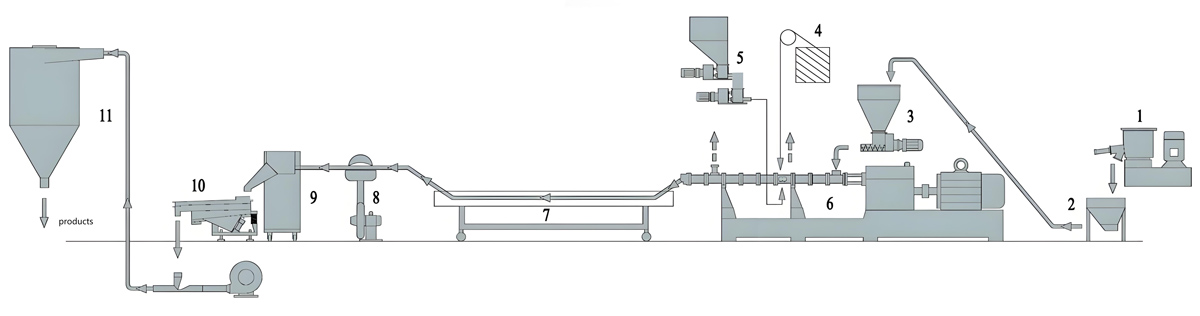
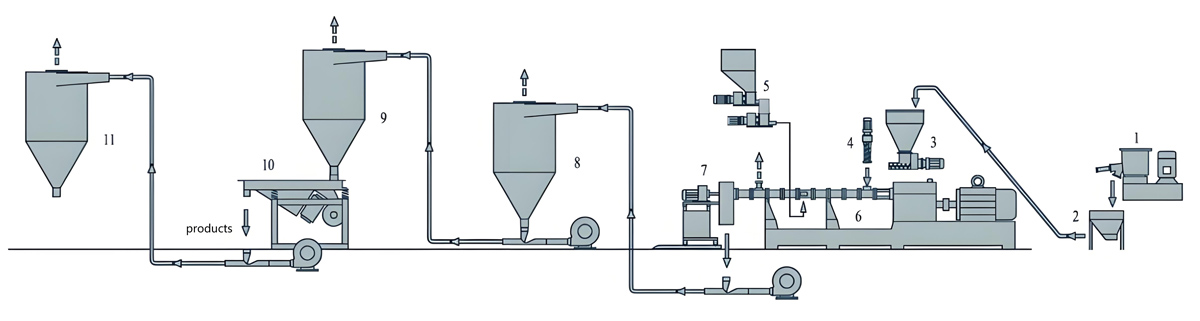
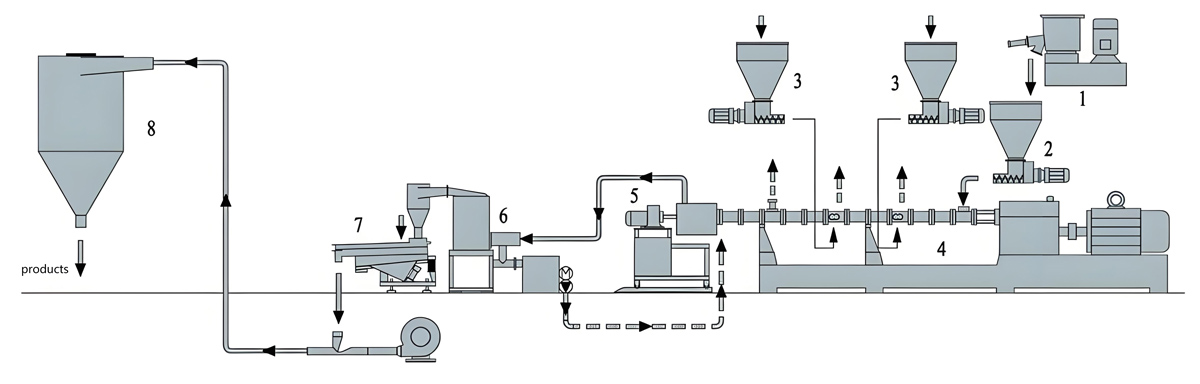
The production of heat resistant PC masterbatch using thermostatic twin screw extruders involves multiple carefully controlled stages that must be optimized to achieve consistent quality while maintaining thermal stability. The process begins with raw material preparation, progresses through compounding and pelletizing, and concludes with quality control and packaging. Each stage requires specific attention to temperature control, moisture management, and thermal stability to ensure optimal dispersion of heat resistant additives while preventing thermal degradation of polycarbonate.
Raw material preparation is a critical first step that significantly influences final product quality and thermal performance. Polycarbonate resin must be thoroughly dried to moisture content below 0.02% to prevent hydrolysis during processing, as even small amounts of moisture can cause significant degradation of polycarbonate at high processing temperatures. Drying typically requires 4 to 6 hours at 120°C to 140°C in dehumidifying dryers with dew point below minus 20°C. Heat resistant additives should be dried if they are hygroscopic, with drying conditions specified by the additive manufacturer. Dispersing agents and stabilizers are typically liquid or semi-solid materials that may require preheating to reduce viscosity for accurate metering. All raw materials must be weighed with high precision, typically to within 0.1% accuracy, to ensure consistent batch-to-batch composition. The weighing and feeding areas must be maintained with controlled humidity to prevent moisture absorption by dried polycarbonate.
Feeding of raw materials into the thermostatic twin screw extruder requires precise metering and careful moisture management to maintain thermal stability. Polycarbonate resin is typically fed through gravimetric feeders equipped with moisture protection to prevent moisture pickup during feeding. The feeder should be enclosed and purged with dry air to maintain low humidity environment. Heat resistant additives are fed through separate gravimetric feeders, with feeding rates adjusted based on additive density and desired loading. Liquid dispersing agents and stabilizers are metered using precision liquid dosing pumps for accurate volumetric delivery. The feed system must be designed to prevent moisture ingress and maintain consistent feeding rates, as variations in feed rate can cause temperature fluctuations and thermal degradation. Feed zones should be equipped with temperature control to prevent premature heating that could cause material bridging.
The compounding process in the thermostatic twin screw extruder occurs through a series of carefully designed barrel zones, each optimized for specific processing functions. The initial feed zone operates at lower temperatures, typically 260°C to 270°C, to ensure smooth feeding without premature melting that could cause material bridging. As material progresses through the extruder, temperature gradually increases, with the melting zone reaching 280°C to 300°C for optimal melting of polycarbonate. The high shear mixing zones, where dispersion of heat resistant additives occurs, typically operate at peak processing temperatures of 300°C to 320°C. These high temperatures are necessary for achieving proper melting and dispersion but require precise control to prevent thermal degradation. The vent zone typically operates at slightly lower temperatures of 290°C to 300°C to facilitate removal of any volatiles without causing excessive material degradation. The die zone typically operates at 310°C to 330°C to ensure proper flow through the die.
Temperature control during processing is critical for maintaining thermal stability of polycarbonate and preventing color formation. Thermostatic extruders feature independent zone control that allows different temperature setpoints for each barrel zone. Temperature uniformity across the barrel cross-section is essential for consistent processing, requiring precise heater control algorithms and adequate cooling capacity. Temperature fluctuations must be maintained within tight tolerances, typically plus or minus 1°C to 2°C of setpoint, to prevent thermal degradation and ensure consistent product quality. The heating system must provide sufficient capacity to reach and maintain the high temperatures required for polycarbonate processing while maintaining precise control. Cooling systems must provide sufficient capacity to remove excess heat and maintain temperature stability during fluctuations in feed rate or screw speed.
Moisture removal during processing is essential for preventing hydrolysis of polycarbonate. Vent zones with vacuum systems are used to remove moisture and volatiles from the melt. The vacuum level must be carefully controlled to provide adequate moisture removal without causing excessive material foaming or degradation. Typical vent vacuum levels range from 700 to 900 mbar absolute pressure for polycarbonate processing. The vent zone should be designed with sufficient residence time to allow effective moisture removal while minimizing the exposure of the melt to reduced pressure which can cause volatilization of additives. Vent exhaust should be condensed to recover any volatilized additives and prevent environmental release.
Melt filtration is an essential step in heat resistant PC masterbatch production, removing oversized particles, gels, and contaminants that could affect product quality. Melt filters with mesh sizes ranging from 150 to 400 microns are commonly used, with the exact selection depending on the additive particle size and dispersion quality requirements. Filter changers must be designed for high-temperature operation and should be equipped with rapid change capabilities to minimize downtime. The filtration system must maintain temperature stability during filter changes to prevent thermal degradation of material in the extruder. Screen changers with continuous operation capabilities are preferred for high-temperature processing to minimize interruptions to production.
Pelletizing of the compounded heat resistant PC masterbatch typically uses strand pelletizers or underwater pelletizers depending on the material characteristics and desired pellet shape. Strand pelletizing is common for polycarbonate-based masterbatches due to the material’s tendency to form clean strands that cut cleanly. The pelletizing area must be maintained at controlled temperature to prevent thermal shock that could cause cracking of the pellets. Pelletizer knives must be kept sharp and properly aligned to ensure clean cuts that minimize fines generation. The pelletizing process must be controlled to achieve consistent pellet size, typically 2mm to 4mm in diameter and 3mm to 6mm in length, which ensures uniform feeding in downstream processing equipment.
Cooling of the pellets after pelletizing is critical to prevent thermal degradation and maintain material properties. Air cooling systems with adjustable temperature control are typically used, with cooling air temperatures maintained between 15°C and 25°C. The pellets must be cooled sufficiently to prevent sticking during subsequent handling, typically to below 50°C, but not overcooled to avoid thermal stress that could affect the crystallinity and thermal properties. The cooling rate must be controlled to prevent condensation on the pellet surface, which could cause moisture absorption and subsequent hydrolysis during processing. The cooling system should be designed to minimize exposure to ambient humidity, possibly with enclosures and dehumidified air.
Quality control procedures include measurement of thermal properties, dispersion quality assessment, color evaluation, and mechanical property testing. Heat deflection temperature (HDT) testing according to ASTM D648 is performed to verify that the masterbatch achieves the required thermal resistance. Vicat softening point testing provides additional thermal property data. Dispersion quality is assessed through microscopic examination of pellet cross-sections, looking for uniform distribution of heat resistant additives without significant agglomeration. Color evaluation using colorimeters or spectrophotometers ensures that color development during processing remains within acceptable limits. Mechanical properties including impact strength and tensile strength may be tested for formulations where the additives significantly affect mechanical performance. Thermal stability testing using thermogravimetric analysis (TGA) or differential scanning calorimetry (DSC) provides additional data on thermal performance.
Production Equipment Introduction
The production of heat resistant PC masterbatch requires specialized thermostatic twin screw extruders capable of processing at high temperatures while maintaining precise temperature control. Thermostatic twin screw extruders incorporate multiple advanced technologies to achieve the necessary temperature management and high-temperature processing capabilities. These machines are particularly important for polycarbonate processing where the combination of high processing temperatures and thermal sensitivity demands exceptional temperature control and thermal management.
Thermostatic twin screw extruders feature high-performance heating systems designed to maintain stable temperatures up to 350°C or higher. The heating elements are typically arranged in multiple zones along the barrel, with each zone having independent control. The heating capacity is sized to provide sufficient power to maintain temperature stability even during fluctuations in feed rate or screw speed, typically providing 20 to 30% excess heating capacity over the steady-state requirement. Heating elements are typically constructed from high-temperature resistant materials such as nickel-chromium alloys to ensure long service life at high operating temperatures. The heating system may include both primary heaters for maintaining operating temperature and auxiliary boost heaters for rapid temperature changes during startup or product changeovers.
Precision temperature control systems are essential for maintaining the tight temperature tolerances required for polycarbonate processing. Each heating zone is controlled by a dedicated temperature controller with PID algorithms optimized for the thermal characteristics of the zone. Modern thermostatic extruders may feature cascade control systems that adjust downstream zone temperatures based on upstream conditions to maintain optimal temperature profiles. Temperature sensors are typically high-accuracy resistance temperature detectors (RTDs) with accuracy better than plus or minus 0.5°C. The control system may include adaptive algorithms that learn the thermal characteristics of the system and optimize control parameters automatically over time. Temperature setpoints can be programmed as profiles that vary along the barrel length, allowing optimization of temperature gradients for different formulations.
Active cooling systems are incorporated to maintain temperature stability during processing fluctuations and to provide temperature adjustment capability. The cooling system typically includes air cooling with adjustable flow rates for each zone, and may include water cooling for zones requiring higher cooling capacity. The cooling system must provide sufficient capacity to remove excess heat generated by mechanical shear and maintain temperature stability during feed rate variations. Cooling systems are typically controlled by the same temperature controllers that control heating, providing seamless integration of heating and cooling control. The cooling system design must prevent condensation and moisture ingress that could affect polycarbonate processing quality.
Thermal insulation is applied to the extruder barrel to improve energy efficiency and reduce temperature losses that could affect temperature control. The insulation is typically high-temperature resistant material rated for continuous operation above 350°C. The insulation thickness is optimized to balance insulation effectiveness with access for maintenance. Removable insulation panels allow access to heaters and temperature sensors for maintenance without complete removal of the insulation system. The insulation also reduces heat loss to the environment, improving workplace conditions and reducing energy consumption.
Screw and barrel construction in thermostatic extruders includes special features designed for high-temperature processing. Screws may be constructed from high-temperature tool steels or may be coated with high-temperature resistant materials to reduce thermal degradation. Barrel bores may be lined with wear-resistant alloys that can withstand the high temperatures and abrasive nature of some heat resistant additives. The screw geometry is optimized for the high-temperature processing characteristics of polycarbonate, including appropriate flight depths and clearance design for efficient melting and mixing at high temperatures. The screw may feature wear-resistant coatings in high-wear areas such as mixing elements.
Kerke KTE Series twin screw extruders from Nanjing Kerke Extrusion Equipment Company represent advanced thermostatic solutions specifically designed for high-temperature masterbatch applications. The KTE Series incorporates comprehensive thermostatic features including multi-zone independent temperature control up to 350°C, high-performance heating systems, active cooling, and thermal insulation. These extruders are available in screw diameters from 20mm to 120mm, with length-to-diameter ratios of 40:1 to 60:1 to provide sufficient mixing length for heat resistant additive dispersion. The KTE Series features modular construction that allows easy maintenance and reconfiguration for different masterbatch formulations, with quick-change barrel segments and screw elements that facilitate rapid product changeovers while maintaining temperature control capability.
Parameter Settings
Proper parameter settings are essential for achieving consistent quality in heat resistant PC masterbatch production using thermostatic twin screw extruders. Temperature profiles, screw speeds, feed rates, vent vacuum, and other process parameters must be optimized for each specific formulation to achieve optimal dispersion while maintaining thermal stability. Parameter optimization requires consideration of polycarbonate thermal characteristics, additive properties, equipment capabilities, and product quality requirements.
Temperature profiles must be carefully configured to ensure proper melting, dispersion, and devolatilization while preventing thermal degradation of polycarbonate. For typical heat resistant PC masterbatch production, the temperature profile might be: Feed zone 260°C to 270°C, melting zone 280°C to 300°C, mixing zone 300°C to 320°C, vent zone 290°C to 300°C, and die zone 310°C to 330°C. The exact temperatures must be adjusted based on the specific polycarbonate grade, heat resistant additive type, and required thermal properties. Higher additive loadings may require slightly higher temperatures to achieve proper dispersion, though this must be balanced against increased thermal degradation risk. The temperature profile should feature gradual temperature increases along the barrel to minimize thermal shock and ensure smooth processing. Temperature differences between adjacent zones should not exceed 20°C to 30°C to prevent thermal stress on the material.
Screw speed significantly affects dispersion quality, residence time, and thermal history. For heat resistant PC masterbatch production, screw speeds typically range from 150 to 300 rpm depending on screw diameter and material characteristics. Smaller extruders with 20mm to 40mm screw diameters typically operate at higher speeds of 250 to 300 rpm to achieve sufficient mixing intensity for additive dispersion. Medium-sized extruders with 50mm to 80mm screw diameters typically operate at 200 to 250 rpm. Large extruders with 90mm to 120mm screw diameters typically operate at 150 to 200 rpm. The optimal screw speed balances mixing intensity with residence time, ensuring sufficient dispersion while minimizing thermal degradation from excessive residence time at high temperatures. Screw speed also affects shear heating, with higher speeds generating more mechanical heat that must be managed by the cooling system.
Feed rates must be optimized to maintain consistent residence time and filling level in the extruder. Higher feed rates increase throughput but reduce residence time, potentially compromising dispersion quality. Lower feed rates improve dispersion but reduce productivity and may increase thermal degradation due to longer residence time at high temperature. For heat resistant PC masterbatch with 15% to 30% additive loading, typical feed rates range from 50 to 150 kg per hour for 20mm to 40mm extruders, 150 to 600 kg per hour for 50mm to 80mm extruders, and 600 to 2000 kg per hour for 90mm to 120mm extruders. The feed rate should be adjusted to maintain a partially filled condition in the mixing zones, which allows sufficient time for dispersion without causing excessive residence time that could degrade thermal stability. Feed rates also affect the degree of fill in the extruder, which influences shear heating and temperature stability.
Vent vacuum levels must be optimized to remove moisture and volatiles from the melt without causing excessive foaming or additive loss. Inadequate venting can cause hydrolysis of polycarbonate, leading to molecular weight degradation and reduced properties. Excessive venting can cause foaming of the melt, reducing product quality, and can cause volatilization of heat resistant additives, reducing effectiveness. Typical vent vacuum levels range from 700 to 900 mbar absolute pressure for heat resistant PC masterbatch production. The vacuum level should be adjusted based on the moisture content of raw materials and the volatility of heat resistant additives. Materials with higher moisture content require stronger vacuum to achieve effective drying, while volatile additives may require reduced vacuum to prevent excessive additive loss through the vent.
Die temperature and pressure settings affect pellet quality and consistency. Die temperatures are typically set 10°C to 20°C above the final barrel zone temperature to ensure proper flow through the die. For heat resistant PC masterbatch, die temperatures typically range from 320°C to 340°C. Die pressure typically ranges from 80 to 200 bar depending on material viscosity and throughput rate. Higher die pressures can improve pellet definition but increase thermal stress on the material. The optimal die pressure balances pellet quality with thermal degradation considerations. Die pressure monitoring systems should be installed with high-pressure alarms and automatic screw speed reduction or shutdown capabilities to prevent overpressure that could cause equipment failure or thermal degradation.
Cooling water temperature for strand pelletizing must be controlled to achieve proper strand solidification without causing thermal shock. For polycarbonate-based masterbatch, cooling water temperatures typically range from 15°C to 25°C. The water temperature must be adjusted based on ambient conditions, throughput rate, and strand diameter to ensure proper cooling without causing excessive thermal stress that could affect the thermal properties or cause cracking. The cooling water should be filtered to prevent contamination of the strands that could affect pellet quality.
Equipment Price
The investment required for thermostatic twin screw extruder systems for heat resistant PC masterbatch production varies significantly based on equipment size, configuration, temperature capabilities, and optional accessories. Understanding the cost structure and pricing factors helps manufacturers make informed investment decisions and budget appropriately for equipment acquisition. Prices are typically quoted in US dollars for international transactions, though actual transaction prices may vary based on local conditions, currency exchange rates, and specific customer requirements.
Thermostatic twin screw extruders are available in various size categories with corresponding price ranges. Small laboratory or pilot-scale extruders with 20mm to 25mm screw diameters and temperature capabilities up to 300°C typically range from USD 40,000 to USD 65,000 depending on configuration and temperature control sophistication. For high-temperature versions capable of reaching 350°C, prices typically increase by 15% to 25%. These small extruders typically have throughput capacities of 10 to 50 kg per hour and are suitable for formulation development and small-scale production. Medium-sized production extruders with 40mm to 60mm screw diameters and high-temperature capabilities typically range from USD 150,000 to USD 280,000 depending on specifications. These extruders typically achieve throughput rates of 100 to 500 kg per hour and represent the most common size range for heat resistant PC masterbatch production. Large production extruders with 80mm to 120mm screw diameters and high-temperature capabilities typically range from USD 400,000 to USD 900,000 or more depending on configuration. These large extruders can achieve throughput rates of 800 to 2500 kg per hour and are suitable for high-volume production facilities.
Thermostatic features represent a significant cost component, typically adding 20% to 35% to the base extruder price compared to standard extruders without advanced temperature control features. High-performance heating systems rated for operation up to 350°C typically cost USD 15,000 to USD 45,000 more than standard heating systems depending on extruder size and temperature range. Precision temperature control systems with advanced PID algorithms and zone cascade control typically cost USD 8,000 to USD 20,000 more than standard control systems. Active cooling systems with zone-specific control typically cost USD 12,000 to USD 30,000 depending on cooling capacity and control sophistication. Thermal insulation systems for high-temperature operation typically cost USD 5,000 to USD 15,000 depending on insulation quality and coverage. The total premium for thermostatic features typically ranges from USD 40,000 to USD 110,000 depending on extruder size and the extent of temperature control features specified.
Kerke KTE Series twin screw extruders from Nanjing Kerke Extrusion Equipment Company offer competitive pricing in the market while providing advanced thermostatic capabilities. For KTE Series extruders with high-temperature capabilities, typical pricing includes: KTE-25 (25mm screw diameter, 300°C capability) approximately USD 45,000 to USD 60,000, KTE-40 (40mm screw diameter, 350°C capability) approximately USD 160,000 to USD 220,000, KTE-60 (60mm screw diameter, 350°C capability) approximately USD 240,000 to USD 320,000, KTE-80 (80mm screw diameter, 350°C capability) approximately USD 420,000 to USD 580,000, and KTE-120 (120mm screw diameter, 350°C capability) approximately USD 650,000 to USD 900,000. These prices typically include the extruder with basic thermostatic features, standard high-temperature control system, and basic accessories. Custom configurations, additional accessories, and advanced temperature control features will increase the final price.
Feeding systems represent a significant additional cost for heat resistant PC masterbatch production. Gravimetric feeding systems with moisture protection typically cost USD 12,000 to USD 35,000 per feeder depending on accuracy requirements, material handling capacity, and moisture protection level. Heat resistant PC masterbatch production typically requires at least two gravimetric feeders, one for the polycarbonate carrier and one for the heat resistant additives, with additional feeders for additives if required. Feeder systems should be equipped with enclosures and dry air purging to maintain low humidity environment and prevent moisture pickup by dried polycarbonate. Liquid dosing systems for dispersing agents and stabilizers typically cost USD 8,000 to USD 22,000 per dosing system. Dehumidifying dryers for polycarbonate resin can cost an additional USD 25,000 to USD 60,000 depending on capacity and dew point specification.
Pelletizing systems represent another significant cost component. Strand pelletizing systems typically cost USD 20,000 to USD 55,000 depending on throughput capacity and automation level. Underwater pelletizing systems, which offer better pellet shape consistency for some materials, typically cost USD 35,000 to USD 85,000 depending on capacity. Cooling systems for strand pelletizing typically cost USD 12,000 to USD 28,000 depending on capacity and temperature control requirements. Complete pelletizing packages including cutting, cooling, and conveying typically range from USD 35,000 to USD 110,000 depending on throughput and automation.
Complete turnkey production lines including extruder, feeding systems, pelletizing, material handling, and control systems typically cost: Small pilot-scale lines with 20mm to 25mm extruders approximately USD 120,000 to USD 200,000, medium-scale production lines with 40mm to 60mm extruders approximately USD 350,000 to USD 750,000, and large-scale production lines with 80mm to 120mm extruders approximately USD 800,000 to USD 2,000,000 or more. These complete line prices include all major equipment, integration, startup support, and basic training. Additional costs for facility preparation including HVAC systems for humidity control, utilities installation, and operator training are not included in equipment prices and should be budgeted separately, typically adding 15% to 25% to the equipment investment depending on facility conditions and local requirements.
Production Problems and Solutions
Despite careful process optimization and advanced temperature control, heat resistant PC masterbatch production can encounter various problems that affect product quality, equipment performance, or operational efficiency. Understanding common problems, their causes, and implementing effective solutions is essential for maintaining consistent production and minimizing downtime. Each problem requires specific diagnostic approaches and corrective actions to address root causes rather than merely treating symptoms.
Insufficient thermal resistance in the finished masterbatch represents one of the most common quality problems. This problem can manifest as lower-than-expected heat deflection temperature, inconsistent thermal properties between batches, or failure to meet customer specifications for high-temperature applications. The most common cause is insufficient heat resistant additive loading in the formulation, which can occur from weighing errors during raw material preparation, segregation during feeding, or additive degradation during processing. Another frequent cause is poor dispersion of heat resistant additives resulting in non-uniform distribution and reduced effectiveness. Inadequate dispersion can result from insufficient mixing intensity, improper screw configuration, or temperature profiles that cause additive degradation or reagglomeration. Overprocessing of polycarbonate can cause thermal degradation that reduces the base polymer’s inherent thermal resistance, masking the benefits of additives. Inconsistent additive quality between batches can also cause thermal property variations.
Addressing insufficient thermal resistance requires systematic investigation of multiple potential causes. The first step is verification of the formulation by checking weighing records for raw material preparation and confirming that actual ingredient quantities match the target formulation. If formulation errors are identified, the batch should be recompounded with corrected ingredient quantities. For segregation problems, the feeding system should be inspected and modified to ensure uniform mixing of additives with carrier polymer, possibly through the use of pre-mixing systems or improved feeder design. For dispersion problems, screw configuration should be reviewed to ensure sufficient mixing elements are present, and screw speed may be increased to enhance dispersion intensity. Temperature profiles should be reviewed to ensure that temperatures are optimized for dispersion without causing thermal degradation. If thermal degradation of polycarbonate is suspected, residence time may be reduced by adjusting feed rate or screw speed, or processing temperatures may be reduced if thermal stability can be maintained. Material quality should be verified through testing of incoming additives to ensure they meet thermal performance specifications.
Preventing insufficient thermal resistance problems requires implementation of preventive measures during formulation development and ongoing quality control. Formulation development should include margin in heat resistant additive loading to account for normal variations in raw material properties and processing conditions. Process validation should establish acceptable processing windows for temperature, screw speed, and residence time that prevent polycarbonate degradation while ensuring adequate additive dispersion. Regular quality control testing should include measurement of heat deflection temperature and Vicat softening point on each production batch to detect developing problems before they affect customer deliveries. Raw material specifications should include thermal property requirements that ensure incoming additives meet quality standards. Equipment maintenance programs should include regular inspection of mixing elements to ensure they are not worn, which can reduce mixing effectiveness. Process monitoring should include tracking of thermal properties over time to identify trends that may indicate developing problems.
Color formation during processing represents a significant quality problem in heat resistant PC masterbatch production. Polycarbonate is prone to color formation when exposed to excessive temperatures or prolonged residence times, resulting in yellowing or browning that can affect product appearance and optical clarity. The primary causes of color formation include excessive processing temperatures, prolonged residence times at high temperature, thermal degradation of heat resistant additives, inadequate temperature control causing local hot spots, or contamination from previous production runs. Color formation is particularly problematic for applications requiring high optical clarity, where even minor yellowing can be unacceptable.
Solving color formation problems requires addressing the underlying thermal issues. The first approach is to reduce processing temperatures if possible while maintaining adequate dispersion and flow. Temperature profiles should be reviewed and reduced in zones where the highest temperatures occur, particularly the mixing and die zones. The temperature uniformity across the barrel should be verified to identify local hot spots that may be causing degradation. Screw speed may be adjusted to optimize residence time, with higher speeds reducing residence time but increasing shear heating, and lower speeds increasing residence time but reducing shear heating. The optimal screw speed minimizes the combination of thermal effects that cause color formation. If additive degradation is suspected, the additive type or loading may need to be reviewed, and alternative additives with better thermal stability may be tested. Equipment cleaning procedures should be reviewed to ensure that no contamination from previous color-forming production runs remains in the system.
Preventing color formation requires attention to temperature control and thermal management throughout the production process. Process development should establish maximum acceptable temperature limits and residence times that prevent color formation. Temperature control systems should be regularly calibrated to ensure accuracy and stability. Temperature sensors should be checked for accuracy and replaced if necessary. Screw and barrel condition should be monitored for wear that could create local hot spots or reduce mixing efficiency. Raw material quality control should include color specifications for polycarbonate resin to ensure incoming material is within acceptable color limits. Process monitoring should include color measurement on production pellets using colorimeters or spectrophotometers to detect developing color problems before they affect customer deliveries. Regular equipment maintenance should include inspection of heating elements and cooling systems to ensure they are functioning properly and maintaining uniform temperature distribution.
Molecular weight degradation of polycarbonate during processing represents a serious quality problem that can significantly affect the mechanical properties and processability of the final masterbatch. Degradation manifests as reduced molecular weight, increased melt flow index, decreased impact strength, and poor processability in downstream applications. The primary causes include excessive processing temperatures, prolonged residence times at high temperature, hydrolysis from inadequate moisture removal, or thermal degradation of additives that accelerates polycarbonate degradation. Even small amounts of molecular weight degradation can significantly affect the performance characteristics of polycarbonate products.
Addressing molecular weight degradation requires systematic investigation of thermal history and moisture conditions. The first step is measurement of melt flow index or intrinsic viscosity to quantify the extent of degradation. Temperature profiles should be reviewed and reduced if possible while maintaining adequate processing. Residence time should be analyzed to determine if the material is spending too much time at high temperature. Vent vacuum should be verified to ensure adequate moisture removal, as hydrolysis is a common cause of polycarbonate degradation. The drying system for polycarbonate resin should be inspected to ensure it is achieving proper moisture removal before processing. If additive-related degradation is suspected, alternative additives with better thermal stability or lower concentration may need to be evaluated. Process parameters may need to be adjusted to reduce thermal stress on the polycarbonate while maintaining adequate additive dispersion.
Preventing molecular weight degradation requires rigorous attention to thermal history and moisture control throughout the production process. Process development should establish safe processing windows that minimize thermal stress on polycarbonate. Temperature profiles should be optimized to provide the lowest temperatures necessary for adequate processing. Residence time should be minimized to the extent possible while maintaining sufficient mixing and dispersion. Drying of polycarbonate resin must be thorough and verified through moisture content testing before processing. Vent systems must be properly sized and maintained to ensure adequate moisture removal during processing. Regular quality control should include measurement of melt flow index or intrinsic viscosity on production batches to detect developing degradation before it affects product performance. Process monitoring should include tracking of molecular weight indicators over time to identify trends that may indicate developing problems.
Additive dispersion problems resulting in agglomeration of heat resistant additives represent a quality issue that can cause inconsistent thermal properties and affect mechanical properties. Agglomerates appear as visible specks or inclusions in molded parts or extruded products and can cause variations in thermal performance. The primary causes of agglomeration include insufficient dispersing agent concentration, inadequate mixing intensity, excessive screw speed causing additive degradation and reagglomeration, temperature profiles that cause dispersing agents to volatilize prematurely, or poor initial dispersion due to inadequate wetting of additives by the polycarbonate matrix. High additive loadings increase the difficulty of achieving uniform dispersion and make agglomeration more likely if processing conditions are not optimized.
Solving agglomeration problems requires addressing the underlying dispersion issues through formulation and process adjustments. The first approach is to increase dispersing agent concentration in the formulation, typically by 2% to 5% depending on the severity of the problem. Different dispersing agents with improved wetting characteristics for the specific heat resistant additive may be tested, including polymeric dispersants or compatibilizers with specific affinity for the additive surface. Screw configuration should be reviewed to ensure sufficient mixing elements are present, and screw speed may be adjusted to optimize shear conditions. Temperature profiles should be adjusted to ensure that dispersing agents remain active throughout the mixing zones, which may require lower temperatures in early zones and higher temperatures in mixing zones to optimize dispersion efficiency. Pre-mixing of additives with carrier polymer before feeding into the extruder can improve initial dispersion and reduce the likelihood of agglomeration.
Preventing agglomeration problems requires attention to multiple factors throughout the production process. Raw material quality control should include particle size analysis of heat resistant additives to ensure they meet specifications, as overly coarse additives are more difficult to disperse. Dispersing agent selection should consider compatibility with both the heat resistant additive and polycarbonate, with testing performed on multiple candidates to identify the most effective options. Process development should include optimization of screw configuration and processing parameters specifically for dispersion quality, potentially using advanced mixing elements or multiple mixing zones. Regular quality control should include microscopic examination of pellet cross-sections to detect developing dispersion problems before they cause customer complaints. Equipment maintenance programs should include regular inspection of mixing elements to ensure they are not worn, which can reduce mixing effectiveness.
Maintenance
Regular maintenance is essential for maintaining optimal performance and extending equipment life in heat resistant PC masterbatch production. The high processing temperatures, thermal sensitivity of polycarbonate, and precision requirements for temperature control all contribute to the importance of comprehensive maintenance programs. Implementing preventive and predictive maintenance programs helps minimize unplanned downtime, maintain product quality, and reduce total cost of ownership over the equipment lifespan.
Daily maintenance tasks focus on inspection and minor adjustments that ensure reliable operation during the production shift. At the start of each shift, operators should perform visual inspections of the extruder and auxiliary equipment to identify obvious problems such as leaks, loose components, or abnormal noises. Temperature readings from all barrel zones should be recorded and compared to normal operating ranges to identify developing temperature control problems. Pressure readings from the melt pressure transducer should be monitored to ensure consistent die pressure, with sudden pressure increases potentially indicating filter clogging or material problems. The drying system should be checked to ensure it is operating at proper temperature and dew point, as polycarbonate moisture content significantly affects processing quality. The feeding system should be inspected for proper material flow and accurate metering, with particular attention to feeders handling the polycarbonate carrier to ensure it remains dry and flows consistently.
Weekly maintenance tasks involve more detailed inspections and preventive maintenance activities. Screw and barrel inspection through the hopper should be performed to look for signs of excessive wear, surface degradation, or material buildup that could affect performance. The vent system should be inspected and cleaned if necessary to prevent accumulation of degraded material that could reduce venting effectiveness. The die assembly should be disassembled for inspection of wear patterns and cleaning of flow surfaces, with attention to removing any material deposits that could affect temperature control. Pelletizer knives should be inspected for sharpness and proper alignment, with resharpening or replacement as needed. Control system calibration checks should be performed on temperature controllers, pressure transducers, and feed rate indicators to ensure accurate control. The cooling system should be inspected for proper operation, including inspection of cooling fans and airflow.
Monthly maintenance tasks focus on more extensive preventive maintenance and condition monitoring. The drive system including electric motor, gearbox, and couplings should be inspected for signs of wear, overheating, or abnormal vibration. Motor current readings should be recorded and trended to identify developing problems. Gearbox oil should be sampled and analyzed for wear particles, with oil replacement scheduled based on analysis results or at least annually regardless of analysis results. Bearing temperatures should be monitored for elevations that could indicate lubrication problems or wear. Screw and barrel wear should be measured using appropriate gauges, with measurements recorded to track wear rates over time. Feed system calibration checks should be performed using standard weights and flow rates to verify accuracy. The complete extruder should be cleaned thoroughly to remove material buildup that could affect heat transfer and temperature control.
Semi-annual maintenance tasks involve major component inspection and replacement based on condition monitoring results. Screw elements should be removed for detailed inspection and measurement of wear dimensions. Elements with wear exceeding specified tolerances should be replaced, particularly mixing elements that are critical for dispersion quality. The barrel bore should be inspected for wear patterns, ovality, or damage, with re-boring or replacement scheduled if wear exceeds specifications. Heating elements should be inspected for proper operation and replaced if they show signs of degradation or fail to achieve required temperatures. Temperature sensors should be calibrated or replaced if they show drift from specified accuracy. The die and adapter should be removed for thorough cleaning and inspection of flow surfaces, with replacement if flow surfaces are significantly worn or damaged. All bearings in the drive system should be replaced preventively based on operating hours or condition monitoring results. All seals and gaskets should be replaced to prevent leakage.
Annual maintenance tasks involve comprehensive equipment assessment and major overhauls as required. The complete extruder should be disassembled for thorough inspection and measurement of all components. Wear measurements should be compared to previous measurements to track wear rates and identify components approaching end of life. Based on wear measurements and operating hours, a replacement schedule should be established for major components including screw, barrel, die, heating elements, and drive system components. The temperature control system should be thoroughly tested and calibrated, with software updated if newer versions are available that could improve performance or add features. The complete feeding system should be disassembled, cleaned, inspected, and recalibrated, with particular attention to the drying system for polycarbonate. All safety interlocks and protection devices should be tested to ensure proper operation. A complete temperature uniformity survey should be performed to identify any variations in temperature distribution that could affect product quality.
Predictive maintenance technologies can significantly improve maintenance effectiveness and reduce unplanned downtime for heat resistant PC masterbatch production equipment. Vibration monitoring of the drive system can detect bearing or gearbox problems before they cause catastrophic failure. Thermographic inspection can identify overheating problems in electrical components, heating elements, or bearings. Regular measurement of melt flow index or intrinsic viscosity on production batches can detect changes in thermal history that may indicate developing problems in temperature control or residence time. Temperature data logging and trend analysis can identify subtle changes in temperature control that may indicate heater degradation or sensor drift. These predictive maintenance techniques, combined with preventive maintenance schedules, enable more efficient maintenance planning and reduce the likelihood of unexpected equipment failures.
FAQ
Q: What is the recommended drying temperature and time for polycarbonate resin before processing?
A: Polycarbonate resin should be dried at 120°C to 140°C for 4 to 6 hours before processing to achieve moisture content below 0.02%. The drying should be performed in dehumidifying dryers with dew point below minus 20°C to ensure effective moisture removal. Inadequate drying can cause hydrolysis during high-temperature processing, resulting in molecular weight degradation and reduced properties. The exact drying time and temperature may vary based on the specific polycarbonate grade and initial moisture content.
Q: What is the maximum processing temperature for polycarbonate masterbatch production?
A: The maximum practical processing temperature for polycarbonate is approximately 350°C, above which thermal degradation accelerates significantly. Most heat resistant PC masterbatch production is performed at temperatures between 280°C and 320°C to balance processability with thermal stability. Higher temperatures may be used for specific formulations or processes but require very short residence times to prevent degradation. Kerke KTE Series extruders are capable of operation up to 350°C for demanding applications.
Q: How can thermal degradation of polycarbonate be minimized during processing?
A: Thermal degradation can be minimized by using the lowest processing temperatures that still provide adequate processability, minimizing residence time at high temperature, maintaining excellent moisture removal to prevent hydrolysis, and ensuring uniform temperature control to prevent local hot spots. Temperature profiles should be optimized to provide adequate melting and dispersion while minimizing time at peak temperatures. Screw speed should be optimized to balance shear heating against residence time. Regular maintenance of temperature control systems ensures uniform temperature distribution.
Q: What is the typical energy consumption for heat resistant PC masterbatch production?
A: Energy consumption depends on extruder size, throughput rate, material viscosity, and operating temperatures. Typical specific energy consumption ranges from 0.25 to 0.5 kWh per kilogram of product for small extruders, and 0.2 to 0.4 kWh per kilogram for larger extruders. Higher processing temperatures increase energy consumption. Energy consumption can be optimized by proper screw design, temperature profile optimization, use of thermal insulation, and efficient drive systems.
Q: Can heat resistant PC masterbatch be produced on conventional twin screw extruders without special thermostatic features?
A: While heat resistant PC masterbatch can be produced on conventional extruders, the lack of advanced temperature control makes process optimization much more difficult and increases the risk of thermal degradation and color formation. Thermostatic extruders such as the Kerke KTE Series provide superior temperature control that enables consistent production of high-quality heat resistant PC masterbatch with minimal thermal degradation. The investment in thermostatic features typically provides excellent return through improved product quality, reduced scrap, and more consistent production.
Q: What is the maximum heat resistant additive loading that can be processed in twin screw extruders for polycarbonate?
A: The maximum practical heat resistant additive loading depends on the additive type, particle characteristics, polycarbonate grade, and screw design. For organophosphorus flame retardants, practical maximum loading ranges from 25% to 30%. For silicone-based stabilizers, maximum loading typically ranges from 15% to 20%. For inorganic stabilizers, maximum loading can range from 25% to 35% depending on particle size and dispersion quality. Loadings above these ranges typically cause excessive viscosity, poor dispersion, and degraded mechanical properties.
Q: How can color formation be prevented during polycarbonate masterbatch production?
A: Color formation can be prevented by maintaining precise temperature control, minimizing residence time at high temperatures, using polycarbonate resin with good thermal stability, avoiding contamination from previous production runs, and ensuring that heat resistant additives do not contribute to color formation. Temperature profiles should be optimized to provide the lowest temperatures necessary for adequate processing. Equipment should be thoroughly cleaned between product changes. Regular color measurement on production pellets provides early detection of developing color problems.
Conclusion
The production of high-quality heat resistant polycarbonate masterbatches requires specialized thermostatic equipment, carefully optimized formulations, and precise thermal management. Thermostatic twin screw extruders such as the Kerke KTE Series provide the necessary combination of temperature control, high-temperature processing capability, and mixing performance required for successful heat resistant PC masterbatch production. The selection of appropriate equipment, optimization of processing parameters, and implementation of comprehensive maintenance programs are all essential for achieving consistent product quality and efficient operation.
Formulation development must balance thermal performance requirements with processability and thermal stability considerations. The high processing temperatures required for polycarbonate create significant challenges in terms of thermal degradation and color formation. Proper selection of heat resistant additives, dispersing agents, and stabilizers is essential for achieving uniform thermal performance while maintaining acceptable processability and thermal stability. The sensitivity of polycarbonate to thermal history necessitates the use of precisely controlled temperature profiles and minimized residence times to prevent degradation.
Production process optimization requires careful attention to temperature profiles, screw speeds, feed rates, moisture control, and residence time to achieve optimal dispersion while preventing thermal degradation. The interaction between processing parameters is complex, and optimization often requires experimental iteration to find the optimal balance for each specific formulation. Regular quality control testing is essential for monitoring process consistency and detecting developing problems before they affect product quality or customer satisfaction. Moisture control is particularly critical for polycarbonate, requiring thorough drying of resin before processing and effective venting during processing to prevent hydrolysis.
Temperature management throughout the production process is essential for preventing thermal degradation and color formation. Thermostatic extruders with advanced temperature control capabilities provide the precision necessary for maintaining polycarbonate within its acceptable processing window. Regular calibration and maintenance of temperature control systems ensures consistent performance over time. Process monitoring should include comprehensive temperature data logging and trend analysis to identify subtle changes that may indicate developing problems. Equipment design with adequate thermal insulation and precise heating and cooling capacity helps maintain temperature stability.
Maintenance programs must address the high-temperature processing requirements and the critical importance of temperature control. Regular inspection and calibration of temperature sensors and heating elements ensures accurate temperature control. Component inspection and replacement based on wear measurements helps optimize the balance between component cost and production impact. Predictive maintenance technologies can significantly improve maintenance effectiveness by enabling early detection of developing temperature control problems before they cause unplanned downtime or quality issues.
For manufacturers seeking to establish or expand heat resistant polycarbonate masterbatch production capabilities, thermostatic twin screw extruders offer the necessary combination of temperature control, high-temperature processing capability, and mixing performance for demanding applications. The Kerke KTE Series from Nanjing Kerke Extrusion Equipment Company provides advanced thermostatic technology specifically designed for high-temperature masterbatch applications, offering competitive pricing and proven reliability. By implementing appropriate equipment, optimized processes, comprehensive temperature management programs, and rigorous maintenance procedures, manufacturers can achieve consistent production of high-quality heat resistant PC masterbatches meeting the demanding requirements of automotive, electrical, lighting, and other high-temperature applications.