Antioxidant and anti-yellowing masterbatch formulations play an essential role in preserving the aesthetic and mechanical properties of plastic products throughout their service life. These specialized compounds protect polymers from oxidative degradation that causes discoloration, embrittlement, and surface deterioration in applications ranging from food packaging to automotive components. The production of high-performance antioxidant masterbatch using twin screw extrusion technology enables manufacturers to achieve the precise mixing, temperature control, and quality consistency required for demanding applications. This comprehensive guide covers all aspects of antioxidant and anti-yellowing masterbatch production from formulation development through quality assurance practices.
Introduction to Antioxidant and Anti-Yellowing Masterbatch
Oxidative degradation in polymers occurs through a chain reaction mechanism initiated by heat, light, radiation, or mechanical stress. Once initiated, these free radical chain reactions propagate rapidly, causing chain scission, crosslinking, and the formation of chromophoric groups that create visible discoloration. Antioxidant additives interrupt these degradation chains through various chemical mechanisms, extending the useful life of polymer products and maintaining their appearance and performance.
Anti-yellowing properties are particularly important for applications where aesthetic appearance must be maintained over extended periods. Yellowing results from the formation of conjugated double bonds and carbonyl groups during oxidative degradation. Certain polymer types including polyurethanes, polyamides, and some engineering plastics are particularly susceptible to yellowing, requiring specialized anti-yellowing additive packages.
Primary antioxidants function as radical scavengers, accepting free radicals generated during oxidation and forming stable products that terminate the degradation chain. Secondary antioxidants decompose hydroperoxides that would otherwise continue the degradation reaction. The combination of both antioxidant types provides synergistic protection through multiple mechanisms.
Masterbatch production offers significant advantages for antioxidant formulations. Converting free-flowing powder antioxidants into pellet form eliminates dust generation, improves handling characteristics, and enables more accurate dosing during polymer processing. The carrier resin also provides some protective function and improves compatibility with the base polymer being stabilized.
Formulation Ratios for Antioxidant and Anti-Yellowing Masterbatch
Formulation development for antioxidant masterbatch requires careful consideration of the specific polymer being protected, the processing conditions it will undergo, and the service environment it will encounter. Different application requirements necessitate different antioxidant packages and concentration levels.
Phenolic Antioxidant Masterbatch Formulation
Phenolic antioxidants provide excellent long-term heat stabilization through radical scavenging mechanisms. These hindered phenols sacrifice themselves by reacting with peroxy radicals, preventing the radicals from continuing the degradation chain. Common phenolic antioxidants include pentaerythrityl tetrakis(3-(3,5-di-tert-butyl-4-hydroxyphenyl)propionate) and octadecyl 3-(3,5-di-tert-butyl-4-hydroxyphenyl)propionate.
A standard phenolic antioxidant masterbatch formulation contains 15 to 25 percent active phenolic antioxidant with the balance carrier resin. The carrier is typically selected to match the polymer being protected, with polyethylene, polypropylene, or ethylene-vinyl acetate copolymer carriers providing compatibility with common polymer systems. For demanding applications, concentrations up to 35 percent may be used.
The addition of processing aids at 1 to 3 percent improves dispersion and reduces dust generation during handling. Ethylene bis-stearamide and similar slip agents help prevent particle agglomeration and improve flow characteristics of the finished masterbatch.
Phosphite and Phosphonite Antioxidant Masterbatch Formulation
Phosphite and phosphonite antioxidants provide excellent processing stability by decomposing hydroperoxides before they can initiate degradation. These secondary antioxidants work synergistically with phenolic primary antioxidants, extending their effectiveness and providing protection during high-temperature processing operations.
Common phosphite antioxidants include tris(2,4-di-tert-butylphenyl)phosphite and bis(2,4-di-tert-butyl-6-methylphenyl)ethyl phosphite. Phosphonite antioxidants offer improved hydrolysis resistance compared to phosphites, making them suitable for applications with moisture exposure requirements.
A typical phosphite antioxidant masterbatch formulation contains 15 to 30 percent active phosphite compound combined with carrier resin. For combined primary-secondary antioxidant systems, formulations might include 10 to 15 percent phenolic antioxidant and 5 to 10 percent phosphite, providing comprehensive stabilization through multiple mechanisms.
Thioester Antioxidant Masterbatch Formulation
Thioester antioxidants, particularly dilauryl thiodipropionate and distearyl thiodipropionate, provide excellent long-term thermal protection particularly in polyolefin applications. These compounds function by decomposing hydroperoxides through a catalytic mechanism that regenerates active antioxidant species.
Thioester antioxidant masterbatch formulations typically contain 15 to 25 percent active thioester compound. Higher concentrations may be used for severe service conditions, but thioester compounds can contribute to odor and may affect food contact approvals. Blending with phenolic antioxidants provides synergistic stabilization for demanding applications.
The addition of thioesters to phenolic-containing formulations can extend the effective protection period significantly, with synergy factors of 2 to 4 being commonly observed. This makes thioester-containing formulations particularly valuable for applications requiring long-term heat aging resistance.
Anti-Yellowing Masterbatch for Transparent Applications
Transparent polymer products including packaging film, optical components, and clear injection-molded parts require specialized anti-yellowing formulations that do not affect optical clarity. These formulations typically employ UV absorbers in combination with radical scavengers to prevent both UV-induced and thermal yellowing mechanisms.
A typical anti-yellowing masterbatch for transparent applications contains 5 to 15 percent UV absorber such as 2-(2-hydroxy-5-tert-octylphenyl)benzotriazole, combined with 5 to 10 percent hindered amine light stabilizer or phenolic antioxidant. The low loading level minimizes impact on optical properties while providing effective yellowing protection.
Hydroxybenzophenone and benzotriazole UV absorbers provide protection across the UV spectrum, with benzotriazoles generally offering better compatibility with transparent polymer systems. For polyolefin film applications, the combination of UV absorber and hindered amine light stabilizer provides the best yellowing resistance.
High-Performance Multi-Component Antioxidant Masterbatch
Demanding applications requiring maximum protection benefit from multi-component antioxidant formulations that combine multiple antioxidant mechanisms. These comprehensive stabilization packages address both processing stability and long-term thermal aging resistance.
A high-performance formulation for engineering plastics might include 10 to 15 percent phenolic antioxidant, 5 to 10 percent phosphite secondary antioxidant, 2 to 5 percent hindered amine light stabilizer, and 1 to 3 percent UV absorber. This comprehensive package provides protection against processing degradation, long-term thermal oxidation, and UV-induced yellowing.
For automotive interior applications where fogging resistance and odor requirements apply, specialized low-fog and low-odor antioxidant packages are developed that meet these specific requirements while providing effective stabilization performance.
Production Process for Antioxidant and Anti-Yellowing Masterbatch
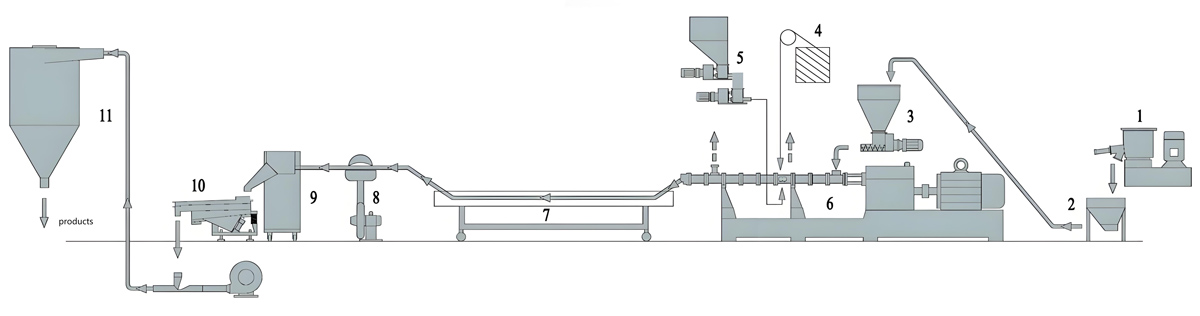
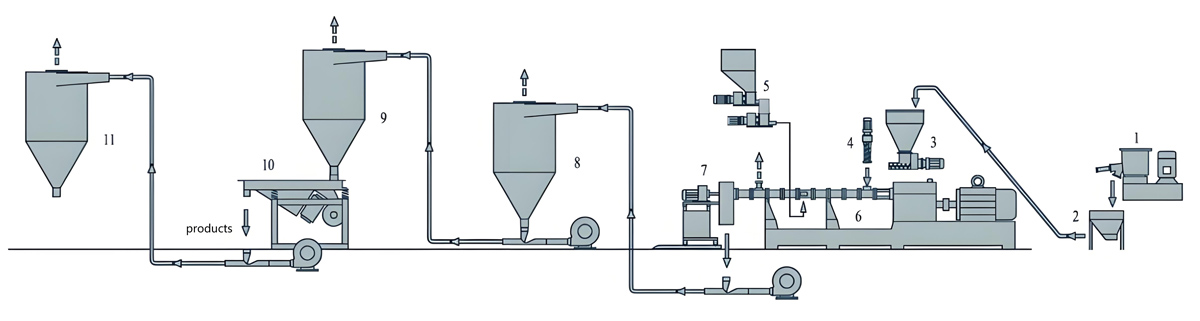
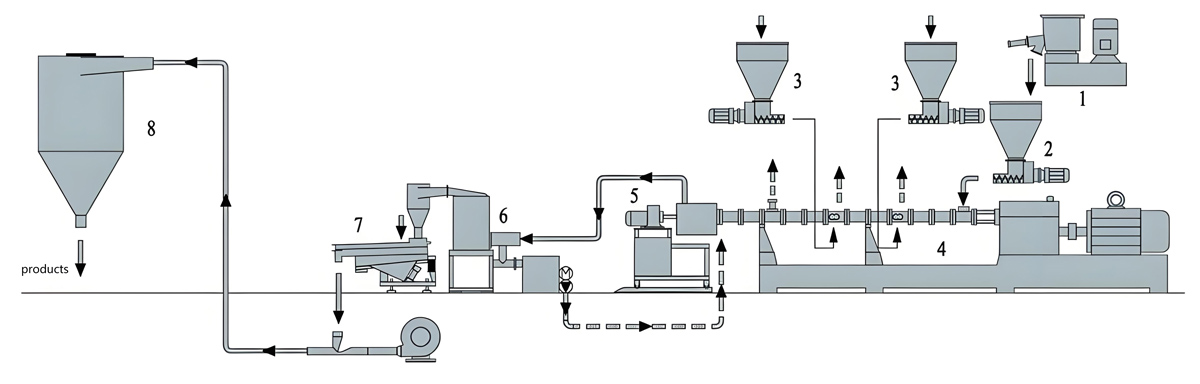
The production of antioxidant masterbatch requires attention to preserving the chemical activity of sensitive antioxidant compounds throughout the manufacturing process. The controlled mixing environment of twin screw extrusion enables consistent production of high-quality antioxidant formulations.
Raw Material Preparation and Handling
Antioxidant compounds must be protected from oxidation, moisture, and contamination during storage and handling. Many phenolic antioxidants undergo slow oxidation when exposed to air, reducing their effectiveness over time. Storage under nitrogen atmosphere or in sealed containers with desiccant extends shelf life and maintains antioxidant activity.
Raw material drying requirements depend on the specific formulation components. Carrier resins generally require drying at 80 to 100 degrees Celsius for 3 to 4 hours to achieve moisture contents below 0.1 percent. Some antioxidant compounds may be moisture-sensitive and require similar or lower drying temperatures to prevent hydrolysis or clumping.
The pre-blending stage combines antioxidant compounds with carrier resin and any other formulation components in the correct proportions. High-intensity mixing ensures uniform distribution of antioxidant particles throughout the carrier. The pre-blended mixture should be processed promptly to minimize exposure to processing conditions that might cause oxidation or volatilization.
Extrusion Processing Optimization
Antioxidant masterbatch extrusion requires careful temperature management to prevent thermal degradation or volatilization of sensitive compounds. The general principle is to use the minimum temperature required for complete melting while maintaining adequate processing viscosity for effective mixing.
Temperature profiles for polyethylene-based antioxidant masterbatch typically range from 140 to 200 degrees Celsius across the barrel zones. Lower temperatures in the feeding zone ensure consistent material introduction while preventing premature melting. Middle zones provide energy input for complete melting. Final zones maintain temperature for thorough mixing without excessive thermal stress.
Screw configuration for antioxidant masterbatch emphasizes distributive mixing over dispersive mixing, as most antioxidant compounds are already in acceptable particle size form. Screw elements promoting material circulation and residence time distribution provide effective mixing without excessive shear heating. Kneading blocks with moderate staggering angles combined with forward-conveying elements maintain mixing while controlling temperature rise.
Vacuum devolatilization removes any volatiles including trace contaminants and residual moisture from the formulation. This stage is particularly important for formulations containing volatile antioxidant degradation products or moisture that might cause problems in end-use applications. Vacuum levels between 0.5 and 0.9 bar provide effective volatile removal.
Pelletizing and Quality Control
The underwater pelletizing system produces uniform granules of the antioxidant masterbatch. The cooling water temperature and flow rate must be controlled to prevent thermal shock and ensure proper solidification of the melt strands before cutting.
Centrifugal drying removes surface moisture from the freshly cut granules. The dried product is inspected for visual quality including color consistency, particle size distribution, and absence of contamination or defects.
Quality testing of antioxidant masterbatch includes antioxidant content verification, melt flow measurement, and application testing in representative polymer systems. Residual antioxidant activity testing provides confirmation of adequate protection capability in the finished product.
Production Equipment Introduction
Equipment selection for antioxidant masterbatch production considers production volume requirements, formulation sensitivity, and quality specifications. The Kerke KTE series offers a range of twin screw extruder options suitable for different production scales and application requirements.
Kerke KTE-36B Twin Screw Extruder
The compact KTE-36B provides an entry-level platform for pilot production and product development of antioxidant masterbatch. The 35.6 millimeter screw diameter and 40:1 length-to-diameter ratio deliver adequate mixing capability for most antioxidant formulations while maintaining precise temperature control.
Throughput rates of 20 to 100 kilograms per hour suit small-batch specialty production and formulation development activities. The six-zone temperature control system enables fine temperature profiling for heat-sensitive antioxidant compounds. This model is suitable for businesses establishing antioxidant masterbatch capabilities or conducting research and development activities.
Kerke KTE-50B Twin Screw Extruder
The mid-range KTE-50B offers increased production capacity with 50.5 millimeter screw diameter achieving throughput rates of 80 to 200 kilograms per hour. The eight-zone temperature control provides enhanced flexibility for optimizing processing conditions of complex antioxidant formulations.
This model serves small to medium-scale commercial production requirements effectively. The combination of capacity, temperature control capability, and moderate investment makes the KTE-50B an attractive option for growing antioxidant masterbatch businesses.
Kerke KTE-65B Twin Screw Extruder
Medium-scale commercial production is served by the KTE-65B with 62.4 millimeter screw diameter and throughput rates of 200 to 450 kilograms per hour. The ten-zone temperature control enables precise management of temperature-sensitive antioxidant formulations.
The extended barrel length and robust construction support continuous production operation. The KTE-65B provides an excellent balance of capacity, control capability, and investment level for established antioxidant masterbatch production operations.
Kerke KTE-75B Twin Screw Extruder
High-volume antioxidant masterbatch production is addressed by the KTE-75B with 71 millimeter screw diameter and throughput rates of 300 to 800 kilograms per hour. The twelve-zone temperature control system provides maximum flexibility for demanding formulations.
The extended length-to-diameter ratio of 48:1 offers additional residence time for complete mixing of high-viscosity formulations. This model suits manufacturers with established markets seeking capacity expansion or improved production efficiency.
Kerke KTE-95D Twin Screw Extruder
Maximum production capacity is available through the KTE-95D with 93 millimeter screw diameter achieving throughput rates between 1000 and 2000 kilograms per hour. This industrial-scale platform delivers the throughput required for large-volume antioxidant masterbatch manufacturing.
The comprehensive automation and control systems support continuous production operation with consistent quality. Multiple devolatilization zones provide enhanced volatile removal capability for high-throughput processing. The KTE-95D serves major production facilities requiring maximum capacity output.
Parameter Settings for Antioxidant and Anti-Yellowing Masterbatch
Optimal parameter settings balance processing efficiency against the need to preserve sensitive antioxidant compounds. Temperature control and residence time management are particularly critical for maintaining antioxidant effectiveness in the finished product.
Temperature Profile Optimization
Temperature profiles for antioxidant masterbatch must consider the thermal stability limits of constituent compounds. Phenolic antioxidants generally tolerate temperatures up to 280 degrees Celsius for short periods, while phosphite antioxidants may degrade at temperatures above 250 degrees Celsius. Formulation-specific temperature limits should be established based on supplier data and testing.
For polyethylene-based antioxidant formulations, typical temperature profiles range from 140 to 190 degrees Celsius across processing zones. The feeding zone operates at lower temperatures to ensure consistent material introduction. Compression and melting zones use progressively higher temperatures to achieve complete polymer melting. The final mixing zones maintain temperatures that provide adequate mixing without thermal degradation.
Die zone temperatures are set 5 to 15 degrees Celsius below the final barrel zone to ensure proper melt consolidation. This temperature gradient prevents material pooling in the die while maintaining flow characteristics for uniform strand formation.
Screw Speed and Throughput Balance
Screw speeds between 150 and 300 revolutions per minute typically provide good balance between mixing quality and processing stability for antioxidant masterbatch. Lower speeds reduce mechanical energy input and temperature rise, benefiting heat-sensitive formulations. Higher speeds increase throughput and shear mixing intensity.
Throughput optimization considers the relationship between production rate and product quality. For antioxidant masterbatch, maintaining adequate residence time to ensure complete melting and thorough mixing is important, but excessive residence time at elevated temperatures causes antioxidant degradation. The optimal throughput balances these competing requirements.
Recommended throughput ranges for different equipment sizes are as follows: KTE-36B operates efficiently at 25 to 50 kilograms per hour, KTE-50B at 80 to 140 kilograms per hour, KTE-65B at 180 to 320 kilograms per hour, KTE-75B at 280 to 550 kilograms per hour, and KTE-95D at 900 to 1500 kilograms per hour.
Vacuum and Pressure Control
Devolatilization vacuum levels between 0.5 and 0.9 bar effectively remove volatiles from antioxidant formulations. The vacuum zone should be positioned where material is sufficiently molten but not at maximum fill level, providing adequate surface area for volatile escape and preventing excessive foaming.
Melt pressure monitoring provides important information about process stability and fill level. Antioxidant masterbatch formulations typically show melt pressures between 3 and 10 megapascals depending on viscosity and throughput conditions. Sudden pressure changes may indicate feeding problems or equipment issues.
Equipment Price
Investment levels for twin screw extrusion equipment vary based on production capacity, features, and configuration. Kerke offers the KTE series across a comprehensive price range suitable for different market segments and production requirements.
The Kerke KTE-36B is priced between 25,000 and 35,000 dollars, providing an accessible entry point for pilot production and development activities. The compact design minimizes installation requirements while delivering professional-grade mixing performance for antioxidant formulations.
The Kerke KTE-50B ranges from 40,000 to 60,000 dollars, offering increased capacity and enhanced temperature control for small to medium-scale commercial antioxidant masterbatch production. The additional temperature zones and improved control systems support demanding formulation requirements.
Medium-scale production capacity is available through the Kerke KTE-65B at 50,000 to 80,000 dollars. The higher throughput capability and extended features support established commercial production operations requiring consistent output of quality antioxidant masterbatch.
The Kerke KTE-75B, priced between 70,000 and 100,000 dollars, serves high-volume production requirements with maximum capacity and advanced control features. The robust construction supports continuous production operation in demanding manufacturing environments.
Maximum capacity production is available through the Kerke KTE-95D at 120,000 to 200,000 dollars. This industrial-scale platform provides the throughput and automation capabilities required for large-volume antioxidant masterbatch manufacturing operations.
Problems in Production Process and Solutions
Production of antioxidant masterbatch presents specific challenges related to the chemical sensitivity of antioxidant compounds. Understanding these challenges enables processors to develop effective solutions and preventive measures.
Problem: Color Change and Discoloration in Finished Masterbatch
Antioxidant masterbatch exhibiting color changes or discoloration indicates thermal or oxidative degradation during processing. This problem affects product appearance and may indicate reduced antioxidant effectiveness in the finished product.
Root Cause Analysis
Excessive processing temperatures cause thermal degradation of antioxidant compounds, resulting in colored degradation products. Each antioxidant has specific temperature limits beyond which degradation occurs. The combination of temperature and time determines the extent of degradation, with longer residence times at lower temperatures potentially causing more degradation than shorter times at higher temperatures.
Inadequate antioxidant protection from the formulation or use of degraded raw materials allows oxidation to occur during processing. Antioxidant compounds that have lost effectiveness during storage cannot protect the formulation or themselves from oxidation. The resulting colored oxidation products create visible discoloration in the masterbatch.
Contamination from previous production runs can introduce materials that catalyze oxidation reactions or create colored byproducts. Residual material in the extruder from previous formulations can react with current formulation components or undergo its own degradation.
Solutions
Systematic temperature reduction throughout the extrusion profile addresses thermal degradation problems. Beginning with the final zones and die, reduce temperatures by 5 to 10 degree increments while monitoring product quality. The minimum temperature that produces acceptable product quality represents the optimal processing condition for each formulation.
Increasing throughput rate reduces residence time at processing temperatures, decreasing the time available for thermal degradation reactions. This approach must be balanced against mixing quality and product consistency requirements.
Thorough purging and cleaning of extrusion equipment between production runs removes residual material that could cause contamination. Using compatible purge compounds and following established cleaning procedures ensures complete removal of previous formulation residues.
Prevention Methods
Establishing maximum temperature limits for each formulation based on antioxidant thermal stability specifications prevents degradation-related discoloration. Including safety margins accounts for normal variations in equipment performance and processing conditions.
Implementing proper raw material storage and handling procedures maintains antioxidant effectiveness. Using first-in-first-out inventory rotation, storing materials in sealed containers, and monitoring storage conditions prevents antioxidant degradation before processing.
Regular quality testing of finished product verifies color consistency and antioxidant effectiveness. Visual inspection and instrumental color measurement identify problems before product release to customers.
Problem: Inconsistent Antioxidant Dispersion
Poor dispersion of antioxidant compounds creates localized areas of high and low concentration, resulting in variable protection performance in customer applications. This problem manifests as inconsistent aging resistance and batch-to-batch variation.
Root Cause Analysis
Inadequate mixing during extrusion results from screw configurations lacking sufficient mixing elements, insufficient residence time for complete distribution, or inadequate shear stress to break down agglomerates. Antioxidant compounds that are not properly distributed cannot provide uniform protection throughout the polymer matrix.
Pre-blending deficiencies leave antioxidant particles poorly distributed before they enter the extruder. Large agglomerates formed during storage or handling resist breakdown during extrusion, particularly at lower processing temperatures. Inadequate pre-blending time or intensity fails to achieve the initial distribution required for effective extrusion mixing.
Raw material issues including excessive particle size, poor flow characteristics, or contamination affect dispersion performance. Antioxidant powders that have absorbed moisture may clump together, creating dispersion difficulties. Particles with irregular shapes or surfaces may resist uniform distribution.
Solutions
Modifying screw configurations to include additional mixing elements improves antioxidant dispersion. Kneading blocks with varying staggering angles provide intensive distributive mixing that distributes antioxidant particles throughout the carrier resin. Adding forward-conveying elements between mixing sections maintains material flow while preserving mixing efficiency.
Improving pre-blending procedures ensures better initial distribution of antioxidants before extrusion. Using high-intensity mixing equipment, extending mixing times, or adding dispersing agents improves the wetting and distribution of antioxidant compounds. The improved pre-blend requires less processing to achieve complete dispersion.
Adjusting processing temperatures to optimize viscosity improves mixing effectiveness. Lower viscosity allows greater material circulation and more thorough distribution of antioxidant particles. However, temperatures must remain within limits that prevent antioxidant degradation or other quality problems.
Prevention Methods
Standardizing pre-blending procedures ensures consistent preparation regardless of operator or batch. Documenting mixing parameters including time, speed, and sequence provides reproducible preparation conditions. Regular calibration of mixing equipment maintains consistent performance.
Implementing statistical process control for production parameters identifies trends that might indicate dispersion problems. Recording and analyzing mixing torque, pressure, and other process variables helps identify variations affecting product quality.
Quality testing of finished masterbatch verifies dispersion effectiveness. Testing samples from different points within a production batch identifies distribution uniformity issues. Melt flow variation, microscopy examination, and application testing provide confirmation of adequate dispersion.
Problem: Antioxidant Volatilization and Fuming
Volatilization of antioxidant compounds during extrusion creates smoke in the production environment, reduces active content in the finished product, and indicates inefficient processing that wastes expensive antioxidant materials.
Root Cause Analysis
Processing temperatures exceeding the volatilization threshold for antioxidant compounds cause direct vaporization of these materials. Lower molecular weight antioxidants and processing stabilizers are particularly susceptible to volatilization at extrusion temperatures. Longer residence times increase total volatilization losses.
Inadequate devolatilization allows volatilized antioxidants to condense in cooler sections of the equipment or exit through the die rather than being removed from the system. Vacuum system problems including insufficient vacuum level, leaks, or improper zone positioning reduce devolatilization efficiency.
Formulation issues can contribute to volatilization problems. High concentrations of volatile compounds or low-viscosity formulations that exit rapidly can carry antioxidants with them rather than allowing proper devolatilization.
Solutions
Reducing processing temperatures throughout the extrusion system addresses volatilization caused by excessive heat. Even small temperature reductions can significantly decrease volatilization rates for temperature-sensitive antioxidants. Target reductions in zones where volatilization is most likely to occur.
Improving vacuum devolatilization efficiency removes volatiles before they exit the extruder. Checking vacuum system operation, increasing vacuum level, and adjusting vacuum zone positioning for optimal volatile removal addresses system limitations. Multiple vacuum zones may be required for formulations with significant volatile content.
Formulation modifications including substitution of higher-molecular-weight antioxidant alternatives can reduce volatilization tendencies. Longer-chain antioxidants and polymeric antioxidants offer improved thermal stability and reduced vapor pressure at processing temperatures.
Prevention Methods
Selecting antioxidant compounds with appropriate volatility characteristics for intended processing conditions prevents volatilization problems. Antioxidant data sheets include volatility specifications and recommended processing temperature limits that guide formulation development.
Installing appropriate exhaust and smoke collection systems protects the production environment when volatilization cannot be completely eliminated. Proper ventilation maintains safe working conditions and prevents accumulation of volatile compounds.
Regular monitoring of production conditions including visual observation for smoke provides early warning of volatilization problems. Recording observations during production runs documents conditions and enables identification of problems.
Maintenance of Twin Screw Extruders for Antioxidant Masterbatch
Consistent maintenance of extrusion equipment ensures reliable production and consistent product quality for antioxidant masterbatch manufacturing. The maintenance program addresses equipment condition, control system accuracy, and processing efficiency.
Temperature Control System Maintenance
Accurate temperature control is critical for preserving antioxidant activity during processing. Regular calibration of temperature sensors using traceable standards ensures measurement accuracy and control precision. Verification of temperature sensor readings against known standards identifies drift and accuracy problems.
Heating element condition affects temperature control performance and energy consumption. Testing element resistance and comparing with specifications identifies degradation before failure occurs. Replacing worn elements during scheduled maintenance prevents unexpected production interruptions and maintains temperature control quality.
Cooling system performance directly impacts temperature control capability in heated zones. Scale buildup in water-cooled sections reduces heat transfer efficiency and creates control difficulties. Regular cleaning of cooling passages maintains proper heat removal and temperature control.
Drive and Mechanical System Care
Gearbox maintenance including oil level checks, oil analysis, and regular oil changes maintains drive system reliability. Analyzing oil samples for wear metals and contamination provides early warning of developing problems. Following manufacturer recommendations for maintenance intervals ensures long equipment life.
Motor condition monitoring including vibration analysis and insulation testing identifies problems before motor failure. Maintaining proper motor cooling ensures adequate heat removal during operation. Checking electrical connections prevents intermittent operation and potential safety hazards.
Screw element and barrel inspection identifies wear affecting processing performance. Measuring clearances and comparing with specifications determines when replacement is necessary. Worn components affect mixing efficiency and product quality, so proactive replacement maintains consistent production performance.
Feeding and Pelletizing System Maintenance
Accurate feeding is essential for consistent antioxidant masterbatch production. Loss-in-weight feeder calibration ensures accurate feed rate control. Regular verification using check weights confirms calibration accuracy and identifies needed adjustments.
Feeder component condition affects accuracy, particularly for low feed rate applications. Feeder screw wear changes throughput characteristics and reduces accuracy. Replacing worn feeder components restores accurate feeding performance.
Pelletizing equipment maintenance ensures consistent granule quality. Knife blade sharpness affects cut quality and granule appearance. Regular inspection and replacement of dull blades maintains granule quality and minimizes fines production. Die plate condition affects granule shape and consistency.
FAQ
What is the recommended antioxidant concentration for general polyolefin stabilization?
General polyolefin stabilization typically requires 0.1 to 0.5 percent total antioxidant content in the final compound. For processing protection, 0.05 to 0.2 percent phosphite or phosphonite provides adequate stabilization during extrusion. Long-term thermal protection requires 0.1 to 0.3 percent phenolic antioxidant. Combined systems using both types provide comprehensive protection through synergistic mechanisms.
Can antioxidant masterbatch be used in food contact applications?
Many antioxidant compounds are approved for food contact use, but specific approvals depend on the polymer type, processing conditions, and intended food contact application. Selecting antioxidants with appropriate food contact approvals and verifying compliance with relevant regulations ensures safe use in food packaging applications.
How does antioxidant masterbatch affect the color of transparent polymers?
Some antioxidants have inherent color or may develop color during processing or aging. For transparent applications requiring minimal color impact, selecting antioxidants with low inherent color and good color stability is important. Benzenetriol and similar phenolic antioxidants may contribute slight color that affects transparency.
What is the difference between primary and secondary antioxidants?
Primary antioxidants, typically hindered phenols, function by scavenging free radicals that propagate degradation reactions. They sacrifice themselves by reacting with peroxy radicals, forming stable products. Secondary antioxidants, typically phosphites and thioesters, function by decomposing hydroperoxides before they can initiate new degradation chains. The combination provides synergistic protection.
How should antioxidant masterbatch be stored to maintain effectiveness?
Antioxidant masterbatch should be stored in a cool, dry environment away from direct light exposure. Storage temperatures between 15 and 30 degrees Celsius and relative humidity below 60 percent help maintain product quality. Sealed packaging prevents moisture absorption and contamination. Typical shelf life under proper storage conditions is 12 to 24 months.
What causes yellowing in polymer products and how do anti-yellowing additives help?
Yellowing results from the formation of chromophoric groups during oxidative degradation of polymers. UV exposure, heat, and oxidation reactions create conjugated double bonds and carbonyl groups that absorb visible light and create yellow coloration. Anti-yellowing additives including UV absorbers, hindered amine light stabilizers, and antioxidants prevent or retard these degradation reactions, maintaining color clarity.
Can different antioxidant masterbatch types be combined?
Different antioxidant masterbatch types can be combined to create customized stabilization packages for specific applications. Blending primary and secondary antioxidants provides synergistic protection through multiple mechanisms. Testing combined systems for compatibility and effectiveness is recommended before production use.
How does processing history affect antioxidant effectiveness in recycled polymers?
Recycled polymers may have reduced antioxidant effectiveness due to previous processing exposure and consumption of stabilizers during service life. The extent of reduction depends on the polymer type, processing conditions, and service environment. Additional antioxidant supplementation may be required to achieve adequate protection in recycled polymer applications.
Conclusion
Antioxidant and anti-yellowing masterbatch production requires careful attention to formulation chemistry, processing conditions, and quality control to deliver effective protection for polymer materials. The antioxidant compounds must be preserved through the manufacturing process and remain active in the finished product to provide the stabilization performance required in end-use applications.
Twin screw extrusion technology provides the controlled processing environment necessary for producing high-quality antioxidant masterbatch. Precise temperature control, consistent mixing, and effective devolatilization all contribute to maintaining antioxidant effectiveness while achieving the product quality specifications required for commercial success.
The importance of oxidative and UV protection in polymer applications continues to grow as industries demand longer product life, improved aesthetics, and sustained performance. Manufacturers who invest in proper equipment, process development, and quality control for antioxidant masterbatch production position themselves to serve these demanding markets with high-value products that protect polymer materials throughout their service life.