Introduction
The production of basalt fiber filled masterbatch represents a critical segment of the advanced composite materials industry, serving applications that demand exceptional mechanical properties, thermal stability, and cost-effective reinforcement solutions. Basalt fibers, derived from natural volcanic rock through high-temperature melting and fiberization processes, offer remarkable tensile strength, superior chemical resistance, and excellent thermal insulation properties that make them ideal reinforcing agents for polymer matrices across numerous industrial applications.
Twin screw extrusion technology has become the dominant manufacturing method for producing basalt fiber reinforced masterbatches due to its superior fiber handling capabilities, precise temperature management, and exceptional mixing performance. The intensive shear forces generated within twin screw extruders enable effective fiber dispersion and incorporation while minimizing fiber breakage that compromises reinforcement efficiency. Modern twin screw extruders with modular screw configurations allow processors to optimize fiber length retention and dispersion quality for specific application requirements.
Nanjing Kerke Extrusion Equipment Company has developed the comprehensive KTE series of co-rotating parallel twin screw extruders specifically engineered to address the unique challenges of basalt fiber masterbatch production. These machines combine high torque transmission, precise temperature control, and configurable screw elements to deliver consistent quality and efficient production across the full range of basalt fiber loading levels and polymer matrix combinations.
This comprehensive technical guide examines every aspect of basalt fiber filled masterbatch production using twin screw extrusion technology. From formulation development through production optimization, equipment selection, and quality assurance, this resource provides manufacturers with the detailed technical knowledge required to establish or enhance their basalt fiber masterbatch production capabilities.
Formulation Ratio for Basalt Fiber Filled Masterbatch
Basalt Fiber Specifications and Selection
The selection of appropriate basalt fiber specifications significantly impacts masterbatch performance characteristics and processing requirements. Understanding fiber properties and their relationship to final product performance enables optimal formulation development and processing optimization.
Chopped basalt fiber strands ranging from 3 to 12 millimeters in length represent the most common form used in masterbatch production. Shorter fiber lengths (3 to 6 millimeters) offer easier processing and better dispersion characteristics but provide less pronounced reinforcement effects compared to longer fibers. Longer fiber lengths (6 to 12 millimeters) deliver superior mechanical property improvements but require more careful processing to prevent excessive fiber breakage and ensure uniform distribution throughout the polymer matrix.
Fiber diameter selection influences both processing characteristics and reinforcement efficiency. Standard basalt fiber diameters range from 9 to 13 microns, with finer diameters (9 to 10 microns) providing larger surface areas for polymer-fiber interfacial bonding but requiring more intensive mixing to achieve uniform dispersion. Coarser fibers (11 to 13 microns) process more readily but may create stress concentration points in finished products under high-load conditions.
Silane coupling agent surface treatments significantly enhance basalt fiber-polymer interfacial bonding, improving stress transfer efficiency and mechanical property retention. Standard sizing formulations include amino-silanes for polyamide matrices, vinyl-silanes for polyethylene and polypropylene, and epoxy-silanes for polyester systems. Fiber selection should account for the specific coupling treatment matched to the target polymer matrix to ensure optimal compatibility and performance.
Polymer Matrix Selection
The polymer matrix selection for basalt fiber reinforced masterbatches depends on the target application requirements, processing conditions, and cost considerations. Different polymer systems interact uniquely with basalt fibers, affecting final compound properties and processing optimization requirements.
Polypropylene serves as the most widely used matrix polymer for basalt fiber masterbatch production due to its favorable processing characteristics, excellent chemical resistance, and broad application range. PP-based basalt masterbatches typically contain 20% to 50% fiber loading by weight, achieving significant improvements in tensile strength, flexural modulus, and heat deflection temperature. The non-polar nature of polypropylene requires appropriate coupling agent selection to ensure adequate fiber-matrix interfacial bonding.
Polyamide 6 and polyamide 66 matrices provide superior mechanical performance and thermal resistance for demanding engineering applications. Basalt fiber reinforced PA masterbatches typically contain 15% to 40% fiber loading, achieving tensile strengths exceeding 150 MPa and continuous service temperatures up to 200 degrees Celsius. The polar nature of polyamide creates strong hydrogen bonding interactions with basalt fiber surfaces, reducing the need for intensive coupling agent treatments compared to polyolefin matrices.
Polyethylene terephthalate and polybutylene terephthalate matrices serve automotive and industrial applications requiring excellent dimensional stability and surface finish. PET-based basalt masterbatches achieve fiber loadings of 15% to 30% while maintaining good processability and mechanical property retention. The crystalline nature of these polyesters requires careful attention to cooling conditions during masterbatch processing to prevent dimensional instability in subsequent processing operations.
Additive Components for Enhanced Performance
Optimizing additive packages for basalt fiber masterbatch formulations addresses processing requirements, end-use performance needs, and production efficiency objectives. Each additive component requires careful selection and concentration optimization to achieve target property improvements without compromising fiber integrity or final compound quality.
Coupling agents represent the most critical additive category for basalt fiber masterbatch formulations. Maleic anhydride-grafted polypropylene (PP-g-MAH) at addition rates of 2% to 4% significantly improves fiber-matrix interfacial bonding in PP systems. For polyamide matrices, primary diamine coupling agents such as hexamethylenediamine enable chemical bonding between fiber sizing and polymer chains, improving stress transfer efficiency and mechanical property retention during processing.
Impact modifiers including ethylene-propylene copolymers and styrenic block copolymers improve the toughness of basalt fiber reinforced compounds, offsetting the inherent brittleness introduced by fiber reinforcement. Addition rates of 3% to 8% maintain adequate impact resistance while preserving the stiffness improvements provided by fiber reinforcement. Selection of impact modifier compatibility with the specific polymer matrix ensures uniform property improvements throughout the compound.
Thermal stabilizers protect both polymer matrix and basalt fiber from thermal degradation during high-temperature extrusion processing. Phosphite stabilizers such as tris(2,4-di-tert-butylphenyl) phosphite prevent polymer oxidation at processing temperatures, while hindered amine light stabilizers (HALS) provide long-term thermal and UV stability for outdoor applications. Total stabilizer addition rates of 0.3% to 0.8% provide adequate protection without compromising fiber-matrix interfacial properties.
Production Process for Basalt Fiber Filled Masterbatch
Raw Material Preparation and Handling
Proper raw material preparation establishes the foundation for consistent masterbatch quality and efficient production operations. Basalt fiber handling requires particular attention due to the brittle nature of fibers and the potential for airborne fiber fragments that create workplace safety concerns.
Basalt fiber storage should occur in controlled environments with relative humidity below 65% and temperature below 30 degrees Celsius. Excessive moisture absorption can cause hydrolysis reactions during processing and compromise the fiber sizing compatibility with the polymer matrix. Fibers should be stored in sealed packaging until immediately before use to prevent moisture absorption and contamination.
Pre-blending operations combine polymer resin, basalt fibers, and additive components in appropriate ratios before extrusion processing. Due to the low bulk density of chopped basalt fibers, pre-blending typically involves adding fibers gradually to the polymer resin in drum tumblers over 10 to 15 minutes of gentle mixing. Excessive mixing intensity causes fiber breakage and creates dust generation hazards. Alternative pre-blending approaches introduce fibers through side-feeding directly into the extruder to minimize handling-related fiber damage.
Polymer resin drying follows established procedures for the specific polymer type being processed. Polyamide resins require particular attention, with drying at 80 to 100 degrees Celsius for 12 to 24 hours achieving moisture contents below 0.1%. Polyester resins require similar attention, with drying temperatures of 120 to 150 degrees Celsius for 4 to 6 hours ensuring moisture levels below 0.02%.
Extrusion Processing Configuration
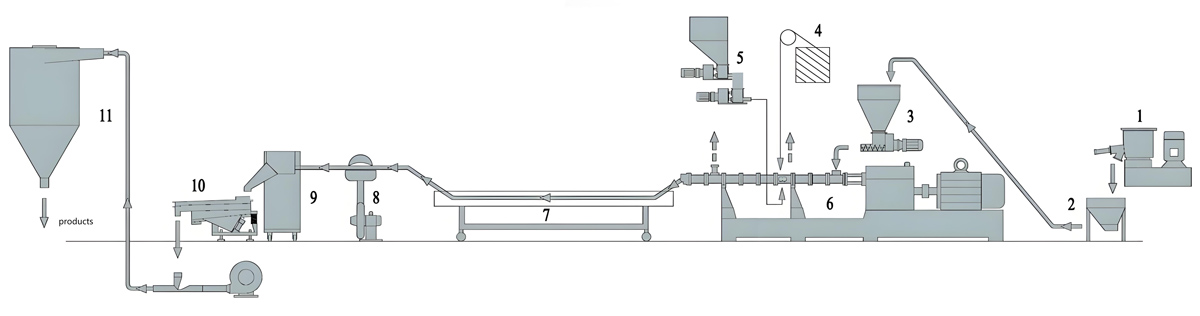
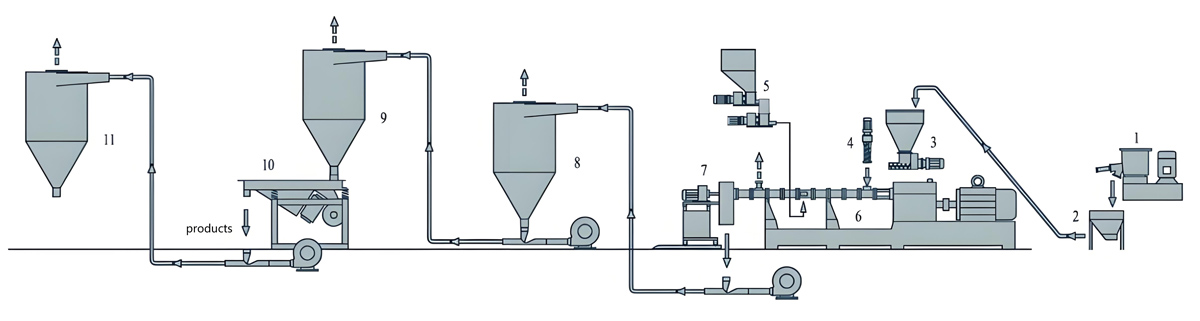
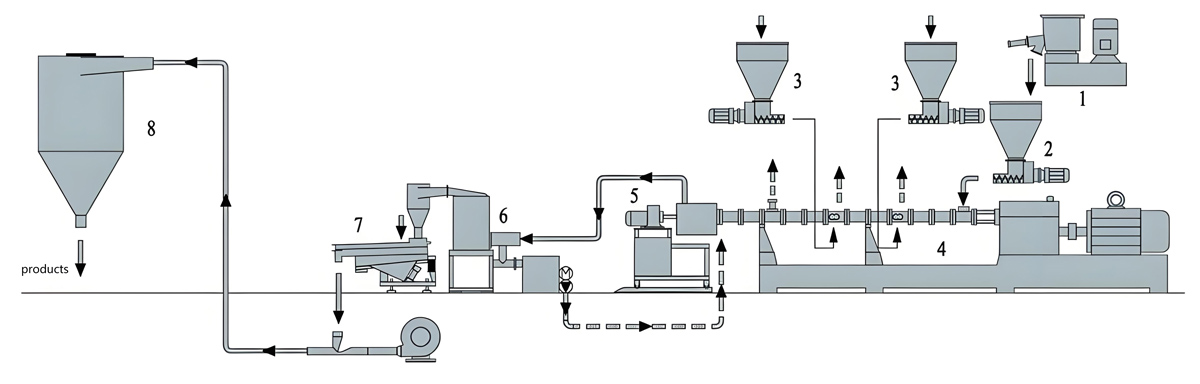
The twin screw extrusion process for basalt fiber masterbatch production requires careful configuration of screw elements, temperature profiles, and processing parameters to achieve optimal fiber length retention and dispersion quality.
The feeding zone (barrel sections 1 through 3) operates at temperatures slightly above the polymer melt temperature to ensure consistent polymer melting while preventing premature fiber incorporation into partially melted polymer. This gentle temperature approach minimizes fiber breakage in the feeding zone where screw elements focus on polymer conveying rather than mixing. Feed throat cooling prevents polymer melt-back that would interfere with fiber introduction.
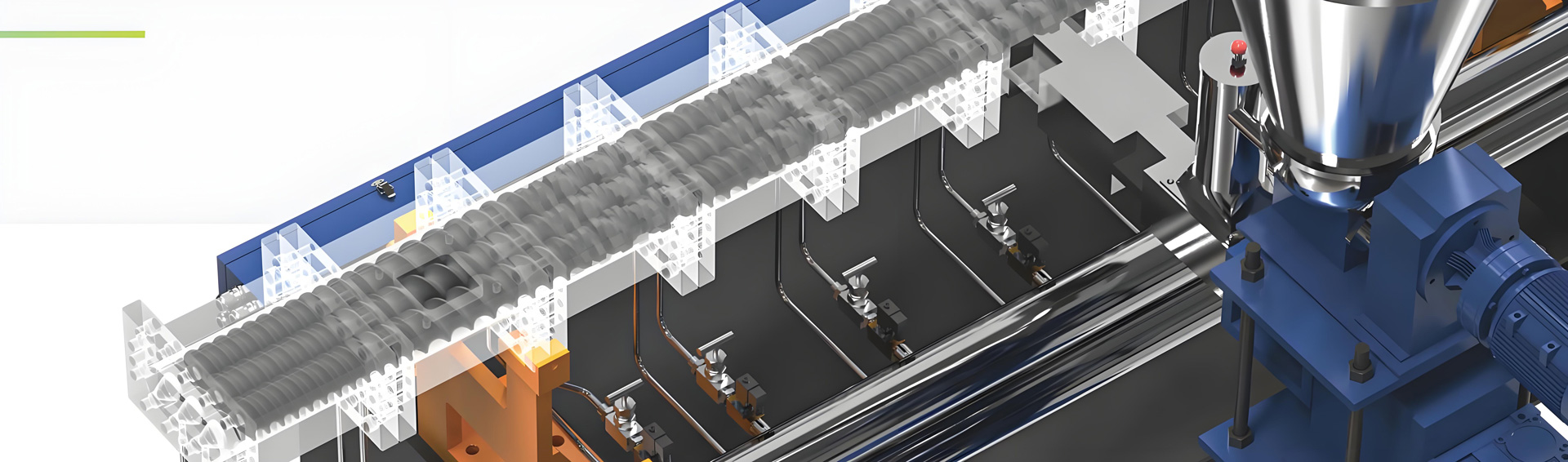
The melting zone (barrel sections 4 through 6) achieves complete polymer melting and begins initial fiber incorporation. Kneading blocks with moderate staggering angles (45 to 60 degrees) provide distributive mixing that begins incorporating fibers into the polymer matrix without excessive fiber breakage. Temperature profiles in this zone peak at values 10 to 20 degrees Celsius above the nominal melt temperature to ensure complete melting while providing adequate viscosity reduction for fiber incorporation.
The mixing and dispersion zone (barrel sections 7 through 12) provides the intensive mixing conditions necessary for achieving uniform fiber distribution and effective polymer impregnation of fiber bundles. High-shear kneading blocks with tight staggering angles (90 degrees) create aggressive mixing that separates individual fibers and ensures complete polymer encapsulation. However, excessive mixing intensity causes fiber breakage that reduces reinforcement efficiency, requiring careful balance between dispersion quality and fiber length retention.
Side-feeder installation at barrel sections 5 or 6 introduces basalt fibers directly into the molten polymer stream, avoiding the fiber feeding challenges associated with main hopper introduction. This configuration enables better control of fiber incorporation and reduces airborne fiber exposure during handling. Side-feeder systems require synchronized operation with the main polymer feed rate to maintain consistent fiber-matrix ratios throughout production.
Pelletizing and Cooling Procedures
Pelletizing operations convert the molten basalt fiber-polymer mixture into uniform masterbatch pellets suitable for handling, storage, and subsequent processing. Equipment selection and parameter optimization significantly impact pellet quality and production efficiency.
Strand pelletizing systems with water quenching represent the most common approach for basalt fiber masterbatch production. The molten extrudate emerges from the die plate as continuous strands that pass through water cooling tanks before entering the pelletizer. Water temperatures between 25 and 40 degrees Celsius provide rapid cooling that solidifies the polymer matrix while preventing thermal oxidation. Strand diameters of 2 to 4 millimeters ensure complete cooling during the standard water bath residence time of 3 to 5 seconds.
Underwater pelletizing systems offer advantages for high-viscosity basalt fiber compounds that may experience strand drawing or breakage in conventional strand pelletizing systems. The immediate pellet formation in the underwater chamber prevents strand integrity issues and enables higher production rates. However, underwater pelletizers require more complex water management systems and may create challenges with fiber settling in the cooling water reservoir.
Pellet classification and quality sorting remove oversized, undersized, and irregularly shaped pellets that would create feeding problems in downstream processing. Vibrating screens with appropriate mesh sizes separate conforming pellets from waste material, which may be recycled into subsequent production batches (within limits established by quality specifications) or disposed according to facility waste management procedures.
Production Equipment Introduction: Kerke KTE Series Twin Screw Extruders
KTE-36B Research and Development System
The KTE-36B twin screw extruder provides an ideal platform for basalt fiber masterbatch product development, process optimization studies, and small-volume specialty production. The 35.6 millimeter screw diameter achieves throughput rates of 20 to 100 kilograms per hour, enabling detailed process studies at production-representative conditions without consuming large quantities of raw materials.
The 500 to 600 revolutions per minute maximum speed range provides sufficient shear intensity for effective basalt fiber incorporation while maintaining processing stability within the moderate power envelope provided by the 18.5 to 22 kilowatt motor. The KTE-36B price range of $25,000 to $35,000 makes this system accessible for research institutions, startup operations, and established manufacturers establishing pilot production capabilities for new basalt fiber compound formulations.
The compact physical dimensions of the KTE-36B simplify installation and relocation, supporting applications where production requirements change over time or where space constraints limit equipment options. This system serves as an excellent development platform for establishing processing parameters and quality specifications before committing to larger production equipment investments.
KTE-50B Commercial Production System
The KTE-50B represents the standard choice for commercial-scale basalt fiber masterbatch production, offering throughput capacities of 80 to 200 kilograms per hour that achieve favorable production economics while maintaining the processing flexibility required for diverse formulation requirements.
The 50.5 millimeter screw diameter provides adequate length for incorporating fiber reinforcement while maintaining the mixing intensity necessary for uniform fiber dispersion. The 500 to 600 revolutions per minute speed range combined with 55 to 75 kilowatt motor power ensures consistent processing quality across the full throughput range without compromising fiber length retention or dispersion uniformity.
At $40,000 to $60,000, the KTE-50B provides the best value proposition for manufacturers entering the basalt fiber masterbatch market or expanding production capacity to meet growing demand. The modular barrel configuration enables installation of optional venting ports for devolatilization applications and side-feeder openings for optimized fiber introduction.
KTE-65B High-Volume Production System
The KTE-65B twin screw extruder addresses production requirements for manufacturers with substantial volume demands who require single-machine capacities exceeding 200 kilograms per hour. The 62.4 millimeter screw diameter achieves throughput rates of 200 to 450 kilograms per hour, enabling efficient production economics for regional market supply.
The 90 to 110 kilowatt motor system provides substantial power reserves for processing challenging basalt fiber formulations, including high-loading compounds and thermally sensitive polymer matrices. The KTE-65B price range of $50,000 to $80,000 reflects the industrial-grade engineering required for continuous high-volume production operations.
Enhanced barrel heating and cooling capacity ensures precise temperature control at elevated throughput rates where viscous dissipation generates additional thermal energy. Advanced control system features enable automated production recipe management and real-time monitoring of critical process parameters.
KTE-75B Industrial Scale System
The KTE-75B serves manufacturers requiring high-volume production capabilities for basalt fiber masterbatch products serving national or regional markets. The 71 millimeter screw diameter achieves throughput rates of 300 to 800 kilograms per hour, enabling single-machine annual production capacities exceeding 5000 tons at full utilization.
The 132 to 160 kilowatt motor system provides the substantial power reserves necessary for processing demanding basalt fiber formulations at elevated throughput rates. The KTE-75B price range of $70,000 to $100,000 positions this system for established masterbatch manufacturers and vertically integrated compounders serving demanding industrial applications.
The extended barrel length options and twelve-barrel-section configuration provide maximum flexibility for configuring processing zones matched to specific basalt fiber compound requirements. Comprehensive automation options enable integration with factory management systems for production tracking and quality documentation.
KTE-95D Maximum Capacity System
The KTE-95D represents the highest capacity option in the Kerke twin screw extruder lineup, designed for the most demanding basalt fiber masterbatch production requirements. The 93 millimeter screw diameter achieves throughput rates of 1000 to 2000 kilograms per hour, enabling single-machine production capacities that serve international market demands.
The 500 to 800 revolutions per minute speed range (extended beyond the 500 to 600 rpm limit of smaller models) combined with 315 to 500 kilowatt motor power provides exceptional processing capability for the most challenging basalt fiber formulations. The KTE-95D price range of $120,000 to $200,000 reflects the substantial engineering and manufacturing investment required for this production-scale system.
Advanced features including automated screw configuration changes, real-time quality monitoring integration, and predictive maintenance systems support continuous production operations at maximum capacity. This system represents the optimal choice for manufacturers requiring dedicated high-volume basalt fiber masterbatch production capabilities.
Parameter Settings for Basalt Fiber Masterbatch Production
Temperature Profile Optimization
Temperature profile configuration significantly impacts basalt fiber masterbatch quality by affecting polymer melt viscosity, fiber-matrix interfacial bonding, and fiber degradation prevention. Optimized temperature profiles balance processing efficiency against quality requirements for each specific formulation.
For polypropylene-based basalt fiber masterbatches, recommended temperature profiles typically start at 180 to 200 degrees Celsius in the feed zone and progress to 220 to 250 degrees Celsius in the melting zone. Mixing zone temperatures of 210 to 240 degrees Celsius provide adequate viscosity for fiber incorporation while minimizing thermal degradation. Die zone temperatures of 200 to 220 degrees Celsius prevent surface oxidation while maintaining adequate flow for strand formation.
Polyamide 6 and PA66 matrices require higher processing temperatures due to their higher melt temperatures and moisture sensitivity. Feed zone temperatures of 230 to 250 degrees Celsius transition to melting zone temperatures of 260 to 280 degrees Celsius, with mixing zone temperatures maintained between 250 and 270 degrees Celsius. Strict moisture control becomes essential at these elevated temperatures, as moisture contamination causes polymer hydrolysis that degrades mechanical properties and creates surface defects.
Polyester matrices including PET and PBT require the highest processing temperatures, typically ranging from 260 to 300 degrees Celsius in the melting zone. Cooling in the final mixing zones to 250 to 280 degrees Celsius helps prevent crystallinity-related dimensional instability while maintaining processing stability. These elevated temperatures necessitate comprehensive stabilizer packages and careful processing time management to prevent thermal degradation.
Screw Speed and Throughput Coordination
Optimal screw speed selection balances competing requirements for mixing intensity (which benefits from higher speeds) against fiber length retention and thermal management (which benefit from lower speeds). Understanding these relationships enables processors to optimize settings for specific formulation requirements.
Maximum screw speeds of 400 to 500 revolutions per minute typically provide optimal balance for basalt fiber masterbatch production on KTE series extruders. This speed range generates sufficient shear for fiber dispersion while limiting fiber breakage to acceptable levels. Higher speeds above 500 rpm begin causing excessive fiber attrition, particularly for longer fiber lengths and higher fiber loadings.
Throughput selection depends on fiber loading, fiber length, and target production volume. A general guideline establishes throughput rates of 0.4 to 0.8 kilograms per hour per millimeter of screw diameter for basalt fiber masterbatch production. For the KTE-50B, this translates to 20 to 40 kilograms per hour for high-loading formulations (above 35% fiber) and 40 to 80 kilograms per hour for moderate-loading formulations.
Specific mechanical energy input provides a useful metric for comparing processing conditions across different throughput and speed combinations. Optimal basalt fiber masterbatch processing typically requires SME values between 0.18 and 0.28 kilowatt-hours per kilogram, indicating the intensive mechanical work required for fiber incorporation and dispersion.
Feeding System Configuration
Feeding system design and operation significantly impact basalt fiber masterbatch quality and production efficiency. Multiple feeding strategies address the unique challenges of introducing low-density fiber materials and maintaining consistent fiber-matrix ratios throughout production.
Main hopper feeding delivers polymer resin and pre-blended additive packages to the extruder at controlled rates matched to the target throughput and formulation composition. Gravimetric loss-in-weight feeders provide superior accuracy compared to volumetric systems, maintaining formulation precision within plus or minus 0.5% of target values. Hopper design should include anti-bridging features such as agitators or vibrators to ensure consistent flow of polymer pellets.
Side-feeder introduction of basalt fibers at barrel sections 5 or 6 provides the most effective approach for minimizing fiber breakage while maximizing fiber incorporation efficiency. Side-feeders operate with synchronized control to the main polymer feed, maintaining consistent fiber-to-polymer ratios throughout production. Fiber feeding rates typically range from 10 to 50 kilograms per hour depending on extruder size and target fiber loading.
Multi-stage feeding configurations introduce fibers gradually through multiple side-feeder ports along the mixing zone, reducing the instantaneous fiber concentration in any barrel section and improving dispersion quality. This approach proves particularly beneficial for high-loading formulations where concentrated fiber introduction creates processing challenges and quality variations.
Equipment Price Analysis for Basalt Fiber Masterbatch Production
Capital investment planning for basalt fiber masterbatch production facilities requires evaluation of equipment costs, facility requirements, and projected production economics. The following price analysis provides guidance for manufacturers considering twin screw extruder investments.
The KTE-36B at $25,000 to $35,000 serves research and development, pilot production, and low-volume specialty applications. This system achieves production rates of 20 to 100 kilograms per hour, enabling detailed process development and product qualification before committing to larger production equipment. The accessible price point makes this system attractive for new market entrants and academic research institutions.
The KTE-50B priced between $40,000 and $60,000 provides the foundation for commercial-scale basalt fiber masterbatch production. The 80 to 200 kilograms per hour capacity achieves production economics that support competitive pricing while maintaining the quality standards required for engineering applications. This investment level suits startup operations and established compounders expanding into basalt fiber products.
The KTE-65B at $50,000 to $80,000 addresses production requirements for manufacturers with substantial volume demands. The 200 to 450 kilograms per hour throughput enables efficient production economics and reduces per-kilogram manufacturing costs through improved labor productivity and facility utilization. This investment level typically appeals to established masterbatch manufacturers with defined market opportunities.
The KTE-75B priced between $70,000 and $100,000 serves high-volume production requirements for manufacturers supplying regional or national markets. The 300 to 800 kilograms per hour capacity enables single-machine production volumes that substantially reduce manufacturing overhead per unit of output. The substantial capital requirement necessitates comprehensive production planning and market analysis to ensure adequate capacity utilization.
The KTE-95D at $120,000 to $200,000 represents the maximum production capability in the Kerke twin screw extruder lineup. The 1000 to 2000 kilograms per hour throughput positions this system for dedicated production facilities serving international markets with consistent high-quality basalt fiber masterbatch products. Return on investment analysis should confirm adequate demand to justify this substantial capital commitment.
Comprehensive facility setup requires additional investments including fiber handling and dust collection systems ($15,000 to $60,000), raw material storage and handling infrastructure ($20,000 to $80,000), downstream processing and packaging equipment ($25,000 to $100,000), and quality control laboratory instrumentation ($15,000 to $50,000).
Problems in Production Process and Solutions
Fiber Breakage and Length Reduction
Problem Description: Basalt fibers experience excessive breakage during extrusion processing, resulting in shorter than expected fiber lengths in the final masterbatch. This fiber attrition reduces reinforcement efficiency, compromising the mechanical property improvements that represent the primary value proposition for basalt fiber reinforcement.
Root Cause Analysis: Excessive shear stress during processing breaks basalt fibers through mechanical impact and abrasive contact with screw elements and barrel surfaces. High screw speeds, extended mixing zones, and worn screw elements all contribute to fiber breakage. Insufficient polymer melting before fiber introduction causes fiber contact with solid polymer particles that accelerate attrition.
Technical Solutions: Reduce screw speed from maximum values toward the 300 to 400 revolutions per minute range, accepting modest reductions in mixing efficiency to preserve fiber length. Reconfigure screw elements to reduce mixing intensity in fiber incorporation zones, replacing high-shear kneading blocks with distributive mixing elements that provide dispersion without excessive mechanical impact. Ensure complete polymer melting upstream of fiber introduction points to prevent fiber contact with solid polymer particles.
Preventive Measures: Establish maximum allowable fiber length reduction (typically 30% to 40% of original fiber length) as a quality specification verified through regular fiber length distribution testing. Implement production scheduling that minimizes processing time between fiber introduction and pelletizing, reducing cumulative mechanical stress exposure. Maintain screw element replacement schedules based on production volume rather than calendar time to ensure mixing elements retain proper geometries.
Poor Fiber Dispersion and Bundle Formation
Problem Description: Basalt fibers fail to disperse uniformly within the polymer matrix, forming bundles and agglomerates that create stress concentration points in finished products. This defect manifests as surface irregularities, inconsistent mechanical properties, and compromised appearance in injection molded or extruded parts.
Root Cause Analysis: Insufficient mixing intensity and inadequate fiber incorporation timing create fiber bundles that persist through the extrusion process. Fibers introduced before complete polymer melting resist separation due to the high viscosity of partially melted polymer. Incompatible sizing treatments prevent polymer wetting of fiber surfaces, creating interfacial adhesion failures that allow bundle formation during cooling.
Technical Solutions: Increase mixing intensity through additional kneading blocks or tighter staggering angles in the fiber incorporation and mixing zones. Extend the mixing zone length to provide additional residence time for fiber bundle separation and polymer impregnation. Verify that fiber introduction occurs after complete polymer melting, adjusting barrel temperature profiles or feed rates to ensure adequate melting upstream of the fiber introduction point.
Preventive Measures: Verify fiber sizing compatibility with the target polymer matrix through supplier technical specifications and small-scale mixing trials before production commitment. Implement statistical process control monitoring of dispersion quality through sampling and microscopy inspection. Establish minimum mixing element specifications for fiber incorporation configurations and document approved screw configurations for each formulation.
Feeding Difficulties and Fiber Bridging
Problem Description: Basalt fiber feeding becomes inconsistent or completely interrupted due to bridging, clumping, or inadequate flow through feeding equipment. These feeding interruptions create formulation variations that compromise product quality and production efficiency.
Root Cause Analysis: The low bulk density and fibrous nature of basalt fibers create handling challenges that differ fundamentally from conventional polymer resin processing. Fibers tend to interlock and form stable structures that resist flow through hoppers and feeders. Moisture absorption creates clumping that exacerbates flow problems. Inadequate feeder design for fiber materials causes erratic flow rates.
Technical Solutions: Implement side-feeder introduction directly into the molten polymer stream, eliminating the handling challenges associated with hopper feeding of fibrous materials. Install hopper vibrators or agitators on polymer feed hoppers to prevent arching of pre-blended mixtures. Configure gravimetric feeding systems with appropriate resolution and response characteristics matched to fiber feeding requirements.
Preventive Measures: Control fiber storage conditions to prevent moisture absorption that contributes to clumping and flow problems. Establish maximum storage time limits for fiber materials and implement first-in-first-out inventory rotation. Conduct regular feeder calibration and performance verification to ensure accurate fiber feed rates throughout production campaigns.
Color Variation and Discoloration
Problem Description: Basalt fiber masterbatch exhibits unexpected color variations or discoloration ranging from yellowing to browning that exceeds acceptable quality specifications. These color defects indicate thermal degradation and create aesthetic concerns for applications where consistent appearance is important.
Root Cause Analysis: Excessive thermal exposure during extrusion processing causes polymer chain oxidation and degradation reactions that create color bodies. Elevated processing temperatures, extended residence times, and inadequate antioxidant protection all contribute to thermal discoloration. Fiber introduction timing affects thermal exposure duration for the polymer matrix.
Technical Solutions: Reduce barrel temperature settings by 10 to 15 degrees Celsius while maintaining adequate processing conditions for polymer melting and fiber incorporation. Increase antioxidant addition rates with emphasis on phosphite stabilizers that provide excellent color protection during high-temperature processing. Optimize screw configuration to minimize residence time in high-temperature zones while maintaining dispersion quality requirements.
Preventive Measures: Implement regular color measurement monitoring using spectrophotometric techniques to detect trends before they create out-of-specification product. Establish maximum production campaign durations based on the thermal stability of each specific formulation. Maintain antioxidant inventory at fresh stock levels and verify antioxidant effectiveness through regular testing.
Mechanical Property Variability
Problem Description: Basalt fiber masterbatch batches exhibit inconsistent mechanical property measurements despite seemingly consistent processing conditions. This variability creates quality concerns for customers using masterbatch in applications requiring predictable and consistent performance.
Root Cause Analysis: Inconsistent fiber dispersion quality creates batch-to-batch variations in reinforcement efficiency. Fiber length distribution variations directly impact mechanical property measurements. Fluctuations in fiber loading due to feeding system variations create composition differences that affect final compound properties.
Technical Solutions: Implement comprehensive quality control testing on representative samples from each production batch, including tensile testing, flexural testing, and impact resistance measurements. Increase feeding system accuracy through gravimetric control and regular calibration verification. Verify screw element wear status and replace worn elements that compromise mixing consistency.
Preventive Measures: Establish statistical process control programs with control charts for critical quality parameters including tensile strength, flexural modulus, and fiber length distribution. Document and replicate successful production conditions to ensure consistency across production campaigns. Qualify backup fiber suppliers to prevent quality variations due to source changes.
Maintenance for Twin Screw Extruders in Basalt Fiber Masterbatch Production
Screw Element Care and Replacement
Basalt fiber processing accelerates wear on screw elements due to the abrasive nature of glass fibers and the high processing temperatures required for many polymer matrices. Scheduled screw element maintenance ensures consistent processing quality and prevents equipment failures that interrupt production.
Visual inspection of screw elements should occur at intervals of 500 to 800 production hours, depending on fiber loading levels and polymer matrix characteristics. Inspectors should document wear patterns on kneading blocks, including tooth wear, edge rounding, and surface scoring that indicate excessive mechanical stress. Conveying elements show wear through polished surfaces and reduced helix angles that compromise conveying efficiency.
Wear measurement using precision gauges enables quantitative assessment of element condition. Elements showing wear depths exceeding 15% of original dimensions should be scheduled for replacement to maintain proper clearances and mixing efficiency. Hardened steel screw elements provide extended service life in basalt fiber applications compared to standard tool steel options.
Barrel and Liner Maintenance
Barrel wear in basalt fiber processing occurs primarily in the mixing zone regions where screw elements generate the highest contact pressures against barrel surfaces. Regular barrel inspection prevents quality degradation and equipment damage from excessive wear.
Borescope inspection of barrel bores at 1000-hour intervals enables visual assessment of wear patterns and material accumulation without disassembly. Wear patterns in mixing zones indicate screw alignment issues or excessive clearances that should be addressed to prevent further wear progression.
Barrel liner replacement becomes necessary when wear depths compromise heat transfer efficiency or create clearance variations that affect mixing performance. Hardened barrel liners resist abrasive wear and provide extended service life in demanding basalt fiber applications.
Feeding System and Material Handling Maintenance
Feeding system reliability directly impacts production efficiency and formulation accuracy in basalt fiber masterbatch production. Regular maintenance of feeders, hoppers, and material handling equipment prevents production interruptions and quality variations.
Gravimetric feeder calibration should occur at monthly intervals using certified reference weights. Feeder accuracy verification confirms that formulation precision meets quality specifications throughout production. Loss-in-weight sensor inspection and cleaning removes accumulated material that could affect weighing accuracy.
Side-feeder maintenance includes inspection of feed screws, bearings, and drive systems for wear and performance degradation. Fiber feed rate verification through periodic collection and weighing confirms consistent feeding performance throughout production campaigns.
Preventive Maintenance Program Structure
Comprehensive preventive maintenance programs coordinate equipment care activities into systematic schedules that optimize production efficiency while ensuring equipment reliability throughout the equipment lifecycle.
Daily maintenance activities include visual inspection of feeding systems, temperature monitoring verification, and recording of production parameters for trend analysis. Operators should document any unusual sounds, vibrations, or processing variations that could indicate emerging equipment problems.
Weekly maintenance encompasses hopper inspection and cleaning, die plate inspection, and cooling system verification. Water system flow rates and temperatures should be verified to ensure adequate cooling performance throughout production.
Monthly maintenance includes gearbox oil analysis, motor insulation testing, and comprehensive equipment inspection. Screw element condition assessment enables planning for replacement requirements before wear creates quality problems.
Annual maintenance programs include major component overhauls, gearbox service, and comprehensive system testing. This annual review enables planning for capital expenditure requirements and equipment upgrades necessary for maintaining competitive production capabilities.
FAQ
What basalt fiber loading levels are achievable in twin screw extruder masterbatch production?
Basalt fiber masterbatch loadings typically range from 15% to 50% depending on the polymer matrix, fiber specifications, and target application requirements. Polypropylene-based formulations commonly achieve 30% to 50% fiber loading, while polyamide matrices typically range from 20% to 40% fiber content. Higher loadings require specialized processing configurations to achieve adequate dispersion and fiber length retention.
How does basalt fiber compare to glass fiber for polymer reinforcement applications?
Basalt fibers offer several advantages compared to conventional E-glass fibers, including superior tensile strength (typically 2800 to 4800 MPa versus 2000 to 3500 MPa for E-glass), better thermal stability (continuous service temperatures up to 600 degrees Celsius versus 350 degrees Celsius for E-glass), and improved chemical resistance to alkaline environments. Basalt fibers also exhibit lower water absorption compared to glass fibers, providing better dimensional stability in humid environments.
What screw configuration is recommended for basalt fiber masterbatch production?
Optimal screw configuration depends on specific formulation requirements, but general recommendations include gentle conveying elements in the feeding zone, moderate-shear kneading blocks in the melting zone for initial polymer melting, and fiber introduction through side-feeders at barrel sections 5 or 6. The mixing zone should include distributive mixing elements followed by dispersive mixing elements to achieve fiber separation and dispersion without excessive fiber breakage.
What is the typical production rate for basalt fiber masterbatch on Kerke KTE extruders?
Production rates depend on the specific extruder model and formulation characteristics. The KTE-36B achieves 20 to 100 kilograms per hour, the KTE-50B produces 80 to 200 kilograms per hour, the KTE-65B delivers 200 to 450 kilograms per hour, the KTE-75B provides 300 to 800 kilograms per hour, and the KTE-95D reaches 1000 to 2000 kilograms per hour. Higher fiber loadings generally require reduced throughput rates to maintain adequate fiber length retention and dispersion quality.
How can fiber breakage be minimized during extrusion processing?
Fiber breakage minimization requires attention to multiple processing factors including screw speed optimization (typically 300 to 450 rpm), proper timing of fiber introduction (after complete polymer melting), appropriate screw element selection (distributive rather than highly dispersive elements in fiber incorporation zones), and maintaining proper barrel temperature profiles. Fiber length monitoring through regular testing enables identification of processing conditions that cause excessive fiber attrition.
What quality control tests are essential for basalt fiber masterbatch?
Essential quality control testing includes tensile property measurements (tensile strength and modulus), flexural property testing, fiber length distribution analysis through microscopy, melt flow rate determination, and moisture content verification. For critical applications, Charpy impact testing and heat deflection temperature measurements provide additional characterization of compound performance under service conditions.
Can existing compounding equipment be converted for basalt fiber masterbatch production?
Standard polymer compounding extruders can process basalt fiber formulations with appropriate screw configuration modifications and processing parameter adjustments. However, the abrasive nature of basalt fibers accelerates wear on standard steel components. For dedicated basalt fiber production, hardened steel screw elements and barrel liners provide extended service life and reduced maintenance costs.
What are the key applications for basalt fiber reinforced masterbatch?
Basalt fiber reinforced compounds serve diverse applications including automotive structural components (door modules, instrument panel carriers, seat frames), construction materials (bridge railings, window profiles, pipe systems), industrial equipment (pump housings, valve bodies, conveyor components), and consumer products (sports equipment, furniture frames, power tool housings). The specific application determines fiber loading requirements and polymer matrix selection.
Conclusion
Basalt fiber filled masterbatch production through twin screw extrusion technology enables manufacturers to participate in the growing advanced composite materials market with products that deliver exceptional mechanical properties, thermal stability, and cost effectiveness. The unique combination of basalt fiber properties including high tensile strength, excellent chemical resistance, and superior thermal insulation creates value across diverse applications in automotive, construction, industrial, and consumer products markets.
Twin screw extruder technology provides the processing capabilities necessary to incorporate basalt fibers into polymer matrices while preserving fiber length and achieving uniform dispersion. The intensive mixing, precise temperature control, and configurable screw elements of modern twin screw extruders enable processors to optimize production processes for specific formulation requirements and quality targets.
Nanjing Kerke Extrusion Equipment Company offers a comprehensive range of KTE series twin screw extruders designed to address the specific requirements of basalt fiber masterbatch production. The KTE product range spans production capacities from 20 kilograms per hour to over 2000 kilograms per hour, with prices ranging from $25,000 for the KTE-36B entry-level system to $200,000 for the KTE-95D production-scale extruder.
Successful basalt fiber masterbatch production requires attention to formulation optimization, processing parameter control, and quality assurance throughout the manufacturing process. By understanding the critical factors affecting fiber incorporation and dispersion and implementing appropriate maintenance procedures, manufacturers can establish reliable production capabilities that deliver consistent, high-quality masterbatch products.
The future demand for basalt fiber reinforced compounds continues to grow as industries seek sustainable, high-performance material solutions. Twin screw extrusion technology provides the manufacturing foundation for this market growth, enabling producers to translate the remarkable properties of basalt fibers into practical compound products that enhance plastic material performance across countless applications.