Introduction
Bentonite filled masterbatch production represents a specialized segment of the polymer additives industry, serving applications where moisture barrier properties, viscosity modification, and cost efficiency are primary considerations. Bentonite, a naturally occurring clay composed primarily of smectite minerals, exhibits unique swelling characteristics and excellent adsorption properties that make it valuable for various polymer applications. When processed through advanced twin screw extrusion technology, bentonite filled masterbatch delivers enhanced barrier performance, improved dimensional stability, and significant cost reduction compared to unfilled polymer systems.
The exceptional swelling capacity of bentonite results from its layered mineral structure capable of absorbing water molecules between silicate layers. This characteristic enables the creation of tortuous pathways within the polymer matrix that significantly impede the diffusion of gases and moisture vapor. Bentonite filled polymers are widely used in packaging applications where moisture sensitivity of the packaged product requires effective barrier protection. Agricultural film applications benefit from bentonite incorporation through improved water retention and enhanced durability characteristics.
Twin screw extrusion processing of bentonite filled masterbatch requires specialized equipment configurations and process parameters to achieve optimal filler dispersion while preserving the unique swelling characteristics of the clay mineral. The high aspect ratio platelet structure of bentonite particles provides excellent barrier enhancement when properly oriented and dispersed within the polymer matrix. Understanding the processing requirements and formulation considerations enables manufacturers to produce consistent high quality bentonite masterbatch products meeting diverse application requirements.
Formulation Ratio
Standard Bentonite Masterbatch Formulation
The formulation of bentonite filled masterbatch requires careful balance of components to achieve target barrier performance, processing characteristics, and cost objectives. Standard formulations typically incorporate bentonite concentrations ranging from 20% to 50% depending on the specific application requirements and performance targets.
Carrier resin selection significantly influences the processing characteristics and final product performance of bentonite filled masterbatch. Polyethylene resins, particularly linear low density polyethylene and metallocene catalyzed variants, provide excellent compatibility with bentonite and enable effective processing through standard extrusion systems. Ethylene vinyl acetate copolymers offer improved flexibility and adhesion characteristics for certain film applications. The carrier resin typically constitutes 40% to 70% of the formulation depending on the target bentonite loading level.
Bentonite incorporation at higher loading levels requires enhanced dispersant systems to achieve adequate dispersion of the platelet particles. Organic modified bentonite grades, sometimes referred to as organoclays, enable improved compatibility with organic polymer matrices. These surface modified grades typically require lower dispersant additions and provide more uniform dispersion compared to untreated bentonite products.
Dispersant additives serve multiple functions in bentonite masterbatch formulations including facilitating particle dispersion, preventing agglomeration, and improving compatibility between the hydrophilic clay surface and hydrophobic polymer matrix. Common dispersant systems include fatty acid derivatives, amide compounds, and specialized polymeric dispersants. Typical dispersant concentrations range from 2% to 6% of the formulation depending on the specific bentonite grade and processing conditions.
High Barrier Bentonite Formulation
For demanding barrier applications such as food packaging and pharmaceutical packaging, specialized high barrier formulations maximize the tortuous pathway effect through optimized filler loading and dispersion. These formulations typically target bentonite loadings of 40% to 60% with enhanced dispersant systems and processing aids to ensure complete platelet exfoliation and orientation.
Compatibilizer addition significantly improves the interfacial adhesion between bentonite platelets and the polymer matrix in high barrier formulations. Maleic anhydride grafted polyethylene and similar functionalized polymers provide chemical bonding sites that enhance stress transfer and prevent delamination under mechanical loading. Compatibilizer concentrations typically range from 2% to 5% depending on the specific formulation and application requirements.
Processing aids including polyethylene waxes and fluorinated elastomers may be incorporated to reduce melt viscosity and improve processing stability at high filler loading levels. These additives enable increased throughput rates while maintaining adequate dispersion quality. Selection of processing aids should consider potential impacts on final product properties and regulatory compliance for food contact applications.
Antioxidant systems protect both the polymer matrix and the organic modifier components of the bentonite from thermal oxidation during processing and service life. Standard antioxidant packages include primary and secondary antioxidants selected for compatibility with the specific polymer system. Concentrations typically range from 0.3% to 0.8% depending on the thermal processing requirements and target application environment.
Production Process
Raw Material Selection and Preparation
Raw material selection significantly influences the processing characteristics and final performance of bentonite filled masterbatch products. Bentonite grades vary considerably in their mineral composition, particle size distribution, swelling capacity, and surface chemistry characteristics. Selection of appropriate bentonite grades requires evaluation of these parameters in relation to the target application requirements and processing capabilities.
Natural bentonite exhibits strong hydrophilic characteristics due to the ionic nature of its surface chemistry. For polymer applications, organic modification through ion exchange with quaternary ammonium compounds transforms the hydrophilic clay surface to an organophilic character compatible with organic polymer matrices. Organically modified bentonite, commonly referred to as organoclay, provides improved dispersion and compatibility compared to untreated natural bentonite grades.
Moisture content management represents a critical aspect of raw material preparation for bentonite masterbatch production. Residual moisture in the bentonite can cause processing problems including steam formation, surface defects, and reduced barrier performance in the final product. Pre drying protocols typically employ temperatures of 100 to 120 degrees Celsius for 4 to 6 hours to achieve moisture levels below 1%. For high performance applications, more aggressive drying conditions may be necessary to achieve moisture levels below 0.5%.
Carrier resin preparation follows similar drying protocols to remove residual moisture and prevent hydrolysis reactions during processing. Polyolefin resins generally require drying at 80 to 100 degrees Celsius for 2 to 4 hours. Extended drying times may be necessary for resin grades with high moisture absorption characteristics or when operating in humid environmental conditions.
Premixing and Feeding Operations
Efficient premixing of formulation components ensures consistent composition and facilitates subsequent extrusion processing. The premixing process should achieve uniform distribution of bentonite particles within the carrier resin matrix without creating excessive agglomerates that could resist dispersion during extrusion processing.
High intensity mixing equipment provides effective premixing through mechanical agitation and shear forces that separate and distribute the bentonite particles. Ribbon blenders, conical screw mixers, and high speed mixing systems are commonly employed for bentonite masterbatch premixing operations. Mixing time and intensity should be optimized to achieve adequate distribution without excessive energy input that could cause premature degradation of the polymer or modification of the bentonite surface chemistry.
Feeding system design significantly influences processing stability and formulation accuracy in bentonite masterbatch production. Gravimetric feeding systems provide superior accuracy compared to volumetric alternatives, enabling precise control of formulation composition and throughput rate. The feed hopper configuration should prevent bridging and ensure consistent material flow to the extrusion system.
Side feeding configurations may be advantageous for formulations containing high concentrations of mineral fillers. Introduction of bentonite at a downstream feeding point allows initial melting and compounding of the carrier resin before filler addition, potentially improving dispersion characteristics and reducing feeding related processing issues.
Extrusion Processing Optimization
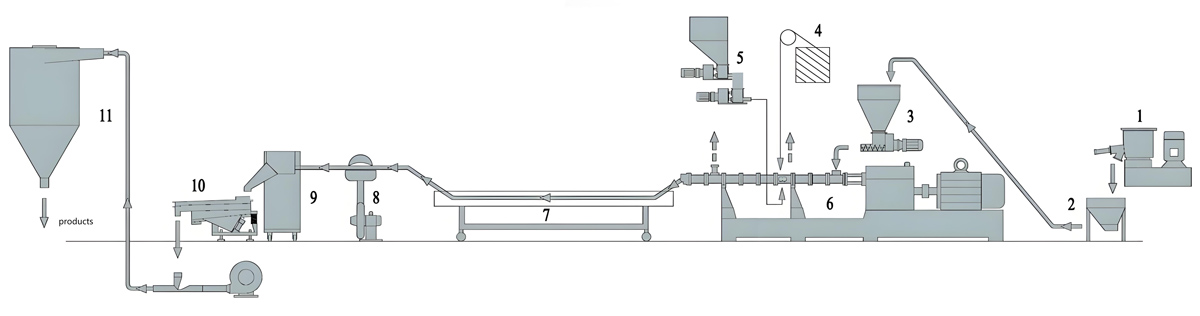
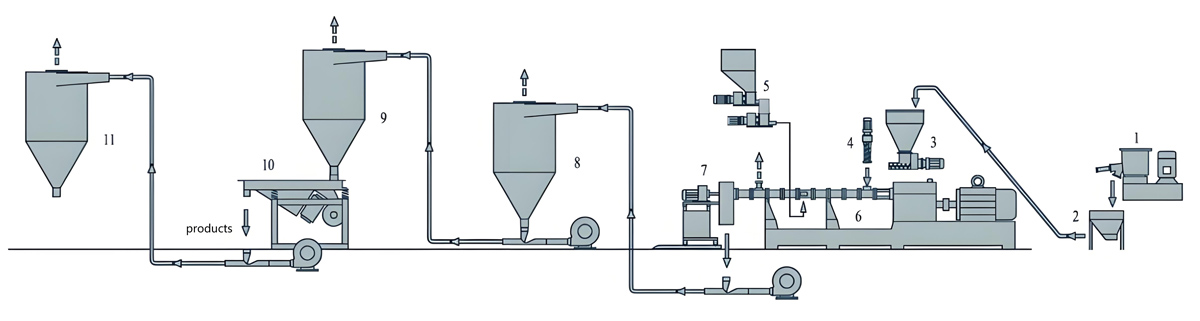
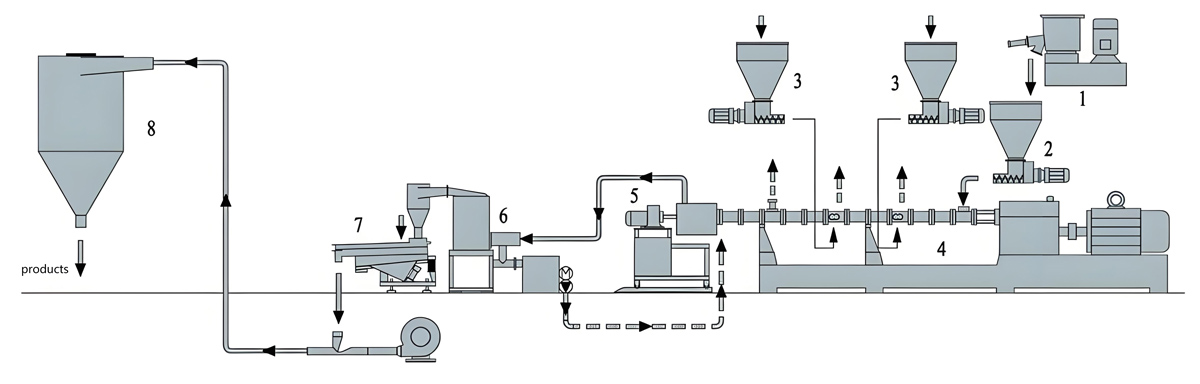
The twin screw extrusion process accomplishes multiple objectives in bentonite masterbatch production including melting, dispersion, mixing, and compounding of the formulation components. The extrusion system configuration must be optimized to achieve complete dispersion of bentonite platelets while preserving the platelet aspect ratio that enables effective barrier enhancement.
Screw configuration design balances conveying efficiency, melting capacity, and mixing intensity requirements for bentonite masterbatch production. The feed zone provides material introduction and initial heating using screw elements optimized for positive conveying and controlled compression. Compression zone elements achieve gradual consolidation and melting of the formulation while avoiding excessive pressure fluctuations that could cause processing instability.
Dispersive mixing sections employing kneading blocks and high shear elements break up bentonite agglomerates and achieve uniform platelet distribution. The intensity and extent of dispersive mixing should be carefully controlled to achieve complete dispersion without excessive energy input that could degrade the polymer matrix or cause mechanical damage to the bentonite platelets.
Distributive mixing elements ensure uniform spatial distribution of the well dispersed bentonite platelets throughout the polymer matrix. Intermeshing screw configurations with appropriate channel depth ratios provide effective distributive mixing through repeated reorientation of the material elements. The combination of dispersive and distributive mixing elements enables achievement of the uniform microstructures required for consistent barrier performance.
Pelletizing and Post Processing
Pelletizing systems convert the compounded melt into granular form suitable for storage, handling, and subsequent processing. Underwater pelletizing systems provide excellent size control and cooling efficiency for high volume bentonite masterbatch production. The pelletizing process parameters including water temperature, cutter speed, and die configuration should be optimized to produce granules with consistent size distribution and minimal fines generation.
Water temperature in the pelletizing system affects both the cooling rate and the final granule quality. Temperatures between 30 and 50 degrees Celsius typically provide adequate cooling while preventing thermal shock that could cause cracking or internal stresses in the granules. Water flow rate should be sufficient to remove heat efficiently and prevent agglomeration of the hot granules.
Post processing operations including drying, screening, and packaging complete the production process and prepare the product for storage and shipment. Bentonite filled masterbatch granules require thorough drying to remove residual moisture absorbed during the pelletizing process. Drying systems employing desiccant dehumidification or heated air circulation achieve moisture levels suitable for long term storage.
Screening operations remove fines, oversized particles, and potential contamination from the finished product. Vibratory screening systems provide efficient separation with adjustable mesh sizes to achieve the target particle size distribution. Metal detection systems provide protection against metallic contamination that could cause processing problems or quality issues in downstream applications.
Production Equipment Introduction
Twin Screw Extruder Technology Overview
Twin screw extrusion technology provides the processing capabilities required for successful bentonite masterbatch production including intensive mixing, precise temperature control, and flexible configuration options. Co rotating twin screw extruders offer particular advantages for filled polymer processing through their self wiping action, positive conveying characteristics, and excellent mixing efficiency.
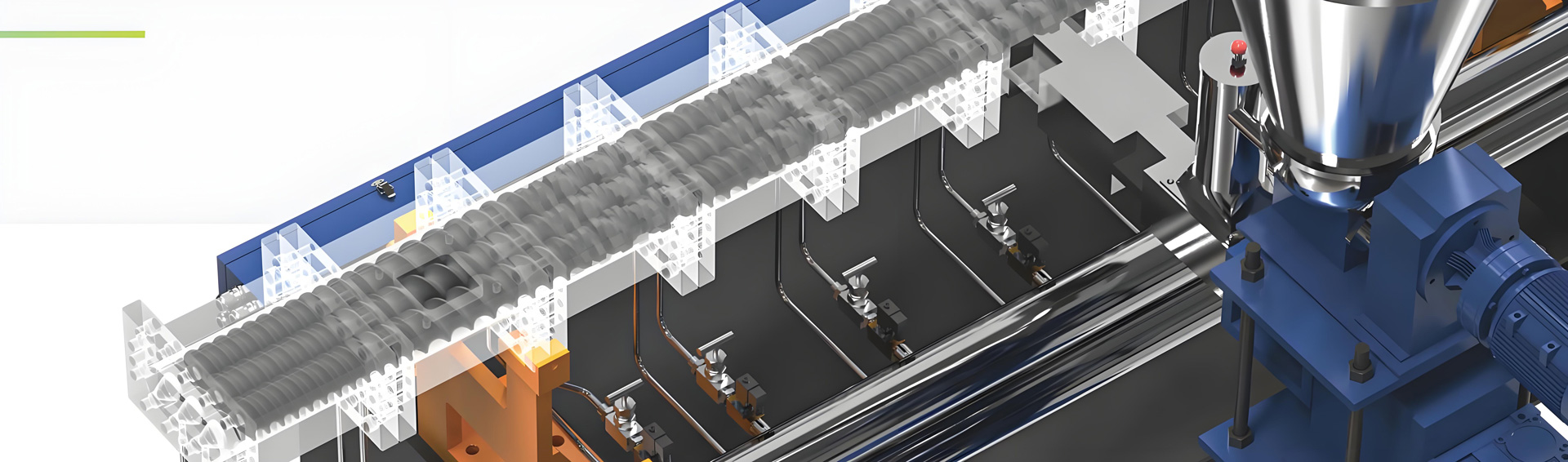
The modular construction of modern twin screw extrusion systems enables customized configuration for specific formulation requirements. Screw elements are available in various geometries and sizes to address specific processing objectives including feeding, compressing, mixing, and pumping functions. Barrel sections incorporate heating and cooling systems with multiple independent zones for precise temperature profile control.
Process monitoring and control systems provide real time visibility into key operating parameters including temperature, pressure, throughput rate, and motor power consumption. Advanced control algorithms enable automated optimization of process parameters for consistent product quality and efficient production operation. Data logging and trending capabilities support quality control documentation and continuous improvement initiatives.
Material feeding systems provide accurate and consistent introduction of formulation components into the extrusion process. Gravimetric feeding systems with loss in weight technology enable precise control of composition and throughput rate. Multiple feeder configurations support multi component formulations and side feeding requirements for specialized processing approaches.
Kerke KTE Series Equipment Specifications
The Kerke KTE series provides a comprehensive range of twin screw extrusion equipment suitable for bentonite filled masterbatch production across various capacity requirements. Equipment selection should consider production volume targets, formulation complexity, and quality requirements for the specific product applications.
The KTE 36B model offers compact production capability with a 35.6mm screw diameter and throughput rates of 20 to 100kg per hour. This equipment option provides an excellent platform for pilot production, process development, and small volume specialty product manufacturing. The moderate capacity enables detailed process optimization and product qualification activities before scaling to larger production equipment. Pricing for the KTE 36B ranges from 25,000 to 35,000 USD.
The KTE 50B extruder provides intermediate production capacity with a 50.5mm screw diameter and output rates of 80 to 200kg per hour. This equipment tier addresses commercial production requirements for moderate volume applications while maintaining the flexibility and processing capability required for diverse bentonite masterbatch formulations. Equipment pricing ranges from 40,000 to 60,000 USD.
The KTE 65B model features a 62.4mm screw diameter and production rates of 200 to 450kg per hour. This higher capacity equipment serves commercial production requirements with robust processing capability and reliability. The enhanced throughput enables competitive production economics while maintaining the quality standards required for premium barrier applications. Pricing ranges from 50,000 to 80,000 USD.
The KTE 75B extruder delivers substantial production capacity with a 71mm screw diameter and throughput rates of 300 to 800kg per hour. This industrial scale equipment addresses high volume commercial production requirements with excellent processing efficiency and product quality consistency. Advanced control systems and robust construction enable continuous production operations with minimal downtime. Equipment pricing ranges from 70,000 to 100,000 USD.
The KTE 95D represents the premium production option with a 93mm screw diameter and output rates of 1000 to 2000kg per hour. This large scale industrial machine enables efficient high volume bentonite masterbatch production with sophisticated control and monitoring capabilities. Investment in this equipment tier ranges from 120,000 to 200,000 USD and is suited for established producers with significant volume requirements and comprehensive quality management systems.
Parameter Settings
Temperature Profile Configuration
Temperature profile optimization is essential for achieving consistent processing and product quality in bentonite masterbatch production. The temperature profile must balance melt viscosity requirements, dispersant activation, and thermal stability considerations to achieve optimal processing conditions.
The feed zone temperature should be maintained at moderate levels between 150 and 170 degrees Celsius to ensure proper feeding behavior without premature melting that could cause material accumulation and processing instability. Initial heating of the formulation components establishes the foundation for subsequent melting and mixing operations.
Compression zone temperatures typically range from 170 to 200 degrees Celsius, providing sufficient thermal energy to accomplish complete melting of the carrier resin and activation of any temperature dependent formulation additives. The compression zone temperature profile should ensure gradual and uniform melting without creating localized hot spots that could cause polymer degradation.
Mixing zone temperatures significantly influence dispersion quality and processing stability for bentonite filled formulations. Typical mixing zone temperatures range from 180 to 220 degrees Celsius depending on the specific carrier resin and formulation composition. Higher temperatures reduce melt viscosity and facilitate platelet separation and distribution, but increase thermal exposure and energy consumption.
Die zone temperatures should ensure complete melting and smooth flow through the die openings without causing thermal degradation or pressure buildup. Typical die temperatures range from 190 to 230 degrees Celsius, with the specific temperature selected based on formulation characteristics and processing rate requirements.
Screw Speed and Residence Time
Screw speed selection determines the shear energy input, mixing intensity, and production rate in twin screw extrusion processing. Optimal screw speed for bentonite masterbatch production depends on formulation characteristics, equipment specifications, and quality requirements.
Typical screw speeds for bentonite masterbatch production range from 200 to 450 rpm depending on the extruder size and specific formulation requirements. Lower screw speeds provide extended residence time and more gentle processing conditions that may be beneficial for thermally sensitive formulations or when preserving specific additive characteristics is important.
Higher screw speeds increase shear energy input and mixing intensity, enabling improved dispersion and faster production rates. However, excessive screw speeds can generate excessive heat through viscous dissipation, potentially causing thermal degradation and increased energy consumption. Speed selection should balance these competing considerations to achieve optimal processing efficiency.
Residence time distribution significantly influences the processing of bentonite filled formulations. The average residence time and the width of the residence time distribution affect the degree of mixing, thermal exposure, and product uniformity. Screw configuration modifications can modify residence time characteristics to optimize processing for specific formulation requirements.
Throughput and Specific Energy
Throughput rate selection should consider the balance between production efficiency and processing quality. Higher throughput rates increase production efficiency but may require adjustments to temperature profiles, screw speeds, or screw configurations to maintain product quality. The relationship between throughput and processing quality should be established through systematic process characterization studies.
Specific mechanical energy represents the mechanical energy input per unit mass of processed material, serving as an important parameter for process optimization and monitoring. Typical specific mechanical energy values for bentonite masterbatch production range from 0.12 to 0.28 kWh per kg depending on formulation characteristics and processing intensity requirements.
Monitoring of specific mechanical energy provides valuable insight into processing conditions and can indicate changes in material characteristics or equipment performance. Increases in specific mechanical energy at constant operating conditions may indicate changes in material flow characteristics, equipment wear, or formulation variations requiring attention.
Equipment Price
Investment in twin screw extrusion equipment for bentonite filled masterbatch production requires comprehensive evaluation of capacity requirements, quality specifications, and economic factors. The Kerke KTE series provides equipment options spanning a wide range of production capacities and price points to address diverse market requirements.
The KTE 36B model at 25,000 to 35,000 USD provides an accessible entry point for businesses developing bentonite masterbatch production capabilities or requiring flexible small volume production options. This investment level enables pilot production, process development, and market evaluation activities without requiring major capital commitment.
The KTE 50B at 40,000 to 60,000 USD addresses intermediate capacity commercial production requirements with robust processing capability and reliability. This equipment tier provides attractive economics for growing businesses and established producers seeking additional capacity or flexibility.
The KTE 65B equipment at 50,000 to 80,000 USD serves higher volume commercial operations with enhanced production efficiency and quality consistency. The investment provides access to industrial scale processing capabilities suitable for competitive market participation.
The KTE 75B at 70,000 to 100,000 USD delivers substantial production capacity for established commercial operations. The enhanced throughput capabilities reduce per unit production costs while maintaining the quality standards required for premium barrier applications.
The KTE 95D at 120,000 to 200,000 USD represents the premium industrial investment for high volume production operations. This equipment tier provides maximum capacity and processing flexibility for large scale commercial operations or specialized high performance product manufacturing.
Beyond base equipment investment, total capital requirements should include ancillary equipment, installation, commissioning, and operating supplies. Return on investment analysis should consider production volumes, market pricing, and operating cost factors to ensure appropriate equipment selection for the specific business context.
Problems in Production Process and Solutions
Agglomeration and Dispersion Failures
Agglomerate formation represents the primary quality concern in bentonite filled masterbatch production. Inadequate dispersion results in visible particles, inconsistent barrier performance, and reduced mechanical properties in the final product. Agglomeration occurs when bentonite particles fail to separate into individual platelets and distribute uniformly throughout the polymer matrix.
Solutions for agglomeration problems focus on improving the dispersion process through equipment modifications, process parameter adjustments, or formulation changes. Increasing the intensity or extent of dispersive mixing sections within the screw configuration can significantly improve agglomerate breakup. Additional kneading blocks or high shear mixing elements provide enhanced dispersion capability for challenging formulations.
Process parameter optimization may resolve dispersion issues by adjusting screw speed, temperature profile, or throughput rate to achieve the specific mechanical energy input required for adequate dispersion. Systematic process studies can identify the optimal operating window for specific formulations.
Formulation modifications can address dispersion issues related to compatibility or interfacial characteristics. Enhanced dispersant systems improve wetting and separation of bentonite particles. Coupling agent addition strengthens the interfacial bonding between bentonite and the polymer matrix, improving stress transfer and preventing re agglomeration during processing.
Prevention of agglomeration issues requires comprehensive quality control of raw materials, systematic process monitoring, and regular equipment maintenance. Raw material qualification testing verifies the dispersibility characteristics of bentonite grades and identifies potential issues before production. Process documentation ensures consistent execution of optimized processing conditions.
Moisture Related Processing Issues
Moisture contamination in bentonite masterbatch production causes multiple processing problems including steam generation, surface defects, and reduced product quality. The hydrophilic nature of bentonite makes moisture control particularly challenging in this application.
Solutions for moisture related issues focus on improved drying procedures and moisture exclusion throughout the production process. Enhanced pre drying protocols with extended drying times or elevated temperatures may be necessary to achieve the moisture levels required for stable processing. Monitoring of raw material moisture content enables identification of batches requiring additional drying treatment.
Equipment modifications can improve moisture handling capabilities. Extended devolatilization zones in the screw configuration provide additional opportunity for moisture removal during processing. Vacuum assisted devolatilization sections dramatically improve moisture removal efficiency for challenging formulations.
Storage and handling procedures should minimize moisture exposure throughout the production process. Sealed material handling systems, dry air purging of hoppers, and rapid material transfer protocols reduce opportunities for moisture reabsorption between drying and processing operations.
Prevention of moisture issues requires comprehensive moisture management programs including raw material testing, process monitoring, and storage condition control. Regular verification of drying equipment performance ensures consistent moisture removal capability. Statistical process control charts for moisture sensitive parameters enable early detection of trends that may indicate developing moisture issues.
Processing Instability and surging
Processing instability manifests as pressure fluctuations, surging output, or inconsistent product quality during bentonite masterbatch production. These issues result from various factors including feeding problems, incomplete melting, or improper screw configuration for the specific formulation characteristics.
Diagnostic approaches for processing instability begin with systematic evaluation of feeding system performance. Feed rate consistency, hopper bridging, and feeding equipment calibration should be verified. Gravimetric feeding systems provide improved consistency compared to volumetric alternatives for materials with variable flow characteristics.
Screw configuration evaluation identifies potential issues with conveying, melting, or mixing characteristics that may contribute to processing instability. Modifications to feed zone geometry, compression ratio, or mixing element arrangement can address specific instability causes.
Temperature profile adjustments address melt viscosity variations that may cause pumping instability. Increasing temperatures in problem zones can improve melting efficiency and reduce viscosity fluctuations. Temperature controller tuning may be necessary to achieve stable temperature control response.
Prevention of processing instability requires comprehensive equipment maintenance programs, process monitoring systems, and operating procedures designed to maintain stable conditions. Regular calibration of feeding and temperature control systems ensures consistent performance. Operating guidelines should specify acceptable parameter ranges and escalation procedures for addressing developing issues.
Maintenance
Wear Component Management
Bentonite filled formulations present significant wear challenges for twin screw extrusion equipment due to the abrasive nature of the clay mineral particles. Wear management strategies must address both screw element wear and barrel surface wear to maintain processing performance and product quality.
Screw element wear monitoring should be conducted at regular intervals based on production volume and formulation characteristics. Visual inspection identifies obvious wear patterns and surface damage. Dimensional measurement using specialized gauges enables quantitative assessment of wear progression. Critical dimensions including flight width, root diameter, and element clearances should be compared against specification limits to determine replacement timing.
Barrel wear evaluation focuses on high stress regions including feed throats, compression zones, and mixing sections. Wear liner inspection identifies potential issues with bimetallic or nitrided barrel surfaces. Temperature sensor accuracy verification ensures reliable temperature monitoring despite potential wear related changes in heat transfer characteristics.
Replacement parts inventory management ensures timely availability of critical wear components to minimize production downtime. Maintaining inventory of commonly replaced elements such as feed screws, kneading blocks, and barrel liners enables rapid equipment restoration when wear limits are reached.
Control System Maintenance
Modern twin screw extrusion systems incorporate sophisticated control and monitoring capabilities that require regular maintenance to ensure reliable performance. Temperature controller calibration, pressure transducer verification, and motor drive system maintenance support consistent processing quality.
Temperature sensor calibration should be verified periodically using calibrated reference instruments. Thermocouple drift can cause temperature control errors that affect product quality. Regular calibration documentation supports quality system requirements and identifies sensors requiring replacement.
Motor drive system maintenance includes inspection of electrical connections, cooling systems, and drive parameters. Variable frequency drive programming should be verified to ensure proper operation and protection functions. Motor winding temperature monitoring ensures protection against thermal overload conditions.
Data acquisition system maintenance ensures reliable recording of process parameters for quality control and troubleshooting purposes. Regular backup of process data protects against loss of valuable production records. Software updates should be evaluated and applied according to manufacturer recommendations.
Preventive Maintenance Scheduling
Comprehensive preventive maintenance programs minimize unexpected equipment failures and maintain consistent production quality over extended operating periods. Maintenance scheduling should balance production requirements against maintenance needs to minimize operational disruptions.
Daily maintenance activities include visual inspection of equipment condition, cleaning of die faces and pelletizing systems, and verification of operating parameters. Operator checklists ensure consistent execution of daily maintenance requirements.
Weekly maintenance activities include more thorough inspection of critical components, lubrication of mechanical systems, and verification of safety systems. Calibration verification of feeding systems and temperature controllers ensures continued accuracy of key process parameters.
Monthly and quarterly maintenance activities include comprehensive equipment inspection, replacement of wear components as indicated by monitoring, and system performance verification. Statistical analysis of production quality data can identify trends indicating emerging equipment issues requiring attention.
Annual maintenance programs should include major equipment overhauls, system optimization, and comprehensive performance testing. Extended maintenance activities may require production scheduling adjustments to accommodate planned downtime.
FAQ
What bentonite loading level provides effective barrier enhancement?
Effective barrier enhancement typically requires bentonite loadings of 30% to 50% depending on the specific polymer matrix, bentonite characteristics, and barrier performance requirements. Higher loading levels increase the tortuous pathway effect but may compromise mechanical properties or processing characteristics. The optimal loading level for specific applications should be determined through systematic testing of barrier performance, mechanical properties, and processing characteristics.
What is the difference between natural bentonite and organoclay?
Natural bentonite exhibits hydrophilic surface chemistry due to exchangeable ions on the clay platelet surfaces. Organoclays are produced through ion exchange reactions that replace natural cations with organic quaternary ammonium compounds, creating organophilic surface characteristics compatible with organic polymers. Organoclay grades provide improved dispersion and compatibility in polymer matrices compared to untreated natural bentonite, resulting in enhanced barrier performance and mechanical properties.
How does bentonite affect the processing characteristics of masterbatch?
Bentonite incorporation generally increases melt viscosity and reduces melt flow index compared to unfilled polymer systems. The degree of viscosity increase depends on the bentonite loading level, particle size distribution, and degree of platelet exfoliation achieved during processing. Formulation modifications including compatibilizer addition and processing aid incorporation can address viscosity increases while maintaining adequate barrier performance.
What applications benefit most from bentonite filled masterbatch?
Applications requiring moisture barrier performance represent the primary market for bentonite filled masterbatch. Agricultural film, construction membrane, and flexible packaging applications benefit significantly from bentonite incorporation. The effectiveness of bentonite barriers makes them particularly valuable for products exposed to humid environments or containing moisture sensitive components.
How should bentonite masterbatch be stored?
Bentonite filled masterbatch should be stored in sealed containers or bags to prevent moisture absorption from the environment. Storage temperature should be maintained below 40 degrees Celsius to prevent granule softening or sticking. Under proper storage conditions, bentonite masterbatch maintains acceptable quality for 6 to 12 months depending on formulation composition and storage environment. Exposure to humidity should be minimized throughout storage and handling operations.
Can bentonite masterbatch be used in food contact applications?
Food contact compliance depends on the specific formulation components including carrier resin, bentonite grade, and additives. Food grade formulations require selection of components approved for food contact and may require regulatory compliance documentation. Processing conditions and end use conditions should be evaluated to ensure food safety requirements are met for specific applications.
Conclusion
Bentonite filled masterbatch production through twin screw extrusion technology enables the creation of polymer composites with enhanced barrier performance and cost efficiency for diverse application requirements. The unique swelling characteristics and platelet structure of bentonite provide effective moisture barrier enhancement when properly processed and dispersed within appropriate polymer matrices.
Equipment selection from the Kerke KTE series addresses production capacity requirements from pilot scale through high volume industrial operations. Investment levels ranging from 25,000 to 200,000 USD provide options for businesses at various stages of market development and operational scale. The flexibility and configuration options of these systems support optimization for specific formulation requirements and quality objectives.
Process optimization focusing on moisture control, dispersion quality, and temperature management enables achievement of consistent product quality while maximizing production efficiency. Understanding of the relationships between processing parameters and bentonite platelet characteristics supports effective optimization and troubleshooting.
Maintenance programs ensure long term equipment reliability and production quality consistency. Comprehensive preventive maintenance approaches minimize unexpected downtime while maximizing return on equipment investment. Operator training and process monitoring capabilities support sustainable production excellence in bentonite masterbatch manufacturing operations.
The barrier enhancement capabilities of bentonite filled masterbatch serve important application requirements across packaging, agricultural, construction, and industrial markets. Success in this market segment requires commitment to quality excellence, application understanding, and continuous improvement in all aspects of production and product development.