Introduction to electromagnetic shielding masterbatch
Electromagnetic Shielding Masterbatch represents a specialized functional additive concentrate designed to provide block electromagnetic interference and radio frequency radiation in plastic products. The year 2026 brings increasing demand for advanced functional masterbatches as industries seek enhanced product performance, safety features, and value-added capabilities. electromagnetic shielding masterbatch enables plastic products to achieve exceptional properties that would be impossible or impractical to achieve through base resin modification alone.
The global electromagnetic shielding masterbatch market continues growing as applications expand across diverse industries including electronic enclosures, aerospace components, military equipment, telecommunications. Manufacturing electromagnetic shielding masterbatch requires specialized knowledge, precise formulation, and advanced processing equipment. Success in electromagnetic shielding masterbatch production depends on understanding the interaction between functional additives, carrier resins, processing conditions, and end-use requirements.
Twin screw extrusion technology has become the preferred method for electromagnetic shielding masterbatch production due to superior mixing capability, precise temperature control, and consistent output quality. The co-rotating twin screw design provides intensive distributive and dispersive mixing essential for uniform dispersion of nickel-coated graphite, stainless steel fibers, silver-coated copper particles within carrier resin matrix. This comprehensive guide covers all aspects of electromagnetic shielding masterbatch production from formulation through troubleshooting.
Formulation Ratios and Composition
Formulation development represents the foundation of successful electromagnetic shielding masterbatch production. Proper formulation ensures functional performance while maintaining processability and cost-effectiveness. electromagnetic shielding masterbatch formulations consist of multiple components each serving specific functions in the final product.
Base Polymer Selection
Base polymer selection depends on compatibility with target applications and processing requirements. Common carrier resins for electromagnetic shielding masterbatch include polyethylene, polypropylene, polycarbonate, ABS. Polyethylene provides excellent compatibility with polyolefin applications while maintaining low cost and good processability. Polypropylene offers higher temperature resistance suitable for applications requiring thermal stability. Engineering polymers provide enhanced performance for demanding applications.
Carrier resin selection considers melt flow index compatibility with end-use resins. Melt flow index typically 2 to 20 grams per 10 minutes depending on application requirements. Carrier resin viscosity must match application resin to ensure proper let-down ratio during end-use processing. Incompatible carrier resins cause migration, blooming, or performance loss in final products.
Functional Additive Loading
Functional additive loading directly affects electromagnetic shielding masterbatch performance and cost. Standard formulation includes shielding agents 15-50%, carrier resin 45-80%, coupling agents 2-5%, processing aids 1-3%. Functional additive concentration typically ranges from 15 to 50 percent depending on additive potency and final application requirements.
High loading formulations reduce let-down ratio during end-use processing but may increase viscosity and processing difficulty. Low loading formulations offer easier processing but require higher let-down ratios increasing handling requirements. Optimal loading balances performance, processability, and cost based on application requirements.
Additive particle size and morphology significantly affect dispersion and performance. Nano-scale additives provide superior performance but require specialized dispersion techniques. Micro-scale additives offer easier processing but may require higher loading levels. Particle size distribution must be controlled to ensure consistent performance.
Additives and Processing Aids
Additional additives enhance electromagnetic shielding masterbatch performance and processability. Dispersing agents improve additive distribution and prevent agglomeration. Stabilizers prevent degradation during processing and extend product lifetime. Coupling agents improve interfacial adhesion between additives and carrier resin. Processing aids reduce viscosity and improve flow.
Dispersing agent concentration typically 1 to 5 percent depending on additive loading and compatibility. Dispersing agent selection considers chemical compatibility with both additives and carrier resin. Proper dispersing agent selection prevents additive aggregation and ensures uniform distribution.
Stabilizers including antioxidants, heat stabilizers, and UV stabilizers protect electromagnetic shielding masterbatch during processing and end-use. Stabilizer selection depends on processing conditions and application requirements. Stabilizer concentration typically 0.5 to 2 percent balancing protection and cost.
Formulation Optimization
Formulation optimization requires systematic testing and evaluation. Design of experiments methodology efficiently evaluates multiple variables. Key formulation variables include additive loading, additive particle size, dispersant type, dispersant concentration, and carrier resin selection. Response variables include functional performance, dispersion quality, melt flow index, and processing stability.
Formulation optimization follows iterative process starting with baseline formulation and systematically varying parameters. Performance testing validates functional requirements. Processing evaluation assesses manufacturability. Cost analysis determines economic viability. Optimized formulation balances performance, processability, and cost for commercial production.
Production Process and Technology
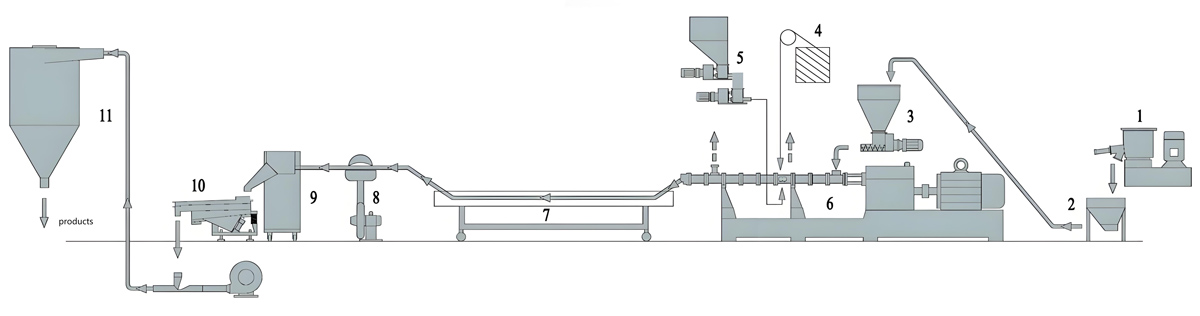
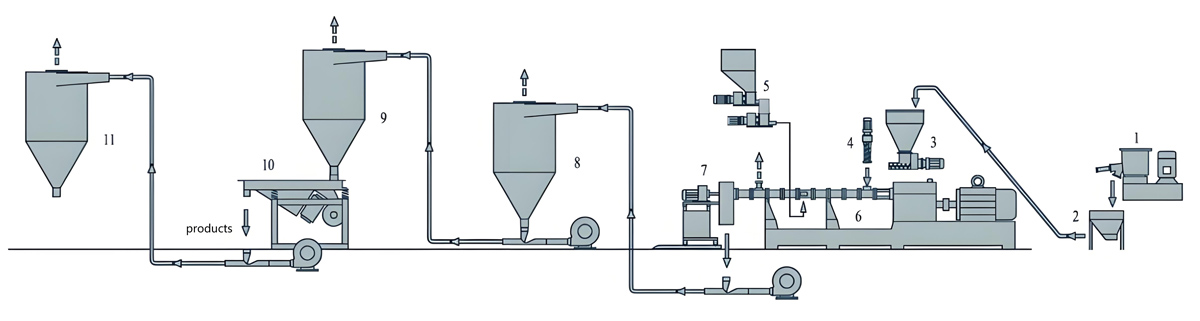
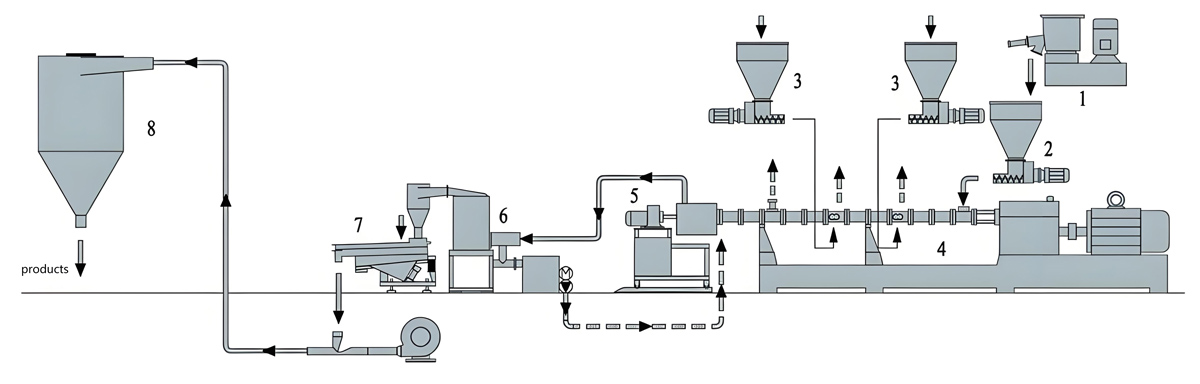
electromagnetic shielding masterbatch production involves multiple processing stages requiring precise control and coordination. Proper production process ensures consistent quality, efficient operation, and reliable output. Twin screw extrusion provides the primary mixing and dispersion mechanism while upstream and downstream processes support complete production requirements.
Raw Material Preparation
Raw material preparation represents critical initial processing stage affecting final product quality. Raw materials including functional additives, carrier resins, dispersants, and stabilizers must meet quality specifications. Additive moisture content must be controlled to prevent hydrolysis and degradation. Pre-drying of hygroscopic materials essential for consistent processing.
Material handling equipment including silos, feeders, and conveyors transport materials to extrusion area. Automatic weighing and dosing systems ensure accurate formulation. Material quality verification prevents contaminated or out-of-specification materials from entering production process. Proper material preparation foundation for successful electromagnetic shielding masterbatch production.
Premixing of dry blend ingredients ensures homogenous feed to extruder. High-speed mixers combine materials ensuring uniform distribution. Premixing time typically 5 to 15 minutes depending on formulation complexity. Over-mixing may cause segregation while under-mixing leads to inconsistent composition. Proper premixing ensures consistent feed composition.
Twin Screw Extrusion Process
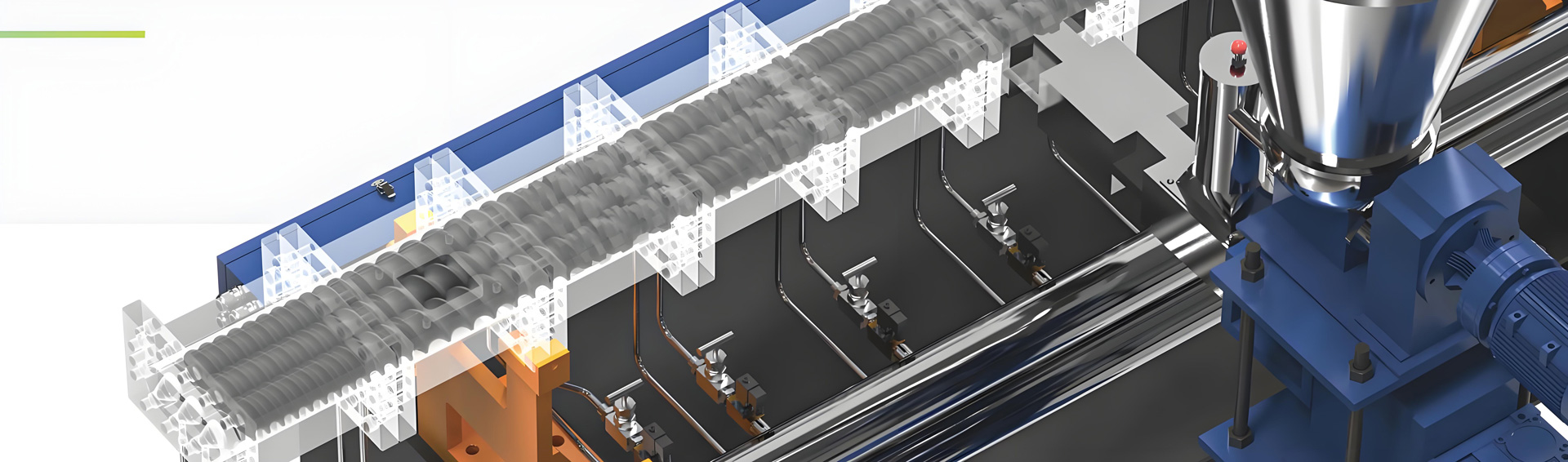
Twin screw extrusion represents core processing technology for electromagnetic shielding masterbatch production. Co-rotating twin screw design provides intensive mixing and dispersion. Screw configuration includes conveying elements for material transport, kneading elements for dispersion, and mixing elements for homogenization. Screw design optimized for maximize filler alignment and contact for optimal shielding.
Temperature profile along extruder barrel ensures proper melting and dispersion while preventing additive degradation. Temperature typically increases from feed zone to die zone. Feed zone temperature 160 to 190°C ensures gradual melting. Mixing zone temperature 180 to 230°C provides optimal viscosity for dispersion. Die zone temperature 170 to 220°C maintains melt quality.
Screw speed affects shear and residence time. Screw speed typically 100 to 400 RPM depending on formulation and throughput requirements. Higher screw speed increases shear improving dispersion but reduces residence time. Lower screw speed increases residence time but reduces dispersion intensity. Optimal screw speed balances dispersion quality and throughput.
Die Design and Pelletizing
Die design affects melt homogeneity and pellet quality. Strand die design most common for electromagnetic shielding masterbatch production providing uniform strand formation. Strand number typically 2 to 8 depending on extruder capacity. Die land length and diameter optimized for pressure and flow characteristics. Proper die design prevents melt fracture and strand instability.
Water bath cooling solidifies strands for pelletizing. Water temperature 20 to 40°C provides adequate cooling without thermal shock. Cooling length depends on line speed and strand diameter. Adequate cooling prevents strand sticking and deformation. Cooling system design ensures consistent strand temperature before pelletizing.
Pelletizing equipment cuts cooled strands into uniform pellets. Strand pelletizer with rotary cutter provides clean, uniform pellets. Pellet size typically 2 to 4 millimeters diameter and 3 to 6 millimeters length. Precise pellet sizing ensures consistent flow during end-use processing. Pelletizing must produce minimal fines and dust.
Quality Control and Inspection
Quality control ensures electromagnetic shielding masterbatch meets specifications and customer requirements. Melt flow index testing confirms processability consistent with specifications. Visual inspection detects discoloration, contamination, or pellet defects. Functional testing verifies performance requirements met. Statistical process control monitors process consistency.
In-line monitoring provides real-time quality assessment. Melt pressure sensors detect process variations. Temperature sensors ensure thermal control. Optical sensors detect pellet defects. Real-time monitoring enables rapid correction of process deviations.
Laboratory testing provides detailed quality verification. Particle size analysis confirms additive dispersion. Spectroscopic analysis verifies composition. Mechanical testing evaluates final product performance. Comprehensive quality control ensures consistent, reliable electromagnetic shielding masterbatch production.
Production Equipment
electromagnetic shielding masterbatch production requires specialized equipment designed for functional additive processing. Equipment selection significantly affects production efficiency, product quality, and operating costs. Twin screw extruder represents primary equipment while supporting equipment includes material handling, temperature control, and pelletizing systems.
Kerke Twin Screw Extruder
Kerke twin screw extruders represent industry-leading technology for electromagnetic shielding masterbatch production. Kerke KTE Series twin screw extruders provide superior mixing, precise control, and reliable operation specifically designed for functional masterbatch production. Kerke extruders incorporate advanced features ensuring optimal performance for maximize filler alignment and contact for optimal shielding.
Kerke KTE-90 twin screw extruder ideally suited for electromagnetic shielding masterbatch production with screw diameter 65mm, L/D ratio 40:1, and throughput capacity 300 to 800 kilograms per hour. Co-rotating screw design provides intensive distributive and dispersive mixing essential for uniform additive dispersion. Modular screw configuration enables optimization for specific formulations.
Kerke extruders feature temperature control system with 10 barrel zones plus die zone providing precise thermal management. Temperature control accuracy plus or minus 1°C enables precise processing while preventing additive degradation. Barrel heating uses electric heaters with zone control ensuring uniform heating. Cooling capability enables precise temperature control during high-shear processing.
Drive system features AC motor with variable frequency drive providing speed range 10 to 500 RPM. Drive power 75 kilowatts provides adequate power for high-viscosity formulations. Torque capacity 800 Nm ensures reliable operation under demanding conditions. High-torque design enables processing of high-loading formulations.
Kerke extruders include side feeding capability for downstream ingredient addition. Side feeder enables addition of temperature-sensitive additives after melting carrier resin protecting additive properties. Side feeding provides flexibility for multi-stage addition optimizing dispersion and protecting sensitive components.
Control system features PLC-based automation with touch screen HMI providing intuitive operation and monitoring. Recipe storage enables quick changeover between formulations. Real-time monitoring of process parameters ensures consistent operation. Data logging provides traceability and quality records. Communication capability enables integration with plant-wide systems.
Supporting Equipment
Supporting equipment essential for complete electromagnetic shielding masterbatch production system. Gravimetric feeding system provides precise material metering with 0.5 percent accuracy. Feeder capacity 500 to 2000 kilograms per hour matches extruder throughput. Multi-component feeding enables formulation flexibility. Loss-in-weight technology ensures accurate dosing.
Drying system removes moisture from hygroscopic materials. Dehumidifying dryer provides dew point minus 40°C ensuring thorough drying. Drying capacity 100 to 500 kilograms per hour matches material requirements. Pre-drying prevents hydrolysis and degradation during processing. Automatic loading provides continuous operation.
Temperature control system provides cooling for extrusion process. Water chiller provides chilled water for barrel cooling and water bath. Chiller capacity 50 to 150 tons matches heat removal requirements. Temperature control accuracy plus or minus 0.5°C ensures consistent processing. Heat recovery reduces energy consumption.
Pelletizing system cuts extruded strands into uniform pellets. Strand pelletizer with rotary cutter provides clean cutting. Pellet size adjustment accommodates different requirements. Fines removal system removes dust and broken pellets. Automatic packaging provides finished product handling.
Equipment Integration
Equipment integration ensures coordinated operation of all system components. Material handling system feeds extruder automatically. Temperature control system maintains thermal conditions. Pelletizing system handles finished product. Control system coordinates all components ensuring synchronized operation.
Integration requires proper sizing of all components. Feeder capacity must match extruder throughput. Cooling capacity must match heat generation. Pelletizing capacity must match production rate. Proper sizing ensures balanced operation preventing bottlenecks.
Communication links enable data exchange between components. Modbus, Ethernet, and fieldbus communication supported. Integration with plant-wide systems enables comprehensive monitoring and control. Real-time data collection enables optimization and troubleshooting.
Parameter Settings and Optimization
Proper parameter settings essential for successful electromagnetic shielding masterbatch production. Temperature profile, screw speed, feeding rate, and vacuum settings significantly affect product quality and process efficiency. Parameter optimization requires systematic testing and adjustment based on formulation requirements.
Temperature Profile
Temperature profile along extruder barrel controls melting, mixing, and additive protection. Feed zone temperature 190°C ensures gradual carrier resin melting without bridging. Compression zone temperature 190-270°C°C provides adequate viscosity for dispersion. Mixing zone temperature maintains optimal viscosity for additive distribution. Metering zone temperature ensures homogenous melt. Die zone temperature provides appropriate melt viscosity for strand formation.
Temperature settings depend on carrier resin melting point, additive thermal stability, and desired melt viscosity. Lower temperatures protect sensitive additives but may increase viscosity reducing dispersion. Higher temperatures improve flow but may degrade sensitive components. Temperature optimization balances flow, dispersion, and additive protection.
Temperature gradient between zones must be controlled. Excessive gradient causes thermal stress and degradation. Insufficient gradient causes inadequate melting and poor dispersion. Typical gradient 10 to 30°C per zone provides optimal thermal profile. Temperature uniformity across barrel width essential for consistent processing.
Screw Speed and Configuration
Screw speed affects shear rate, residence time, and throughput. Screw speed 150 to 350 RPM typical for electromagnetic shielding masterbatch production. Higher speed increases shear improving dispersion but reduces residence time. Lower speed increases residence time allowing longer mixing but reduces throughput. Optimal speed based on formulation viscosity and dispersion requirements.
Screw configuration optimized for maximize filler alignment and contact for optimal shielding. Kneading block arrangement provides dispersive mixing. Pitch and stagger angle affects mixing intensity. Reverse elements provide back-mixing for homogenization. Screw configuration modified based on formulation requirements and performance testing.
Screw configuration affects distributive and dispersive mixing. Distributive mixing spreads additives throughout melt. Dispersive mixing breaks agglomerates into individual particles. Proper balance ensures uniform additive distribution without degradation. Configuration optimization requires testing and experience.
Feeding Rate and Vacuum
Feeding rate must match screw speed and processing conditions. Starve feeding with gravimetric control provides precise feed rate control. Feed rate adjusted to maintain optimal barrel fill. Overfilling causes excessive pressure and motor overload. Underfilling reduces mixing and residence time. Feed rate optimization ensures stable operation.
Vacuum venting removes volatiles and moisture from melt. Vacuum vent typically located after mixing zone. Vacuum level 50 to 100 millibar removes volatiles effectively. Vacuum venting prevents defects caused by volatiles including bubbles and surface imperfections. Vacuum requirements depend on formulation moisture and volatile content.
Feeding and vacuum settings coordinated with temperature and screw speed. Feed rate affects residence time and shear. Vacuum level must complement vent location and melt characteristics. Systematic optimization of all parameters ensures consistent quality.
Equipment Pricing and Investment
electromagnetic shielding masterbatch production requires significant capital investment in equipment and infrastructure. Equipment costs depend on capacity, features, and automation level. Understanding investment requirements enables proper budgeting and ROI calculation.
Primary Equipment Costs
Kerke KTE-90 twin screw extruder investment $125,000 – $180,000 depending on configuration and options. Base model includes extruder, drive system, temperature control, and basic automation. Enhanced options including advanced control, side feeding, and additional sensors increase cost. Kerke extruders provide competitive value compared to premium European brands while matching performance.
Supporting equipment costs include gravimetric feeding system 15,000 to 35,000 US dollars, drying system 12,000 to 28,000 US dollars, cooling system 8,000 to 20,000 US dollars, and pelletizing system 10,000 to 25,000 US dollars. Complete supporting system 45,000 to 108,000 US dollars depending on capacity and automation.
Installation cost including foundation preparation, utility connections, and startup 8,000 to 20,000 US dollars. Training cost 3,000 to 8,000 US dollars for operator and maintenance training. Initial spare parts inventory 5,000 to 12,000 US dollars ensures rapid maintenance response.
Total Investment Summary
Complete electromagnetic shielding masterbatch production line investment typically 153,000 to 338,000 US dollars depending on capacity and automation. Small capacity line 200 to 400 kilograms per hour 153,000 to 215,000 US dollars. Medium capacity line 400 to 600 kilograms per hour 215,000 to 280,000 US dollars. Large capacity line 600 to 800 kilograms per hour 280,000 to 338,000 US dollars.
Operating costs include energy consumption 15 to 25 kilowatt hours per 100 kilograms processed, labor 2 to 5 US dollars per 100 kilograms, maintenance 3 to 8 US dollars per 100 kilograms, and raw materials depending on formulation. Total operating cost typically 0.30 to 0.80 US dollars per kilogram produced.
ROI and Payback Analysis
ROI calculation considers annual production, profit margin, and investment cost. Assuming annual production 1000 tonnes, profit margin 0.40 to 0.80 US dollars per kilogram, annual profit 400,000 to 800,000 US dollars. Payback period typically 0.5 to 1.5 years depending on capacity utilization and market conditions.
Kerke equipment provides competitive ROI through competitive pricing, reliable operation, and low maintenance costs. Energy efficiency reduces operating costs. Automation reduces labor requirements. Comprehensive support ensures reliable operation minimizing downtime. Kerke investment provides excellent value and rapid payback.
Production Problems and Solutions
Production problems can affect quality, efficiency, and profitability. Understanding common problems, root causes, solutions, and prevention methods enables rapid resolution and minimization of future occurrences. Problems must be addressed systematically identifying root causes and implementing appropriate solutions.
Problem: Additive Agglomeration and Poor Dispersion
Causes of additive agglomeration include insufficient mixing energy, inadequate dispersant, improper additive loading, and poor screw configuration. Agglomerated additives cause inconsistent performance, surface defects, and property variations. Agglomeration visible as spots or streaks in final products.
Solutions for additive agglomeration include increasing screw speed to increase shear, optimizing screw configuration for better dispersion, increasing dispersant concentration, and reducing additive particle size. Screw configuration modification including increased kneading blocks improves dispersive mixing. Dispersant optimization improves additive wetting and distribution.
Prevention methods include proper formulation design with adequate dispersant, optimal additive particle size, and appropriate loading levels. Regular maintenance ensures screw elements not worn reducing mixing efficiency. Process monitoring detects dispersion problems early. Preventive measures prevent agglomeration occurrence.
Problem: Additive Degradation and Performance Loss
Additive degradation caused by excessive temperature, excessive residence time, oxidative conditions, and mechanical degradation. Degradation causes color change, performance loss, and property variation. Sensitive additives particularly susceptible to thermal degradation.
Solutions for additive degradation include reducing processing temperature, optimizing screw speed to reduce residence time, adding stabilizers, and improving melt venting. Temperature reduction to minimum required for processing protects sensitive additives. Screw speed optimization reduces thermal exposure. Stabilizers protect additives during processing.
Prevention methods include proper temperature control, real-time monitoring of melt temperature, and proper formulation with adequate stabilizers. Processing conditions optimization prevents degradation. Regular maintenance ensures accurate temperature control. Preventive measures maintain additive performance.
Problem: Pellet Size Variation and Fines Generation
Pellet size variation caused by improper cooling, unstable strand speed, cutter wear, and improper cutting parameters. Inconsistent pellets cause flow problems during end-use processing. Fines generation increases waste and causes contamination.
Solutions for pellet problems include optimizing water bath temperature and length, stabilizing strand speed, replacing worn cutter blades, and adjusting cutting parameters. Consistent cooling ensures uniform strand properties. Stable strand speed provides consistent feed to pelletizer. Sharp cutter blades produce clean cuts.
Prevention methods include regular maintenance of pelletizing equipment, monitoring strand quality, and adjusting parameters based on conditions. Preventive maintenance prevents equipment degradation. Process monitoring detects developing problems. Proper adjustment maintains consistent pellet quality.
Problem: Color Variation and Discoloration
Color variation caused by inconsistent additive dispersion, thermal degradation, contamination, and raw material variation. Discoloration causes visual defects and customer rejection. Color consistency critical for appearance applications.
Solutions for color problems include improving additive dispersion, reducing processing temperature, eliminating contamination sources, and controlling raw material quality. Improved dispersion eliminates color spots. Temperature reduction prevents thermal discoloration. Contamination elimination prevents foreign color introduction.
Prevention methods include strict raw material quality control, consistent processing conditions, and regular equipment cleaning. Quality control prevents contaminated materials. Process consistency prevents variation. Regular cleaning prevents contamination buildup.
Problem: High Viscosity and Processing Difficulty
High viscosity caused by high additive loading, large additive particles, low processing temperature, and high molecular weight carrier resin. High viscosity causes excessive motor load, poor mixing, and equipment overload.
Solutions for viscosity problems include reducing additive loading, reducing additive particle size, increasing processing temperature, and selecting lower viscosity carrier resin. Loading reduction reduces viscosity impact. Smaller particles reduce viscosity increase. Temperature increase reduces viscosity. Carrier resin selection affects flow characteristics.
Prevention methods include proper formulation design with optimal loading, additive particle size control, and appropriate carrier resin selection. Formulation optimization prevents viscosity problems. Material quality control ensures consistent particle size. Proper resin selection provides appropriate viscosity.
Problem: Volatile Release and Surface Defects
Volatile release caused by moisture in materials, volatile additives, insufficient venting, and excessive temperature. Volatiles cause bubbles, surface roughness, and dimensional defects. Volatile management critical for product quality.
Solutions for volatile problems include pre-drying materials, optimizing venting, reducing temperature, and selecting low-volatile additives. Pre-drying removes moisture causing volatiles. Venting optimization removes volatiles from melt. Temperature reduction reduces volatile generation. Additive selection reduces volatile content.
Prevention methods include material drying before processing, adequate venting capacity, and proper temperature control. Drying prevents moisture-related volatiles. Venting capacity accommodates volatile removal. Temperature control prevents volatile generation.
Maintenance and Service
Regular maintenance essential for reliable operation and long equipment life. Preventive maintenance prevents unexpected downtime and costly repairs. Maintenance schedule based on operating hours and manufacturer recommendations ensures optimal performance.
Daily Maintenance
Daily maintenance includes visual inspection, parameter verification, and performance monitoring. Inspection checks for unusual noises, leaks, or vibrations. Parameter verification confirms temperature, pressure, and screw speed within specifications. Performance monitoring ensures throughput and quality within expected range. Daily maintenance identifies developing problems early.
Lubrication checks ensure adequate lubrication of moving parts. Oil level checks in drive system. Grease points lubricated according to schedule. Proper lubrication prevents wear and extends component life. Daily lubrication checks ensure adequate lubrication.
Material inspection ensures materials meet specifications. Additive color and appearance checked. Carrier resin quality verified. Contaminated materials rejected preventing processing problems. Material inspection prevents quality issues.
Weekly Maintenance
Weekly maintenance includes detailed inspection, cleaning, and adjustment. Detailed inspection examines components for wear or damage. Cleaning removes material buildup from barrels, dies, and pelletizers. Adjustment ensures proper alignment and settings. Weekly maintenance maintains optimal condition.
Filter inspection and cleaning ensures proper material flow. Inlet filters checked for blockage. Vent filters cleaned or replaced. Clean filters prevent material restriction and venting problems. Regular filter maintenance ensures proper flow.
Screw elements inspected for wear and damage. Worn elements replaced to maintain mixing performance. Element alignment verified. Screw inspection maintains mixing quality. Regular replacement prevents performance degradation.
Monthly Maintenance
Monthly maintenance includes comprehensive inspection, calibration, and preventive service. Comprehensive inspection examines all major components. Calibration ensures temperature and pressure sensors accurate. Preventive service includes oil changes, bearing inspection, and seal replacement.
Drive system maintenance includes oil analysis, filter replacement, and coupling inspection. Oil analysis detects component wear. Filter replacement prevents contamination. Coupling inspection prevents drive system failure. Drive system maintenance ensures reliable power transmission.
Temperature control system maintenance includes calibration checks, heater inspection, and cooling system service. Calibration ensures accurate temperature control. Heater inspection prevents heating problems. Cooling system service maintains cooling capacity. Temperature control maintenance ensures precise thermal management.
Annual Maintenance
Annual maintenance includes major service, overhaul, and rebuild. Major service includes complete disassembly, inspection, and component replacement as needed. Barrel wear measured and evaluated. Screw elements replaced as required. Annual maintenance extends equipment life.
Control system maintenance includes software updates, calibration verification, and component testing. Software updates provide latest features and improvements. Calibration verification ensures measurement accuracy. Component testing detects aging components. Control system maintenance ensures reliable automation.
Safety system verification ensures all safety devices function properly. Emergency stops tested. Interlocks verified. Guards inspected. Safety verification ensures operator protection. Regular safety testing maintains safe operation.
Frequently Asked Questions
What capacity extruder is needed for electromagnetic shielding masterbatch production?
Extruder capacity depends on target production rate and formulation. Production rate 200 to 400 kilograms per hour suitable for startup operations. Production rate 400 to 600 kilograms per hour suitable for established operations. Production rate 600 to 800 kilograms per hour suitable for high-volume operations. Kerke KTE-90 provides capacity 300 to 800 kilograms per hour covering wide range.
Capacity selection considers current demand and growth projections. Undersized extruder limits growth requiring replacement. Oversized extruder wastes capital operating inefficiently at low capacity. Phased installation enables capacity expansion matching growth. Proper capacity selection optimizes investment.
What is the typical let-down ratio for electromagnetic shielding masterbatch?
Let-down ratio depends on additive loading and performance requirements. Standard let-down ratio 1:25 to 1:100 for electromagnetic shielding masterbatch. Higher loading formulations allow higher let-down ratios reducing masterbatch usage. Lower loading formulations require lower let-down ratios increasing masterbatch usage.
Let-down ratio affects processing economics. Higher let-down ratios reduce masterbatch cost contribution. Lower let-down ratios increase masterbatch cost contribution. Let-down ratio optimization balances cost and performance. Testing determines appropriate let-down ratio for specific applications.
How long does electromagnetic shielding masterbatch last in storage?
Storage life depends on formulation and storage conditions. Typical storage life 6 to 24 months when stored properly. Proper storage includes cool, dry conditions away from direct sunlight. Moisture and heat accelerate degradation. Proper storage extends shelf life.
Storage testing determines actual shelf life for specific formulations. Accelerated aging tests predict storage life. Regular quality monitoring ensures stored material maintains quality. First-in-first-out rotation prevents aging issues.
What are the main quality tests for electromagnetic shielding masterbatch?
Quality tests verify electromagnetic shielding masterbatch meets specifications and requirements. Melt flow index testing confirms processability. Functional testing verifies performance including block electromagnetic interference and radio frequency radiation. Dispersion testing confirms additive distribution. Color testing ensures color consistency. Comprehensive testing ensures quality.
Testing frequency depends on production volume and customer requirements. Routine testing monitors process consistency. Full testing on production lots ensures compliance. Customer-specific testing ensures requirements met. Testing program ensures quality assurance.
What maintenance is required for twin screw extruder producing electromagnetic shielding masterbatch?
Maintenance requirements depend on operating hours and conditions. Daily maintenance includes inspection and parameter verification. Weekly maintenance includes detailed inspection and cleaning. Monthly maintenance includes calibration and preventive service. Annual maintenance includes major service and overhaul.
Preventive maintenance prevents unexpected downtime and costly repairs. Maintenance schedule based on manufacturer recommendations ensures optimal performance. Regular maintenance extends equipment life and reduces total cost of ownership. Proper maintenance essential for reliable operation.
Conclusion
Electromagnetic Shielding Masterbatch production requires specialized knowledge, proper equipment, and precise process control. Twin screw extrusion technology provides the mixing and dispersion capability essential for uniform additive distribution. Kerke KTE Series twin screw extruders offer optimal performance for electromagnetic shielding masterbatch production with features specifically designed for maximize filler alignment and contact for optimal shielding.
Successful production depends on understanding formulation, process parameters, equipment operation, and quality requirements. Proper formulation ensures functional performance while maintaining processability. Process optimization ensures consistent quality and efficient operation. Regular maintenance ensures reliable long-term operation. Kerke equipment provides reliable performance and competitive ROI.
The electromagnetic shielding masterbatch market continues growing as applications expand across diverse industries. Investment in electromagnetic shielding masterbatch production capability enables participation in growing market. Kerke twin screw extruders provide excellent foundation for electromagnetic shielding masterbatch production with proven technology and comprehensive support. Proper implementation ensures competitive advantage and business success.