Glossy and smooth masterbatch products serve demanding applications where surface appearance and tactile properties determine product acceptability. These surface modification additives enhance the visual appeal and functional performance of plastic articles across automotive interiors, consumer electronics, cosmetic packaging, and premium consumer goods sectors. The production of consistent, high-performance glossy and smooth masterbatch demands advanced compounding technology capable of achieving uniform additive dispersion while preserving surface modification effectiveness. Twin screw extrusion provides the precise mixing control and processing flexibility required for manufacturing premium quality surface enhancement masterbatch products.
Introduction
The plastics industry increasingly recognizes that surface characteristics significantly influence consumer perception and product functionality. Glossy finishes convey premium quality and visual appeal, while smooth surfaces provide tactile satisfaction and practical benefits including easier cleaning and improved mold release. Meeting these surface requirements depends on specialized masterbatch formulations incorporating surface modifying agents that migrate to the polymer interface during processing.
Glossy masterbatch products contain slip agents, waxes, and fluoropolymers that reduce surface friction and enhance light reflection. These additives create the characteristic shine associated with premium plastic products. Smooth masterbatch formulations utilize similar surface modifying technology combined with processing aids that optimize surface replication during injection molding or extrusion processes. Both product categories require exceptional dispersion quality to achieve uniform surface enhancement without defects.
Twin screw extrusion technology addresses the unique processing challenges of glossy and smooth masterbatch manufacturing. The intensive mixing action achieves uniform distribution of surface modifying agents throughout the carrier resin. Precise temperature control prevents thermal degradation of sensitive additives. Modular equipment configurations enable optimization for specific formulation requirements. This comprehensive guide provides the technical knowledge necessary for establishing or improving glossy and smooth masterbatch production operations.
Formulation Ratio for Glossy & Smooth Masterbatch
Glossy Masterbatch Formulations
High-gloss masterbatch formulations utilize erucamide and oleamide as primary slip agents at concentrations typically ranging from 10% to 20%. These fatty acid amides migrate to the polymer surface during cooling, creating a lubricating layer that enhances shine and reduces friction. Concentration selection depends on the required gloss level and migration rate considerations for specific processing conditions.
Premium gloss formulations incorporate secondary additives including silicone fluids at 2% to 5% concentration and fluoropolymers at 0.5% to 2% concentration. These additives synergistically enhance surface smoothness and light reflection characteristics. Polymethylpentene and specialized polyethylene waxes at 5% to 15% concentration improve crystallization behavior and surface definition. Carrier resin selection focuses on compatibility with the target polymer application and appropriate melt flow characteristics.
Optical brightener addition at 0.1% to 0.5% concentration enhances perceived whiteness and brilliance in applications requiring exceptional visual appeal. Antioxidant packages at 0.2% to 0.5% concentration protect the formulation during high-temperature processing and extend the effective shelf life of finished products. Processing acid neutralizers ensure that residual catalytic materials do not interfere with surface modification chemistry.
Smooth Masterbatch Formulations
Smooth masterbatch formulations emphasize tactile qualities and surface replication performance alongside visual gloss enhancement. Primary slip agents including erucamide, oleamide, and behenamide provide baseline surface modification at 12% to 18% concentration. These additives work together to create the characteristic smoothness associated with premium plastic surfaces.
Internal lubrication systems utilizing polyethylene waxes and montanic acid esters at 5% to 12% concentration enhance melt flow characteristics during processing. These additives reduce shear stress during molding and extrusion, enabling better surface replication of mold textures and die surfaces. Surface tension modifiers at 2% to 5% concentration optimize wetting behavior and appearance consistency.
Specialty smooth masterbatch formulations for medical and food contact applications require approved additive packages at controlled concentrations. Glycerol monostearate at 8% to 15% concentration provides smooth surface characteristics while meeting regulatory requirements. Silicone-based additives require careful selection to ensure compliance with specific application regulations. Antiblock agents including talc and silica at 2% to 5% concentration prevent surface adhesion in film applications while maintaining smoothness characteristics.
Production Process for Glossy & Smooth Masterbatch
Material Selection and Preparation
Raw material quality directly influences final glossy and smooth masterbatch performance. Slip agents and surface modifying compounds require careful supplier qualification to ensure consistent chemical composition and purity. Variations in fatty acid amide chain length distribution affect migration rates and surface concentration achievable under specific processing conditions. Particle size specifications for powdered additives must match feeding system capabilities and dispersion requirements.
Carrier resin selection considers melt flow index, thermal stability, and compatibility with target application polymers. High-flow carrier resins facilitate uniform additive distribution but may compromise mechanical properties if concentration is excessive. Low-density polyethylene carriers at melt flow indices of 20 to 50 grams per ten minutes provide excellent slip agent compatibility. Linear low-density polyethylene alternatives offer improved toughness for applications requiring enhanced article durability.
Material preparation includes drying operations for hygroscopic components and pre-blending procedures to ensure homogeneous distribution before extrusion. Slip agents may require grinding or classification to achieve appropriate particle sizes for efficient feeding and dispersion. Pre-blending in ribbon blenders or high-intensity mixers for 5 to 10 minutes achieves adequate distribution before primary extrusion processing.
Extrusion Compounding Operations
Extrusion compounding transforms raw materials into finished masterbatch through controlled thermal and mechanical processing. The twin screw extruder generates the mixing energy necessary for uniform slip agent dispersion while maintaining temperatures that preserve additive effectiveness. Screw configuration selection balances dispersive mixing requirements against thermal degradation risks associated with excessive shear heating.
Temperature profile management represents a critical processing variable for glossy masterbatch production. Barrel zones typically operate from 150°C in the feed section to 220°C in the mixing and pumping sections. Lower processing temperatures preserve volatile slip agent components while sufficiently high temperatures ensure complete melting and adequate mixing. Zone-to-zone temperature gradients guide material flow and mixing behavior throughout the extruder.
Vacuum devolatilization removes residual moisture and any volatile byproducts that could cause surface defects in finished applications. Devolatilization zones operate at reduced pressure of 50 to 100 millibars absolute to promote efficient volatile removal. Screen changing systems with 40 to 100 mesh filters remove contamination and agglomerated material before die extrusion. Underwater pelletizing systems produce uniform pellets with controlled cooling to prevent surface irregularities.
Quality Assurance Procedures
Quality assurance for glossy and smooth masterbatch encompasses both physical property testing and application performance verification. Melt flow index measurement confirms processing consistency and indicates appropriate additive incorporation. Moisture content analysis verifies that drying procedures effectively remove hygroscopic moisture. Pellet appearance inspection identifies contamination, discoloration, or shape irregularities.
Gloss enhancement testing utilizes contact angle measurement or standardized gloss meters to quantify surface energy improvements. Coefficient of friction testing verifies slip agent effectiveness for both static and dynamic friction conditions. Application testing through injection molding or extrusion trials confirms that masterbatch addition achieves target surface characteristics in actual production conditions.
Quality documentation includes certificate of analysis reporting all test results against specification limits. Batch traceability enables investigation of any field performance issues. Statistical process control charts monitor key quality parameters over time, enabling detection of trends before specification excursions occur. Customer feedback integration ensures continuous improvement of formulations and production processes.
Production Equipment Introduction
Kerke KTE Series Twin Screw Extruders for Masterbatch Production
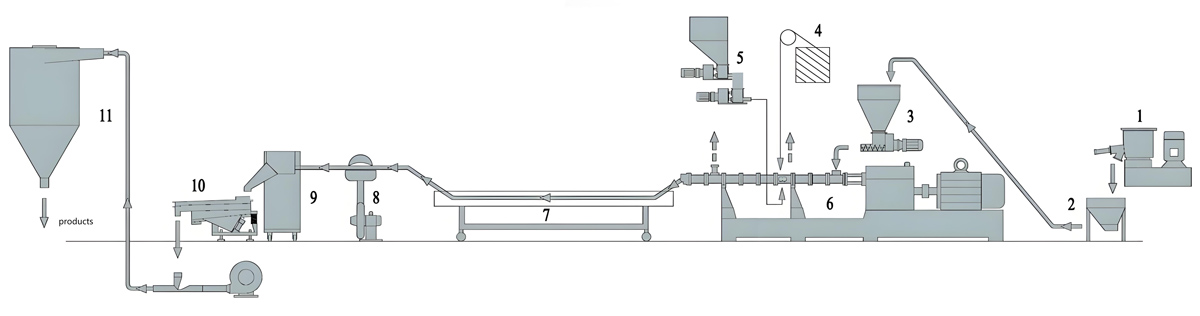
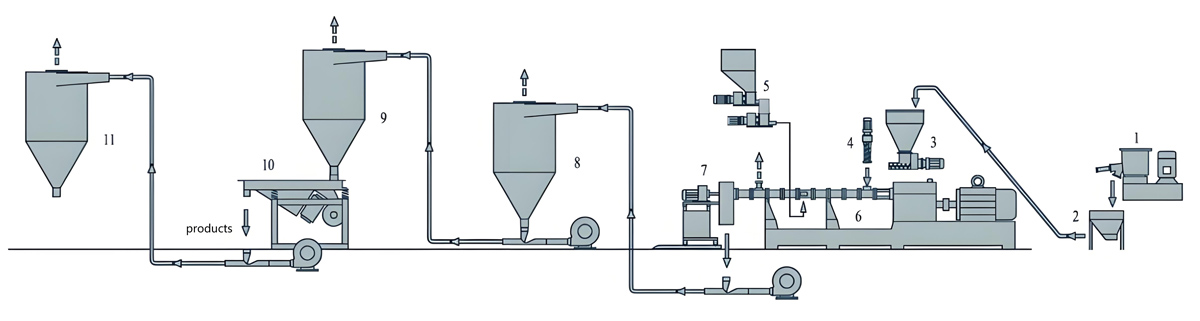
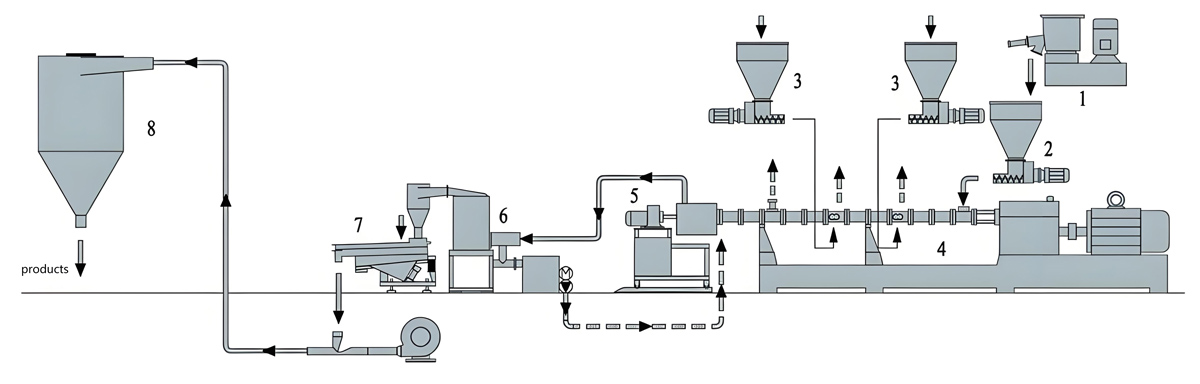
Kerke KTE series twin screw extruders provide the processing capability necessary for high-quality glossy and smooth masterbatch production. These co-rotating intermeshing extruders feature precision engineered screw elements that achieve superior mixing performance while maintaining precise temperature control essential for slip agent preservation. Modular barrel and screw configurations enable optimization for specific formulation requirements.
The KTE-36B with 35.6mm screw diameter and 20 to 100 kilograms per hour capacity serves development and small-scale production requirements. This model enables formulation optimization and pilot production before scaling to commercial volumes. The KTE-50B at 50.5mm screw diameter and 80 to 200 kilograms per hour throughput provides intermediate capacity for market development and specialty production runs.
Commercial production typically utilizes the KTE-65B with 62.4mm screw diameter achieving 200 to 450 kilograms per hour, or the KTE-75B at 71mm diameter with 300 to 800 kilograms per hour capacity. The KTE-95D high-capacity model featuring 93mm screw diameter delivers 1000 to 2000 kilograms per hour throughput for established high-volume production operations. Each model incorporates the advanced control systems and processing flexibility necessary for consistent masterbatch quality.
Auxiliary Equipment for Masterbatch Manufacturing
Auxiliary equipment requirements include material handling systems, feeding equipment, and downstream processing machinery. Gravimetric feeders with loss-in-weight technology ensure accurate additive metering throughout production runs. Liquid additive injection systems enable precise addition of silicone fluids and other liquid surface modifiers. Material transport systems with dust collection protect operators and maintain clean production environments.
Pelletizing systems convert extruded melt into finished product form. Underwater pelletizers provide rapid cooling and precise size control for most glossy masterbatch formulations. Strand pelletizers offer alternative processing for formulations sensitive to rapid cooling. Pellet cooling and classification equipment ensures proper handling and packaging of finished products. Packaging machinery with nitrogen flushing capability extends shelf life by preventing oxidative degradation.
Parameter Settings for Glossy & Smooth Masterbatch
Temperature Profile Optimization
Temperature profile configuration significantly impacts glossy and smooth masterbatch quality and production efficiency. The feeding zone maintains temperatures of 130°C to 160°C to ensure initial melting while preventing premature slip agent migration. Compression zones at 160°C to 190°C complete melting and begin additive incorporation into the polymer matrix.
Mixing zones require careful temperature control at 190°C to 220°C to achieve adequate dispersion without thermal degradation of slip agents. Fatty acid amide additives begin to decompose at temperatures exceeding 240°C, requiring close monitoring of peak temperatures during high-shear mixing. Pumping zones at 200°C to 220°C maintain appropriate melt viscosity for efficient extrusion through die openings.
Die head temperatures of 200°C to 220°C ensure smooth melt flow and proper strand formation. Water temperature in pelletizing systems should maintain pellets at 40°C to 60°C entering the cutting chamber to achieve proper solidification without thermal shock. Temperature profiling software enables precise zone-by-zone control for optimal processing of specific formulations.
Screw Speed and Residence Time Management
Screw speed selection balances mixing intensity against thermal effects and throughput requirements. Typical operating speeds range from 200 to 400 revolutions per minute depending on extruder size and formulation characteristics. Higher speeds increase shear forces that enhance dispersive mixing but also generate additional mechanical heat input.
Residence time within the extruder should be optimized between 30 and 90 seconds for glossy masterbatch production. Shorter residence times reduce thermal exposure but may compromise mixing efficiency. Longer residence times improve homogenization but increase degradation risk for temperature-sensitive slip agents. Throughput adjustment enables residence time optimization independent of screw speed selection.
The KTE-36B achieves optimal performance at screw speeds of 250 to 350 rpm with throughput of 40 to 80 kilograms per hour. The KTE-50B operates efficiently at 100 to 160 kilograms per hour with 200 to 300 rpm. The KTE-65B processes 250 to 400 kilograms per hour, while the KTE-75B achieves 400 to 600 kilograms per hour with appropriately configured screw elements.
Feeding System Configuration
Feeding system configuration ensures accurate metering and consistent introduction of formulation components. Gravimetric feeders provide accuracy of plus or minus 0.5% for major components including carrier resin and slip agents. Liquid injection systems meter silicone fluids and other liquid additives with proportional control based on throughput signals.
Feed throat design prevents material bridging and ensures continuous feeding throughout production runs. Agitator installation eliminates hopper bridging for problematic formulations. Backflow prevention in downstream feeding ports maintains formulation integrity when adding sensitive additives. Closed-loop feeding control integrates with extruder throughput monitoring for automatic adjustment maintaining formulation accuracy.
Equipment Price for Twin Screw Extruders
Kerke KTE Series Investment Overview
Capital investment for Kerke KTE series twin screw extruders varies by model capacity and included features. The KTE-36B laboratory and pilot scale extruder represents an investment range of $25,000 to $35,000, providing accessible entry for formulation development and small-scale production. This model suits research operations and market development activities seeking to establish glossy and smooth masterbatch products.
The KTE-50B intermediate production extruder costs $40,000 to $60,000, offering capacity for growing production requirements and specialty product lines. This model balances throughput capability with reasonable capital requirements for expanding operations. The KTE-65B at $50,000 to $80,000 and KTE-75B at $70,000 to $100,000 serve established commercial production operations requiring higher volumes and production efficiency.
The KTE-95D high-capacity extruder priced at $120,000 to $200,000 provides maximum throughput for large-scale production facilities. This model achieves throughput of 1000 to 2000 kilograms per hour for high-volume masterbatch manufacturing. Equipment selection should consider both current requirements and growth projections to optimize capital efficiency.
Complete Production Line Costs
Complete production line investment extends beyond extruder purchase to include supporting equipment and facilities. Feeding systems including gravimetric feeders and liquid injection equipment cost $15,000 to $50,000 depending on configuration. Pelletizing systems with underwater pelletizers and classification equipment represent $25,000 to $70,000 additional investment.
Quality control instrumentation including testing equipment and laboratory facilities requires $20,000 to $50,000. Material handling and storage systems contribute $10,000 to $30,000. Facility preparation including electrical, ventilation, and structural modifications may require $20,000 to $60,000 depending on existing conditions. Total project investment ranges from $100,000 for basic pilot facilities to $500,000 or more for fully automated commercial production lines.
Problems in Production Process and Solutions
Slip Agent Migration and Bloom Control
Excessive slip agent migration causes surface bloom and contamination issues in finished masterbatch. Symptoms include white powdery deposits on pellet surfaces, blocking during storage, and inconsistent performance in application testing. Migration occurs when slip agent concentration exceeds the carrier resin capacity to retain the additive in solution.
Carrier resin selection significantly influences migration behavior. Higher molecular weight carriers retain slip agents more effectively than lower molecular weight alternatives. Increased carrier crystallinity reduces amorphous regions available for slip agent dissolution. Balancing slip agent concentration against carrier resin characteristics prevents excessive migration while maintaining required surface modification performance.
Processing conditions also affect migration behavior. Rapid cooling during pelletizing traps slip agents in the polymer matrix before migration can occur. Reduced storage temperatures slow migration rates and extend usable shelf life. Additive selection using higher molecular weight slip agents such as behenamide reduces migration compared to erucamide alternatives. Anti-migration additives including glycerol esters at 2% to 5% concentration provide additional retention control.
Surface Defects and Appearance Issues
Surface defects in masterbatch pellets indicate processing problems that will affect application performance. Yellowing suggests thermal degradation of slip agents or carrier resin oxidation. Black specs result from material carbonization due to excessive local temperatures or contamination. Surface roughness indicates incomplete melting or inadequate mixing.
Temperature profile adjustment resolves most surface defect issues. Reducing peak temperatures in mixing zones decreases thermal degradation risk. Improving temperature uniformity through barrel zone balancing eliminates hot spots that cause carbonization. Increasing devolatilization efficiency removes volatile byproducts that cause surface irregularities. Screw speed optimization balances mixing intensity against thermal effects.
Equipment maintenance addresses mechanical sources of surface defects. Screw and barrel wear creates dead spots where material accumulates and degrades. Screen changer malfunction allows contamination to pass through into finished product. Pelletizer blade wear produces irregular particles with damaged surfaces. Regular inspection and component replacement prevents defect formation from equipment issues.
Dispersion Inconsistency Problems
Inconsistent dispersion produces batch-to-batch variation in glossy and smooth masterbatch performance. Poor dispersion manifests as gloss variation, surface streaking, or inconsistent slip properties in finished applications. Root causes include inadequate mixing, material feeding problems, and formulation instability.
Screw configuration evaluation identifies mixing inefficiencies. Insufficient mixing elements fail to break down slip agent agglomerates. Worn screw components reduce mixing effectiveness as clearances increase. Kneading block wear specifically affects dispersive mixing capability. Configuration modifications incorporating additional mixing elements or different element types improve dispersion quality.
Feeding system verification ensures consistent material introduction. Feeder calibration drift causes gradual formulation changes over production runs. Material segregation in premixes creates concentration variations that appear as dispersion problems. Hoppers and feeders require regular verification and cleaning to maintain accuracy. Material flow characteristics may require feed aid addition or equipment modifications to ensure reliable feeding.
Throughput Instability and Pressure Fluctuations
Throughput instability manifests as motor load variations, pressure fluctuations, and inconsistent pellet quality. These symptoms indicate problems with feeding, melting, or pumping that require investigation and correction. Instability affects production efficiency and creates quality variations that may not be immediately apparent.
Feeding system problems represent common instability sources. Material bridging in hoppers disrupts continuous feeding. Feeder calibration issues cause unsteady introduction of formulation components. Segregation of premixed materials creates concentration variations that affect melt behavior. Feed throat modifications including agitators and liners address bridging and flow problems.
Melting zone problems create pressure instability as material transitions from solid to melt. Incomplete melting allows solid particles to pass through mixing zones, creating pressure spikes. Screw configuration adjustments optimize melting behavior for specific formulations. Temperature profile modifications ensure adequate heat transfer for complete melting. Pressure monitoring identifies specific zones experiencing melting difficulties.
Maintenance
Operational Maintenance Best Practices
Daily maintenance activities establish the foundation for reliable production and consistent quality. Visual inspection of equipment condition reveals developing problems before they cause quality failures or production interruptions. Operating parameter monitoring through comparison with established baselines identifies deviations requiring investigation.
Production record documentation captures critical information for quality tracking and troubleshooting. Recording temperatures, pressures, throughput rates, and quality observations for each batch enables trend analysis and problem investigation. Shift handoff procedures ensure continuity of quality awareness and problem status. Cleaning procedures between formulation changes prevent cross-contamination that could affect product quality.
Equipment housekeeping maintains clean operating conditions that support quality and safety. Regular removal of material spills and dust accumulations prevents contamination and slip hazards. Lubrication of moving components according to manufacturer schedules maintains mechanical reliability. Immediate attention to unusual sounds, vibrations, or odors prevents escalation of developing problems.
Preventive Maintenance Scheduling
Weekly maintenance encompasses thorough inspection and adjustment activities. Feeder calibration verification ensures continued metering accuracy. Screen changer inspection and cleaning maintains filtration efficiency. Cooling system evaluation confirms adequate flow rates and temperature control. Belt tension adjustment and bearing inspection maintain mechanical integrity.
Monthly maintenance addresses detailed equipment condition assessment. Screw wear measurement identifies sections requiring attention before mixing quality suffers. Barrel inspection detects wear patterns affecting sealing and heat transfer. Gearbox oil analysis reveals mechanical condition trends. Electrical system inspection verifies motor and drive performance. Documentation updates maintain equipment history records supporting maintenance planning.
Quarterly and annual maintenance programs address major overhaul requirements. Screw element replacement restores mixing performance in worn sections. Barrel liner inspection and replacement ensures proper clearances. Complete system calibration verifies all control functions. Spare parts inventory management ensures availability of critical components. Training updates maintain operator competency with evolving procedures and equipment.
FAQ
What is the difference between glossy masterbatch and smooth masterbatch?
Glossy masterbatch focuses on visual shine and light reflection characteristics, emphasizing surface appearance. Smooth masterbatch prioritizes tactile qualities and surface replication performance during processing. Both formulations utilize similar slip agent technology, but glossy formulations optimize for optical properties while smooth formulations balance appearance with processing benefits. Some products combine both properties through optimized additive combinations.
How much glossy masterbatch should I add to achieve maximum shine?
Addition rates of 1% to 5% typically achieve noticeable gloss enhancement depending on base polymer and processing conditions. Maximum effectiveness occurs at 3% to 5% concentration for most formulations, with diminishing returns at higher levels. Higher concentrations may cause migration and bloom issues. Testing with your specific application conditions determines the optimal addition rate balancing performance and cost.
Can glossy masterbatch affect the mechanical properties of my plastic articles?
Slip agents and surface modifiers in glossy masterbatch may slightly reduce coefficient of friction but typically have minimal impact on mechanical strength properties. Excessive addition rates above 5% may affect impact strength or elongation in some polymer systems. Compatibility between masterbatch carrier and base polymer influences property effects. Testing of final articles confirms that gloss enhancement does not compromise structural performance.
Why does glossy masterbatch lose effectiveness after storage?
Slip agent migration to pellet surfaces during storage depletes the interior concentration available for application use. Storage at elevated temperatures accelerates migration rates. Humidity exposure can affect some slip agent types. Selecting higher molecular weight slip agents, using anti-migration additives, and storing in cool conditions extends effective shelf life. Regular testing of aged material verifies continued performance.
What slip agent provides the best balance of gloss and smoothness?
Erucamide provides excellent gloss enhancement with good slip properties at moderate cost. Oleamide offers similar performance with slightly faster migration rates. Behenamide provides superior permanence and reduced migration but at higher cost. Fluoropolymers achieve exceptional smoothness and release properties for demanding applications. Blending multiple slip agents often achieves optimal balance of properties for specific requirements.
How do I prevent glossy masterbatch from contaminating my production equipment?
Dedicated equipment for glossy masterbatch production eliminates cross-contamination concerns. When equipment sharing is necessary, thorough purging between products prevents residue carryover. Purging compounds designed for slip agent removal clean residual material effectively. Color coding and scheduling systems prevent inadvertent production errors. Complete equipment disassembly and cleaning provides assurance for critical applications.
What quality tests verify glossy masterbatch performance?
Key quality tests include gloss meter measurements of injection molded or extruded samples, coefficient of friction testing, and melt flow index determination. Visual appearance inspection identifies contamination or discoloration. Moisture content testing ensures adequate drying. Application testing under actual production conditions provides ultimate performance verification. Requesting certificate of analysis with each shipment confirms quality consistency.
How does screw configuration affect glossy masterbatch quality?
Screw configuration determines mixing intensity, residence time, and temperature development during extrusion. High-shear elements achieve superior dispersion of slip agents but increase degradation risk. Kneading blocks with various stagger angles provide controlled mixing appropriate for sensitive additives. Configuration selection balances dispersion requirements against thermal sensitivity of slip agent components. Optimization for specific formulations requires testing and adjustment.
Conclusion
Manufacturing premium glossy and smooth masterbatch requires systematic attention to formulation science, process engineering, and quality management throughout production operations. Twin screw extrusion technology provides the processing capability necessary for incorporating surface modifying additives while preserving their effectiveness. The Kerke KTE series offers scalable equipment solutions suitable for development operations through high-volume commercial production.
Successful production depends on understanding the interactions between slip agent chemistry, carrier resin characteristics, and processing parameters. Temperature management preserves slip agent effectiveness while achieving adequate dispersion. Screw configuration optimization balances mixing intensity against thermal degradation risks. Quality control systems ensure consistent product performance meeting application requirements.
Equipment investment considerations extend beyond extruder pricing to encompass complete production line requirements. Supporting equipment, quality systems, and facility modifications contribute significantly to total project costs. Maintenance programs preserve equipment performance and product quality throughout the operational lifecycle. Training and technical development build organizational capabilities for sustained competitive advantage.
The growing demand for premium surface appearance in plastic products creates opportunities for masterbatch producers capable of delivering consistent quality and technical expertise. Investment in people, processes, and technology builds capabilities that support long-term success in serving demanding applications across automotive, consumer electronics, packaging, and consumer goods industries. Continuous improvement and customer collaboration drive product development that addresses evolving market requirements.