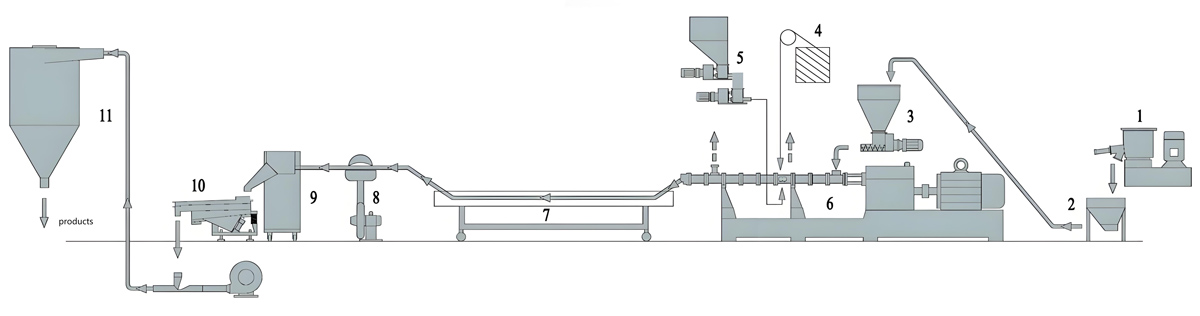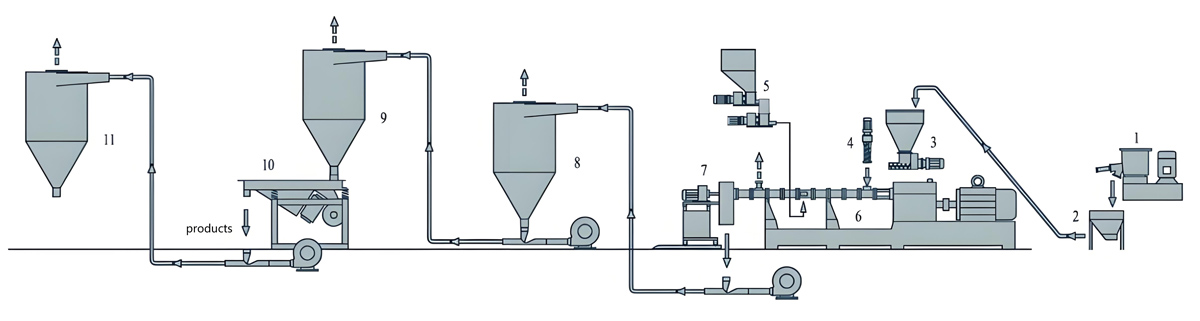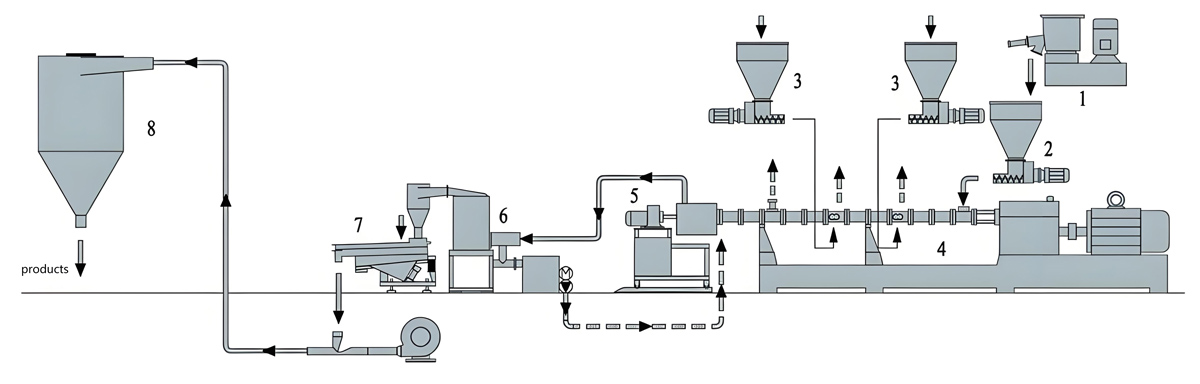
The production of heat stabilizer and light stabilizer masterbatch addresses one of the most critical challenges in plastic processing and end-use performance: the degradation of polymer materials under thermal and ultraviolet exposure. These specialized additives protect plastics from the damaging effects of processing heat, prolonged UV radiation, and oxidative reactions that would otherwise cause discoloration, embrittlement, and loss of mechanical properties. Twin screw extrusion has become the established manufacturing method for these formulations due to its superior mixing capabilities and precise processing control. This comprehensive guide provides detailed information on formulation development, production processes, equipment selection, and quality management for heat stabilizer and light stabilizer masterbatch manufacturing.
Introduction to Heat Stabilizer and Light Stabilizer Masterbatch
Heat stabilizers and light stabilizers serve complementary functions in protecting polymer materials from degradation. Heat stabilizers prevent thermal degradation during high-temperature processing operations such as extrusion, injection molding, and blow molding. Light stabilizers, including ultraviolet absorbers and hindered amine light stabilizers, protect finished products from UV-induced degradation during outdoor exposure and extended use. The combination of both stabilizer types in appropriate formulations provides comprehensive protection throughout the polymer lifecycle.
The chemistry of stabilization mechanisms varies significantly between different polymer types and stabilizer classes. Hindered amine light stabilizers function by scavenging free radicals generated during UV exposure, while ultraviolet absorbers work by absorbing harmful UV radiation and dissipating it as harmless heat energy. Heat stabilizers for PVC include lead compounds, organotin compounds, and calcium-zinc systems, while polyolefin stabilizers typically employ phenolic antioxidants combined with phosphite processing stabilizers.
Masterbatch production offers significant advantages over direct addition of neat stabilizers, including improved handling of dusty additives, better dispersion in the polymer matrix, and more consistent dosing during processing. The carrier resin in the masterbatch also provides some stabilization function and improves compatibility between the additives and the base polymer being protected.
Twin screw extrusion enables the production of stable, uniform masterbatch formulations by providing the mixing intensity required to disperse crystalline or agglomerated stabilizer additives throughout the carrier resin. The controlled temperature profile prevents premature activation or degradation of temperature-sensitive stabilizers while ensuring complete melting and mixing of the formulation.
Formulation Ratios for Heat Stabilizer and Light Stabilizer Masterbatch
Formulation development for stabilizer masterbatch requires careful balancing of stabilizer types, concentrations, and compatibility with target polymer systems. Different applications require different stabilizer packages optimized for specific protection requirements and processing conditions.
PVC Heat Stabilizer Masterbatch Formulation
PVC heat stabilizer masterbatches utilize metal soap systems as their primary active components. Calcium-zinc stabilizers represent the most common formulation type, typically comprising 20 to 40 percent calcium stearate and zinc octoate combination. The zinc component provides initial color protection while calcium provides long-term stability through HCl absorption mechanisms.
Lead-based stabilizer formulations, now restricted in many regions due to environmental concerns, historically contained 30 to 50 percent lead stearate or lead phosphite. These formulations achieved excellent stabilization performance but are being replaced by calcium-zinc and organotin alternatives in most applications. Organic stabilizers including beta-diketonates and epoxidized soybean oil serve as co-stabilizers at concentrations of 5 to 15 percent.
Modern PVC stabilizer masterbatches often combine multiple stabilizer types to achieve synergistic effects. A typical high-performance PVC stabilizer formulation might include 15 to 25 percent calcium-zinc soap, 5 to 10 percent organic heat stabilizer, 5 to 10 percent internal lubricant, and the balance carrier resin or processing aids.
Polyolefin Heat Stabilizer Masterbatch Formulation
Polyolefin stabilization systems typically employ phenolic antioxidants as primary stabilizers combined with phosphite or phosphonite secondary stabilizers. Phenolic antioxidants function as radical scavengers, accepting free radicals generated during processing and preventing chain scission reactions. Common phenolic antioxidants include tetrakis[methylene(3,5-di-tert-butyl-4-hydroxyhydrocinnamate)]methane and octadecyl 3,5-di-tert-butyl-4-hydroxyhydrocinnamate.
A standard polyolefin heat stabilizer masterbatch formulation contains 10 to 20 percent phenolic antioxidant primary stabilizer, 3 to 8 percent phosphite secondary stabilizer, and the balance carrier resin selected to match the target polyolefin. The phosphite component provides additional protection by decomposing hydroperoxides before they can initiate degradation reactions.
For demanding processing applications requiring enhanced stabilization, formulations may include higher antioxidant concentrations up to 30 percent total, or incorporate specialized high-performance stabilizers such as thioesters or hydroxylamines. These enhanced formulations are used for polymers undergoing severe processing conditions or requiring extended service life.
Hindered Amine Light Stabilizer Masterbatch Formulation
Hindered amine light stabilizers provide excellent UV protection through free radical scavenging mechanisms that regenerate during UV exposure. These stabilizers are particularly effective in polyolefin applications where they can achieve service life extensions of five to ten times compared to unstabilized polymers. Common hindered amine stabilizers include bis(2,2,6,6-tetramethyl-4-piperidyl)sebacate and poly[[6-[(1,1,3,3-tetramethylbutyl)amino]-1,3,5-triazine-2,4-diyl][(2,2,6,6-tetramethyl-4-piperidyl)imino]].
A typical hindered amine light stabilizer masterbatch formulation contains 15 to 30 percent active hindered amine stabilizer, 5 to 10 percent UV absorber as co-stabilizer, and carrier resin. The combination of hindered amine and UV absorber provides synergistic protection through multiple mechanisms.
For agricultural film applications requiring multi-year UV protection, hindered amine concentrations up to 40 percent may be used to achieve the required stabilization performance. These high-concentration formulations require careful processing to ensure complete dispersion and prevent stabilizer blooming or migration during service.
UV Absorber-Based Light Stabilizer Masterbatch Formulation
UV absorber stabilizers protect polymers by absorbing harmful ultraviolet radiation and dissipating it as harmless thermal energy. Benzotriazole, triazine, and oxalanilide UV absorbers provide protection across different regions of the UV spectrum. The choice of UV absorber depends on the polymer type, processing conditions, and required protection characteristics.
A standard UV absorber masterbatch formulation typically contains 15 to 25 percent active UV absorber, with the balance carrier resin selected for compatibility with the target polymer. For transparent applications where optical clarity is important, lower absorber loadings of 10 to 15 percent maintain protection while minimizing impact on aesthetics.
Titanium dioxide pigment masterbatches often incorporate UV absorber additives to provide combined UV protection and opacity. These hybrid formulations may contain 20 to 40 percent titanium dioxide combined with 5 to 10 percent UV absorber for enhanced weathering performance. The pigment particles also provide physical UV blocking through light scattering mechanisms.
Combined Heat and Light Stabilizer Masterbatch Formulation
Applications requiring both heat and light stabilization benefit from combined stabilizer masterbatch formulations that provide comprehensive protection throughout the product lifecycle. These formulations incorporate multiple stabilizer types working through different mechanisms to achieve maximum protection.
A typical combined stabilizer masterbatch for outdoor polyolefin applications might include 10 to 15 percent hindered amine light stabilizer, 5 to 10 percent UV absorber, 5 to 10 percent phenolic antioxidant, and 2 to 5 percent phosphite processing stabilizer. This comprehensive stabilization package protects against processing degradation, UV exposure, and long-term thermal oxidation during service.
Customized formulations for specific applications may adjust stabilizer ratios based on the polymer type, processing conditions, and expected service environment. Consultation with stabilizer suppliers helps identify optimal formulation configurations for demanding applications.
Production Process for Heat Stabilizer and Light Stabilizer Masterbatch
The production of stabilizer masterbatch requires careful attention to processing conditions that preserve stabilizer activity while achieving uniform dispersion in the carrier resin. Temperature control and residence time management are particularly important for these heat-sensitive formulations.
Raw Material Handling and Preparation
Stabilizer additives are often temperature-sensitive and require careful handling throughout the production process. Many hindered amine stabilizers begin to degrade at temperatures above 280 degrees Celsius, requiring careful temperature profile management during extrusion. UV absorbers may sublime or vaporize at high temperatures, necessitating temperature control and potentially vacuum devolatilization.
Raw materials should be protected from moisture, contamination, and extended exposure to light before processing. Many stabilizer compounds are hygroscopic and require drying before use to prevent hydrolysis reactions or processing problems. Typical drying conditions for stabilizer masterbatch raw materials include 80 to 100 degrees Celsius for 3 to 4 hours for polymer carriers and 60 to 80 degrees Celsius for 2 to 4 hours for heat-sensitive stabilizer compounds.
The pre-blending stage combines all formulation components in the correct proportions. Careful attention to blending uniformity ensures consistent stabilizer distribution throughout the carrier resin. High-intensity mixing before extrusion improves the wetting and dispersion of solid stabilizer compounds. The pre-blend should be processed promptly to minimize exposure to processing environment conditions.
Extrusion Processing
The extrusion process for stabilizer masterbatch requires precise temperature control to prevent thermal degradation of sensitive stabilizer compounds. The general principle is to use the minimum temperature required for complete melting and mixing while maintaining adequate processing viscosity for effective dispersion.
The feeding zone operates at relatively low temperatures to prevent premature melting and ensure consistent feed rate control. Material progresses through compression zones where melting occurs, with temperatures increasing to achieve complete polymer melting. The mixing zones maintain adequate temperature for thorough dispersion while avoiding excessive thermal stress on stabilizer compounds.
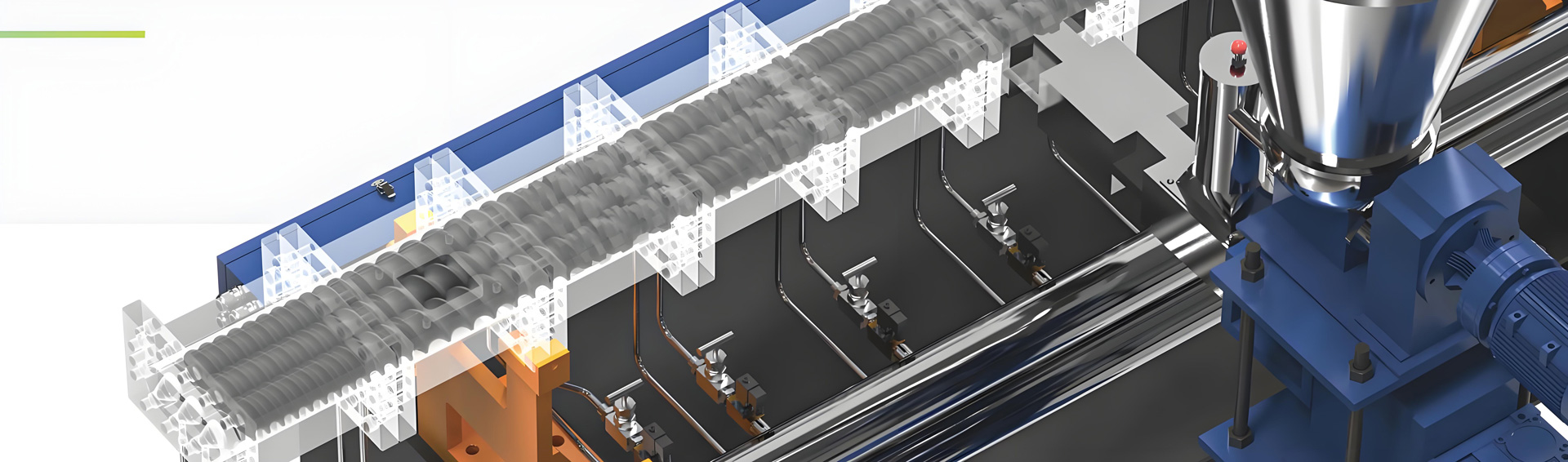
Screw configuration for stabilizer masterbatch typically emphasizes distributive mixing over dispersive mixing, as most stabilizer additives are already in an acceptable particle size form. Screw elements that provide good material circulation without excessive shear heating work well for these formulations. Kneading blocks with moderate staggering angles and forward-conveying elements maintain mixing while controlling temperature rise.
Vacuum devolatilization zones remove any volatiles including residual moisture and trace contaminants from the formulation. This stage is particularly important for formulations containing moisture-sensitive stabilizer compounds. Vacuum levels between 0.5 and 0.9 bar effectively remove volatiles without causing excessive foam formation.
Pelletizing and Packaging
The underwater pelletizing system cuts the extruded strands into uniform granules while minimizing dust generation and static charge buildup. Stabilizer masterbatch granules are often more fragile than filled masterbatches due to the crystalline nature of many stabilizer compounds, requiring appropriate cutting and handling conditions.
Immediately after pelletizing, the granules are dried to remove surface moisture that could affect stability or cause problems during subsequent use. Centrifugal drying provides effective moisture removal while minimizing mechanical damage to the granules. The dried product is then packaged in moisture-resistant containers that protect during storage and transport.
Proper packaging includes labeling with production date, formulation information, and recommended storage conditions. The shelf life of stabilizer masterbatch depends on the specific formulation and storage conditions, typically ranging from 12 to 24 months when stored properly in cool, dry conditions away from direct light exposure.
Production Equipment Introduction
Equipment selection for stabilizer masterbatch production depends on production scale requirements, formulation characteristics, and quality specifications. The Kerke KTE series provides a range of twin screw extruder options suitable for different production volumes and application requirements.
Kerke KTE-36B Twin Screw Extruder
The compact KTE-36B serves small-scale production and product development applications. The 35.6 millimeter screw diameter and 40:1 length-to-diameter ratio provide adequate mixing capability for stabilizer formulations while maintaining good temperature control. Throughput rates of 20 to 100 kilograms per hour suit pilot production and low-volume specialty applications.
The six-zone temperature control system enables precise temperature profiling for heat-sensitive formulations. The modular screw element configuration allows customization of mixing intensity to match specific formulation requirements. This model is particularly suitable for developing new stabilizer formulations and small-batch specialty production.
Kerke KTE-50B Twin Screw Extruder
The mid-range KTE-50B offers increased production capacity with 50.5 millimeter screw diameter and throughput rates of 80 to 200 kilograms per hour. The eight-zone temperature control provides additional flexibility for complex formulations requiring multiple temperature adjustments throughout the processing length.
The KTE-50B represents an excellent choice for small to medium commercial production of stabilizer masterbatch. The combination of increased capacity and precise temperature control enables efficient production of consistent-quality product. The moderate investment level makes this model accessible for growing businesses.
Kerke KTE-65B Twin Screw Extruder
Medium-scale commercial production is served by the KTE-65B with 62.4 millimeter screw diameter and throughput rates of 200 to 450 kilograms per hour. The ten-zone temperature control system provides maximum flexibility for optimizing temperature profiles of heat-sensitive stabilizer formulations.
The extended barrel length provides adequate residence time for thorough mixing while maintaining throughput efficiency. Reinforced drive components handle the demands of continuous commercial production. The KTE-65B serves as a standard platform for many stabilizer masterbatch production operations.
Kerke KTE-75B Twin Screw Extruder
High-volume production requirements are addressed by the KTE-75B with 71 millimeter screw diameter and throughput rates of 300 to 800 kilograms per hour. The twelve-zone temperature control enables fine-tuned temperature management for demanding stabilizer formulations.
The extended length-to-diameter ratio of 48:1 provides additional residence time for complete melting and mixing of high-viscosity formulations. Advanced mixing elements optimize dispersion quality while controlling energy input and temperature rise. This model suits manufacturers with established markets and significant production volumes.
Kerke KTE-95D Twin Screw Extruder
Maximum production capacity is available through the KTE-95D with 93 millimeter screw diameter achieving throughput rates between 1000 and 2000 kilograms per hour. This industrial-scale extruder provides the capacity required for large-volume stabilizer masterbatch production.
The comprehensive control and automation systems support continuous production operation with minimal operator intervention. Multiple devolatilization zones handle volatile removal from high-throughput processing. The KTE-95D serves major production facilities requiring consistent output of large-volume products.
Parameter Settings for Heat Stabilizer and Light Stabilizer Masterbatch
Optimal parameter settings for stabilizer masterbatch production balance processing efficiency against the need to preserve sensitive stabilizer compounds. Temperature control is particularly critical, as excessive heat causes stabilizer degradation that reduces effectiveness in the finished product.
Temperature Profile Configuration
Temperature profiles for stabilizer masterbatch vary significantly depending on the carrier resin and stabilizer types. For polyethylene-based formulations, typical barrel temperatures range from 140 to 200 degrees Celsius across the processing zones. The lower end of this range applies to heat-sensitive hindered amine stabilizers while higher temperatures suit more thermally stable formulations.
Polypropylene carrier resins require higher processing temperatures, typically 180 to 240 degrees Celsius, to achieve adequate melting and flow. However, stabilizer compounds must remain stable at these elevated temperatures, limiting the choice of additives for polypropylene-based stabilizer masterbatches.
PVC stabilizer masterbatch formulations typically process at lower temperatures between 120 and 170 degrees Celsius to prevent premature degradation of the PVC carrier or volatile loss of stabilizer components. The relatively low processing temperature of PVC-based formulations reduces energy consumption but may require extended residence times for complete mixing.
Die zone temperatures are set 10 to 20 degrees Celsius below the final barrel zone temperature to ensure proper melt consolidation before extrusion. This temperature gradient prevents thermal degradation in the die while maintaining adequate flow for uniform strand formation.
Screw Speed and Throughput Optimization
Screw speeds between 150 and 300 revolutions per minute typically provide good balance between mixing quality and processing stability for stabilizer masterbatch. Lower speeds reduce mechanical energy input and temperature rise, which benefits heat-sensitive formulations. Higher speeds increase throughput and mixing intensity but generate more heat through viscous dissipation.
Throughput optimization considers the relationship between feed rate and residence time. Lower throughput rates increase average residence time, providing more thorough mixing and potentially better stabilizer dispersion. However, excessive residence time at elevated temperatures can cause stabilizer degradation, creating a balance between mixing quality and stabilizer retention.
For KTE-36B equipment, throughput rates of 25 to 50 kilograms per hour are typical for stabilizer formulations. The larger KTE-50B operates efficiently at 80 to 140 kilograms per hour, while KTE-65B achieves 180 to 320 kilograms per hour. KTE-75B and KTE-95D units process 280 to 550 and 900 to 1500 kilograms per hour respectively under normal conditions.
Vacuum and Pressure Settings
Devolatilization vacuum levels between 0.5 and 0.9 bar effectively remove volatiles without causing excessive foaming or material disturbance. The vacuum zone location should be positioned where the material is sufficiently melted but not at maximum fill level, providing adequate surface area for volatile escape.
Melt pressure monitoring provides important information about process stability and fill level. Typical melt pressures for stabilizer masterbatch production range from 3 to 10 megapascals depending on formulation viscosity and throughput rate. Pressure fluctuations may indicate feeding problems, temperature variations, or equipment issues.
Equipment Price
The investment in twin screw extrusion equipment for stabilizer masterbatch production varies based on production capacity, features, and configuration options. Kerke offers the KTE series across a comprehensive price range to serve different market segments.
The Kerke KTE-36B is priced between 25,000 and 35,000 dollars, providing an entry point for pilot production and product development. This compact platform enables formulation development and small-batch production without requiring large capital investment. The modular configuration supports customization as requirements evolve.
The Kerke KTE-50B ranges from 40,000 to 60,000 dollars, offering increased capacity and enhanced temperature control for small to medium-scale commercial production. The additional temperature zones and improved control systems justify the higher investment for production-scale operations requiring precise processing control.
Medium-scale production capacity is available through the Kerke KTE-65B at 50,000 to 80,000 dollars. The higher throughput capability and extended temperature control options support continuous commercial production of stabilizer masterbatch products.
The Kerke KTE-75B, priced between 70,000 and 100,000 dollars, serves high-volume production requirements with maximum capacity and advanced features. The robust construction and comprehensive control systems support demanding continuous production operations.
Maximum capacity production is available through the Kerke KTE-95D at 120,000 to 200,000 dollars. This industrial-scale platform provides the throughput and automation capabilities required for large-volume stabilizer masterbatch manufacturing operations.
Problems in Production Process and Solutions
Stabilizer masterbatch production presents specific technical challenges related to the temperature sensitivity and chemical reactivity of stabilizer compounds. Understanding these challenges enables processors to develop effective solutions and preventive measures.
Problem: Stabilizer Degradation During Processing
Thermal or oxidative degradation of stabilizer compounds during extrusion reduces their effectiveness in the finished masterbatch. This problem manifests as reduced stabilization performance in customer applications, discoloration of the final product, and inconsistent batch-to-batch quality.
Root Cause Analysis
Stabilizer degradation occurs when processing temperatures exceed the thermal stability limits of the additive compounds. Each stabilizer has a maximum temperature tolerance above which degradation reactions occur. Extended residence times at elevated temperatures compound this effect, as degradation is time-dependent as well as temperature-dependent.
Inadequate temperature control creates hotspots within the extruder where degradation can occur even when average temperatures are within acceptable ranges. Mechanical energy input from screw rotation and material viscosity generates additional heat beyond that provided by barrel heating, potentially causing localized overheating.
Oxidative degradation can occur when oxygen enters the processing system through leaks, inadequate purge procedures, or contaminated raw materials. Many stabilizer compounds react with oxygen, particularly at elevated temperatures, consuming the stabilizer before it can provide protection in end-use applications.
Solutions
Reducing processing temperatures throughout the barrel profile minimizes thermal stress on stabilizer compounds. The goal is to use the minimum temperature required for complete melting and adequate mixing. Systematic temperature reduction, beginning with the final zones and die, while monitoring product quality identifies the optimal temperature profile for each formulation.
Increasing screw speed while maintaining throughput reduces residence time at processing temperatures. The higher speed reduces the time available for thermal degradation reactions. However, this must be balanced against increased mechanical energy input and potential temperature rise from viscous dissipation.
Installing additional temperature control zones or improving barrel cooling capacity addresses hotspot problems that cause localized degradation. Infrared temperature measurement of barrel surfaces helps identify temperature non-uniformity. Upgrading temperature controllers with faster response and tighter control tolerance improves overall temperature stability.
Prevention Methods
Establishing maximum temperature limits for each formulation based on the thermal stability of constituent compounds prevents degradation-related problems. These limits should include safety margins to account for variations in processing conditions and equipment performance.
Implementing nitrogen or inert gas purging of the extrusion system prevents oxidative degradation during processing. The inert atmosphere displaces oxygen and prevents oxidation reactions. Regular leak testing identifies air ingress points that might contribute to oxidative problems.
Quality testing of finished masterbatch verifies stabilizer effectiveness before product release. Accelerated aging tests, residual stabilizer analysis, or application testing with customer formulations provides confirmation of adequate stabilization. Establishing specification limits for minimum residual stabilizer content ensures consistent product performance.
Problem: Poor Stabilizer Dispersion and Uniformity
Inadequate dispersion of stabilizer compounds within the masterbatch creates localized areas of high and low concentration, resulting in inconsistent stabilization performance in customer applications. This problem is particularly problematic for crystalline stabilizer compounds that tend to agglomerate.
Root Cause Analysis
Insufficient mixing intensity or inadequate mixing time results in poor stabilizer dispersion. The co-rotating screw elements must provide sufficient shear stress and material circulation to break down agglomerates and distribute stabilizer particles throughout the carrier resin. Screw configurations lacking adequate mixing elements fail to achieve proper dispersion.
Improper pre-blending preparation leaves stabilizer particles poorly distributed before entering the extruder. Large agglomerates formed during storage or handling resist breakdown during extrusion, particularly at lower processing temperatures. Inadequate wetting of hydrophobic stabilizer particles by the polymer carrier promotes agglomeration.
Raw material quality problems including excessive particle size, contamination, or improper storage create dispersion difficulties. Stabilizer compounds that have absorbed moisture may form clumps that resist dispersion. Particles that have undergone partial surface oxidation may have reduced compatibility with the polymer carrier.
Solutions
Modifying the screw configuration to include additional mixing elements increases shear stress and material circulation. Kneading blocks with 45 to 90 degree staggering angles provide intensive mixing that breaks down agglomerates. Adding neutral or reverse screw elements increases fill level and mixing intensity in specific zones.
Improving pre-blending procedures ensures better initial distribution of stabilizer compounds before extrusion. High-shear pre-mixing or compound milling breaks down large particles before they enter the extruder. Adding dispersing agents or coupling agents improves wetting and prevents re-agglomeration.
Adjusting processing temperatures to reduce viscosity improves the effectiveness of mechanical mixing. Lower viscosity allows greater material circulation and more thorough distribution of stabilizer particles. However, temperatures must remain high enough to prevent other processing problems.
Prevention Methods
Establishing raw material specifications and incoming quality control procedures prevents dispersion problems caused by poor-quality input materials. Testing particle size distribution, moisture content, and visual appearance identifies potential problems before they affect production.
Standardizing pre-blending procedures ensures consistent preparation regardless of operator or batch. Documenting mixing times, speeds, and procedures provides reproducible preparation conditions. Regular equipment maintenance maintains mixing performance of pre-blending equipment.
Implementing statistical process control for production parameters identifies trends that might indicate developing dispersion problems. Recording and analyzing data for temperature, pressure, torque, and throughput helps identify process variations affecting product quality.
Problem: Volatile Loss and Smoke Generation
Volatilization of stabilizer compounds during extrusion creates smoke, reduces active stabilizer content, and potentially causes contamination of the production environment. This problem indicates that processing temperatures exceed the volatilization threshold for formulation components.
Root Cause Analysis
Excessive processing temperatures cause volatilization of low-molecular-weight stabilizer compounds. This is particularly problematic for some hindered amine stabilizers and UV absorbers that have significant vapor pressure at extrusion temperatures. Longer residence times at high temperatures increase volatilization losses.
Inadequate devolatilization allows volatiles to remain in the product and exit through the die, creating smoke and potential die blockage. Vacuum system problems including leaks, insufficient vacuum level, or improper zone location reduce devolatilization efficiency.
Formulation issues can also contribute to volatilization problems. Low-viscosity formulations exit the extruder more readily, potentially carrying volatiles with them. High filler loadings may create channels through which volatiles escape rather than being properly removed.
Solutions
Reducing processing temperatures throughout the extrusion system directly addresses volatilization problems caused by excessive heat. Even small reductions of 5 to 10 degrees Celsius can significantly reduce volatilization rates for temperature-sensitive compounds. Target reductions in the hottest zones where volatilization is most likely.
Improving vacuum devolatilization efficiency helps remove volatiles before they exit the extruder. Checking vacuum system integrity for leaks, increasing vacuum level, and repositioning vacuum zones for optimal volatile removal addresses system limitations. Multiple vacuum zones may be required for formulations with high volatile content.
Formulation modifications including substitution of higher-molecular-weight stabilizer alternatives or addition of non-volatile co-stabilizers can reduce volatilization tendencies. Consultation with stabilizer suppliers identifies alternatives with improved thermal stability and lower vapor pressure.
Prevention Methods
Selecting stabilizer compounds with appropriate thermal stability for intended processing conditions prevents volatilization problems. Stabilizer data sheets typically include volatilization temperature specifications that guide formulation development. Testing new formulations at processing temperatures before production scale-up identifies potential problems early.
Installing exhaust and smoke collection systems protects the production environment and operator health when volatilization cannot be completely eliminated. Proper ventilation prevents accumulation of volatile compounds in the work area.
Regular monitoring of exhaust systems and smoke detection provides early warning of volatilization problems. Recording observations during production runs documents normal and abnormal conditions.
Maintenance of Twin Screw Extruders for Stabilizer Masterbatch
Consistent maintenance of extrusion equipment ensures reliable production and consistent product quality for stabilizer masterbatch manufacturing. The maintenance program addresses both general equipment care and specific considerations for stabilizer formulations.
Temperature Control System Maintenance
Accurate temperature control is critical for heat-sensitive stabilizer formulations. Regular calibration of temperature sensors using traceable standards ensures measurement accuracy. Thermocouple and pyrometer readings should be verified at regular intervals to detect drift or malfunction.
Heating element condition affects temperature control performance and energy efficiency. Measuring element resistance and comparing with specifications identifies degradation before failure occurs. Replacing worn elements during scheduled maintenance prevents unexpected production interruptions.
Cooling system performance directly impacts temperature control capability. Scale buildup in water-cooled zones reduces heat transfer efficiency and creates control difficulties. Regular cleaning of cooling passages maintains proper heat removal capacity. Water treatment prevents scale formation and corrosion in cooling systems.
Screw and Barrel Care
While stabilizer masterbatch formulations are generally less abrasive than filled compounds, screw and barrel wear still affects processing performance over time. Regular inspection of screw elements identifies wear patterns and determines replacement timing. Measuring flight diameters and clearances quantifies wear levels.
Barrel inspection using borescope equipment reveals liner wear and surface condition. Worn barrel liners create clearance increases that affect compression and mixing performance. Replacing worn liners restores original equipment specifications and processing capability.
Proper material storage and handling prevents contamination that could damage equipment or affect product quality. Particles of foreign material in the feed can cause scratching of barrel surfaces or damage to screw elements. Proper raw material handling and storage protects both equipment and product quality.
Vacuum System Maintenance
Vacuum devolatilization systems require regular attention to maintain performance. Vacuum pump oil level and condition should be checked according to manufacturer recommendations. Oil changes at appropriate intervals prevent pump damage and maintain vacuum efficiency.
Vacuum piping and fittings should be inspected for leaks and blockages. Accumulated material in vacuum lines reduces efficiency and can contaminate product. Regular cleaning maintains proper vacuum system performance.
Vacuum controller calibration ensures accurate pressure measurement and control. Installing vacuum gauges at multiple locations verifies system performance and identifies potential problems in specific zones.
Feeding and Handling Equipment
Accurate feeding is essential for consistent stabilizer masterbatch production. Loss-in-weight feeder calibration should be verified regularly using check weights. Feeder screw condition affects accuracy, particularly for low feed rate applications.
Hopper and feed throat condition affects material flow and feeding accuracy. Material buildup can cause bridging and inconsistent feed rates. Regular cleaning and inspection maintains proper feeding performance.
Pelletizing equipment including knives, die plates, and water systems requires maintenance attention. Sharp cutting knives produce clean granule surfaces and minimize dust generation. Die plate condition affects granule shape and consistency. Water system cleaning prevents biological growth and maintains proper cooling performance.
FAQ
What is the recommended concentration of hindered amine light stabilizer in outdoor polyolefin applications?
Hindered amine light stabilizer concentrations between 0.3 and 0.8 percent in the final compound provide effective UV protection for most outdoor polyolefin applications. Applications requiring extended service life of ten years or more may require concentrations up to 1.0 to 1.5 percent. The specific concentration depends on the required service life, expected UV exposure intensity, and other formulation components.
Can different types of stabilizer masterbatch be blended together?
Different stabilizer masterbatch types can be combined to create custom stabilization packages for specific applications. Blending should be verified through compatibility testing as some stabilizer combinations may show antagonistic effects that reduce overall stabilization performance. Consultation with stabilizer suppliers helps identify optimal combinations.
How does humidity affect heat stabilizer and light stabilizer masterbatch during storage?
Most stabilizer masterbatch formulations are sensitive to moisture absorption that can affect processing performance and product quality. Storage in dry conditions with relative humidity below 60 percent is recommended. Some stabilizer compounds may hydrolyze or absorb odors when exposed to high humidity, affecting their stabilization effectiveness.
What is the difference between primary and secondary heat stabilizers?
Primary heat stabilizers, such as phenolic antioxidants, function by scavenging free radicals that initiate degradation reactions. Secondary stabilizers, such as phosphites, work by decomposing hydroperoxides before they can continue degradation chains. The combination of primary and secondary stabilizers provides synergistic protection through multiple mechanisms.
How do UV absorbers differ from hindered amine light stabilizers in their protection mechanisms?
UV absorbers protect polymers by absorbing harmful ultraviolet radiation and dissipating it as harmless heat energy. Hindered amine light stabilizers function by scavenging free radicals generated by UV exposure, effectively regenerating their protective capability. UV absorbers provide direct UV blocking while hindered amines work through chemical reaction mechanisms.
What factors affect the choice between liquid and solid stabilizer masterbatch?
Solid masterbatch offers easier handling, dust-free incorporation, and better storage stability. Liquid stabilizers provide faster incorporation and more uniform distribution in some applications but require special handling and feeding equipment. The choice depends on the specific polymer system, processing equipment, and application requirements.
How should stabilizer masterbatch be dried before use?
Most stabilizer masterbatch products require drying before processing to prevent moisture-related defects. Typical drying conditions are 80 to 100 degrees Celsius for 3 to 4 hours. However, some heat-sensitive stabilizer formulations should not be dried at high temperatures. Following supplier recommendations for specific products ensures proper preparation without stabilizer degradation.
What is the typical shelf life of stabilizer masterbatch?
Stabilizer masterbatch typically maintains effective performance for 12 to 24 months when stored in original sealed packaging under recommended conditions. Heat and light exposure during storage can reduce effective shelf life. Products showing discoloration, odor changes, or caking should be tested before use.
Conclusion
Heat stabilizer and light stabilizer masterbatch production represents a sophisticated manufacturing operation requiring careful attention to formulation chemistry, processing conditions, and quality control. The protection these products provide enables the use of polymer materials in demanding applications where thermal and UV exposure would otherwise cause unacceptable degradation.
Successful production of effective stabilizer masterbatch depends on preserving the activity of sensitive additive compounds throughout the manufacturing process. Temperature control, residence time management, and proper handling all contribute to maintaining stabilizer effectiveness in the finished product. Investment in equipment with precise temperature control and flexible configuration options pays dividends in consistent product quality.
The growing awareness of material durability requirements across industries including construction, automotive, agriculture, and consumer products creates expanding opportunities for stabilizer masterbatch manufacturers. Twin screw extrusion technology provides the capabilities required to produce high-quality, consistent products meeting demanding performance specifications. Processors who master the technical requirements of stabilizer formulation and processing position themselves to serve these growing markets with high-value products.