Introduction
Plastic lubricant masterbatch production represents a critical segment of the plastics processing industry, serving as the foundation for manufacturing high-quality polymer products with enhanced processing characteristics and surface properties. The twin screw extruder stands as the most essential equipment in this production process, offering unparalleled mixing efficiency, precise temperature control, and superior dispersion capabilities that are vital for creating uniform and effective lubricant masterbatch formulations.
Lubricant masterbatches are concentrated blends of lubricating agents and carrier resins designed to improve the processing performance of plastic materials during injection molding, extrusion, and other forming processes. These additives reduce friction between polymer chains and between the polymer and processing equipment, resulting in lower energy consumption, improved flow properties, enhanced surface finish, and reduced wear on machinery components.
The selection and operation of twin screw extruder technology directly impact the quality, consistency, and performance characteristics of lubricant masterbatch products. This comprehensive guide explores the essential aspects of twin screw extruder applications in plastic lubricant masterbatch production, including formulation considerations, process parameters, equipment selection, maintenance requirements, and troubleshooting strategies to optimize production efficiency and product quality.
Formulation Ratios for Different Types
The formulation of plastic lubricant masterbatch requires careful consideration of multiple factors including the type of lubricant, carrier resin compatibility, concentration levels, and intended application requirements. The twin screw extruder must accommodate various formulation ratios while maintaining consistent mixing and dispersion quality throughout the production process.
Internal lubricant masterbatches typically contain 15-30% active lubricant components such as fatty acid amides, metallic stearates, or ester-based compounds dispersed in polyethylene, polypropylene, or other carrier resins. These formulations focus on improving internal friction reduction between polymer chains, enabling easier flow during processing. For polyolefin-based internal lubricant masterbatches, a typical formulation might consist of 20% erucamide, 5% zinc stearate, and 75% low-density polyethylene carrier resin.
External lubricant masterbatches, designed to reduce friction between the polymer and processing equipment surfaces, generally contain higher concentrations of lubricating agents ranging from 25-40% depending on the specific application requirements. Common external lubricants include waxes, silicone-based compounds, and fluoropolymers. A typical external lubricant masterbatch for injection molding applications might contain 30% polyethylene wax, 5% silicone masterbatch carrier, and 65% polypropylene carrier resin.
Combination lubricant masterbatches incorporate both internal and external lubricating agents to provide comprehensive processing improvements. These formulations typically contain 25-35% total lubricant content, with balanced ratios of internal and external components. For example, a combination masterbatch might include 15% erucamide (internal lubricant), 10% polyethylene wax (external lubricant), and 75% polyethylene carrier resin to provide both improved flow and mold release characteristics.
High-performance lubricant masterbatches for specialized applications such as high-speed processing or high-temperature environments require more sophisticated formulation approaches. These may include 30-40% active lubricant content with multiple synergistic components such as 12% erucamide, 8% polyethylene wax, 5% silicone compounds, and 75% engineering-grade carrier resins like polyamide or polycarbonate derivatives.
The twin screw extruder must be configured to handle these various formulation ratios effectively. Higher lubricant concentrations require optimized screw designs with enhanced mixing sections to prevent lubricant migration and ensure uniform distribution. Processing temperatures must be carefully controlled to prevent degradation of temperature-sensitive lubricating agents while ensuring complete melting and dispersion of carrier resins.
Production Process
The production process for plastic lubricant masterbatch using twin screw extruders involves several critical stages that must be carefully controlled to ensure consistent product quality and optimal performance characteristics. Each stage of the process requires specific parameter adjustments and monitoring to achieve the desired dispersion quality and concentration uniformity.
Raw material preparation represents the initial and crucial step in the production process. Lubricant components must be pre-dried according to their moisture sensitivity specifications, with typical drying conditions ranging from 80-90°C for 2-4 hours depending on the specific lubricant type. Carrier resins should also be conditioned to appropriate moisture levels, typically below 0.1% for polyolefins and below 0.02% for engineering plastics. Premixing of solid lubricant components with carrier resin pellets in appropriate ratios ensures consistent feeding and prevents concentration variations in the final product.
Feeding systems for twin screw extruder lubricant masterbatch production must deliver precise and consistent material flow to the extruder barrel. Gravimetric feeding systems are preferred over volumetric feeders due to their superior accuracy and ability to compensate for material density variations. Multiple feeding points may be employed to introduce different lubricant components at optimal locations along the extruder barrel, with solid additives typically introduced through the main feed port and liquid lubricants injected downstream through specialized injection ports.
The melting and initial dispersion phase occurs in the feed zone and early transition sections of the twin screw extruder. Temperature profiles in these zones must be carefully controlled to gradually melt the carrier resin without degrading the lubricant components. Typical temperature settings for polyolefin-based lubricant masterbatch production range from 160-180°C in the feed zone, gradually increasing to 190-210°C in the transition zones. The screw configuration in these sections typically features forward-conveying elements with moderate compression ratios to initiate melting while preventing excessive shear that could degrade sensitive lubricants.
Intensive mixing and dispersion represent the most critical phase in lubricant masterbatch production. This occurs in the mixing zones of the twin screw extruder, typically located in the middle and rear sections of the barrel. High-shear mixing elements such as kneading blocks, blister rings, and special dispersive mixing sections create the necessary shear forces to break down lubricant agglomerates and distribute them uniformly throughout the carrier resin matrix. The screw speed during this phase typically ranges from 200-400 RPM, depending on the specific formulation and desired dispersion quality, with higher speeds generally producing finer dispersion but requiring careful temperature monitoring to prevent thermal degradation.
Venting and devolatilization may be necessary when using lubricants that release volatile components during processing or when removing entrapped air and moisture. Twin screw extruders equipped with vented barrel sections allow for the removal of these volatiles under vacuum or atmospheric pressure, improving product purity and preventing surface defects. Vent zones are typically located downstream of the mixing sections and maintained at temperatures 10-20°C above the processing temperature to facilitate volatile removal without causing material degradation.
Pelletizing and cooling complete the production process. The molten masterbatch exits the extruder through a strand die, water-cooled strand bath, and pelletizing system to produce uniform pellets. Strand die temperature should be maintained 5-10°C above the melt temperature to ensure smooth extrusion without die lip buildup. Water bath temperature is typically set between 40-60°C to ensure rapid solidification without inducing thermal stress. The pelletizing system must be adjusted to produce consistent pellet sizes, typically 2-4mm in diameter, which facilitates accurate dosing in downstream processing operations.
Production Equipment Introduction
The selection and configuration of twin screw extruder equipment for plastic lubricant masterbatch production requires careful consideration of multiple technical factors including capacity requirements, formulation characteristics, product quality specifications, and production efficiency targets. Modern twin screw extruder systems offer advanced features specifically designed for masterbatch production applications.
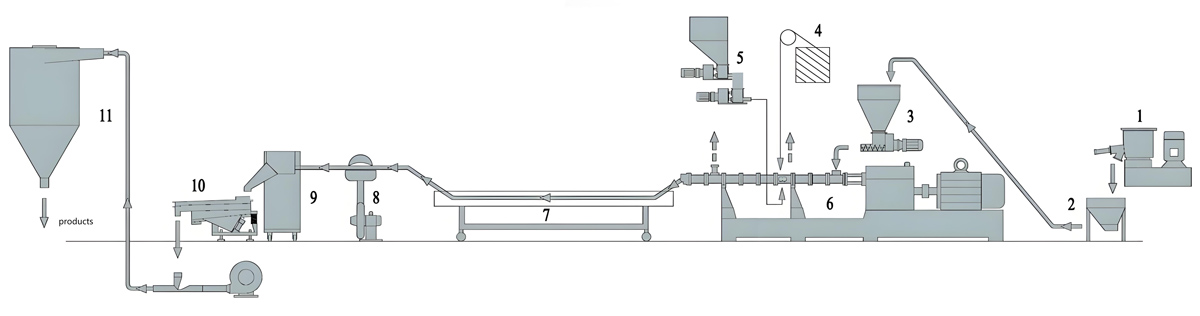
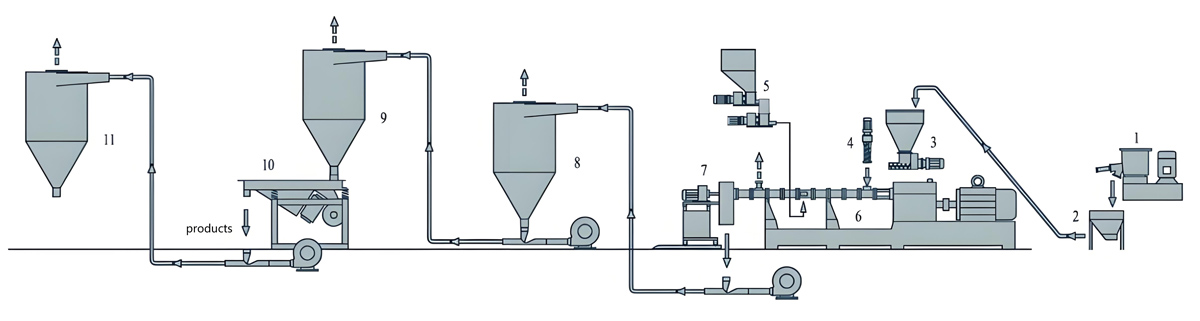
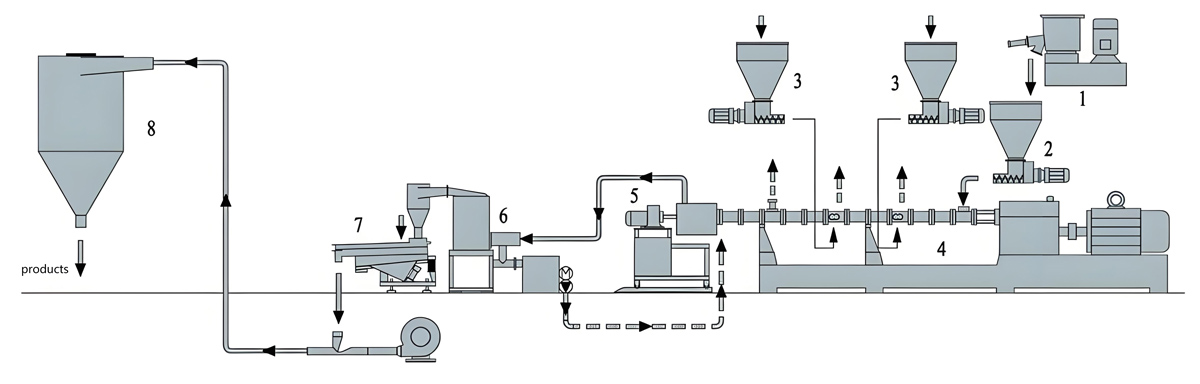
The Nanjing Kerke Extrusion Equipment Company KTE Series twin screw extruders represent leading-edge technology for lubricant masterbatch production, offering superior mixing performance, precise temperature control, and robust construction designed for continuous operation in demanding production environments. These co-rotating twin screw extruders feature L/D ratios ranging from 40:1 to 48:1, providing sufficient residence time for thorough mixing and dispersion while maintaining high throughput capabilities.
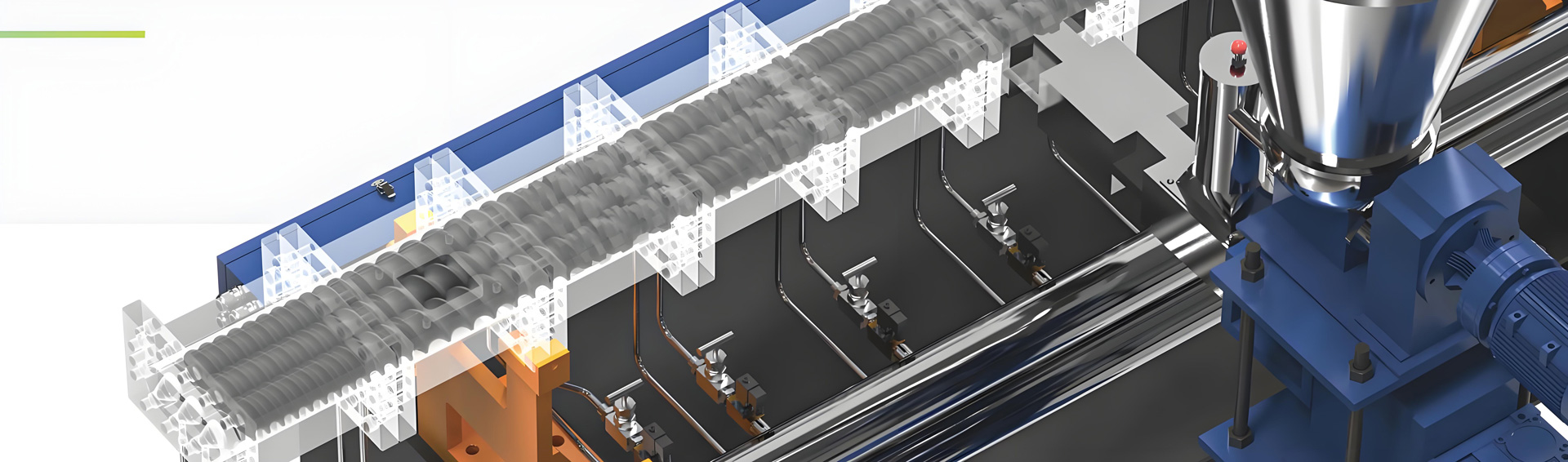
Screw design represents a critical component of twin screw extruder performance in lubricant masterbatch production. The KTE Series extruders feature modular screw configurations that can be customized for specific formulation requirements. Typical screw configurations for lubricant masterbatch production include feed zones with forward-conveying elements for reliable material intake, compression zones with gradually decreasing element pitch for melting and pressure build-up, intensive mixing zones featuring kneading blocks and dispersive elements for lubricant dispersion, and metering zones for precise pressure control and output consistency. The modular design allows for rapid reconfiguration when switching between different lubricant masterbatch formulations.
Barrel construction and temperature control systems significantly impact processing stability and product quality. The KTE Series extruders feature electrically heated barrels with multiple independent temperature zones, typically 8-12 zones depending on the barrel length, each with individual PID temperature controllers for precise regulation. Barrel cooling systems, either air or water-cooled, provide rapid response to temperature variations and prevent thermal runaway during high-shear mixing operations. Barrel materials are typically constructed from hardened tool steel or bimetallic alloys to withstand abrasive wear from lubricant components and ensure extended service life.
Feeding systems for lubricant masterbatch production must deliver precise and consistent material flow to the extruder. Gravimetric feeding systems with loss-in-weight technology are preferred for their ability to maintain accurate feed rates despite material density variations. Multi-component feeding systems may be employed to introduce different lubricant components at optimal locations along the extruder barrel. Liquid injection systems are available for liquid lubricant additions, featuring heated injection lines to prevent solidification and metering pumps for precise flow control. Side feeding capabilities allow for the introduction of temperature-sensitive lubricants downstream of initial melting zones, reducing thermal exposure and degradation risk.
Drive systems for twin screw extruders must provide consistent torque output across a range of operating conditions. The KTE Series extruders feature AC or DC drive motors with power ratings ranging from 45-200 kW depending on the extruder size and intended application requirements. Torque ratings typically range from 400-1200 Nm, providing sufficient power for intensive mixing operations required for lubricant dispersion. Variable speed drives allow for precise screw speed control from 50-600 RPM, enabling operators to optimize mixing intensity and residence time for different formulations.
Control systems for modern twin screw extruders provide comprehensive process monitoring and automation capabilities. The KTE Series extruders feature touchscreen HMI interfaces with real-time display of all process parameters including temperature profiles, screw speed, torque, pressure, and motor load. Advanced control algorithms provide automatic temperature regulation, pressure control, and process optimization functions. Data logging and recording capabilities enable detailed production tracking and quality control documentation. Remote monitoring and control features allow for supervisory oversight and quick response to process variations.
Downstream equipment for lubricant masterbatch production includes strand dies, water bath cooling systems, pelletizers, and material handling systems. Strand dies feature precision-machined holes arranged in circular or linear patterns to produce uniform strands. Water bath systems incorporate temperature control and adjustable immersion lengths for optimal cooling. Pelletizing systems are available in strand pelletizer, rotary cutter, or underwater pelletizer configurations, with selection based on production capacity and product requirements. Material handling systems include pneumatic conveying, storage silos, and packaging equipment to complete the production line.
Parameter Settings
Optimal parameter settings for twin screw extruder lubricant masterbatch production depend on multiple factors including formulation composition, equipment specifications, product quality requirements, and production throughput targets. Careful adjustment and monitoring of these parameters is essential for achieving consistent product quality and maximizing production efficiency.
Temperature profile optimization represents one of the most critical aspects of lubricant masterbatch production. The barrel temperature profile must be carefully configured to ensure complete melting of carrier resin without degrading temperature-sensitive lubricant components. For polyethylene-based lubricant masterbatch production, a typical temperature profile might include: Feed zone 160-170°C, transition zone 1 170-180°C, transition zone 2 180-190°C, mixing zone 1 190-200°C, mixing zone 2 200-210°C, metering zone 200-210°C, and die zone 210-220°C. Polypropylene-based formulations generally require higher temperatures, with feed zones typically at 180-190°C and die zones at 220-240°C. Engineering plastic carrier resins may require even higher temperatures, with some formulations requiring processing temperatures up to 280-300°C in the mixing zones.
Screw speed significantly impacts mixing intensity, residence time, and product quality. Higher screw speeds generally produce finer dispersion and better mixing but also increase shear heating and reduce residence time, which can lead to incomplete dispersion or thermal degradation. Typical screw speeds for lubricant masterbatch production range from 200-400 RPM, with lower speeds (200-250 RPM) appropriate for formulations containing highly shear-sensitive lubricants, and higher speeds (300-400 RPM) suitable for formulations requiring intensive dispersion. The optimal screw speed must balance mixing requirements with thermal considerations to achieve the desired dispersion quality without product degradation.
Feed rate and throughput must be optimized to achieve consistent product quality while maintaining production efficiency. The feed rate should be set to maintain optimal fill level in the extruder barrel, typically 60-80% of the maximum volumetric capacity. Overfeeding can cause excessive pressure and motor overload, while underfeeding reduces production efficiency and may cause poor dispersion due to insufficient material for effective mixing. Throughput rates vary significantly based on extruder size and formulation, with typical production rates for KTE Series extruders ranging from 100-500 kg/hour for lubricant masterbatch applications.
Vent zone settings are critical when processing lubricants that release volatiles or when removing entrapped air and moisture. Vent zones should be maintained at temperatures 10-20°C above the processing temperature to facilitate volatile removal. Vacuum levels in vented sections typically range from -0.8 to -0.95 bar, with the specific level adjusted based on the volatility of components being removed. Vent port design should prevent material entrainment while maximizing volatile removal efficiency. Some formulations may require atmospheric venting rather than vacuum to prevent loss of low-molecular-weight lubricants.
Die pressure and temperature settings directly impact strand formation and pellet quality. Die temperature should be maintained 5-10°C above the melt temperature to ensure smooth flow and prevent die lip buildup. Typical die pressures for lubricant masterbatch production range from 2-5 MPa, depending on formulation viscosity and throughput rate. Higher pressures may be required for formulations with high lubricant content or high viscosity carrier resins. Pressure fluctuations should be minimized to ensure consistent strand diameter and pellet uniformity.
Cooling water bath parameters significantly affect product quality and dimensional stability. Water temperature should be maintained between 40-60°C for most polyolefin-based lubricant masterbatches, with lower temperatures used for formulations containing components with high crystallinity. Bath immersion length should be adjusted to ensure complete solidification before pelletizing, typically 2-4 meters depending on line speed and formulation. Water flow rate must be sufficient to maintain consistent temperature across the entire bath and remove heat efficiently. Water quality, including hardness and chemical composition, should be monitored to prevent mineral deposits on strands that could affect pellet quality.
Pelletizer settings must be optimized for the specific formulation and equipment configuration. Rotor speed and cutting gap should be adjusted to produce uniform pellet sizes, typically 2-4mm in diameter. Cutting knife sharpness is critical for clean pellet edges and reduced fines generation. Screen hole size should match the desired pellet dimensions. Tension on pull rolls must be adjusted to maintain consistent strand speed without stretching or breaking. Underwater pelletizing systems require careful control of water temperature, circulation rate, and cutting speed to achieve consistent pellet size and shape.
Equipment Price
Investment in twin screw extruder equipment for plastic lubricant masterbatch production represents a significant capital expenditure, with costs varying substantially based on equipment specifications, capacity, automation level, and manufacturer. Understanding the cost structure and value propositions of different equipment options is essential for making informed investment decisions that align with production requirements and budget constraints.
Entry-level twin screw extruder systems for small-scale lubricant masterbatch production typically range from 50,000-80,000 USD. These systems generally feature smaller extruder sizes (25-30mm screw diameter), L/D ratios around 40:1, basic temperature control systems, volumetric feeding, and simple pelletizing equipment. While these systems offer lower initial investment, they may have limitations in terms of throughput capacity, mixing performance, and automation capabilities that could restrict production efficiency and product quality for higher-end applications.
Mid-range twin screw extruder systems, such as the Nanjing Kerke KTE Series with 35-45mm screw diameters, typically range from 90,000-150,000 USD. These systems offer enhanced capabilities including L/D ratios of 40-48:1, advanced temperature control with multiple zones, gravimetric feeding systems, more sophisticated screw configurations, and improved automation features. These systems provide better mixing performance, higher throughput capabilities (200-400 kg/hour), and improved process control, making them suitable for medium-scale production operations with quality requirements for consistent dispersion and concentration uniformity.
High-end twin screw extruder systems for large-scale lubricant masterbatch production can range from 180,000-350,000 USD or more depending on specifications and automation level. These systems typically feature larger extruder sizes (50-75mm screw diameter), L/D ratios up to 48:1, advanced process control systems, multi-zone temperature control, sophisticated feeding systems with multiple feeding points, vented barrel sections for devolatilization, and high-capacity downstream equipment. These systems provide superior mixing performance, high throughput capabilities (400-800+ kg/hour), advanced automation and data logging capabilities, and enhanced flexibility to handle a wide range of formulations and production requirements.
Additional equipment and options can significantly impact total investment costs. Gravimetric feeding systems with loss-in-weight technology typically add 15,000-30,000 USD to the system cost depending on the number of components and feeding points required. Liquid injection systems for liquid lubricant additions cost approximately 10,000-20,000 USD. Vented barrel sections with vacuum pumps add 20,000-40,000 USD. Advanced process control systems with data logging and remote monitoring capabilities may cost 15,000-25,000 USD. Downstream equipment including strand dies, water baths, and pelletizers typically cost 20,000-50,000 USD depending on capacity and configuration.
Operational costs must be considered alongside capital expenditure when evaluating total cost of ownership. Energy consumption varies based on equipment size and operating parameters, with typical power requirements ranging from 45-200 kW for mid-to-high-end systems. Labor costs can be reduced through automation features but increase with system complexity. Maintenance costs include regular replacement of wear parts such as screw elements, barrel liners, and cutting knives, with annual maintenance costs typically ranging from 2-5% of equipment value. Raw material yields and production efficiency also impact operational costs, with higher-quality equipment generally providing better yields and lower scrap rates.
Return on investment analysis should consider factors such as production capacity, product quality requirements, market demand, and competitive positioning. Higher-quality equipment may justify its higher cost through improved product quality, production efficiency, and reduced operational costs. Financing options including equipment leasing and vendor financing programs can help manage cash flow requirements. Tax incentives and depreciation schedules should also be considered in investment decisions. Used equipment options may provide cost savings but require careful evaluation of condition, remaining service life, and compatibility with current production requirements.
Production Problems and Solutions
Problem 1: Incomplete Dispersion of Lubricant Components
Problem Analysis: Incomplete dispersion of lubricant components results in uneven distribution throughout the carrier resin, leading to inconsistent product performance. This issue manifests as visible specks or streaks in the masterbatch pellets, inconsistent melt flow indices, and variable lubricating effectiveness in final applications. The root causes typically include insufficient mixing intensity, inadequate residence time, improper temperature profile, inappropriate screw configuration, or excessive throughput rates that reduce residence time below the minimum required for complete dispersion.
Causes: Low screw speed reduces shear forces needed for dispersion; screw configuration lacks adequate mixing elements; temperature profile prevents complete melting of carrier resin before mixing zones; throughput rate exceeds mixing capacity; lubricant components have poor compatibility with carrier resin; feed system introduces material surges causing inconsistent fill levels; worn mixing elements reduce shear efficiency.
Solutions: Increase screw speed within acceptable limits to enhance mixing intensity; modify screw configuration to include additional kneading blocks or dispersive mixing elements; adjust temperature profile to ensure complete melting before intensive mixing zones; reduce throughput rate to increase residence time; evaluate and potentially modify formulation to improve compatibility; implement gravimetric feeding to ensure consistent feed rates; replace worn screw elements and mixing components.
Prevention Methods: Establish and maintain standard operating procedures for each formulation; implement regular screw design reviews to optimize configuration for specific formulations; monitor and record process parameters to identify trends indicating potential dispersion issues; conduct regular quality control testing including melt flow index and dispersion analysis; schedule regular maintenance of mixing elements and screw components; implement statistical process control to detect parameter variations before they cause quality problems.
Problem 2: Thermal Degradation of Lubricant Components
Problem Analysis: Thermal degradation of lubricant components results in reduced effectiveness, color changes, odor formation, and potential contamination of final products. This issue is particularly critical for temperature-sensitive lubricants such as fatty acid amides and some waxes. Degradation typically occurs when local temperatures exceed thermal stability limits due to excessive shear heating, inadequate temperature control, or extended residence times at elevated temperatures.
Causes: Barrel temperatures set too high for formulation components; screw speed generates excessive shear heating; inadequate barrel cooling fails to remove heat from mixing zones; residence time too long due to low throughput or back pressure; worn screw elements increase friction and heat generation; temperature controllers malfunction or miscalibrated; vent zone insufficient to remove degradation volatiles.
Solutions: Reduce barrel temperatures in critical zones, particularly mixing zones; lower screw speed to reduce shear heating; verify proper operation of barrel cooling systems; increase throughput rate to reduce residence time; replace worn screw elements and barrel sections; calibrate or replace malfunctioning temperature controllers; optimize vent zone operation to remove degradation products; consider side feeding of temperature-sensitive lubricants downstream of initial heating zones.
Prevention Methods: Implement strict temperature limits based on thermal stability data for each formulation component; install additional temperature sensors in critical zones to monitor hot spots; establish maximum residence time limits for each formulation; implement interlock systems to prevent operation when temperature limits are exceeded; conduct regular thermal analysis of product samples to detect early signs of degradation; train operators on recognizing signs of thermal degradation; develop and implement temperature-sensitive formulations with improved thermal stability when possible.
Problem 3: Die Lip Buildup and Strand Instability
Problem Analysis: Die lip buildup occurs when lubricant components migrate to the die surface and accumulate, causing strand diameter variations, surface roughness, and eventual die blockage. This issue results from excessive lubricant content, low molecular weight lubricants with high mobility, inappropriate die temperature, or inadequate mixing that allows lubricant-rich regions to reach the die. Strand instability manifests as diameter variations, waving, or breakage, affecting pellet quality and production efficiency.
Causes: Lubricant content exceeds solubility limits in carrier resin; die temperature too low causing increased viscosity and lubricant migration; excessive back pressure forces low-viscosity lubricants to die walls; inadequate mixing creates lubricant-rich regions; formulation contains low molecular weight lubricants with high mobility; die design inappropriate for formulation rheology; insufficient cooling in pelletizing section causes strand softening.
Solutions: Reduce lubricant content within acceptable limits or change to higher molecular weight lubricants; increase die temperature to reduce viscosity and improve flow; reduce back pressure through die design or processing adjustments; optimize screw configuration to improve mixing uniformity; modify formulation to include polymeric lubricants or carriers with better compatibility; clean die regularly to prevent excessive buildup; implement pulsed air or mechanical cleaning systems for die lips.
Prevention Methods: Establish maximum lubricant content limits based on compatibility testing; implement regular die inspection and cleaning schedules; monitor strand diameter continuously to detect early signs of problems; develop formulations with lubricant systems specifically designed for masterbatch applications; use internal screw designs that prevent lubricant-rich regions from reaching the die; install die face temperature control systems; implement backup dies to allow quick changeover when cleaning is required.
Problem 4: Inconsistent Pellet Size and Shape
Problem Analysis: Inconsistent pellet size and shape results in dosing difficulties, reduced bulk density, and handling problems in downstream processing. This issue manifests as variable pellet dimensions, excessive fines, elongated or deformed pellets, and inconsistent bulk density. Root causes typically include pelletizer malfunction, improper strand cooling, inconsistent strand diameter, or improper pelletizer settings relative to strand characteristics.
Causes: Worn or damaged pelletizer cutting knives produce irregular cuts; improper knife gap or alignment causes uneven cutting; inconsistent strand diameter from die lip buildup or pressure fluctuations; inadequate strand cooling causes soft pellets that deform; water bath temperature too high or too low; pelletizer speed mismatched to strand speed; worn pull rolls cause strand speed variations; screen hole size inappropriate for strand characteristics.
Solutions: Replace or sharpen pelletizer cutting knives regularly; adjust knife gap and alignment according to manufacturer specifications; resolve die lip buildup and pressure fluctuations; adjust water bath temperature and immersion length for proper cooling; synchronize pelletizer speed with strand speed; replace worn pull rolls and bearings; select appropriate screen hole size for formulation and pellet size requirements; implement tension control on strand pull system.
Prevention Methods: Implement regular maintenance schedules for pelletizer components; install automatic knife adjustment systems; monitor strand diameter continuously with feedback control to pelletizer; implement temperature control on water bath with alarms for deviations; train operators on proper pelletizer adjustment procedures; establish quality control procedures for pellet size distribution; maintain backup pelletizer components for quick replacement; implement statistical process control on pellet dimensions to detect trends before they cause quality problems.
Problem 5: Moisture-Related Quality Issues
Problem Analysis: Moisture in lubricant masterbatch production causes multiple quality issues including surface defects, hydrolytic degradation, poor dispersion, and reduced mechanical properties in final products. Moisture can enter through raw materials, atmospheric exposure during processing, or inadequate drying of components. The effects include splay marks, bubbles, voids, and degraded lubricant performance.
Causes: Raw materials not properly dried before processing; hygroscopic lubricants absorb moisture during storage; atmospheric conditions introduce moisture during processing; condensation in hoppers and feed systems; vent zone operation inadequate to remove moisture; water bath cooling introduces surface moisture; storage of finished pellets in humid conditions without protection.
Solutions: Implement proper drying procedures for all hygroscopic materials; use desiccant dryers with dew point monitoring; install hopper dryers and material handling systems with moisture protection; maintain positive air pressure in hoppers and feed systems; optimize vent zone operation with vacuum to remove moisture; implement surface drying of pellets after water bath cooling; store finished pellets in moisture-proof packaging with desiccant when necessary.
Prevention Methods: Establish and implement strict material drying specifications; install moisture sensors in material handling systems; maintain controlled humidity environments in production areas; implement regular moisture testing of raw materials and finished products; use nitrogen purging in hoppers and feed systems for moisture-sensitive formulations; train operators on moisture control procedures; implement preventive maintenance schedules for drying equipment; develop and implement moisture-resistant formulations when possible.
Maintenance and Care
Proper maintenance and care of twin screw extruder equipment is essential for ensuring consistent product quality, maximizing production efficiency, and extending equipment service life. A comprehensive maintenance program should address daily operational checks, routine preventive maintenance tasks, periodic component replacement, and detailed record-keeping to track equipment condition and maintenance history.
Daily maintenance procedures should be performed at the beginning of each production shift to identify potential issues before they cause production problems. These procedures include visual inspection of the extruder system for obvious damage or leaks, checking all safety interlocks and emergency stop functionality, verifying proper operation of temperature control systems and ensuring all zones reach target temperatures within normal timeframes, inspecting feeding systems for proper operation and material flow, checking drive system for unusual noises or vibrations, and verifying proper operation of all cooling systems including barrel cooling and water bath circulation.
Weekly maintenance tasks should address components that require regular attention but do not need daily verification. These tasks include cleaning die faces and checking for die lip accumulation, inspecting and cleaning vent ports to ensure proper volatile removal, checking and tightening all electrical connections and terminal blocks, lubricating all bearings and moving parts according to manufacturer specifications, inspecting and cleaning pelletizer cutting knives and screens, checking water bath for proper water level and cleanliness, and verifying proper operation of all sensors and indicating instruments.
Monthly maintenance procedures should address components that require periodic attention to maintain optimal performance. These tasks include detailed inspection of screw elements for wear or damage, checking barrel internal surfaces for wear patterns or damage, inspecting and testing all safety devices and emergency systems, calibrating temperature sensors and controllers against known standards, testing motor and drive performance including current draw and torque output, inspecting and cleaning all material contact surfaces including hoppers and feed throats, and testing backup systems and redundant controls to ensure proper operation when needed.
Quarterly maintenance should include more comprehensive inspections and replacements as needed. These tasks include complete disassembly and inspection of screw configuration, replacement of worn screw elements and barrel sections as indicated by wear measurements, comprehensive inspection of gear drive system including gear wear and oil analysis, detailed inspection of electrical systems including testing of all motor controls and safety circuits, calibration of all process instruments and sensors, inspection of structural components including support frames and foundation connections, and thorough cleaning of all internal surfaces that contact product materials.
Annual maintenance represents the most comprehensive maintenance activities and should address complete system overhauls as needed. These tasks include complete disassembly of the extruder screw and barrel for detailed inspection, replacement of all worn components based on condition assessment, complete overhaul of gear drive system including bearing replacement and oil changes, comprehensive electrical system inspection and testing of all components, calibration and testing of all instrumentation and control systems, structural inspection of all equipment supports and foundations, and detailed review of maintenance records to identify trends or recurring issues that may require design modifications or process changes.
Screw and barrel wear monitoring represents a critical maintenance activity that directly impacts product quality and mixing performance. Regular measurements of screw element dimensions, barrel bore diameter, and flight clearances should be recorded and tracked over time to identify wear trends and plan component replacement before wear affects product quality. Key wear indicators include increased screw-to-barrel clearances, reduced flight heights, and changes in surface finish that affect material flow and mixing efficiency. Establishing replacement criteria based on wear measurements ensures proactive component replacement rather than reactive repair after quality problems occur.
Maintenance record-keeping provides valuable information for predicting future maintenance needs and identifying recurring problems. Records should include dates of all maintenance activities, components replaced, measurements taken during inspections, calibration results, and any operational problems experienced. Analysis of these records over time can reveal patterns indicating design issues, inadequate maintenance intervals, or operating conditions that accelerate component wear. This information supports continuous improvement of maintenance programs and operational procedures to maximize equipment reliability and minimize total cost of ownership.
FAQ
What is the optimal L/D ratio for twin screw extruders in lubricant masterbatch production?
The optimal L/D ratio depends on formulation complexity and dispersion requirements, but generally ranges from 40:1 to 48:1 for most lubricant masterbatch applications. Longer L/D ratios provide increased residence time for better mixing and dispersion, particularly important for formulations with multiple components or challenging dispersion requirements. However, longer barrels also increase equipment cost, energy consumption, and potential thermal degradation of sensitive components. The specific L/D ratio should be selected based on formulation characteristics, production throughput requirements, and quality specifications for dispersion uniformity.
How do I select the appropriate screw configuration for my lubricant masterbatch formulation?
Screw configuration selection should consider formulation components, dispersion requirements, and thermal sensitivity of lubricants. Generally, configurations include feed zones with forward-conveying elements for reliable material intake, compression zones for melting and pressure build-up, intensive mixing zones with kneading blocks for dispersion, and metering zones for output control. Formulations with high lubricant content or poor compatibility require more intensive mixing sections. Temperature-sensitive lubricants may benefit from side feeding downstream of initial heating zones. Modular screw designs allow configuration optimization for specific formulations and easy reconfiguration when changing product types.
What are the common causes of color variations in lubricant masterbatch production?
Color variations in lubricant masterbatch production can result from multiple factors including thermal degradation of lubricants or carrier resins, incomplete dispersion of colorants or lubricants, contamination from previous production runs, variations in raw material quality, inconsistent temperature profiles, or inadequate cleaning between production runs. Prevention requires proper temperature control, adequate mixing intensity, thorough cleaning procedures, raw material quality control, and consistent operating parameters. Implementing color measurement systems can detect variations early, and statistical process control helps identify parameter trends before they cause color problems.
How often should screw elements and barrel sections be replaced?
Replacement intervals for screw elements and barrel sections depend on operating conditions, formulation abrasiveness, and wear tolerance. Generally, screw elements may require replacement every 2-4 years in continuous operation, while barrel sections typically last 5-8 years or longer. However, actual replacement should be based on wear measurements rather than fixed time intervals. Regular measurement of screw-to-barrel clearances, flight heights, and surface finish provides objective data for replacement decisions. Premature replacement increases maintenance costs, while delayed replacement affects product quality and mixing performance.
What factors should I consider when selecting between strand pelletizing and underwater pelletizing?
Strand pelletizing is typically more economical and suitable for most lubricant masterbatch formulations, but requires careful water bath temperature control and can produce dust and fines. Underwater pelletizing provides excellent pellet quality with minimal fines and no dust generation, but requires significantly higher investment and more complex operation. Selection should consider production volume, product quality requirements, capital budget, operational complexity, and formulation characteristics. Underwater pelletizing may be preferred for high-volume production or formulations with strict dust requirements, while strand pelletizing is suitable for lower volumes or when investment cost is a primary consideration.
How can I optimize energy consumption in lubricant masterbatch production?
Energy optimization in lubricant masterbatch production involves multiple strategies including optimizing temperature profiles to minimum acceptable levels, using proper screw speed to balance mixing energy with thermal considerations, implementing variable frequency drives on motors, maintaining equipment in good condition to minimize friction losses, using energy-efficient barrel heating and cooling systems, and optimizing process parameters to maximize throughput per energy unit. Regular energy monitoring and analysis can identify inefficiencies, and process optimization through design of experiments can identify optimal parameter combinations that minimize energy consumption while maintaining product quality.
What safety considerations are important when operating twin screw extruders for lubricant masterbatch production?
Safety considerations include proper guarding of all rotating components including screws, drive systems, and pelletizers, installation of emergency stop systems accessible from all operator positions, proper electrical grounding and lockout-tagout procedures for maintenance, adequate ventilation for removal of any volatiles or decomposition products, temperature monitoring and alarms for hot surfaces, proper handling of hot materials and equipment, and appropriate personal protective equipment including heat-resistant gloves and eye protection. Training operators on all safety procedures and maintaining comprehensive safety documentation is essential for safe operation.
How do I troubleshoot inconsistent melt flow index in lubricant masterbatch production?
Inconsistent melt flow index typically indicates variations in dispersion quality, lubricant content, or degradation levels. Troubleshooting should start with verifying raw material consistency and formulation ratios, then checking process parameters including temperature profile, screw speed, and feed rate. Equipment factors such as worn mixing elements, inconsistent feeding, or variable die pressure should be investigated. Laboratory analysis including dispersion testing and thermal analysis can identify the root cause. Statistical process control of process parameters and quality measurements helps identify trends and correlations that point to specific causes.
Conclusion
Successful production of plastic lubricant masterbatch using twin screw extruders requires comprehensive understanding of formulation science, equipment technology, process optimization, and quality management. The complex interactions between lubricant chemistry, carrier resin properties, mixing dynamics, and thermal management create a challenging production environment that demands careful attention to multiple variables to achieve consistent, high-quality results.
The selection of appropriate twin screw extruder equipment, such as the Nanjing Kerke KTE Series with its modular design and advanced control capabilities, provides the foundation for successful production. However, equipment selection alone is insufficient without proper formulation optimization, process parameter development, and maintenance programs tailored to specific production requirements. The most successful operations integrate equipment capabilities with formulation science to achieve optimal dispersion quality while protecting temperature-sensitive lubricant components from degradation.
Quality in lubricant masterbatch production extends beyond simple concentration accuracy to include dispersion uniformity, thermal stability, and consistency across production batches. Achieving these quality requirements demands rigorous process control, comprehensive quality testing, and systematic troubleshooting approaches. The most effective quality management systems combine real-time process monitoring with offline testing to detect and correct issues before they impact customers.
Looking forward, the lubricant masterbatch industry continues to evolve with new lubricant chemistries, enhanced performance requirements, and increasing demand for environmentally sustainable formulations. Successful producers will continue to invest in advanced twin screw extruder technology, process optimization capabilities, and continuous improvement programs to maintain competitive advantage in this dynamic market. The fundamental principles of mixing science, thermal management, and quality control will remain essential, but their application will evolve with new technologies and market requirements.
By understanding and implementing the principles outlined in this guide, producers can optimize their twin screw extruder operations for lubricant masterbatch production, achieve consistent product quality, maximize production efficiency, and position themselves for success in an increasingly competitive market environment. The combination of appropriate equipment selection, formulation optimization, process control, and comprehensive maintenance creates the foundation for sustainable success in plastic lubricant masterbatch production.