Introduction
Titanium dioxide masterbatch serves as a critical white pigment concentrate across diverse industries including packaging, automotive components, construction materials, and consumer goods. The exceptional whiteness, opacity, and UV resistance properties of titanium dioxide make it indispensable for applications requiring bright white coloring or light diffusion. Manufacturing titanium dioxide masterbatch demands specialized processing equipment and precise process control to achieve optimal dispersion, which directly impacts final product quality, color consistency, and performance characteristics. Twin screw extruders have established themselves as the preferred technology for titanium dioxide masterbatch production due to their superior distributive and dispersive mixing capabilities, efficient heat transfer, and ability to handle high viscosity materials with substantial filler loading.
The global titanium dioxide market continues experiencing robust growth across multiple sectors, driven by increasing demand for white plastics and materials with superior opacity and brightness. Manufacturers must balance multiple competing factors: achieving consistent whiteness and opacity, maintaining excellent titanium dioxide dispersion quality, ensuring processing stability across different polymer matrices, and optimizing production costs while meeting exacting quality standards. Understanding the complex relationships between titanium dioxide particle characteristics, carrier polymer selection, dispersing agent chemistry, and extrusion process parameters becomes essential for producing high-quality masterbatch that satisfies diverse application requirements. This comprehensive guide provides detailed insights covering every aspect of titanium dioxide masterbatch manufacturing using twin screw extruders, from formulation strategies and production processes to equipment selection, parameter optimization, and resolution of common production challenges.
Formulation Ratios for Titanium Dioxide Masterbatch
High Loading Titanium Dioxide Masterbatch
High loading titanium dioxide masterbatch formulations typically contain between 50% to 75% titanium dioxide by weight, depending on target opacity requirements and base polymer compatibility. These formulations are commonly used when maximum whiteness and opacity are required in final applications. For polyolefin-based systems, a typical high loading formulation includes 60% to 70% titanium dioxide (Rutile grade preferred for higher opacity), 28% to 38% carrier resin (LLDPE, LDPE, or PP), 2% to 4% dispersing agents, and 0.5% to 1% processing aids. The extremely high titanium dioxide content presents significant processing challenges requiring careful selection of carrier resin with appropriate melt flow characteristics and excellent wetting properties for the pigment particles.
When formulating high loading titanium dioxide masterbatch, the choice between Rutile and Anatase grades significantly impacts performance and processing characteristics. Rutile titanium dioxide provides higher refractive index and opacity per unit weight but presents greater dispersion challenges due to particle characteristics. Anatase grades offer easier processing and lower viscosity but require higher loading to achieve comparable opacity. At these extremely high filler loadings, dispersing agent selection becomes critical, typically requiring combination of stearic acid-based dispersants with specialized polymeric dispersants designed for high surface area pigments. Processing aids such as zinc stearate or calcium stearate (0.5% to 1%) help reduce melt viscosity and improve flow characteristics during extrusion, though their effectiveness diminishes as filler loading increases beyond 70%.
Medium Loading Titanium Dioxide Masterbatch
Medium loading titanium dioxide masterbatch formulations generally contain 30% to 50% titanium dioxide, offering versatility across numerous applications while maintaining more manageable processing characteristics. These formulations are popular for general-purpose coloring applications where high opacity is still required but processing constraints limit the use of extremely high loadings. A typical polyolefin-based medium loading formulation comprises 40% titanium dioxide (Rutile grade), 56% to 58% carrier resin, 2% to 3% dispersing agents, and 0.5% to 1% processing aids. The moderate titanium dioxide content allows for greater flexibility in carrier resin selection and simplifies processing while still providing excellent opacity and whiteness for most applications.
The medium loading range enables manufacturers to achieve an optimal balance between performance requirements and processing practicality. For engineering plastic applications requiring high-temperature processing, the carrier resin may include heat-stabilized polyolefins or specialized engineering plastics compatible with titanium dioxide pigments. The dispersing package can be optimized compared to high loading formulations, often using single-component dispersants such as zinc stearate, titanium-based coupling agents, or maleic anhydride grafted polyolefins. Processing temperatures can be maintained in normal ranges due to moderate viscosity increases, potentially improving energy efficiency compared to high loading formulations while still delivering adequate opacity for most applications.
Special Purpose Titanium Dioxide Masterbatch
Special purpose titanium dioxide masterbatch formulations are tailored for specific applications requiring unique performance characteristics. These include ultraviolet-resistant masterbatches using surface-treated titanium dioxide grades for enhanced UV stability, optical brightener-enhanced formulations combining titanium dioxide with optical brighteners for improved whiteness perception, and food-grade titanium dioxide masterbatches using FDA-compliant ingredients for food contact applications. UV-resistant formulations often incorporate surface-treated titanium dioxide grades with enhanced UV absorption capabilities and additional UV stabilizers, requiring careful consideration of additive compatibility and thermal stability during processing.
For food-grade titanium dioxide masterbatch, all ingredients must meet FDA or relevant food safety regulations for intended applications. Typical formulations include 30% to 50% food-grade titanium dioxide, FDA-compliant carrier resins (such as FDA-grade LDPE, PP, or specialty food-contact polymers), and food-grade dispersants. The processing parameters must be carefully controlled to prevent contamination and ensure consistent quality while maintaining strict hygiene standards throughout the production process. Optical brightener-enhanced formulations combine titanium dioxide with specific optical brighteners to enhance whiteness perception in applications where bright white appearance is particularly important, requiring careful balance between pigment and brightener concentrations.
Production Process for Titanium Dioxide Masterbatch
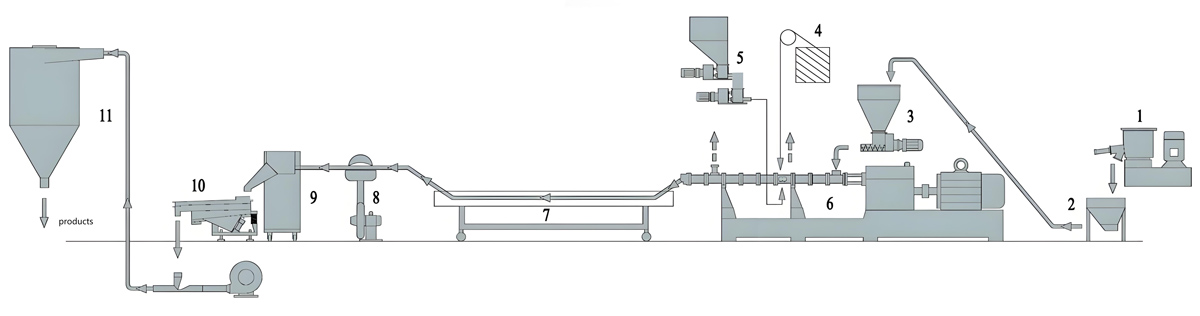
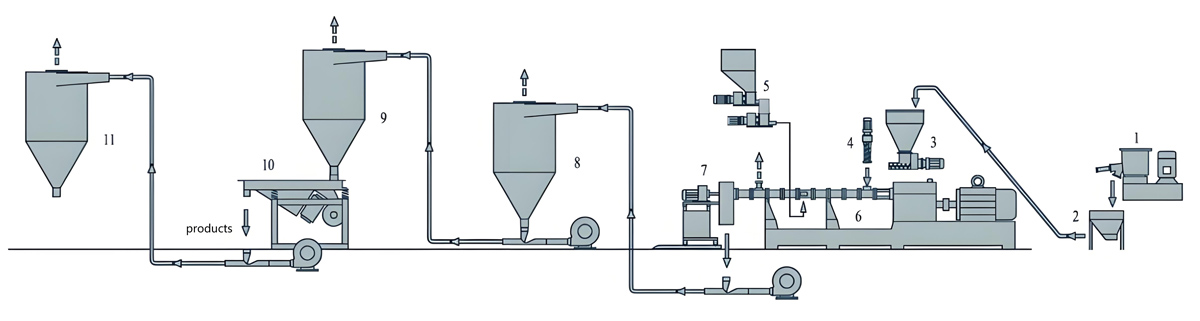
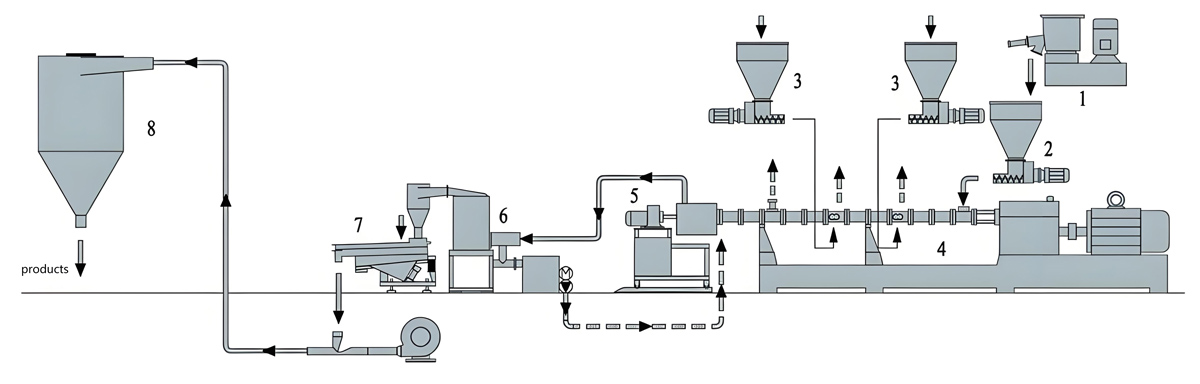
Titanium dioxide masterbatch production begins with meticulous raw material preparation and precise weighing of all formulation components. The titanium dioxide pigment should be dried if necessary to remove adsorbed moisture that could cause processing defects and affect dispersion quality. Carrier resin pellets typically require drying depending on their hygroscopic properties, particularly for polyamide-based carriers. Dispersing agents and processing aids are weighed according to formulation specifications using precision scales, as even small deviations can affect final product quality and color consistency. All components must be accurately weighed and documented for traceability and quality control purposes.
The feeding system for titanium dioxide masterbatch production requires special consideration due to the fine particle size, high bulk density, and challenging flow characteristics of titanium dioxide powders. Gravimetric feeding systems are strongly preferred over volumetric feeders to ensure accurate dosing and consistent product quality given the high value and critical performance importance of titanium dioxide. Titanium dioxide is typically introduced through dedicated feed ports with appropriate flow aids and vibration mechanisms to ensure consistent powder flow. The carrier resin and liquid additives are fed through the main hopper or separate side feeders, depending on the extruder design and process requirements for optimal processing.
Melting and mixing constitute critical stages in titanium dioxide masterbatch production, particularly given the high filler loading requirements for achieving opacity objectives. The twin screw extruder’s design provides intensive distributive and dispersive mixing, essential for achieving uniform titanium dioxide dispersion, which is critical for color consistency and performance. The initial melt zone must generate sufficient shear to wet the titanium dioxide particles and initiate dispersion. As the material progresses through the barrel, mixing elements work to break down pigment agglomerates and distribute them evenly throughout the polymer matrix. The screw configuration typically includes conveying elements in feeding zones, followed by mixing elements (kneading blocks, blister rings, or other mixing devices) in dispersion zones, and conveying elements in venting zones if vacuum degassing is employed.
Temperature profiling along the extruder barrel is carefully controlled to optimize melting and dispersion while preventing thermal degradation of titanium dioxide or polymer carrier. Typical temperature profiles for polyolefin-based titanium dioxide masterbatch range from 180°C to 220°C, with the highest temperatures in the melting zones to facilitate polymer melting and titanium dioxide wetting, followed by slightly lower temperatures in subsequent zones to optimize viscosity for mixing. Screw speed is adjusted based on viscosity characteristics and desired mixing intensity. Higher screw speeds generally improve dispersion quality through increased shear rates but may reduce residence time and increase thermal generation, requiring careful balance given the thermal conductivity of titanium dioxide-loaded materials.
After achieving complete mixing and dispersion, the melt proceeds to the die and pelletizing system. Titanium dioxide masterbatch typically uses strand pelletizing with water cooling, though underwater pelletizing can also be employed for specific formulations and requirements. The die design must ensure uniform flow and maintain sufficient melt pressure for adequate dispersion quality. Strand diameter is controlled based on pellet size requirements, and water bath temperature is optimized to achieve rapid solidification without causing thermal shock or pellet deformation. The pelletizing system must be designed to handle the abrasive nature of titanium dioxide-loaded materials, requiring wear-resistant components and regular maintenance schedules.
Quality control sampling occurs throughout the production process to monitor critical parameters such as titanium dioxide dispersion quality, whiteness and opacity measurements, and mechanical properties if relevant to the application. Samples are typically taken from the pellet stream and tested for dispersion rating using microscopy techniques, whiteness index and opacity via spectrophotometry, and basic mechanical properties if required. Process adjustments are made based on these test results to maintain product within specification limits. Final products are packaged in moisture-resistant bags or bulk containers with proper labeling and identification to ensure traceability and quality assurance throughout the supply chain.
Production Equipment Introduction
Kerke KTE Series Twin Screw Extruder
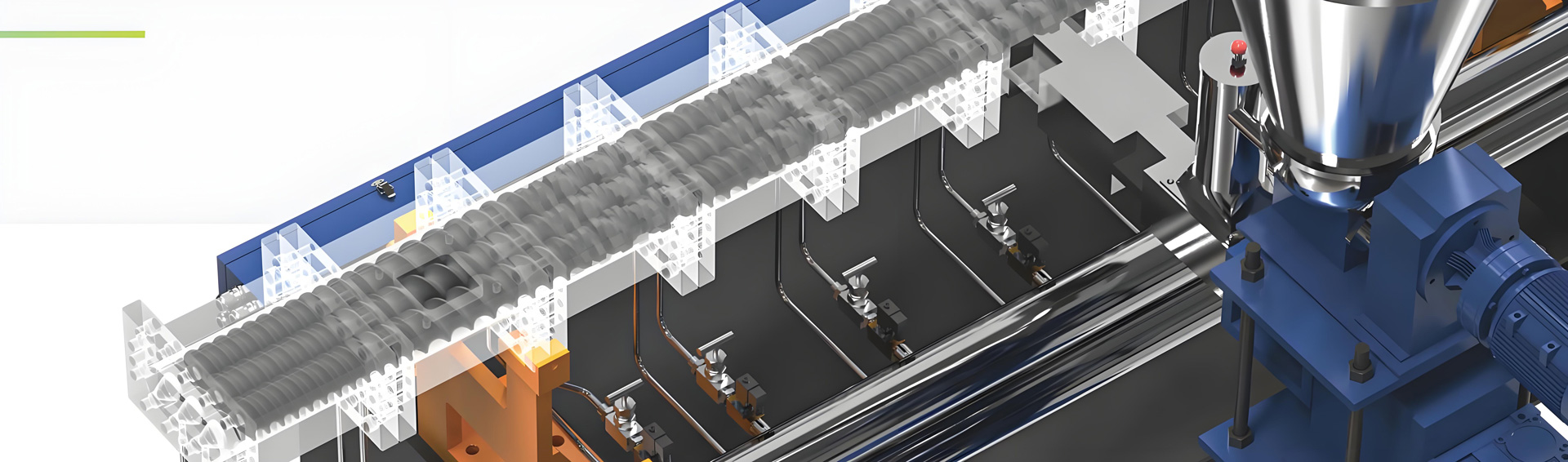
The Kerke KTE Series twin screw extruder represents advanced engineering specifically designed for demanding masterbatch applications, including titanium dioxide masterbatch production with high filler loading requirements. These co-rotating twin screw extruders offer superior mixing capabilities, excellent temperature control, and robust construction capable of handling high viscosity materials with substantial abrasive filler content. The modular screw design allows customization for specific application requirements, while the high-torque gearbox provides reliable power transmission under demanding processing conditions typical of high-loading titanium dioxide masterbatch production.
KTE Series extruders feature advanced barrel heating and cooling systems with multiple independent zones, enabling precise temperature profile control essential for titanium dioxide masterbatch production where viscosity management is critical. The screw and barrel materials are manufactured from wear-resistant alloys to withstand the abrasive nature of titanium dioxide, ensuring long service life and maintaining processing consistency. The control system incorporates PLC-based automation with touchscreen interface, offering intuitive operation and precise parameter control across the production process. The extruder design accommodates various feeding configurations, including main hopper feeding, side feeding, and liquid injection ports, providing flexibility for different formulation requirements and processing strategies.
Feeding System
Accurate feeding is critical for titanium dioxide masterbatch production due to the high value and critical quality importance of titanium dioxide pigments. Gravimetric feeding systems are essential for consistent product quality, providing real-time weight monitoring and automatic adjustment to maintain precise dosing accuracy. Titanium dioxide feeders typically employ loss-in-weight or weigh-belt designs specifically engineered for fine powders with challenging flow characteristics. Specialized screw designs, vibration-assisted feeding mechanisms, and flow aids help overcome flow issues common with titanium dioxide powders, particularly at high loading levels where consistent feeding becomes challenging.
The carrier resin feeding system typically includes gravimetric weigh feeders for pelletized materials or volumetric feeders for free-flowing pellets depending on formulation complexity and quality requirements. Liquid additive feeding systems with metering pumps allow precise introduction of liquid dispersing agents or processing aids. Some installations include pre-mixing systems where titanium dioxide is blended with a portion of carrier resin or processing aids before feeding into the extruder, improving feeding consistency and reducing flow-related issues. All feeding components must be constructed from materials resistant to abrasion and corrosion to withstand the demanding processing environment of titanium dioxide-based formulations.
Pelletizing System
Strand pelletizing systems are commonly used for titanium dioxide masterbatch due to their versatility and ability to handle high filler loading with good process stability. The system includes a multi-hole die, water bath with temperature control, strand guide, strand cutter, and pellet classification equipment. Die materials must be wear-resistant to withstand the abrasive titanium dioxide-loaded melt. Water bath temperature is precisely controlled to achieve rapid solidification while preventing thermal stress that could affect pellet quality or cause surface defects. Strand cutters utilize high-speed rotating knives or stationary cutters, depending on pellet size requirements and production capacity, with appropriate wear-resistant materials for cutting components.
Underwater pelletizing systems offer advantages for some titanium dioxide masterbatch applications, producing spherical pellets with excellent flow characteristics and reduced dust generation. These systems cut the extruded melt directly into a water bath with cutting knives mounted on a rotating head. The system includes water circulation, filtration, and drying components. While more complex and expensive than strand pelletizing, underwater systems can improve pellet quality and reduce dust-related issues for high-loading formulations where powder handling becomes problematic. The selection between strand and underwater pelletizing depends on specific application requirements, production volume, and budget considerations.
Auxiliary Equipment
Auxiliary equipment essential for titanium dioxide masterbatch production includes material handling systems, drying equipment, and quality control instrumentation. Bulk handling systems for titanium dioxide typically include silos with dust collection systems to handle the fine powder safely and efficiently while maintaining consistent flow characteristics. Pneumatic conveying systems transfer titanium dioxide to feeding stations while minimizing dust generation and maintaining material integrity. Dryers for carrier resins or finished masterbatch may be required depending on material hygroscopicity and storage conditions. Dehumidifying dryers provide consistent drying performance for moisture-sensitive polymers commonly used as carriers in titanium dioxide masterbatch formulations.
Quality control equipment includes spectrophotometers for whiteness and opacity measurement, microscopes for dispersion analysis, and melt flow index testers for processability assessment. Inline monitoring systems such as pressure transducers, temperature sensors, and melt pumps provide real-time process feedback for control and optimization. Cooling systems for the extruder barrel and pelletizing equipment ensure stable operation under continuous production conditions, particularly important given the high thermal conductivity of titanium dioxide-loaded materials. Dust collection and filtration systems maintain clean operating environments and protect operator health from titanium dioxide dust exposure.
Parameter Settings
Temperature Profile
Optimizing temperature profile is essential for achieving proper melting, dispersion, and quality in titanium dioxide masterbatch production, particularly given the high thermal conductivity of titanium dioxide particles. For typical polyolefin-based formulations with medium titanium dioxide loading (40-50%), the recommended temperature profile ranges from 190°C to 220°C across the barrel zones. The feed zone (zones 1-2) typically operates at 170°C-190°C to ensure gradual melting and prevent thermal shock to the titanium dioxide particles. The melting and dispersion zones (zones 3-5) should maintain temperatures between 200°C-220°C to ensure complete polymer melting and reduce viscosity for improved mixing. Downstream zones (zones 6-7) can operate at slightly lower temperatures (190°C-200°C) to optimize viscosity while preventing thermal degradation of sensitive carrier polymers.
For high loading formulations (60-70% titanium dioxide), temperatures may need adjustment to account for increased thermal conductivity and heat distribution within the melt. Temperature uniformity across the melt becomes more critical with higher filler loading, potentially requiring adjustment of heating and cooling balance across barrel zones. While overall temperatures may not need significant increase, the distribution of heating and cooling may require optimization to ensure uniform temperature throughout the melt cross-section. Special attention to die temperature control becomes important to prevent freeze-off or excessive die lip build-up common with high-loading titanium dioxide formulations.
Screw Speed
Screw speed directly affects mixing intensity, residence time, and thermal generation during titanium dioxide masterbatch production. Typical screw speeds for titanium dioxide masterbatch manufacturing range from 200 to 400 rpm, depending on extruder size, formulation characteristics, and desired throughput. Higher screw speeds generally improve dispersive mixing through increased shear rates, which is particularly beneficial for breaking down titanium dioxide agglomerates and achieving uniform dispersion given the tendency of titanium dioxide particles to form strong agglomerates. However, higher speeds also reduce residence time and increase thermal generation, requiring careful balance given the thermal conductivity and potential for viscous dissipation in titanium dioxide-loaded materials.
The optimal screw speed balances dispersion quality with processing stability and energy efficiency for titanium dioxide masterbatch formulations. For high loading formulations, medium speeds (250-350 rpm) may be preferred to provide adequate residence time for dispersion while managing the increased viscosity and heat transfer characteristics. Medium loading formulations can often process at higher speeds (300-400 rpm) to maximize throughput while still achieving adequate dispersion quality. Screw speed adjustments should be made gradually while monitoring key quality indicators such as dispersion rating, whiteness consistency, and melt pressure to ensure product quality is maintained throughout optimization process.
Feeding Rates
Feeding rates are precisely controlled to maintain consistent formulation ratios and achieve target throughput for titanium dioxide masterbatch production. For typical 40-50% titanium dioxide formulations, overall throughput rates range from 200 to 800 kg/h depending on extruder size and screw configuration. The titanium dioxide feed rate is calculated based on target titanium dioxide content and overall throughput, while carrier resin and additive feed rates are adjusted accordingly. Gravimetric feeding systems continuously monitor and adjust individual component feed rates to maintain precise formulation ratios despite material flow variations, which is critical given the high value and quality importance of titanium dioxide.
When establishing feeding parameters for new titanium dioxide masterbatch formulations, it is advisable to start at lower throughput rates to verify process stability and product quality before gradually increasing to target rates. The titanium dioxide feed rate must be carefully controlled to prevent overloading the mixing capacity of the extruder, which can lead to poor dispersion quality and increased equipment wear. Side feeding of titanium dioxide, if available, allows optimization of the feeding point to maximize dispersion efficiency while managing viscosity challenges in the initial melt zones. The abrasive nature of titanium dioxide requires regular monitoring and maintenance of feeder components to ensure consistent performance.
Vacuum Venting
Vacuum venting is employed in titanium dioxide masterbatch production to remove volatile components, moisture, and entrapped air from the melt, which is particularly important given the high filler loading and potential for air entrapment. Venting ports are typically located in barrel zones after the primary mixing sections where most dispersion has occurred. Vacuum levels of 20 to 30 inches of mercury (approximate 50 to 75 kPa absolute pressure) are commonly applied. The vent zone temperature is maintained slightly below the melt temperature to prevent melt strand formation while ensuring efficient volatile removal, which is critical for preventing surface defects in final pellets.
Effective vacuum venting helps eliminate steam generation from residual moisture in titanium dioxide or carrier resin, prevents air entrapment which can cause defects in final products, and removes volatile degradation products that could affect quality. Vented material must be properly handled to prevent atmospheric contamination and protect vacuum pumps from titanium dioxide dust infiltration, which can cause significant pump damage. Regular maintenance of vent port seals and vacuum system components is essential to maintain consistent venting performance throughout production runs and prevent vacuum leaks that could affect product quality.
Equipment Price
KTE Series Twin Screw Extruder Pricing
Kerke KTE Series twin screw extruders for titanium dioxide masterbatch production are available in various sizes and configurations to accommodate different production requirements. Smaller laboratory-scale models with 20mm to 30mm screw diameter typically range from $30,000 to $60,000, suitable for research and development or small-scale production. Pilot-scale extruders with 40mm to 60mm screw diameter and moderate capacity are priced between $70,000 and $140,000, offering good throughput for medium-sized operations. Production-scale models with 70mm to 100mm screw diameter, capable of handling substantial throughput for commercial production, range from $160,000 to $320,000 depending on configuration and included features.
The final pricing depends on multiple factors including screw diameter, length-to-diameter ratio, drive system capacity, control system sophistication, and included accessories. Custom configurations such as multiple feeding ports, specialized barrel heating systems for improved temperature uniformity, or advanced control features increase costs accordingly. Prices typically include basic installation support and training, though additional fees may apply for extended service contracts or customized training programs. Manufacturers often provide package pricing for complete production lines including extruder, feeding system, pelletizing equipment, and auxiliary components.
Feeding System Costs
Gravimetric feeding systems for titanium dioxide masterbatch production represent a significant investment but are essential for consistent product quality given the high value and quality importance of titanium dioxide. Individual loss-in-weight feeders for titanium dioxide range from $10,000 to $25,000 depending on capacity and special features required for handling fine powders with challenging flow characteristics. Carrier resin feeders typically cost between $6,000 and $15,000. Complete feeding system packages including multiple feeders, control integration, and installation can range from $30,000 to $70,000 for typical production setups. Advanced systems with online monitoring, recipe management, and integration with plant DCS systems command premium pricing.
Alternative volumetric feeders represent lower initial investment options, typically ranging from $3,000 to $10,000 per feeder, but sacrifice dosing accuracy and process control that are critical for titanium dioxide masterbatch quality consistency. The long-term quality benefits and material cost savings from gravimetric feeding systems typically justify the higher initial investment for commercial production operations of titanium dioxide masterbatch. Manufacturers should consider specific application requirements, formulation complexity, and quality standards when selecting feeding system sophistication and budget levels.
Pelletizing System Investment
Strand pelletizing systems for titanium dioxide masterbatch production are available in various configurations and capacities. Basic strand pelletizing units with manual cutters and simple water baths range from $18,000 to $35,000, suitable for smaller operations. Automated strand pelletizing systems with high-speed cutters, precision water temperature control, and pellet classification typically cost between $45,000 and $90,000. Complete systems including die face cutters, water treatment, and drying capabilities range from $65,000 to $130,000 depending on capacity and automation level, with increased costs for wear-resistant components required for titanium dioxide processing.
Underwater pelletizing systems represent premium options with superior pellet quality but higher investment requirements. Basic underwater pelletizing units range from $90,000 to $170,000, while advanced systems with high capacity, sophisticated water treatment, and full automation can cost between $220,000 and $450,000. The choice between strand and underwater pelletizing should consider product quality requirements, production volume, and budget constraints. Used or refurbished equipment may offer cost savings but require careful evaluation of condition and remaining service life, particularly given the wear characteristics of titanium dioxide processing.
Complete Production Line Investment
Complete titanium dioxide masterbatch production lines including extruder, feeding systems, pelletizing equipment, and necessary auxiliary components represent significant capital investment. Small-scale production lines with extruder diameter up to 40mm typically require $100,000 to $180,000 total investment. Medium-scale lines with 50mm to 70mm extruder capacity range from $250,000 to $500,000. Large-scale commercial production facilities with 80mm to 100mm extruders and full automation may require investment between $600,000 and $1,200,000 depending on production capacity and level of automation.
Additional costs include plant preparation (foundation, utilities installation), training programs, spare parts inventory, and maintenance equipment. Operating costs include energy consumption, material costs (particularly the significant cost of titanium dioxide), labor, maintenance, and quality control. Manufacturers should develop comprehensive business cases considering both capital investment and ongoing operating expenses when planning titanium dioxide masterbatch production facilities. Financing options, government incentives, and potential partnerships with suppliers may help manage capital requirements for high-value titanium dioxide masterbatch production.
Production Problems and Solutions
Poor Titanium Dioxide Dispersion
Problem Description
Poor titanium dioxide dispersion represents one of the most critical quality issues in masterbatch production, manifesting as visible specks, streaks, or inconsistent whiteness and opacity in final products. This problem occurs when titanium dioxide agglomerates are not sufficiently broken down and distributed throughout the polymer matrix. Poor dispersion leads to inconsistent color strength, reduced opacity, uneven surface appearance, and potential weakness points in mechanical properties. The issue is particularly problematic with high loading formulations and fine particle size titanium dioxide grades that tend to form strong agglomerates requiring significant dispersive mixing energy.
Root Cause Analysis
Several factors contribute to poor titanium dioxide dispersion. Insufficient shear mixing due to low screw speeds or inappropriate screw configuration fails to break down titanium dioxide agglomerates effectively. Inadequate dispersing agent levels or improper dispersant selection result in poor wetting of titanium dioxide particles and increased tendency for agglomeration. High viscosity from low processing temperatures or excessive titanium dioxide loading reduces mixing effectiveness and prevents proper particle breakdown. Inadequate feeding accuracy causing formulation variations can create zones with poor dispersion characteristics. Additionally, worn mixing elements or insufficient clearance in screw and barrel components reduce dispersive mixing capability, which becomes critical given the abrasive nature of titanium dioxide.
Solution Implementation
Improving titanium dioxide dispersion requires systematic approach addressing multiple process parameters simultaneously. Increase screw speed gradually while monitoring quality to enhance dispersive mixing through higher shear rates, which is particularly important for breaking down strong titanium dioxide agglomerates. Optimize screw configuration by incorporating additional kneading blocks or mixing elements in dispersion zones, potentially increasing the number or staggering angle of mixing elements. Evaluate and adjust dispersing agent type and concentration, testing various options to find optimal combination for specific titanium dioxide grade and carrier resin, potentially using combination dispersants. Increase processing temperatures appropriately to reduce melt viscosity and improve mixing while avoiding thermal degradation of carrier polymer. Ensure feeding accuracy through gravimetric system calibration and regular maintenance to maintain formulation consistency. Inspect and replace worn mixing elements or screw components that have lost effectiveness due to abrasive titanium dioxide wear.
Prevention Strategies
Preventing dispersion problems begins with proper formulation development and process validation specifically for titanium dioxide masterbatch. Establish standard operating procedures specifying optimal screw speed, temperature profile, and mixing element configuration for each formulation. Implement regular monitoring of dispersion quality using microscopic analysis with established acceptance criteria, developing specific rating systems for titanium dioxide dispersion. Maintain strict control over raw material quality, particularly titanium dioxide particle size distribution and dispersing agent effectiveness. Implement preventive maintenance schedules for mixing components and regularly calibrate feeding systems to ensure formulation consistency. Train operators on recognition of early signs of dispersion problems and appropriate response procedures. Develop specification limits for acceptable dispersion and implement corrective actions when limits are exceeded, with particular attention to dispersion at high loading levels.
Inconsistent Whiteness and Opacity
Problem Description
Inconsistent whiteness and opacity between production batches manifests as detectable differences in whiteness index, opacity values, or brightness characteristics that can cause customer rejection and quality issues. This problem is particularly critical for applications requiring precise color matching and consistent appearance across multiple production runs. The inconsistency may appear as variations in whiteness index, differences in opacity performance, or changes in perceived brightness. Even small differences in whiteness and opacity can be problematic for customers using masterbatch in products requiring consistent appearance and performance characteristics.
Root Cause Analysis
Whiteness and opacity inconsistencies originate from multiple potential sources. Variations in titanium dioxide grade, particle size, or surface treatment between suppliers or batches cause inherent differences in optical properties. Inconsistent feeding accuracy leads to formulation ratio variations affecting titanium dioxide concentration and therefore whiteness and opacity. Temperature profile variations between runs affect dispersion quality and optical performance development. Screw speed changes alter shear history and dispersion characteristics differently across batches. Changes in carrier resin clarity or grade influence optical properties. Worn die components affect melt flow characteristics and potentially optical appearance. Inconsistent processing conditions between shifts or operators create process variations affecting optical output.
Solution Implementation
Addressing whiteness and opacity inconsistency requires systematic quality control and process standardization. Implement strict raw material specification and supplier qualification programs for titanium dioxide and carrier resins, particularly focusing on optical properties. Calibrate and maintain gravimetric feeding systems to ensure formulation accuracy within tight tolerances. Standardize temperature profiles and screw speed parameters across production runs for each formulation. Implement spectrophotometric measurement of whiteness index and opacity with established acceptance limits. Maintain consistent start-up and shutdown procedures to minimize process variations. Document and follow standardized operating procedures across all shifts and operators. Regularly inspect and maintain die components to ensure consistent flow characteristics. Implement statistical process control monitoring key parameters affecting whiteness and opacity consistency.
Prevention Strategies
Preventing whiteness and opacity inconsistency begins with comprehensive quality management system implementation specific to optical properties. Establish whiteness index and opacity standards and acceptance criteria for each masterbatch product with customer approval. Implement incoming material testing including optical measurement of titanium dioxide and carrier resin characteristics. Maintain masterbatch reference samples for optical comparison purposes. Conduct regular optical measurement on production samples with documented results and trend analysis. Implement change control procedures for any raw material or process parameter modifications. Train operators on importance of optical consistency and standardized operating procedures. Perform regular audits of process parameter adherence and formulation accuracy. Develop customer communication procedures for managing minor optical variations within acceptable ranges.
Die Build-up and Freeze-off
Problem Description
Die build-up and freeze-off are common problems in titanium dioxide masterbatch production, particularly with high loading formulations. Die build-up manifests as accumulation of material on die lips or within die holes, causing flow restrictions and affecting pellet quality. Freeze-off occurs when melt solidifies prematurely in the die, blocking flow and creating production interruptions. Both problems lead to inconsistent pellet size, production stoppages, and potential equipment damage. The high thermal conductivity of titanium dioxide particles, combined with high viscosity materials at high loading, makes titanium dioxide masterbatch particularly susceptible to these die-related problems.
Root Cause Analysis
Die build-up and freeze-off originate from multiple factors. Low die temperatures cause melt solidification and freeze-off, particularly with high viscosity materials. Inadequate mixing leaving undispersed titanium dioxide particles creates build-up points. Temperature gradients across the die cause uneven flow and local cooling. High filler loading increases viscosity and melt stability challenges. Excessive screw speed creating shear heating can cause localized degradation and build-up. Insufficient die clearance or die design inadequate for high viscosity materials. Inconsistent melt pressure causing flow variations and build-up formation. Improper die material or surface treatment causing adhesion of titanium dioxide-loaded material.
Solution Implementation
Addressing die build-up and freeze-off requires attention to die design, temperature control, and process parameters. Increase die temperature appropriately to maintain melt in fluid state while avoiding degradation. Optimize die design with appropriate hole geometry, length-to-diameter ratio, and surface finish for high viscosity materials. Implement precise die temperature control with multiple heating zones for uniformity. Reduce screw speed if excessive shear heating is occurring. Improve mixing in final zones to ensure complete dispersion before die entry. Implement regular die cleaning procedures to prevent accumulation. Consider die coatings or surface treatments to reduce adhesion of titanium dioxide-loaded materials. Optimize melt pressure for consistent flow through die. Increase venting to remove volatiles that could cause build-up.
Prevention Strategies
Preventing die build-up and freeze-off requires comprehensive approach to die management and process control. Establish regular die inspection and cleaning schedules with documented procedures. Implement die temperature monitoring with alarm systems for temperature deviations. Optimize die design specific to titanium dioxide masterbatch formulations and loading levels. Train operators on proper die maintenance and recognition of early build-up signs. Implement preventive maintenance for die heating systems and temperature controls. Document process parameters for optimal die operation for each formulation. Consider backup dies for quick changeover during maintenance periods. Implement proper shutdown procedures to prevent die blockage during cooling.
Equipment Wear from Abrasive Titanium Dioxide
Problem Description
Abrasive titanium dioxide causes significant wear on extruder components, particularly screw elements, barrel liners, mixing sections, and die components, though typically less severe than carbon black but still substantial at high loadings. This wear manifests as increased clearances, reduced mixing effectiveness, dimensional changes in pellet size, and eventually equipment failure. The abrasiveness increases with loading level and is particularly significant with fine particle size titanium dioxide grades. Equipment wear not only increases maintenance costs but also affects product quality consistency over time as processing characteristics change with component wear.
Root Cause Analysis
Titanium dioxide abrasiveness stems from its hard particle structure, particularly with Rutile grades having higher hardness than Anatase grades. High filler loading increases the concentration of abrasive particles in the melt, accelerating wear rates. Fine particle size grades have higher surface area and cause more surface wear than coarser particles. High processing speeds increase shear rates and abrasive particle velocity against metal surfaces. Insufficient lubrication or processing aid levels reduce protective effects on metal surfaces. Inadequate hardfacing or wear-resistant materials on critical components result in premature wear. Poor dispersion leads to large agglomerates that cause concentrated abrasive wear. Inadequate maintenance allows wear to progress without detection, leading to catastrophic failure.
Solution Implementation
Managing equipment wear requires material upgrades, process optimization, and maintenance strategies. Specify wear-resistant materials for screw elements and barrel components, including hardfacing alloys or ceramic coatings appropriate for titanium dioxide abrasion characteristics. Optimize processing aids and lubricant levels to reduce abrasive contact with metal surfaces. Implement appropriate screw speed balancing mixing requirements with wear considerations. Regularly inspect and measure component dimensions to track wear progression. Replace worn mixing elements and other critical components before failure occurs. Consider side feeding titanium dioxide to reduce exposure of initial melting zones to high abrasive concentrations. Implement cooling strategies where appropriate to reduce thermal effects on material properties affecting wear.
Prevention Strategies
Preventing excessive equipment wear requires comprehensive preventive approach specific to titanium dioxide processing. Establish wear monitoring schedules with regular dimensional measurements of critical components, establishing baseline wear rates for different formulations. Maintain inventory of replacement wear parts to minimize downtime. Implement component life tracking based on actual processing hours and formulation characteristics, with titanium dioxide loading as key factor. Consider alternative titanium dioxide grades with coarser particle size where application requirements allow. Optimize screw configuration to balance mixing requirements with wear considerations. Implement training programs for maintenance personnel on wear identification and replacement procedures. Budget for scheduled component replacement based on historical wear data. Document wear patterns across different formulations to predict maintenance needs more accurately.
Melt Temperature Instability
Problem Description
Melt temperature instability during titanium dioxide masterbatch production creates inconsistent processing conditions leading to product inconsistency and potential quality issues. Instability manifests as variations in melt temperature readings, inconsistent viscosity, and variable product quality. Severe temperature instability can cause processing difficulties and quality variations. Temperature instability affects mixing quality, dispersion uniformity, and ultimately product consistency. The problem is particularly challenging with high loading formulations where titanium dioxide thermal conductivity creates temperature uniformity challenges.
Root Cause Analysis
Melt temperature instability originates from multiple sources. Feeding inconsistencies cause formulation variations affecting thermal properties and temperature. Temperature control system issues including controller malfunction or thermocouple problems. Titanium dioxide content variations between batches change thermal conductivity and heat distribution. Screw speed variations alter shear heating and temperature profiles. Cooling system inadequate for heat removal at high loading levels. Inadequate mixing causing temperature gradients across melt cross-section. Ambient temperature variations affecting extruder operation. Wear in heating or cooling components affecting temperature control capability.
Solution Implementation
Stabilizing melt temperature requires addressing feeding, temperature control, and mechanical factors. Calibrate and maintain temperature controllers and thermocouples for accurate measurement and control. Verify feeding system accuracy to maintain consistent titanium dioxide content. Optimize screw configuration to improve mixing and temperature uniformity across melt. Check cooling system capacity and operation for adequate heat removal. Inspect and replace worn heating elements or cooling system components. Implement temperature monitoring at multiple points along barrel to identify problem areas. Consider additional heating zones for improved temperature uniformity. Optimize screw speed to balance shear heating requirements.
Prevention Strategies
Preventing melt temperature instability requires consistent process control and monitoring. Implement statistical process control monitoring key temperature parameters with established control limits. Establish standard operating procedures for start-up, operation, and shutdown that minimize temperature variations. Conduct regular preventive maintenance on temperature control systems and cooling equipment. Train operators on recognizing early signs of temperature instability and appropriate response procedures. Implement documented process parameter ranges for each formulation with verification requirements. Install temperature monitoring and alarm systems to alert operators to developing problems. Conduct regular audits of process parameter adherence and equipment condition. Maintain detailed records of temperature patterns across different formulations to identify developing issues.
Maintenance and Care
Regular Maintenance Schedule
Implementing a comprehensive regular maintenance schedule is essential for maximizing equipment life and maintaining consistent product quality in titanium dioxide masterbatch production. Daily maintenance tasks include monitoring operating parameters such as temperatures, pressures, and screw speed for normal ranges, with particular attention to temperature uniformity given titanium dioxide thermal characteristics. Visual inspection of feeding systems should check for proper material flow and absence of bridging or blockages, which become critical with titanium dioxide flow challenges. Check vacuum venting operation and condensate removal, as titanium dioxide dust can affect vent system performance. Monitor pellet quality for appearance of defects or irregularities, particularly die build-up signs. Verify proper cooling water circulation and temperature. Listen for unusual sounds from drive system or other components that may indicate developing problems.
Weekly maintenance should include cleaning titanium dioxide accumulation from feeder components and material handling areas, which becomes particularly important due to flow characteristics and dust generation. Check lubrication points on drive system and pelletizing equipment per manufacturer recommendations. Inspect cutter blade condition and adjust or sharpen as needed for consistent pellet quality. Verify temperature controller calibration accuracy with spot checks across multiple zones. Check water bath condition and clean if necessary to prevent contamination issues. Inspect vent port seals for wear or damage, with attention to titanium dioxide dust infiltration. Review process logs for trends that may indicate developing maintenance needs. Perform basic cleaning of exposed machine surfaces to prevent titanium dioxide accumulation that can affect equipment operation and cleanliness.
Monthly Maintenance Tasks
Monthly maintenance tasks provide more detailed inspection and preventive actions specifically tailored to titanium dioxide processing requirements. Conduct detailed inspection of screw and barrel wear if accessible through access ports, with particular attention to wear patterns characteristic of titanium dioxide abrasion. Check drive system belts or couplings for wear and proper tension, as titanium dioxide dust can affect these components. Verify feeding system calibration with test runs and weight verification, critical for maintaining titanium dioxide content accuracy. Clean and inspect die components for wear or damage, with special attention to die build-up patterns. Inspect water bath filtration system and replace filters as needed due to potential titanium dioxide contamination. Check vacuum pump oil levels and condition, as titanium dioxide dust can affect pump performance. Review and clean vent port area thoroughly, removing titanium dioxide dust accumulation. Inspect electrical connections and control system components for proper operation. Test emergency stop and safety systems for proper function. Update maintenance log with detailed condition findings.
Quarterly maintenance should include comprehensive inspection of major components with titanium dioxide-specific considerations. Remove and inspect mixing elements for wear patterns if feasible during scheduled shutdown, focusing on abrasive wear characteristic of titanium dioxide. Check barrel liner condition and measure internal dimensions for wear tracking, establishing baseline wear rates. Perform detailed inspection of gearbox condition per manufacturer recommendations, considering titanium dioxide dust infiltration potential. Test all safety interlocks and emergency systems thoroughly. Verify calibration of all temperature controllers and sensors across all zones. Inspect water treatment system components and perform needed maintenance. Review maintenance records to identify components approaching replacement intervals. Plan and schedule any major component replacements based on condition assessment, with priority on components most affected by titanium dioxide abrasion.
Component Replacement Strategy
Developing a systematic component replacement strategy helps prevent unplanned downtime and maintain consistent production quality in titanium dioxide masterbatch manufacturing. Establish tracking systems for critical component life including screw elements, barrel sections, die components, cutter blades, and wear plates, with particular attention to components most affected by titanium dioxide abrasion. Use historical wear data from similar formulations to predict replacement intervals, noting that wear rates increase with titanium dioxide loading level. Maintain inventory of critical spare parts to minimize downtime during replacements. Document component life data by formulation, processing conditions, and operating hours to refine replacement predictions, with titanium dioxide loading as key variable. Schedule replacements during planned shutdowns rather than waiting for failure.
When replacing worn components, take the opportunity to inspect related components for signs of wear or stress, particularly for components exposed to titanium dioxide abrasion. Document the condition of removed components to build historical wear data for titanium dioxide processing. Consider upgrading to improved wear-resistant materials if excessive wear has been experienced, selecting materials specifically effective against titanium dioxide abrasion characteristics. Verify proper installation clearances and alignment during component replacement to ensure optimal operation and minimize future wear. Update equipment records with new component information and expected service life. Train maintenance personnel on proper installation procedures for each component type. Maintain comprehensive records of all component replacements to support future maintenance planning and optimization.
Preventive Measures
Implementing preventive measures extends equipment life and reduces maintenance frequency specifically for titanium dioxide masterbatch production. Install proper filtration on air intakes for vacuum systems to prevent titanium dioxide dust infiltration, which can cause significant damage to vacuum pumps and other components. Use wear-resistant materials and hardfacing on components subject to high abrasion, with materials selected based on titanium dioxide characteristics and loading level. Implement proper lubrication programs for all moving parts per manufacturer specifications, with attention to components exposed to titanium dioxide dust. Maintain proper operating conditions to reduce stress on equipment components, particularly managing temperature and shear conditions that affect titanium dioxide abrasiveness. Ensure proper alignment of drive components to reduce uneven wear.
Use appropriate processing aids and lubricants to reduce abrasive contact with metal surfaces, optimizing their effectiveness for titanium dioxide processing. Implement proper material handling procedures to minimize introduction of contaminants and maintain consistent flow characteristics that reduce equipment stress. Maintain clean operating environment to reduce titanium dioxide dust accumulation that can cause additional wear on moving components. Operator training programs should emphasize proper operation techniques that reduce equipment stress given titanium dioxide processing challenges. Implement gentle start-up procedures to reduce thermal shock and mechanical stress on components exposed to high titanium dioxide loading. Avoid running equipment beyond design specifications for extended periods, particularly with high loading formulations. Monitor and address unusual operating conditions promptly before they cause equipment damage. Implement proper shutdown procedures to protect components during cooling.
Documentation and Records
Maintaining comprehensive documentation and records supports effective maintenance management and continuous improvement specific to titanium dioxide masterbatch production. Keep detailed maintenance logs documenting all inspections, repairs, and component replacements with dates and condition findings. Track operating hours and production volumes by formulation to correlate with component wear patterns, paying particular attention to titanium dioxide loading variations. Document process parameters for each production run including temperatures, speeds, and quality results, with emphasis on parameters affecting titanium dioxide dispersion and optical properties. Maintain calibration records for all instrumentation and control systems critical for titanium dioxide processing consistency. Store vendor technical information and replacement specifications for all major components.
Implement maintenance tracking system to schedule upcoming maintenance tasks and prevent overdue maintenance, with special attention to titanium dioxide-specific maintenance requirements. Document training completed by maintenance and operating personnel. Keep spare parts inventory records with usage history and reorder points, prioritizing components most affected by titanium dioxide abrasion. Maintain warranty information and service contracts for major components. Regular analysis of maintenance records helps identify trends, predict future maintenance needs, and optimize maintenance schedules for titanium dioxide processing operations. Good documentation also supports regulatory compliance and quality system requirements for industries with formal quality standards. Record titanium dioxide dust accumulation patterns and cleaning frequency to optimize maintenance scheduling and dust management strategies.
Frequently Asked Questions
What is the optimal titanium dioxide loading for masterbatch production?
The optimal titanium dioxide loading depends on specific application requirements and processing capabilities. Medium loading formulations between 40% to 50% offer good balance between opacity and processability for most applications while maintaining manageable viscosity. High loading formulations of 60% to 75% provide maximum whiteness and opacity but require specialized equipment and processing expertise, often creating significant viscosity and die flow challenges. The choice should consider target opacity requirements, processing conditions, equipment capabilities, and cost considerations given the high value of titanium dioxide. Conduct trials at various loading levels to determine optimal balance for specific applications, balancing opacity requirements with processing practicality.
How can I improve titanium dioxide dispersion quality?
Improving titanium dioxide dispersion requires attention to multiple factors specific to its characteristics. Increase screw speed within process limits to enhance dispersive mixing through higher shear rates, which is particularly important for breaking strong titanium dioxide agglomerates. Optimize screw configuration with appropriate mixing elements in dispersion zones, potentially increasing mixing element quantity or stagger angle. Ensure proper dispersing agent selection and concentration for specific titanium dioxide grade and carrier resin, potentially using combination dispersants for high surface area grades. Adjust temperature profile to achieve optimal melt viscosity for mixing, noting titanium dioxide thermal conductivity affects. Verify feeding accuracy to maintain consistent formulation ratios, particularly titanium dioxide content. Regularly inspect and maintain mixing elements to ensure they retain dispersive capability, as wear significantly affects dispersion. Implement quality control monitoring dispersion using microscopic analysis with established acceptance criteria specific to titanium dioxide.
What type of titanium dioxide is best for masterbatch production?
The best titanium dioxide type depends on application requirements and processing considerations. Rutile titanium dioxide provides higher refractive index and opacity per unit weight but presents greater dispersion challenges and tends to be more abrasive. Anatase grades offer easier processing and lower viscosity but require higher loading to achieve comparable opacity. For applications requiring maximum opacity and whiteness, Rutile grades are preferred despite processing challenges. For applications where processing ease is prioritized over maximum opacity, Anatase grades may be suitable. Consider particle size, surface treatment, and crystal structure when selecting titanium dioxide grade. Balance performance requirements with processing capabilities when making selection. Test multiple grades in actual processing conditions to determine optimal choice for specific applications.
How often should I replace worn mixing elements?
Replacement frequency for mixing elements depends on processing conditions and formulation characteristics, with titanium dioxide loading being a significant factor. High loading titanium dioxide formulations cause more rapid wear than lower loadings due to increased abrasive particle concentration. Rutile grades tend to be more abrasive than Anatase grades, affecting wear rates. Monitor wear through regular inspection and dimension measurements, establishing baseline wear rates for specific formulations. Historical data for similar formulations helps predict replacement intervals. Replace mixing elements when wear exceeds acceptable limits or dispersion quality begins to deteriorate, noting dispersion degradation often precedes complete failure. Preventive replacement during planned shutdowns is preferable to failure during production. Maintain spare mixing elements to minimize downtime, prioritizing elements most affected by titanium dioxide abrasion.
What causes whiteness variations between batches?
Whiteness variations between batches originate from multiple potential sources specific to titanium dioxide properties. Raw material variations in titanium dioxide grade, particle size, or surface treatment cause inherent differences in optical properties. Feeding inaccuracies lead to formulation ratio variations affecting titanium dioxide concentration and therefore whiteness. Temperature profile changes affect dispersion quality and whiteness development. Screw speed variations alter mixing and dispersion characteristics differently across batches. Equipment wear gradually changes processing conditions over time, affecting dispersion quality. Changes in carrier resin clarity or grade influence optical properties. Implement tight quality control on raw materials, maintain consistent process parameters, and conduct regular whiteness measurement to minimize batch-to-batch variations. Document and standardize operating procedures across shifts and operators to ensure consistency.
How can I reduce equipment wear from titanium dioxide abrasion?
Reducing equipment wear requires multiple strategies specific to titanium dioxide characteristics. Specify wear-resistant materials for screw elements and barrel components including hardfacing alloys selected for titanium dioxide abrasion resistance. Optimize processing aids to reduce abrasive contact with metal surfaces, particularly with high loading formulations. Consider side feeding titanium dioxide to reduce abrasive concentration in initial melting zones. Balance screw speed between mixing requirements and wear considerations, noting higher speeds may increase wear. Implement regular inspection to track wear progression and replace components before failure, with particular attention to components most exposed to titanium dioxide. Consider alternative titanium dioxide grades with coarser particle size where application requirements allow, as this typically reduces abrasiveness. Maintain proper clearances and alignment to reduce localized wear points that accelerate wear progression.
What temperature profile works best for titanium dioxide masterbatch?
Optimal temperature profile depends on carrier resin and titanium dioxide loading. For polyolefin carriers with medium loading, temperatures typically range from 190°C to 220°C across barrel zones. Feed zones start lower (170°C-190°C) for gradual melting and to prevent thermal shock to titanium dioxide particles. Melting and dispersion zones use higher temperatures (200°C-220°C) for reduced viscosity and improved mixing. Downstream zones use slightly lower temperatures (190°C-200°C) to optimize viscosity while avoiding thermal degradation. High loading formulations may require careful temperature profile optimization to address titanium dioxide thermal conductivity effects, potentially requiring more uniform temperature distribution. Avoid excessive temperatures that cause thermal degradation of carrier polymer. Experiment with small adjustments to find optimal profile for specific formulations, with particular attention to die temperature control to prevent freeze-off at high loading.
How do I troubleshoot die build-up problems?
Troubleshooting die build-up requires systematic evaluation of multiple factors specific to titanium dioxide processing. Start with die temperature verification to ensure adequate heating prevents freeze-off. Check die design appropriateness for high viscosity titanium dioxide-loaded materials, including hole geometry and surface finish. Verify proper mixing before die entry to prevent undispersed titanium dioxide causing build-up points. Monitor melt pressure for consistency as pressure fluctuations can indicate developing build-up. Evaluate screw speed as excessive shear may cause localized degradation contributing to build-up. Inspect die surface condition for wear or damage affecting flow. Consider die surface treatments or coatings to reduce titanium dioxide adhesion. Implement regular cleaning schedule based on build-up rate observations. Address identified issues systematically starting with most obvious causes before investigating more subtle factors such as subtle mixing deficiencies or temperature gradients.
What screw speed should I use for titanium dioxide masterbatch?
Optimal screw speed depends on extruder size, formulation characteristics, and quality requirements, with titanium dioxide loading being a key factor. Typical screw speeds range from 200 to 400 rpm for titanium dioxide masterbatch production. Higher speeds improve dispersive mixing through increased shear rates, important for breaking titanium dioxide agglomerates, but reduce residence time and increase thermal generation. Lower speeds provide longer residence time but may reduce mixing intensity. For high loading formulations, medium speeds (250-350 rpm) often work best to manage viscosity challenges while still providing adequate dispersion. Medium loading formulations can process at higher speeds (300-400 rpm) to maximize throughput while maintaining quality. Start at manufacturer’s recommended speed and adjust based on dispersion quality and process stability monitoring, paying particular attention to temperature uniformity and melt pressure stability.
How can I ensure consistent opacity across batches?
Ensuring consistent opacity requires comprehensive quality control and process standardization specific to titanium dioxide properties. Implement strict raw material specification and supplier qualification programs for titanium dioxide with focus on optical properties consistency. Calibrate and maintain gravimetric feeding systems to ensure formulation accuracy within tight tolerances, as titanium dioxide content directly affects opacity. Standardize temperature profiles and screw speed parameters across production runs for each formulation to maintain consistent dispersion quality. Implement spectrophotometric opacity measurement with established acceptance limits. Maintain consistent start-up and shutdown procedures to minimize process variations. Document and follow standardized operating procedures across all shifts and operators. Regularly inspect and maintain die components to ensure consistent flow characteristics affecting opacity. Implement statistical process control monitoring key parameters affecting opacity consistency. Conduct regular trend analysis of opacity measurements to identify and address gradual variations before they become significant issues.
Summary
Titanium dioxide masterbatch manufacturing using twin screw extruders represents a technically demanding but commercially valuable segment of the plastics industry. The exceptional whiteness and opacity properties of titanium dioxide make it irreplaceable for applications requiring bright white coloring and light diffusion, but achieving consistent quality requires deep understanding of formulation science, processing technology, and quality control principles. Successful titanium dioxide masterbatch production demands attention to multiple interrelated factors including titanium dioxide grade selection, carrier polymer compatibility, dispersing agent optimization, and precise process control. Twin screw extruders, particularly advanced models like the Kerke KTE Series, provide the necessary mixing capabilities and processing flexibility for this challenging application.
Effective formulation development balances titanium dioxide loading with processing requirements and performance objectives. Medium loading formulations of 40% to 50% offer good versatility and processing practicality, while high loading formulations of 60% to 75% provide maximum opacity and whiteness but require specialized processing expertise and equipment capabilities. The choice between Rutile and Anatase titanium dioxide grades significantly impacts performance characteristics and processing requirements, with Rutile providing superior optical properties but greater processing challenges. Dispersing agents and processing aids play critical roles in achieving optimal dispersion and process stability at high loading levels.
Process optimization requires careful attention to temperature profiles, screw speeds, and feeding accuracy, with special consideration given to titanium dioxide thermal conductivity and abrasiveness. Proper parameter settings vary based on specific formulations and equipment capabilities but generally follow established ranges for polyolefin-based systems with adjustments for high loading requirements. Consistent product quality depends on maintaining stable process conditions and implementing comprehensive quality control monitoring, particularly for dispersion quality and optical properties. Equipment selection and maintenance significantly impact long-term production success, particularly given the abrasive nature of titanium dioxide at high loadings.
Common production challenges including poor dispersion, inconsistent whiteness and opacity, die build-up, equipment wear, and temperature instability can be effectively addressed through systematic problem-solving approaches. Root cause analysis identifies underlying factors, and solution implementation addresses multiple contributing factors simultaneously. Prevention strategies including process standardization, preventive maintenance, and comprehensive documentation help minimize recurrence of quality problems and ensure consistent production performance.
The investment in high-quality twin screw extrusion equipment and proper process optimization pays dividends through consistent product quality, reduced downtime, and improved customer satisfaction in the titanium dioxide masterbatch market segment. Titanium dioxide masterbatch manufacturing remains a critical and growing segment of the plastics industry, and companies that master the technical challenges of this application enjoy competitive advantages in quality, reliability, and customer service. Continuous improvement based on production experience and quality monitoring ensures ongoing optimization and success in titanium dioxide masterbatch manufacturing operations.