Introduction
Thermoplastic Elastomer (TPE) is a versatile polymer that combines the properties of rubber and plastic. It offers excellent elasticity, high tensile strength, and good resistance to oil, grease, and abrasion. TPE masterbatch, which contains concentrated pigments or additives dispersed in a TPE carrier resin, is widely used in various industries such as automotive, medical, and consumer goods.
The production of TPE masterbatch requires specialized equipment and processes to ensure uniform dispersion of pigments and additives while maintaining the unique properties of TPE. Twin screw extruders are the preferred choice for TPE masterbatch manufacturing due to their superior mixing capabilities, high throughput rates, and ability to handle the unique characteristics of TPE.
Nanjing Kerke Extrusion Equipment Co., Ltd. offers a comprehensive range of KTE Series twin screw extruders specifically designed for TPE masterbatch manufacturing. These extruders feature advanced screw designs, precise temperature control, and efficient feeding systems to ensure consistent quality and high productivity.
Formulation ratios for different types of TPE masterbatch
The formulation ratio of TPE masterbatch depends on the type of masterbatch and the specific application requirements. Here are some common formulation ratios for different types of TPE masterbatch:
Color masterbatch
- TPE carrier resin: 60-80%
- Pigments: 15-35%
- Dispersing agents: 2-5%
- Processing aids: 1-3%
For example, a typical black TPE masterbatch formulation might include 70% TPE resin, 25% carbon black pigment, 3% polyethylene wax as a dispersing agent, and 2% antioxidant as a processing aid.
Additive masterbatch
- TPE carrier resin: 70-90%
- Additives: 5-25%
- Dispersing agents: 2-5%
- Processing aids: 1-3%
For example, a TPE masterbatch with UV stabilizer might include 80% TPE resin, 15% UV stabilizer, 3% dispersing agent, and 2% antioxidant.
Functional masterbatch
- TPE carrier resin: 50-70%
- Functional additives: 25-45%
- Dispersing agents: 2-5%
- Processing aids: 1-3%
For example, a TPE masterbatch with conductivity might include 60% TPE resin, 35% carbon nanotubes, 3% dispersing agent, and 2% processing aid.
Production process for TPE masterbatch manufacturing
The production process for TPE masterbatch manufacturing typically involves the following steps:
1. Raw material preparation
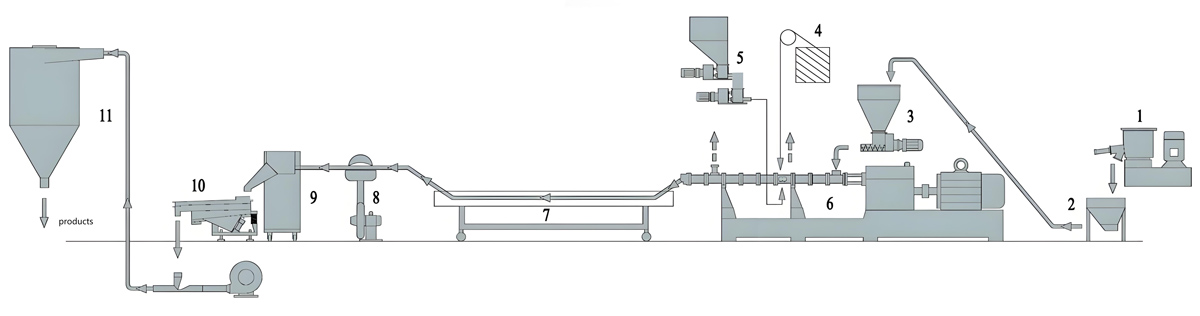
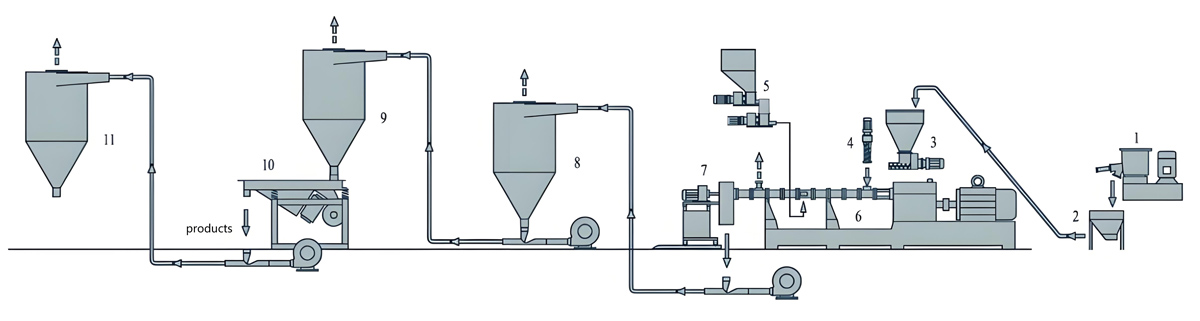
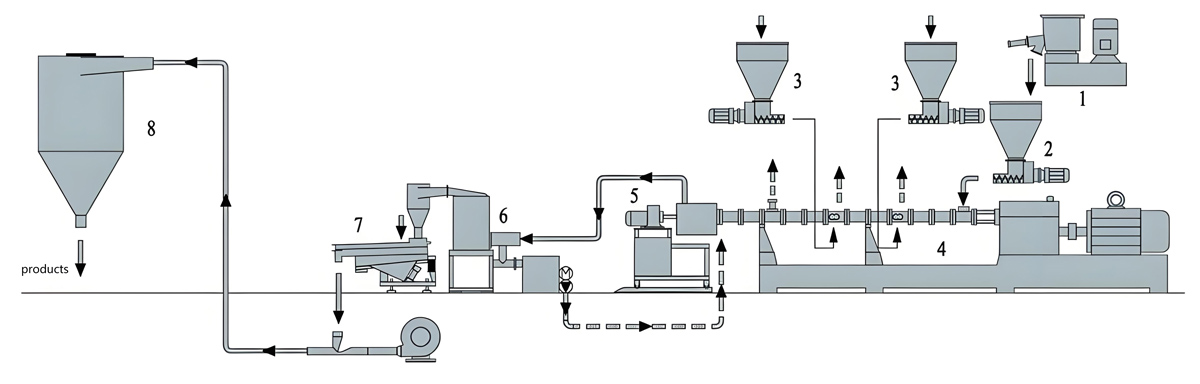
All raw materials, including TPE resin, pigments, additives, and processing aids, are carefully weighed and measured according to the formulation ratio. TPE resin should be properly dried before use to remove moisture, which can affect the quality of the masterbatch. The raw materials are then pre-mixed in a high-speed mixer to ensure uniform distribution before being fed into the twin screw extruder.
2. Twin screw extrusion
The pre-mixed raw materials are fed into the twin screw extruder, where they are melted, mixed, and compounded under controlled temperature and pressure conditions. The twin screws rotate in the same direction, creating intense shear forces that break down pigment agglomerates and disperse them uniformly throughout the TPE resin matrix.
The extrusion process typically involves multiple heating zones, with temperatures ranging from 150°C to 200°C depending on the specific formulation and processing requirements. The extruder also features a degassing system to remove volatile impurities and moisture, which can affect the quality of the final masterbatch.
3. Pelletizing
After extrusion, the molten TPE masterbatch is cooled and solidified into strands, which are then cut into pellets using a pelletizer. The pellets are typically 2-5 mm in diameter and have a uniform size and shape, ensuring consistent feeding during subsequent processing steps.
Underwater pelletizing is often used for TPE masterbatch manufacturing because it provides better cooling and produces pellets with a smoother surface. The pellets are then dried to remove any residual moisture.
4. Quality control
The finished TPE masterbatch pellets are subjected to strict quality control tests to ensure they meet the required specifications. These tests may include:
- Color measurement using a spectrophotometer to ensure color consistency
- Dispersion analysis under a microscope to check for uniform pigment distribution
- Melt flow index (MFI) testing to assess the flow properties of the masterbatch
- Mechanical property testing to evaluate the impact of the masterbatch on the final product
- Moisture content testing to ensure the pellets are properly dried
Introduction to production equipment
Nanjing Kerke Extrusion Equipment Co., Ltd. offers a range of KTE Series twin screw extruders specifically designed for TPE masterbatch manufacturing. These extruders feature advanced technology and high-quality components to ensure reliable performance and consistent product quality.
KTE Series twin screw extruders
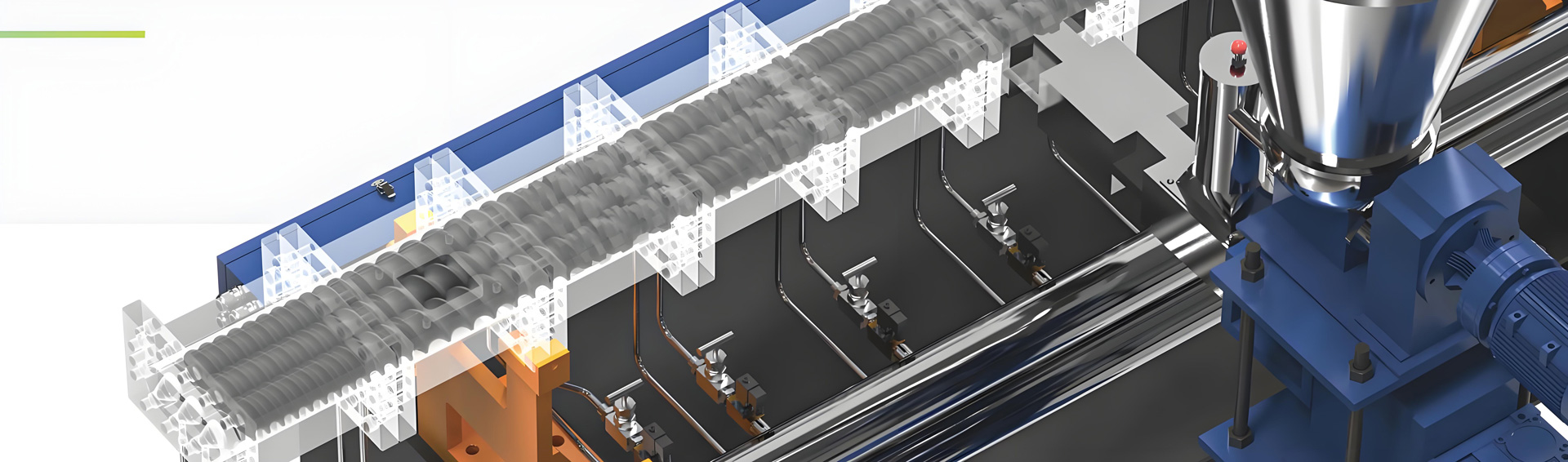
The KTE Series twin screw extruders are co-rotating parallel twin screw extruders with a modular design that allows for easy customization to meet specific processing requirements. Key features of the KTE Series extruders include:
- High torque gearbox for efficient power transmission
- Precise temperature control system with multiple heating zones
- Advanced screw design with self-cleaning capabilities
- Efficient feeding system with volumetric or gravimetric feeders
- Integrated degassing system for removing volatile impurities
- User-friendly control system with touch screen interface
Technical specifications
| Model | Screw Diameter (mm) | Max. Speed (rpm) | Motor Power (kW) | Output (kg/h) |
|---|---|---|---|---|
| KTE-36B | 35.6 | 500-600 | 18.5-22 | 20-100 |
| KTE-50B | 50.5 | 500-600 | 55-75 | 80-200 |
| KTE-65B | 62.4 | 500-600 | 90-110 | 200-450 |
| KTE-75B | 71 | 500-600 | 132-160 | 300-800 |
| KTE-95B | 93 | 500-600 | 250-315 | 800-1500 |
Parameter setting
The parameter setting for TPE masterbatch manufacturing depends on several factors, including the type of masterbatch, the formulation ratio, and the specific equipment being used. Here are some general guidelines for parameter setting:
Temperature setting
The temperature profile of the extruder should be set to ensure complete melting of the TPE resin while minimizing thermal degradation. Typical temperature settings for TPE masterbatch manufacturing are:
- Feeding zone: 150-170°C
- Melting zone: 170-190°C
- Mixing zone: 190-200°C
- Pumping zone: 190-200°C
- Die head: 190-200°C
Screw speed setting
The screw speed should be set to achieve the desired mixing intensity and throughput rate. Typical screw speeds for TPE masterbatch manufacturing range from 200 to 600 rpm, depending on the specific model and processing requirements.
Feeding rate setting
The feeding rate should be balanced with the screw speed to ensure consistent material flow and proper mixing. The feeding rate can be adjusted based on the desired output rate and the characteristics of the raw materials.
Pressure setting
The pressure in the extruder should be maintained within a suitable range to ensure proper melting and mixing of the materials. Typical pressure settings for TPE masterbatch manufacturing range from 1000 to 4000 psi.
Equipment price
The price of twin screw extruders for TPE masterbatch manufacturing varies depending on the model, specifications, and additional features. Here are some approximate price ranges for Kerke KTE Series extruders:
- KTE-36B: $35,000 – $50,000
- KTE-50B: $60,000 – $80,000
- KTE-65B: $90,000 – $120,000
- KTE-75B: $130,000 – $180,000
- KTE-95B: $200,000 – $300,000
These prices are approximate and may vary depending on the specific configuration and additional equipment required, such as feeders, pelletizers, and control systems.
Potential problems in the production process and their solutions and prevention methods
Despite the advanced technology and high-quality components of twin screw extruders, there may still be some potential problems during the production of TPE masterbatch. Here are some common problems, their causes, and solutions:
Problem 1: Poor pigment dispersion
Cause: This may be due to insufficient mixing intensity, improper screw design, or the use of low-quality pigments or dispersing agents.
Solution: Increase the screw speed or adjust the screw configuration to improve mixing. Use high-quality pigments and dispersing agents, and ensure they are properly pre-mixed before extrusion.
Prevention: Regularly maintain and clean the extruder to prevent build-up of materials that can affect mixing. Conduct regular quality control tests to monitor pigment dispersion.
Problem 2: Thermal degradation of TPE resin
Cause: This may be due to excessive temperature, long residence time in the extruder, or the presence of oxygen or moisture.
Solution: Reduce the extrusion temperature or increase the screw speed to shorten the residence time. Ensure the raw materials are properly dried before extrusion.
Prevention: Use a nitrogen atmosphere in the extruder to minimize oxidation. Install a degassing system to remove volatile impurities and moisture.
Problem 3: High torque and power consumption
Cause: This may be due to high melt viscosity, improper screw design, or excessive feeding rate.
Solution: Increase the extrusion temperature to reduce melt viscosity. Adjust the screw configuration to improve material flow. Reduce the feeding rate to match the processing capacity of the extruder.
Prevention: Use a torque limiter to protect the extruder from overloading. Regularly check and maintain the gearbox and other mechanical components.
Problem 4: Uneven pellet size
Cause: This may be due to improper pelletizer settings, inconsistent material flow, or worn pelletizer blades.
Solution: Adjust the pelletizer speed and blade position to ensure uniform cutting. Check the feeding system to ensure consistent material flow. Replace worn pelletizer blades.
Prevention: Regularly maintain and calibrate the pelletizer. Conduct regular quality control tests to monitor pellet size and shape.
Problem 5: Color variation
Cause: This may be due to inconsistent pigment loading, poor mixing, or variations in the raw materials.
Solution: Use a gravimetric feeding system to ensure consistent pigment loading. Improve the mixing process by adjusting the screw configuration or increasing the screw speed. Test raw materials before use to ensure they meet the required specifications.
Prevention: Implement strict quality control procedures for raw materials and finished products. Use color measurement equipment to monitor color consistency.
Problem 6: Pellet agglomeration
Cause: This may be due to insufficient cooling, high humidity, or improper drying of the pellets.
Solution: Increase the cooling water flow or reduce the extrusion speed to improve cooling. Ensure the pellets are properly dried before packaging. Use anti-blocking agents if necessary.
Prevention: Maintain proper cooling and drying conditions. Store the pellets in a dry environment.
Maintenance and care
Proper maintenance and care of the twin screw extruder are essential to ensure reliable performance and extend the service life of the equipment. Here are some maintenance tips:
Regular cleaning
After each production run, clean the extruder thoroughly to remove any residual materials that can affect the quality of subsequent batches. Use a suitable cleaning agent and follow the manufacturer’s instructions for cleaning procedures.
Lubrication
Regularly lubricate the gearbox, bearings, and other moving parts to reduce friction and wear. Use the recommended lubricant and follow the manufacturer’s instructions for lubrication intervals.
Inspection and replacement of parts
Regularly inspect the screw elements, barrel, and other components for signs of wear or damage. Replace worn or damaged parts promptly to avoid further damage to the equipment.
Calibration and adjustment
Regularly calibrate the temperature control system, feeding system, and other components to ensure accurate and consistent performance. Adjust the equipment settings as needed to optimize the production process.
Training and education
Provide proper training and education to the operators to ensure they understand the equipment and its operation. Regularly update the operators on new technologies and best practices to improve their skills and knowledge.
FAQ
Q: What is the difference between a twin screw extruder and a single screw extruder for TPE masterbatch manufacturing?
A: Twin screw extruders offer superior mixing capabilities compared to single screw extruders, making them more suitable for TPE masterbatch production. The twin screws create intense shear forces that break down pigment agglomerates and disperse them uniformly throughout the TPE resin matrix. Twin screw extruders also have a higher throughput rate and can handle a wider range of materials.
Q: Can TPE masterbatch be produced using a single screw extruder?
A: While it is possible to produce TPE masterbatch using a single screw extruder, the quality of the masterbatch may not be as consistent as that produced using a twin screw extruder. Single screw extruders have limited mixing capabilities, which can result in poor pigment dispersion and inconsistent color. For high-quality TPE masterbatch production, a twin screw extruder is recommended.
Q: What is the recommended L/D ratio for a twin screw extruder used for TPE masterbatch manufacturing?
A: The recommended L/D (length to diameter) ratio for a twin screw extruder used for TPE masterbatch manufacturing is typically between 36:1 and 48:1. This ratio provides sufficient residence time for proper melting, mixing, and degassing of the materials.
Q: How can I improve the dispersion of pigments in TPE masterbatch?
A: To improve pigment dispersion, you can: (1) Use high-quality pigments and dispersing agents, (2) Ensure proper pre-mixing of the raw materials, (3) Adjust the screw configuration to increase mixing intensity, (4) Optimize the extrusion temperature and screw speed, and (5) Use a twin screw extruder with advanced mixing technology.
Q: What are the common applications of TPE masterbatch?
A: TPE masterbatch is widely used in various industries, including automotive, medical, and consumer goods. Common applications include automotive interior parts, medical devices, and consumer products such as phone cases and sports equipment.
Conclusion
The production of TPE masterbatch requires specialized equipment and processes to ensure uniform dispersion of pigments and additives while maintaining the unique properties of TPE. Twin screw extruders, such as the Kerke KTE Series, are the preferred choice for TPE masterbatch manufacturing due to their superior mixing capabilities, high throughput rates, and ability to handle the unique characteristics of TPE.
By understanding the formulation ratios, production processes, equipment specifications, and potential problems in TPE masterbatch manufacturing, manufacturers can optimize their production processes and produce high-quality TPE masterbatch that meets the demanding requirements of various industries.
With proper maintenance and care, twin screw extruders can provide reliable performance and consistent product quality for many years, making them a valuable investment for TPE masterbatch manufacturers.