Introduction
TPR thermoplastic rubber based masterbatch incorporating calcium carbonate filler represents an important segment of the polymer compounding industry, particularly for applications requiring flexible, rubber-like characteristics with cost-effective material composition. The production of TPR calcium carbonate filled masterbatch demands specialized knowledge of both material properties and processing techniques to achieve optimal product performance. Twin screw extruders have established themselves as the preferred processing equipment for this application due to their exceptional mixing capabilities and precise control over processing conditions.
The fundamental chemistry of TPR materials distinguishes them from other thermoplastic elastomers. TPR typically refers to styrenic block copolymers, primarily SBS styrene-butadiene-styrene and SEBS styrene-ethylene-butylene-styrene, which provide a unique combination of rubbery elasticity and thermoplastic processability. These materials exhibit complex viscoelastic behavior that requires careful processing attention. The incorporation of calcium carbonate filler must be accomplished without compromising the elastomeric properties that make TPR valuable in applications such as footwear, consumer products, automotive components, and industrial goods.
Calcium carbonate serves multiple functional purposes in TPR masterbatch formulations. Beyond the obvious cost reduction through polymer displacement, calcium carbonate can enhance dimensional stability, improve processing characteristics, modify surface finish, and provide specific mechanical property modifications. The interaction between the rigid inorganic filler particles and the elastomeric polymer matrix determines the final product characteristics. Particle size distribution, surface treatment, and filler loading level all influence the processing behavior and end-use performance of the masterbatch.
The manufacturing process for TPR calcium carbonate filled masterbatch involves careful coordination of multiple processing variables. Raw material preparation, formulation design, temperature profile, screw configuration, and cooling conditions all contribute to product quality. The twin screw extruder provides the processing flexibility needed to accommodate different TPR types, various calcium carbonate grades, and diverse formulation requirements. Understanding the relationships between these variables enables producers to optimize their operations for consistent quality and efficient production.
Formulation Ratios (Different Types)
Standard TPR Calcium Carbonate Masterbatch
The standard formulation for TPR calcium carbonate masterbatch typically consists of 52-58% calcium carbonate filler, 38-42% TPR carrier resin, and 4-6% processing aids and dispersants. This composition provides an effective balance between cost reduction and maintenance of elastomeric properties. The TPR carrier must be carefully selected based on the specific styrenic block copolymer type used in the target base polymer. SBS-based TPR is commonly used for applications requiring good tensile strength and abrasion resistance, while SEBS-based TPR offers superior weatherability and thermal stability.
Calcium carbonate grade selection is critical for achieving desired product characteristics. Ground calcium carbonate with particle sizes ranging from 1 to 4 microns provides good dispersion and reinforcement potential. Surface-treated grades with stearic acid coating demonstrate improved compatibility with TPR polymers and reduced moisture sensitivity compared to untreated grades. The formulation may incorporate processing aids such as waxes or slip agents to improve flow characteristics during subsequent processing of the masterbatch into final compounds.
High-Filler Loading Formulation
High-filler loading TPR calcium carbonate masterbatch formulations are designed for maximum cost reduction while still maintaining acceptable processing characteristics and product performance. These formulations typically contain 65-70% calcium carbonate, 26-30% TPR carrier resin, and 4% dispersing agents and processing aids. The extremely high filler content significantly reduces material costs but presents substantial processing challenges that must be addressed through proper formulation design and process optimization.
The high filler loading dramatically increases melt viscosity and alters the rheological behavior of the compound. This necessitates the use of specialized calcium carbonate grades with very fine particle size and effective surface treatment to maintain acceptable flow properties. Dispersing agents are particularly important in these formulations to prevent filler agglomeration and maintain homogeneous distribution throughout the TPR matrix. Processing temperatures may need adjustment, typically requiring slightly higher temperatures to overcome the increased viscosity and ensure adequate flow.
Low-Filler Loading Formulation
Low-filler loading TPR calcium carbonate masterbatch formulations prioritize maintaining elastomeric properties and processing ease over cost reduction. These formulations typically contain 35-40% calcium carbonate, 55-60% TPR carrier resin, and 5% processing aids and performance enhancers. The higher TPR content results in viscosity profiles closer to neat TPR, facilitating easier incorporation into downstream compounds and better preservation of elastic recovery properties.
Low-filler formulations are often preferred for applications where the masterbatch must maintain excellent flow characteristics and minimal impact on the final compound’s mechanical properties. The higher polymer content provides better compatibility with a wider range of base TPR grades and reduces the risk of phase separation during storage or processing. Additive packages for low-filler formulations may include antioxidants, UV stabilizers, or slip agents depending on the specific application requirements and environmental exposure conditions.
UV-Stabilized Formulation
UV-stabilized TPR calcium carbonate masterbatch formulations incorporate ultraviolet stabilizers to prevent degradation from sunlight exposure in outdoor applications. These formulations typically contain 50% calcium carbonate, 42% TPR carrier resin, 5% UV stabilizers, and 3% processing aids and dispersants. The UV stabilizers may include hindered amine light stabilizers HALS, ultraviolet absorbers UVAs, or combinations of both depending on the specific degradation resistance requirements.
The incorporation of UV stabilizers requires careful attention to thermal stability during processing, as some stabilizers may degrade at typical TPR processing temperatures. Formulation development must balance UV protection requirements with processing constraints. The calcium carbonate loading may be adjusted slightly to accommodate the stabilizer package while maintaining desired product characteristics. Testing under accelerated weathering conditions is essential to verify UV protection effectiveness before commercial production.
Antistatic Formulation
Antistatic TPR calcium carbonate masterbatch formulations are designed for applications requiring control of static electricity, such as electronic components or conveyor systems. These formulations typically contain 50% calcium carbonate, 42% TPR carrier resin, 5% antistatic agents, and 3% dispersants and processing aids. The antistatic agents migrate to the surface over time, providing a conductive path that prevents static charge accumulation.
The selection of antistatic agents must consider compatibility with the TPR matrix and processing temperature constraints. Some antistatic additives may affect other properties such as surface friction or appearance, requiring formulation optimization. The antistatic effect may have limited service life, requiring consideration of the expected service duration of the final product. Formulation testing should verify antistatic performance under the expected environmental conditions of use.
Production Process
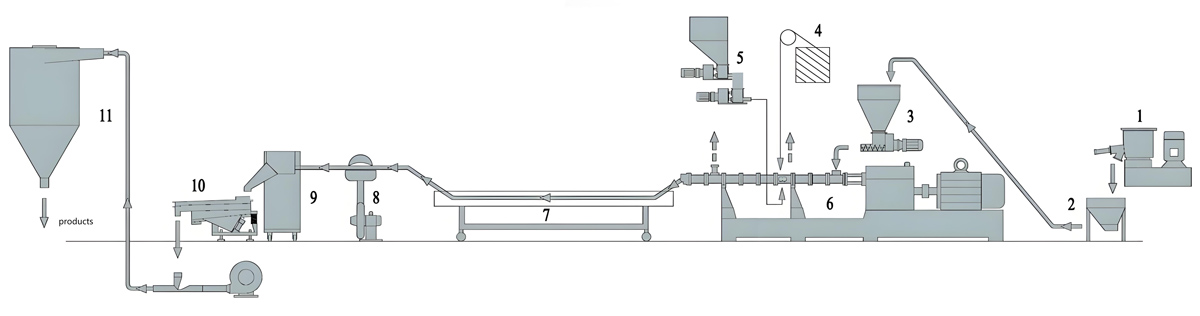
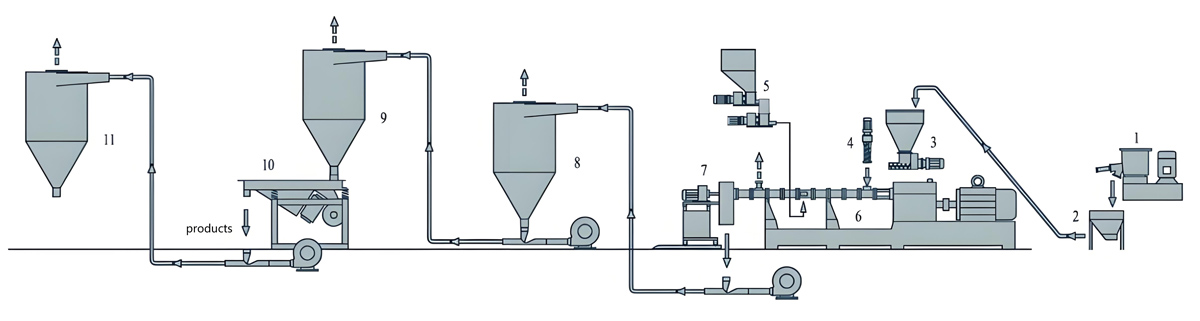
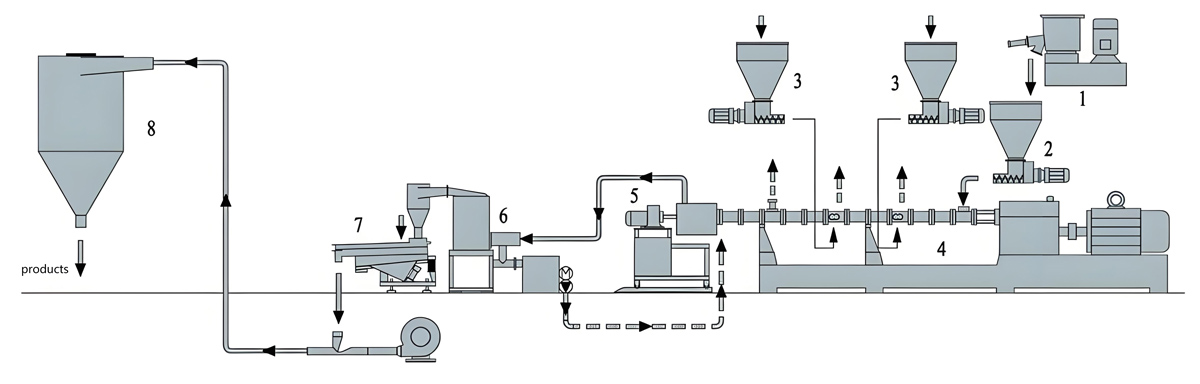
The production of TPR calcium carbonate filled masterbatch follows a systematic process that transforms raw materials into a homogeneous, uniformly dispersed finished product. Each stage of the process requires careful control and monitoring to ensure consistent quality. The twin screw extruder provides the core processing capability, but successful production depends on properly prepared materials, optimized processing conditions, and effective quality control throughout the production sequence.
Raw Material Reception and Storage
Raw material reception begins with proper inspection and documentation of incoming materials. Calcium carbonate, TPR carrier resin, and additives should be verified against purchase specifications for identity, appearance, and certificate of analysis data. Moisture content analysis is particularly important for hygroscopic materials, though TPR is generally less hygroscopic than some other elastomers. Each material should be assigned a unique lot number and stored in appropriate conditions to prevent contamination and property changes.
Storage conditions maintain material quality until use. Calcium carbonate should be stored in dry environments with controlled humidity to prevent caking and reduce drying requirements. TPR resins, while less sensitive to moisture than some polymers, still benefit from storage away from direct sunlight and at controlled temperatures. Additives should be stored according to supplier recommendations, with particular attention to temperature and humidity sensitivity for performance additives such as UV stabilizers.
Material Drying Preparation
Material drying removes moisture that could cause voids, surface defects, or processing problems during extrusion. While TPR is generally less hygroscopic than some elastomers, calcium carbonate can adsorb moisture from ambient air that affects processing quality. Typical drying temperatures range from 90-100°C for TPR resins and 100-110°C for calcium carbonate. Drying time varies from 2-4 hours depending on material quantity, dryer capacity, and initial moisture content.
Proper drying requires attention to both temperature and airflow. Desiccant dryers provide the most effective moisture removal by using dehumidified air with very low dew points. The air flow must be sufficient to carry moisture away from the material bed and ensure uniform drying throughout the material mass. Over-drying should be avoided as it can cause thermal degradation of sensitive additives or oxidation of TPR components. Moisture analysis before and after drying confirms the effectiveness of the drying process.
Premixing and Blending
Premixing combines the various solid components into a homogeneous blend before introduction to the extruder. This step reduces the mixing burden on the extruder and improves process stability. High-speed mixers with capacities from 100 to 1000 liters provide efficient blending of pellets, powders, and additives. Mixing times typically range from 3 to 5 minutes at 800-1500 rpm depending on mixer design and formulation characteristics.
The premixing process generates heat through friction that must be controlled to prevent material softening or degradation. Temperature monitoring during mixing prevents excessive heat buildup that could cause TPR pellets to become tacky and agglomerate. Maximum mixing temperatures should be maintained below 70-80°C to preserve free-flowing characteristics. Some mixers incorporate water cooling jackets or controlled air circulation to manage temperature rise during extended mixing cycles.
Extruder Feeding System
The feeding system delivers the premixed material to the extruder at a controlled rate that matches processing requirements. Gravimetric feeders provide the highest accuracy by continuously weighing the material stream and automatically adjusting feeder speed to maintain target throughput. For TPR calcium carbonate masterbatch, feed rates typically range from 100 to 500 kg/h depending on extruder size and formulation. Feeder hopper design should prevent material bridging and ensure consistent flow.
Feeder calibration should be performed regularly to maintain accuracy within 1% of setpoint. Calibration involves running material through the feeder for a timed interval, weighing the delivered material, and comparing to the setpoint. Adjustments are made as needed to correct any deviations. Multiple feeders may be used for multi-component formulations, with each feeder handling specific components at precisely controlled ratios. This approach allows formulation adjustment by modifying feeder ratios rather than requiring new premixes.
Melting and Mixing Process
The melting and mixing process transforms the premixed materials into a homogeneous melt with uniformly dispersed calcium carbonate particles. The process begins in the feed section of the extruder where conveying elements transport solid material forward. Progressive heating in subsequent barrel sections melts the TPR matrix, creating a melt that can be mixed with the calcium carbonate filler. The intermeshing screws generate shear forces that disperse the filler throughout the melt.
Barrel temperature profile increases gradually from feed to die to accommodate melting and mixing requirements. Typical profiles start at 150-160°C in the feed zone, increase to 180-200°C in the melting zone, and reach 200-220°C in the mixing zone. The precise temperatures depend on the specific TPR type, with SEBS generally requiring slightly higher temperatures than SBS-based formulations. Temperature uniformity across the barrel width is essential for consistent processing quality.
Screw configuration significantly impacts mixing performance. Kneading blocks in the melting and mixing zones provide dispersive mixing to break up filler agglomerates. Conveying elements ensure material transport through the extruder. The specific arrangement of screw elements should be optimized for the formulation characteristics and desired product properties. Proper screw configuration ensures complete melting, homogeneous filler dispersion, and consistent melt delivery to the die.
Degassing and Venting
Degassing removes volatiles, moisture, and entrapped air from the melt. This step is particularly important when using materials that may release volatiles during processing or when the formulation includes additives with decomposition temperatures close to the processing temperature. A vent zone located after the mixing section provides atmospheric or vacuum conditions that allow volatiles to escape from the melt.
Vent port sizing must prevent melt leakage while providing adequate surface area for volatile removal. Vent depth typically ranges from 5-15mm depending on the melt viscosity and vacuum level. Vacuum levels for TPR calcium carbonate masterbatch typically range from 500-700 mbar absolute pressure. Vacuum pump capacity must be sufficient to maintain the required vacuum level while accounting for air leakage through the screw vent flights and around the vent port.
Die Design and Strand Formation
The die shapes the homogeneous melt into multiple strands for subsequent cooling and pelletizing. Die design significantly affects strand quality and downstream processing efficiency. For TPR calcium carbonate masterbatch, strand dies typically feature 4-8 round holes with diameters ranging from 2mm to 4mm depending on throughput requirements. Die land length should be 3-5 times the hole diameter to control die swell and ensure smooth strand formation.
Die temperature is typically set at the same level as the final barrel zone or slightly higher to maintain proper melt viscosity for smooth strand formation. Die heating must be uniform across all holes to ensure consistent strand dimensions. Die material selection considers wear resistance from abrasive calcium carbonate filler. Hardened tool steel dies provide extended service life. Die surfaces should be polished to minimize material build-up and facilitate clean strand separation.
Cooling and Solidification
Strand cooling solidifies the extruded strands to temperatures suitable for pelletizing. Water bath cooling is the most common method, offering rapid heat transfer and good temperature control. Water temperature is maintained between 15-25°C for optimal quenching of TPR materials. The bath length provides sufficient residence time for complete cooling, typically requiring 3-6 meters of water contact depending on line speed and strand diameter.
Water circulation ensures uniform cooling across all strands. Agitation or spray nozzles may be used to enhance heat transfer and prevent temperature stratification in the bath. Some facilities use multiple cooling tanks at different temperatures to implement controlled cooling profiles that optimize product properties. The cooling system must be designed to handle the thermal load from the extrusion process while maintaining stable water temperature.
Pelletizing and Finishing
Pelletizing converts the cooled strands into uniform pellets suitable for downstream processing. Strand pelletizers with rotary cutting knives are commonly used for TPR masterbatch applications. The cutting speed is synchronized with strand line speed to maintain consistent pellet length, typically 2-4mm. Knife sharpness and proper alignment are critical for clean cuts without generating fines or causing strand deformation.
Pellet quality inspection includes checks for size consistency, shape uniformity, and absence of defects. Pellets should be free of voids, surface irregularities, or color inconsistencies. Automatic pelletizing systems may include optical sorting to reject defective pellets. Proper pellet handling and packaging prevent moisture absorption and contamination during storage and transportation. Final product testing confirms that all specifications are met before shipment.
Production Equipment Introduction
Equipment selection for TPR calcium carbonate masterbatch production significantly influences product quality, production efficiency, and operational costs. The twin screw extruder serves as the core processing equipment, but supporting systems for material handling, temperature control, strand formation, cooling, and pelletizing are equally important. Each component must be properly specified, integrated, and maintained to achieve optimal performance.
Twin Screw Extruder System
The twin screw extruder provides the primary processing capability for TPR calcium carbonate masterbatch production. Co-rotating intermeshing extruders are preferred for this application due to their positive displacement characteristics and superior mixing performance. The KTE Series twin screw extruders offer excellent performance for this application, featuring robust construction designed for continuous operation with abrasive fillers. Screw diameters range from 40mm to 130mm, providing throughput capacities from 50 kg/h to over 2000 kg/h.
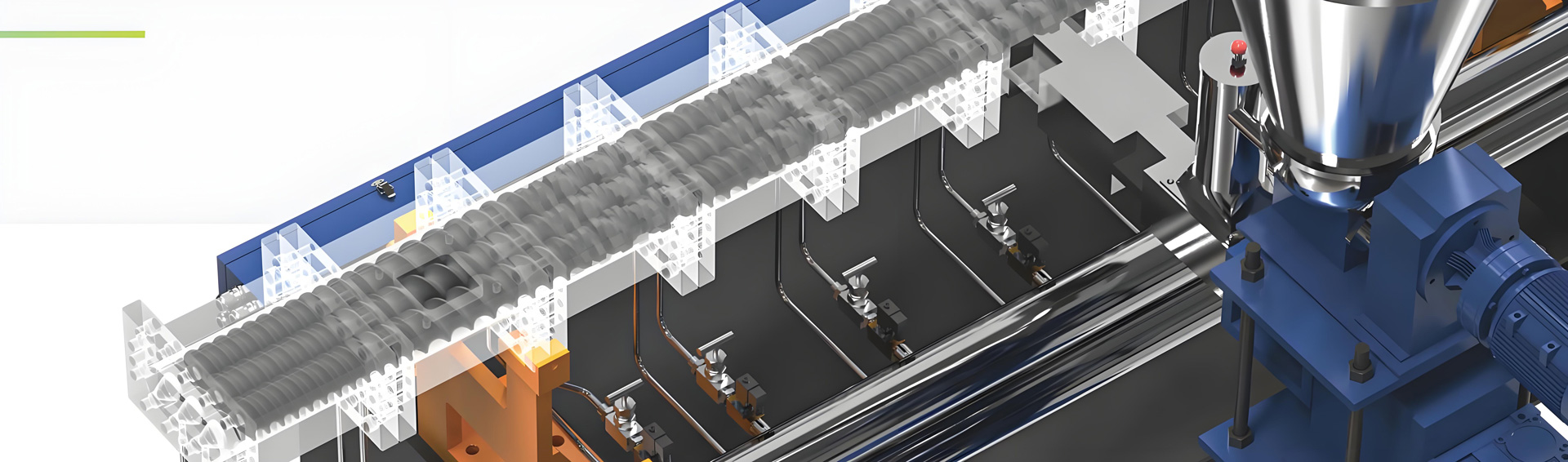
The extruder design includes modular barrel construction with individually controlled heating zones. This arrangement enables precise thermal profiling tailored to specific TPR types and formulations. Heavy-duty gearboxes deliver the high torque required for processing high-viscosity melts with high filler loading. Drive systems provide stable speed control across the operating range, typically from 50 to 500 rpm depending on extruder size. Control systems with touchscreen interfaces facilitate process monitoring and adjustment.
Screw Configuration and Design
Screw configuration determines the mixing performance and product quality. Standard configurations for TPR calcium carbonate masterbatch include conveying elements in the feed section for efficient solids transport. Kneading blocks in the melting and mixing zones provide dispersive mixing to break up filler agglomerates. Conveying elements with mixing sections in the final homogenization zone ensure uniform melt delivery to the die.
The specific arrangement of screw elements should be optimized for formulation characteristics. Higher filler loadings generally require more aggressive mixing elements. Kneading block stagger angles of 30-60 degrees provide effective dispersive mixing. The flexibility to modify screw configurations allows optimization for different formulations without requiring equipment replacement. Proper screw design ensures efficient solids conveying, complete melting, uniform filler dispersion, and consistent melt delivery.
Barrel Construction and Heating
Barrel construction provides the housing for the rotating screws and the thermal control needed for processing. Bimetallic barrel liners with wear-resistant alloys are essential for TPR calcium carbonate masterbatch production due to the abrasive nature of the filler. Electric heating bands with individual zone control enable precise temperature management along the barrel length. Temperature sensors at each zone provide feedback for closed-loop temperature regulation.
Some barrel sections may incorporate water cooling channels to remove excess shear heat and maintain temperature stability. This is particularly important in high-viscosity formulations where shear heating can be significant. The barrel must be properly supported and aligned to prevent binding between the barrel and screws. Regular inspection identifies wear patterns and determines the need for barrel relining or replacement.
Feeding Equipment
Feeding equipment ensures consistent material delivery to the extruder. Gravimetric feeders provide the highest accuracy and are strongly recommended for masterbatch production. These systems continuously weigh the material stream and automatically adjust feeder speed to maintain target throughput, typically achieving accuracy within 1%. For multi-component formulations, multiple gravimetric feeders can introduce individual components at precisely controlled ratios.
Volumetric feeders offer a lower-cost alternative but provide less consistent feeding, particularly when material properties vary. Feed hopper design should prevent material bridging and ensure smooth flow. Water-cooled feed throats prevent premature melting that could cause feed instability. Feeder capacity should match production requirements to minimize refill frequency and maintain continuous operation.
Die and Strand Handling
Die systems shape the molten polymer into strands for subsequent processing. Strand dies with multiple round holes are most common for TPR masterbatch. The number and diameter of holes depend on throughput requirements and desired strand size. Die land length affects die swell and strand uniformity, with optimal land lengths typically 3-5 times the hole diameter.
Die material must resist wear from abrasive calcium carbonate. Hardened tool steel dies provide extended service life. Quick-change die designs facilitate cleaning and maintenance, reducing downtime between production runs. Strand handling equipment including guides, rollers, and tension controls ensure proper strand positioning and smooth transport from the die to the cooling system.
Cooling System Components
Cooling systems solidify the extruded strands to temperatures suitable for pelletizing. Water bath systems are most common, consisting of stainless steel tanks with controlled water temperature and circulation. Tank length provides sufficient residence time for complete cooling, typically 3-6 meters depending on line speed. Water temperature control between 15-25°C ensures optimal quenching of TPR materials.
Water pumps and circulation systems ensure uniform water flow and temperature throughout the bath. Filtration systems remove debris and maintain water quality. Temperature control units regulate water temperature through heating and cooling as needed. Some facilities use air knives after the water bath to remove surface water before pelletizing, preventing moisture-related quality issues.
Pelletizing Equipment
Pelletizing equipment converts cooled strands into uniform pellets. Strand pelletizers with rotary cutting knives are commonly used, offering precise control over pellet length and shape. The cutting rotor typically features 4-8 knives that cut strands against a fixed bed knife. Cutting speed synchronization with strand line speed maintains consistent pellet dimensions. Knife material selection considers wear resistance from abrasive calcium carbonate.
Underwater pelletizing systems offer an alternative for formulations sensitive to strand handling or requiring rapid quenching. These systems cut strands directly in a water bath, providing uniform cooling and preventing strand sticking. However, underwater systems are more complex and expensive than strand pelletizers. The choice between pelletizing methods depends on formulation characteristics, production volume, and quality requirements.
Control and Monitoring Systems
Control systems monitor and regulate process parameters to ensure consistent operation and product quality. Modern extruders feature PLC-based controls with touchscreen interfaces providing real-time monitoring of temperature, pressure, screw speed, and feed rate. Data logging capabilities enable process analysis and traceability. Safety interlocks prevent operation under unsafe conditions.
Advanced control systems may include automated recipe management for quick changeovers between formulations. Integration with upstream and downstream equipment enables coordinated operation of the entire production line. Remote monitoring capabilities allow operators to supervise process conditions from control rooms. Statistical process control features help maintain product quality within specification limits.
Parameter Settings
Process parameter optimization is essential for producing high-quality TPR calcium carbonate filled masterbatch consistently. The interaction between temperature profile, screw speed, feed rate, and other variables determines product quality, production efficiency, and equipment wear. Understanding these relationships enables fine-tuning for specific formulations and equipment configurations.
Temperature Profile Setup
The temperature profile along the extruder must accommodate the melting characteristics of the TPR carrier while preventing thermal degradation. For most TPR calcium carbonate formulations, temperatures increase gradually from feed to die. Feed zone temperatures of 150-160°C ensure efficient solids conveying without premature melting. Melting zone temperatures of 180-200°C facilitate complete polymer melting. Mixing zone temperatures of 200-220°C ensure proper viscosity for mixing and dispersion.
The specific temperature profile depends on the TPR type. SEBS-based formulations typically require temperatures of 190-220°C, while SBS-based formulations process at slightly lower temperatures of 180-210°C. Calcium carbonate loading affects the optimal profile, with higher loadings requiring slightly higher temperatures to overcome increased viscosity. Temperature stability within ±2°C is essential for consistent product quality.
Screw Speed Optimization
Screw speed affects residence time, shear input, and throughput. For TPR calcium carbonate masterbatch, screw speeds typically range from 200 to 350 rpm. Higher speeds increase throughput but may reduce residence time and increase melt temperature through shear heating. Lower speeds provide longer residence time for improved mixing but reduce production capacity.
The relationship between screw speed and product quality depends on formulation characteristics. High filler loading formulations may require higher speeds to provide sufficient shear for dispersion. However, excessive speed can cause thermal degradation of TPR, particularly for SBS-based formulations with lower thermal stability. Monitoring melt temperature and product quality while adjusting screw speed helps identify optimal operating conditions.
Feed Rate Control
Feed rate determines throughput and affects the degree of fill in the extruder channels. Proper feed rate ensures the extruder operates at optimum capacity without overfilling or starving the screws. Feed rate is typically coordinated with screw speed to maintain the desired feed ratio, which ranges from 0.3 to 0.7 kg/(rpm·cm³ of screw volume) for TPR calcium carbonate formulations.
Higher feed rates increase throughput but may reduce mixing quality if the extruder becomes overfilled. Lower feed rates provide better mixing but reduce production efficiency. The feed rate should be adjusted in conjunction with screw speed to maintain stable processing. Gravimetric feeders with closed-loop control help maintain consistent feed rates despite variations in material bulk density.
Pressure Monitoring
Pressure monitoring provides valuable information about process stability and product consistency. Die pressure typically ranges from 20 to 40 bar for TPR calcium carbonate masterbatch. Higher pressures indicate increased viscosity, which may result from excessive filler loading, low temperatures, or material degradation. Lower pressures may indicate inadequate mixing or material property changes.
Pressure variations along the barrel provide diagnostic information about processing conditions. Increasing pressure in the feed section may indicate feeding problems. Rising pressure in the melting zone suggests incomplete melting or viscosity increase. Stable pressure in the mixing zone indicates proper mixing conditions. Pressure transducers installed at multiple barrel points enable detailed process analysis.
Vacuum Venting Parameters
Vacuum venting removes volatiles and moisture from the melt. For TPR calcium carbonate formulations with additives that may release volatiles, vent zone vacuum levels of 500-700 mbar absolute pressure are typical. The vent port should be sized appropriately to handle the expected vapor load without causing melt leakage. Vent zone temperature should be set to maintain proper melt viscosity while preventing material leakage.
Vacuum pump capacity must be sufficient to maintain the required vacuum level, accounting for air leakage through the screw vent flights. The vent zone location after the mixing section ensures that most volatiles have been released from the melt before venting. Proper vent system design prevents melt leakage while effectively removing volatiles.
Equipment Price
Capital investment in production equipment represents a significant consideration for TPR calcium carbonate masterbatch manufacturers. Understanding the cost structure for different equipment components enables accurate budgeting and investment decisions. Prices vary based on capacity, features, and manufacturer, but typical ranges provide useful reference points for planning.
Twin Screw Extruder Cost
Twin screw extruders represent the largest capital expense for masterbatch production. Pricing for co-rotating twin screw extruders ranges from approximately USD 70,000 for a 40mm diameter, 50 kg/h capacity unit to USD 420,000 for a 130mm diameter, 2000 kg/h capacity system. Mid-range models with 60-80mm screw diameters and 300-600 kg/h capacities typically cost between USD 140,000 and USD 280,000.
Price variations within each size category depend on L/D ratio, gearbox capacity, control system sophistication, and additional features. Higher L/D ratios (48:1 vs. 40:1) typically add 15-25% to the base price. Advanced control systems with recipe management and data logging capabilities may add USD 15,000-30,000 to the cost. Custom screw configurations with specialized elements may incur additional charges.
Feeding System Investment
Feeding systems vary widely in cost depending on type and features. Gravimetric feeders for single-component feeding typically cost USD 7,000-20,000 per unit, depending on throughput capacity and accuracy requirements. Multi-component gravimetric feeding systems with integrated control may cost USD 30,000-70,000 for three to six component configurations. Volumetric feeders offer a lower-cost alternative at USD 5,000-12,000 per unit.
Material handling systems including silos, conveying systems, and receivers add USD 30,000-140,000 depending on capacity and automation level. The investment in feeding systems should be justified by the benefits of improved accuracy and reduced labor requirements. Larger facilities with multiple extrusion lines may invest USD 300,000 or more in comprehensive material handling infrastructure.
Die and Cooling Equipment Costs
Die systems represent a moderate investment. Standard strand dies for TPR calcium carbonate masterbatch typically cost USD 5,000-12,000 depending on hole configuration and materials. Quick-change die systems that facilitate rapid changeovers may cost USD 15,000-30,000. Strand handling equipment including guides, tension controls, and take-up systems adds USD 10,000-25,000 to the total investment.
Cooling systems typically cost USD 15,000-40,000 depending on length, capacity, and features. Additional cooling equipment including water pumps, filtration systems, and temperature control units add USD 8,000-22,000. Water treatment equipment for maintaining water quality and preventing algae growth costs USD 5,000-12,000.
Pelletizing System Pricing
Strand pelletizers range in price from USD 20,000 for basic models to USD 50,000 for high-capacity units with advanced features. Underwater pelletizing systems represent a larger investment, typically costing USD 100,000-190,000 depending on capacity and capabilities. Knife replacement represents an ongoing operating cost, with USD 3,000-7,000 annually typical for knife replacement and maintenance.
Total Capital Investment
The total investment for a complete TPR calcium carbonate masterbatch production line typically ranges from USD 300,000 for a small-scale operation to USD 2,000,000 or more for large-scale facilities. Mid-sized operations with 300-500 kg/h capacity typically require USD 700,000-1,200,000 investment including extruder, auxiliaries, and installation. Installation costs typically add 10-20% to equipment costs for foundations, utility connections, and commissioning.
Production Process Problems and Solutions
Production problems can arise during TPR calcium carbonate masterbatch manufacturing despite proper equipment and formulation. Understanding common issues, their causes, and effective solutions enables rapid troubleshooting and minimization of production downtime.
Filler Dispersion Problems
Problem Description: Poor filler dispersion results in uneven distribution of calcium carbonate particles throughout the TPR matrix. This issue manifests as visible agglomerates, inconsistent mechanical properties, and processing difficulties. Poor dispersion can cause surface defects, reduced mechanical strength, and unpredictable processing behavior in downstream applications.
Causes: Insufficient mixing intensity from inadequate screw configuration is a primary cause. Screw wear over time reduces mixing efficiency. Processing temperatures that are too low increase melt viscosity, limiting mixing effectiveness. Inadequate premixing of components before extrusion contributes to poor initial distribution. Calcium carbonate grade with poor dispersibility may be prone to agglomeration. Excessive feed rate may reduce residence time for adequate mixing.
Solutions: Modify screw configuration to increase mixing elements, particularly adding kneading blocks with larger stagger angles. Replace worn screw elements to restore original mixing efficiency. Increase barrel temperatures in melting and mixing zones to reduce viscosity. Extend premixing time or improve premixer efficiency. Consider switching to more dispersible calcium carbonate grades. Reduce feed rate to increase residence time and mixing time.
Prevention: Implement regular screw inspection and maintenance schedules. Establish and maintain standard operating procedures for screw configuration and temperature settings. Perform quality control checks for dispersion quality using techniques such as microscopy or ash content analysis. Train operators to recognize early signs of dispersion problems.
Strand Breakage Issues
Problem Description: Strand breakage causes production interruptions and yield loss. This problem occurs when strands break between the die and pelletizer, often due to weak strands or excessive mechanical stress. Breakage manifests as sudden process interruption, strand accumulation in the cooling system, and reduced production yield.
Causes: Insufficient cooling after the die leaves strands too hot and weak. Excessive draw-down from improper die-to-takeup distance stretches strands beyond their strength limits. Inadequate melt strength from degraded TPR or improper formulation causes weak strands. Temperature fluctuations create inconsistent melt properties. Equipment alignment problems introduce bending or twisting forces. Calcium carbonate agglomerates act as stress concentrators.
Solutions: Extend cooling system length or reduce line speed to ensure adequate strand cooling. Adjust die-to-takeup distance to reduce draw-down forces. Optimize temperature profile to maintain consistent melt properties. Check and correct equipment alignment. Improve calcium carbonate dispersion to eliminate agglomerates. Verify TPR quality and thermal stability.
Prevention: Monitor strand temperature after cooling to ensure adequate solidification. Maintain proper die-to-takeup distance based on strand diameter and line speed. Implement statistical process control for temperature parameters. Perform regular equipment alignment checks and adjustments. Ensure proper filler dispersion through optimized mixing.
Surface Roughness on Pellets
Problem Description: Rough or uneven pellet surfaces affect appearance and may cause processing difficulties in downstream applications. The problem appears as dull surfaces, visible texture, or irregularities on pellet exteriors. Surface quality is important for applications where pellet appearance or flow characteristics are critical.
Causes: Insufficient cooling after extrusion causes pellets to retain heat, leading to surface deformation during pelletizing. Uneven strand diameter from die swell variations causes inconsistent pellet geometry. Worn or misaligned pelletizing knives produce ragged edges and surface defects. Inadequate drying of strands before pelletizing leaves water on the surface. Calcium carbonate protruding at the pellet surface causes roughness.
Solutions: Extend cooling system length or reduce line speed to ensure adequate strand cooling before pelletizing. Adjust die parameters to ensure consistent strand diameter. Sharpen or replace pelletizing knives and verify proper alignment. Add air knives or additional drying sections after water bath to remove surface water. Improve filler dispersion to prevent surface protrusion.
Prevention: Implement regular maintenance schedules for cooling system. Monitor strand diameter as part of quality control. Establish knife sharpening and replacement schedules based on operating hours. Maintain pelletizing equipment properly to prevent mechanical issues. Optimize mixing to ensure filler remains embedded in the polymer matrix.
Moisture-Related Defects
Problem Description: Moisture in the material causes voids, surface defects, and reduced mechanical properties. The issue appears as blisters, bubbles, or surface roughness on pellets. Moisture problems become more severe with formulations containing untreated calcium carbonate or hygroscopic additives.
Causes: Inadequate drying of raw materials before processing is the primary cause. Insufficient drying time, temperature, or airflow leaves residual moisture. Environmental humidity during storage or transfer reintroduces moisture. Condensation in feed hoppers from temperature differentials. Vacuum venting insufficient to remove moisture released during processing.
Solutions: Increase drying time and temperature according to material supplier recommendations. Verify dryer performance and airflow. Implement closed conveying systems with dehumidified air. Use heated or insulated feed hoppers to prevent condensation. Increase vacuum venting capacity. Install moisture meters at key process points for monitoring.
Prevention: Establish strict material handling procedures with defined drying parameters. Maintain climate-controlled storage areas. Regularly calibrate moisture meters and dryer controls. Train personnel on proper procedures for maintaining material dryness throughout the process.
Color Inconsistencies
Problem Description: Color variations between batches or within a production run affect product uniformity. The problem may appear as shade differences, streaks, or inconsistent pigment dispersion. For natural or white formulations, color consistency refers to consistent whiteness or absence of color contamination.
Causes: Variations in raw material quality, particularly pigment or TPR color, cause batch-to-batch differences. Inconsistent pigment dispersion from insufficient mixing leads to localized color differences. Thermal degradation from excessive temperatures causes color shifts. Contamination from previous production runs introduces foreign colors. Inconsistent calcium carbonate quality affects whiteness in natural formulations.
Solutions: Implement strict raw material quality control with color specifications. Improve mixing performance through screw configuration optimization. Reduce processing temperatures if thermal degradation is suspected. Implement thorough equipment cleaning procedures between production runs. Establish quality specifications for calcium carbonate whiteness.
Prevention: Establish color standards and tolerance ranges for each product specification. Implement statistical process control for color measurement. Develop color control charts to track batch-to-batch variations. Train operators on proper cleaning procedures to prevent cross-contamination.
Maintenance and Care
Regular maintenance and proper care of production equipment are essential for reliable operation, consistent product quality, and long equipment service life. TPR calcium carbonate masterbatch production involves abrasive fillers and processing conditions that can accelerate equipment wear if maintenance is neglected.
Daily Maintenance Tasks
Daily maintenance tasks focus on immediate operational needs and preventing sudden failures. Operators should check and record all process parameters at the start of each shift. Visual inspection should identify any leaks, unusual vibrations, or abnormal sounds. Cleaning die faces and pelletizing knives prevents material buildup. Checking cooling water system operation ensures proper temperature and flow.
Material handling equipment requires daily attention to prevent bridging or flow interruptions. Hoppers and feed chutes should be inspected for material buildup and cleaned as necessary. Vacuum vent systems need daily checks for proper operation and cleaning of vent port filters. End-of-shift cleaning procedures remove residual material to prevent degradation between production runs.
Weekly Maintenance Activities
Weekly maintenance activities address aspects requiring attention less frequently than daily tasks. Screw wear should be assessed by measuring key dimensions and checking for surface damage. Barrel inspection should identify signs of wear, particularly in sections with abrasive filler loading. Temperature control sensors should be verified for accuracy. Lubrication of gearboxes and bearings according to manufacturer specifications.
Drive belts should be checked for proper tension and condition. Electrical connections should be inspected for loose connections or signs of heat damage. Water treatment systems require monitoring of chemical levels and pH balance. Documentation of weekly maintenance activities provides a record for trend analysis.
Monthly Maintenance Requirements
Monthly maintenance involves more thorough inspections. Screw and barrel wear measurements should be compared to previous readings to establish wear trends. Gearbox oil analysis checks for contamination or wear particles. Bearing temperature monitoring identifies components running hot. Calibration of all process sensors and instruments ensures accurate process control.
Electrical systems should be tested for proper voltage, current, and insulation resistance. Safety interlocks and emergency stop systems should be tested. Cooling system inspection includes checking heat exchangers and pump performance. Documentation of monthly maintenance findings provides a basis for scheduling repairs.
Screw and Barrel Maintenance
The screw and barrel represent critical wear components. Screw wear patterns provide diagnostic information about processing conditions. Regular measurements track wear progression and enable prediction of replacement needs. Barrel inspection focuses on detecting wear, particularly in sections exposed to abrasive filler loading. When replacing screws, it’s often advisable to replace or reline the barrel to ensure proper fit and performance.
Die Maintenance Procedures
Die maintenance focuses on maintaining proper hole geometry and surface finish. Regular inspection identifies wear patterns, material buildup, or damage. Die holes should be measured to detect gradual enlargement. Surface inspection identifies roughness or deposits. Cleaning procedures should remove all material residues without damaging the die surface. Die replacement should be scheduled based on inspection findings.
Pelletizing Equipment Care
Pelletizing knife maintenance is critical for consistent pellet quality. Knives should be inspected for sharpness, edge condition, and proper alignment. Bed knives should be checked for wear and proper adjustment. The gap between rotary and bed knives must be set correctly. Lubrication of pelletizing drive components according to manufacturer specifications prevents premature failure.
FAQ
What is the difference between TPR and TPE calcium carbonate masterbatch?
TPR thermoplastic rubber specifically refers to styrenic block copolymers such as SBS and SEBS, while TPE thermoplastic elastomer is a broader category that includes various types of elastomeric materials. TPR masterbatch uses styrenic block copolymer carriers that offer good compatibility with polystyrene and polyolefins. TPE masterbatch may use different elastomer carriers depending on application requirements. The production processes are similar, but the specific elastomer type affects processing temperatures and formulation design.
How does calcium carbonate loading affect TPR masterbatch processing?
Calcium carbonate loading significantly influences processing behavior and product properties. Higher loading increases melt viscosity, requiring higher processing temperatures and potentially higher screw speeds. Increased loading reduces the elastomeric characteristics of the final compound, affecting tensile strength, elongation, and flexibility. Processing windows become narrower with higher loading, demanding tighter control over process parameters. Dispersion becomes more challenging, requiring optimized screw configuration and mixing conditions.
Can I use SBS and SEBS interchangeably as TPR carriers?
SBS and SEBS have different characteristics and are not directly interchangeable without formulation adjustments. SBS generally offers better tensile strength and abrasion resistance but has lower thermal stability and weatherability. SEBS provides superior thermal stability, UV resistance, and weatherability but may have slightly different mechanical properties. Processing temperatures differ, with SEBS typically requiring slightly higher temperatures. The choice between SBS and SEBS depends on the specific application requirements and environmental exposure conditions.
What causes die swell in TPR calcium carbonate masterbatch production?
Die swell occurs when the extruded strand expands after exiting the die due to elastic recovery. The degree of die swell depends on multiple factors including melt viscosity, temperature, filler loading, and die geometry. Higher calcium carbonate loading typically reduces die swell due to reduced elastic content. Lower processing temperatures increase die swell by increasing melt elasticity. Die design affects swell, with shorter land lengths resulting in greater swell. Controlling these factors enables management of die swell and consistent strand dimensions.
How do I optimize screw configuration for high-filler loading TPR masterbatch?
High-filler loading formulations require more aggressive screw configurations to ensure adequate dispersion and mixing. The configuration typically includes conveying elements in the feed section, followed by multiple kneading block sections in the melting and mixing zones. Kneading block stagger angles of 45-60 degrees provide dispersive mixing to break up filler agglomerates. Some reverse elements may be incorporated to increase residence time and mixing intensity. The specific configuration should be optimized through testing and may require adjustment based on the specific calcium carbonate grade and particle size.
What is the typical energy consumption for TPR calcium carbonate masterbatch production?
Energy consumption typically ranges from 0.18 to 0.35 kWh per kilogram of product, depending on formulation and processing conditions. Higher calcium carbonate loading increases specific energy consumption due to increased viscosity and mixing requirements. Screw speed affects energy use, with higher speeds typically increasing energy consumption per kilogram. Temperature settings influence energy requirements, with higher processing temperatures consuming more heating energy. Energy monitoring and optimization can reduce operating costs through process parameter adjustment.
How do I prevent moisture-related defects in TPR masterbatch?
Preventing moisture-related defects requires comprehensive moisture control throughout the process. Proper drying of all raw materials before processing is essential, with drying parameters established based on material type and initial moisture content. Climate-controlled storage areas prevent moisture absorption during storage. Closed conveying systems with dehumidified air prevent moisture pickup during transfer. Vacuum venting removes moisture released during processing. Regular moisture analysis at key process points enables early detection of moisture problems before they cause quality issues.
What are the common causes of pellet size variation?
Pellet size variation has multiple potential causes. Strand diameter variations from die swell or processing instability cause immediate size inconsistency. Line speed fluctuations alter pellet length when cutting speed is not properly synchronized. Knife wear or misalignment produces ragged cuts and size variations. Inadequate cooling causes strand deformation during cutting. Mechanical problems in the pelletizer cause irregular cutting. Addressing these causes requires attention to process stability, equipment maintenance, and proper synchronization of cutting speed with line speed.
How do I determine the appropriate vacuum level for venting?
The appropriate vacuum level depends on the formulation and processing conditions. For TPR calcium carbonate masterbatch, vacuum levels typically range from 500-700 mbar absolute pressure. The specific level should be determined based on the volatility of components in the formulation and the amount of moisture present. Higher vacuum levels provide more effective volatile removal but increase the risk of melt leakage. The vacuum level should be set to provide adequate volatile removal without causing excessive melt leakage or affecting process stability.
What quality control tests are essential for TPR calcium carbonate masterbatch?
Essential quality control tests include filler content analysis typically performed by thermogravimetric analysis or ash content testing. Melt flow index measurement verifies processing characteristics. Visual inspection examines pellet quality, color consistency, and surface finish. For formulations with performance additives, additional tests may include mechanical property evaluation, thermal stability assessment, or UV resistance testing. Moisture content analysis ensures proper drying. Statistical process control of these test parameters maintains consistent product quality and detects problems early.
Conclusion
The production of TPR calcium carbonate filled masterbatch using twin screw extrusion technology represents a sophisticated manufacturing process that combines material science, process engineering, and quality management. Success in this field requires understanding of the complex interactions between formulation components, processing parameters, and equipment characteristics. This comprehensive guide has addressed the essential aspects of production from formulation design through equipment operation, parameter optimization, troubleshooting, and maintenance.
The twin screw extruder provides the mixing capability and process control necessary for high-quality masterbatch production. However, equipment capability alone does not guarantee success. Proper formulation design based on application requirements, careful process parameter selection, and consistent operating practices are equally important. The relationship between calcium carbonate loading, TPR carrier type, and processing conditions determines product quality and production efficiency.
Effective troubleshooting and preventive maintenance programs minimize downtime and ensure consistent product quality. Understanding the root causes of common production problems enables rapid resolution and prevention of recurrence. Quality control systems with statistical process control provide early warning of developing problems and support continuous improvement efforts.
The market for TPR calcium carbonate masterbatch continues to evolve with increasing emphasis on cost reduction, sustainability, and performance enhancement. Producers who can deliver consistent, high-quality masterbatch while maintaining competitive production costs are well-positioned for success. Continuous investment in equipment, process knowledge, and quality systems supports long-term competitiveness.
Future developments in this field will likely include new calcium carbonate grades with improved compatibility, advanced TPR formulations with enhanced properties, and increasingly sophisticated processing equipment with enhanced automation and control capabilities. Successful producers will maintain flexibility to adapt to new technologies while building on fundamental understanding of twin screw extrusion principles and TPR material characteristics.