Introduction
High concentration color masterbatch production represents one of the most technically demanding segments in the compounding industry. With colorant loadings ranging from 30% to 70%, achieving uniform dispersion, maintaining color consistency, and preventing pigment degradation require sophisticated processing equipment and precise control. Variable speed twin screw extruders have emerged as the optimal solution for this challenging application, offering the flexibility to adjust processing conditions according to specific pigment characteristics and carrier material requirements.
The importance of selecting the right equipment cannot be overstated. In high concentration color masterbatch manufacturing, even minor processing variations can lead to significant color differences, affecting product quality and customer satisfaction. Variable speed twin screw extruders provide operators with the ability to fine-tune screw speed independently of throughput, enabling optimal residence time distribution, shear rate control, and temperature profile adjustment. These capabilities are critical when processing sensitive organic pigments that may degrade under excessive shear or heat, or when working with inorganic pigments that require extended mixing to achieve complete dispersion.
This comprehensive guide examines all aspects of high concentration color masterbatch production using variable speed twin screw extruders, from formulation principles to equipment selection, processing parameters, troubleshooting, and maintenance strategies. Whether you are establishing a new production line or optimizing existing operations, this guide provides the technical insights needed to achieve superior product quality and operational efficiency.
Formulation Proportions (Different Types)
The formulation of high concentration color masterbatch varies significantly depending on the colorant type, carrier polymer, and intended end-use application. Understanding these variables is essential for developing effective recipes that deliver consistent color performance and processability.
Organic Pigment Masterbatch Formulations
Organic pigments, including phthalocyanine blues and greens, azo reds and yellows, and quinacridone violets, are widely used in plastic coloration due to their vibrant colors and good tinting strength. However, these pigments are sensitive to thermal degradation and require careful formulation design.
For organic pigment masterbatch with 50% pigment loading, a typical formulation consists of 50% organic pigment, 45% carrier polymer, and 5% dispersant additive. The carrier polymer selection is crucial and typically matches the end-use application polymer to ensure compatibility. For polyolefin applications, LDPE or LLDPE are common carriers, while for engineering plastics, the corresponding engineering polymer or a compatible functionalized polyolefin may be used.
Dispersant additives, such as polyethylene wax or specialized dispersion aids, play a critical role in organic pigment masterbatch. These additives reduce pigment agglomeration, improve pigment wetting, and enhance distribution uniformity. The dispersant content typically ranges from 3% to 7%, depending on pigment surface characteristics and desired dispersion quality.
Inorganic Pigment Masterbatch Formulations
Inorganic pigments, including titanium dioxide (white), iron oxides (reds, yellows, browns), chrome greens, and ultramarine blues, offer excellent heat resistance and light stability but present dispersion challenges due to their higher specific gravity and tendency to agglomerate.
For titanium dioxide white masterbatch at 70% loading, the formulation typically includes 70% TiO2, 25% carrier polymer, and 5% dispersant. The high pigment loading necessitates specialized screw configuration and processing conditions to achieve adequate wetting and dispersion of the dense pigment particles.
Iron oxide-based masterbatch formulations at 60% loading usually consist of 60% iron oxide pigment, 35% carrier polymer, and 5% dispersant. Due to the abrasive nature of iron oxides, carrier polymers with higher melt flow indices are often preferred to facilitate pigment wetting and reduce screw wear.
Carbon Black Masterbatch Formulations
Carbon black represents one of the most challenging colorants due to its extremely high surface area, strong tendency to agglomerate, and electrical conductivity properties. Black masterbatch formulations require special consideration of carbon black structure and particle size.
For high jetness black masterbatch with 50% carbon black loading, the standard formulation comprises 50% carbon black, 45% carrier polymer, and 5% processing aids. The carbon black structure (high structure vs. low structure) significantly affects dispersion difficulty and final product properties. High structure carbon blacks, with more complex aggregate formations, require more intensive mixing and higher dispersant levels.
Processing aids, including specific coupling agents and wetting agents, are often added to improve carbon black dispersion and reduce electrical conductivity in applications where this is undesirable. The exact additive package varies depending on the carbon black type and application requirements.
Fluorescent and Metallic Masterbatch Formulations
Fluorescent pigments and metallic powders present unique formulation challenges. Fluorescent pigments are extremely sensitive to heat degradation, while metallic powders can cause severe screw wear and surface finish issues.
Fluorescent masterbatch formulations typically limit pigment loading to 20-30% to minimize thermal stress on these sensitive colorants. The formulation consists of 20-30% fluorescent pigment, 70-75% carrier polymer, and 3-5% thermal stabilizers and dispersants. The carrier polymer often includes higher levels of thermal stabilizers to protect the fluorescent pigments during processing.
Metallic masterbatch formulations at 30% loading comprise 30% metallic powder (aluminum, bronze, etc.), 65% carrier polymer, and 5% lubricants and dispersants. The lubricants are critical to reduce metal powder adhesion to screw surfaces and minimize wear. Specialized screw configurations with wear-resistant coatings are recommended for metallic masterbatch production.
Production Process
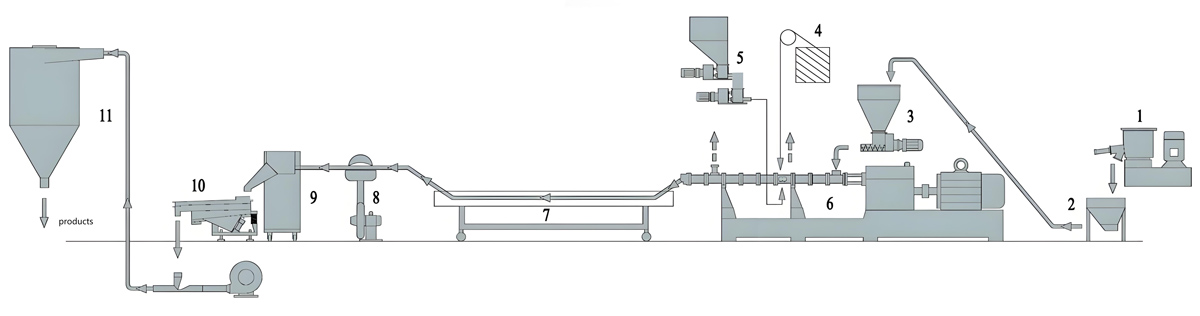
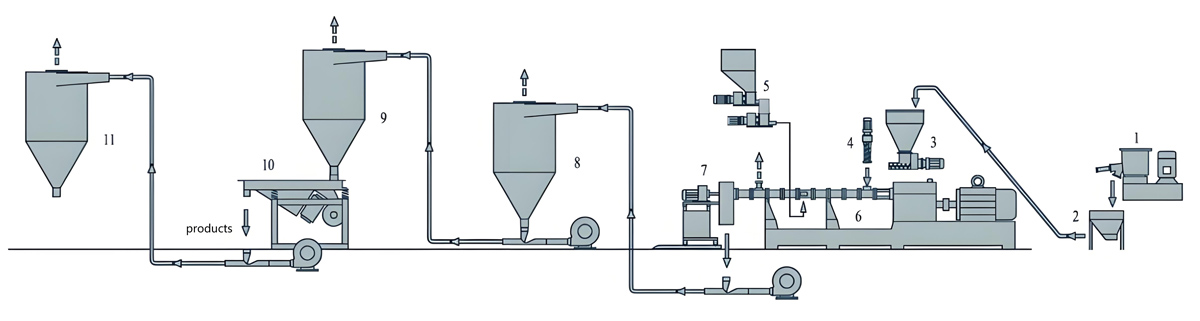
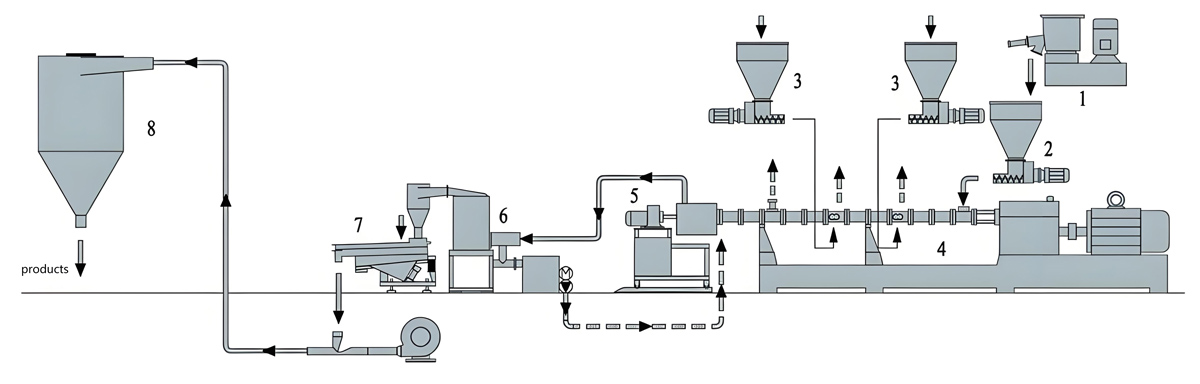
The production of high concentration color masterbatch follows a systematic process that begins with raw material preparation and ends with quality verification. Each step requires careful attention to detail to ensure consistent product quality.
Raw Material Preparation
The process starts with thorough raw material inspection and preparation. Pigments must be examined for moisture content, particle size distribution, and potential contamination. Moisture content above 0.1% for organic pigments and 0.5% for inorganic pigments should trigger pre-drying steps to prevent defects during processing.
Pigment feeding systems must be calibrated accurately to ensure consistent formulation ratios. For high concentration masterbatch, gravimetric feeding systems with loss-in-weight capabilities are strongly recommended over volumetric feeders to maintain precise pigment loading, especially when pigment cost represents a significant portion of total formulation cost.
Carrier polymers should be examined for melt flow index consistency and absence of foreign contaminants. When using recycled carrier materials, the recycled content should be limited to below 20% to maintain consistent processing behavior and color quality.
Feeding and Pre-mixing
In high concentration masterbatch production, multiple feeding strategies can be employed. Side feeding of pigments downstream from the main polymer feed zone is often preferred for organic pigments to minimize residence time and thermal exposure. This approach allows the carrier polymer to melt and establish a melt film before pigment introduction, improving dispersion efficiency.
For inorganic pigments, particularly high-density materials like titanium dioxide, main feeding or early side feeding may be necessary to provide sufficient residence time for complete dispersion and distribution. The feeding point selection depends on pigment type, desired dispersion level, and screw configuration capabilities.
Pre-mixing of pigments and carrier polymer before extrusion is beneficial for some applications, particularly when using pelletized carriers. Tumble blending for 10-15 minutes can improve initial distribution and reduce the mixing load on the extruder. However, for powder pigment directly fed into the extruder, proper feeding system design is more critical than pre-mixing.
Melting and Mixing
The melting and mixing section is where the fundamental dispersion process occurs. Variable speed twin screw extruders provide the flexibility to optimize this critical stage by adjusting screw speed and throughput independently.
Initial melting of the carrier polymer occurs in the feed section and early compression zones. The screw geometry in these zones should provide gentle compression without excessive shear that could prematurely heat sensitive pigments. Variable speed control allows operators to adjust the feed zone screw speed to maintain optimal filling degree and residence time.
The kneading blocks and mixing elements in the subsequent zones generate the shear necessary to break down pigment agglomerates and distribute individual particles uniformly throughout the polymer matrix. The screw speed directly influences the shear rate, with higher speeds producing higher shear rates but also higher melt temperatures. The variable speed capability enables finding the optimal balance between dispersion quality and thermal protection of sensitive pigments.
Devolatilization
Devolatilization zones are incorporated when processing pigments with volatile components or when moisture removal is necessary. These zones typically operate under vacuum to remove trapped air, moisture, and volatile decomposition products that could cause surface defects in the final pellets.
For organic pigment masterbatch, vacuum devolatilization is often essential to remove absorbed moisture and prevent hydrolysis of sensitive pigments. The vacuum level typically ranges from 500 to 700 mmHg, depending on the polymer melt viscosity and desired devolatilization efficiency.
Pelletizing
The final processing stage involves pelletizing the extrudate into uniform granules suitable for downstream processing. Strand pelletizing, water ring pelletizing, and underwater pelletizing are common methods, each with advantages for specific applications.
Strand pelletizing is most suitable for high concentration color masterbatch due to its simplicity and ability to handle high pigment loadings without water contamination. The extrudate is cooled in a water bath and cut into pellets by rotary cutters. Proper strand tension control is critical to prevent strand breakage, which can occur with high pigment loadings that affect melt strength.
Underwater pelletizing provides superior pellet quality with spherical shape and excellent dimensional consistency, but may not be suitable for pigments that are water-soluble or hydrolytically unstable. When using underwater pelletizing for high concentration color masterbatch, special attention must be paid to water treatment and recycling to prevent pigment contamination.
Quality Control
Comprehensive quality control measures are implemented throughout the production process. Color measurement using spectrophotometers confirms color accuracy and consistency within established tolerances. Color difference (Delta E) should be maintained below 1.0 for most applications, and below 0.5 for critical color applications.
Pellet appearance inspection identifies surface defects, gels, and inconsistent sizing. Pellet size uniformity is important for consistent feeding in downstream processes and should be maintained within +/- 0.2 mm of the target diameter.
Dispersion quality assessment is performed through microscopic examination or hot press film testing. Proper dispersion should show pigment particles individually distributed without visible agglomerates greater than 10 microns for most applications.
Production Equipment Introduction
Kerke KTE Series Twin Screw Extruder
The Kerke KTE Series twin screw extruder represents advanced extrusion technology specifically designed for demanding compounding applications including high concentration color masterbatch production. Built by Kerke Extrusion Equipment Company in Nanjing, China, the KTE Series incorporates numerous design features that address the unique challenges of pigment dispersion and thermal management.
The KTE Series features co-rotating twin screw design with screw diameters ranging from 25mm to 100mm and L/D ratios from 40:1 to 48:1. This extended L/D ratio provides the necessary processing length for achieving excellent dispersion of high pigment loadings. The modular barrel segments allow flexible configuration of heating zones, feeding ports, and devolatilization sections to accommodate different processing requirements.
The variable speed drive system on the KTE Series enables precise screw speed control from 50 to 600 rpm depending on machine size. The AC vector drive provides excellent torque characteristics throughout the speed range, allowing operators to optimize shear rate independently of throughput. This capability is particularly valuable for high concentration color masterbatch where shear sensitivity varies significantly between pigment types.
Advanced screw elements are available for the KTE Series, including various kneading block configurations (forward conveying, neutral, and reverse conveying), mixing discs, and barrier elements. These elements can be arranged in custom configurations to optimize the dispersion process for specific pigment types and carrier materials.
Feeding Systems
Accurate pigment feeding is critical for maintaining consistent color quality in high concentration masterbatch. The KTE Series supports multiple feeding configurations, including main feeding through the hopper and side feeding at multiple downstream positions.
Gravimetric feeding systems with loss-in-weight technology are recommended for precise pigment dosing. These systems continuously monitor the weight loss in the feeder and adjust feed rate to maintain accuracy within +/- 0.5% of the target rate. For high-value organic pigments where slight variations significantly affect color, this level of accuracy is essential.
Pigment feeders must be designed to handle the specific characteristics of different pigment types. Free-flowing granular pigments can be fed using standard screw feeders, while fine powders may require agitator-equipped hoppers or vibratory feeders to prevent bridging and ensure consistent flow.
Side feeding systems with vented ports allow introduction of sensitive pigments after the carrier polymer has melted, reducing thermal exposure. The side feeder should be positioned to provide sufficient mixing length for complete dispersion while minimizing residence time for heat-sensitive materials.
Temperature Control System
Precise temperature control is essential for high concentration color masterbatch production to achieve proper polymer melting without degrading sensitive pigments. The KTE Series features zone-based temperature control with individual PID controllers for each barrel zone and die zone.
The barrel temperature profile typically follows a gradual increase from the feed zone to the die, but specific temperatures depend on the carrier polymer and pigment type. For polyolefin carriers, typical barrel temperatures range from 160°C in the feed zone to 210°C in the mixing zones, with die temperatures of 200-220°C. For engineering polymer carriers, temperatures are adjusted according to the polymer’s processing range.
The advanced control system on the KTE Series allows independent temperature setpoints for each zone, enabling precise profile tailoring. The system also includes interlocks to prevent operation when temperature deviations exceed acceptable limits, protecting both the equipment and product quality.
Cooling and Pelletizing Equipment
Effective cooling of the extruded strands is critical for achieving consistent pellet quality. The standard cooling bath for KTE Series extruders includes variable speed water circulation, adjustable water level control, and temperature regulation capability.
Water temperature should be maintained between 15-25°C for most polyolefin-based masterbatch applications. Lower temperatures improve cooling rate but may cause excessive strand stiffness leading to breakage, while higher temperatures may cause insufficient cooling and pellet deformation.
The pelletizing unit for the KTE Series includes rotary cutters with adjustable speed to maintain proper pellet length. Cutter blades must be made from hardened tool steel and maintained sharp to produce clean cuts without generating fines. The cutter speed is synchronized with haul-off speed to maintain consistent pellet length.
Parameter Settings
Optimal parameter settings for high concentration color masterbatch production vary depending on pigment type, carrier polymer, and desired dispersion quality. The following sections provide recommended starting points for different formulations.
Organic Pigment Masterbatch Parameters
For organic pigment masterbatch with 50% pigment loading, the following parameter settings serve as a good starting point for a KTE Series 50mm twin screw extruder processing LDPE carrier:
Screw speed: 200-250 rpm provides adequate shear for dispersion while limiting thermal exposure. The variable speed capability allows fine-tuning based on specific pigment sensitivity. Higher speeds up to 300 rpm may be used for less sensitive pigments, while more sensitive pigments may require speeds as low as 150 rpm.
Throughput: 150-200 kg/h for 50mm extruder. The throughput should be adjusted to maintain optimal filling degree in the mixing zones. Too low throughput results in excessive residence time and potential pigment degradation, while too high throughput reduces mixing effectiveness.
Temperature profile: Feed zone 160°C, compression zones 180°C, mixing zones 200°C, die 210°C. This moderate temperature profile ensures complete polymer melting while protecting sensitive organic pigments. For particularly heat-sensitive pigments, temperatures may be reduced by 10-20°C throughout.
Back pressure: 2.0-2.5 MPa at the die provides sufficient melt compression for good pelletizing without excessive shear heating. The back pressure can be adjusted through screen pack mesh size selection – finer screens increase back pressure and improve dispersion but increase melt temperature.
Inorganic Pigment Masterbatch Parameters
For titanium dioxide masterbatch with 70% loading, parameter settings differ significantly due to the different pigment characteristics:
Screw speed: 300-350 rpm provides the higher shear necessary for dense inorganic pigment dispersion. The higher screw speed generates the shear energy needed to break down TiO2 agglomerates and achieve uniform distribution.
Throughput: 100-150 kg/h for 50mm extruder. The lower throughput relative to organic pigment masterbatch reflects the additional mixing energy required for high-density inorganic pigments. Higher throughputs would reduce residence time and mixing effectiveness.
Temperature profile: Feed zone 170°C, compression zones 200°C, mixing zones 220°C, die 230°C. The higher temperatures are necessary to maintain adequate melt fluidity with the high pigment loading. TiO2 is thermally stable, allowing higher processing temperatures without pigment degradation.
Back pressure: 2.5-3.0 MPa at the die. The higher back pressure improves wetting of dense TiO2 particles and enhances dispersion quality. This can be achieved using finer screen packs (40-60 mesh) rather than the coarser screens used for organic pigment masterbatch.
Carbon Black Masterbatch Parameters
Carbon black masterbatch presents unique processing challenges due to the pigment’s high surface area and tendency to agglomerate:
Screw speed: 250-300 rpm for medium structure carbon black at 50% loading. High structure carbon blacks may require speeds up to 350 rpm, while low structure carbon blacks can be processed at 200-250 rpm.
Throughput: 120-150 kg/h for 50mm extruder. Carbon black’s high viscosity-increasing effect requires moderate throughput to maintain adequate mixing. Excessive throughput can lead to insufficient dispersion and color streaking.
Temperature profile: Feed zone 165°C, compression zones 190°C, mixing zones 210°C, die 220°C. Moderate temperatures are used to avoid excessive shear heating from the high viscosity melt. Carbon black itself has good thermal stability but can oxidize at very high temperatures.
Back pressure: 2.0-2.5 MPa. While adequate back pressure is necessary for dispersion, excessive pressure can cause overheating due to the high melt viscosity. A balanced approach with 30-40 mesh screens provides good dispersion without excessive temperature increase.
Feeding Rate Calibration
Accurate feeding is critical for maintaining consistent pigment loading. The following calibration procedure should be performed for each formulation:
For gravimetric feeders, calibration involves weighing the material delivered over a timed period and adjusting the feeder controller accordingly. Calibration should be performed at multiple feed rates covering the expected operating range to ensure accuracy across all conditions.
For volumetric feeders, calibration is more complex as feed rate depends on material bulk density. The feeder should be calibrated with the actual pigment to be used, and recalibration should be performed whenever pigment lots change significantly in particle size distribution or flow characteristics.
Regular verification of feeder accuracy should be performed during production by periodically collecting discharge samples and comparing actual pigment content to target through laboratory analysis.
Equipment Price
The investment required for high concentration color masterbatch production equipment varies based on capacity, level of automation, and specific configuration requirements. The following price estimates are provided for reference and are expressed in US dollars.
KTE Series Twin Screw Extruder Pricing
The KTE Series twin screw extruder from Kerke Extrusion Equipment Company offers competitive pricing while maintaining high quality standards for demanding compounding applications. Price levels vary by machine size and configuration:
KTE-25 model (25mm screw diameter): $85,000 – $110,000. This compact model is suitable for laboratory-scale production and pilot trials, with capacity ranging from 20-50 kg/h for masterbatch applications.
KTE-40 model (40mm screw diameter): $150,000 – $190,000. This mid-range model is ideal for small to medium-scale production, with capacity of 80-150 kg/h. The KTE-40 represents excellent value for operations requiring flexibility for multiple formulations.
KTE-50 model (50mm screw diameter): $220,000 – $280,000. This is the most popular size for dedicated masterbatch production, offering capacity of 150-300 kg/h. The KTE-50 provides the optimal balance of productivity, energy efficiency, and investment cost.
KTE-75 model (75mm screw diameter): $350,000 – $450,000. This high-capacity model is designed for large-scale production operations, with capacity of 300-600 kg/h. The KTE-75 is suitable for dedicated production of high-volume color masterbatch lines.
KTE-100 model (100mm screw diameter): $550,000 – $700,000. The largest KTE Series model offers capacity of 600-1200 kg/h for high-volume production. This model is typically used in large compounding facilities with dedicated production lines.
Accessory Equipment Pricing
In addition to the extruder, several accessory systems are required for complete masterbatch production:
Gravimetric feeding systems: $25,000 – $60,000 depending on number of feeders and capacity. High-accuracy systems for organic pigments typically cost $45,000-$60,000, while less critical systems for inorganic pigments may cost $25,000-$35,000.
Side feeding unit with vented port: $15,000 – $25,000. This accessory is essential for processing heat-sensitive pigments and provides flexibility in feeding strategy.
Strand pelletizing system: $30,000 – $50,000 including water bath, haul-off, and rotary cutter. Higher capacity systems and those with advanced automation are at the upper end of this range.
Underwater pelletizing system: $80,000 – $150,000. While more expensive than strand pelletizing, underwater systems produce superior pellet quality and are preferred for high-value applications.
Complete production line with KTE-50 extruder, gravimetric feeders, side feeder, and pelletizing system: $320,000 – $420,000 installed, depending on specific configuration and automation level.
Operating Cost Considerations
Beyond initial capital investment, ongoing operating costs significantly impact total cost of ownership:
Energy consumption varies by machine size and configuration. The KTE-50 typically consumes 80-120 kW/h depending on operating conditions, translating to $12,000-$20,000 in annual electricity costs at typical industrial rates assuming 5000 operating hours per year.
Maintenance costs average 2-3% of equipment value annually when proper maintenance schedules are followed. This includes routine maintenance such as screw and barrel inspection, drive system servicing, and control system calibration.
Raw material costs, particularly pigments, represent the largest variable cost component in masterbatch production. Efficient processing with low scrap rates (below 2%) is essential for maintaining profitability, especially for high-value organic pigments.
Production Problems and Solutions
Problem 1: Color Inconsistency Between Batches
Color inconsistency is one of the most common quality issues in high concentration color masterbatch production. This problem manifests as noticeable color differences between different production batches of the same formulation, causing significant customer dissatisfaction and potential rejections.
Cause Analysis
The primary causes of color inconsistency include variations in raw material characteristics, particularly pigment particle size distribution and tinting strength between different pigment lots. Even slight differences in these characteristics can result in measurable color differences at high pigment loadings. Feed system inaccuracies, particularly with volumetric feeders, can cause variations in actual pigment loading compared to the target formulation.
Processing parameter variations, especially temperature and screw speed, can affect pigment dispersion quality and thermal degradation of sensitive pigments. Inadequate mixing due to screw wear or improper configuration may lead to non-uniform pigment distribution within the melt. Finally, inconsistent sampling and measurement procedures during quality control can lead to apparent color differences that are actually measurement artifacts.
Solution
Implement comprehensive raw material qualification procedures that require pigment suppliers to provide certificates of analysis including particle size distribution, tinting strength, and moisture content. Establish acceptance criteria and perform incoming inspection testing for critical pigment characteristics. When pigment lots vary, reformulate slightly to compensate for strength differences, maintaining consistent color performance.
Upgrade to gravimetric feeding systems with loss-in-weight technology for precise pigment dosing. Implement regular feeder calibration procedures and verify accuracy through periodic laboratory analysis of masterbatch pigment content. For critical applications, consider implementing online pigment content monitoring using near-infrared spectroscopy.
Standardize processing parameters and implement process control systems that maintain tight tolerances on key variables. The variable speed drive on the KTE Series allows precise screw speed control, while the advanced temperature control system maintains consistent barrel and die temperatures. Document standard operating procedures specifying parameter ranges and adjustment protocols.
Prevention
Implement a comprehensive quality management system that includes statistical process control for monitoring color variation trends. Establish color tolerance specifications based on customer requirements and application criticality. Perform regular inter-batch color comparisons using calibrated spectrophotometers under standardized lighting conditions.
Maintain detailed production records documenting raw material lot numbers, processing parameters, and quality control results for each batch. This enables traceability and root cause analysis when color inconsistencies occur. Implement supplier quality management programs to improve consistency of incoming pigment materials.
Problem 2: Poor Pigment Dispersion and Agglomerates
Inadequate pigment dispersion results in visible pigment agglomerates in the final product, color streaks, and reduced tinting strength. This problem is particularly common with high pigment loadings and dense inorganic pigments like titanium dioxide.
Cause Analysis
The primary causes of poor dispersion include insufficient shear energy during processing, often resulting from low screw speed or excessive throughput that reduces residence time in the mixing zones. Improper screw configuration lacking adequate kneading blocks or mixing elements fails to generate the necessary dispersive mixing. Worn screw elements or barrel surfaces reduce mixing efficiency by allowing material to bypass mixing zones.
Inadequate pigment wetting due to low processing temperatures or incorrect feeding position prevents polymer melt from penetrating pigment agglomerates. Poor pigment pre-treatment with inadequate dispersant levels or ineffective dispersant selection reduces pigment compatibility with the carrier polymer. Finally, pigment characteristics such as large agglomerate size or high surface energy may exceed the equipment’s dispersive capacity.
Solution
Optimize screw configuration by increasing the number and aggressiveness of kneading blocks in the mixing zones. For titanium dioxide masterbatch, incorporate reverse conveying elements to increase residence time and mixing intensity. The modular design of the KTE Series allows easy reconfiguration of screw elements to suit specific dispersion requirements.
Increase screw speed to generate higher shear rates, balancing this with thermal considerations for sensitive pigments. The variable speed capability of the KTE Series allows finding the optimal screw speed for each formulation. Adjust throughput to maintain optimal filling degree in the mixing zones, typically 60-80% fill for dispersive mixing.
Increase processing temperature gradually while monitoring pigment thermal stability. Higher temperatures reduce melt viscosity and improve pigment wetting. For titanium dioxide, increase mixing zone temperatures to 220-230°C, provided the carrier polymer can tolerate these temperatures.
Incorporate appropriate dispersants in the formulation, typically 3-7% depending on pigment type. For difficult-to-disperse pigments, use combination dispersants including wetting agents and lubricants. Optimize dispersant type and level through experimentation using dispersion quality evaluation methods.
Prevention
Implement regular equipment maintenance schedules to replace worn screw elements and maintain barrel surfaces. Monitor screw wear patterns and replace elements before dispersion quality degrades. Establish baseline dispersion quality standards and perform regular dispersion testing using microscopic examination or hot press film evaluation.
Develop formulation-specific processing guidelines with recommended screw configurations, parameter settings, and dispersant packages. Document these guidelines in standard operating procedures and ensure operators are trained to implement them correctly.
Establish raw material specifications including maximum agglomerate size for pigments. Pre-screen pigment lots to identify problematic materials before production. Consider pre-milling or air classification of pigments to reduce agglomerate size before extrusion.
Problem 3: Pigment Degradation and Color Fading
Pigment degradation, particularly of organic pigments, results in color fading, hue shifts, and reduced tinctorial strength. This problem is especially prevalent with heat-sensitive pigments and occurs during processing or in the final application.
Cause Analysis
Excessive thermal exposure during processing is the primary cause of pigment degradation. High barrel temperatures, especially in the mixing zones and die, can exceed pigment thermal stability limits. Prolonged residence time in the extruder due to low throughput or inefficient feeding increases thermal exposure. Excessive shear heating from high screw speed or aggressive mixing elements can generate local hot spots that degrade pigments.
Oxidative degradation occurs when pigments are exposed to oxygen at elevated temperatures for extended periods. This is particularly problematic for certain organic pigments that are susceptible to oxidation. Contamination from previous production runs may introduce incompatible materials that catalyze pigment degradation reactions.
Solution
Reduce processing temperatures to the minimum required for adequate polymer melting and mixing. For sensitive organic pigments, use barrel temperatures 10-20°C below typical polyolefin processing temperatures. Maintain die temperature slightly below mixing zone temperature to reduce thermal stress before pelletizing.
Decrease residence time by optimizing throughput to the highest level that still maintains adequate dispersion quality. Implement side feeding of sensitive pigments after the carrier polymer has melted, reducing thermal exposure by 30-50%. The KTE Series side feeder with vented port is ideal for this purpose.
Reduce screw speed to lower shear heating, particularly for pigments known to be shear-sensitive. However, balance this with dispersion requirements. The variable speed drive on the KTE Series allows precise adjustment to find the optimal balance.
Incorporate thermal stabilizers in the formulation to protect sensitive pigments. Antioxidants, particularly phenolic and phosphite types, can significantly improve pigment thermal stability. For oxidation-prone pigments, include antioxidants in the carrier polymer formulation.
Prevention
Implement rigorous material changeover procedures to prevent cross-contamination between formulations. Purge the extruder thoroughly with compatible materials before introducing sensitive pigments. Use purge compounds specifically designed for color change to reduce material loss and downtime.
Develop processing specifications for each pigment type based on manufacturer thermal stability data. Maintain a database of pigment characteristics and processing guidelines to ensure operators are aware of special handling requirements for sensitive materials.
Implement nitrogen purging of the hopper and feed zones when processing extremely sensitive pigments to reduce oxidative degradation. While this adds complexity and cost, it may be justified for high-value pigment applications.
Problem 4: Pellet Quality Issues
Pellet quality problems including inconsistent sizing, surface defects, and gels affect downstream processing performance and customer satisfaction. These issues are common in high concentration masterbatch due to the unique rheological properties of highly pigmented melts.
Cause Analysis
Inconsistent pellet sizing typically results from improper synchronization of haul-off speed and cutter speed, or from variation in extrudate diameter due to die swell changes. Surface defects such as roughness or pitting often result from inadequate cooling, moisture contamination, or incompatible material in the formulation. Gels and unmelted particles usually originate from poor melting efficiency or contamination from previous runs.
High pigment loading significantly affects melt rheology, increasing viscosity and affecting die swell characteristics. This can lead to inconsistent strand diameter and pellet size. Poor strand cooling causes soft pellets that deform during cutting, while excessive cooling makes strands brittle and prone to breakage.
Solution
Optimize cutter speed to haul-off speed ratio to maintain consistent pellet length. For most applications, a ratio of 1:3 (cutter to haul-off) provides good results. Fine-tune this ratio based on pellet quality inspection and adjust for different formulations due to rheological differences.
Maintain consistent die temperature and throughput to stabilize extrudate diameter. The advanced temperature control on the KTE Series maintains die temperature within +/- 1°C, minimizing die swell variations. For formulations with significant die swell, consider installing a calibration die to stabilize strand diameter.
Adjust water bath temperature and immersion length to achieve proper cooling without causing thermal shock. For polyolefin masterbatch, water temperature of 15-20°C and immersion length of 2-3 meters typically provides adequate cooling. Higher pigment loadings may require longer cooling due to increased melt thermal mass.
Ensure cutter blades are sharp and properly aligned. Replace blades when cutting quality deteriorates or after processing abrasive materials. For abrasive inorganic pigments, schedule more frequent blade replacement to maintain pellet quality.
Prevention
Implement regular pellet quality monitoring with defined specifications for pellet size, shape, and appearance. Use automated vision systems for consistent inspection where production volumes justify the investment. Document quality trends and correlate with processing parameters to identify root causes.
Establish changeover procedures that minimize transition material while ensuring complete removal of previous formulations. Implement color change validation procedures to confirm complete purging before starting production runs with sensitive pigments.
Maintain water bath cleanliness through regular filtration and treatment. Contaminated water causes surface defects and may introduce incompatible contaminants to the pellets. Implement water treatment schedules based on water quality monitoring and production volume.
Problem 5: Excessive Screw Wear
High concentration color masterbatch, particularly those containing abrasive inorganic pigments, can cause accelerated screw and barrel wear. This increases maintenance costs and eventually affects product quality through reduced mixing efficiency.
Cause Analysis
Abrasive pigments including titanium dioxide, iron oxides, and metallic powders cause mechanical wear on screw elements and barrel surfaces through continuous abrasive action. High screw speeds and throughput rates increase the abrasive wear rate. Improper screw configuration that forces abrasive pigments through restrictive elements accelerates wear.
Corrosive pigments or additives can cause chemical attack on metal surfaces, accelerating wear. High processing temperatures accelerate chemical wear processes. Hard particles that cannot be adequately dispersed act as abrasive media throughout the mixing zones.
Solution
Use wear-resistant screw elements and barrel linings for abrasive applications. The KTE Series offers nitrided and tungsten carbide coated elements that significantly extend service life with abrasive formulations. For extremely abrasive materials, consider ceramic-coated elements or specialized alloys.
Reduce screw speed to the minimum that still provides adequate dispersion. While this may require lower throughput or longer mixing sections, the reduced wear rate can justify the lower productivity for abrasive formulations. The variable speed capability of the KTE Series allows optimizing this balance.
Redesign screw configuration to minimize restrictive elements that force abrasive materials through tight clearances. Use more open mixing configurations that provide dispersive action without excessive pressure build-up. Incorporate barrier elements that protect critical wear areas.
Prevention
Implement scheduled maintenance programs based on predicted wear rates for different formulations. Keep detailed records of element service life by formulation to predict when replacement will be needed. Plan preventive maintenance rather than waiting for wear to affect product quality.
Separate abrasive and non-abrasive production lines when possible to avoid exposing sensitive equipment to unnecessary wear. For mixed production facilities, establish dedicated equipment groups for abrasive applications and schedule them accordingly.
Monitor wear through regular dimensional inspection of critical screw elements. Measure element wear during scheduled maintenance and track trends to predict remaining service life. This enables proactive replacement before wear affects product quality.
Maintenance
Preventive Maintenance Schedule
A well-structured preventive maintenance program is essential for maintaining consistent product quality and maximizing equipment uptime. The following schedule provides recommended maintenance intervals for high concentration color masterbatch production using the KTE Series.
Daily Maintenance
Daily maintenance tasks focus on monitoring equipment performance and addressing immediate issues. Operators should visually inspect the extruder for leaks, unusual vibrations, or abnormal noises. Check all temperature zones are maintaining setpoints within tolerance and record any deviations.
Inspect the feeding system for proper operation and ensure smooth material flow. Clean feed hoppers if necessary to prevent material build-up. Check the pelletizing system for proper strand cutting and pellet quality. Clear any strand breakages immediately and address underlying causes.
Record production parameters including throughput, screw speed, temperatures, and energy consumption. Compare these to baseline values and investigate any significant deviations that may indicate developing problems.
Weekly Maintenance
Weekly maintenance includes more detailed inspection and cleaning tasks. Inspect and clean the die assembly, removing any material build-up that could affect extrudate quality. Check screen pack condition and replace if excessive pressure increase is observed.
Inspect cutter blades for wear or damage and sharpen or replace as needed. For abrasive formulations, blade inspection should be performed more frequently. Check water bath filtration and clean or replace filters as needed to maintain water quality.
Perform detailed inspection of screw elements through the discharge end, looking for signs of wear, corrosion, or damage. Document any observations and compare to previous inspections to track wear trends.
Monthly Maintenance
Monthly maintenance tasks address longer-term equipment condition. Lubricate all drive system components according to manufacturer specifications, including motor bearings, gearbox, and drive shafts. Check drive belt tension and condition, replacing belts showing signs of wear.
Perform detailed inspection of temperature control systems, checking sensors, heaters, and cooling systems. Calibrate temperature sensors using reference thermocouples and adjust for any drift. Inspect electrical connections for signs of overheating or corrosion.
Review and update maintenance records, analyzing trends to predict future maintenance needs. Schedule major overhauls based on this analysis rather than waiting for equipment failure.
Quarterly Maintenance
Quarterly maintenance involves more extensive inspections and potential component replacement. Perform detailed gearbox inspection, checking oil condition and changing if necessary. Inspect gear teeth for wear patterns indicating misalignment or overload.
Inspect barrel interior surface for wear, scoring, or corrosion. Measure barrel internal diameter at multiple locations to track wear trends. Replace barrels when wear exceeds manufacturer specifications or begins affecting product quality.
Perform complete screw element inspection and wear measurement. Replace elements showing excessive wear or damage. For abrasive formulations, consider upgrading to more wear-resistant materials at this time.
Annual Maintenance
Annual maintenance involves comprehensive equipment assessment and major component servicing. Perform complete disassembly and inspection of the extruder drive system, including motor, gearbox, and couplings. Replace bearings, seals, and other wear components based on inspection results.
Comprehensive electrical system inspection including control panel review, wire integrity, and safety systems verification. Calibrate all instruments including temperature sensors, pressure transducers, and motor speed controllers.
Review maintenance records from the past year and update maintenance schedules based on observed wear patterns and component life. Adjust preventive maintenance intervals to optimize equipment reliability while minimizing unnecessary maintenance.
Record Keeping
Comprehensive maintenance records are essential for tracking equipment condition and optimizing maintenance schedules. Maintain detailed logs for all maintenance activities including date, personnel involved, work performed, parts replaced, and observations.
Record production parameters and quality data for correlation with maintenance activities. This data helps identify the effects of maintenance on product quality and equipment performance. Track component service life by formulation to identify particularly demanding materials that may require specialized maintenance approaches.
Implement a computerized maintenance management system for production-scale operations to automate record keeping, schedule maintenance activities, and provide trend analysis. Even smaller operations benefit from structured documentation using spreadsheets or maintenance logs.
Spare Parts Management
Effective spare parts management minimizes downtime during unscheduled maintenance. Maintain an inventory of critical spare parts based on lead time, cost, and failure probability. For the KTE Series, recommended spare parts include common screw elements, temperature sensors, heater bands, cutter blades, and seals.
For high-value components with long lead times such as complete screw assemblies or barrels, consider establishing consignment agreements with the supplier to reduce inventory investment while ensuring availability when needed.
Track spare parts usage and adjust inventory levels based on actual consumption patterns. Review spare parts requirements quarterly to ensure inventory reflects current production conditions and component service life experience.
FAQ
Q1: What is the optimal pigment loading for high concentration color masterbatch?
Optimal pigment loading depends on the pigment type, carrier polymer, and end-use application. For organic pigments, typical loadings range from 30% to 50%, with 40% being common for many applications. Inorganic pigments like titanium dioxide can achieve loadings of 60-75% while maintaining good processability. Carbon black typically uses 30-50% loading depending on structure and desired jetness. The key is to balance concentration with processability and cost. Higher loadings reduce the amount of carrier polymer needed but increase processing difficulty and equipment wear. Formulation development should optimize loading for each specific application.
Q2: How do I choose the right dispersant for my pigment masterbatch formulation?
Dispersant selection depends on pigment surface characteristics, carrier polymer compatibility, and processing conditions. For polyolefin carriers, polyethylene wax is a versatile dispersant effective for many pigment types. Polypropylene wax provides better compatibility with PP carriers and higher temperature applications. Specialized dispersants such as maleic anhydride grafted polyolefins improve dispersion of difficult-to-wet pigments. The dispersant level typically ranges from 3-7%, with higher levels needed for pigments with high surface energy or strong agglomeration tendencies. Formulation testing should include evaluation of different dispersants at various levels to optimize dispersion quality and processing performance.
Q3: What are the advantages of side feeding sensitive pigments?
Side feeding offers several important benefits for heat-sensitive pigments. It reduces thermal exposure by introducing the pigment after the carrier polymer has melted, typically cutting residence time by 30-50% compared to main feeding. This is particularly valuable for organic pigments with thermal stability limits around 200-220°C. Side feeding also reduces the shear energy transferred to sensitive pigments since the melt film is already established, protecting pigments from high shear in the early melting zones. Additionally, side feeding can improve dispersion efficiency for some pigments by introducing them into a well-developed melt, improving wetting and reducing the energy needed for deagglomeration. The KTE Series includes side feeder options with vented ports specifically designed for this application.
Q4: How can I improve color consistency between batches?
Improving color consistency requires addressing multiple factors. First, implement strict raw material qualification procedures to ensure pigment lots meet specifications for particle size, tinting strength, and moisture content. Consider pre-testing each pigment lot and reformulating slightly to compensate for strength variations. Second, upgrade to gravimetric feeding systems for precise pigment dosing, as volumetric feeders can vary significantly with changes in material bulk density. Third, standardize and tightly control processing parameters including temperatures, screw speed, and throughput. Document and follow standard operating procedures for each formulation. Fourth, implement statistical process control to monitor color trends and identify variations before they become significant problems. Finally, use calibrated spectrophotometers under consistent lighting conditions for color measurement to eliminate measurement variability.
Q5: What screw speed should I use for different pigment types?
Optimal screw speed varies significantly based on pigment characteristics. For heat-sensitive organic pigments such as phthalocyanines and azo pigments, lower screw speeds of 150-250 rpm reduce thermal exposure while still providing adequate dispersion. For dense inorganic pigments like titanium dioxide and iron oxides, higher speeds of 300-350 rpm generate the shear needed to break down agglomerates and achieve uniform distribution. Carbon black processing requires intermediate speeds of 250-300 rpm, adjusted based on carbon black structure with high structure carbon blacks requiring higher speeds. The variable speed capability of the KTE Series allows fine-tuning screw speed for each formulation to find the optimal balance between dispersion quality and thermal protection. Always start with recommended speeds for the pigment type and adjust based on dispersion quality and pigment thermal stability assessment.
Q6: How do I troubleshoot color streaking in the final product?
Color streaking typically indicates pigment dispersion problems or feeding inconsistencies. First, check that the feeding system is delivering consistent pigment loading. Verify feeder calibration and inspect for material bridging or flow interruptions. Second, examine the screw configuration to ensure adequate mixing elements are present, particularly in the zones after pigment introduction. Increase the number or aggressiveness of kneading blocks if necessary. Third, check processing temperatures. Low temperatures may prevent proper pigment wetting, while excessively high temperatures may cause pigment degradation or carrier polymer breakdown. Fourth, inspect the die for build-up or obstructions that could cause flow variations. Finally, evaluate the pigment itself – has the lot changed from previous successful production? Is the pigment properly dispersed with appropriate dispersant levels? Addressing these factors systematically usually identifies and resolves color streaking issues.
Q7: What is the expected service life of screw elements with abrasive pigments?
Service life varies significantly based on pigment abrasiveness, processing conditions, and screw element material. Standard steel elements processing titanium dioxide at 70% loading may show measurable wear after 2000-3000 operating hours. With less abrasive pigments at 30% loading, service life may extend to 4000-5000 hours. Nitrided or tungsten carbide coated elements can double or triple these service times, particularly important for high-value abrasive pigments. Carbon steel elements processing metallic powders may need replacement after just 1000-1500 hours. Regular monitoring through dimensional inspection allows prediction of remaining service life and scheduling of replacement before wear affects product quality. Reducing screw speed and optimizing screw configuration to minimize restrictive elements can also extend element life, though this may require trade-offs with productivity.
Q8: How do I prevent cross-contamination between color changes?
Effective color change procedures are critical for preventing cross-contamination. Start by completely emptying the hopper and feeding system of the previous material. Use a purge compound compatible with both the old and new formulations to clean the extruder. For major color changes, particularly when switching from dark to light colors, multiple purge cycles may be necessary. Continue purging until the extrudate runs clear of the previous color. For difficult changes, consider using specialized color change purge compounds that contain cleaning agents. After purging, visually inspect the screw elements and barrel through openings to verify complete removal of previous material. Document the purge time and material used for each color change to develop effective procedures. For frequently used colors, consider dedicating specific extruders to certain color families to minimize changeover requirements.
Q9: What are the signs of inadequate pigment dispersion?
Inadequate dispersion manifests through several observable signs. Visual inspection may reveal pigment specks or agglomerates in pellets or in test plaques molded from the masterbatch. Color measurement may show lower tinctorial strength than expected for the given loading, indicating that not all pigment is effectively contributing to color. Microscopic examination of thin sections will show pigment agglomerates larger than 5-10 microns, where properly dispersed pigments should appear as individual particles. Processing the masterbatch may cause issues such as filter clogging due to agglomerates, or inconsistent color in downstream applications. Mechanical properties of molded parts using the masterbatch may be reduced if agglomerates act as stress concentrators. Regular dispersion testing using hot press films or microscopic examination helps identify dispersion problems before they affect customer satisfaction.
Q10: How does pigment particle size affect processing and final product quality?
Pigment particle size significantly impacts both processing requirements and final product performance. Smaller pigment particles provide greater surface area, which improves color strength and reduces the loading needed to achieve target color. However, smaller particles are more prone to agglomeration, requiring more intensive mixing and higher dispersant levels to achieve proper dispersion. Larger pigment particles are easier to disperse but provide lower color strength and may cause surface roughness or visible particles in thin applications. Particle size distribution also affects processing – broad distributions can lead to inconsistent dispersion as larger particles require more energy to break down while smaller particles may already be adequately dispersed. Understanding the particle size characteristics of your pigments allows optimization of formulation and processing parameters for each specific pigment type.
Summary
High concentration color masterbatch production demands specialized equipment, precise process control, and detailed technical understanding of pigment-polymer interactions. Variable speed twin screw extruders, particularly the Kerke KTE Series, provide the flexibility and performance needed to produce consistent, high-quality color masterbatch across a wide range of pigment types and concentrations.
Successful production begins with proper formulation development that considers pigment characteristics, carrier polymer selection, and dispersant optimization. Understanding the specific requirements of organic pigments, inorganic pigments, carbon black, and specialty colorants enables formulation of effective masterbatch that delivers reliable color performance while maintaining processability.
Processing parameters must be carefully optimized for each formulation. The variable speed capability of the KTE Series allows operators to find the optimal balance between dispersion quality and thermal protection for sensitive pigments. Screw configuration, feeding strategy, temperature profile, and throughput all significantly impact final product quality and must be systematically optimized.
Quality control throughout the production process ensures consistent product delivery to customers. Color measurement, dispersion evaluation, and pellet quality inspection provide comprehensive quality assurance. Statistical process control enables early detection of variations and facilitates continuous improvement.
Effective troubleshooting procedures help quickly identify and resolve production problems when they occur. Understanding the root causes of common issues such as color inconsistency, poor dispersion, pigment degradation, pellet quality problems, and equipment wear enables efficient problem resolution and prevents recurrence.
Comprehensive maintenance programs are essential for maintaining equipment performance and minimizing downtime. Regular preventive maintenance, detailed record keeping, and effective spare parts management keep the extruder operating at peak efficiency while extending service life and reducing total cost of ownership.
Investing in high-quality equipment such as the KTE Series twin screw extruder, combined with proper technical knowledge and systematic process management, enables manufacturers of high concentration color masterbatch to achieve superior product quality, operational efficiency, and customer satisfaction in this technically demanding segment of the compounding industry.