Introduction to Extrusion Technology
Extrusion is a widely used manufacturing process in the polymer industry that involves heating, melting, and shaping plastic materials into continuous profiles such as films, pipes, sheets, and pellets. The extrusion process relies on extruders, which are machines that push plastic materials through a die to create the desired shape.
There are two main types of extruders used in the polymer industry: twin screw extruders and single screw extruders. Each type has its own unique features and advantages, making them suitable for different applications. In this article, we will compare twin screw extruders and single screw extruders for compounding applications, highlighting their differences, advantages, and limitations.
Single Screw Extruders: An Overview
Working Principle
Single screw extruders are the most common type of extruder used in the polymer industry. They consist of a single screw that rotates within a barrel, pushing plastic material from the hopper to the die. The screw is designed with a specific flight profile that conveys, melts, and pumps the material through the extruder.
Advantages
Single screw extruders have several advantages, including:
- Simple design and easy to operate
- Lower initial cost compared to twin screw extruders
- High throughput for simple applications
- Less energy consumption for certain materials
- Low maintenance requirements
Limitations
However, single screw extruders also have some limitations:
- Poor mixing capabilities compared to twin screw extruders
- Limited ability to process complex materials with multiple components
- Prone to overheating and degradation of heat-sensitive materials
- Less control over the processing parameters
- Limited flexibility for changing processing conditions
Twin Screw Extruders: An Overview
Working Principle
Twin screw extruders consist of two parallel screws that rotate within a barrel. The screws can rotate in the same direction (co-rotating) or opposite directions (counter-rotating). Co-rotating twin screw extruders are the most common type used in compounding applications due to their superior mixing capabilities.
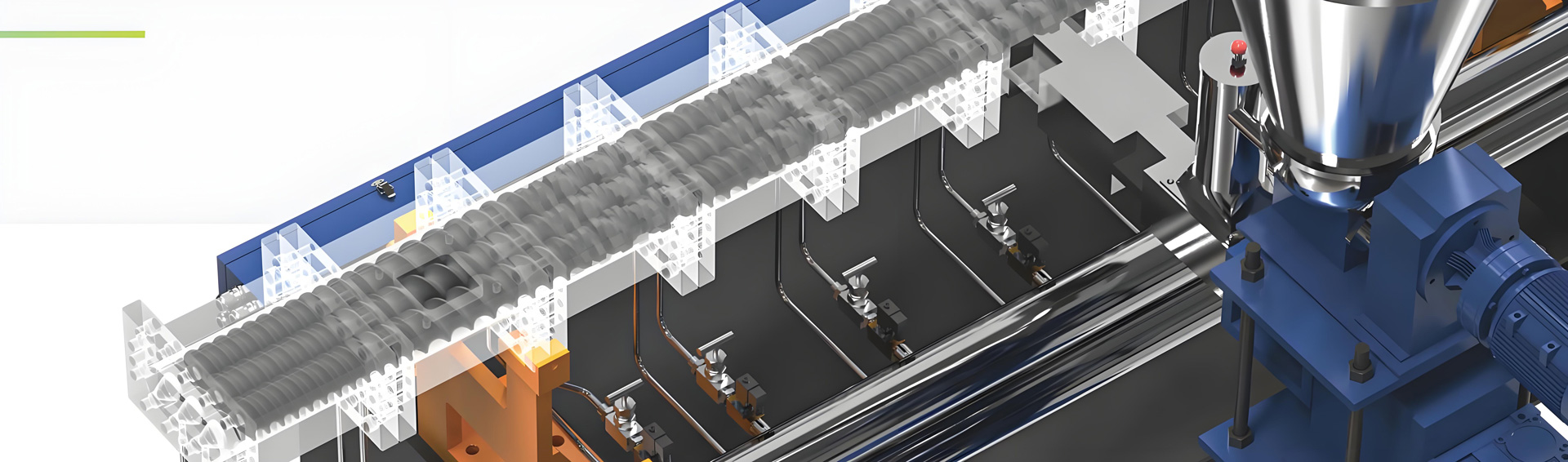
The screws in twin screw extruders are designed with a variety of flight profiles and mixing elements that work together to convey, melt, and mix the plastic material. The intermeshing screws create a high shear environment that ensures thorough mixing of all components, resulting in a homogeneous product.
Advantages
Twin screw extruders offer several advantages over single screw extruders:
- Superior mixing capabilities for complex materials
- Ability to process a wide range of materials with different properties
- Better temperature control, reducing the risk of overheating and degradation
- More precise control over the processing parameters
- Greater flexibility for changing processing conditions
- Self-cleaning capabilities, reducing the need for frequent cleaning
Limitations
Despite their many advantages, twin screw extruders also have some limitations:
- Higher initial cost compared to single screw extruders
- More complex design and requires more skilled operators
- Higher energy consumption for certain applications
- Greater maintenance requirements
- Lower throughput for simple applications compared to single screw extruders
Comparison of Twin Screw Extruders vs Single Screw Extruders for Compounding Applications
Mixing Capabilities
One of the key differences between twin screw extruders and single screw extruders is their mixing capabilities. Twin screw extruders are specifically designed for compounding applications, where multiple components need to be mixed together to create a homogeneous product.
The intermeshing screws in twin screw extruders create a high shear environment that breaks up agglomerates and ensures uniform distribution of all components throughout the polymer matrix. This results in a more homogeneous product with better mechanical properties and consistent color.
Single screw extruders, on the other hand, rely on a single screw to convey and melt the material, which provides limited mixing capabilities. They are suitable for simple applications where the material is relatively uniform and does not require extensive mixing.
Processing Flexibility
Twin screw extruders offer greater processing flexibility compared to single screw extruders. The screw configuration in twin screw extruders can be customized to meet the specific requirements of different materials and applications. Different types of mixing elements, such as kneading blocks and mixing screws, can be used to achieve the desired mixing efficiency.
Single screw extruders, on the other hand, have a fixed screw design, which limits their flexibility for processing different materials. Changing the screw configuration in a single screw extruder is time-consuming and expensive, making it less suitable for applications that require frequent changes in processing conditions.
Temperature Control
Temperature control is crucial in the extrusion process to prevent overheating and degradation of the plastic material. Twin screw extruders offer better temperature control compared to single screw extruders due to their design.
The intermeshing screws in twin screw extruders ensure that the material is evenly heated as it moves through the extruder. The high shear environment created by the screws also helps to distribute the heat more uniformly, reducing the risk of hot spots and degradation.
Single screw extruders, on the other hand, rely on friction between the screw and the material to generate heat, which can result in uneven heating and overheating of the material. This can lead to degradation of heat-sensitive materials and affect the quality of the final product.
Throughput and Efficiency
Single screw extruders typically have higher throughput for simple applications compared to twin screw extruders. This is because single screw extruders have a simpler design and lower energy consumption, allowing them to process larger volumes of material at a lower cost.
However, twin screw extruders are more efficient for complex compounding applications where thorough mixing is required. Despite their higher energy consumption, twin screw extruders can process materials more efficiently, resulting in a better quality product with fewer defects.
Maintenance and Operating Costs
Single screw extruders have lower maintenance and operating costs compared to twin screw extruders. Their simple design means that they require less maintenance and have fewer parts that can wear out or break down.
Twin screw extruders, on the other hand, have a more complex design with more moving parts, which requires more frequent maintenance and can be more expensive to operate. The high torque and high speed capabilities of twin screw extruders also put more stress on the components, increasing the risk of wear and tear.
Kerke Extruders: A Leading Manufacturer of Twin Screw Extruders
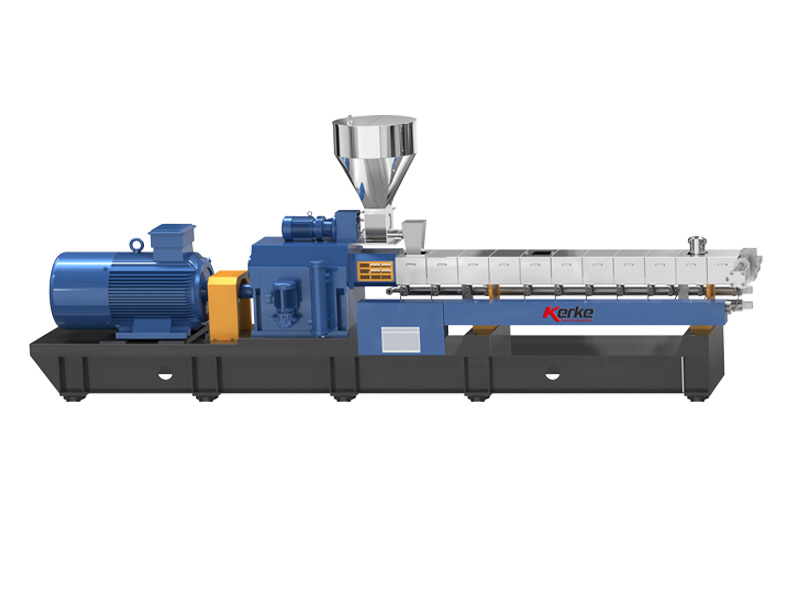
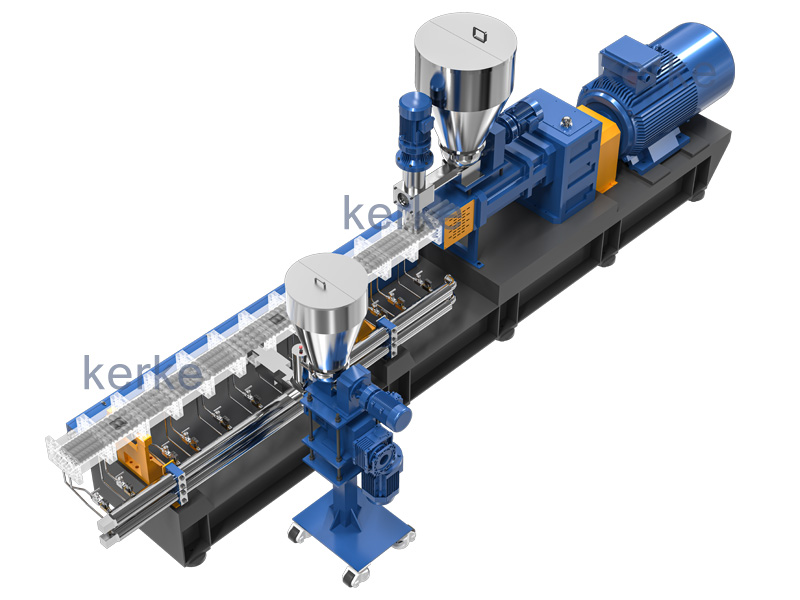
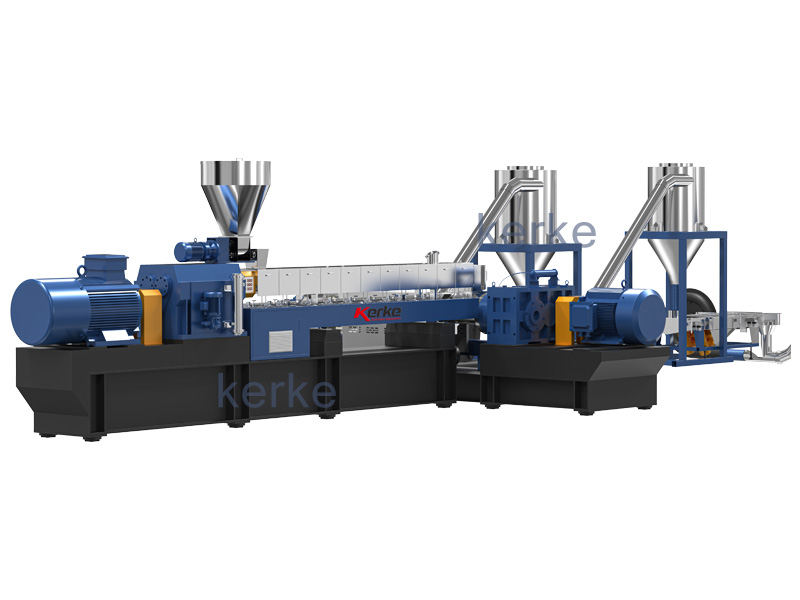
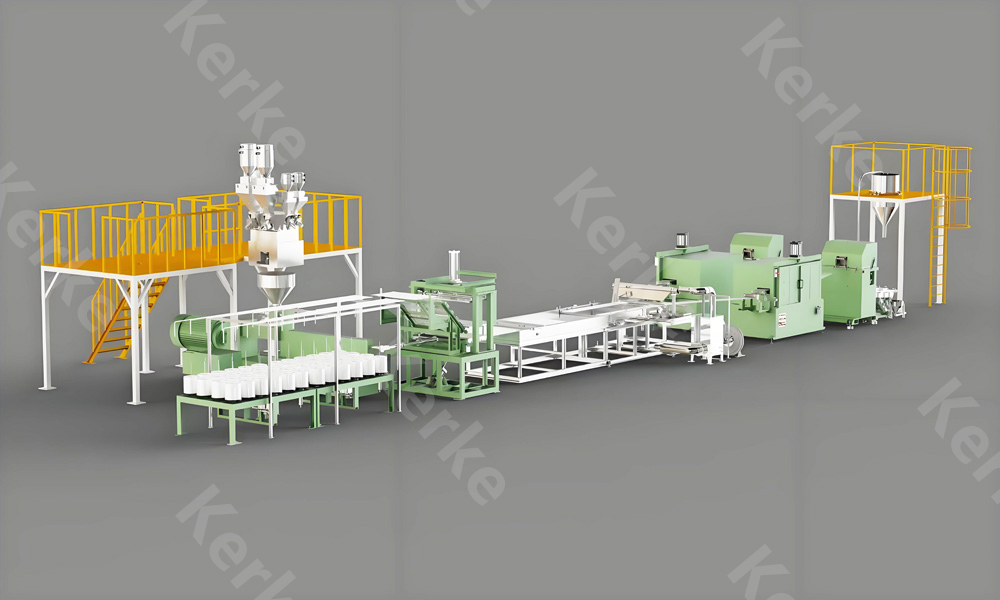
Kerke Extrusion Equipment Co., Ltd is a leading manufacturer of twin screw extruders with over 12 years of experience in the industry. The company’s KTE series co-rotating parallel twin screw extruders are designed to meet the highest standards of quality and performance, making them suitable for a wide range of compounding applications.
Key Features of Kerke Twin Screw Extruders
Kerke twin screw extruders offer several key features that make them stand out from the competition:
- Advanced screw design with high torque and high speed capabilities
- Modular design for easy customization and maintenance
- Precise temperature control system with multiple heating zones
- Intelligent control system for real-time monitoring and adjustment of processing parameters
- Self-cleaning capabilities for easy maintenance and reduced downtime
- Durable construction with high-quality materials for long-lasting performance
Applications of Kerke Twin Screw Extruders
Kerke twin screw extruders are suitable for a wide range of compounding applications, including:
- Color masterbatch production
- Filler masterbatch production
- Engineering plastic compounding
- Thermoplastic elastomer (TPE) compounding
- Biodegradable plastic compounding
- Plastic recycling and reprocessing
Choosing the Right Extruder for Your Application
When choosing between a twin screw extruder and a single screw extruder for compounding applications, there are several factors to consider:
Material Properties
The properties of the material being processed, such as its viscosity, melting point, and sensitivity to heat, will influence the choice of extruder. Heat-sensitive materials that require gentle processing may be better suited for twin screw extruders, while materials that are less sensitive to heat can be processed with single screw extruders.
Application Requirements
The specific requirements of the application, such as the level of mixing required, the desired throughput, and the complexity of the material, will also influence the choice of extruder. Applications that require extensive mixing of multiple components will benefit from the superior mixing capabilities of twin screw extruders.
Budget and Cost Considerations
The initial cost of the extruder, as well as the operating and maintenance costs, should also be considered. Twin screw extruders have a higher initial cost but can provide better performance and quality for complex applications, while single screw extruders are more cost-effective for simple applications.
Future Growth and Expansion
It is also important to consider future growth and expansion when choosing an extruder. Twin screw extruders offer greater flexibility for processing a wider range of materials and can be easily upgraded or modified to meet changing requirements, making them a better investment for long-term growth.
Conclusion
Twin screw extruders and single screw extruders are both valuable tools in the polymer industry, but they have different strengths and limitations. Twin screw extruders are ideal for compounding applications that require thorough mixing, precise temperature control, and processing flexibility, while single screw extruders are more suitable for simple applications that require high throughput at a lower cost.
Kerke Extrusion Equipment Co., Ltd offers a range of high-quality twin screw extruders that are designed to meet the specific needs of the polymer industry. With their advanced features, durable construction, and easy maintenance, Kerke twin screw extruders provide an efficient and reliable solution for compounding applications.
If you are looking for a reliable and efficient extruder for your compounding needs, contact Kerke Extrusion Equipment Co., Ltd today to learn more about their products and services.