Anti-aging masterbatch and heat stabilizer masterbatch are critical components in plastic manufacturing, enabling materials to maintain their mechanical properties and appearance over extended service periods. As plastics are increasingly used in demanding applications requiring decades of reliable performance, the need for effective thermal stabilization and anti-aging additives has never been greater. This comprehensive guide explores the science behind polymer degradation, the mechanisms of anti-aging protection, formulation strategies, and cost-benefit considerations for manufacturers seeking to maximize the service life of their plastic products.
Understanding Polymer Aging Mechanisms
Polymer aging is a complex process involving multiple degradation mechanisms that occur simultaneously or sequentially throughout the material lifetime. The primary aging mechanisms include thermal degradation, oxidation, photo-oxidation, hydrolytic degradation, and environmental stress cracking. Each mechanism attacks different aspects of the polymer structure, leading to gradual or rapid deterioration of mechanical properties, appearance, and functionality.
Thermal degradation occurs when polymers are exposed to elevated temperatures, either during processing or in-service conditions. At elevated temperatures, polymer chains can break (chain scission) or crosslink, depending on the polymer type and temperature range. Chain scission reduces molecular weight, leading to embrittlement, reduced tensile strength, and ultimately material failure. Crosslinking increases brittleness and can cause dimensional changes. The rate of thermal degradation follows an Arrhenius relationship, meaning that small increases in temperature can dramatically accelerate degradation rates. For every 10°C increase in temperature, the rate of many degradation reactions approximately doubles, explaining why processing temperatures and service temperatures are critical considerations for material longevity.
Oxidative degradation occurs when polymers react with oxygen at elevated temperatures. This process is particularly significant for polyolefins (polyethylene, polypropylene) and many other polymers. The oxidation mechanism involves initiation, propagation, and termination phases, with free radicals playing a central role. Once oxidation begins, it becomes autocatalytic, meaning the process accelerates as it progresses. The result of oxidation includes chain scission, crosslinking, formation of carbonyl groups (which can be detected by FTIR analysis), and yellowing or color changes. Without proper stabilization, oxidation can cause significant material degradation in as little as a few months at elevated service temperatures, while properly stabilized materials can maintain properties for decades under similar conditions.
The economic impact of polymer aging is substantial across all industries that use plastics. In the automotive industry alone, thermal and oxidative degradation account for approximately $12-18 billion annually in warranty claims, recalls, and customer dissatisfaction. In the construction industry, premature aging of plastic materials leads to replacement and maintenance costs of $30-50 billion per year globally. For manufacturers, investing in appropriate anti-aging and heat stabilizer masterbatch typically adds 1-5% to material costs, but prevents failures that can cost millions in product recalls, warranty claims, and damage to brand reputation.
Heat Stabilizer Types and Mechanisms
Heat stabilizers are additives that protect polymers from thermal degradation during processing and in-service applications. Different polymer types require different stabilizer chemistries, and the choice of stabilizer system significantly affects processing stability, color retention, and long-term service life. Understanding the various heat stabilizer types and their mechanisms is essential for formulating effective anti-aging solutions.
Primary Antioxidants
Primary antioxidants, also known as radical scavengers, work by intercepting and deactivating free radicals formed during the initiation stages of thermal or oxidative degradation. The most common primary antioxidants are hindered phenols, which include compounds such as butylated hydroxytoluene (BHT), tris(2,4-di-tert-butylphenyl)phosphite (Irganox 1010), and various pentaerythritol derivatives. These compounds have bulky tert-butyl groups that provide steric hindrance, allowing them to react with free radicals while being relatively stable themselves.
Primary antioxidants are particularly effective at preventing thermal oxidation during processing, where temperatures can exceed 200-300°C depending on the polymer. The effectiveness of primary antioxidants is typically measured by induction time, which is the time before oxidation begins under standardized testing conditions. For polypropylene processing at 200°C, induction times range from 5-10 minutes for unstabilized material to 60-120 minutes for well-stabilized material. The cost of primary antioxidant masterbatch typically ranges from $3 to $9 per kilogram, with loading levels of 0.05-0.5% depending on the specific antioxidant and required stabilization level.
Secondary Antioxidants
Secondary antioxidants, also known as hydroperoxide decomposers, work by converting hydroperoxides (intermediate compounds formed during oxidation) into stable, non-radical species. Common secondary antioxidants include phosphites and thioesters. Phosphites such as tris(2,4-di-tert-butylphenyl)phosphite (Irgafos 168) are particularly effective and widely used. Thioesters such as dilauryl thiodipropionate (DLTDP) and distearyl thiodipropionate (DSTDP) work through different mechanisms and are particularly effective at elevated temperatures.
Secondary antioxidants are most effective when used in combination with primary antioxidants, creating a synergistic effect that provides superior protection compared to either type alone. This synergy occurs because primary antioxidants stop the chain reactions by scavenging radicals, while secondary antioxidants remove the hydroperoxides that would otherwise generate new radicals. The combination of primary and secondary antioxidants typically achieves 2-4 times the induction time of primary antioxidants alone. Secondary antioxidant masterbatch typically costs $2.50 to $7.50 per kilogram, with loading levels of 0.05-0.5% depending on the formulation.
Metal Deactivators
Metal deactivators, also known as metal chelants, protect polymers from catalytic degradation caused by metal contaminants. Trace metals including copper, iron, manganese, and other transition metals can accelerate oxidation rates by orders of magnitude, even at parts-per-million concentrations. Metal deactivators work by chelating (binding) these metal ions, rendering them inactive as oxidation catalysts. Common metal deactivators include N,N’-bis(3,5-di-tert-butyl-4-hydroxyhydrocinnamamide) (Irganox MD 1024) and various oxamides.
Metal deactivators are particularly important in applications where plastic materials contact metals or metal processing equipment, such as wire and cable applications, automotive applications, and materials processed in equipment that may introduce metal contamination. Without metal deactivators, trace metals can reduce induction times by 50-90%, leading to premature material failure. Metal deactivator masterbatch typically costs $5 to $15 per kilogram, representing a higher cost than primary or secondary antioxidants, but providing critical protection in metal-contaminated environments. Loading levels typically range from 0.05-0.3% depending on the expected metal contamination level.
Acid Scavengers
Acid scavengers neutralize acidic compounds that can catalyze polymer degradation or interfere with stabilizer performance. These additives are particularly important in polymers processed using Ziegler-Natta catalysts (including polyolefins), which can leave acidic catalyst residues. Common acid scavengers include calcium stearate, zinc stearate, and hydrotalcite-type materials. In addition to neutralizing acids, these compounds can function as lubricants, processing aids, or synergists with other stabilizer systems.
Acid scavengers are typically included in heat stabilizer masterbatch at loading levels of 0.1-0.5%, with costs ranging from $2 to $5 per kilogram. While seemingly simple additives, acid scavengers play a critical role in maintaining stabilizer effectiveness and preventing catalytic degradation. In polyolefin processing, inadequate acid scavenging can reduce the effectiveness of primary and secondary antioxidants by 30-50%, leading to significantly shorter material lifetimes.
Formulation Strategies for Anti-Aging Masterbatch
Formulating effective anti-aging and heat stabilizer masterbatch requires careful consideration of multiple factors including polymer type, processing conditions, service environment, performance requirements, and cost constraints. A well-designed formulation must balance these sometimes-competing factors to achieve optimal performance-cost ratios.
Polymer-Specific Formulations
Different polymer types require fundamentally different stabilizer chemistries due to differences in degradation mechanisms and processing characteristics. Polyolefins (polyethylene, polypropylene) primarily require antioxidant systems to prevent thermal and oxidative degradation. Formulations for polyolefins typically include primary antioxidants (hindered phenols), secondary antioxidants (phosphites, thioesters), acid scavengers, and sometimes metal deactivators. The total antioxidant loading in polyolefin masterbatch typically ranges from 0.2% to 1.5% depending on the processing severity and required service life.
Polyvinyl chloride (PVC) requires completely different stabilization chemistry focused on preventing dehydrochlorination, where hydrogen chloride is eliminated from the polymer chain, leading to conjugated double bonds that cause discoloration and degradation. PVC heat stabilizers include metal soaps (barium, zinc, calcium), organotin compounds, organophosphites, and calcium-zinc systems. The stabilizer loading in PVC masterbatch is significantly higher than in polyolefins, typically 2-8% depending on the application requirements and processing conditions.
Engineering plastics including polyamides, polycarbonates, and polyesters have different degradation mechanisms and stabilizer requirements. Polyamides are susceptible to hydrolytic degradation in addition to thermal and oxidative degradation, requiring moisture control and hydrolysis stabilizers. Polycarbonates and polyesters may require UV stabilizers in addition to thermal stabilizers for outdoor applications. The total additive loading for engineering plastics typically ranges from 0.5% to 3% depending on the polymer type and application requirements.
Processing-Oriented Formulations
For applications where processing stability is the primary concern, formulations focus on providing maximum protection during high-temperature processing conditions. Processing-oriented formulations typically include higher levels of primary and secondary antioxidants, with emphasis on primary antioxidants that provide long induction times. These formulations may also include processing aids and lubricants to reduce shear heating during extrusion or injection molding.
Processing-oriented stabilizer masterbatch typically costs $3 to $10 per kilogram, representing an investment that is justified through reduced scrap rates and improved processing efficiency. For a processing line that experiences 5% scrap rates due to thermal degradation, implementing a proper stabilizer system can reduce scrap rates to 1-2%, saving significant material costs annually. For a line processing 500 kg per hour of material at $2.50 per kilogram, reducing scrap from 5% to 2% saves $37.50 per hour, or approximately $150,000 annually for a 4,000-hour production year, far exceeding the stabilizer cost of approximately $0.05-0.15 per kilogram.
Long-Term Service Life Formulations
For applications requiring decades of service life, formulations are designed to provide protection throughout the entire service period rather than just during processing. Long-term service life formulations typically include combinations of primary antioxidants, secondary antioxidants, metal deactivators, and UV stabilizers for outdoor applications. These formulations may also include antioxidants with different volatilities to provide protection throughout the material thickness and over extended time periods.
Long-term service life stabilizer masterbatch typically costs $4 to $12 per kilogram, representing a premium over processing-oriented formulations. However, this investment is justified by the extended service life achieved, which can be 3-10 times longer than minimally stabilized materials. For a building component requiring 30-year service life, the additional stabilizer cost of approximately $0.20-0.40 per kilogram prevents replacement costs that can exceed $50-200 per kilogram including removal, replacement, and disposal costs.
Cost-Optimized Formulations
For applications where cost sensitivity is high, cost-optimized formulations provide acceptable performance at minimum cost. These formulations typically use the most cost-effective antioxidant combinations and may reduce antioxidant loading to the minimum required level. Cost-optimized formulations are appropriate for applications with moderate service life requirements (5-10 years) and moderate processing conditions.
Cost-optimized stabilizer masterbatch typically costs $2 to $5 per kilogram, representing the lower end of the cost spectrum for anti-aging additives. These formulations provide excellent value for applications where performance requirements are modest and cost is a primary consideration. For packaging materials, disposable products, and other applications with limited service life requirements, cost-optimized formulations provide adequate performance while minimizing material costs.
Service Life Prediction and Testing
Predicting and validating the service life of anti-aging stabilized materials is essential for product development and warranty planning. Various testing methods allow manufacturers to estimate service life under different conditions and validate formulations before commercial production.
Thermal Aging Tests
Thermal aging tests expose materials to elevated temperatures for extended periods to accelerate degradation and estimate service life at normal operating temperatures. The Arrhenius relationship is used to extrapolate from accelerated test conditions to normal service conditions. Common thermal aging test standards include ASTM D3045 (Standard Test Methods for Heat Aging of Plastics Without Load) and ASTM D6186 (Standard Test Method for Thermal-Oxidative Instability of Polypropylene Plastics).
Thermal aging tests are typically conducted at multiple temperatures (for example, 100°C, 120°C, 140°C) to establish the degradation rate as a function of temperature. Testing at three or more temperatures allows construction of an Arrhenius plot that can be used to predict service life at normal operating temperatures. Testing costs typically range from $500 to $2,000 per formulation, including multiple temperatures and time points, and evaluation of mechanical property retention.
Oxidation Induction Time (OIT) Testing
Oxidation Induction Time (OIT) testing measures the time required for oxidation to begin under standardized testing conditions at elevated temperature in an oxygen environment. OIT is a rapid screening test that provides a good indication of oxidation resistance. Differential Scanning Calorimetry (DSC) is commonly used for OIT testing, as oxidation is an exothermic reaction that produces a detectable heat flow.
OIT testing is relatively fast (typically 30-60 minutes per test) and inexpensive (approximately $50-150 per test), making it ideal for screening formulations and quality control. However, OIT testing is most valuable for relative comparisons between formulations rather than absolute service life predictions. For polypropylene, OIT values typically range from 5-10 minutes for unstabilized material to 60-180 minutes for well-stabilized material tested at 200°C in oxygen.
Long-Term Aging Tests
For critical applications requiring accurate service life predictions, long-term aging tests at or near actual service temperatures provide the most reliable data. These tests may extend for months or even years, depending on the application requirements. While time-consuming and expensive, long-term aging tests provide the most accurate prediction of real-world performance and are essential for applications where failure has severe consequences.
Long-term aging test costs are substantial due to the extended test duration and ongoing evaluation requirements. A 12-month aging program with monthly evaluations typically costs $10,000-30,000 depending on the number of formulations, test conditions, and evaluation parameters. However, this investment is justified for applications such as medical devices, aerospace components, and critical infrastructure where accurate service life prediction is essential.
Application-Specific Considerations
Different applications have unique requirements for anti-aging protection based on service conditions, performance criteria, and regulatory requirements. Understanding these application-specific needs is essential for selecting and formulating optimal anti-aging masterbatch solutions.
Automotive Applications
Automotive components including under-hood parts, interior trim, and exterior components are exposed to demanding conditions including high temperatures, temperature cycling, chemical exposure, and UV radiation. Under-hood components may experience temperatures ranging from -40°C to 150°C depending on the location and operating conditions. The automotive industry typically requires materials to maintain properties for 10-15 years of service, with warranty periods extending to 5-8 years for many components.
For automotive applications, anti-aging masterbatch typically represents 1-3% of total material cost. However, the cost of inadequate stabilization is substantial, with warranty claims for thermal and oxidative degradation in the automotive industry averaging $3,000-8,000 per vehicle for affected components. Investing in comprehensive anti-aging systems, typically costing $0.10-0.30 per kilogram of plastic, prevents costly recalls and maintains brand reputation in the highly competitive automotive market. Testing for automotive applications is rigorous, with requirements including thermal aging (150-200°C for 1000-3000 hours), UV exposure (1000-2000 kJ/m2), and various chemical resistance tests.
Electrical and Electronic Applications
Electrical and electronic components are exposed to elevated temperatures during operation, with some components generating significant heat internally. The combination of internal heat, ambient temperature, and thermal cycling creates challenging conditions for polymer materials. Many electronic applications require materials to maintain electrical properties and mechanical integrity for 10-20 years of continuous operation. Additionally, electrical and electronic materials must meet specific flammability requirements, often requiring flame retardant additives that can affect thermal stability.
For electrical and electronic applications, anti-aging masterbatch typically costs 1.5-3.5% of material cost. The requirements for electrical stability add complexity to formulations, as certain stabilizers may affect electrical properties such as dielectric strength and volume resistivity. Testing requirements for electrical applications include thermal aging at elevated temperatures (often 105-125°C for 1000-5000 hours), humidity aging, and electrical property retention testing. The cost of failure in electrical applications can be catastrophic, including electrical shorts, fires, and complete system failures, justifying the investment in comprehensive stabilization.
Building and Construction
Building and construction materials including piping, roofing membranes, window profiles, and insulation must endure decades of exposure to temperature cycling, UV radiation, moisture, and various environmental chemicals. Service life requirements for construction materials typically range from 20-50 years, with some applications requiring even longer lifetimes. The extended service life requirements necessitate the most robust anti-aging formulations, often including combinations of thermal stabilizers and UV stabilizers.
For construction applications, anti-aging masterbatch typically costs 2-6% of material cost, representing the highest additive cost among common applications. However, the cost-benefit ratio is excellent when considering the extended service life achieved and the high costs of material replacement in buildings. Testing requirements for construction materials include long-term thermal aging (often 5-10 years at elevated temperatures), weathering tests (both accelerated and natural), and mechanical property retention testing. Building codes and certification programs often require specific testing programs and minimum performance criteria for material approval.
Processing with Anti-Aging Masterbatch
Processing plastics containing anti-aging masterbatch requires consideration of how processing conditions affect additive effectiveness and final material performance. Optimal processing preserves additive functionality and ensures that the material achieves its maximum potential service life.
Temperature Control
Maintaining precise temperature control during processing is critical for preserving antioxidant effectiveness. Excessively high processing temperatures can degrade or deplete antioxidants, reducing the material’s long-term service life. For most polymers, processing temperatures should be kept within the range recommended by the polymer manufacturer, typically 20-50°C above the melting point. For polypropylene, processing temperatures of 200-260°C are typical, while polyethylene is processed at 180-240°C depending on the density and grade.
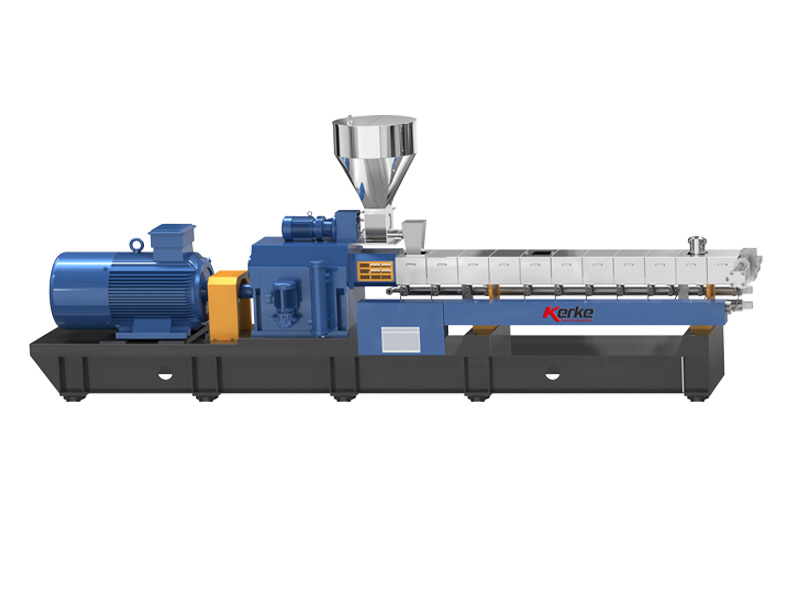
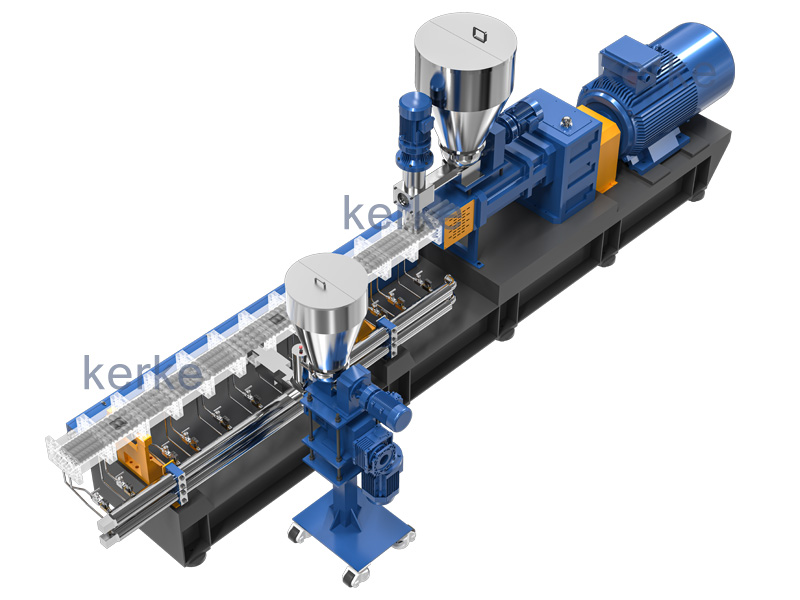
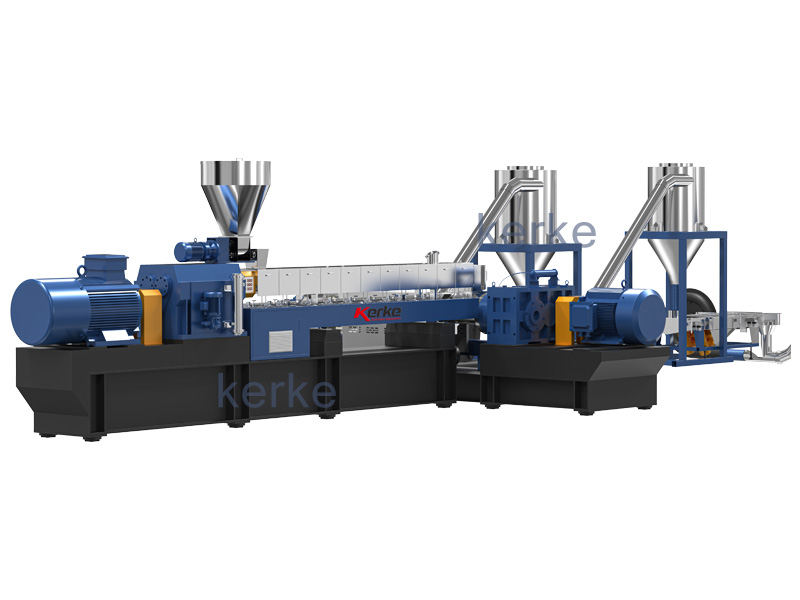
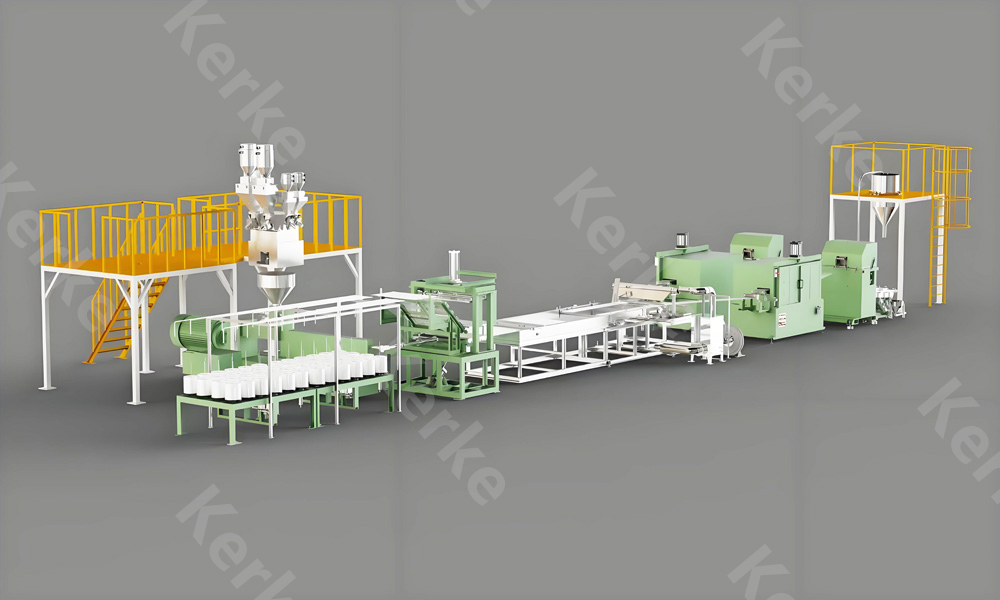
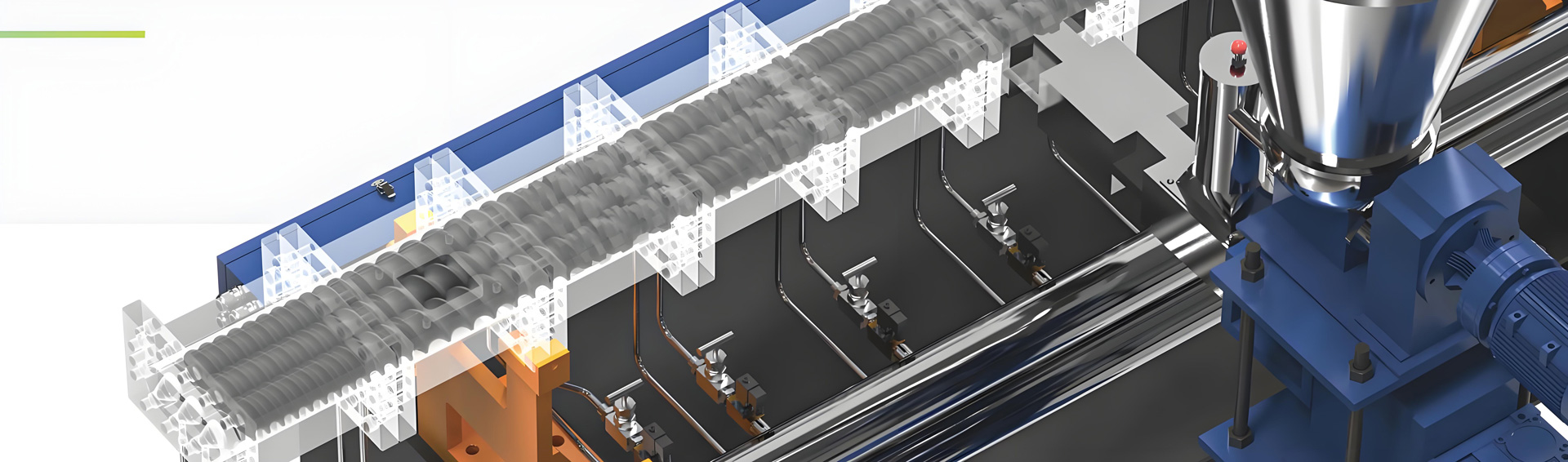
Modern twin-screw extruders from manufacturers like Kerke provide precise temperature control, with temperature uniformity typically maintained within plus or minus 2-3°C across the length of the barrel. This precise temperature control is essential for preserving antioxidant functionality and preventing degradation during processing. Kerke’s KTE Series twin-screw extruders, specifically designed for masterbatch production, offer the precise temperature control and mixing capabilities necessary for processing sensitive anti-aging formulations.
Shear Management
Excessive shear during processing can generate additional heat and potentially degrade antioxidants. Optimal screw configuration and processing conditions balance mixing efficiency with minimal shear heating. For sensitive antioxidant systems, processing with lower screw speeds and optimized screw configurations can preserve additive effectiveness while still achieving adequate dispersion.
The cost of a twin-screw extruder optimized for anti-aging masterbatch production typically ranges from $85,000 to $150,000, depending on screw diameter, length-to-diameter ratio, and level of automation. While this represents a significant investment, the benefits in terms of additive preservation and final material quality provide a strong return on investment. For processors producing high volumes of long-life materials, investment in advanced processing equipment typically pays for itself within 12-24 months through improved material performance and reduced scrap rates.
Moisture Control
For polymers susceptible to hydrolytic degradation (such as polyamides, polyesters, and polycarbonates), moisture control during processing is essential to maximize the effectiveness of anti-aging additives. These polymers must be dried to very low moisture contents (typically less than 0.02%) before processing. Inadequate drying can cause hydrolytic degradation during processing that consumes antioxidants and reduces the material’s long-term stability.
Desiccant dryers capable of drying hygroscopic polymers to the required moisture levels typically cost $15,000-50,000 depending on capacity and features. For processors working with polyamides, polyesters, and other hygroscopic polymers, investment in proper drying equipment is essential for achieving optimal material performance and maximizing the effectiveness of anti-aging masterbatch.
Cost-Benefit Analysis of Anti-Aging Masterbatch
Investing in appropriate anti-aging and heat stabilizer masterbatch represents a cost that must be justified through extended service life, reduced maintenance, and improved product performance. Understanding the cost-benefit relationship helps manufacturers optimize stabilization strategies for specific applications and market requirements.
Material Cost Analysis
The cost of anti-aging and thermal stabilizer additives typically represents 1-6% of total material costs for most applications. For high-performance applications requiring extended service life, additive costs may reach 8-12% of material costs. However, the total cost of ownership, including material costs, manufacturing costs, and product lifetime costs, typically favors investment in comprehensive stabilization systems.
For example, a plastic component costing $2.50 per kilogram with 2% additive cost ($0.05 per kilogram) that achieves 20-year service life compares favorably to a component costing $2.35 per kilogram with 0.5% additive cost ($0.01175 per kilogram) that achieves only 5-year service life. Over the 20-year period, the first component requires no replacement, while the second component requires three replacements (at 5-year intervals), resulting in total material costs of $2.50 per kilogram versus $9.40 per kilogram for the second component. The savings of 73% in material costs justifies the initial investment in better stabilization.
Warranty and Liability Reduction
Comprehensive anti-aging protection significantly reduces warranty claims, product returns, and liability exposure. For manufacturers, the cost of warranty claims for thermal and oxidative degradation typically ranges from 1-4% of product revenue annually. Proper stabilization can reduce these claims by 70-90%, resulting in substantial savings and improved customer satisfaction.
For a company with $30 million in annual revenue for long-life products and 2.5% warranty claims ($750,000 annually), reducing claims by 80% through improved stabilization saves $600,000 annually. This savings far exceeds the additive costs for stabilization, which might total $300,000-600,000 annually for similar production volumes, representing an excellent return on investment.
Market Differentiation
In markets where material longevity and reliability are key differentiators, comprehensive anti-aging protection can provide competitive advantages. Products with demonstrated long-term performance can command premium pricing and win market share from competitors offering inferior products. The ability to demonstrate extended service life through rigorous testing and real-world performance examples creates market differentiation that justifies premium pricing of 5-20% over competitors.
For example, in the construction materials market, products with documented 50-year service life may command a 10-15% price premium over products with only 30-year documented life. For a product costing $5 per kilogram, this premium represents $0.50-0.75 per kilogram, far exceeding the $0.10-0.20 per kilogram cost difference between standard and premium anti-aging formulations.
Environmental and Regulatory Considerations
As environmental and regulatory requirements evolve, the selection of anti-aging additives must consider recyclability, toxicity, and regulatory compliance. Staying informed about changing requirements and adopting future-proof formulations helps manufacturers avoid regulatory problems and environmental liabilities.
Recyclability
Anti-aging additives affect the recyclability of plastic materials by potentially interfering with recycling processes or degrading during multiple processing cycles. Developing formulations that maintain effectiveness through multiple recycling cycles is becoming increasingly important as circular economy initiatives gain momentum. Testing the recyclability of anti-aging masterbatch formulations involves subjecting materials to multiple processing cycles and evaluating retained mechanical properties and stability after each cycle.
For applications requiring recyclability, selecting anti-aging additives that demonstrate minimal degradation after 3-5 recycling cycles is recommended. The cost of recyclability testing typically ranges from $400-1,200 per formulation. While this represents an additional development cost, the ability to produce recyclable materials provides market advantages and aligns with increasing regulatory and consumer expectations for sustainable materials.
Regulatory Compliance
Regulatory requirements for additives vary by region and application. The European Union’s REACH regulation, TSCA in the United States, and various other regulations restrict the use of certain additives and require extensive documentation for others. For food contact applications, FDA compliance (in the United States) and EU regulations require specific testing and documentation for additive systems.
Working with additive suppliers who understand regulatory requirements and maintain current compliance documentation is essential for avoiding regulatory problems. The cost of regulatory compliance, including testing, documentation, and certification, typically ranges from $1,000 to $15,000 per additive system depending on the complexity and number of regions covered. Non-compliance can result in product recalls, fines, and market access restrictions costing millions of dollars.
Future Trends in Anti-Aging Technology
The field of anti-aging and thermal stabilization continues to evolve with new technologies addressing performance, cost, and sustainability concerns. Staying informed about emerging trends helps manufacturers prepare for future market demands and technology adoption.
Reactive Stabilization Systems
Reactive stabilization involves chemically incorporating stabilizers into the polymer chain during polymerization or processing, providing permanent stabilization that cannot migrate or be depleted. These systems include polymer-bound antioxidants and stabilizers that become covalently bound during processing. Reactive stabilization can provide exceptionally long service life and is particularly valuable for applications where additive migration is a concern.
While still in the development and early commercialization stages, reactive stabilization systems offer exciting possibilities for the future of anti-aging technology. The cost of reactive stabilizers is currently higher than conventional additives, but the potential for superior performance and no additive migration makes this an area of intense research and development interest.
Self-Healing Polymers
Self-healing polymers that can autonomously repair thermal and oxidative damage are under development. These systems include microcapsules containing healing agents that release upon damage, reversible covalent bonds that can re-form, and other advanced mechanisms. While still primarily in research stages, self-healing polymers represent an exciting frontier that could dramatically extend material service life beyond what is currently possible with conventional stabilizers.
Bio-Based Stabilizers
Development of bio-based antioxidants and stabilizers derived from renewable sources is addressing sustainability concerns in the industry. These stabilizers, which may be based on natural compounds such as tocopherols (vitamin E derivatives), flavonoids, or lignin derivatives, offer the potential for improved environmental profiles while maintaining effective protection. As bio-based stabilizer technology matures, costs are expected to become competitive with petrochemical-based stabilizers, providing manufacturers with sustainable options for anti-aging protection.
Conclusion
Anti-aging and heat stabilizer masterbatch are essential components for ensuring the long-term performance and reliability of plastic products in demanding applications. As product lifetimes become longer and performance requirements more stringent, the importance of effective thermal stabilization and anti-aging additives continues to grow. For plastic manufacturers, investing in appropriate anti-aging solutions represents a strategic investment that pays dividends through extended product life, reduced warranty costs, improved customer satisfaction, and enhanced market competitiveness.
Understanding the various degradation mechanisms, stabilizer chemistries, and application requirements enables manufacturers to select optimal anti-aging solutions for specific products and markets. Working with experienced suppliers and investing in advanced processing equipment like Kerke’s KTE Series twin-screw extruders ensures consistent product quality and optimal additive performance.
As the industry continues to evolve, adoption of new technologies and sustainable practices will be key to meeting future challenges and maintaining leadership in the global market for long-life plastic materials. The investment in anti-aging and heat stabilizer masterbatch is not just a cost of doing business, but an investment in product performance, customer satisfaction, and long-term business success.