In 2026, white masterbatch has become the second most consumed plastic additive in India, only after black masterbatch, widely applied in flexible packaging, injection molding household appliances, PVC/PPR pipes, medical plastic products, textile fibers and automotive interior parts. As a high-value color masterbatch with titanium dioxide as the core filler, white masterbatch is the key raw material to realize whiteness, opacity, UV resistance and thermal stability of plastic products. Driven by India’s PLI (Production-Linked Incentive) scheme for plastic products, the rapid expansion of the food packaging industry, the upgrading of the home appliance manufacturing industry and the popularization of medical-grade plastic materials, the Indian white masterbatch market is growing at a CAGR of 15.1%, and the market scale will exceed 1.5 billion US dollars by 2028. At present, most Indian white masterbatch manufacturers still use single-screw extruders as core production equipment, which cannot solve the core pain points such as poor titanium dioxide dispersion, low concentration loading, unstable product performance, high energy consumption and failure to meet BIS certification standards, resulting in a serious shortage of high-quality white masterbatch in the Indian market. The professional twin screw extrusion technology has become the only core solution to break the production bottleneck of white masterbatch in India.
Nanjing Kerke Extrusion Equipment Co., Ltd (WANPLAS Group), a global leader in parallel co-rotating twin screw compounding extruders with 12 years of R&D experience, has launched a full set of customized production solutions for Indian white masterbatch manufacturers based on its flagship KTE series twin screw extruders. Aiming at the characteristics of Indian raw materials, industrial environment, regulatory standards and production demand, Kerke optimizes the screw structure, feeding system, pelletizing mode and electrical control of the extruder to realize high-efficiency, high-quality and low-cost production of white masterbatch with titanium dioxide loading of 20%-60%. Up to now, Kerke has delivered more than 2,000 twin screw extruders to 70+ countries around the world, and its white masterbatch special production lines have been widely recognized in the Indian plastic additive industry. All equipment has CE, TUV Rheinland and SGS certifications, and fully meets the BIS (Bureau of Indian Standards) certification requirements for plastic processing equipment and masterbatch products in India.
This 5000-word professional guide focuses on the **white masterbatch production in India** and takes Kerke KTE twin screw extruders as the core carrier. It eliminates commercial cases and focuses on in-depth analysis of market demand, regulatory policies, core production pain points, targeted customized solutions, equipment configuration, process optimization, energy-saving transformation, localized adaptation and ROI calculation. This is a professional technical document for Indian white masterbatch manufacturers to upgrade production lines, improve product quality and reduce production costs in 2026.
1. 2026 India White Masterbatch Market: Core Demand & Regulatory Constraints
The development of India’s white masterbatch industry in 2026 is driven by terminal market demand and restricted by national regulatory standards. The dual forces have created clear technical requirements for professional production equipment, which also determines the core orientation of Kerke’s customized solutions for the Indian market.
1.1 Terminal Industry Demand: High-Growth Scenarios Drive High-Quality White Masterbatch
India’s food packaging and FMCG industries account for 60% of the white masterbatch consumption. The state’s mandatory standards for food contact plastic materials require white masterbatch to have non-toxic, odorless and high whiteness characteristics. The home appliance manufacturing industry centered in Delhi and Mumbai requires white masterbatch to have excellent weather resistance and dispersion to avoid color difference and spots on product surfaces. The construction pipe industry needs white masterbatch with UV resistance to extend the service life of outdoor pipes. The medical plastic industry has higher requirements for the purity and stability of white masterbatch. These terminal scenarios have completely eliminated the application space of low-quality white masterbatch produced by single-screw extruders, and put forward mandatory requirements for high-dispersion, high-concentration and high-stability twin screw extrusion production lines.
1.2 BIS IS 17061: Mandatory Certification Standard for White Masterbatch
Since January 2026, BIS certification has become a legal threshold for all color masterbatches sold in India, including white masterbatch. The IS 17061 standard strictly specifies the dispersion uniformity, titanium dioxide particle size, whiteness value, moisture content, heavy metal content and mechanical properties of white masterbatch. Products that fail to pass the certification shall not be sold in the Indian market, and manufacturers will face fines and license revocation. Single-screw extruders cannot achieve uniform dispersion of titanium dioxide particles, and it is impossible to produce white masterbatch that meets BIS standards. Kerke KTE twin screw extruders take BIS standards as the design basis, and the customized production solutions can stably output qualified products that exceed the standard requirements.
1.3 Cost Control Demand: High-Concentration Titanium Dioxide Loading Becomes the Mainstream
The price of virgin plastic resin in India remains high, and manufacturers generally adopt high-concentration white masterbatch (40%-60% titanium dioxide loading) to reduce the production cost of terminal products. Single-screw extruders can only support titanium dioxide loading below 30%, and agglomeration, streaks and poor fluidity will occur if the concentration is exceeded. Kerke’s professional solutions break through the loading limit, realize stable production of 60% high-concentration white masterbatch, and maximize the cost reduction effect for Indian manufacturers.
1.4 Energy Policy: Mandatory Energy Efficiency Standards for Industrial Equipment
Energy costs account for 28%-33% of the total production cost of white masterbatch in India. The Indian government has implemented graded electricity prices for industrial equipment, and inefficient production equipment will face higher electricity costs and lose the qualification to apply for government subsidies. The energy consumption of traditional single-screw extruders is 30% higher than that of advanced twin screw extruders, which has become a heavy burden for manufacturers. Kerke’s energy-saving customized solutions can reduce energy consumption by 30% on the premise of ensuring output, which is the core advantage to adapt to India’s energy policies.
2. Kerke KTE Series: Core Equipment Matching Indian White Masterbatch Production
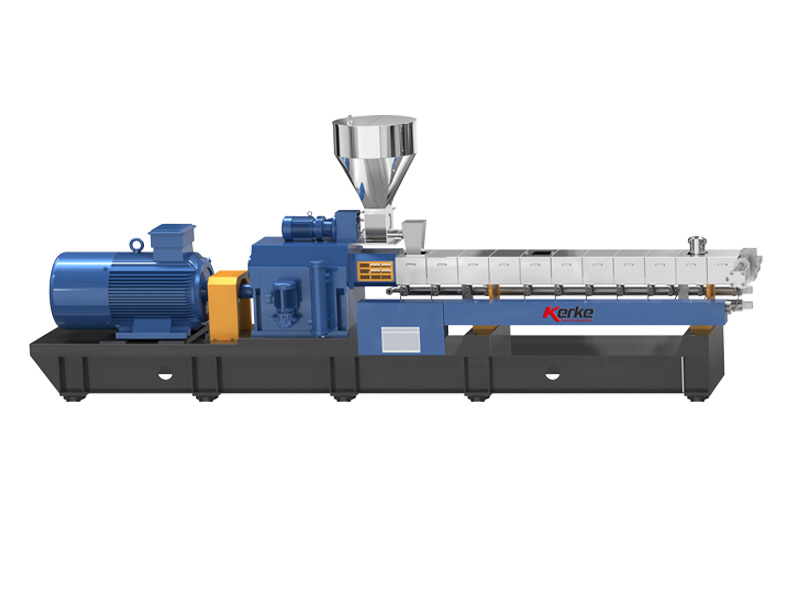
Kerke takes the KTE series parallel co-rotating twin screw extruder as the core, and configures a complete turnkey production line for Indian white masterbatch manufacturers of different scales. All equipment is customized for white masterbatch production characteristics and Indian industrial environment, forming a standardized and scalable equipment system.
2.1 Core Extruder Models for Indian White Masterbatch
According to the production capacity demand of Indian small and medium-sized factories, large manufacturers and R&D institutions, Kerke provides four standardized KTE models, all of which are optimized for titanium dioxide dispersion:
- KTE-35 Twin Screw Extruder: Lab and pilot production, capacity 100-200 kg/h, suitable for formula research and small-batch customized production of white masterbatch;
- KTE-50 Twin Screw Extruder: Medium capacity model, capacity 300-500 kg/h, the best choice for Indian small and medium-sized white masterbatch manufacturers, balancing investment cost and production efficiency;
- KTE-65 Twin Screw Extruder: High-output model, capacity 500-800 kg/h, designed for large manufacturers supplying FMCG, home appliance and pipe industries;
- KTE-75 Twin Screw Extruder: Heavy-duty industrial model, capacity 800-1200 kg/h, supporting 24/7 continuous production of high-concentration white masterbatch.
2.2 Complete Turnkey Production Line Configuration
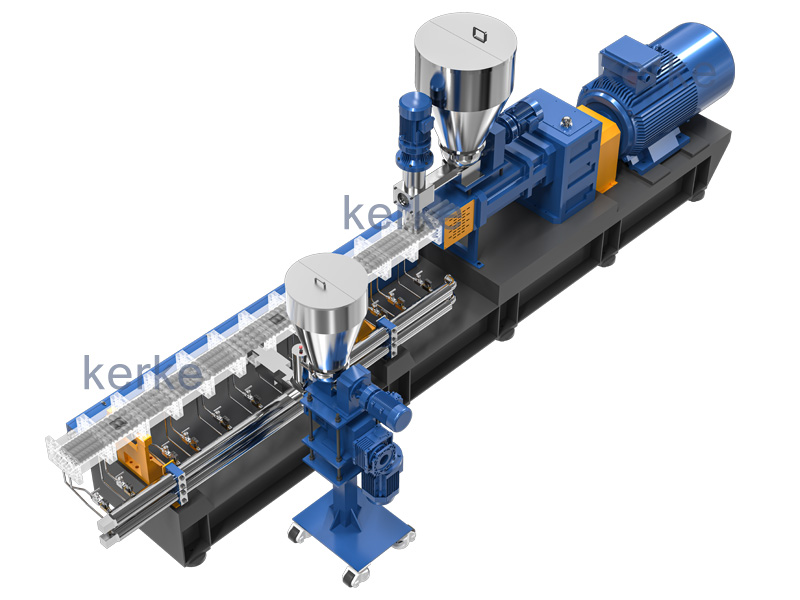
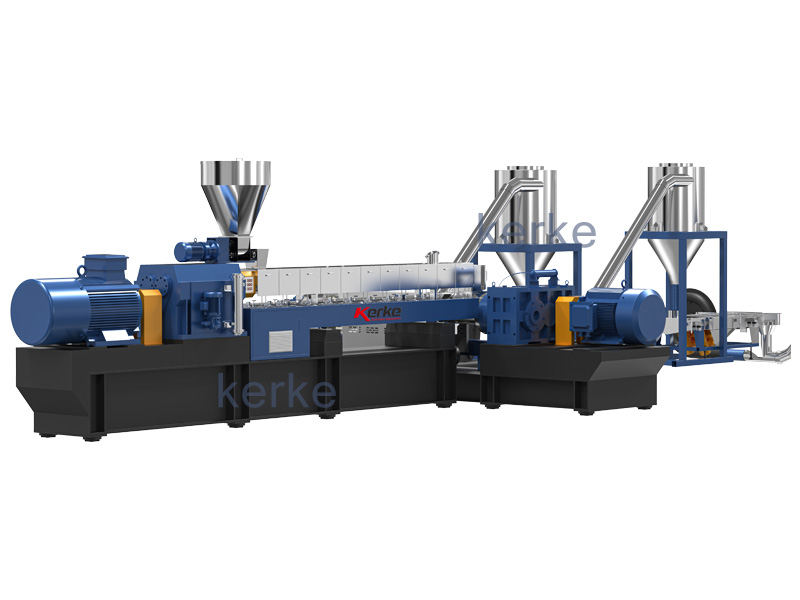
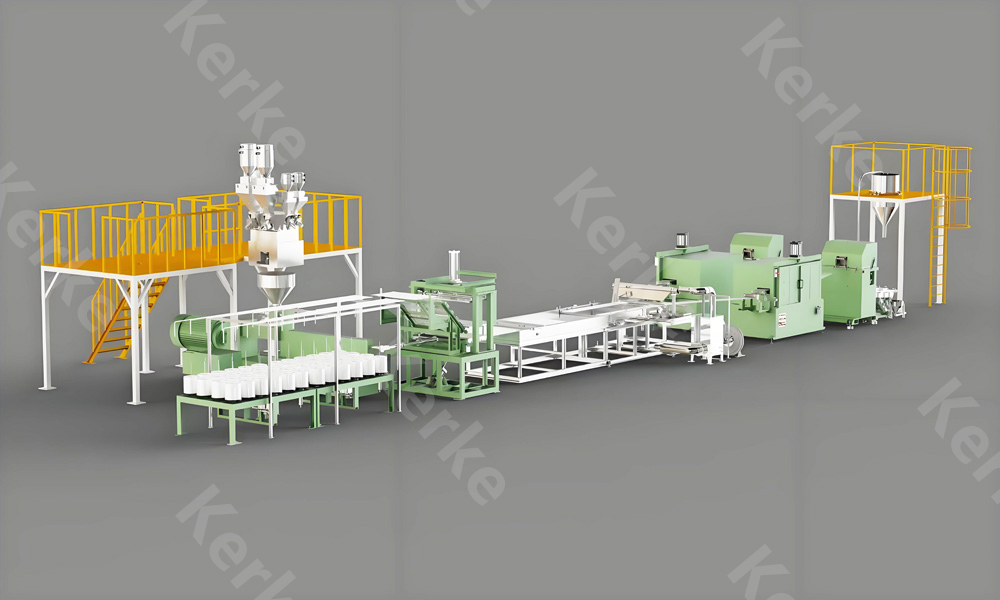
The white masterbatch production solution provided by Kerke is a full-process turnkey system, covering all links from raw material processing to finished product packaging, eliminating the need for manufacturers to match additional equipment independently:
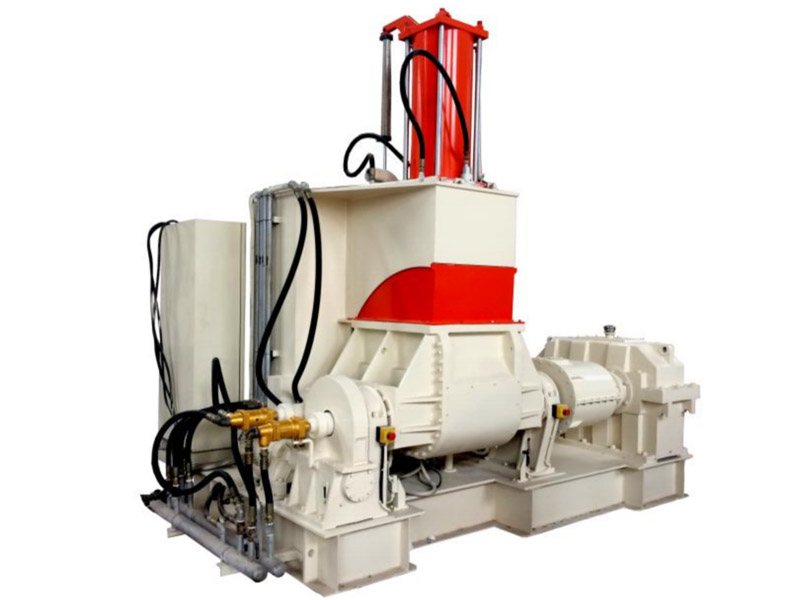
- Raw material processing system: high-speed mixer with anti-dust design, suitable for mixing titanium dioxide, carrier resin and dispersant;
- Precision feeding system: loss-in-weight feeder to realize accurate dosing of titanium dioxide and avoid material segregation;
- Core extrusion system: KTE twin screw extruder with dedicated screw configuration for white masterbatch;
- Pelletizing system: water-cooled strand pelletizing system (standard configuration) or air-cooled die face cutting system (optional for high-concentration formulas);
- Post-processing system: vibrating screener, vertical dryer and automatic packaging machine;
- Auxiliary system: voltage stabilizer, water chiller and dust removal device, customized for Indian industrial environment.
3. Kerke Customized Production Solutions for Indian White Masterbatch (Core Technical Analysis)
Aiming at the core pain points of white masterbatch production in India, Kerke has developed six targeted professional solutions, all based on the structural optimization and process adjustment of KTE twin screw extruders, focusing on solving dispersion, concentration, energy saving, stability, compliance and cost problems.
3.1 High-Concentration Titanium Dioxide Uniform Dispersion Solution
The core technical difficulty of white masterbatch production is the uniform dispersion of titanium dioxide particles. Kerke’s solution adopts a modular screw assembly specially designed for white masterbatch, equipped with high-shear kneading blocks and multi-stage mixing elements. The screw structure generates strong shear force and folding mixing effect in the extrusion process, which can break up titanium dioxide agglomerates to 1-2 microns, and realize 100% uniform dispersion under 60% high loading. The self-cleaning design of the screw eliminates material residue, avoids color cross-contamination, and ensures the whiteness and consistency of the masterbatch. This solution completely solves the problems of spots, color difference and low opacity of white masterbatch produced by single-screw extruders, and meets the BIS dispersion standard.
3.2 BIS Certification Compliance Production Solution
To help Indian manufacturers smoothly pass BIS IS 17061 certification, Kerke has launched a full-process compliance production solution. The solution includes: precision temperature control system (±1℃ temperature accuracy) to avoid thermal decomposition of materials; closed dust-proof production environment to reduce moisture absorption and impurity contamination; online quality monitoring module to real-time detect dispersion uniformity, whiteness and particle size; complete equipment certification documents and production process reports. The extruder’s operating parameters are pre-calibrated according to BIS standards, and manufacturers can directly use the fixed formula parameters to produce compliant white masterbatch without secondary debugging, greatly shortening the certification cycle.
3.3 30% Energy-Saving Efficient Production Solution
Combined with India’s energy efficiency policies and high electricity cost characteristics, Kerke’s energy-saving solution covers three core technologies: IE5 ultra-high-efficiency motor, ceramic infrared heating system and variable frequency drive control. The motor reduces idle power loss by 25%, the ceramic heating band improves thermal efficiency by 40%, and the variable frequency system automatically adjusts the operating power according to the production load. Compared with single-screw extruders, the overall energy consumption per kilogram of white masterbatch is reduced by 30%. For Indian manufacturers, this solution can save 1.2 million INR per year per extruder, directly improving profit margins. In addition, the optimized screw structure reduces shear heat generation, avoiding material degradation caused by high temperature and improving product stability.
3.4 24/7 Continuous Stable Production Solution
Indian large-scale white masterbatch manufacturers need uninterrupted production to meet market demand. Kerke’s continuous production solution adopts a heavy-duty gearbox with high torque design, wear-resistant nitrided alloy barrel and screw (service life of 8-10 years), and reinforced cooling system. The equipment can operate continuously for 24 hours without shutdown, and the output fluctuation is controlled within ±2%. The precision feeding system ensures the stability of titanium dioxide dosing, and the pelletizing system avoids strand breakage and uneven particle size. This solution eliminates downtime caused by equipment failure and material blockage, and increases the annual effective production time by more than 15% compared with traditional equipment.
3.5 Indian Local Raw Material Adaptation Solution
The particle size and purity of titanium dioxide and carrier resin produced in India are quite different from imported materials. Kerke’s raw material adaptation solution optimizes the screw length-diameter ratio and feeding speed according to the characteristics of local Indian raw materials. The side feeding device is optional for light and easy-to-bridge titanium dioxide powder, ensuring smooth feeding without segregation. The mixing system is adjusted to improve the compatibility between local resin and titanium dioxide, reducing the use of dispersants and further reducing raw material costs. This solution ensures that the equipment can produce high-quality white masterbatch stably with local Indian raw materials, eliminating the dependence on imported raw materials.
3.6 Low-Scrape, Low-Maintenance Cost Reduction Solution
The scrap rate of white masterbatch produced by single-screw extruders in India is as high as 5%-7%, while Kerke’s solution controls the scrap rate below 1.5% through precision extrusion and pelletizing control. The modular barrel design is convenient for disassembly and cleaning, reducing the maintenance time and cost. The wearing parts are made of high-strength alloy, which reduces the frequency of replacement. The automatic lubrication system prolongs the service life of the transmission parts. For Indian manufacturers, this solution reduces material waste and maintenance costs, and the annual comprehensive cost can be saved by more than 1.5 million INR per production line.
4. India-Specific Localized Adaptation of Production Solutions
On the basis of professional technical solutions, Kerke carries out all-round localized adaptation for India’s industrial environment, power grid, climate and labor characteristics, ensuring that the production solutions can operate stably in various regions of India.
4.1 Power Grid Adaptation: 415V 50Hz Voltage Stabilization Design
Frequent voltage fluctuations in Indian industrial zones are the main cause of equipment failure. All Kerke extruders are equipped with built-in voltage stabilizers, adapting to India’s standard 415V 50Hz three-phase power supply, and can operate stably under ±15% voltage fluctuation. The electrical system is protected against overvoltage and undervoltage, avoiding shutdown and damage caused by power problems.
4.2 Climate Adaptation: High-Temperature and High-Humidity Resistance Design
India’s annual high temperature (up to 45°C) and high humidity environment will cause equipment corrosion and material moisture absorption. Kerke’s solution adopts dust-proof and waterproof electrical cabinets, enhanced industrial cooling system and anti-corrosion metal frame. The drying system is optimized to reduce the impact of humidity on raw materials, ensuring stable production in all climatic regions of India.
4.3 Operation Adaptation: English-Hindi Bilingual Intelligent Control
The 10-inch touchscreen control panel adopts English-Hindi bilingual interface, with visualized operation interface and one-click formula call function. The system stores 50+ white masterbatch production formulas, which reduces the operation threshold for local workers. The fault self-diagnosis function can quickly display problem points and solutions, reducing the dependence on professional technicians.
4.4 Service Adaptation: Mumbai Local Technical Support System
Kerke has established a local service center in Mumbai, providing 7×24 remote technical support and 24-48 hours on-site service. The center is equipped with complete spare parts inventory, realizing fast replacement of wearing parts. Professional engineers provide free on-site installation, commissioning and technical training, covering equipment operation, maintenance and process optimization.
4.5 Delivery Adaptation: 45-Day Fast Port Delivery
Core components are stocked in Kerke’s Shanghai warehouse, and the standard production line can be delivered to Mumbai, Chennai and Kandla ports within 45 days, 30-60 days faster than European and other Chinese suppliers, meeting the urgent capacity expansion needs of Indian manufacturers.
5. ROI Analysis of Kerke White Masterbatch Production Solutions in India (2026)
This part carries out a standardized ROI calculation for Indian manufacturers based on the KTE-65 twin screw extruder production line (600 kg/h capacity), producing 50% high-concentration white masterbatch, operating 8 hours a day and 250 working days a year. All data are based on the actual production costs and market prices in India:
- Upfront Investment: Full turnkey production line + installation + commissioning + localized adaptation + spare parts kit
- Annual Production Capacity: 1,200 tons of high-concentration white masterbatch
- Annual Energy Savings: ~1,200,000 INR (30% lower than single-screw extruders)
- Annual Material Savings: ~900,000 INR (1.5% scrap rate vs industry average 5-7%)
- Annual Maintenance Savings: ~600,000 INR (low-wear design and long service life)
- Total Annual Cost Savings: ~2,700,000 INR
- Annual Operating Revenue: 192,000,000 INR (Indian market price: 160 INR/kg for high-concentration white masterbatch)
- Annual Net Profit: ~22,800,000 INR
- Investment Return Cycle: 12-16 months (Indian industry average: 24-36 months)
The ROI data shows that Kerke’s white masterbatch production solutions have obvious economic benefits compared with traditional equipment, which is the most cost-effective choice for Indian manufacturers to upgrade production capacity.
6. FAQ: Professional Technical Solutions for Indian White Masterbatch Manufacturers
6.1 Can your solutions produce BIS-compliant white masterbatch stably?
Yes. All Kerke solutions are designed based on BIS IS 17061 standards, with precision process control and quality monitoring systems, which can stably produce white masterbatch that meets and exceeds certification requirements.
6.2 What is the maximum titanium dioxide loading supported by your solutions?
Our KTE series extruders can realize stable production of white masterbatch with 60% titanium dioxide loading, with uniform dispersion and no agglomeration.
6.3 How do your solutions adapt to India’s voltage and climate?
We adopt 415V 50Hz voltage stabilizer, dust-proof and high-temperature resistant electrical system, which can operate stably in India’s high-temperature, high-humidity and voltage fluctuation environment.
6.4 What is the energy-saving effect of your solutions compared with single-screw extruders?
Our solutions reduce energy consumption by 30% through IE5 motors, ceramic heating and variable frequency control, saving about 1.2 million INR per year for each production line.
6.5 Can your solutions adapt to local Indian titanium dioxide and resin raw materials?
Yes. We optimize the screw structure and feeding system for local Indian raw materials, ensuring stable production and consistent product quality.
6.6 What is the delivery cycle of standard production lines to Indian ports?
Standard KTE models can be delivered to Mumbai, Chennai and Kandla ports within 45 days, and customized models within 60 days.
6.7 Do you provide after-sales support across India?
Yes. Our Mumbai service center provides 24-48 hours on-site service, lifetime technical support and spare parts supply.
6.8 What is the scrap rate of your white masterbatch production solutions?
Controlled below 1.5%, far lower than the 5-7% of single-screw extruders, greatly reducing material waste.
7. Conclusion: Kerke Professional Solutions Empower India’s White Masterbatch Industry
2026 is a critical period for the upgrading and development of India’s white masterbatch industry. The dual drivers of terminal market demand and BIS mandatory certification have eliminated low-efficiency and low-quality production models. Professional twin screw extrusion production solutions have become the core competitiveness of manufacturers.
Kerke relies on 12 years of twin screw compounding technology accumulation, and launches targeted customized solutions for the production pain points, raw material characteristics, industrial environment and regulatory standards of the Indian white masterbatch market. The six core solutions covering dispersion, compliance, energy saving, stability, raw material adaptation and cost reduction, combined with India’s localized adaptation design, solve all production problems for Indian manufacturers. The KTE series twin screw extruders, as the core carrier, achieve high-concentration, high-dispersion, low-energy and low-cost production of white masterbatch, with a short investment return cycle and significant economic benefits.
Whether it is a startup building a new production line, a small and medium-sized manufacturer upgrading equipment, or a large enterprise expanding high-concentration white masterbatch production capacity, Kerke’s professional solutions can meet all production needs. With standardized equipment configuration, flexible customized adjustment, fast delivery and localized after-sales service, Kerke has become the preferred partner for Indian white masterbatch manufacturers to achieve industrial upgrading.
To obtain a free customized solution design, process parameter optimization and quotation for white masterbatch production, please visit Kerke’s official website: https://www.kerkeextruder.com.