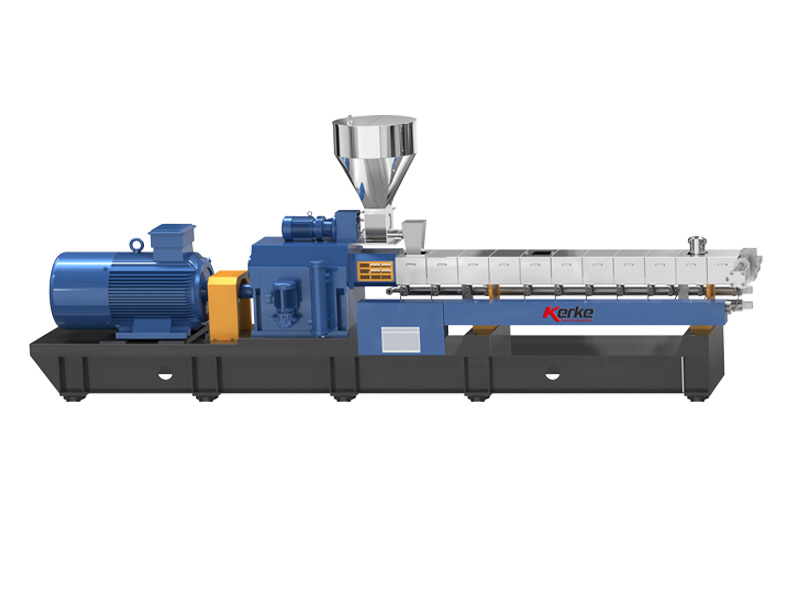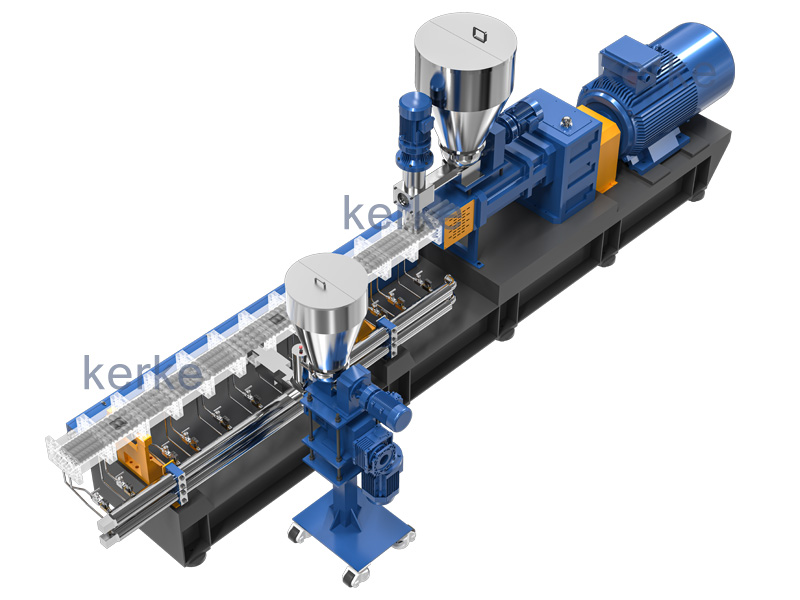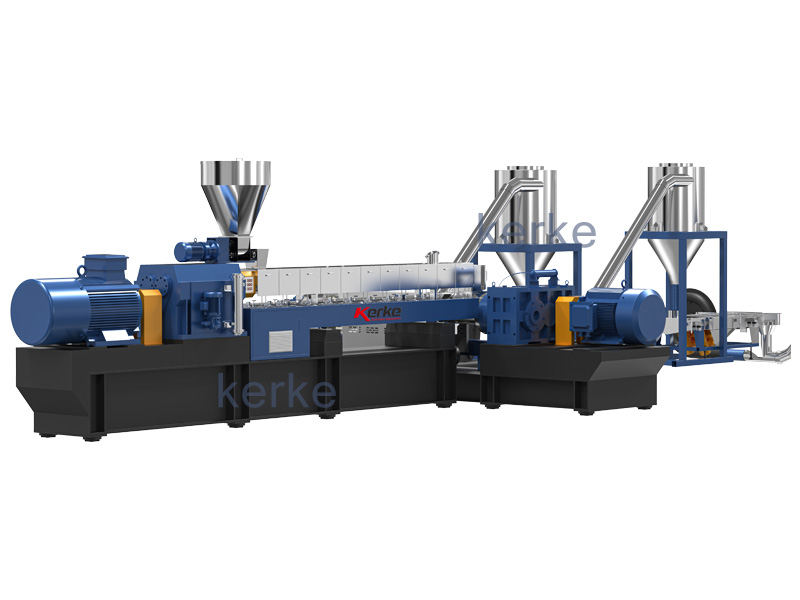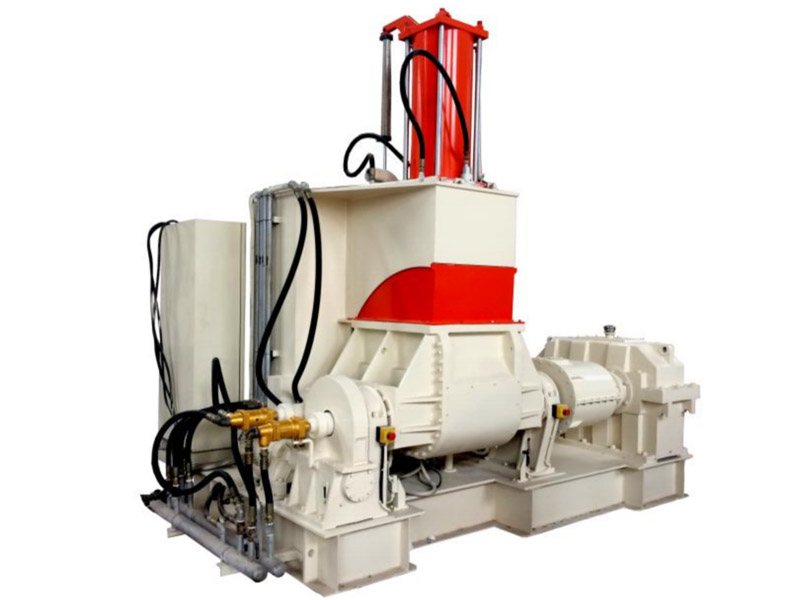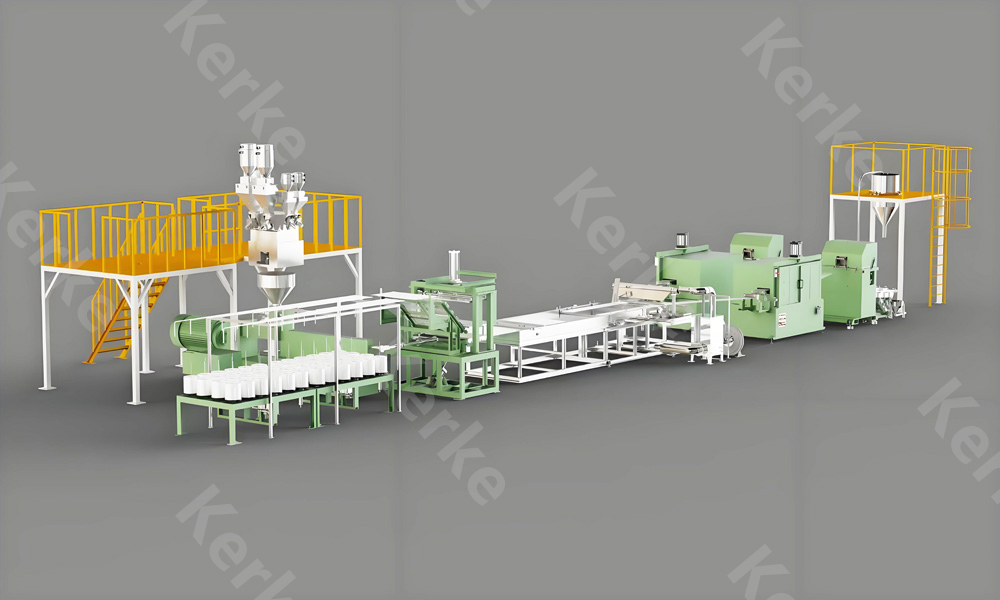
The global masterbatch market is projected to reach $18.2 billion by 2026, growing at a compound annual growth rate (CAGR) of 5.8% through 2032. This robust growth is driven by the expanding plastics industry across packaging, automotive, electronics, construction, and consumer goods sectors. Masterbatches play a critical role in modern plastics manufacturing, providing coloration, functional enhancement, and performance modification to plastic products. The quality of masterbatch pellets directly determines the appearance, performance, and market value of the final plastic products.
Among all manufacturing technologies available for masterbatch production, the twin screw extruder has emerged as the undisputed industry standard. This advanced compounding extruder delivers superior mixing performance, precise process control, and consistent product quality that cannot be achieved with traditional single screw extruders. A high-performance masterbatch extruder can significantly improve both the visual appearance and functional properties of masterbatch pellets, resulting in higher quality final products and increased profitability for manufacturers.
As a leading global manufacturer of advanced twin screw extrusion systems with over 25 years of industry experience, KERKE has established itself as the trusted partner for masterbatch producers worldwide. Our comprehensive range of masterbatch extruders is specifically engineered to meet the unique requirements of color, additive, and functional masterbatch production. From small laboratory machines for research and development to large-scale industrial compounding lines for high-volume production, KERKE has the perfect solution for every application.
This comprehensive guide provides everything you need to know about how masterbatch extruders improve the appearance and performance of pellets. It examines the critical role of masterbatch in the plastics industry, outlines the key challenges in masterbatch production, explains why twin screw extruders are the gold standard for compounding, details how these machines enhance both visual and functional properties of pellets, provides a complete product overview of KERKE masterbatch extruders with detailed pricing, includes a comprehensive cost analysis and return on investment calculation, features real-world success stories from our global customers, and offers practical guidance for selecting the right extrusion system for your specific needs. Whether you are starting a new masterbatch business or upgrading your existing production facility, this guide will help you make an informed decision and achieve the highest possible product quality and profitability.
1. The Critical Role of Masterbatch in Modern Plastics Industry
Masterbatch is a concentrated mixture of pigments, additives, and carrier resins that is used to color or modify the properties of plastic polymers during processing. It provides a cost-effective and efficient way to incorporate colorants and functional additives into plastic products, eliminating the need for handling large quantities of loose powders and ensuring consistent distribution throughout the polymer matrix.
Masterbatches are used in virtually every segment of the plastics industry. In the packaging sector, they provide vibrant colors and barrier properties to food and beverage containers. In the automotive industry, they enhance the durability, UV resistance, and aesthetic appeal of interior and exterior components. In the electronics industry, they provide flame retardancy and electrical insulation properties. In the construction sector, they improve the weather resistance and mechanical strength of building materials.
The quality of masterbatch pellets is of paramount importance. Poor quality masterbatch can result in a wide range of problems in the final product, including uneven coloration, surface defects, reduced mechanical properties, and inconsistent processing performance. These issues can lead to increased production costs, higher scrap rates, and lost customers. For this reason, masterbatch producers must invest in high-quality manufacturing equipment that can consistently produce pellets with excellent appearance and performance.
The global demand for high-quality masterbatches is growing rapidly, driven by increasing consumer expectations for product quality and performance, as well as stricter regulatory requirements for safety and environmental protection. This trend is creating significant opportunities for masterbatch producers who can deliver consistent, high-quality products at competitive prices.
2. Key Challenges in Masterbatch Production
Masterbatch production is a complex process that requires precise control over multiple variables to achieve consistent product quality. Manufacturers face several key challenges that can negatively impact the appearance and performance of masterbatch pellets.
2.1 Poor Dispersion and Distribution of Additives
One of the most significant challenges in masterbatch production is achieving uniform dispersion and distribution of pigments and additives throughout the polymer matrix. Poor dispersion results in agglomerates of pigment or additive particles, which can cause color streaks, surface defects, and reduced mechanical properties in the final product. This problem is particularly acute for high-performance pigments and additives that are difficult to disperse, such as carbon black, titanium dioxide, and nanomaterials.
Poor distribution, on the other hand, results in uneven concentration of additives throughout the masterbatch, leading to inconsistent color and performance from batch to batch. Both dispersion and distribution issues can significantly increase scrap rates and production costs for masterbatch producers and their customers.
2.2 Inconsistent Color Uniformity
Color uniformity is the most important quality parameter for color masterbatches. Even minor variations in color can result in rejected batches and lost customers. Achieving consistent color uniformity is challenging due to variations in raw material quality, processing conditions, and equipment performance. Small changes in temperature, shear rate, or residence time can significantly affect the color of the final masterbatch.
In addition, different pigments have different dispersion characteristics and thermal stability, requiring different processing conditions. This makes it difficult to produce consistent color across different product lines and production runs.
2.3 Common Visual Defects in Masterbatch Pellets
Masterbatch pellets are prone to several common visual defects that can negatively impact their market value and performance. These defects include:
Black specks and contaminants, which are caused by impurities in the raw materials, degradation of the polymer during processing, or contamination from the equipment. These defects are particularly noticeable in light-colored masterbatches and can result in significant scrap rates.
Bubbles and voids, which are caused by moisture in the raw materials or volatile components that are not properly removed during processing. Bubbles can affect the flow properties of the masterbatch and cause surface defects in the final product.
Fisheyes and gel particles, which are caused by undispersed polymer or additive agglomerates. These defects can cause surface imperfections and reduce the mechanical properties of the final product.
Irregular pellet shape and size distribution, which are caused by poor cutting performance or inconsistent processing conditions. Irregular pellets can cause feeding problems in downstream processing equipment, leading to inconsistent product quality.
2.4 Degradation of Polymer and Additives
During the compounding process, the polymer and additives are subjected to high temperatures and shear forces, which can cause thermal and mechanical degradation. Degradation can result in discoloration, reduced molecular weight, and loss of functional properties. This is particularly problematic for heat-sensitive additives and biodegradable polymers, which require precise temperature control and gentle processing conditions.
Degradation not only affects the appearance and performance of the masterbatch but also reduces the shelf life of the product. It can also lead to the formation of volatile organic compounds (VOCs), which can have negative environmental and health impacts.
2.5 Production Efficiency and Cost Control
In addition to quality challenges, masterbatch producers also face significant pressure to improve production efficiency and reduce costs. High energy consumption, low throughput, high scrap rates, and frequent downtime can significantly increase production costs and reduce profitability. For this reason, masterbatch producers need equipment that can deliver high productivity, low operating costs, and consistent product quality.
3. Why Twin Screw Extruder is the Gold Standard for Masterbatch Manufacturing
The twin screw extruder has revolutionized masterbatch production, addressing many of the challenges associated with traditional single screw extruders. This advanced compounding extruder offers several unique advantages that make it the ideal choice for producing high-quality masterbatch pellets.
3.1 Superior Mixing and Dispersion Capabilities
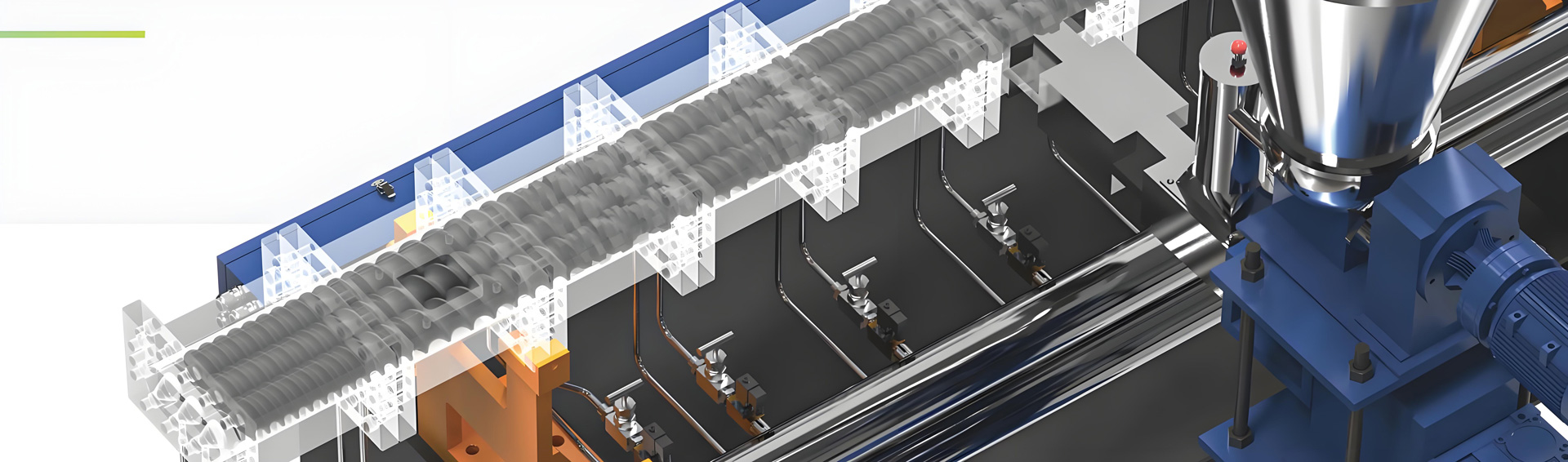
The most significant advantage of the twin screw extruder is its superior mixing and dispersion capabilities. Co-rotating intermeshing twin screws generate high shear forces that effectively break down agglomerates of pigment and additive particles, ensuring uniform dispersion throughout the polymer matrix. The intermeshing screw design also creates a positive conveying action that ensures consistent distribution of materials along the length of the extruder.
Unlike single screw extruders, which rely primarily on drag flow for mixing, twin screw extruders provide both distributive and dispersive mixing. Distributive mixing ensures that components are evenly distributed throughout the polymer, while dispersive mixing breaks down agglomerates into individual particles. This combination of mixing mechanisms results in masterbatch pellets with excellent color uniformity and consistent performance.
3.2 Precise Process Control
Modern twin screw extruders feature advanced control systems that allow for precise regulation of all process parameters, including temperature, pressure, screw speed, and feed rate. This precise control ensures consistent processing conditions from batch to batch, resulting in masterbatch pellets with uniform quality and performance.
The temperature profile along the length of the extruder can be precisely adjusted to optimize the processing of different materials and additives. This is particularly important for heat-sensitive materials, which require gentle processing conditions to prevent degradation. The ability to independently control the temperature of each barrel zone allows manufacturers to create the ideal processing environment for each specific formulation.
3.3 Self-Cleaning Function
Co-rotating intermeshing twin screws have an excellent self-cleaning function. The close intermeshing of the screws wipes the surfaces of both screws and the barrel, preventing material buildup and degradation. This self-cleaning function significantly reduces cross-contamination between different formulations and minimizes downtime for cleaning and product changeovers.
For masterbatch producers who manufacture multiple product lines, this self-cleaning capability is invaluable. It allows for quick and efficient product changeovers, reducing downtime and increasing production flexibility. It also ensures that each batch of masterbatch is free from contamination from previous formulations.
3.4 Flexible Screw Configuration
Twin screw extruders feature a modular screw design that allows for easy customization of the screw configuration to meet specific processing requirements. Different types of screw elements, such as conveying elements, kneading blocks, and mixing elements, can be combined in various configurations to optimize the mixing, shearing, and residence time characteristics of the extruder.
This flexibility allows manufacturers to tailor the extruder to the specific needs of each formulation. For example, formulations that require high dispersion can be processed with a screw configuration that includes more kneading blocks, while formulations that require gentle processing can be processed with a configuration that minimizes shear forces.
3.5 High Throughput and Energy Efficiency
Modern twin screw extruders offer high throughput rates and excellent energy efficiency compared to single screw extruders. The positive conveying action of the twin screws allows for higher processing speeds and greater throughput per unit of energy consumed. This results in lower production costs and higher profitability for masterbatch producers.
In addition, advanced twin screw extruders incorporate energy-saving features such as servo-driven motors, optimized heating systems, and energy recovery systems. These features can reduce energy consumption by up to 30% compared to older models, resulting in significant annual savings in energy costs.
4. How Masterbatch Extruder Enhances Pellet Appearance Quality
A high-performance masterbatch extruder can significantly improve the visual appearance of masterbatch pellets, resulting in products that are more attractive to customers and perform better in downstream processing.
4.1 Superior Color Uniformity and Consistency
The most important visual characteristic of masterbatch pellets is their color uniformity and consistency. A good masterbatch extruder ensures that pigments and additives are uniformly dispersed and distributed throughout the polymer matrix, resulting in pellets with consistent color from batch to batch and within each batch.
KERKE twin screw extruders achieve this through their advanced screw design and precise process control. The high shear forces generated by the intermeshing screws effectively break down pigment agglomerates, ensuring that each pellet contains the exact same concentration of pigment. The precise temperature control prevents thermal degradation of pigments, which can cause color shifts and inconsistencies.
In addition, KERKE extruders feature advanced feeding systems that ensure accurate and consistent dosing of raw materials. Gravimetric feeders precisely control the feed rate of each component, ensuring that the formulation is maintained within tight tolerances. This combination of accurate feeding and excellent mixing results in masterbatch pellets with exceptional color uniformity and consistency.
4.2 Smooth and Glossy Surface Finish
The surface finish of masterbatch pellets is an important indicator of quality. Pellets with a smooth, glossy surface are generally considered to be of higher quality than pellets with a rough, matte surface. A smooth surface finish also improves the flow properties of the pellets in downstream processing equipment, resulting in more consistent feeding and better product quality.
KERKE masterbatch extruders produce pellets with an excellent surface finish through several design features. The precise temperature control ensures that the polymer is properly melted and homogenized, resulting in a smooth, uniform melt. The advanced die design ensures that the melt exits the extruder in a smooth, continuous stream without surface defects.
In addition, KERKE offers a range of pelletizing systems that are specifically designed to produce pellets with a smooth, glossy surface. Underwater pelletizing systems, in particular, produce spherical pellets with an excellent surface finish that is ideal for high-quality masterbatch applications.
4.3 Uniform Pellet Shape and Size Distribution
Uniform pellet shape and size distribution are critical for consistent feeding in downstream processing equipment. Irregularly shaped pellets or pellets with a wide size distribution can cause bridging and feeding problems, leading to inconsistent product quality and increased scrap rates.
KERKE extruders are equipped with high-precision pelletizing systems that produce pellets with uniform shape and size distribution. The pelletizing systems feature advanced cutting mechanisms that ensure clean, consistent cuts every time. The speed of the cutter can be precisely adjusted to match the extrusion rate, resulting in pellets of uniform length.
For applications that require the highest level of size uniformity, KERKE offers underwater pelletizing systems that produce perfectly spherical pellets with a very narrow size distribution. These pellets flow freely in hoppers and feeders, ensuring consistent feeding and processing performance.
4.4 Elimination of Common Visual Defects
A good masterbatch extruder effectively eliminates the common visual defects that plague masterbatch production, including black specks, bubbles, fisheyes, and discoloration.
Black specks and contaminants are eliminated through the use of high-efficiency melt filtration systems. KERKE extruders are equipped with continuous screen changers that remove impurities from the melt before it exits the die. These screen changers operate continuously without interrupting production, ensuring that the melt is always free from contaminants.
Bubbles and voids are eliminated through the use of efficient vacuum degassing systems. KERKE extruders feature multiple vacuum ports that remove moisture and volatile components from the melt during processing. The high vacuum level ensures that all volatile components are effectively removed, resulting in bubble-free pellets.
Fisheyes and gel particles are eliminated through the superior dispersion capabilities of the twin screw extruder. The high shear forces generated by the screws break down undispersed agglomerates, ensuring that the polymer and additives are fully homogenized. This results in pellets that are free from fisheyes and gel particles.
Discoloration caused by thermal degradation is prevented through precise temperature control and gentle processing conditions. KERKE extruders feature advanced temperature control systems that maintain the melt temperature within tight tolerances. The modular screw design allows for optimization of the residence time, ensuring that the material is not exposed to high temperatures for longer than necessary.
5. How Compounding Extruder Boosts Pellet Functional Performance
In addition to improving the visual appearance of masterbatch pellets, a high-performance compounding extruder also significantly enhances their functional properties. The superior mixing and process control capabilities of the twin screw extruder ensure that functional additives are uniformly distributed and activated, resulting in masterbatch pellets with consistent and reliable performance.
5.1 Enhanced Mechanical Properties
Masterbatches often contain additives that improve the mechanical properties of plastic products, such as impact modifiers, reinforcing agents, and processing aids. The uniform dispersion of these additives is critical for achieving consistent mechanical properties in the final product.
KERKE twin screw extruders ensure that these additives are uniformly dispersed throughout the polymer matrix, resulting in masterbatch pellets that provide consistent mechanical performance. The high shear forces generated by the screws break down agglomerates of reinforcing agents such as glass fibers and talc, ensuring that they are evenly distributed throughout the polymer. This results in final products with improved strength, stiffness, and impact resistance.
In addition, the precise process control of KERKE extruders prevents degradation of the polymer and additives during processing, preserving their mechanical properties. This ensures that the masterbatch pellets deliver the expected performance in downstream applications.
5.2 Improved Thermal and Oxidative Stability
Thermal and oxidative stability are important properties for masterbatch pellets, as they determine how well the masterbatch will perform during processing and in the final product. Masterbatches that have poor thermal stability can degrade during processing, resulting in discoloration, reduced mechanical properties, and the formation of volatile compounds.
KERKE compounding extruders improve the thermal and oxidative stability of masterbatch pellets through several mechanisms. The precise temperature control ensures that the polymer and additives are not exposed to excessive temperatures, preventing thermal degradation. The efficient vacuum degassing system removes volatile components and oxidation products from the melt, improving the stability of the final product.
In addition, the uniform dispersion of antioxidants and heat stabilizers ensures that these additives are evenly distributed throughout the polymer matrix, providing consistent protection against thermal and oxidative degradation. This results in masterbatch pellets with excellent thermal stability and long shelf life.
5.3 Better Weather and Chemical Resistance
Many masterbatches contain additives that improve the weather and chemical resistance of plastic products, such as UV stabilizers, light absorbers, and chemical resistant agents. The uniform distribution of these additives is critical for achieving consistent performance in outdoor and harsh chemical environments.
KERKE twin screw extruders ensure that these additives are uniformly dispersed throughout the polymer matrix, resulting in masterbatch pellets that provide consistent weather and chemical resistance. The high shear forces generated by the screws break down agglomerates of these additives, ensuring that they are evenly distributed. This results in final products that have uniform color retention and performance over their entire service life.
In addition, the precise process control of KERKE extruders prevents degradation of these sensitive additives during processing, preserving their effectiveness. This ensures that the masterbatch pellets deliver the expected level of protection in the final product.
5.4 Consistent Processing Performance in Downstream Applications
The processing performance of masterbatch pellets in downstream applications is a critical quality parameter. Masterbatches that have inconsistent flow properties or melting characteristics can cause processing problems such as surging, inconsistent output, and poor product quality.
KERKE masterbatch extruders produce pellets with consistent processing performance through precise control of the compounding process. The uniform dispersion of additives and consistent polymer morphology ensure that the pellets have consistent melt flow properties and melting characteristics. This results in smooth, consistent processing in downstream equipment such as injection molding machines, blow molding machines, and film extrusion lines.
In addition, the uniform pellet shape and size distribution of KERKE masterbatch pellets ensure consistent feeding in downstream processing equipment. This eliminates feeding problems such as bridging and surging, resulting in more stable processing and better product quality.
5.5 Precise Control of Functional Additive Distribution
For functional masterbatches such as flame retardant, antimicrobial, and antistatic masterbatches, the precise control of additive concentration and distribution is critical. Even minor variations in additive concentration can result in the final product failing to meet performance specifications or regulatory requirements.
KERKE compounding extruders provide precise control over the concentration and distribution of functional additives. The advanced gravimetric feeding systems ensure that each component is dosed with high accuracy, maintaining the formulation within tight tolerances. The superior mixing capabilities of the twin screw extruder ensure that the additives are uniformly distributed throughout the polymer matrix, resulting in pellets with consistent additive concentration.
This precise control ensures that the masterbatch pellets deliver the exact level of functional performance required, allowing manufacturers to meet the strictest industry standards and regulatory requirements.
6. KERKE Masterbatch Extruder Product Range and Technical Specifications
KERKE offers a comprehensive range of twin screw masterbatch extruders designed to meet the diverse needs of masterbatch producers worldwide. Our product range includes laboratory, pilot scale, and industrial production machines, with capacities ranging from 5 kg/h to 1000 kg/h. All our machines are built to the highest quality standards, incorporating advanced technology and innovative features to deliver exceptional performance, reliability, and value.
6.1 KTE-20 Laboratory Twin Screw Extruder
The KTE-20 is our compact laboratory twin screw extruder, designed for research and development, formulation testing, and small batch production. This versatile machine is perfect for masterbatch producers who need to develop new formulations and test new products before scaling up to industrial production.
Key specifications:
- Screw diameter: 20 mm
- L/D ratio: 40:1
- Maximum screw speed: 600 rpm
- Production capacity: 5-20 kg/h
- Drive power: 7.5 kW
- Heating zones: 8
- Vacuum degassing: 1 port
- Footprint: 3.5 m x 1.5 m
- Weight: 2,500 kg
Price and Cost Analysis
The price of the KTE-20 laboratory twin screw extruder ranges from $18,000 to $28,000 FOB Shanghai, depending on the specific configuration and optional features. The standard configuration includes the main extruder, volumetric feeder, strand pelletizer, and control system. Optional features include gravimetric feeding, underwater pelletizing, and melt filtration systems.
6.2 KTE-35 Pilot Scale Masterbatch Extruder
The KTE-35 is our pilot scale masterbatch extruder, designed for product development, small-scale production, and market testing. This machine bridges the gap between laboratory and industrial production, allowing manufacturers to scale up their formulations with confidence.
Key specifications:
- Screw diameter: 35 mm
- L/D ratio: 44:1
- Maximum screw speed: 500 rpm
- Production capacity: 30-80 kg/h
- Drive power: 22 kW
- Heating zones: 10
- Vacuum degassing: 2 ports
- Footprint: 5.0 m x 2.0 m
- Weight: 5,500 kg
Price and Cost Analysis
The price of the KTE-35 pilot scale masterbatch extruder ranges from $45,000 to $65,000 FOB Shanghai, depending on the specific configuration and optional features. The standard configuration includes the main extruder, gravimetric feeder, continuous screen changer, strand pelletizer, and control system. Optional features include side feeders, underwater pelletizing, and melt pump systems.
6.3 KTE-50 Industrial Production Compounding Extruder
The KTE-50 is our most popular industrial production compounding extruder, ideal for medium to large-scale masterbatch production. This high-performance machine offers an excellent balance of productivity, efficiency, and flexibility, making it perfect for producing a wide range of color and functional masterbatches.
Key specifications:
- Screw diameter: 50 mm
- L/D ratio: 48:1
- Maximum screw speed: 450 rpm
- Production capacity: 50-150 kg/h
- Drive power: 55 kW
- Heating zones: 12
- Vacuum degassing: 2 ports
- Footprint: 6.5 m x 2.5 m
- Weight: 9,500 kg
Price and Cost Analysis
The price of the KTE-50 industrial production compounding extruder ranges from $85,000 to $120,000 FOB Shanghai, depending on the specific configuration and optional features. The standard configuration includes the main extruder, gravimetric feeding system, continuous screen changer, melt pump, strand pelletizer, and advanced control system. Optional features include multiple side feeders, underwater pelletizing, and automatic material handling systems.
6.4 KTE-65 High Capacity Masterbatch Extruder
The KTE-65 is our high capacity masterbatch extruder, designed for large-scale production of color and functional masterbatches. This machine offers high throughput rates and excellent energy efficiency, making it ideal for high-volume production environments.
Key specifications:
- Screw diameter: 65 mm
- L/D ratio: 48:1
- Maximum screw speed: 400 rpm
- Production capacity: 150-300 kg/h
- Drive power: 110 kW
- Heating zones: 14
- Vacuum degassing: 2 ports
- Footprint: 8.0 m x 3.0 m
- Weight: 15,000 kg
Price and Cost Analysis
The price of the KTE-65 high capacity masterbatch extruder ranges from $130,000 to $180,000 FOB Shanghai, depending on the specific configuration and optional features. The standard configuration includes the main extruder, multiple gravimetric feeders, continuous screen changer, melt pump, underwater pelletizing system, and advanced control system with recipe management.
6.5 KTE-75 Large Scale Compounding Line
The KTE-75 is our large scale compounding line, designed for the highest volume masterbatch production. This heavy-duty machine offers exceptional performance and reliability, making it ideal for large masterbatch manufacturers serving global markets.
Key specifications:
- Screw diameter: 75 mm
- L/D ratio: 52:1
- Maximum screw speed: 350 rpm
- Production capacity: 300-600 kg/h
- Drive power: 200 kW
- Heating zones: 16
- Vacuum degassing: 3 ports
- Footprint: 10.0 m x 3.5 m
- Weight: 22,000 kg
Price and Cost Analysis
The price of the KTE-75 large scale compounding line ranges from $200,000 to $280,000 FOB Shanghai, depending on the specific configuration and optional features. The standard configuration includes a complete turnkey production line with automatic material handling, multiple gravimetric feeders, continuous screen changer, melt pump, underwater pelletizing system, and advanced control system with remote monitoring capabilities.
7. Complete Cost Analysis and Return on Investment Calculation
Investing in a high-quality masterbatch extruder is a significant capital expenditure, but it can provide excellent returns when properly planned and executed. In this section, we will provide a detailed cost analysis and return on investment calculation for the KTE-50 industrial production compounding extruder, which is our most popular model for masterbatch production.
7.1 Initial Investment Breakdown
The initial investment for a complete KTE-50 masterbatch production line includes the cost of the extruder, auxiliary equipment, installation, training, and other startup expenses. The following is a detailed breakdown of the initial investment for a standard KTE-50 line:
Main extruder and control system: $75,000
Gravimetric feeding system: $12,000
Continuous screen changer: $8,000
Melt pump: $6,000
Strand pelletizer: $9,000
Cooling trough and air dryer: $4,000
Vacuum system: $3,000
Installation and commissioning: $8,000
Training and documentation: $3,000
Initial spare parts package: $4,000
Contingency fund (10%): $13,200
Total Initial Investment: $145,200
This represents a typical initial investment for a complete KTE-50 masterbatch production line. The actual investment may vary depending on specific requirements and optional equipment. KERKE offers flexible payment terms and financing options for qualified customers to help make the investment more manageable.
7.2 Annual Operating Cost Analysis
The annual operating cost for a KTE-50 masterbatch production line includes raw material costs, energy costs, labor costs, maintenance costs, and overhead costs. The following analysis is based on 16 hours of production per day, 300 days per year, producing color masterbatch with an average selling price of $2.50 per kg:
Raw material costs: $2,160,000 per year ($1.80 per kg)
Energy costs: $72,000 per year ($0.06 per kg)
Labor costs (3 workers per shift): $108,000 per year ($0.09 per kg)
Maintenance and repair costs: $24,000 per year ($0.02 per kg)
Overhead costs (rent, insurance, marketing, etc.): $120,000 per year ($0.10 per kg)
Packaging costs: $60,000 per year ($0.05 per kg)
Transportation costs: $120,000 per year ($0.10 per kg)
Total Annual Operating Costs: $2,664,000 per year
Cost per Kilogram: $2.22
Note: The maintenance and repair costs already take into account KERKE’s comprehensive warranty and after-sales support, which includes free spare parts for the first year of operation.
7.3 Revenue and Profitability Calculation
Using the parameters outlined above, we can calculate the annual revenue and profitability for the KTE-50 production line:
Annual production: 1,200,000 kg per year
Average selling price: $2.50 per kg
Annual revenue: $3,000,000 per year
Annual operating costs: $2,664,000 per year
Annual gross profit: $336,000 per year
Gross profit margin: 11.2%
This represents a very attractive gross profit margin for masterbatch production. The actual profitability may be higher for producers who manufacture high-value functional masterbatches, which typically command higher selling prices and profit margins. For example, flame retardant masterbatches can sell for $4.00-$8.00 per kg, resulting in significantly higher profit margins.
7.4 ROI and Payback Period Calculation
Using the figures from the previous sections, we can calculate the return on investment for the KTE-50 production line:
Payback Period = Total Initial Investment ÷ Annual Gross Profit
= $145,200 ÷ $336,000
= 0.43 years (approximately 5.2 months)
This is an exceptionally short payback period for a manufacturing business of this scale. Over the 15-year service life of the equipment, the total return on investment is substantial:
Total Profit Over 15 Years = (Annual Gross Profit × 15) – Total Initial Investment
= ($336,000 × 15) – $145,200
= $5,040,000 – $145,200
= $4,894,800
Return on Investment: 3,371%
These calculations demonstrate that investing in a KERKE masterbatch extruder provides one of the highest returns on investment available in the manufacturing industry today. The short payback period means that the investment can be recovered in just a few months, and the plant will generate significant profits for many years to come.
7.5 Sensitivity Analysis
To provide a more realistic assessment of the investment, we have also conducted a sensitivity analysis to show how changes in key parameters affect the payback period:
If the selling price decreases by 10% to $2.25 per kg, the payback period increases to 7.8 months
If the production volume decreases by 20% to 960,000 kg per year, the payback period increases to 6.5 months
If the raw material cost increases by 10% to $1.98 per kg, the payback period increases to 6.8 months
If all three factors occur simultaneously (10% lower price, 20% lower volume, 10% higher cost), the payback period increases to 12.5 months
Even in the worst-case scenario, the payback period is still less than 13 months, which is extremely attractive for any manufacturing investment.
8. Real-World Success Stories with KERKE Twin Screw Extruders
KERKE twin screw extruders have been successfully installed in hundreds of masterbatch production facilities around the world. The following case studies demonstrate how our machines have helped our customers improve the quality of their masterbatch pellets, increase production efficiency, and achieve significant business success.
8.1 Case Study 1: Color Masterbatch Manufacturer in Turkey
ColorMaster Turkey, a leading color masterbatch manufacturer in Istanbul, was experiencing significant quality issues with their existing single screw extruders. They were struggling with poor color uniformity, high scrap rates, and frequent production downtime. Their scrap rate was averaging 8%, and they were losing customers due to inconsistent product quality.
After researching several manufacturers, ColorMaster Turkey selected KERKE as their equipment supplier based on our reputation for quality, reliability, and technical expertise. They purchased a KTE-50 industrial production compounding extruder with a gravimetric feeding system, continuous screen changer, and underwater pelletizing system.
Results after implementation:
- Color uniformity improved dramatically, with color variation reduced from ΔE=2.5 to ΔE=0.3
- Scrap rate reduced from 8% to 0.5%, resulting in annual raw material savings of $120,000
- Production capacity increased by 30% from 80 kg/h to 105 kg/h
- Energy consumption reduced by 25% per kg of product
- Product changeover time reduced from 8 hours to 2 hours
- Payback period of 11 months
The company was extremely satisfied with the performance of the KERKE extruder and has since purchased two additional KTE-50 machines to expand their production capacity. They have also been able to enter new markets and win major customers due to the improved quality of their products.
8.2 Case Study 2: Functional Masterbatch Producer in Germany
TechCompound GmbH, a manufacturer of high-performance functional masterbatches in Germany, needed a new extrusion system to produce flame retardant masterbatches for the automotive industry. They required a machine that could provide excellent dispersion of flame retardant additives, precise process control, and consistent product quality to meet the strict automotive industry standards.
The company selected KERKE as their equipment supplier after a thorough evaluation process. They were particularly impressed with the advanced screw design, precise temperature control, and excellent mixing capabilities of our machines. They purchased a KTE-65 high capacity masterbatch extruder with multiple side feeders, advanced vacuum degassing, and a fully automated control system.
Results after implementation:
- Successfully developed and produced a new line of halogen-free flame retardant masterbatches
- Achieved consistent flame retardant performance across all production batches
- Passed all automotive industry quality and performance tests
- Production capacity of 220 kg/h for flame retardant masterbatches
- Product defect rate reduced from 3.2% to 0.4%
- Market share increased by 25% in the automotive functional masterbatch segment
- Payback period of 6.8 months
The company has since become a leading supplier of flame retardant masterbatches to the European automotive industry. They have also expanded their product line to include other high-performance functional masterbatches, all produced on KERKE extrusion systems.
8.3 Case Study 3: Biodegradable Masterbatch Startup in Brazil
EcoBio Plastics, a startup company in Brazil, wanted to enter the rapidly growing market for biodegradable plastics. They needed a pilot scale extrusion system to develop and test their biodegradable masterbatch formulations before scaling up to industrial production.
The company selected KERKE as their equipment supplier based on our expertise in processing biodegradable materials and our flexible pilot scale solutions. They purchased a KTE-35 pilot scale masterbatch extruder with a modular screw design, precise temperature control, and gentle processing capabilities.
Results after implementation:
- Successfully developed 12 different biodegradable masterbatch formulations in just 6 months
- Achieved excellent dispersion of biodegradable additives and fillers
- Produced high-quality masterbatch pellets with consistent performance
- Successfully scaled up their production from pilot to industrial scale using KERKE’s process data
- Launched their product line and secured their first major customers within 8 months
- Payback period of 8.2 months
The company has since become a leading supplier of biodegradable masterbatches in Brazil. They are currently planning to purchase a KTE-50 industrial production extruder to meet the growing demand for their products.
9. Key Factors to Consider When Choosing a Masterbatch Extruder
Choosing the right masterbatch extruder is a critical decision that will significantly impact the quality of your products, your production efficiency, and your overall business success. The following are the key factors you should evaluate when selecting an extrusion system for your masterbatch production facility.
9.1 Production Capacity and Scalability
The first factor to consider is your production capacity requirements, both current and future. You should select a machine that can meet your current production needs while also providing room for future growth. It is generally more cost-effective to invest in a slightly larger machine than you currently need than to have to replace it in a few years when your production increases.
KERKE offers a range of machines with different capacities, allowing you to choose the solution that best fits your current needs while providing a path for future growth. Our machines are also designed to be easily upgraded with additional features and capabilities as your business expands.
9.2 Material Compatibility and Application Requirements
Different types of masterbatches have different processing requirements. Color masterbatches generally require high dispersion capabilities, while functional masterbatches may require gentle processing conditions to prevent degradation of sensitive additives. Biodegradable masterbatches require precise temperature control and low shear processing to prevent degradation of the biodegradable polymers.
You should select an extruder that is specifically designed for the types of masterbatches you plan to produce. KERKE can customize the screw configuration, temperature control system, and other features of our machines to meet the specific requirements of your application.
9.3 Screw Design and Mixing Performance
The screw design is the most important factor determining the mixing performance of a twin screw extruder. A good screw design should provide the right balance of dispersive and distributive mixing for your specific application. It should also be flexible enough to handle different formulations and product types.
KERKE uses advanced screw design software to optimize the screw configuration for each specific application. Our screws are manufactured from high-quality alloy steel and undergo special heat treatment to ensure durability and wear resistance. We also offer a range of standard and custom screw elements to meet the diverse needs of our customers.
9.4 Temperature and Process Control Precision
Precise temperature and process control are essential for producing consistent, high-quality masterbatch pellets. The extruder should feature an advanced control system that allows for precise regulation of all process parameters, including temperature, pressure, screw speed, and feed rate.
KERKE extruders are equipped with Siemens PLC control systems and intuitive touch screen interfaces that provide precise control over all process parameters. Our control systems also feature recipe management, data logging, and remote monitoring capabilities, allowing you to optimize your production process and ensure consistent product quality.
9.5 Automation and Digitalization Level
Modern masterbatch production facilities are increasingly adopting automation and digitalization technologies to improve production efficiency, reduce labor costs, and ensure consistent product quality. You should select an extruder that offers a high level of automation and can be integrated with your plant’s ERP and MES systems.
KERKE extruders feature advanced automation capabilities, including automatic material handling, gravimetric feeding, automatic product changeover, and remote monitoring. Our machines can also be integrated with plant-wide control systems for seamless production management.
9.6 After-Sales Support and Service Network
Reliable after-sales support is essential for ensuring that your extruder operates efficiently and reliably throughout its service life. You should select a manufacturer that offers comprehensive after-sales support, including installation, training, technical support, and spare parts supply.
KERKE has established a global service network to provide fast and efficient support to our customers around the world. We have service centers and local representatives in key regions, and our technicians are available to travel to your facility to provide installation, training, and maintenance services. We also maintain a large inventory of spare parts to ensure fast delivery when needed.
9.7 Total Cost of Ownership
When evaluating different extrusion systems, it is important to consider the total cost of ownership over the life of the machine, not just the initial purchase price. The total cost of ownership includes the initial investment, energy costs, maintenance costs, labor costs, and downtime costs.
KERKE extruders are designed to provide the lowest total cost of ownership in the industry. Our machines feature energy-efficient designs that reduce energy consumption, durable construction that minimizes maintenance costs, and high reliability that reduces downtime. This results in significant long-term savings for our customers.
10. KERKE’s Comprehensive Technical Support and Global Service
At KERKE, we are committed to providing comprehensive technical support and service to ensure that our customers’ machines operate reliably and efficiently throughout their entire service life. We understand that reliable after-sales support is particularly important for manufacturing businesses, where downtime can result in significant production losses and lost revenue.
10.1 Pre-Sales Consultation and Process Development
Before you make a purchase, our experienced sales engineers will work closely with you to understand your specific production requirements, application needs, and budget. We will provide you with detailed information about our products, help you select the right machine and configuration for your needs, and prepare a comprehensive cost estimate.