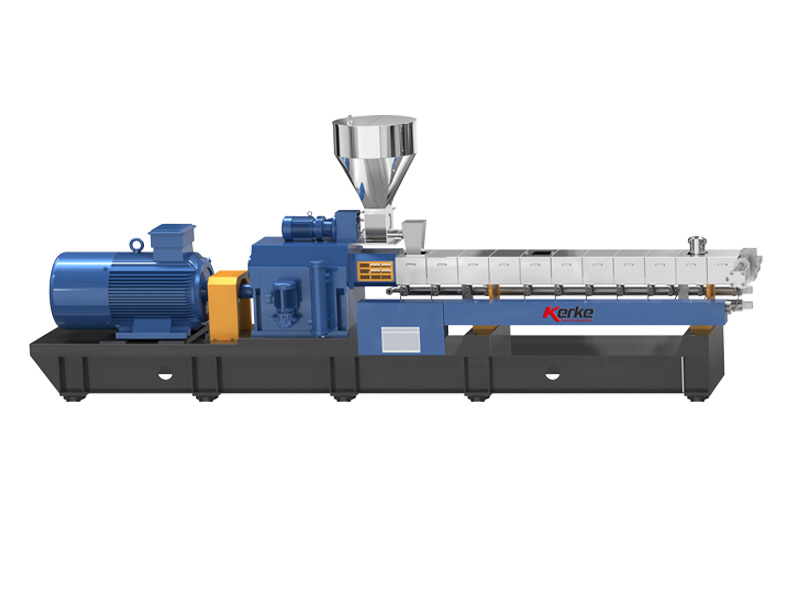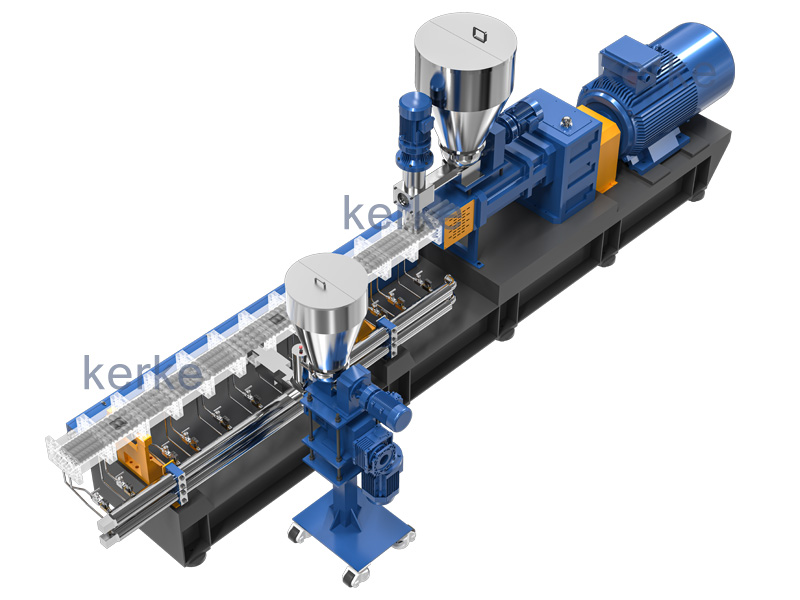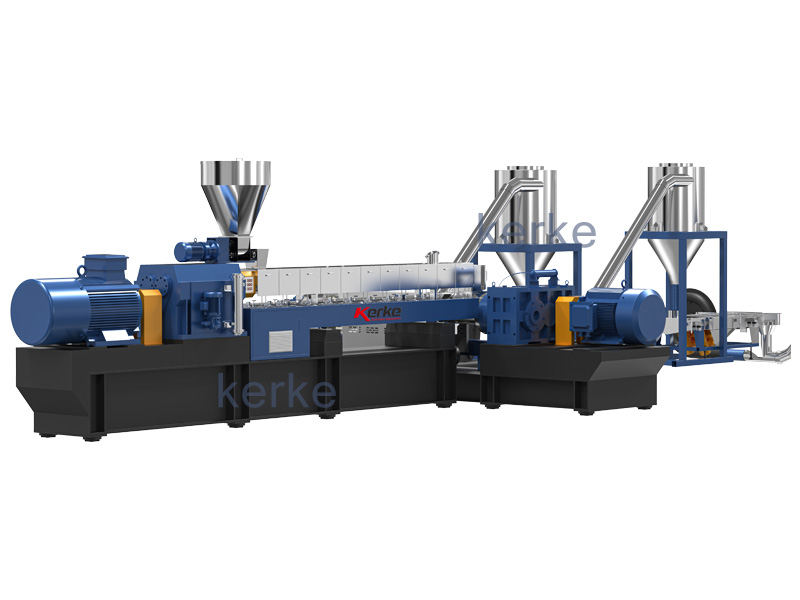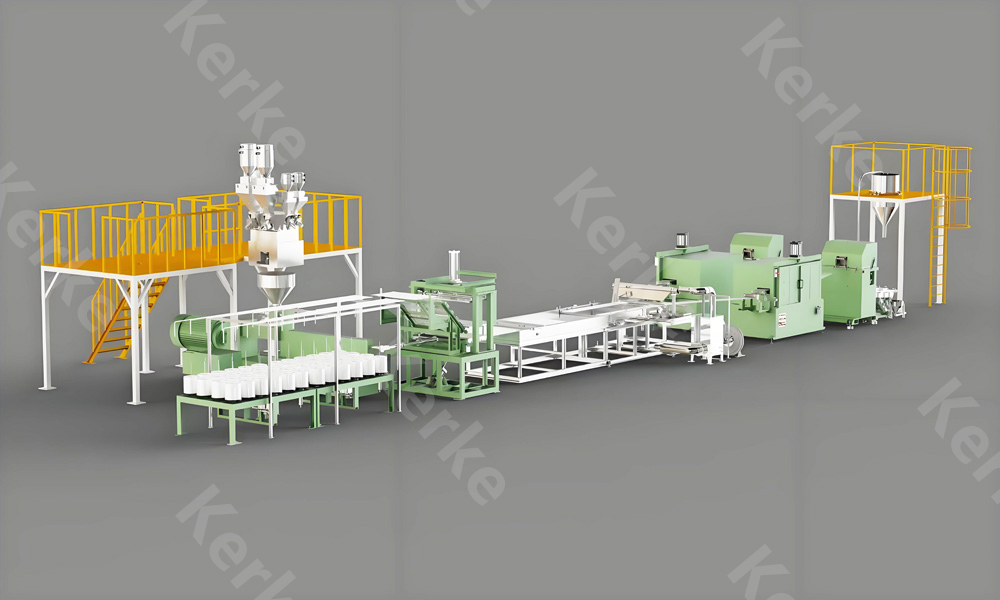
Co-rotating twin screw extruders have become the dominant technology for masterbatch production worldwide. This dominance reflects the substantial advantages that co-rotating designs provide over alternative technologies. Understanding these benefits helps manufacturers make informed equipment decisions and enables existing users to maximize the value of their investment. This comprehensive perspective guides both equipment selection and operational optimization.
The masterbatch industry demands exceptional mixing capability, precise temperature control, consistent quality, and efficient throughput. Co-rotating twin screw extruders address these requirements through their unique mechanical design and versatile processing capabilities. No other compounding technology provides the same combination of performance and flexibility. This capability combination explains why co-rotating twin screw technology dominates professional masterbatch manufacturing.
The commercial implications of technology choice extend beyond processing capability to include productivity, quality, and long-term competitiveness. Equipment that enables superior quality and efficient production creates sustainable competitive advantage. The investment in capable technology generates returns through improved customer satisfaction and enhanced profitability. Technology selection thus represents a strategic decision with long-term consequences.
Fundamental Principles of Co-Rotating Twin Screw Technology
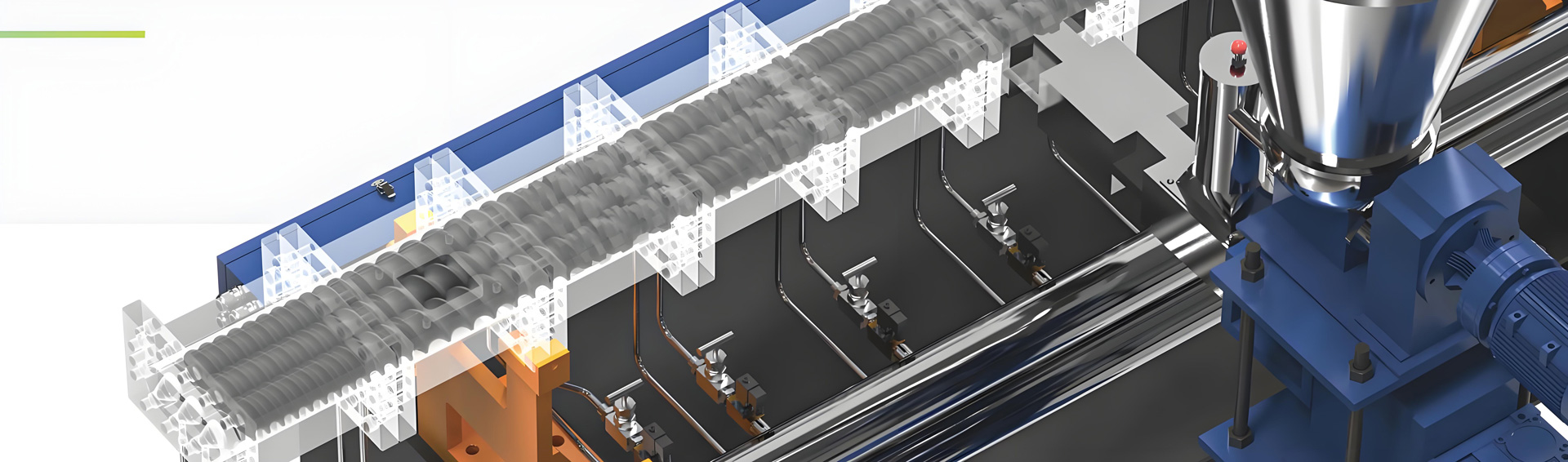
Co-rotating twin screw extruders feature two parallel screws rotating in the same direction within a figure-eight barrel cross-section. This arrangement creates a positive displacement pumping mechanism that differs fundamentally from single-screw or counter-rotating designs. The intermeshing screw flights provide barrier functions that prevent material backflow and ensure predictable conveying. Understanding these fundamentals clarifies why co-rotating design provides superior capability.
Understanding the mechanical principles underlying co-rotating operation explains why this design delivers superior performance in demanding applications. The geometry of intermeshing screws determines material flow patterns, mixing characteristics, and overall processing capability. Each aspect of screw geometry affects performance in ways that guide configuration and operating decisions.
The continuous material movement in co-rotating twinscrew extruders differs from the drag flow mechanism in single-screw machines. This difference enables the controlled residence times and predictable mixing that demanding applications require. The positive displacement nature of twin screw conveying provides capability that alternatives cannot match.
Screw Intermeshing and Material Conveying
The intermeshing region of co-rotating screws creates a seal between screw channels, preventing the backward leakage that limits single-screw output. Material within each screw channel moves forward with the screw rotation, held against the barrel wall by centrifugal forces and channel geometry. This positive conveying provides throughput control accuracy impossible with single-screw designs. The precision of this control enables the consistency that quality-conscious manufacturers require.
The degree of intermeshing affects both conveying efficiency and mixing capability. Tight intermeshing provides maximum sealing and throughput control but may limit mixing element integration. Kerke extruders feature optimized intermeshing geometry that balances these considerations for masterbatch applications. This optimization reflects extensive engineering development and application experience.
Conveying efficiency varies with screw design and operating conditions. Properly designed screws maintain forward conveying across a wide range of formulations and conditions. This conveying stability enables the reliable production that customers expect from professional suppliers.
Material Flow Patterns in Co-Rotating Systems
Material flow in co-rotating twin screw extruders involves multiple simultaneous mechanisms. Forward conveying along the screw axis combines with cross-channel mixing induced by screw rotation. This combination creates efficient distributive mixing while maintaining productive throughput. The multiple flow mechanisms work together to achieve the mixing that quality requires.
The figure-eight barrel cross-section creates alternating regions of high and low pressure as screws rotate. These pressure variations drive material exchange between screw channels, contributing to distributive mixing. The extent of this exchange depends on screw speed, flight geometry, and material viscosity. Understanding these relationships guides configuration and operating optimization.
Material exchange between channels creates the repeated folding and dividing that characterizes twin screw mixing. Each screw rotation doubles the number of interfaces between components. This exponential increase in interfacial area enables rapid homogenization that single-screw machines cannot match.
Mixing Zone Development and Design
Mixing zones within the screw configuration provide dispersive and distributive mixing capability beyond what conveying elements alone provide. Kneading blocks create the high-shear conditions necessary for breaking down pigment agglomerates. The arrangement and extent of mixing elements determine mixing intensity and residence time distribution. Configuration design addresses the specific mixing requirements of intended formulations.
Co-rotating designs accommodate extensive mixing zone development without sacrificing conveying stability. The positive displacement nature of intermeshing screws maintains material flow even with aggressive mixing elements. This capability enables mixing configurations impossible with less positive conveying systems. The flexibility to configure for specific requirements maximizes equipment utility.
Mixing zone design balances multiple factors including intensity, residence time, and thermal generation. Higher-intensity mixing achieves better dispersion but generates more heat and may stress materials. The optimal design balances these factors based on formulation requirements. Kerke applications engineering supports this optimization.
Mixing Performance Advantages
Mixing performance determines the quality achievable in masterbatch production. Both distributive mixing, which rearranges material without size reduction, and dispersive mixing, which breaks down agglomerates, contribute to final product quality. Co-rotating twin screw extruders excel at both mixing modes, enabling the quality that demanding applications require. This dual-mode capability distinguishes capable equipment.
The mixing advantages of co-rotating twin screw technology directly affect the business outcomes of masterbatch production. Better mixing enables higher pigment loading, reduces waste, and improves customer satisfaction. These business benefits justify the technology investment that capable equipment requires.
Superior Dispersive Mixing Capability
Dispersive mixing requires sufficient shear stress to break adhesive bonds between pigment particles. The shear stress generated depends on material viscosity and shear rate. Co-rotating twin screw extruders generate high shear rates through the close-clearance intermeshing region while maintaining the viscosity necessary for effective stress transmission. This combination enables aggressive dispersion that alternatives cannot achieve.
The intensity and duration of shear exposure in the mixing zone can be precisely controlled through element selection and configuration. Aggressive kneading blocks provide intensive dispersive mixing for difficult-to-disperse pigments, while gentler configurations suit shear-sensitive colorants. This flexibility enables optimization for specific formulation requirements. Kerke experience across diverse formulations supports this optimization.
Dispersion quality directly affects the visual appearance and performance of finished masterbatches. Incomplete dispersion creates color streaking, specks, and inconsistency that customers immediately reject. The dispersive mixing capability of co-rotating twin screw technology prevents these quality problems.
Excellent Distributive Mixing Characteristics
Distributive mixing ensures uniform composition throughout the material volume. Co-rotating twin screw extruders achieve excellent distributive mixing through the repeated material rearrangements that occur as screws rotate. Each screw flight passage folds and divides the material, exponentially increasing the number of interfaces between components. This efficient mixing reduces processing time and improves consistency.
The distributive mixing efficiency of twin screw extrusion reduces the mixing time required to achieve uniformity. Shorter mixing times improve productivity and reduce exposure of heat-sensitive materials to processing temperatures. This efficiency advantage compounds as mixing requirements become more demanding. Time savings translate directly to throughput benefits.
Uniform distribution of additives ensures consistent performance throughout the masterbatch. Incomplete distribution creates variation that affects customer product quality. The distributive mixing capability of co-rotating twin screw technology ensures the consistency that quality requires.
Self-Cleaning Feature and Operating Benefits
The wiping action of intermeshing screw flights and barrel surfaces in co-rotating designs provides a self-cleaning effect. Material deposits that might accumulate and degrade are continuously removed, preventing quality problems from material buildup. This self-cleaning characteristic enables color changeovers with minimal material retention. Changeover efficiency directly affects production flexibility and equipment utilization.
The self-cleaning effect also contributes to operating stability by preventing material accumulation that might cause flow disturbances or temperature excursions. Processing remains consistent throughout production runs without gradual changes from material accumulation. This stability enables the consistent quality that customers require. Kerke extruders optimize self-cleaning geometry for demanding masterbatch applications.
Self-cleaning capability affects maintenance requirements and equipment longevity. Materials that might otherwise accumulate and degrade are continuously removed, reducing the material-related wear and fouling that affect equipment life. This benefit complements the quality benefits that self-cleaning provides.
Temperature Control Excellence
Precise temperature control enables processing optimization while preventing material degradation. The thermal environment in the extruder results from heat generation through shear and heat transfer through barrel heating and cooling. Co-rotating twin screw design provides inherent advantages in thermal management that support both quality and productivity. Temperature control capability often determines achievable processing conditions.
Temperature control affects product quality through its influence on viscosity, reaction rates, and material stability. Excessive temperature causes degradation; insufficient temperature limits mixing efficiency. The precise control that co-rotating twin screw technology provides enables operation at optimal temperatures throughout the barrel.
Heat Generation Control and Prediction
Shear heat generation in co-rotating twin screw extruders follows predictable patterns based on screw geometry and operating parameters. The relationship between speed, viscosity, and heat generation enables accurate thermal modeling and control optimization. This predictability supports stable process control across operating ranges. Predictable thermal behavior distinguishes professional equipment.
Heat generation concentrates in specific zones where mixing elements create high shear. This localization enables targeted thermal management rather than blanket temperature control. Zone-specific heating and cooling addresses actual heat generation patterns for improved efficiency. Kerke multi-zone temperature control enables this targeted thermal management.
Understanding heat generation patterns guides screw configuration and operating parameter optimization. Configuring mixing elements to distribute shear heat generation prevents localized overheating. These configuration decisions affect both quality and throughput.
Temperature Profile Flexibility
Multi-zone temperature control provides flexibility to establish temperature profiles matching specific formulation requirements. Different temperature zones support feed zone cooling, compression zone heating, mixing zone temperature management, and die temperature optimization. Each zone operates independently to maintain precise setpoints. Zone independence enables the fine-tuning that complex formulations require.
Kerke extruders feature advanced temperature control systems with multiple independently-controlled zones. This granularity enables optimization of thermal conditions throughout the barrel, supporting processing of diverse formulations from thermally-sensitive colorants to high-temperature engineering resins. The range of controllable zones affects the flexibility available for different applications.
Temperature profile optimization considers how each zone affects both processing and product quality. Feed zones typically require cooling to prevent premature melting. Mixing zones require careful temperature management to maintain viscosity while avoiding degradation. Die zones affect melt flow and final product characteristics. The complete temperature profile creates the conditions for optimal processing.
Uniform Melt Temperature Distribution
Material temperature uniformity throughout the melt affects quality consistency in the extruded product. Co-rotating twin screw extruders promote temperature uniformity through the mixing that occurs during conveying. Material temperature variations from non-uniform heating or local shear heating differences are reduced through continuous mixing. Temperature uniformity enables consistent processing and product quality.
Temperature measurement at the die exit indicates final melt temperature but may not reflect internal temperature variations. The mixing inherent in twin screw processing ensures that temperature variations present earlier in the process are eliminated before extrusion. This temperature homogenization supports consistent product quality across the full production run.
Thermal gradients within the melt may affect crystallization or other temperature-dependent processes. The mixing that occurs in twin screw processing reduces these gradients, enabling predictable behavior from temperature-sensitive materials. This gradient reduction contributes to the quality advantages of twin screw technology.
Process Flexibility and Versatility
Masterbatch production involves diverse formulations with varying requirements for pigment type, concentration, carrier resin, and performance characteristics. Equipment versatility enables single machines to address multiple formulation types efficiently. Co-rotating twin screw extruders provide exceptional versatility through their modular design and flexible configuration options. This versatility maximizes the return on equipment investment.
Versatile equipment adapts to changing market requirements without requiring complete replacement. New formulations, different concentrations, and expanded product ranges can often be processed on existing equipment with configuration changes. This adaptability protects capital investment against evolving market requirements.
Configuration Flexibility for Diverse Formulations
Modular screw designs enable configuration optimization for specific formulations. Screw elements can be arranged to emphasize feeding, melting, mixing, or devolatilization as specific formulations require. This flexibility enables a single extruder to handle diverse applications without compromise. Configuration optimization addresses the specific requirements of each formulation.
Kerke extruders feature modular screw construction with a wide range of element types. Kerke applications engineering supports configuration development for specific formulations, leveraging extensive experience across diverse masterbatch applications. This expertise helps customers achieve optimal results without extensive trial-and-error experimentation.
Configuration changes for different formulations should be documented and validated. Recipe management systems store configuration parameters along with operating conditions. This documentation ensures that configuration changes are implemented correctly and consistently.
Capacity Range and Scalability
The Kerke product line spans capacity ranges from compact production models through high-volume industrial machines. This range enables appropriate equipment selection for specific production requirements while maintaining the capability to scale up as needs grow. Each model maintains the fundamental advantages of co-rotating twin screw design while addressing different capacity requirements.
The KTE-36B model at $25,000 to $35,000 addresses lower-volume specialty applications, while the KTE-95D at $120,000 to $200,000 handles high-volume production requirements. Intermediate models including KTE-50B at $40,000 to $60,000, KTE-65B at $50,000 to $80,000, and KTE-75B at $70,000 to $100,000 address intermediate capacity needs. This product range enables matching equipment to specific requirements without capability compromise.
Scalability considerations should address both current requirements and anticipated growth. Equipment with capability margin enables volume growth without equipment replacement. The marginal cost of additional capability often proves economical compared to the disruption of inadequate equipment.
Multi-Function Processing Capability
Beyond basic mixing, co-rotating twin screw extruders accommodate multiple processing functions in single machines. Reactive extrusion, devolatilization, filling, and compounding functions can be integrated into unified processes. This integration reduces equipment requirements and improves process efficiency. Multi-function capability expands the applications that equipment can address.
Masterbatch applications often benefit from devolatilization capability to remove moisture or residual monomers. Vacuum venting zones incorporated into the screw configuration enable efficient volatiles removal without process interruption. This multi-function capability distinguishes co-rotating twin screw technology from less versatile alternatives.
Multi-function processing may enable formulations that single-function equipment cannot produce. Reactions, mixing, and devolatilization can be combined in ways that improve product quality or reduce processing steps. These opportunities expand as equipment capability increases.
Quality Consistency and Repeatability
Quality consistency across production batches determines customer satisfaction and manufacturing efficiency. Co-rotating twin screw extruders provide inherent advantages in consistency that translate directly to business benefits. Process stability and repeatability enable sustainable quality improvement programs. Consistency capability affects both customer relationships and operational efficiency.
Consistent quality reduces the costs of waste, rework, and customer complaints. Beyond these direct cost savings, consistent quality builds customer relationships and enables premium pricing. The investment in consistency capability generates returns through multiple mechanisms that compound over time.
Process Stability Mechanisms
The positive displacement conveying of co-rotating twin screw extruders provides inherent process stability. Material feed variations translate to proportional output variations rather than the pressure and quality fluctuations common in single-screw systems. This stability enables tight quality control with minimal variation. Stability capability directly affects achievable quality levels.
Screw geometry consistency from barrel to barrel and machine to machine enables reproducible processing. Formulation development and optimization performed on one machine transfers directly to production machines of the same design. This reproducibility supports efficient technology transfer and production scale-up. Reproducibility reduces the validation burden for new products and production locations.
Stability mechanisms include both mechanical and control aspects. Well-designed screws maintain stable conveying despite variations in material characteristics. Advanced control systems maintain setpoints despite external disturbances. Together, these mechanisms enable the stability that quality requires.
Batch-to-Batch Consistency
Consistent processing conditions produce consistent product quality across batches. Co-rotating twin screw extruders maintain stable conditions throughout production runs, eliminating the startup and shutdown transients that cause quality variation. Automated control systems maintain setpoints precisely despite external variations. This consistency enables the reliable quality that customer relationships require.
Statistical process control benefits from the inherent capability of co-rotating twin screw machines. Process capability indices achievable with these machines often exceed those possible with alternative technologies. Higher capability translates to fewer customer complaints and reduced quality-related costs. Capability improvement initiatives build on this foundation.
Consistency monitoring through SPC detects variation before it causes quality problems. Control charts track process performance, identifying trends that require corrective action. This proactive quality management prevents the customer complaints that reactive approaches cannot avoid.
Quality Verification and Control Integration
Modern co-rotating twin screw extruders integrate with quality control systems for comprehensive process management. In-line sensors monitor critical parameters including temperature, pressure, and motor load. Automated feedback control maintains quality-related parameters within specifications. Integration enables the comprehensive quality management that professional operations require.
Kerke control systems support integration with upstream and downstream equipment for complete production management. Recipe storage and recall ensures consistent processing regardless of operator. Data logging supports quality records and continuous improvement initiatives. These capabilities enable the documentation that quality assurance requires.
Integration with enterprise systems enables tracking and traceability that customers increasingly require. Lot tracking from raw materials through finished product supports root cause investigation and customer requirements. These integration capabilities build the quality infrastructure that competitive operations require.
Economic Advantages of Co-Rotating Technology
The economic advantages of co-rotating twin screw extruders include both direct cost benefits and indirect value from quality and flexibility improvements. Total cost of ownership analysis considering all relevant factors typically favors co-rotating technology despite higher initial equipment costs. This comprehensive perspective reveals the true value of capable equipment.
Initial cost differences between technologies narrow when total cost of ownership is considered. Higher initial investment in capable equipment often generates returns through improved productivity, quality, and longevity. This total cost perspective guides equipment selection decisions that affect business outcomes for years.
Throughput and Productivity Benefits
The pumping efficiency of co-rotating twin screw design enables higher throughputs than alternatives of comparable size. Higher throughputs reduce unit production costs through improved labor efficiency, reduced overhead allocation, and better equipment utilization. Productivity improvements often provide rapid return on investment. Throughput capability directly affects manufacturing cost competitiveness.
Process efficiency advantages compound over operating periods. Higher productivity per machine reduces the capital investment required for given production capacity. Reduced energy consumption per unit of output improves operating cost efficiency. These combined benefits generate substantial economic advantage over equipment life. The compounding effect of efficiency improvements makes capability investment attractive.
Throughput capability enables response to market demand without proportional equipment investment. Capacity utilization improvements generate returns without the capital cost of additional equipment. This leverage effect amplifies the value of throughput capability.
Quality Value and Waste Reduction
Superior mixing quality reduces the processing intensity required to achieve specifications. This reduction translates to lower energy consumption, reduced wear rates, and shorter processing times. Quality improvements also reduce waste from off-specification production and customer returns. Quality value often exceeds the direct cost savings from waste reduction.
The value of consistent quality extends beyond direct cost savings to customer relationships and market position. Premium quality enables premium pricing and preferential customer treatment. These competitive advantages compound over time as reputation builds. Quality leadership creates sustainable competitive advantage that competitors struggle to match.
Quality-related costs often exceed the visible waste costs that receive more attention. Customer complaints, investigation time, and relationship damage create costs that appear in different budget categories. Comprehensive quality cost accounting reveals the true value of quality improvement investments.
Maintenance and Operating Cost Efficiency
Co-rotating twin screw extruders maintain performance through extended operating periods with appropriate maintenance. Self-cleaning features reduce material-related fouling that might otherwise affect performance. Wear-resistant component options extend maintenance intervals in demanding applications. These design features reduce the maintenance burden while preserving equipment capability.
Kerke provides comprehensive support including maintenance guidance, spare parts, and service support. This support infrastructure enables efficient maintenance operations that minimize downtime while preserving equipment investment. Long-term customer relationships depend on this support capability.
Operating cost efficiency improves as processes stabilize and operating procedures mature. Knowledge积累 reduces the trial-and-error that consumes resources during early production. This knowledge advantage compounds over time, improving the competitiveness of experienced operations.
Comparison with Alternative Technologies
Understanding why co-rotating twin screw extruders have achieved dominance requires comparison with alternative technologies. Each alternative offers specific advantages but generally cannot match the comprehensive capability of co-rotating twin screw design for masterbatch applications. This comparative perspective clarifies the basis for technology selection.
Alternative technologies include counter-rotating twin screw extruders, single screw extruders, planetary roll extruders, and specialized designs for specific applications. Each technology has application areas where it performs well, but co-rotating twin screw design offers the most comprehensive capability for general masterbatch production.
Co-Rotating versus Counter-Rotating Twin Screw Extruders
Counter-rotating twin screw extruders rotate screws in opposite directions, creating different material flow patterns than co-rotating designs. Counter-rotating machines provide excellent temperature control and work well for heat-sensitive materials but offer limited mixing intensity compared to co-rotating designs. This mixing limitation restricts their use in demanding masterbatch applications.
The mixing capability limitation of counter-rotating machines restricts their use in demanding masterbatch applications. High-concentration formulations and difficult-to-disperse pigments generally require the mixing intensity that only co-rotating designs provide. Counter-rotating machines find application in PVC processing and other specialized areas where their specific advantages apply.
Selection between co-rotating and counter-rotating technology should consider specific application requirements. Most masterbatch applications favor co-rotating technology for its mixing capability. Specialized applications may benefit from counter-rotating characteristics.
Co-Rotating versus Single Screw Extruders
Single screw extruders offer lower equipment cost and simpler operation but cannot match the mixing capability of twin screw machines. Single-screw mixing relies on melt redistribution and limited shear, making it unsuitable for high-quality masterbatch production. Output control accuracy also suffers from the non-positive nature of single-screw conveying. These limitations restrict single-screw use to basic applications.
The cost advantage of single-screw equipment does not offset the quality and productivity limitations for professional masterbatch production. Manufacturers seeking quality leadership and cost efficiency generally find co-rotating twin screw technology provides the best balance. This balance makes twin screw technology the preferred choice for serious masterbatch producers.
Single screw technology may be appropriate for simple color blending where mixing requirements are minimal. These limited applications represent a small fraction of the masterbatch market where co-rotating twin screw technology dominates.
Co-Rotating versus Planetary Roll Extruders
Planetary roll extruders employ multiple small screws orbiting a central spindle within a heated barrel. This design provides excellent temperature control and surface area contact for heat transfer. However, mixing capability and throughput capacity are limited compared to twin screw designs. These limitations restrict planetary roll use to specialized applications.
Planetary roll extruders find application in specific PVC processing applications where their temperature control advantages are valuable. For general masterbatch production, co-rotating twin screw extruders provide superior capability across the range of requirements. This comprehensive capability explains the market dominance of co-rotating technology.
The comparison with planetary roll technology illustrates how different designs optimize for different characteristics. Temperature control, mixing intensity, throughput, and cost each favor different technologies in different situations. Co-rotating twin screw design offers the most balanced optimization for masterbatch applications.
Applications Where Co-Rotating Twin Screw Excels
Co-rotating twin screw extruders provide particular advantages in specific application areas. Understanding where these advantages are most pronounced guides equipment selection and process development efforts. The following applications particularly benefit from co-rotating twin screw capability.
Application areas include high-concentration masterbatches, multi-component formulations, and performance compounds. Each area presents specific challenges that co-rotating twin screw technology addresses effectively. Understanding these application benefits guides both equipment selection and formulation development.
High-Concentration Masterbatch Production
High-concentration masterbatches with pigment loadings exceeding fifty percent require exceptional mixing capability that co-rotating twin screw extruders uniquely provide. The combination of high viscosity and demanding dispersion requirements pushes alternative technologies beyond their capability limits. This demanding application illustrates the capability advantages of co-rotating twin screw technology.
Kerke extruders feature configurations specifically developed for high-concentration applications. High torque capacity, wear-resistant construction, and optimized mixing section design enable stable production of demanding formulations. This application expertise distinguishes Kerke as a specialist in challenging masterbatch applications.
High-concentration production benefits from all the advantages that co-rotating twin screw technology provides. Mixing capability enables dispersion despite high loading. Thermal management capability handles elevated heat generation. Throughput capability makes high concentration economically attractive. Together, these capabilities enable production that alternatives cannot achieve.
Multi-Component and Additive Masterbatches
Masterbatches containing multiple colorants, additives, or fillers require distributive mixing that ensures uniform component distribution. The material folding and redistribution inherent in co-rotating twin screw processing achieves the distribution uniformity these formulations require. Uniform distribution ensures consistent performance throughout the masterbatch volume.
Complex additive packages including antioxidants, UV stabilizers, and processing aids benefit from the uniform distribution that twin screw processing provides. Incomplete distribution of these expensive additives wastes material and compromises final product performance. The mixing efficiency of co-rotating technology ensures effective distribution of all components.
Multi-color masterbatches requiring precise color matching particularly benefit from the consistency that co-rotating technology provides. Minor variations in additive distribution create visible color differences that customers reject. The consistent mixing of twin screw processing prevents these variation-related quality problems.
Performance Compounds and Filled Resins
Beyond traditional color masterbatch, co-rotating twin screw extruders produce performance compounds with functional fillers and reinforcements. Calcium carbonate, talc, glass fiber, and flame retardant fillers are effectively compounded in twin screw machines. The high-shear mixing necessary for filler dispersion is naturally provided by this equipment type. These performance applications expand the market for capable equipment.
Metalmaster compounds, magnetic compounds, and conductive formulations present additional challenges that twin screw processing addresses effectively. The versatility of co-rotating twin screw design enables these specialized applications alongside standard masterbatch production. This versatility maximizes equipment utility across diverse products.
Performance compound production benefits from the same capabilities that make co-rotating technology ideal for color masterbatch. The fundamental mixing advantages translate across all compounding applications. This versatility explains why co-rotating twin screw technology dominates not just masterbatch production but the broader compounding industry.
Future Technology Developments
Co-rotating twin screw technology continues to evolve with advances in materials, controls, and design. These developments enhance capability and value for manufacturers investing in this technology. Understanding emerging developments helps plan future equipment investments. Technology evolution continues to expand the advantages of co-rotating design.
Developments in materials, controls, and digital integration create opportunities for capability improvement. Staying current with these developments enables manufacturers to maintain competitive advantage. Equipment selection should consider not just current capability but anticipated future developments.
Materials and Manufacturing Advances
New materials for screws, barrels, and components improve wear resistance and thermal management. Advanced coatings provide longer life in abrasive applications while reducing friction and energy consumption. Manufacturing precision improvements enable tighter tolerances and more consistent performance. These materials advances improve equipment capability while reducing maintenance requirements.
Kerke incorporates material and manufacturing advances into product development, ensuring that customers benefit from ongoing technology improvements. These advances translate to improved reliability, reduced maintenance, and better performance over equipment life. Continuous improvement keeps Kerke equipment competitive with evolving market requirements.
Materials development continues to expand the options available for demanding applications. New alloys, coatings, and surface treatments enable equipment to address challenges that previous materials could not handle. This continued development supports the demanding applications that drive market growth.
Control System and Automation Evolution
Advanced control algorithms enable more precise process optimization and faster response to variations. Machine learning approaches identify optimal operating conditions that manual optimization might miss. Integration with enterprise systems enables comprehensive production management. These control advances improve both quality and productivity.
Kerke control systems evolve with technology advances, incorporating improved algorithms and integration capabilities. These advances enhance the value of Kerke equipment while reducing operator burden and improving consistency. Control system evolution enables continuous improvement in equipment performance.
Automation advances reduce the operator skill requirements that limit some operations. Advanced controls enable less-experienced operators to achieve results that previously required extensive training. This democratization of capability expands the market for advanced equipment.
Industry 4.0 and Digital Integration
Digital technologies enable remote monitoring, predictive maintenance, and continuous optimization across production networks. Connected equipment shares performance data that enables fleet-wide improvement initiatives. These capabilities enhance the value proposition of modern co-rotating twin screw extruders. Digital integration represents a significant evolution in equipment capability.
Kerke investments in digital infrastructure support customers implementing Industry 4.0 strategies. These capabilities enable new approaches to process optimization and equipment management that improve competitiveness. Digital capabilities increasingly differentiate capable equipment from basic alternatives.
Predictive maintenance using digital data reduces downtime while ensuring equipment care. Monitoring key parameters enables maintenance scheduling based on actual condition rather than fixed intervals. This condition-based maintenance approach optimizes the balance between equipment care and production availability.
Conclusion
Co-rotating twin screw extruders provide comprehensive advantages for masterbatch production that justify their dominant market position. Superior mixing capability, precise temperature control, excellent process flexibility, and outstanding quality consistency combine to address the demanding requirements of professional masterbatch manufacturing. These advantages translate directly to business benefits that competitive manufacturers require.
The Kerke product line exemplifies the capability of modern co-rotating twin screw technology. From the compact KTE-36B through the high-capacity KTE-95D, each model incorporates design features optimized for masterbatch applications. These machines provide the foundation for quality, productivity, and profitability in demanding compounding operations. This product range addresses diverse requirements while maintaining consistent quality standards.
Contact Kerke to discuss your masterbatch production requirements and discover how co-rotating twin screw extrusion technology can help you achieve your quality and productivity goals. This consultation connects you with specialists who understand the challenges and opportunities in masterbatch production. Technology selection is a strategic decision that affects business outcomes for years; informed decision-making ensures the best outcomes.