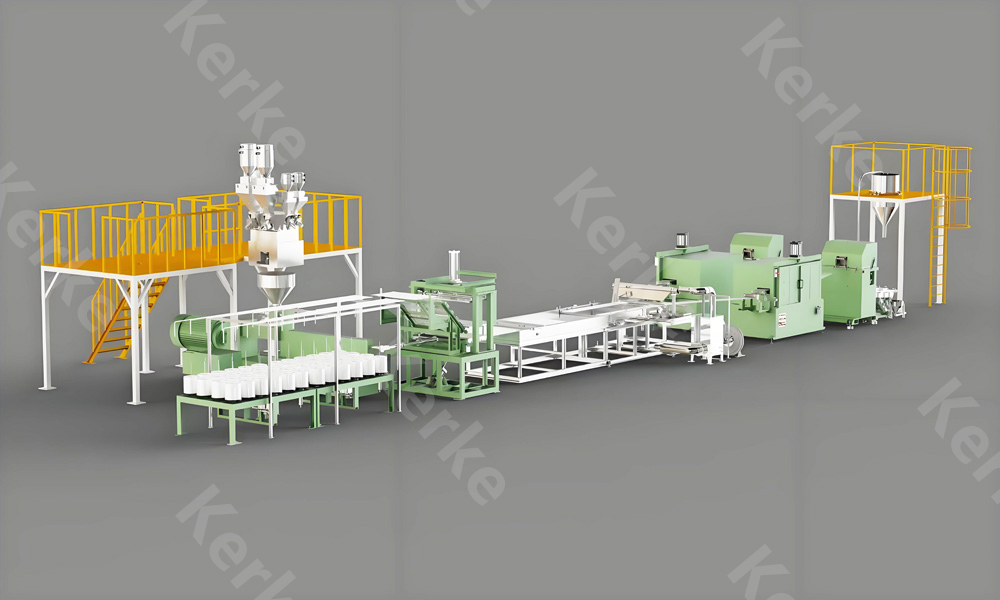
When it comes to producing high-quality white masterbatch and black masterbatch, selecting the right twin screw extruder is critical for achieving optimal color consistency, dispersion quality, and production efficiency. The masterbatch industry demands precision engineering and advanced compounding technology to meet the stringent requirements of plastic processors worldwide. A properly selected twin screw extruder can significantly impact your production costs, product quality, and overall competitiveness in the market.
The demand for premium white and black masterbatches continues to grow across multiple industries including automotive, packaging, construction, and consumer goods. These color masterbatches serve as concentrated pigment formulations that impart color and functional properties to plastic materials during the manufacturing process. The quality of the final masterbatch directly affects the appearance, performance, and value of the end products that manufacturers deliver to their customers.
This comprehensive guide will explore the essential factors that make a twin screw extruder ideal for white and black masterbatch production. We will examine the technical specifications, performance characteristics, and economic considerations that distinguish superior equipment from standard machines. By understanding these critical elements, you can make an informed decision that aligns with your production requirements and business objectives.
Understanding the Importance of Twin Screw Extruder Selection for Masterbatch Production
The selection of a twin screw extruder for masterbatch production is not merely a matter of purchasing equipment. It represents a strategic decision that affects every aspect of your manufacturing operation. The compounding extruder serves as the heart of your masterbatch production line, performing the essential functions of melting, mixing, dispersing, and shaping the polymer-pigment combinations into uniform pellets that end users will incorporate into their manufacturing processes.
White masterbatch production presents unique challenges that require specialized equipment capabilities. The high pigment loading necessary for effective white coloration demands superior dispersing mechanisms to break down titanium dioxide particles and ensure uniform distribution throughout the polymer matrix. Additionally, the optical properties of white masterbatch require careful attention to particle size distribution and agglomerate prevention to achieve the desired brightness and opacity in final applications.
Black masterbatch production, while seemingly simpler due to the nature of carbon black pigments, presents its own set of technical challenges. Achieving deep, uniform black coloration requires excellent carbon black dispersion to prevent speckling and color variation in finished products. The fine particle size of carbon black necessitates robust mixing technology that can effectively incorporate and distribute these demanding pigments without degradation or loss of performance.
The Role of Twin Screw Technology in Color Masterbatch Excellence
Twin screw extrusion technology offers significant advantages over single screw alternatives when it comes to masterbatch production. The intermeshing, co-rotating screw design creates intense mixing action through the combination of kneading blocks,传输 elements, and innovative screw configurations. This superior mixing capability translates directly into better pigment dispersion, more uniform color distribution, and higher quality finished masterbatch products that meet the exacting standards of plastic processors.
The modular nature of modern twin screw extruders allows manufacturers to customize screw configurations to optimize performance for specific masterbatch formulations. For white masterbatch production, screw designs can be optimized to maximize dispersive mixing while minimizing shear degradation of temperature-sensitive polymers. Black masterbatch production benefits from configurations that enhance distributive mixing to ensure complete carbon black incorporation throughout the compound.
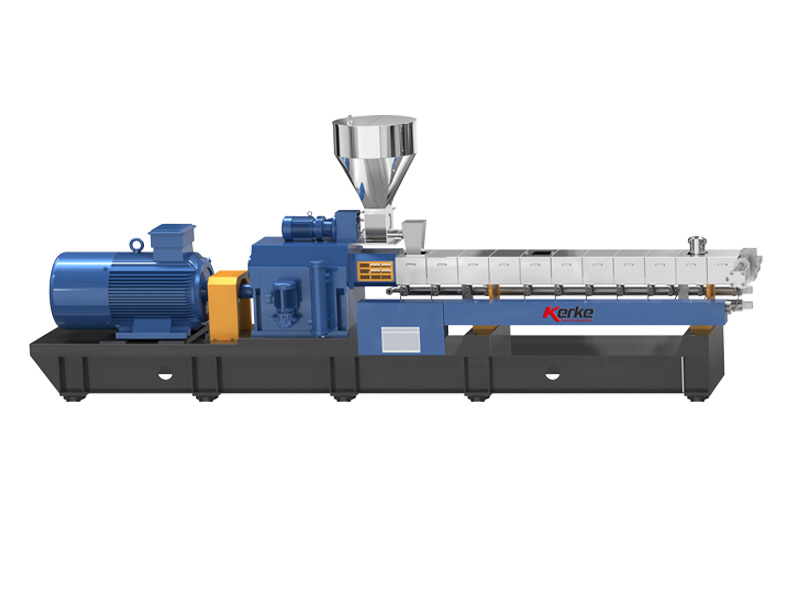
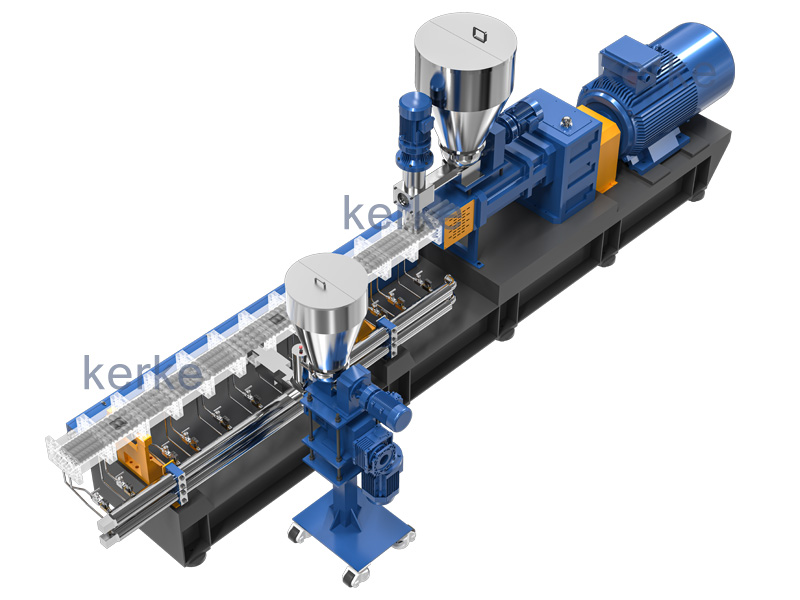
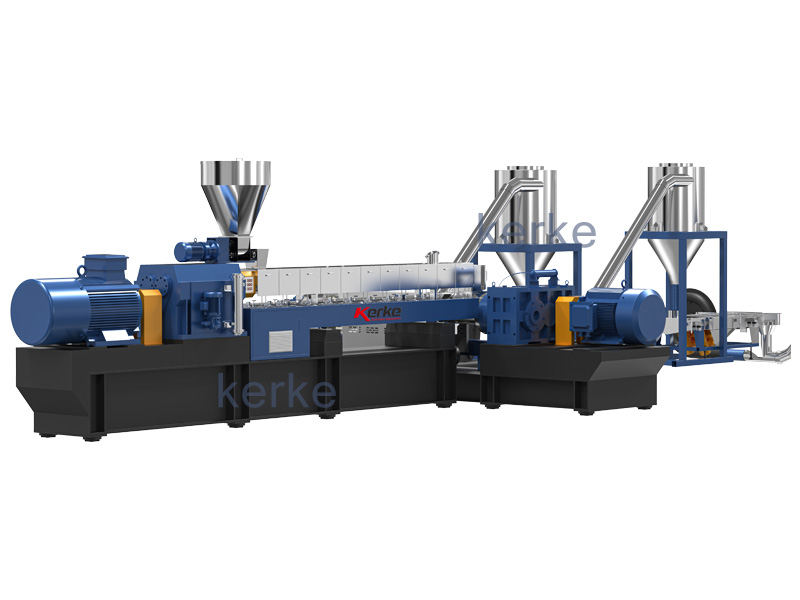
Kerke KTE series twin screw extruders represent cutting-edge engineering designed specifically for demanding masterbatch applications. These machines incorporate advanced compounding technology that delivers the precision, reliability, and performance that masterbatch manufacturers require to remain competitive in global markets.
Key Technical Specifications for White and Black Masterbatch Production
When evaluating twin screw extruders for white and black masterbatch production, several technical specifications deserve careful consideration. Understanding these specifications and their impact on production outcomes will help you select equipment that delivers optimal results for your specific formulation requirements.
Screw Diameter and Production Capacity
The screw diameter of a twin screw extruder directly influences its production capacity and processing capabilities. Larger diameter screws can process greater volumes of material, making them suitable for high-volume masterbatch production operations. However, the relationship between screw diameter and mixing quality requires careful balancing to ensure that increased throughput does not compromise the dispersion quality that your customers expect.
For white masterbatch production requiring high pigment loadings and excellent color properties, Kerke offers several models that balance capacity with quality. The KTE-50B model, featuring a screw diameter of 50.5mm and production capacity of 80-200kg/h, provides an excellent entry point for medium-scale white masterbatch production. This machine, priced in the range of $40,000-$60,000, delivers the mixing intensity necessary for quality white masterbatch while maintaining reasonable capital investment requirements.
Production scale-up considerations often lead manufacturers to evaluate larger equipment options. The KTE-65B, with its 62.4mm screw diameter and 200-450kg/h capacity, offers significant production expansion capabilities at an investment level of $50,000-$80,000. This machine provides the additional processing power necessary for high-volume white masterbatch production while maintaining the flexibility to handle diverse formulations.
For the most demanding white masterbatch production requirements involving premium optical properties and tight color tolerances, the KTE-75B represents an optimal choice. This machine features a 71mm screw diameter and can achieve production rates of 300-800kg/h. With pricing in the $70,000-$100,000 range, the KTE-75B delivers the performance necessary for竞争中保持领先地位 while maintaining operational efficiency.
Screw Design and Mixing Elements
The screw configuration within a twin screw extruder plays a crucial role in determining mixing quality and processing flexibility. Modern compounding extruders feature modular screw element designs that allow processors to customize the screw profile to match their specific formulation requirements. For white masterbatch production, screw designs typically emphasize dispersive mixing elements that effectively break down titanium dioxide agglomerates while maintaining the integrity of the polymer matrix.
Black masterbatch production benefits from screw configurations that optimize distributive mixing to ensure complete carbon black incorporation. The fine particle size and tendency of carbon black to agglomerate require screw designs that provide extended mixing zones with kneading blocks and specialty mixing elements. These configurations ensure that carbon black particles are uniformly distributed throughout the compound without localized concentrations that would cause color variations.
The Kerke KTE series incorporates innovative screw element designs that maximize mixing efficiency while minimizing energy consumption. The precisely engineered kneading blocks and传输 elements create the shear and mixing forces necessary for superior pigment dispersion without excessive heat generation that could degrade sensitive formulations.
Barrel Configuration and Temperature Control
Effective temperature management is essential for achieving consistent masterbatch quality. The barrel configuration of a twin screw extruder determines how heat is applied and removed during the compounding process. Modern compounding extruders feature segmented barrel designs with independent temperature control zones that allow processors to create precise thermal profiles for different formulations.
White masterbatch production often involves temperature-sensitive polymers that can undergo degradation if exposed to excessive temperatures. The ability to create graduated temperature profiles with careful control of peak temperatures ensures that polymer properties are maintained while sufficient melting and mixing is achieved. Advanced barrel designs incorporate efficient cooling systems that prevent temperature overshoot and maintain stable processing conditions throughout production runs.
Black masterbatch production may involve higher temperature processing requirements depending on the polymer system and carbon black type being used. The flexibility to achieve higher temperatures when necessary, while maintaining precise control, enables processors to handle a wider range of formulations with a single piece of equipment.
Color Consistency and Dispersion Quality Considerations
Color consistency represents the most critical quality attribute for both white and black masterbatches. End users of masterbatch expect uniform color delivery across all production batches and throughout the lifecycle of a given formulation. Achieving this consistency requires attention to multiple factors related to the compounding extruder and the overall production process.
Understanding Color Variation Sources in Masterbatch Production
Color variation in masterbatch production can originate from multiple sources including incomplete pigment dispersion, inadequate mixing, thermal degradation, and inconsistent feeding. The twin screw extruder must be designed to address each of these potential variation sources through appropriate mechanical design and process control capabilities.
Incomplete dispersion manifests as color streaking, speckling, or inconsistent coloration in finished products. This defect occurs when pigment particles fail to break down into primary particles and distribute uniformly throughout the polymer matrix. Twin screw extruders with superior dispersive mixing capabilities effectively address this issue by generating the shear forces necessary to break down pigment agglomerates.
Batch-to-batch color variation represents a significant concern for masterbatch manufacturers serving customers with stringent color tolerance requirements. The compounding extruder must provide consistent processing conditions across extended production runs to minimize variation between batches. Modern control systems with advanced monitoring capabilities help maintain these consistent conditions and provide data for quality assurance purposes.
Achieving Superior Dispersion in White Masterbatch
White masterbatch quality depends heavily on the effective dispersion of titanium dioxide pigments throughout the polymer matrix. The optical properties of white masterbatch, including brightness, opacity, and whiteness, are directly influenced by the degree of pigment dispersion achieved during compounding. Well-dispersed titanium dioxide particles provide optimal light scattering that delivers the desired white appearance in final applications.
The compounding process for white masterbatch must balance dispersive requirements with considerations for polymer integrity and production efficiency. Excessive shear can cause polymer degradation that affects final product properties, while insufficient shear results in inadequate dispersion and poor color quality. The twin screw extruder must provide precise control over these processing parameters to achieve optimal results.
Equipment selection for white masterbatch production should emphasize machines with proven capabilities for handling high pigment loadings while maintaining dispersion quality. The KTE series of twin screw extruders has been specifically engineered to address the demanding requirements of white masterbatch production, with screw configurations and processing parameters optimized for titanium dioxide dispersion.
Carbon Black Dispersion for Premium Black Masterbatch
Black masterbatch quality centers on the effective incorporation and distribution of carbon black pigments. The high tinting strength of carbon black means that even minor variations in dispersion quality become readily apparent in finished products. Customers expect deep, uniform black coloration without speckling, streaks, or color variation that would indicate inadequate processing.
Carbon black presents unique dispersion challenges due to its fine particle size and tendency to form strong agglomerates. The primary carbon black particles must be separated and distributed throughout the polymer matrix without re-agglomeration during the compounding process. Twin screw extruders with intensive mixing capabilities effectively address these challenges through carefully designed kneading and mixing elements.
The selection of a twin screw extruder for black masterbatch production should prioritize machines with established track records for carbon black dispersion. The processing flexibility to adjust screw configuration and temperature profiles enables optimization for different carbon black types and polymer systems commonly used in black masterbatch formulations.
Production Efficiency and Cost Considerations
Beyond quality considerations, the economic aspects of twin screw extruder selection significantly impact the viability of masterbatch production operations. Capital investment, operating costs, maintenance requirements, and production efficiency all contribute to the overall cost structure and competitiveness of your masterbatch business.
Capital Investment Analysis for Different Production Scales
The initial capital investment for twin screw extrusion equipment varies widely based on production capacity, technology level, and manufacturer positioning. Understanding the relationship between investment and performance capabilities helps manufacturers select equipment that provides optimal value for their specific production requirements.
For entry-level white and black masterbatch production, the Kerke KTE-36B offers an attractive combination of capability and affordability. With a screw diameter of 35.6mm and production capacity of 20-100kg/h, this machine provides an accessible entry point at $25,000-$35,000. This investment level enables new market entrants to establish masterbatch production capabilities without excessive capital commitment while learning the intricacies of twin screw compounding.
Medium-scale production operations benefit from equipment like the KTE-50B or KTE-65B that offer higher throughput capabilities while maintaining quality standards. The production economics of these machines enable improved unit costs as fixed costs are spread across greater production volumes. The $40,000-$80,000 investment range for these models represents a significant step-up in capability for growing masterbatch businesses.
Large-scale masterbatch production operations typically require the highest capacity machines available. The KTE-95D, featuring a 93mm screw diameter and production capacity of 1000-2000kg/h, represents the pinnacle of Kerke’s production-oriented equipment. At $120,000-$200,000, this machine enables economies of scale that can significantly improve competitive positioning for high-volume producers.
Operating Cost Optimization
Operating costs for twin screw extrusion include energy consumption, raw material waste, labor requirements, and maintenance expenses. Equipment selection should consider not only initial acquisition costs but also the ongoing operating economics that affect profitability over the equipment lifecycle.
Energy efficiency has become increasingly important as electricity costs represent a significant portion of masterbatch production expenses. Modern twin screw extruders incorporate energy-efficient motor designs, optimized screw geometries, and advanced control systems that minimize energy consumption while maintaining quality standards. These efficiency improvements translate directly into lower operating costs and improved profit margins.
Material waste during startup, formulation changes, and shutdown procedures represents another significant cost consideration. Equipment with efficient startup behavior and quick color change capabilities minimizes the material losses associated with these production transitions. The total cost of ownership analysis should account for these waste costs when comparing different equipment options.
Return on Investment Considerations
The return on investment for twin screw extrusion equipment depends on production volumes, selling prices, operating costs, and quality levels achieved. Higher quality equipment that enables premium pricing and reduced waste can provide superior returns compared to lower-cost alternatives that limit market positioning.
Masterbatch producers serving quality-conscious customers can justify higher equipment investments based on the ability to command premium prices for superior products. The additional capabilities of advanced twin screw extruders enable production of masterbatches that meet the most demanding customer specifications, opening market opportunities that would not be accessible with standard equipment.
The production capacity of selected equipment determines the revenue potential of the investment. While smaller machines involve lower capital commitments, they also limit the production scale and associated revenue potential. Careful analysis of market opportunities and growth projections should inform equipment capacity decisions.
Maintenance Requirements and Equipment Reliability
Equipment reliability directly impacts production continuity and overall operating costs. Twin screw extruders operating in demanding masterbatch production environments require regular maintenance to maintain performance levels and extend equipment life. Understanding maintenance requirements helps in planning operational activities and budgeting for ongoing equipment care.
Screw and Barrel Wear Considerations
The screws and barrels of a twin screw extruder experience significant wear during normal operation, particularly when processing abrasive masterbatch formulations. White masterbatch containing high loadings of titanium dioxide can cause accelerated wear on screw elements and barrel surfaces. Carbon black, with its abrasive characteristics, presents similar wear challenges for black masterbatch production.
Material selection for screw elements and barrels significantly influences wear resistance and maintenance intervals. Tool steel configurations with appropriate hardening treatments provide cost-effective wear resistance for standard applications. For the most demanding formulations, specialty materials such as bimetallic barrels and hardened screw elements offer extended service life at higher initial cost.
Regular inspection and replacement of worn components maintains processing quality and prevents equipment damage. Establishing maintenance schedules based on production volume and formulation characteristics ensures proactive equipment care that minimizes unexpected downtime and production interruptions.
Preventive Maintenance Programs
Implementing comprehensive preventive maintenance programs extends equipment life and maintains consistent production quality. These programs include regular inspection schedules, component replacement intervals, and performance monitoring that identifies potential issues before they cause production problems.
Daily maintenance activities include visual inspections, temperature verification, and routine cleaning procedures that maintain equipment condition. Weekly and monthly maintenance schedules address more thorough inspection requirements and component adjustments that optimize performance.
Kerke provides comprehensive technical documentation and support services that enable effective maintenance programs for their twin screw extruder product line. These resources help ensure that equipment operators can implement appropriate maintenance practices that maximize equipment availability and performance.
Process Control and Quality Monitoring Systems
Modern twin screw extruders incorporate sophisticated process control and quality monitoring capabilities that enhance production consistency and enable continuous improvement. These systems provide real-time visibility into processing conditions and product quality indicators that help operators maintain optimal production parameters.
Advanced Control System Features
PLC and touchscreen-based control systems provide intuitive operator interfaces that simplify machine operation and monitoring. These systems enable precise control of all processing parameters including temperatures, screw speeds, feed rates, and vacuum levels. The ability to store and recall formulation-specific parameter sets enables quick product changeovers that minimize downtime.
Real-time monitoring of critical parameters enables immediate identification of process deviations that might affect product quality. Temperature fluctuations, pressure variations, and throughput changes are logged and displayed for operator review, enabling proactive response to developing conditions before quality issues occur.
Integration with production management systems enables data collection and analysis that supports quality improvement initiatives and regulatory compliance requirements. The ability to trace production conditions for specific batches provides valuable information for quality investigations and customer inquiries.
Quality Monitoring and Feedback Systems
Advanced masterbatch production operations incorporate inline quality monitoring systems that provide real-time feedback on product characteristics. These systems can detect color variations, dispersion issues, and other quality parameters that would traditionally require laboratory analysis of finished samples.
Color measurement systems integrated with extrusion control systems enable automatic parameter adjustments that maintain consistent product quality. These closed-loop control capabilities significantly reduce the variation that occurs with manual process adjustments and enable tighter quality specifications.
Data logging and trending capabilities provide historical records that support quality improvement initiatives and process optimization efforts. Analysis of production data reveals patterns and correlations that inform equipment configuration decisions and process parameter optimization.
Selecting the Right Kerke Twin Screw Extruder for Your Production Needs
Kerke offers a comprehensive range of twin screw extruders designed to meet the diverse requirements of white and black masterbatch producers. Understanding the capabilities and ideal applications for each model helps in making appropriate equipment selections for specific production requirements.
KTE-36B: Entry-Level Excellence
The KTE-36B represents an ideal entry point for new masterbatch producers or those establishing new production capabilities. With its 35.6mm screw diameter and 20-100kg/h production capacity, this machine provides sufficient capability for product development, small-scale production, and market testing activities.
The affordability of the KTE-36B, priced at $25,000-$35,000, enables capital-efficient market entry without compromising on fundamental quality capabilities. This machine incorporates the same core technologies as larger Kerke models, providing a scalable technology platform that supports business growth.
Ideal applications for the KTE-36B include research and development activities, specialty masterbatch production, and small-scale manufacturing operations. The flexibility to handle diverse formulations enables market positioning in specialty segments where volume requirements do not justify larger equipment investments.
KTE-50B and KTE-65B: Mid-Scale Production Solutions
The KTE-50B and KTE-65B provide production capabilities in the medium scale range that meets the requirements of established masterbatch producers. These machines balance throughput capacity with processing flexibility, enabling efficient production across diverse formulation requirements.
The KTE-50B, with its 50.5mm screw diameter and 80-200kg/h capacity, offers an excellent platform for regional masterbatch production operations. The $40,000-$60,000 investment level provides accessibility for growing businesses while delivering the performance necessary for quality competitive positioning.
The KTE-65B, with its 62.4mm screw diameter and 200-450kg/h capacity, represents the next level of production capability. This machine enables meaningful volume production that improves unit economics and supports customer relationships requiring reliable supply commitments. The $50,000-$80,000 investment provides a strong foundation for growth-oriented masterbatch businesses.
KTE-75B and KTE-95D: High-Capacity Production Excellence
High-volume masterbatch production operations benefit from the capabilities of the KTE-75B and KTE-95D twin screw extruders. These machines deliver the throughput necessary for competitive positioning in high-volume market segments while maintaining the quality standards that customers demand.
The KTE-75B, with its 71mm screw diameter and 300-800kg/h production capacity, provides high-volume capability at a $70,000-$100,000 investment level. This machine serves as an excellent primary production asset for operations focused on medium-to-high volume white and black masterbatch markets.
The KTE-95D, featuring a 93mm screw diameter and 1000-2000kg/h capacity, represents the ultimate production capability for the most demanding applications. At $120,000-$200,000, this machine enables the economies of scale necessary for competitive positioning in high-volume commodity masterbatch markets.
Implementation Considerations for New Equipment
Successful implementation of new twin screw extrusion equipment requires attention to installation, commissioning, training, and process development activities. Proper planning and execution of these activities ensures that new equipment delivers its full potential from the start of production operations.
Installation and Setup Requirements
Proper installation of twin screw extrusion equipment ensures safe, efficient, and reliable operation. Foundation requirements, utility connections, and auxiliary equipment integration must be addressed during installation planning to enable smooth commissioning activities.
Kerke provides comprehensive installation documentation and technical support that guides customers through the installation process. Clear specifications for foundation design, electrical requirements, and auxiliary equipment ensure that site preparations support optimal equipment performance.
Process Development and Optimization
Developing optimal processing parameters for specific masterbatch formulations requires systematic experimentation and analysis. The flexibility of Kerke twin screw extruders enables comprehensive process development that optimizes quality, throughput, and operating costs for each product.
Process development activities typically begin with baseline runs using established formulations, followed by systematic parameter adjustments that identify optimal processing conditions. The data collection capabilities of Kerke control systems support this optimization process by providing detailed information about processing behavior under different conditions.
Conclusion
Selecting the best twin screw extruder for white masterbatch and black masterbatch production requires careful consideration of multiple factors including technical capabilities, quality performance, production efficiency, and economic considerations. The investment in appropriate equipment pays dividends through superior product quality, reliable production performance, and competitive operating costs.
Kerke KTE series twin screw extruders provide a comprehensive range of capabilities that address the requirements of masterbatch producers at all scales. From the entry-level KTE-36B to the high-capacity KTE-95D, each model delivers the precision, reliability, and performance that demanding masterbatch applications require.
The quality challenges of white masterbatch and black masterbatch production are effectively addressed through the advanced compounding technology incorporated in Kerke equipment. By selecting equipment that matches your production scale and quality requirements, you position your business for success in competitive masterbatch markets.