Static electricity presents significant challenges in plastic manufacturing and product performance, ranging from dust attraction and equipment failure to product damage and safety hazards. Antistatic masterbatch technology has emerged as an essential solution for controlling static electricity in plastic products across multiple industries, particularly in electronic packaging where static control is critical. This comprehensive guide explores the science of static electricity in plastics, mechanisms of antistatic action, available antistatic technologies, and practical considerations for selecting and processing antistatic masterbatch to meet specific application requirements. Understanding the fundamentals of antistatic masterbatch enables manufacturers to optimize product performance, prevent static-related failures, and reduce costs associated with static damage in the manufacturing environment.
Understanding Static Electricity in Plastics
Static electricity in plastic materials arises from the accumulation of electric charge on the surface of insulating polymers, creating electrostatic fields that can cause numerous problems in manufacturing environments and end-use applications. Plastics are inherently good electrical insulators with high volume resistivity, typically ranging from 10^12 to 10^16 ohm-cm, which means they do not readily conduct charge away from their surfaces. When plastic materials come into contact with other materials or experience friction, charge separation occurs and the charges remain trapped on the surface due to the material’s insulating properties. This trapped charge creates an electrostatic potential that can accumulate to levels of thousands of volts, potentially causing sparks, attracting dust and contaminants, damaging sensitive electronic components, and posing safety hazards.
The economic impact of static electricity in plastics manufacturing is substantial. Static-related defects cause approximately 2-3% of scrap in plastic injection molding, translating to hundreds of millions of dollars in annual losses worldwide. In electronic manufacturing, electrostatic discharge (ESD) damage accounts for 8-15% of all component failures, resulting in costs exceeding $10 billion annually in the electronics industry alone. Additionally, static attraction of dust and particles causes surface defects in automotive and consumer products, requiring additional cleaning and finishing operations that increase manufacturing costs by an estimated 5-12%. For manufacturers of plastic products, implementing effective antistatic measures through masterbatch technology represents a cost-effective investment that typically reduces scrap rates by 70-90% and eliminates many static-related quality problems.
Static Generation Mechanisms
Static electricity in plastics is generated through several mechanisms including triboelectric charging, contact charging, and induction charging. Triboelectric charging occurs when two different materials come into contact and separate, with electrons transferring from one material to another based on their position in the triboelectric series. The triboelectric series ranks materials according to their tendency to gain or lose electrons. For example, when polyethylene (which tends to lose electrons and become positive) contacts PVC (which tends to gain electrons and become negative), electrons transfer from polyethylene to PVC, leaving the polyethylene with a positive charge and the PVC with a negative charge. Contact charging is similar to triboelectric charging but does not involve friction, simply requiring contact between two different materials. Induction charging occurs when a charged object approaches a neutral conductor or semiconductor, causing charge separation in the neutral object.
In plastic manufacturing environments, static generation occurs through multiple operations. Granule handling and transport cause significant static charge accumulation, with plastic pellets potentially developing charges of 5-50 kV during transfer operations. Injection molding and extrusion processes generate static through friction between the plastic material and metal surfaces of processing equipment, with typical charge potentials ranging from 2-20 kV. Cutting and trimming operations generate additional static charge, with cut edges often exhibiting charges of 1-10 kV. Product assembly and packaging processes create further static through material handling and contact with other surfaces. Understanding these static generation mechanisms helps manufacturers identify critical control points where antistatic measures are most needed.
Static Measurement and Characterization
Measuring static electricity is essential for quantifying static problems and evaluating the effectiveness of antistatic solutions. Static charge is typically measured in volts (V) or surface charge density in coulombs per square meter (C/m²). Common measurement techniques include electrostatic field meters for non-contact measurement of surface potential, static eliminators with charge measurement capability, and specialized instruments for measuring volume resistivity and surface resistivity. Surface resistivity is a particularly useful parameter for evaluating antistatic materials, with antistatic properties typically defined as surface resistivity between 10^9 and 10^12 ohms/square. Conductive materials have resistivity below 10^9 ohms/square, while insulating materials exceed 10^12 ohms/square.
The cost of static measurement equipment ranges from $200 for basic electrostatic field meters to $5,000 or more for advanced charge mapping and resistivity measurement systems. For manufacturers dealing with static-related quality problems, investing in appropriate measurement equipment is essential for root cause analysis and solution verification. The cost of static-related problems typically far exceeds the cost of measurement and monitoring equipment, making this investment highly cost-effective. For example, a manufacturer experiencing $200,000 annually in static-related scrap could see returns on static measurement equipment investment in less than 6 months through improved problem identification and solution implementation.
Mechanisms of Antistatic Action
Antistatic masterbatch functions through various mechanisms to control static electricity in plastic materials, fundamentally altering the electrical properties of the polymer to allow charge dissipation rather than accumulation. Understanding these mechanisms helps manufacturers select the optimal antistatic technology for specific applications and performance requirements.
Hygroscopic Moisture Absorption
Hygroscopic antistatic agents function by absorbing moisture from the surrounding environment onto the polymer surface, creating a conductive water film that allows charge dissipation. These agents are typically ionic compounds with hydrophilic groups such as amine salts, quaternary ammonium salts, or alkyl sulfonates. The absorbed moisture on the surface reduces surface resistivity from insulating levels (10^12-10^16 ohms/square) to antistatic levels (10^9-10^12 ohms/square), providing a path for static charge to flow away from the surface. The effectiveness of hygroscopic antistatic agents depends significantly on relative humidity, with performance typically optimal at 40-60% relative humidity and reduced at lower humidity levels. However, modern formulations maintain effectiveness across a wider humidity range compared to earlier generations of hygroscopic agents.
Hygroscopic antistatic masterbatch typically costs $4-12 per kilogram, with loading levels in the final plastic compound ranging from 1-5% by weight depending on the required antistatic performance and processing conditions. The cost of hygroscopic antistatic additives typically represents 2-6% of total material costs for most applications. For manufacturers processing materials in environments with controlled humidity, hygroscopic antistatic agents offer cost-effective performance with minimal processing impact. However, in very dry environments or applications requiring consistent performance across varying humidity, alternative antistatic technologies may be preferable despite their higher cost.
Conductive Filler Networks
Conductive filler-based antistatic masterbatch incorporates conductive particles such as carbon black, carbon fibers, or metal-coated particles that create a percolating network throughout the polymer matrix. When the concentration of conductive particles exceeds the percolation threshold, typically ranging from 5-20% by weight depending on particle type and geometry, the conductive particles form interconnected pathways that allow charge to flow through the material, reducing volume resistivity to antistatic or conductive levels. This mechanism provides permanent antistatic properties that are not dependent on environmental humidity and maintain effectiveness throughout the product lifetime.
Conductive filler masterbatch typically costs $6-25 per kilogram depending on the conductive filler type, particle size, and loading level. Carbon black-based systems are the most economical at $6-12 per kilogram, while metal-coated particle systems are more expensive at $15-25 per kilogram. Loading levels for conductive filler masterbatch typically range from 10-40% in the final compound, representing a significant material cost increase of 5-20% compared to unfilled materials. However, the permanent nature of the antistatic properties and the ability to achieve low resistivity levels for demanding applications justify the additional cost for electronic packaging and other high-performance applications.
Inherently Antistatic Polymers
Inherently antistatic polymers contain chemical structures that provide antistatic properties without the need for migration or absorption of moisture. These polymers typically incorporate polar groups or conjugated structures that allow limited charge conduction through the material. Examples include polyethers, certain polyamides, and polymers with sulfonate or carboxylate groups. While inherently antistatic polymers provide excellent antistatic performance with minimal additive content, they are typically more expensive than conventional polymers and may have different processing characteristics or mechanical properties.
Inherently antistatic masterbatch typically costs $10-30 per kilogram depending on the polymer system and required antistatic performance. Loading levels for inherently antistatic masterbatch in final compounds typically range from 5-15%, representing a material cost increase of 4-12% compared to conventional polymers. The permanent antistatic properties, consistent performance across environmental conditions, and minimal migration make inherently antistatic polymers valuable for applications where long-term antistatic performance is critical. For electronic packaging applications with 10-20 year service life requirements, the additional cost of inherently antistatic polymers is justified by the elimination of antistatic performance degradation over time.
Types of Antistatic Masterbatch
Multiple categories of antistatic masterbatch are available to meet diverse application requirements, from temporary antistatic protection during manufacturing to permanent antistatic properties for demanding applications. Understanding the different types of antistatic masterbatch enables manufacturers to select the optimal solution for specific performance requirements and cost considerations.
Temporary Antistatic Masterbatch
Temporary antistatic masterbatch provides antistatic properties that gradually diminish over time as the antistatic agent migrates to the surface and is depleted through evaporation or removal. These masterbatches are typically based on hygroscopic agents that migrate to the surface where they form a conductive moisture film. The migration and depletion process typically provides effective antistatic properties for 3-12 months, depending on formulation, processing conditions, and environmental exposure. Temporary antistatic masterbatch is ideal for applications requiring static control during manufacturing and initial product handling where long-term antistatic performance is not required.
The cost of temporary antistatic masterbatch typically ranges from $4-10 per kilogram, with loading levels in final compounds ranging from 1-5% by weight. This represents a material cost increase of 1-4% for most applications, making temporary antistatic masterbatch a cost-effective solution for applications where long-term antistatic performance is not required. For manufacturers experiencing static-related problems during manufacturing but selling products that will not be subject to static requirements, temporary antistatic masterbatch eliminates manufacturing problems with minimal cost impact.
Permanent Antistatic Masterbatch
Permanent antistatic masterbatch provides sustained antistatic properties throughout the product lifetime, typically achieved through conductive filler networks or inherently antistatic polymer systems. These masterbatches are designed for applications requiring ongoing static control throughout the service life of the product, such as electronic packaging, cleanroom materials, and products used in explosive environments. The permanent nature of these antistatic systems eliminates concerns about performance degradation over time and ensures consistent static protection regardless of environmental conditions.
The cost of permanent antistatic masterbatch typically ranges from $8-30 per kilogram depending on the antistatic technology and performance level. Loading levels for permanent antistatic masterbatch typically range from 5-25% by weight, representing a material cost increase of 4-15% for most applications. While this represents a significant material cost increase compared to temporary systems, the permanent nature of the antistatic protection and the ability to meet stringent long-term performance requirements justify the investment for critical applications. For electronic packaging applications where ESD damage could cause thousands of dollars in losses per incident, the investment in permanent antistatic protection provides substantial risk reduction.
Thermal-Stable Antistatic Masterbatch
Thermal-stable antistatic masterbatch is designed for processing at elevated temperatures and for applications requiring antistatic properties after exposure to high temperatures. Standard antistatic agents can degrade or evaporate at processing temperatures above 240-260°C, rendering them ineffective. Thermal-stable formulations incorporate antistatic agents with high molecular weight, stable chemical structures, or protective encapsulation that maintain effectiveness at temperatures up to 300°C or higher. These masterbatches are essential for high-temperature polymers and applications requiring high-temperature processing or service conditions.
The cost of thermal-stable antistatic masterbatch typically ranges from $10-25 per kilogram, representing a premium of 50-150% compared to standard antistatic masterbatch. However, this premium is justified for high-temperature applications where standard antistatic agents would be ineffective. For polymers processed at 280-300°C such as certain polyamides and high-temperature polyesters, thermal-stable antistatic masterbatch is the only viable solution for achieving antistatic properties. The ability to meet static control requirements in high-temperature applications expands the range of materials and applications available to manufacturers.
Application-Specific Requirements
Different applications have unique requirements for antistatic properties based on the expected service conditions, performance criteria, and regulatory requirements. Understanding these application-specific requirements is essential for selecting the optimal antistatic masterbatch solution.
Electronic Packaging
Electronic packaging requires stringent antistatic properties to protect sensitive electronic components from electrostatic discharge damage. Static control in electronic packaging is critical throughout the supply chain, from component manufacturing and storage to assembly and final product delivery. ESD damage can cause immediate component failure or latent defects that lead to premature product failure. For electronic packaging applications, surface resistivity targets typically range from 10^9 to 10^11 ohms/square, providing sufficient conductivity to dissipate static while preventing short circuits. The packaging industry has established standards such as ANSI/ESD S20.20 and IEC 61340-5-1 that specify requirements for static control in electronic environments.
For electronic packaging applications, antistatic masterbatch typically represents 4-10% of total packaging material cost. The cost of ESD damage in electronic components is substantial, with each ESD event potentially causing damage worth $0.50 to $50 or more per component depending on component value. For electronic manufacturers handling millions of components annually, ESD damage costs can reach millions of dollars. Investing in appropriate antistatic packaging, typically costing $0.05-0.15 per square foot for antistatic trays and containers, prevents substantial losses. Testing requirements for electronic packaging include surface resistivity measurement, charge decay testing, and compatibility testing with sensitive electronic components. Manufacturers of electronic packaging must maintain consistent antistatic performance across production lots to ensure customer compliance and product reliability.
Manufacturing Environment Static Control
Controlling static electricity in manufacturing environments is essential for preventing static-related defects, equipment malfunctions, and safety hazards. Static electricity in manufacturing can attract dust and particles causing surface defects, cause material handling problems due to static cling, create safety hazards from static discharge in flammable environments, and damage sensitive electronic equipment. Manufacturing environment static control typically requires surface resistivity in the antistatic range of 10^9-10^12 ohms/square, with more stringent requirements for areas handling flammable materials or sensitive electronics.
For manufacturing environment applications, antistatic masterbatch typically costs 2-5% of material costs. However, the economic impact of static problems in manufacturing is substantial. Static-related defects can increase scrap rates by 2-5%, with typical scrap values ranging from $1 to $10 per pound depending on the material. For a manufacturer processing 1 million pounds of plastic annually with a 3% scrap rate due to static, scrap losses amount to 30,000 pounds at an average value of $5 per pound, totaling $150,000 in losses. Antistatic masterbatch, adding $0.10-0.25 per pound in material costs, can eliminate the majority of these losses, representing an excellent return on investment. Additionally, static-related equipment downtime can cost $500-5,000 per hour in lost production, further justifying investment in static control measures.
Cleanroom and Pharmaceutical Applications
Cleanroom and pharmaceutical applications require exceptional control of particulate contamination, with static electricity being a major source of particle attraction and contamination. Static charges attract airborne particles to surfaces, potentially contaminating products or cleanroom environments. For cleanroom applications, surface resistivity requirements are typically more stringent than general manufacturing, often targeting 10^10-10^11 ohms/square to ensure static charge dissipation without creating conductive pathways that could transfer contamination. Cleanroom standards such as ISO 14644-1 include requirements for controlling static electricity to minimize particle generation and attraction.
For cleanroom applications, antistatic masterbatch typically costs 5-12% of material costs due to the higher performance requirements and the need for cleanroom-compatible formulations that do not generate particles. The cost of contamination in cleanroom environments is extraordinary, with a single particle contamination event in semiconductor manufacturing potentially causing $50,000-1,000,000 in product losses. Pharmaceutical contamination can result in batch rejections worth millions of dollars and regulatory penalties. In these high-value environments, the additional cost of premium antistatic materials is negligible compared to the potential losses from contamination. Testing for cleanroom antistatic applications includes particulate generation testing, surface resistivity measurement, and particle attraction tests to verify antistatic effectiveness in controlled environments.
Explosive and Flammable Environments
Environments with explosive or flammable atmospheres require exceptional static control to prevent ignition and explosions. Static discharge can provide the ignition energy required to ignite flammable vapors, dusts, or gases, making static control a critical safety requirement. For explosive and flammable environments, surface resistivity targets typically range from 10^6 to 10^9 ohms/square, providing sufficient conductivity to prevent hazardous charge accumulation while avoiding the risk of spark discharge from highly conductive surfaces. Standards such as NFPA 77 and ATEX directives specify requirements for static control in hazardous environments.
For explosive and flammable environments, antistatic masterbatch typically costs 6-15% of material costs due to the stringent performance requirements and the need for specialized formulations that meet safety standards. The cost of an industrial explosion can reach millions of dollars in property damage, business interruption, and liability. Worker injuries and fatalities from explosions have immeasurable human costs. In these high-risk environments, investing in appropriate antistatic materials is not just an economic decision but a critical safety requirement. Testing requirements for explosive environments include surface resistivity measurement, charge decay testing, and sometimes spark discharge testing to verify that materials meet safety requirements. Manufacturers serving these markets must maintain rigorous quality control to ensure consistent antistatic performance, as performance failures can have catastrophic consequences.
Processing Considerations
Successfully incorporating antistatic masterbatch into plastic materials requires careful consideration of processing parameters, equipment requirements, and compatibility with other additives. Optimal processing ensures uniform distribution of antistatic agents and achieves consistent antistatic performance.
Compounding and Dispersion
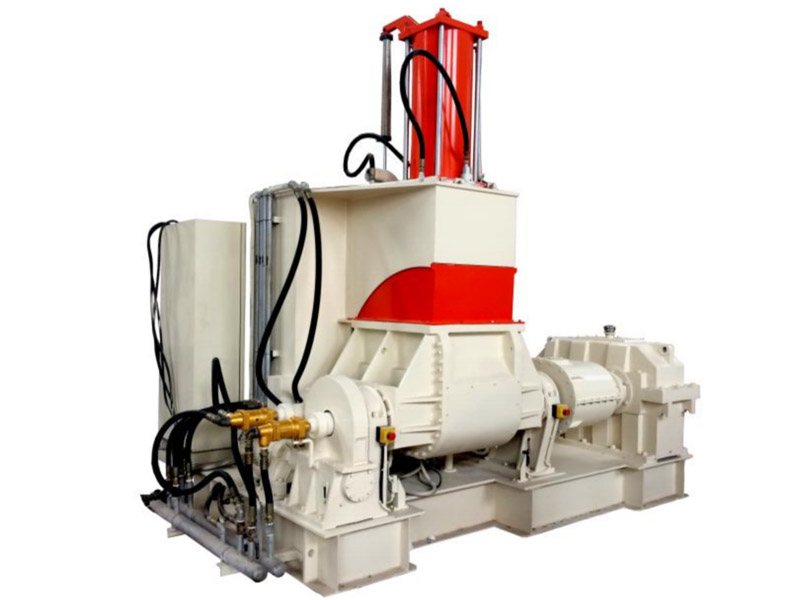
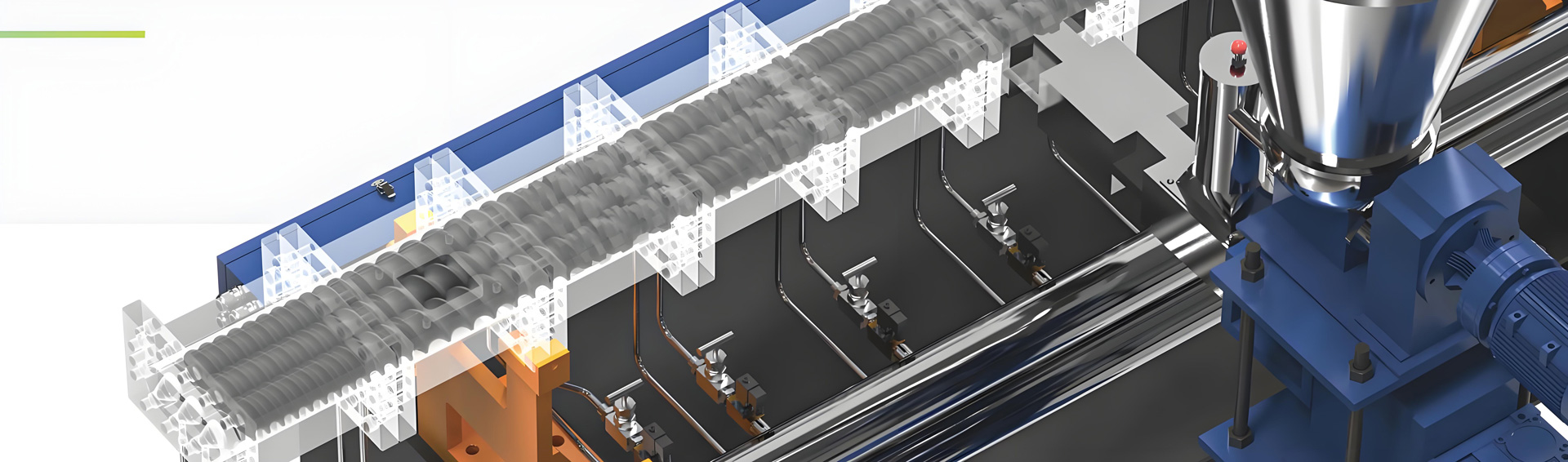
Achieving uniform dispersion of antistatic agents throughout the polymer matrix is critical for consistent antistatic performance. Poor dispersion can result in localized areas with insufficient antistatic protection, leading to static-related problems despite the addition of antistatic masterbatch. Twin-screw extruders with high mixing intensity provide excellent dispersion of antistatic agents, even at high loading levels. The screw configuration should include mixing elements that promote distributive and dispersive mixing without excessive shear that could degrade sensitive antistatic agents. Processing temperature should be optimized to achieve good melt flow while avoiding excessive temperatures that could cause degradation or evaporation of volatile antistatic components.
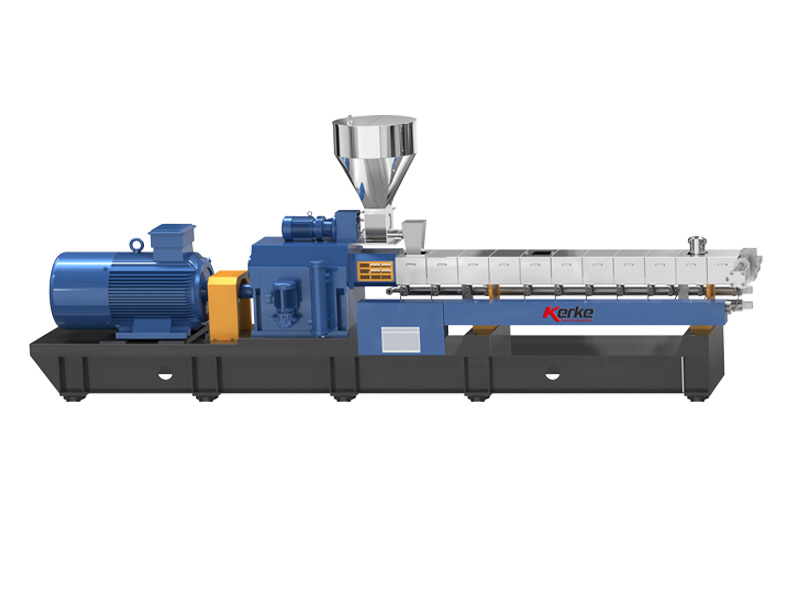
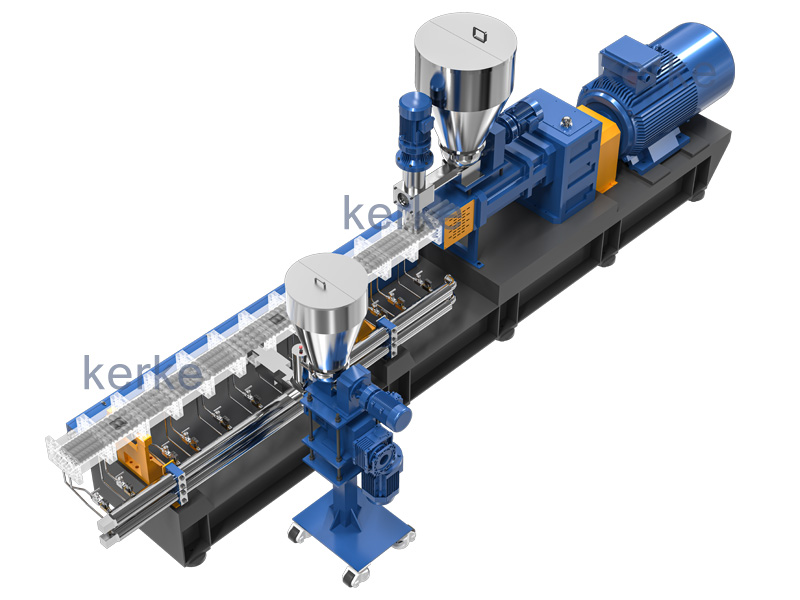
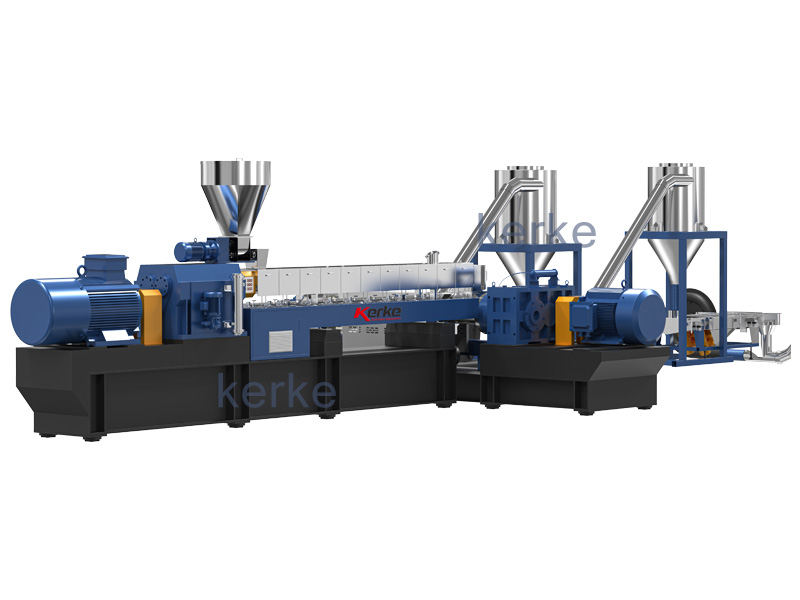
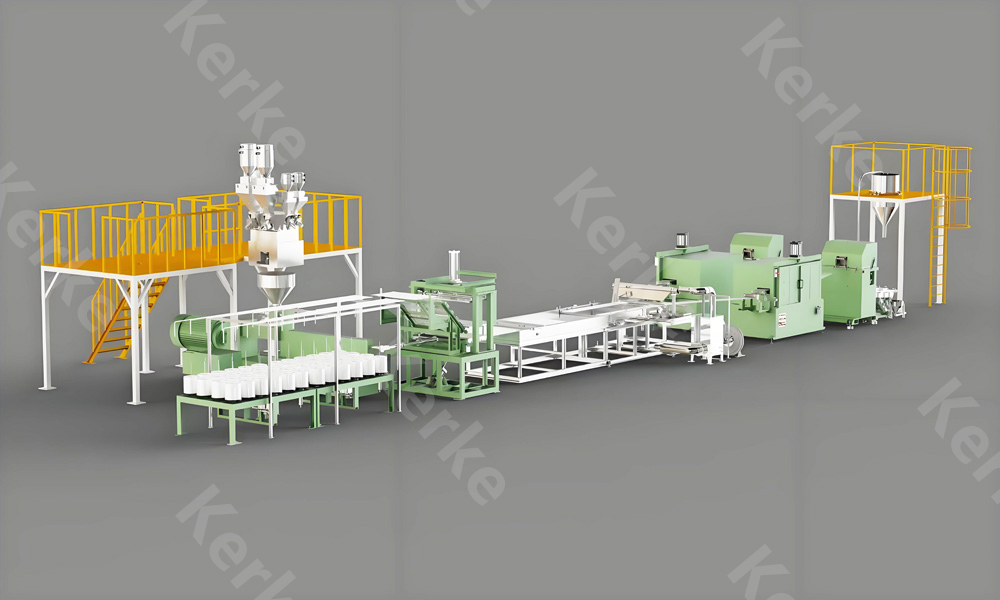
The cost of high-quality compounding equipment for processing antistatic masterbatch typically ranges from $85,000 to $150,000 for a twin-screw extruder, depending on screw diameter, length-to-diameter ratio, and level of automation. For processors specializing in antistatic compounds, investing in specialized equipment with precise temperature control and optimized screw configurations is justified by improved product quality and consistency. Kerke’s KTE Series twin-screw extruders, specifically designed for masterbatch production, provide excellent mixing capabilities and precise temperature control necessary for processing sensitive antistatic formulations. The KTE Series prices range from $95,000 to $180,000 depending on capacity and features, offering excellent value for processors requiring consistent antistatic masterbatch production.
Temperature Control
Maintaining appropriate processing temperatures is essential for preserving the effectiveness of antistatic agents. Many antistatic agents, particularly hygroscopic ionic compounds, can degrade or evaporate at elevated temperatures. Processing temperatures should typically be maintained 10-20°C below the recommended maximum temperature specified by the antistatic masterbatch supplier. For most standard antistatic masterbatch formulations based on hygroscopic agents, processing temperatures should not exceed 240-260°C to prevent degradation. Thermal-stable formulations allow processing temperatures up to 280-300°C, making them suitable for high-temperature polymers.
Modern twin-screw extruders provide precise temperature control with multiple heating zones and advanced temperature regulation systems. Temperature uniformity within ±2-3°C across the length of the barrel ensures consistent processing and preserves antistatic agent effectiveness. For antistatic masterbatch production, this precise temperature control is critical to prevent localized overheating that could degrade sensitive components. Kerke’s twin-screw extruders feature advanced temperature control systems with up to 12 heating zones, ensuring precise temperature management throughout the compounding process. The energy consumption of a typical twin-screw extruder for antistatic masterbatch production ranges from 50-200 kW, representing an annual energy cost of $30,000-120,000 depending on production volume and local energy rates. While energy costs represent a significant operating expense, the consistent product quality achieved with precise temperature control justifies the energy investment.
Compatibility with Other Additives
Antistatic masterbatch must be compatible with other additives used in the formulation, including pigments, UV stabilizers, flame retardants, and processing aids. Antagonistic interactions between additives can reduce effectiveness or cause processing problems. For example, certain flame retardants can interfere with antistatic performance by competing for the same migration pathways to the surface. Similarly, acidic pigments or additives can react with basic antistatic agents, neutralizing their effectiveness. When formulating compounds containing multiple additive systems, careful testing is required to ensure compatibility and that each additive system performs as intended.
The cost of additive compatibility testing typically ranges from $500 to $2,000 per formulation depending on the number of additives and the extent of testing required. However, this testing cost is negligible compared to the potential losses from additive incompatibility. Incompatible additives can cause scrap rates of 10-30%, processing problems that reduce productivity by 20-40%, and product failures that result in warranty claims and customer dissatisfaction. For manufacturers developing formulations with multiple additive systems, investing in comprehensive compatibility testing provides excellent returns through improved product quality and reduced risk of production problems.
Cost-Benefit Analysis
Investing in appropriate antistatic masterbatch represents a cost that must be justified through improved product performance, reduced quality problems, and enhanced market access. Understanding the cost-benefit relationship helps manufacturers optimize antistatic strategies for specific applications and market requirements.
Material Cost Analysis
The cost of antistatic masterbatch typically represents 1-15% of total material costs depending on the type of antistatic system and required performance level. Temporary hygroscopic antistatic systems are the most economical at 1-4% of material costs, while permanent conductive filler systems may represent 8-15% of material costs. However, the total cost of ownership, including material costs, quality-related costs, and risk management, typically favors investment in appropriate antistatic systems.
For example, a plastic component costing $2.00 per pound without antistatic protection might cost $2.08 per pound with 2% loading of temporary antistatic masterbatch at $4 per kilogram, representing a 4% cost increase. This relatively small investment can eliminate static-related scrap that might otherwise cost the manufacturer $0.10-0.30 per pound in quality problems, providing an excellent return on investment. For applications requiring permanent antistatic protection, the material cost increase of 8-12% is justified by the elimination of static-related failures throughout the product lifetime, which could represent liabilities worth many times the material cost difference.
Quality and Scrap Reduction
Comprehensive antistatic protection significantly reduces quality problems and scrap rates caused by static-related issues. Static-related problems including dust attraction causing surface defects, static cling causing handling difficulties, and ESD damage in electronic applications typically cause 2-5% scrap in plastic manufacturing without proper antistatic protection. Implementing appropriate antistatic measures through masterbatch technology reduces these problems by 70-90%, resulting in substantial quality improvements and cost savings.
For a manufacturer processing 500,000 pounds of plastic annually with a 3% scrap rate due to static, scrap amounts to 15,000 pounds annually. At an average material value of $3 per pound, this represents $45,000 in scrap losses annually. By investing in antistatic masterbatch at an additional cost of $0.10-0.30 per pound ($50,000-150,000 annually depending on loading level and masterbatch cost), the manufacturer can reduce scrap to 0.5-1%, saving $30,000-38,000 annually in scrap costs. Combined with reduced rework and improved customer satisfaction, the return on investment for antistatic masterbatch is typically less than 12 months for most manufacturers.
Market Access and Compliance
For certain applications and markets, antistatic performance is not just a quality improvement but a requirement for market access. Electronic packaging markets require compliance with ESD standards such as ANSI/ESD S20.20 and IEC 61340-5-1. Explosive environment applications require compliance with safety standards such as NFPA 77 and ATEX directives. Without meeting these standards, manufacturers are excluded from these high-value markets. The investment in antistatic masterbatch represents the cost of market entry and compliance with these standards.
For example, the market for ESD protective packaging is valued at over $1 billion annually and offers premium pricing compared to standard packaging. Manufacturers who cannot meet ESD requirements are excluded from this market segment entirely. By investing in appropriate antistatic masterbatch, manufacturers can access this premium market and command prices 10-30% higher than standard packaging. For a packaging manufacturer selling 10 million pounds of packaging annually, accessing the ESD market at a $0.30 per pound premium represents an additional $3 million in annual revenue, far exceeding the material cost increase for antistatic protection.
Quality Control and Testing
Ensuring consistent antistatic performance requires rigorous quality control and testing protocols. Various testing methods allow manufacturers to verify antistatic properties and maintain consistent product quality throughout production.
Surface Resistivity Testing
Surface resistivity testing is the primary method for evaluating antistatic properties of plastic materials. This test measures the electrical resistance across the surface of a material using standard electrodes and test voltages specified in standards such as ASTM D257 and IEC 61340-5-1. Surface resistivity is expressed in ohms/square and categorizes materials as conductive (below 10^9 ohms/square), dissipative or antistatic (10^9-10^12 ohms/square), or insulating (above 10^12 ohms/square). Consistent surface resistivity measurements ensure that materials meet target specifications and maintain consistent antistatic performance across production lots.
The cost of surface resistivity testing equipment ranges from $500 for basic resistivity meters to $5,000 or more for advanced systems with temperature and humidity control and automated data logging. For manufacturers of antistatic materials, investing in appropriate testing equipment is essential for quality control and customer documentation. The cost of quality problems from unverified antistatic performance far exceeds the investment in testing equipment. Typical testing frequency for surface resistivity is once per production shift or once per production lot, depending on customer requirements and process capability.
Charge Decay Testing
Charge decay testing evaluates how quickly a material dissipates static charge, providing information about the dynamic antistatic performance beyond the static resistivity measurement. This test involves applying a known charge to the material and measuring the time required for the charge to dissipate to a specified percentage of its initial value. Fast charge decay times indicate effective static control, with antistatic materials typically dissipating 90% of initial charge within 2 seconds or less. Charge decay testing is particularly valuable for evaluating temporary antistatic systems that may show adequate resistivity but inadequate dynamic performance.
The cost of charge decay testing equipment typically ranges from $2,000 to $8,000 depending on the test method and level of automation. While charge decay testing requires a higher investment than resistivity testing, it provides valuable information about the functional antistatic performance of materials, particularly for applications involving high-speed handling or rapid charge generation. For manufacturers serving electronic packaging and other critical antistatic applications, charge decay testing provides assurance that materials will perform effectively under real-world dynamic conditions.
Environmental Testing
Environmental testing evaluates antistatic performance across different temperature and humidity conditions, ensuring consistent performance throughout the expected service environment. Since many antistatic agents are humidity-dependent, testing across a range of humidity conditions is essential for understanding performance boundaries. Temperature testing ensures that antistatic agents maintain effectiveness across the expected service temperature range and that processing at elevated temperatures does not permanently degrade antistatic performance.
The cost of environmental testing equipment, including environmental chambers and humidity generators, ranges from $5,000 to $25,000 depending on the temperature and humidity range and control precision. The cost of environmental testing services from independent laboratories ranges from $200 to $1,000 per test depending on the number of test conditions and duration. While environmental testing represents a significant investment, it provides critical data for ensuring that antistatic materials will perform consistently in actual use conditions. For manufacturers supplying materials for critical applications such as electronic packaging or explosive environments, environmental testing is essential for ensuring reliability and customer satisfaction.
Environmental and Regulatory Considerations
Environmental and regulatory requirements increasingly influence the selection of antistatic technologies, with restrictions on certain chemicals and emphasis on sustainable materials shaping the market. Staying informed about changing requirements and adopting future-proof formulations helps manufacturers avoid regulatory problems and environmental liabilities.
Chemical Restrictions
Various regulations restrict the use of certain chemicals that were historically used in antistatic applications. The European Union’s REACH regulation restricts numerous chemicals including certain heavy metals and halogenated compounds. RoHS directives restrict lead, cadmium, mercury, and other substances in electronic applications. TSCA in the United States regulates chemicals used in commerce, requiring notification and testing for new chemicals. These regulations affect the selection of antistatic agents, particularly in electronic applications and products sold in regulated markets.
Working with antistatic masterbatch suppliers who maintain current knowledge of regulatory requirements and provide compliant formulations is essential for avoiding regulatory problems. The cost of regulatory compliance, including testing, documentation, and certification, typically ranges from $1,000 to $15,000 per product family depending on the complexity and number of regions covered. Non-compliance can result in product recalls, fines, and market access restrictions costing millions of dollars. For manufacturers supplying materials to global markets, investing in regulatory compliance is not optional but essential for business continuity.
Sustainability and Recyclability
Sustainability considerations increasingly influence material selection, including antistatic masterbatch. Recyclability is a key concern, with the circular economy emphasizing materials that can be recycled multiple times without losing critical properties. Many antistatic agents, particularly permanent conductive filler systems, maintain effectiveness through multiple recycling cycles, making them suitable for recycled content applications. However, hygroscopic antistatic agents may degrade or be depleted during recycling, potentially requiring replenishment in recycled materials.
The cost of recyclability testing typically ranges from $300 to $1,000 per formulation. While this represents an additional development cost, the ability to produce recyclable materials provides market advantages and aligns with increasing regulatory and customer expectations for sustainable materials. As recycled content requirements increase, antistatic masterbatch that maintains effectiveness through multiple recycling cycles will become increasingly valuable, potentially commanding premium pricing in the market.
Environmental Impact
Environmental impact considerations including carbon footprint, chemical emissions, and end-of-life disposal are increasingly important for antistatic materials. Carbon-based antistatic systems such as carbon black have environmental concerns during production and potential issues with black color affecting recyclability. Metal-coated antistatic systems may release metal particles during recycling or disposal. Newer bio-based or inherently antistatic polymers may offer improved environmental profiles, though often at higher cost.
The cost of environmental impact assessment, including life cycle analysis and emissions testing, typically ranges from $2,000 to $10,000 per material system. While this represents a significant investment for some manufacturers, environmental credentials are becoming increasingly important for market access and customer acceptance. As environmental regulations become more stringent and customer preferences shift toward sustainable materials, antistatic masterbatch with improved environmental profiles will gain market advantage, potentially justifying the additional development and assessment costs.
Supplier Selection and Technical Support
Choosing the right antistatic masterbatch supplier is critical for achieving optimal product performance, maintaining consistent quality, and obtaining technical support for application development. Evaluating potential suppliers based on multiple criteria ensures reliable supply, consistent quality, and comprehensive technical assistance.
Technical Expertise
Suppliers with strong technical expertise and application laboratories can provide valuable support in formulating antistatic materials for specific applications. Look for suppliers with experience in your target applications, whether electronic packaging, cleanroom materials, or explosive environment applications. Application laboratories capable of conducting surface resistivity, charge decay, and environmental testing help accelerate development and ensure that materials meet specific application requirements. The value of technical support services often exceeds the small premium charged by suppliers with stronger technical capabilities.
Technical support services typically represent an additional 5-15% cost premium but can reduce development time by 30-50% and improve final product performance. For manufacturers developing new antistatic materials or entering new application areas, the time savings and performance improvements justify the investment in suppliers with strong technical support capabilities.
Quality Systems
Consistent product quality is essential for antistatic masterbatch, where performance specifications are tightly controlled and variability can cause quality problems for customers. Look for suppliers with ISO 9001 certification, documented quality control processes, and statistical process control for critical parameters. Requesting certification data, test reports, and samples for evaluation before committing to large orders helps ensure product quality meets requirements and maintains consistency across production lots.
Quality-related issues with antistatic masterbatch can cause customer scrap rates of 5-20% and result in lost business and damaged reputation. The small premium for quality-certified suppliers, typically 3-8%, is a worthwhile investment compared to the potential costs of quality failures. For manufacturers supplying critical applications where antistatic performance failure can cause substantial losses, investing in suppliers with robust quality systems is essential for risk management and customer satisfaction.
Supply Chain Reliability
Reliable supply chain management is critical for high-volume production of antistatic materials. Look for suppliers with multiple production facilities, ample inventory, and contingency plans for supply disruptions. For antistatic masterbatch, where performance specifications are tightly controlled, switching suppliers in response to supply disruptions can be costly and time-consuming due to the need for re-qualification and customer approval. Establishing long-term supply relationships with volume commitments helps ensure reliable supply and provides planning certainty for both supplier and customer.
Supply disruptions can cause production shutdowns costing $50,000-500,000 per day depending on the scale of operations. For antistatic masterbatch, where production volumes are often 100,000-1,000,000 pounds annually, reliable supply is critical. Investing in supplier relationships, maintaining safety stock inventory, and establishing long-term agreements helps ensure continuous production and mitigate disruption risks. While these measures carry costs, they are far less than the cost of supply disruptions and production interruptions.
Conclusion
Antistatic masterbatch technology provides essential solutions for controlling static electricity in plastic products, preventing static-related defects, enabling access to critical markets, and improving safety in hazardous environments. As product requirements for static control become more stringent across multiple industries, the importance of effective antistatic solutions has never been greater. For plastic manufacturers, investing in appropriate antistatic masterbatch represents a strategic investment that pays dividends through improved product quality, reduced quality costs, market access, and enhanced customer satisfaction.
Understanding the various antistatic mechanisms, available technologies, and application requirements enables manufacturers to select optimal antistatic solutions for specific products and markets. Working with experienced suppliers and investing in advanced processing equipment like Kerke’s KTE Series twin-screw extruders ensures consistent product quality and optimal antistatic performance. The range of antistatic technologies available, from economical temporary systems to high-performance permanent systems, allows manufacturers to match performance requirements with cost considerations for maximum value.
As the industry continues to evolve, environmental considerations and regulatory requirements will increasingly shape antistatic technology development. Manufacturers who stay informed about emerging technologies, regulatory changes, and market trends will be well-positioned to adapt and succeed in this dynamic market. The investment in antistatic masterbatch is not just a cost of doing business but an investment in product performance, market access, and long-term business success. For manufacturers of plastic products, understanding and implementing appropriate antistatic solutions is becoming an essential capability in today’s static-sensitive world.